The real England, in one easy day from London
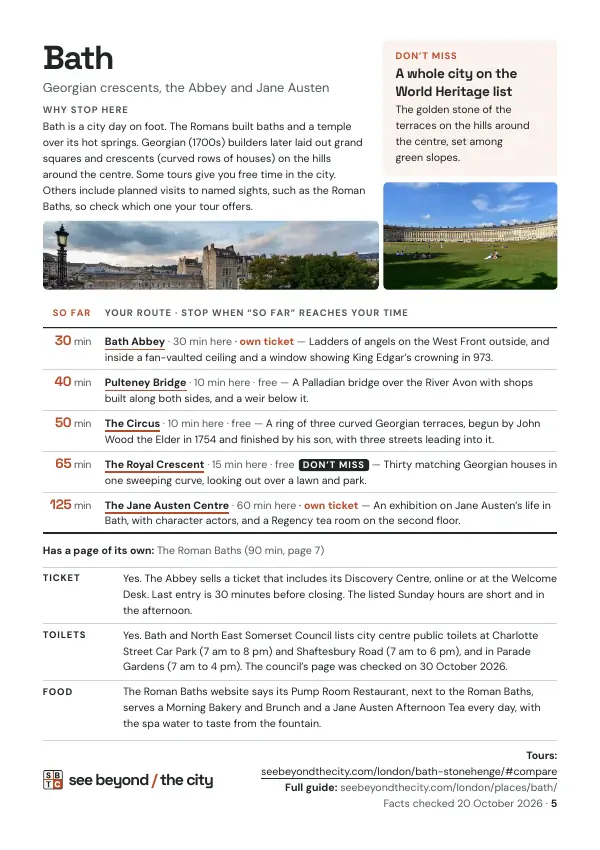
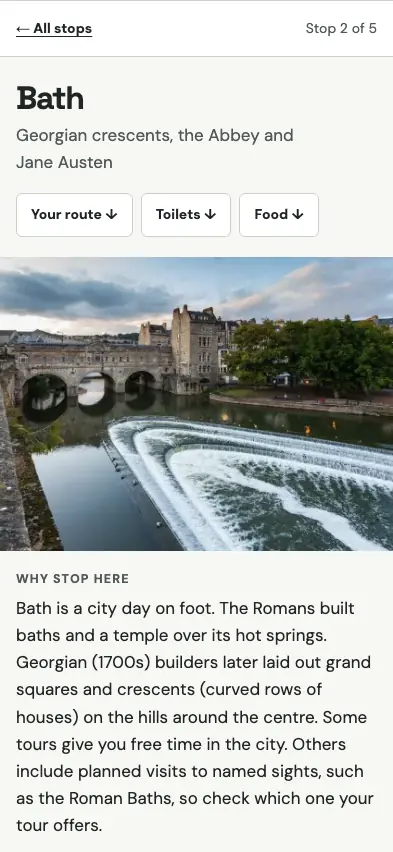
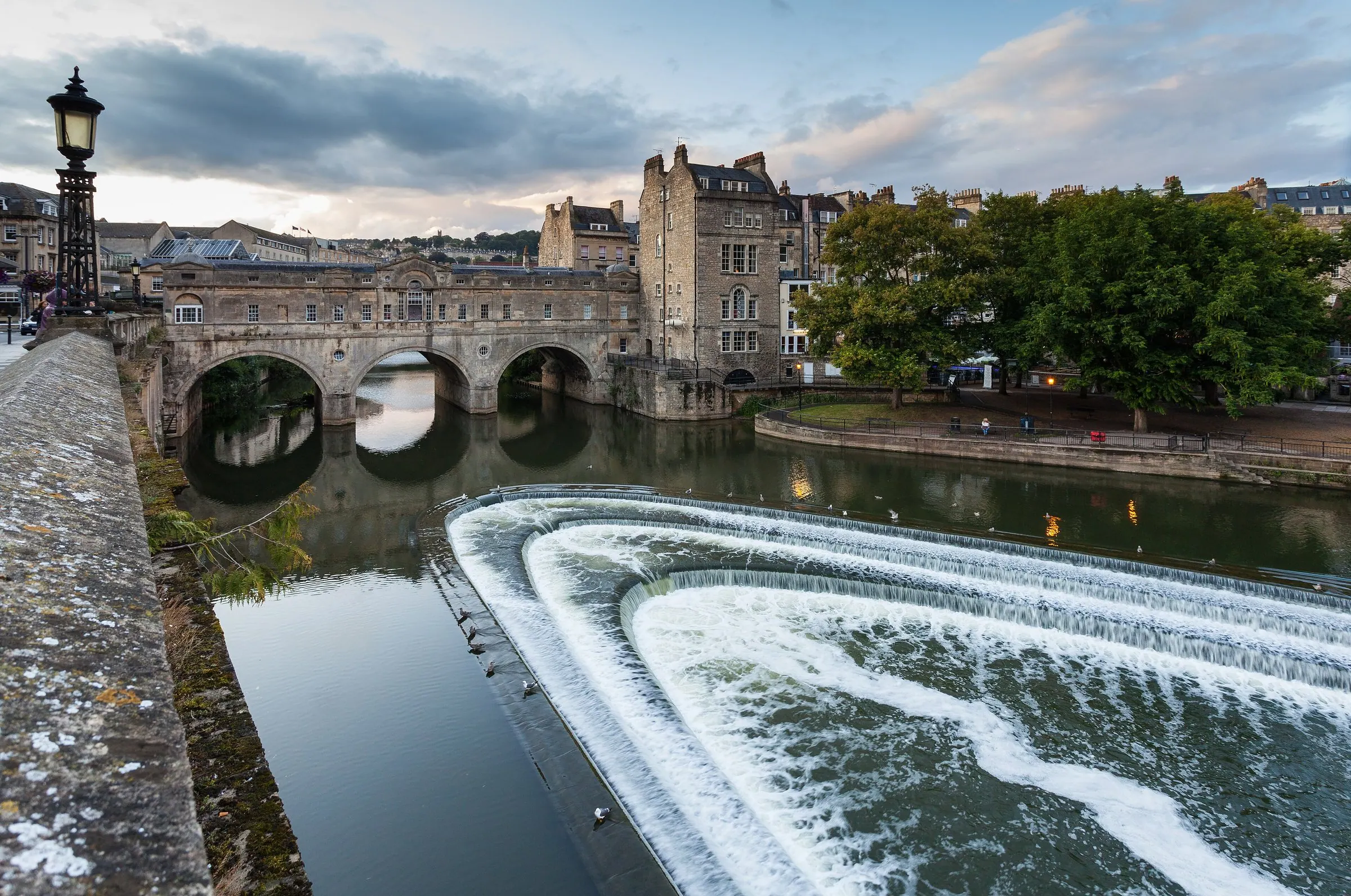
Pulteney Bridge in Bath at dusk, its arches reflected in the River Avon, with the curved steps of the weir rushing in the foreground

Roman baths and Georgian streets from London

Bath

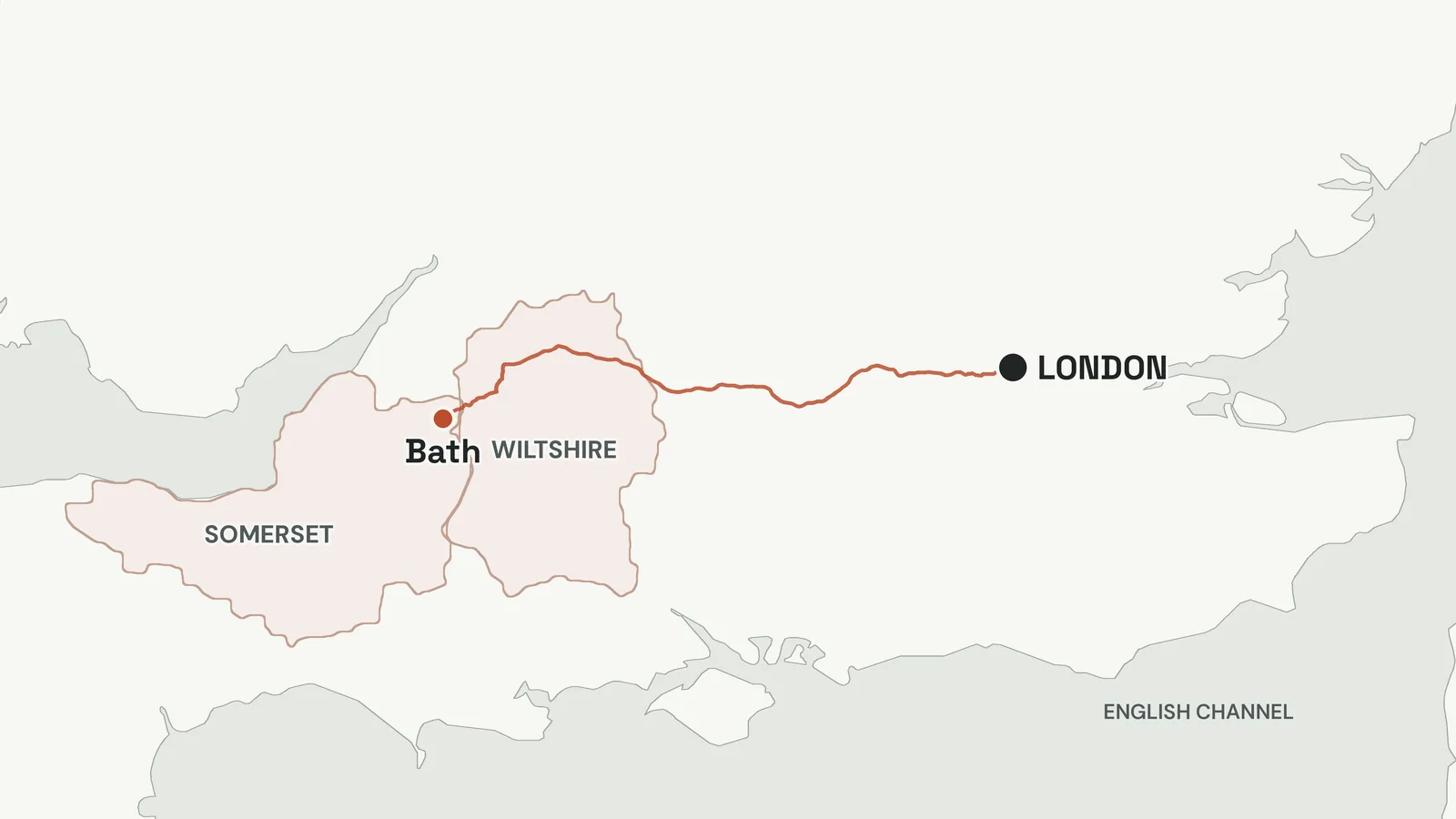
Bath, Somerset, south-west England · a day trip from London

See how long each tour stops in Bath →

Why it matters

Why Bath matters.

The whole city of Bath is a World Heritage Site. The Romans made it a spa, and Georgian builders made it elegant. Here are four stories about the city, with more at each sight below.

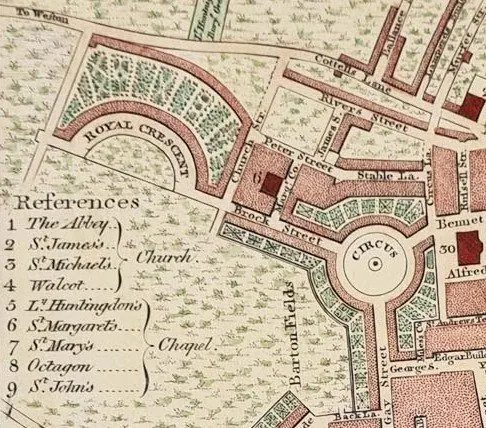
A hand-coloured 1776 map of Bath showing the curved Royal Crescent, the round Circus, and a numbered list of churches and chapels

01

A whole city on the World Heritage list

Bath is listed as a city, not only for its best-known buildings.

UNESCO says Bath was founded in the 1st century AD by the Romans, who used the natural hot springs as a spa. It became an important centre of the wool trade in the Middle Ages. In the 18th century, under George I, II and III, it grew into an elegant spa city. The whole city became a World Heritage Site in 1987, for its Roman remains, hot springs, Georgian architecture, town planning and green setting.

Look for

The golden stone of the terraces on the hills around the centre, set among green slopes.
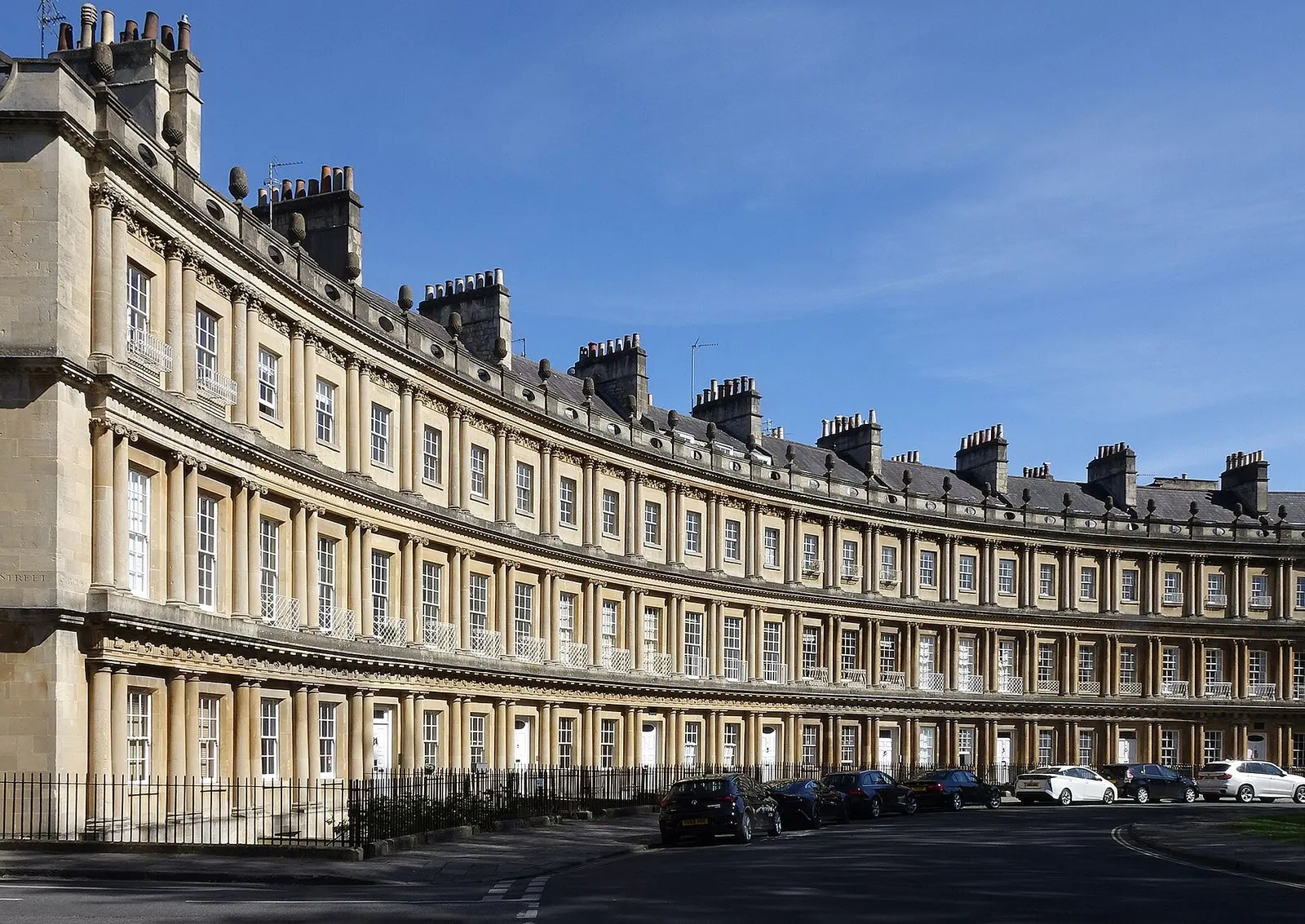
The Circus in Bath, a curved row of honey-coloured Georgian townhouses with three tiers of columns under a blue sky

02

Three men who made a spa city

A builder, an entrepreneur and a master of ceremonies set out to make Bath beautiful.

UNESCO names John Wood the Elder, Ralph Allen and Richard “Beau” Nash. They wanted to make Bath one of the most beautiful cities in Europe. They joined architecture and landscape for the pleasure of people taking the cure. The grand public buildings, such as the Assembly Rooms and the Pump Room, were designed to fit with the huge squares, circles and crescents. Visit Bath adds that Allen made a landscaped garden, with advice from Capability Brown.

Look for

The Circus and Queen Square, where the Georgian builders used round and square shapes to make a stage for city life.

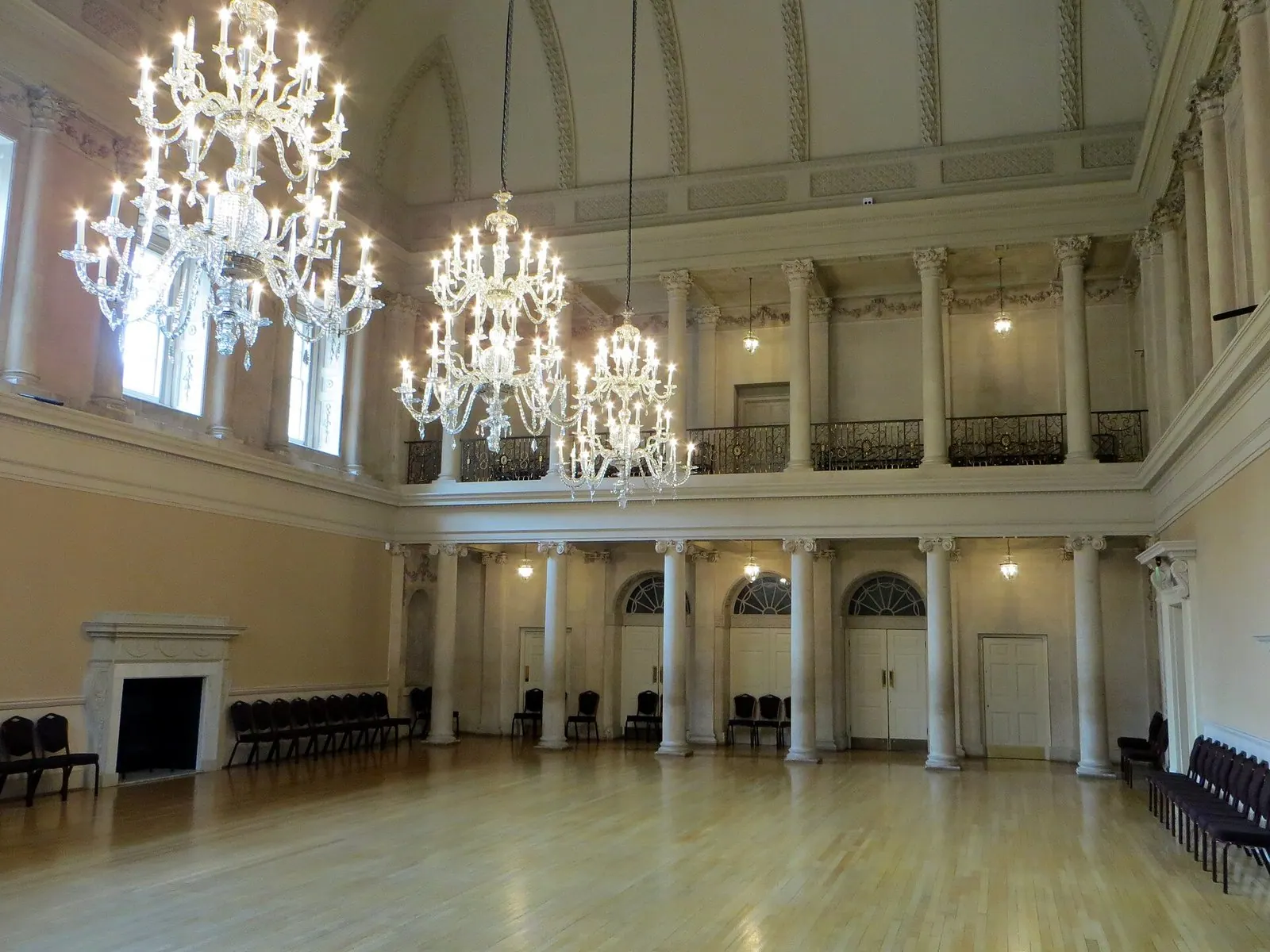
The Tea Room of the Assembly Rooms in Bath, a tall pale hall with crystal chandeliers, columns, a balcony and rows of chairs

03

A city that came through the raids

In 1942 German bombers attacked Bath, but most of Georgian Bath survived.

Visit Bath says the Bath Blitz of 1942 was one of the Baedeker raids, which aimed at historic cities. The Assembly Rooms were gutted and several houses in the Circus were destroyed. Bath Abbey records that 400 people were killed and 872 wounded. The Abbey was not hit, but its Great East Window and the north windows were badly damaged. Most of Georgian Bath and the Roman Baths avoided major damage.

Look for

The Assembly Rooms in Bennett Street, and the houses of the Circus, many of them rebuilt.

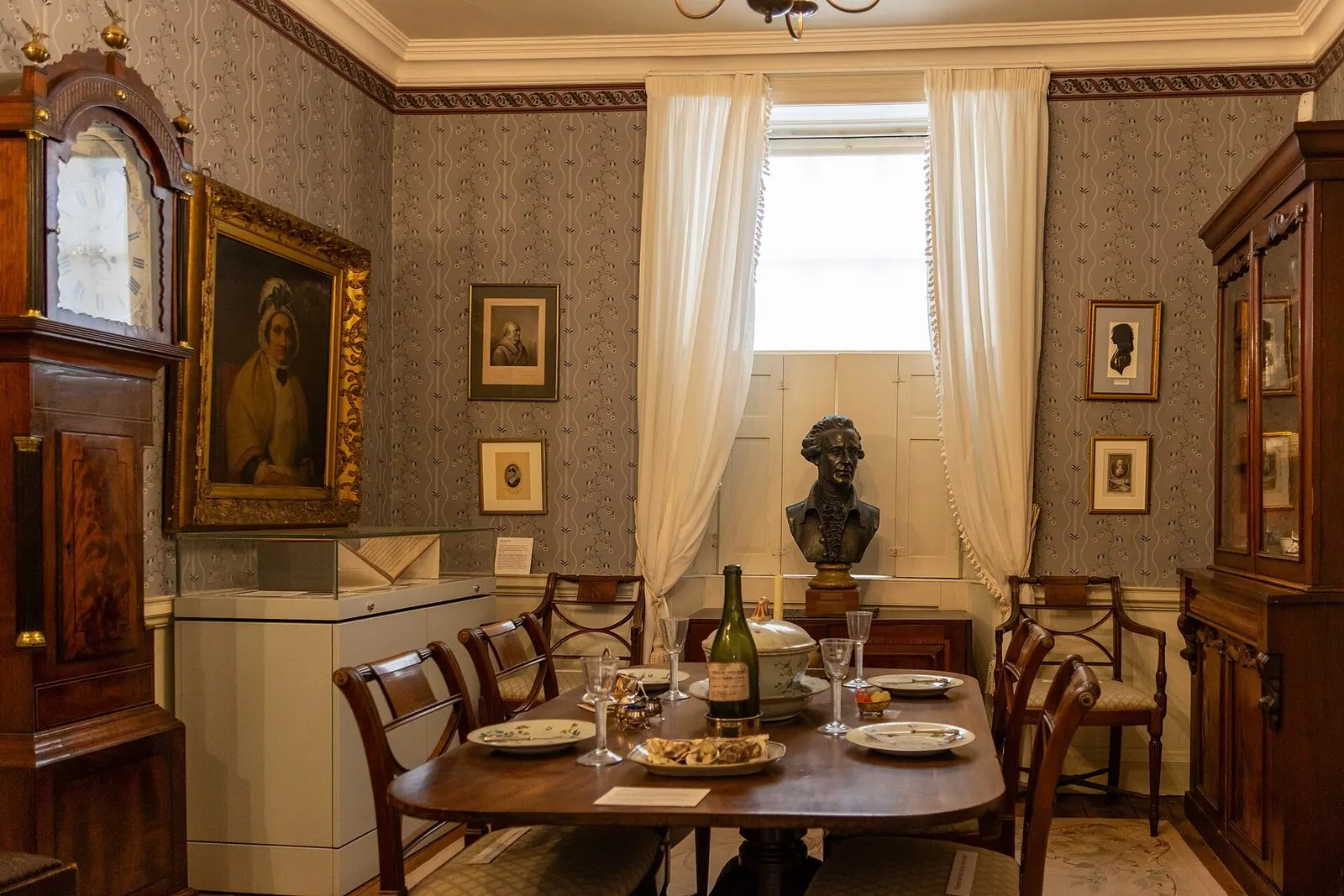
A Georgian dining room at the Herschel Museum of Astronomy, with a laid table, a bust by the window and portraits on patterned wallpaper

04

Writers and scientists in Bath

Famous writers and a famous astronomer lived or stayed in Bath.

In 1781 William Herschel discovered the planet Uranus from the back garden of his home in New King Street, now a museum. Mary Shelley, then 19, came to Bath in 1816, lived at 5 Abbey Churchyard and wrote much of Frankenstein there. Charles Dickens visited from 1835 and made fun of Bath’s spa society in The Pickwick Papers. Jane Austen’s Bath has its own guide, at the Jane Austen Centre.

Look for

The plaque for Mary Shelley in Abbey Church Yard, and New King Street, where Herschel lived.

Your time there

What to see.

These are the highlights worth looking out for, if your time allows. See how long each tour stops in Bath →

Bath is a compact city of Roman Baths, Georgian streets and a great Abbey. Pick two or three to go inside and see the rest from the street.

Inside Bath, with guides of their own: Bath Abbey, Roman Baths, Royal Crescent and Jane Austen Centre.

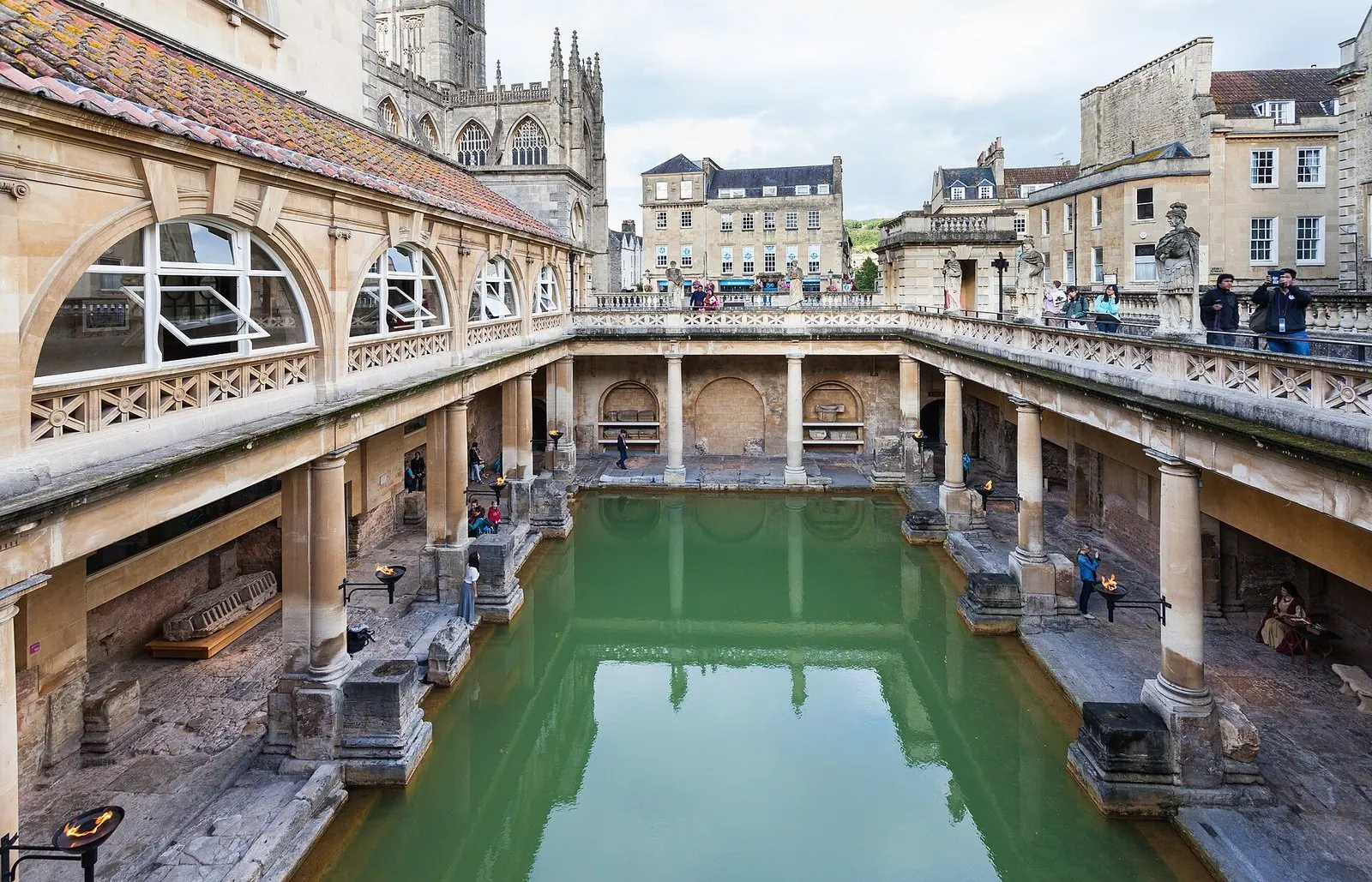
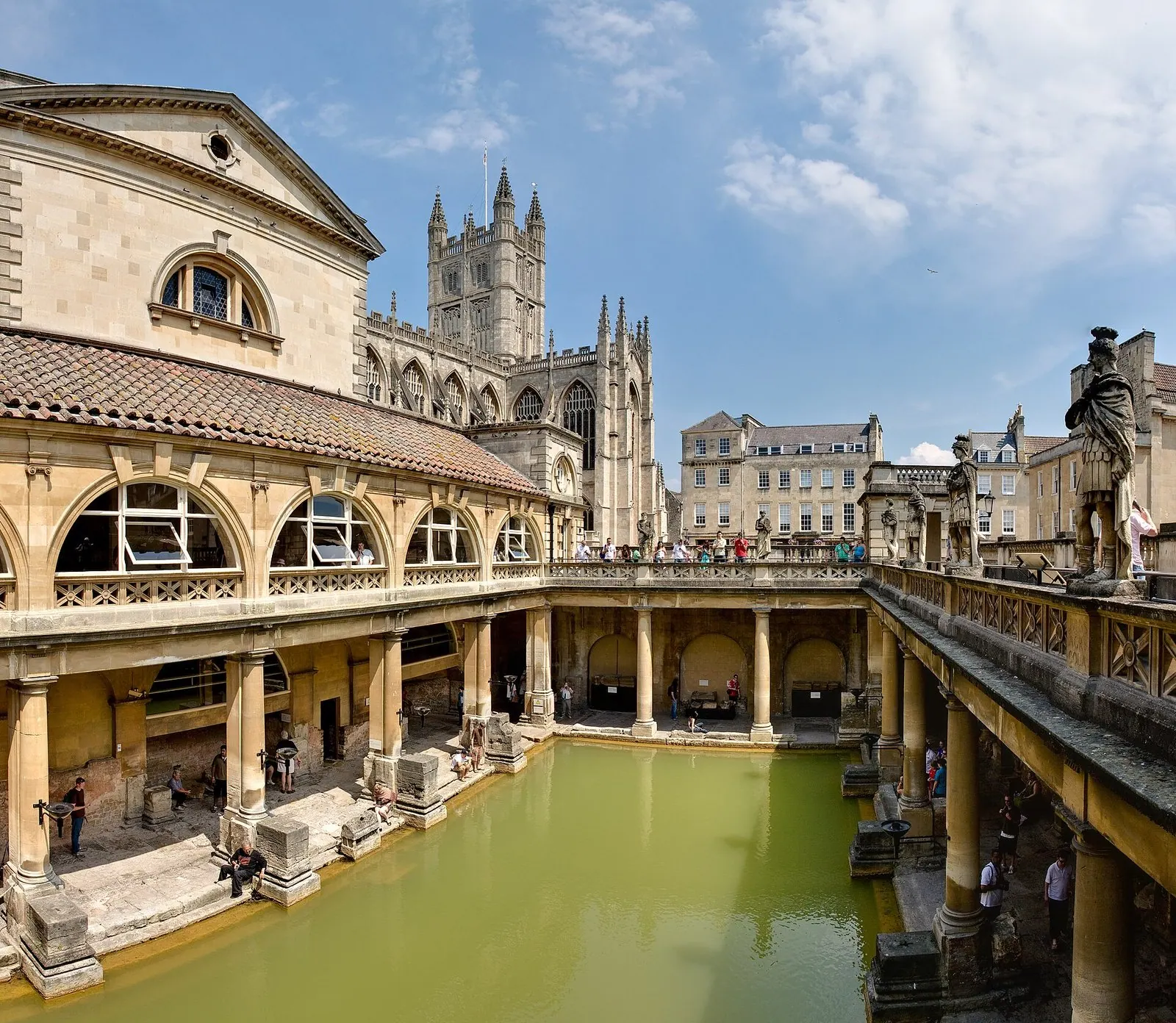
The Great Bath at the Roman Baths, green water framed by stone columns and a terrace with statues, with Bath Abbey's tower behind
Don’t miss

The Roman Baths

The Great Bath with steam rising, the Sacred Spring where hot water bubbles up, the remains of the temple, and thousands of Roman finds.

About 90 min · Own ticket

The Roman Baths recommend 90 minutes to 2 hours. Entry is by timed ticket, and the route is one way.

Read our Roman Baths guide →

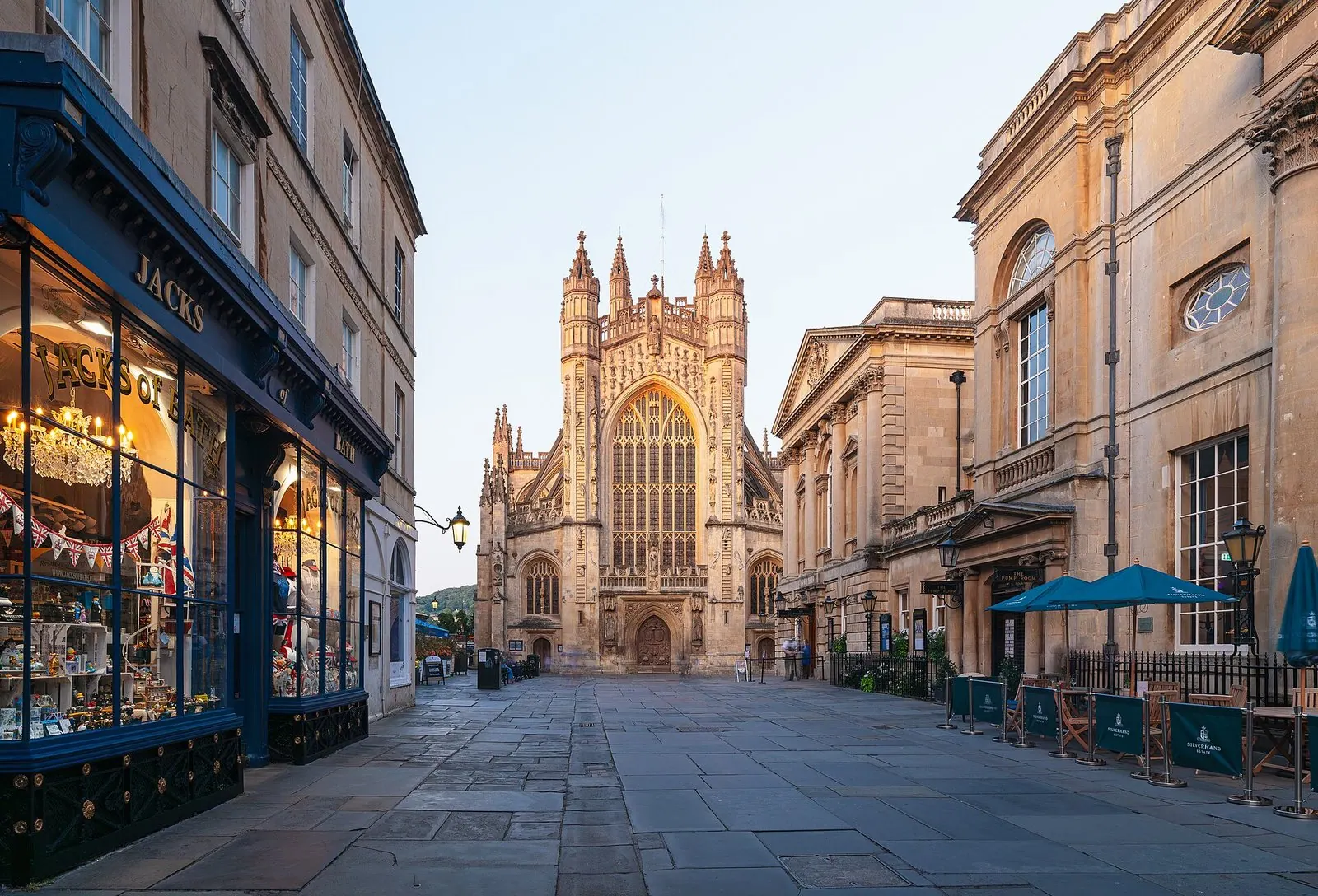
The west front of Bath Abbey at the end of a paved square in evening light, with shops on the left and the Roman Baths on the right

Bath Abbey

Ladders of angels on the West Front outside, and inside a fan-vaulted ceiling and a window showing King Edgar’s crowning in 973.

About 30 min · Own ticket

The Abbey sells its own ticket. It runs a 30-minute guided highlights tour, included in the ticket price, Monday to Saturday.

Read our Bath Abbey guide →

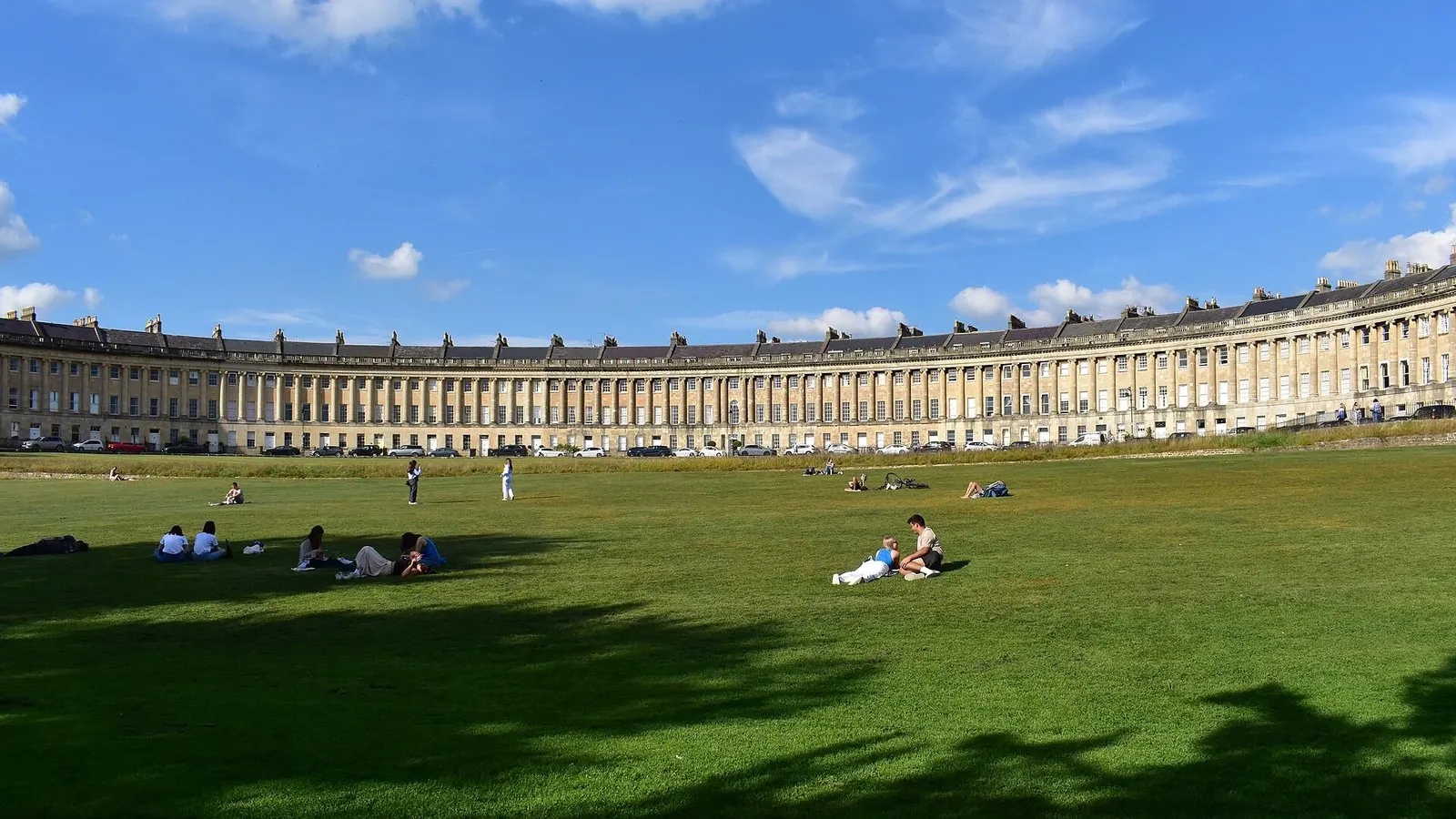
The long curved terrace of the Royal Crescent in Bath, with people sitting on the sunny lawn in front under a blue sky

The Royal Crescent

Thirty matching Georgian houses in one sweeping curve, looking out over a lawn and park.

About 15 min · Free

No. 1 Royal Crescent is a museum with its own ticket. It is closed on Mondays except in local school holidays and bank holidays.

Read our Royal Crescent guide →

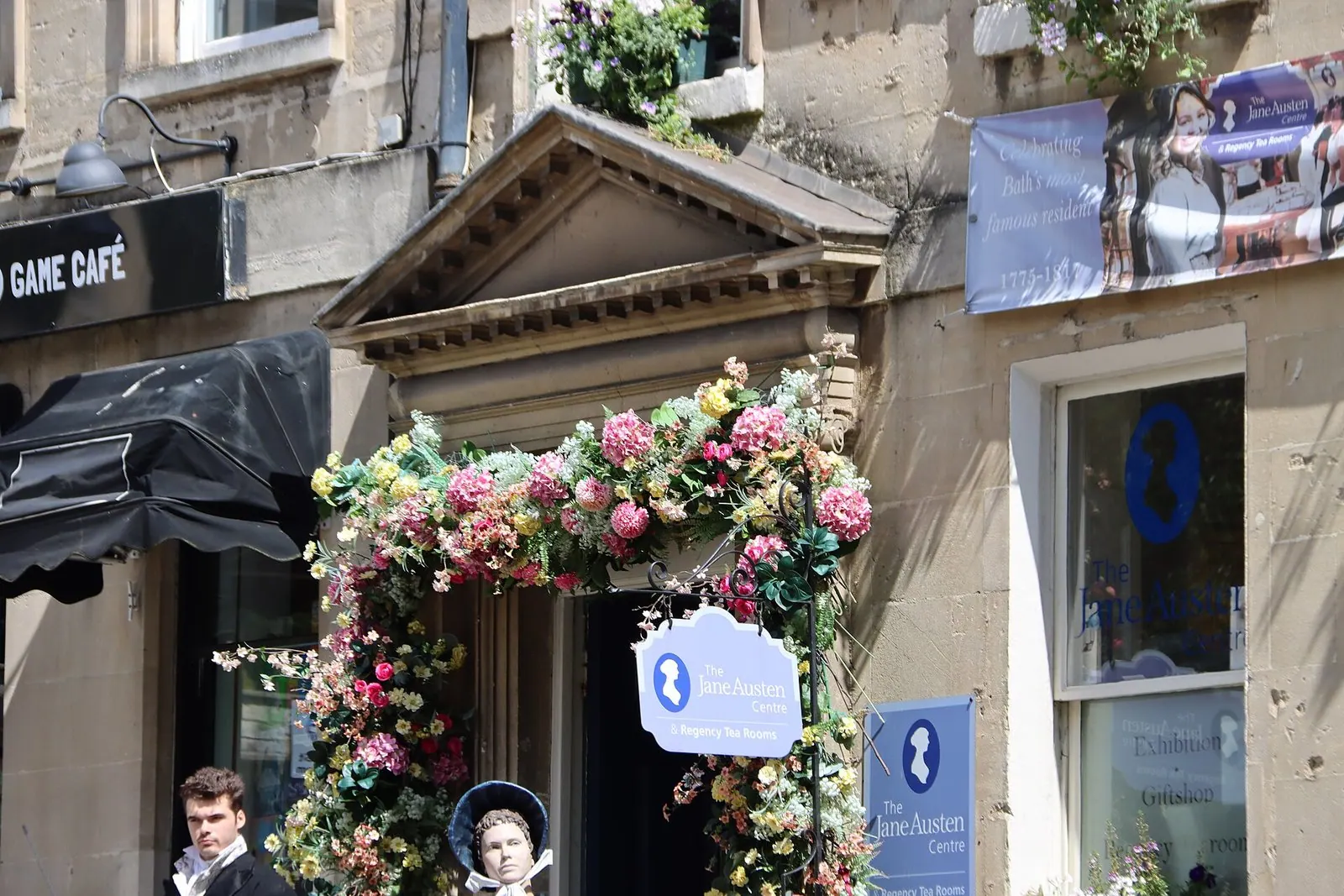
The entrance of the Jane Austen Centre in Bath framed by an arch of pink and yellow flowers, with a blue Centre sign and a banner above

The Jane Austen Centre

An exhibition on Jane Austen’s life in Bath, with character actors, and a Regency tea room on the second floor.

About 60 min · Own ticket

The Jane Austen Centre recommends booking ahead and allowing at least an hour for the exhibition.

Read our Jane Austen Centre guide →

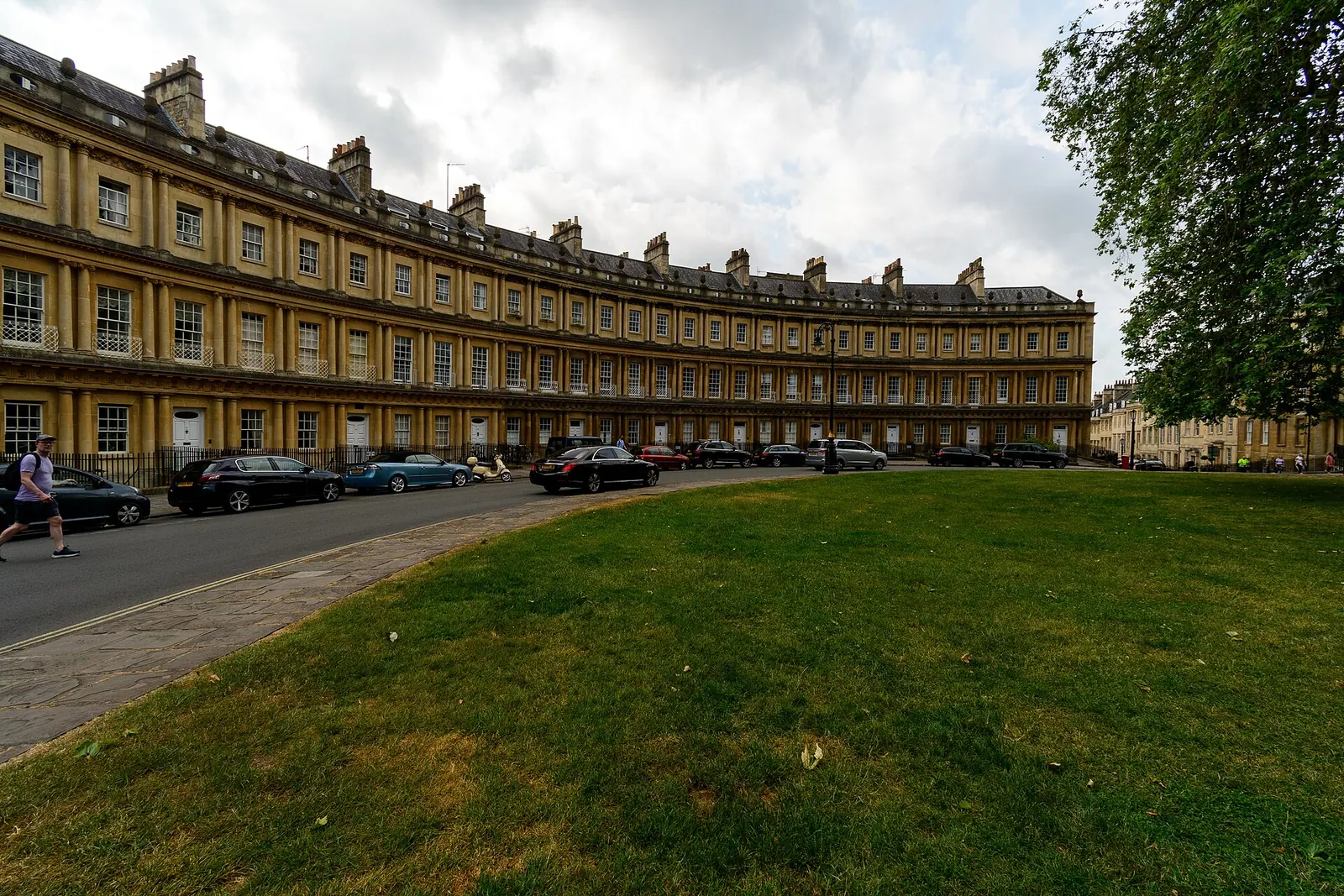
A long curved terrace of honey-coloured Georgian houses in the Circus in Bath, seen across the grass with plane trees at its right edge under a cloudy sky.

The Circus

A ring of three curved Georgian terraces, begun by John Wood the Elder in 1754 and finished by his son, with three streets leading into it.

About 10 min · Free

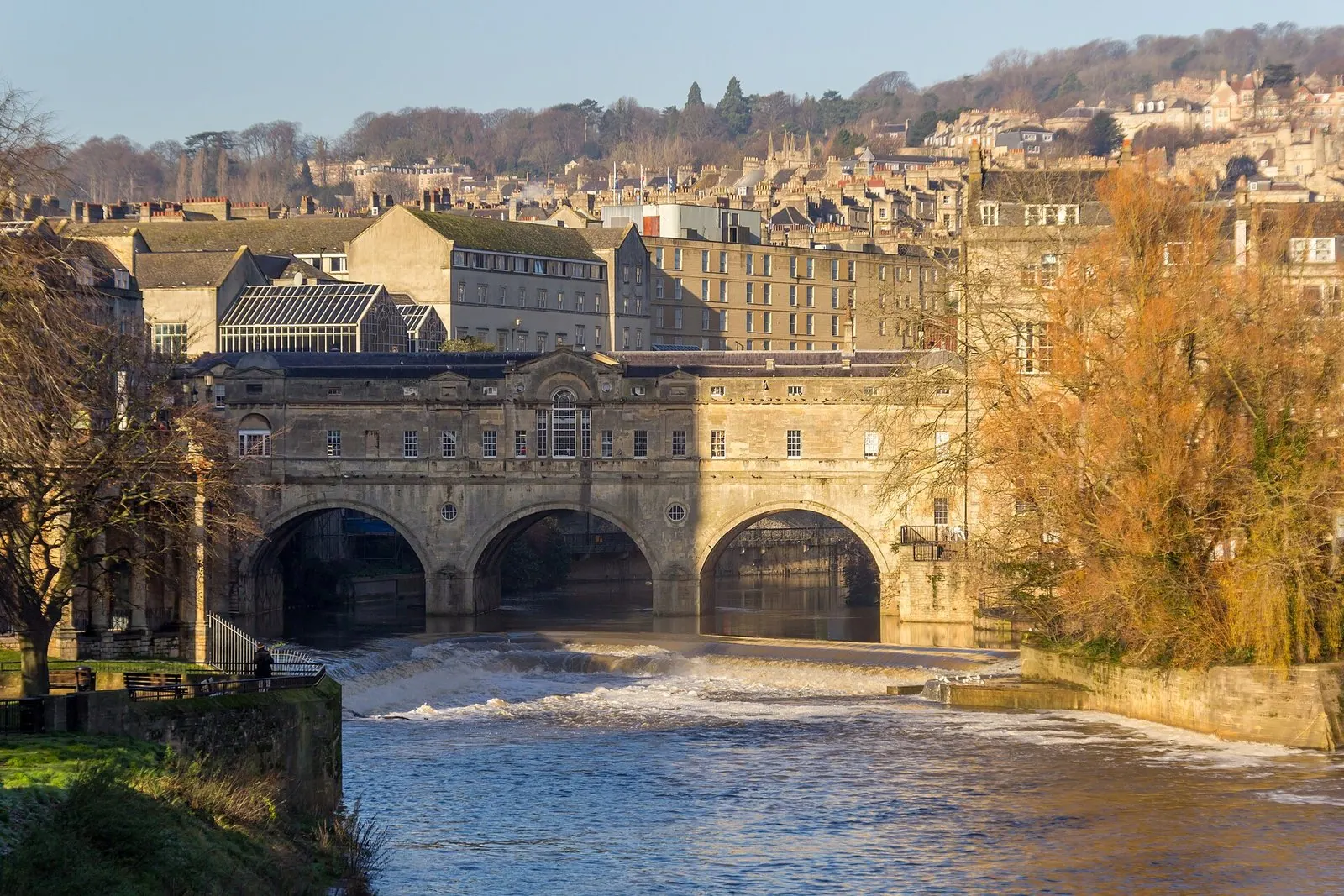
Pulteney Bridge in Bath, three stone arches lined with buildings, above the curved weir on the River Avon in low winter sun

Pulteney Bridge

A Palladian bridge over the River Avon with shops built along both sides, and a weir below it.

About 10 min · Free

1 of 6

Swipe for all six highlights →

Practical answers

Before you go.

The questions people ask before they book.

Is the Roman Baths included in every Bath tour?

No. Time in Bath and entry to the Roman Baths are separate. On the exact tour page, look for a Roman Baths visit and whether the entry ticket is included. If you buy your own, book a time slot at least a day ahead. Tickets often sell out in summer. Roman Baths: frequently asked questions → (opens in a new tab)

Can I see Bath in one day, or in 3 hours?

Yes, the main sights. In 3 hours, see the Roman Baths (they advise 90 minutes to 2 hours), then Bath Abbey (about 30 minutes), then walk up to the Royal Crescent (about 15 minutes, uphill). With a whole day, add the Circus, the Jane Austen Centre (at least an hour) and the museum at No. 1 Royal Crescent (about an hour). Roman Baths: frequently asked questions → (opens in a new tab)

What should I know before I go?

The Roman Baths need their own ticket with a time slot, and tickets often sell out in summer. Roman Baths: frequently asked questions → (opens in a new tab)

Is Bath easy to walk around?

Yes. The centre is compact, largely pedestrianised and mostly flat, and the main sights are close together. The Georgian crescents were built on the hills above the centre, so the walk up to the Royal Crescent climbs. Visit Bath: accessible Bath → (opens in a new tab)

Can I visit the Roman Baths with a wheelchair?

Most of it. About 90 percent of the site is step-free, with four lifts. The baths are about six metres below the street, some steps remain, and the Roman floors are uneven. The terrace above the Great Bath has level access. Roman Baths: accessibility → (opens in a new tab)

Is there somewhere to leave my bags?

Not at the sights. The Roman Baths allow only backpacks up to 30 litres and have no luggage storage, and Bath Abbey does not allow suitcases or have storage. Luggage storage is available elsewhere in the city, so plan where to leave larger bags. Roman Baths: plan your visit → (opens in a new tab)

Do I need a ticket for Bath Abbey?

Yes. The Abbey sells a ticket that includes its Discovery Centre, online or at the Welcome Desk. Last entry is 30 minutes before closing. The listed Sunday hours are short and in the afternoon. Bath Abbey: visiting → (opens in a new tab)

Are there public toilets?

Yes. Bath and North East Somerset Council lists city centre public toilets at Charlotte Street Car Park (7 am to 8 pm) and Shaftesbury Road (7 am to 6 pm), and in Parade Gardens (7 am to 4 pm). The council’s page was checked on 30 October 2026. Bath & North East Somerset Council: find a public toilet → (opens in a new tab)

Free day guide

Get the free Bath and Stonehenge day guide

The guide has a page for each stop, with what to see in 30, 60 or 90 minutes, and where to find toilets and food.

Unsubscribe any time. Privacy

When to go

What changes through the year.

Bath is a year-round city, but opening hours and crowds change with the seasons.

Spring

From early April the Jane Austen Centre opens daily at 9:45 am. Book the Roman Baths and the Centre ahead, because pre-booking is advised. Jane Austen Centre in Bath → (opens in a new tab)

Summer

Roman Baths tickets often sell out in summer, so book at least 24 hours ahead. The torches around the Great Bath are lit at about 6 pm. Roman Baths: frequently asked questions → (opens in a new tab)

Autumn

In autumn the Roman Baths are usually open daily, with later closing in summer and earlier in winter. Check the official page for your date. Roman Baths: plan your visit → (opens in a new tab)

Winter

The Roman Baths are open every day except 25 and 26 December. They close early on 24 December, and the Great Bath torches are lit at about 4 pm. Roman Baths: plan your visit → (opens in a new tab)

The Jane Austen Centre is on winter hours from 3 November to 4 April (10 am to 4:30 pm, Saturdays to 5:30 pm). Bath Abbey’s Sunday hours are short and change for services. Check each sight’s page for your date. Roman Baths: plan your visit → (opens in a new tab)

A taste and a keepsake

Something to taste from Bath.

Here are three local things to try in Bath, if you have time for a treat.

Just ideas for any free time you get.

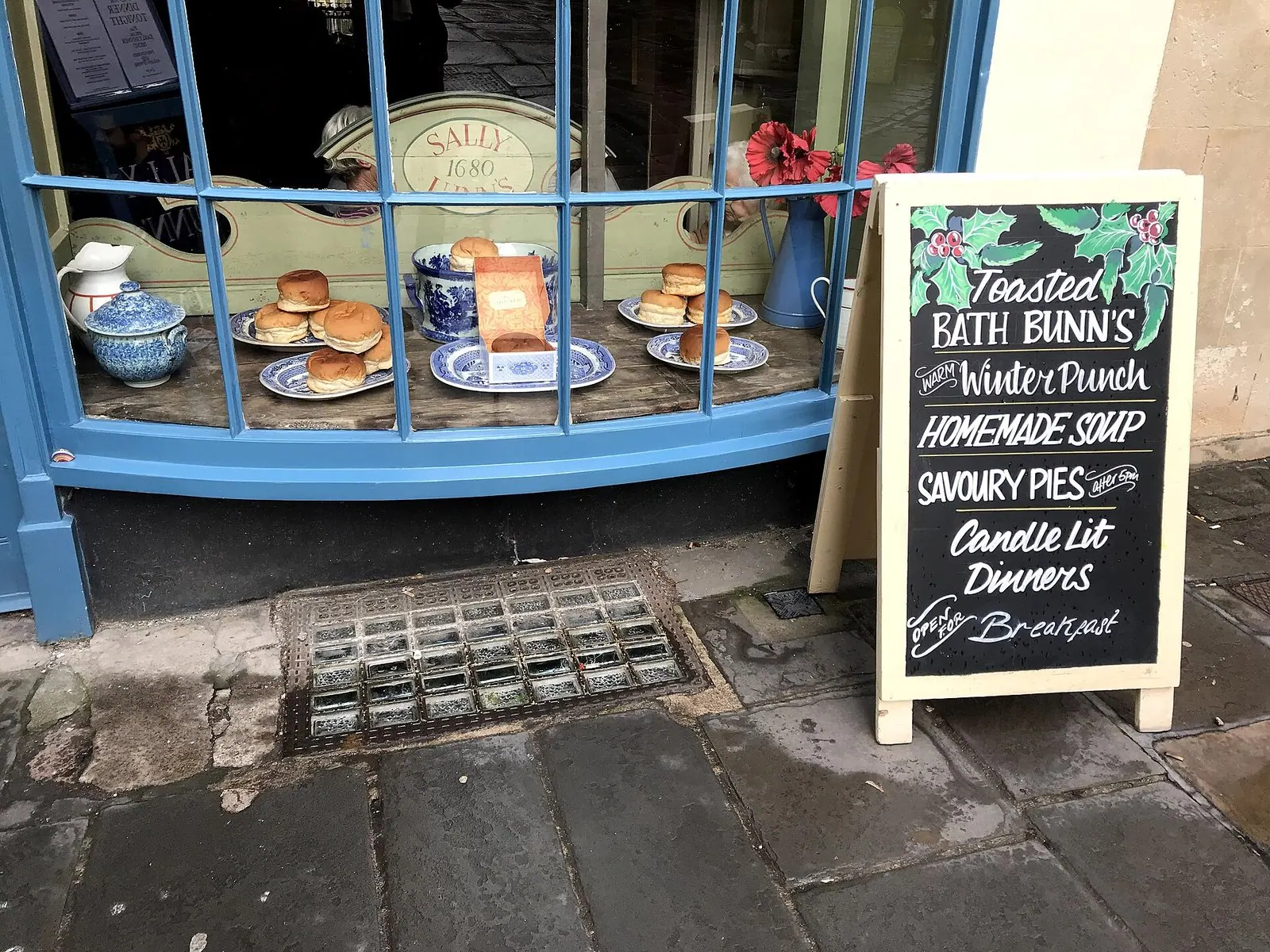
Sally Lunn buns on blue-and-white plates in the window of Sally Lunn's, with a chalkboard outside offering toasted Bath buns
Taste

A Sally Lunn bun

According to legend, a French refugee named Sally Lunn arrived in Bath in 1680. She baked a light, brioche-style bun that became popular at fashionable teas. Its house is one of the oldest in Bath.

Where to find itSally Lunn’s is a short walk from the Abbey and Roman Baths. Only if your time allows.

Whole rounds and cut wedges of blue-veined Bath Blue cheese beside two small glasses of red wine and a 2014 World Cheese Awards sign
Illustrative
Taste

Bath Soft Cheese

A range of soft cheeses, including Wyfe of Bath and Bath Blue, is made just outside the city from an ancient recipe. Visit Bath names where to taste and buy them.

Where to find itEasy to buy to take home, so it suits a free hour of browsing.

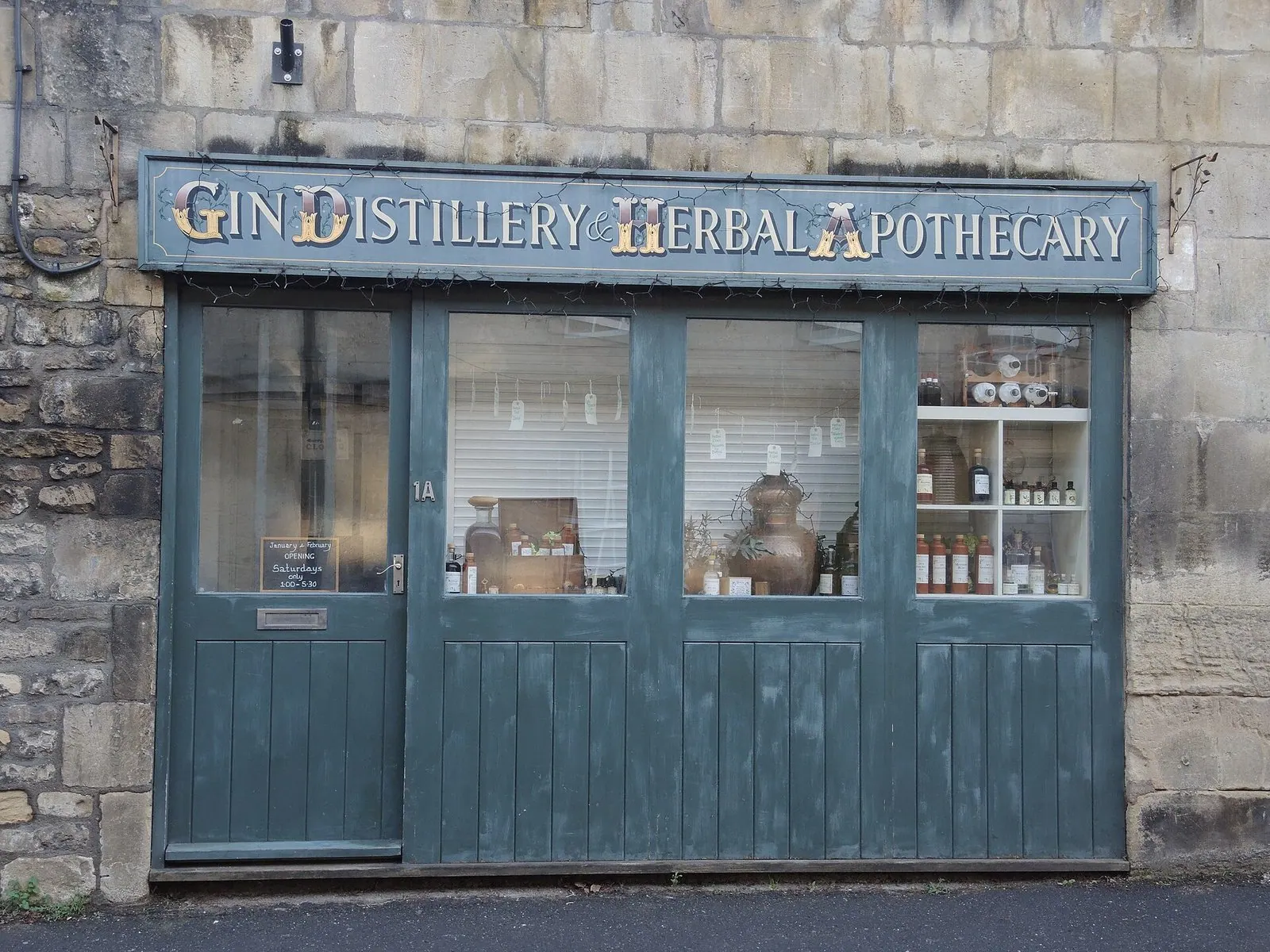
The green shopfront of a gin distillery and herbal apothecary in Bath, its name in gold letters and bottles on shelves in the window
Illustrative
Taste

Bath Gin

Bath Gin was created in the city with local ingredients. The Bath Distillery’s gin bar serves it, and offers a masterclass where you make a gin with your own flavours.

Where to find itA gin bar needs time, so only on a longer stop, and only for adults.

Plan your day

Help with choosing.

Also in Bath and Stonehenge

Places on the same day trips.

All Bath and Stonehenge day trips →
Picture credits and sources

Pictures

Image sources and credits are listed here. Pictures made with AI are marked.

Tour photographs are provided by the tour operators through Viator and are shown from Viator’s own image servers.