The real England, in one easy day from London
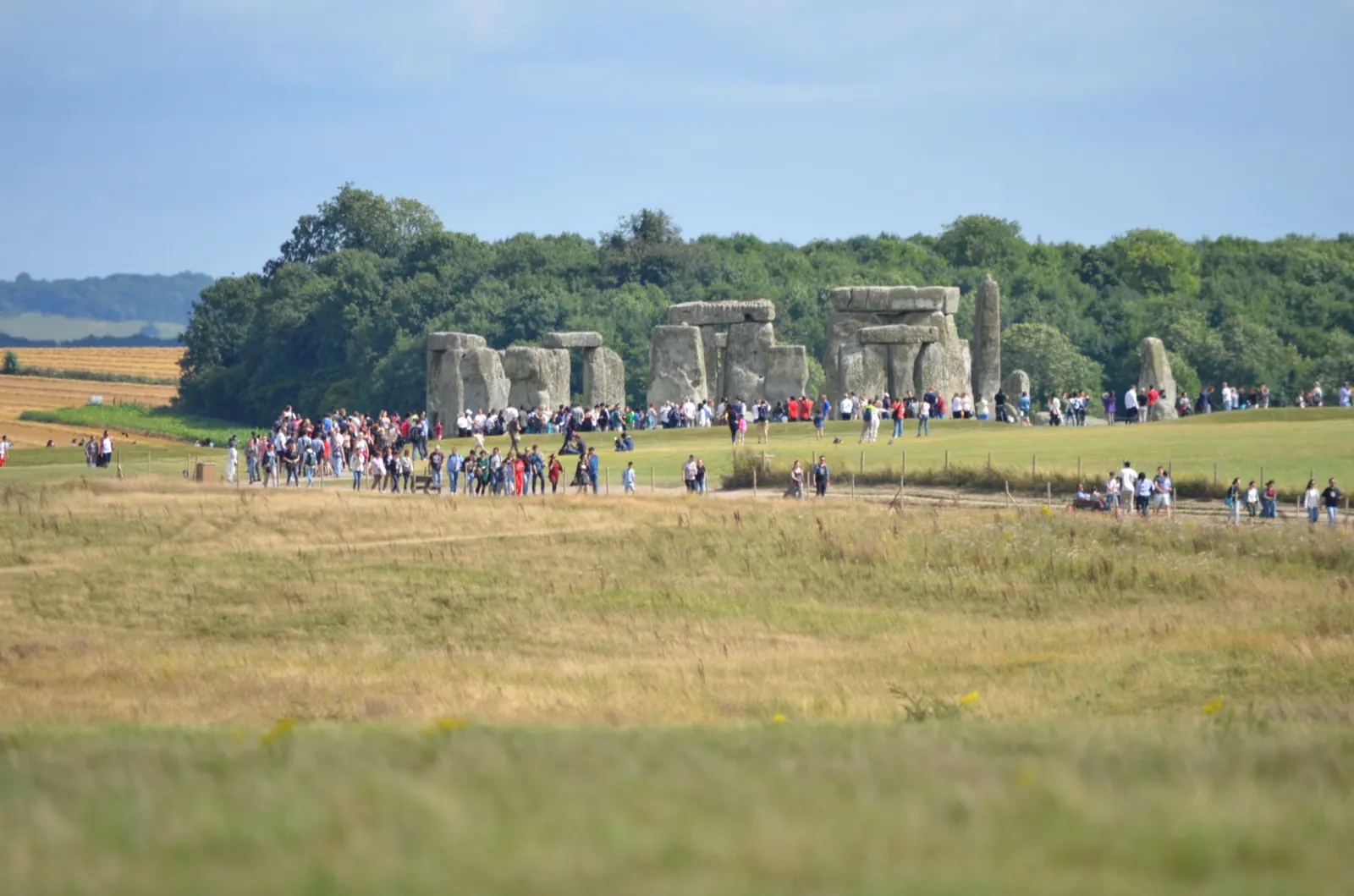
Visitors on the path around the Stonehenge stone circle, with fields and trees beyond

A prehistoric stone circle on open downland

Stonehenge

Near Amesbury, Wiltshire · a day trip from London

See how long each tour stops in Stonehenge →

Why it matters

Why Stonehenge matters.

Stonehenge is the world’s best-known ancient stone circle, and it stands in one of the richest prehistoric landscapes in Europe. Here is where its stones came from, how it follows the sun, who lived nearby, and what to look for when you visit.

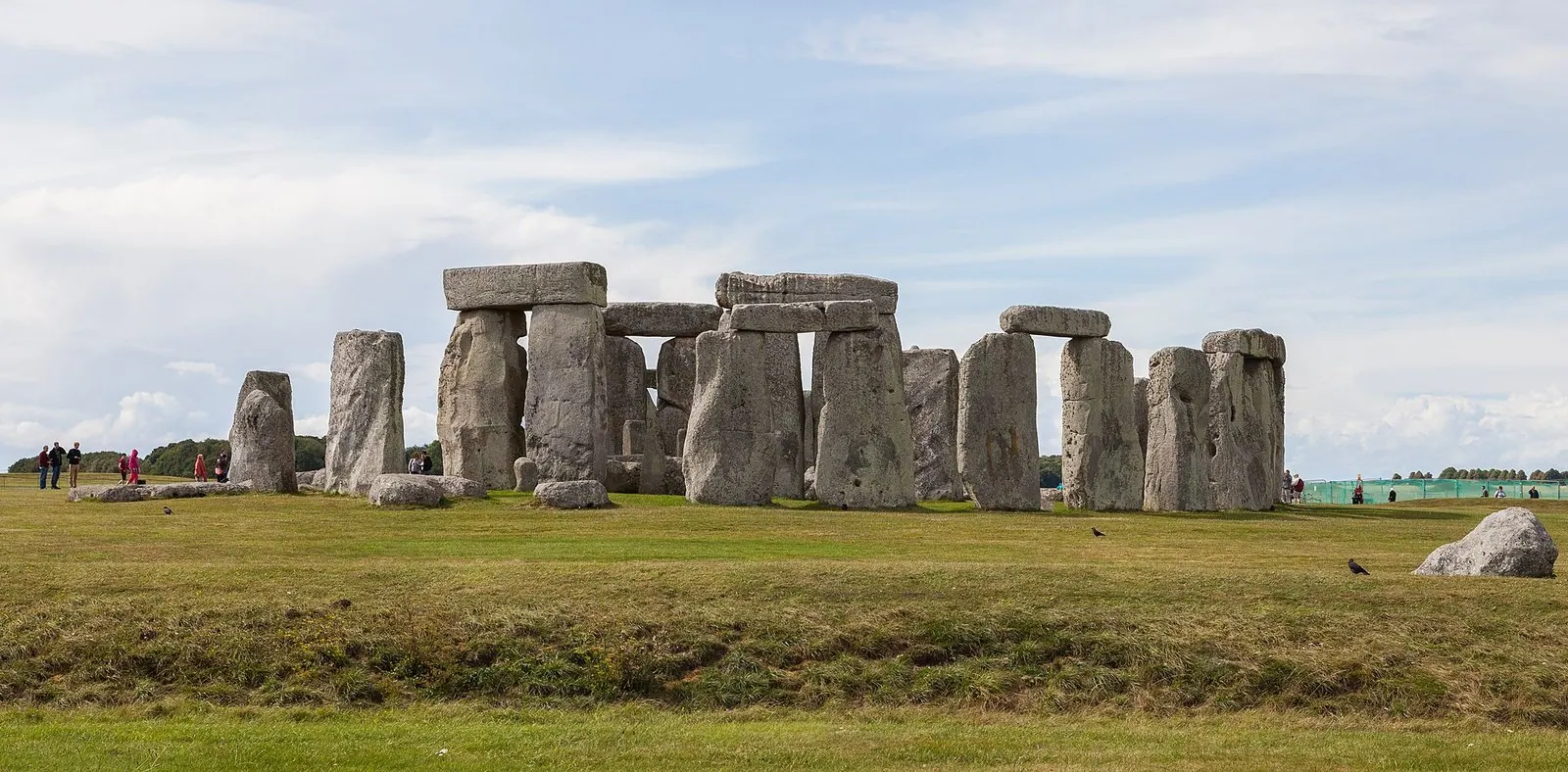
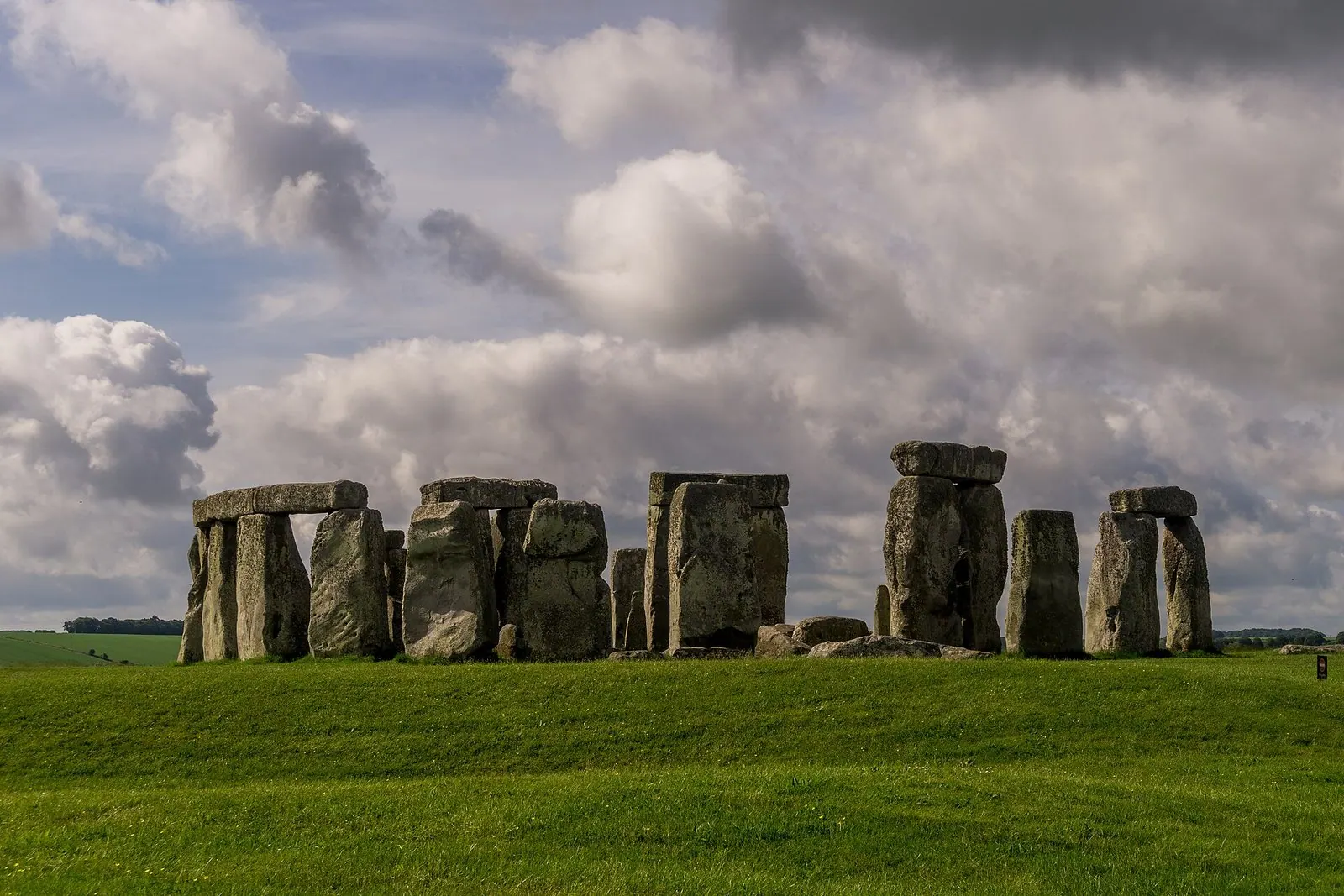
The Stonehenge stone circle seen from the north across green grass under a sky of large grey and white clouds

01

Stones brought from far away

The giant stones and the smaller ones all travelled to this hill, some from very far.

The big sarsen stones most likely came from West Woods, about 15 miles (25 km) north, and an average sarsen weighs about 25 tons. The smaller bluestones, which weigh 2 to 5 tons each, came from the Preseli Hills in south-west Wales, more than 150 miles (250 km) away. A sandstone block called the Altar Stone, now mostly buried, was carried at least 450 miles (750 km), from Scotland. Nobody used wheels or metal tools. Building Stonehenge took hundreds of well-organised people.

Look for

The tall sarsens of the outer ring, with stone lintels across the top. Among them are the smaller bluestones, which can look bluish when wet.
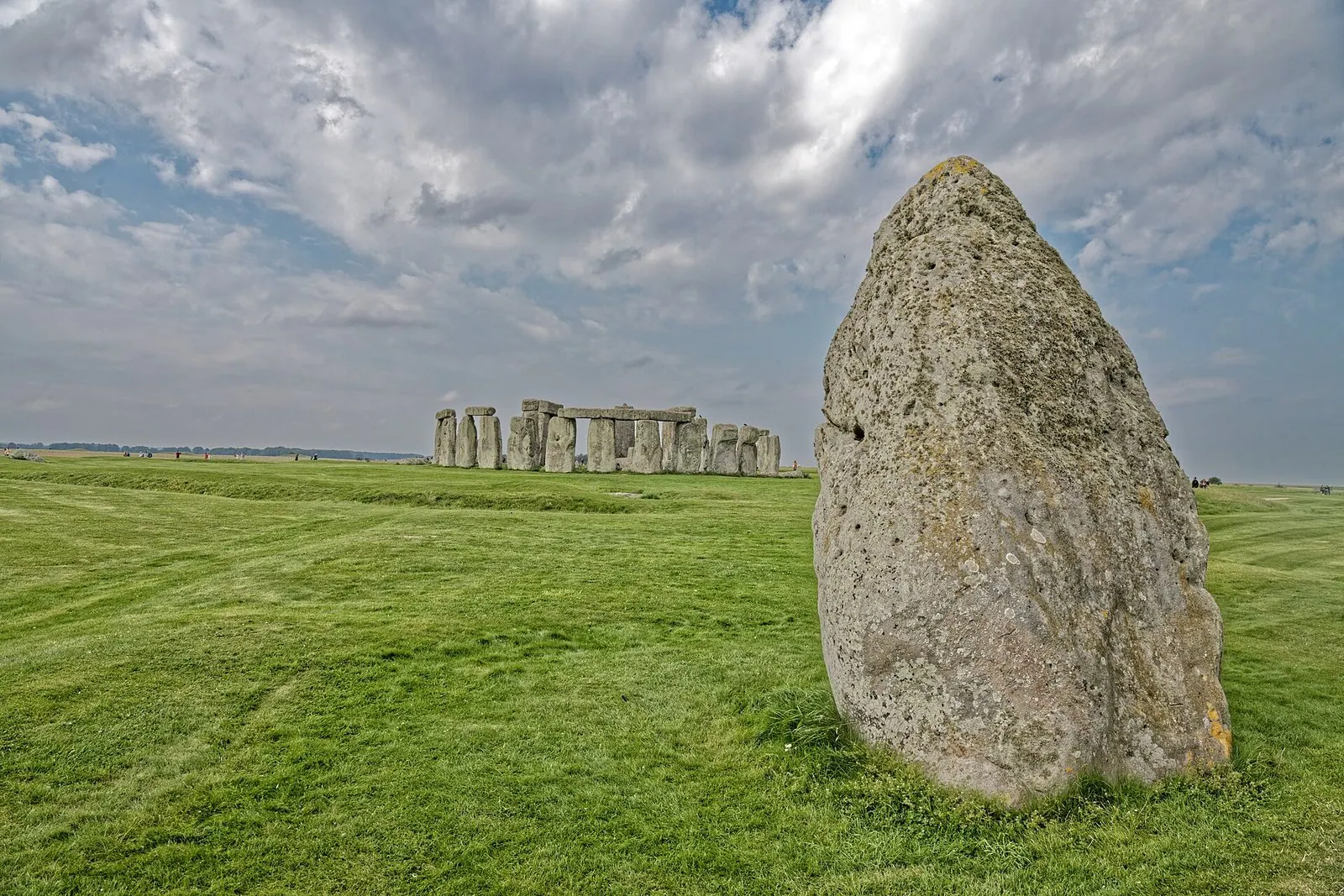
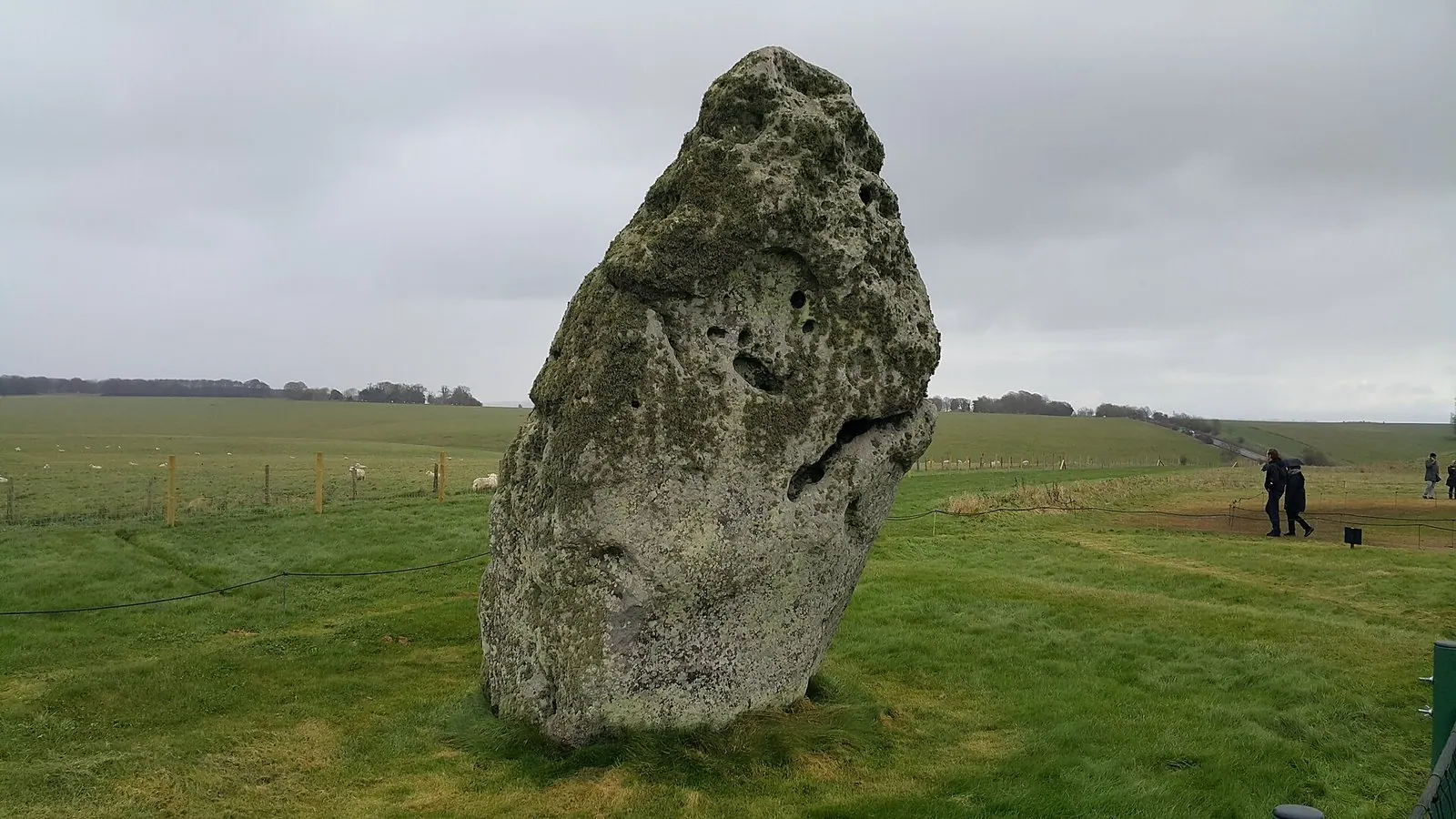
A single tall standing stone on the grass in the foreground, with the Stonehenge circle in the distance under a cloudy sky

02

A calendar made of stone

The stones line up with the sun on the longest and shortest days of the year.

Seen from the centre of the circle, the sun rises beside the Heel Stone at midsummer. At midwinter the sun sets between the stones of the tallest trilithon (two standing stones with a third stone across the top). The Heel Stone is the one large stone that has not been shaped, and it stands outside the circle. English Heritage says most people now think Stonehenge was a temple. It was built and rebuilt over about 1,500 years, to honour the ancestors and mark the sun’s calendar. Visitors cannot stand in the centre on a normal visit.

Look for

The Heel Stone, a rough stone beside the old Avenue, and the tall trilithons of the inner horseshoe.

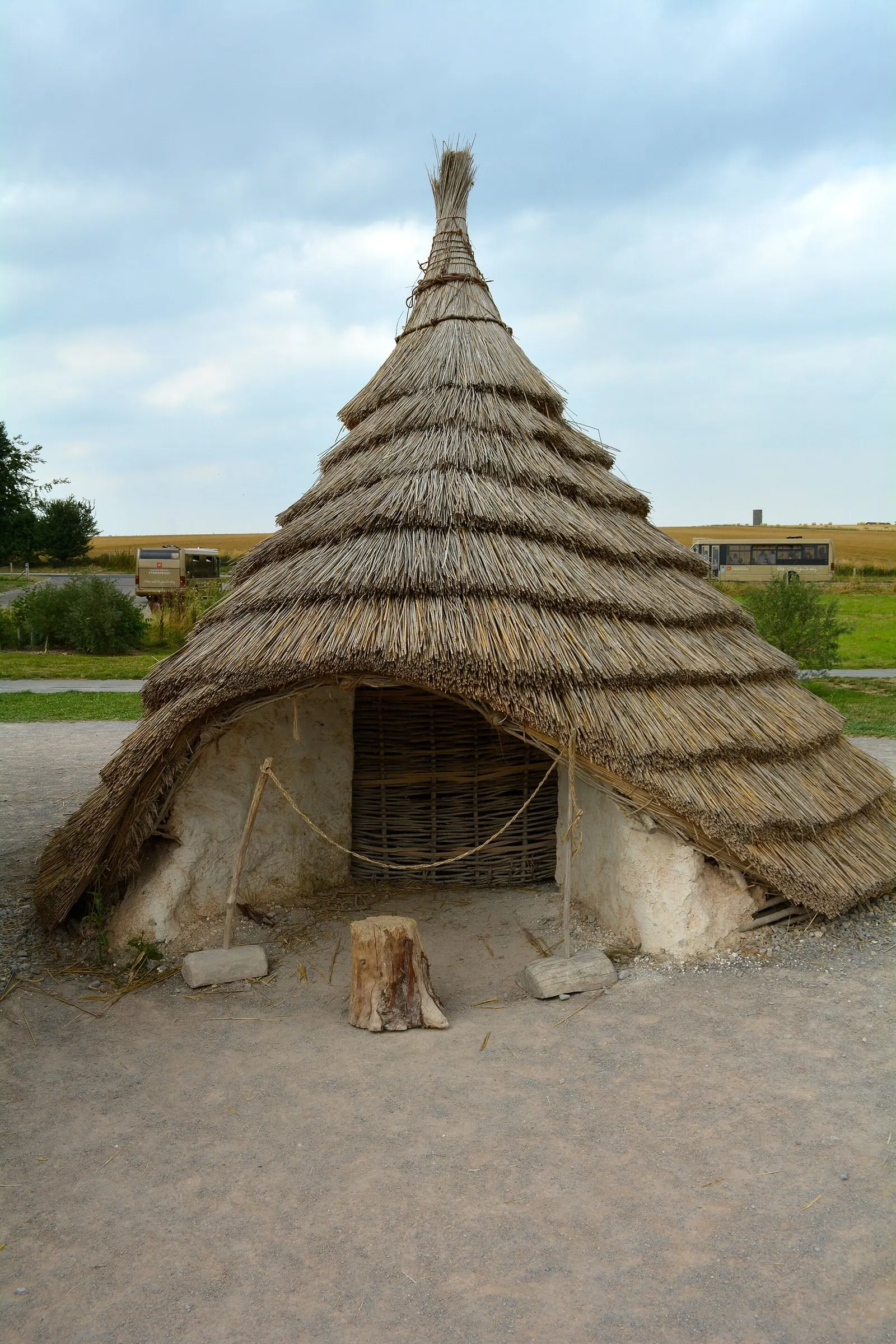
A reconstructed Neolithic house with a steep thatched roof and pale chalk walls, a tree stump at its doorway and buses on the road behind

03

Houses of the people who built it

The builders lived and worked nearby, and you can step inside copies of their homes.

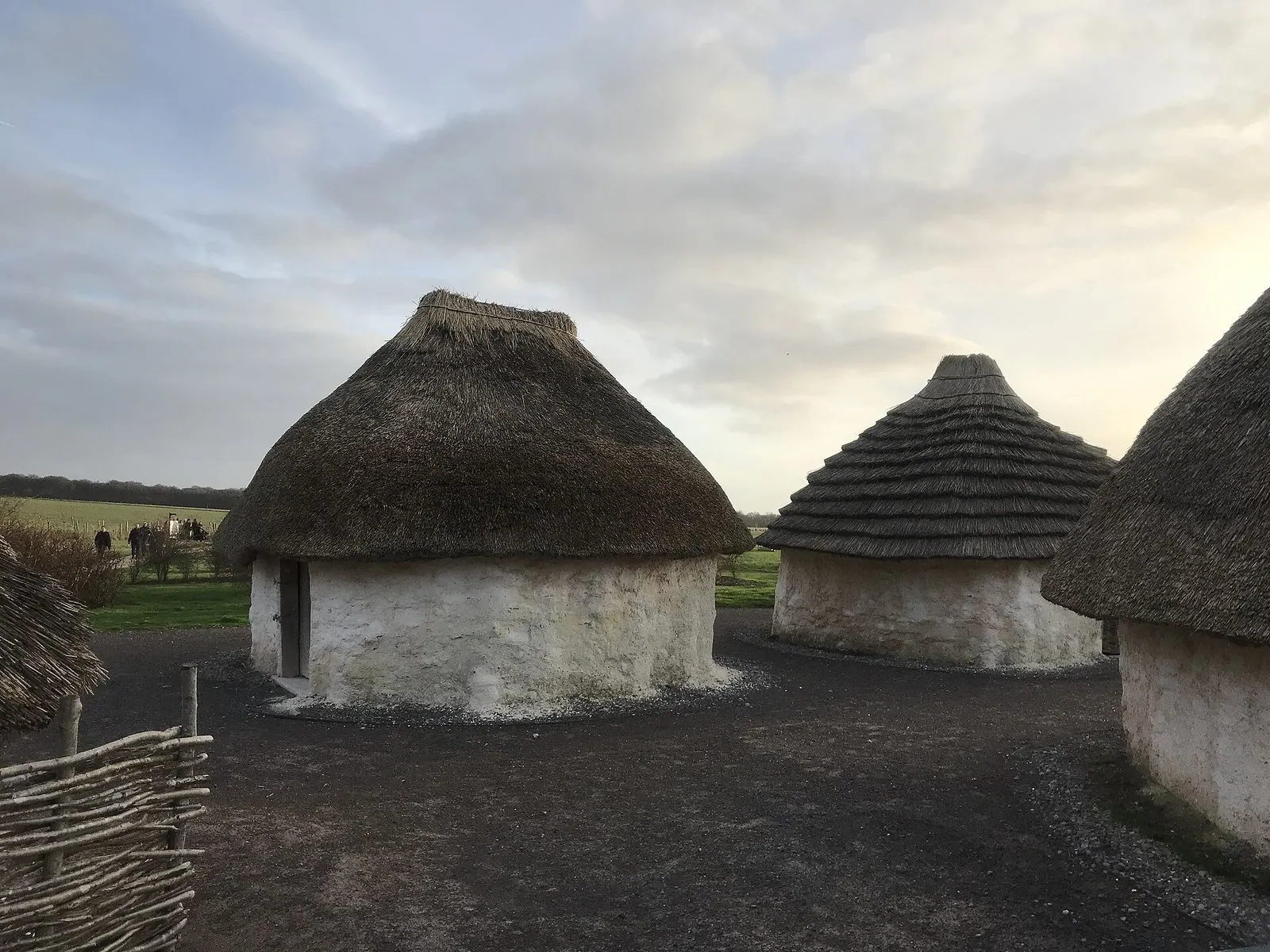
Archaeologists dug up the remains of Neolithic (Stone Age) houses at Durrington Walls, a large ceremonial site about a mile north-east of the stones. They date from about 2500 BC, when the big sarsens were being raised. Outside the visitor centre, volunteers built full-size copies from hazel, wheat straw and chalk, each a single room, five metres on each side. English Heritage says volunteers often show crafts here, such as grinding grain and making rope from rushes.

Look for

The white chalk walls and thatched roofs of the houses, and the volunteers who may be showing a craft inside.

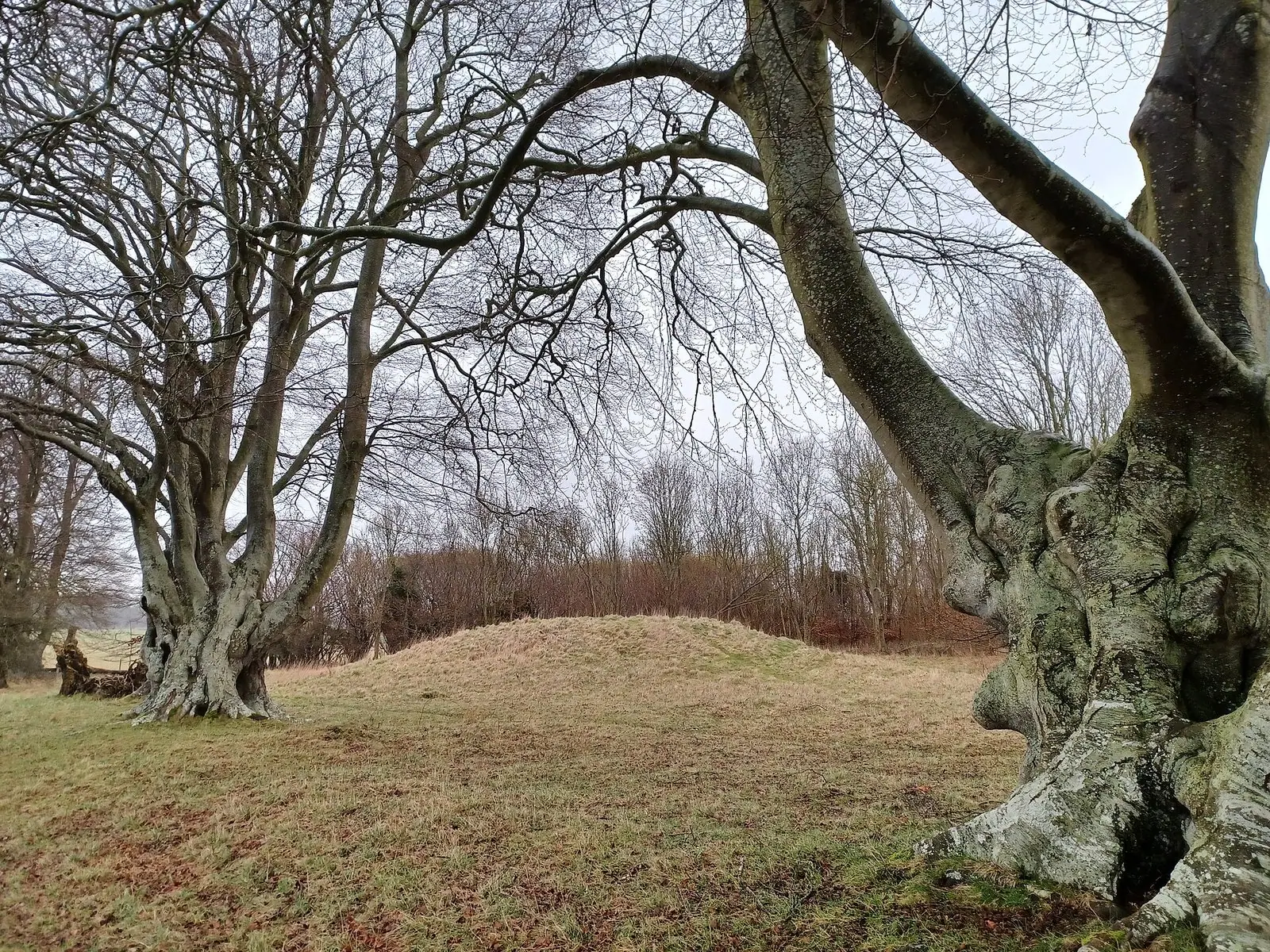
A grass-covered burial mound among bare beech trees on a wintry day in the countryside near Stonehenge

04

A landscape full of burial mounds

The stones are only the centre of a much bigger ancient landscape.

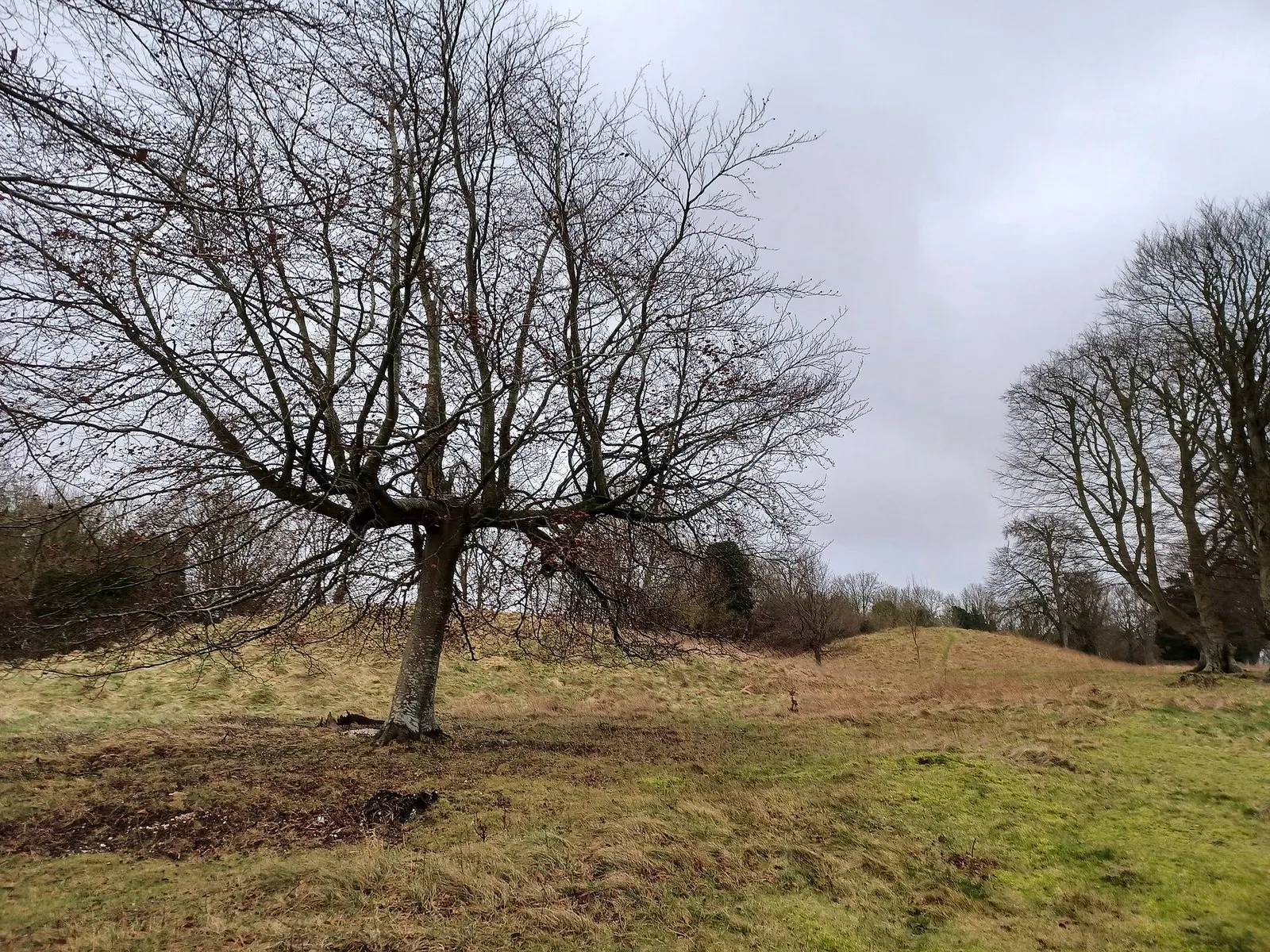
Around Stonehenge are more than 350 burial mounds, as well as the Avenue and a huge ancient enclosure called the Cursus. The first monument here, from about 3000 BC, was a circular ditch and bank used as a cemetery. About 64 burials by cremation have been found. The National Trust looks after 827 hectares (2,100 acres) of the downland around the stones. Its land includes King Barrow Ridge, a Bronze Age cemetery among old beech trees with a view of the stone circle.

Look for

Low grassy mounds on the ridges around the stones, and the faint banks of the Avenue, an ancient route that leads towards the circle.

Your time there

What to see.

These are the highlights worth looking out for, if your time allows. See how long each tour stops in Stonehenge →

English Heritage says a visit combines the stone circle, a world-class exhibition and the Neolithic houses. The stones are the main reason to come, so look for these in this order.

The Stonehenge stone circle on a grassy plain, with upright stones topped by horizontal lintels and a few visitors at its edge under a partly cloudy sky
Don’t miss

The Stone Circle

The ring of tall sarsen stones with lintels across the top, and the smaller bluestones inside. A path goes all the way around the circle.

About 40 min · Included in the entry ticket

The path comes within about 5 metres of the stones in places. There is no shelter and no toilet at the stones.

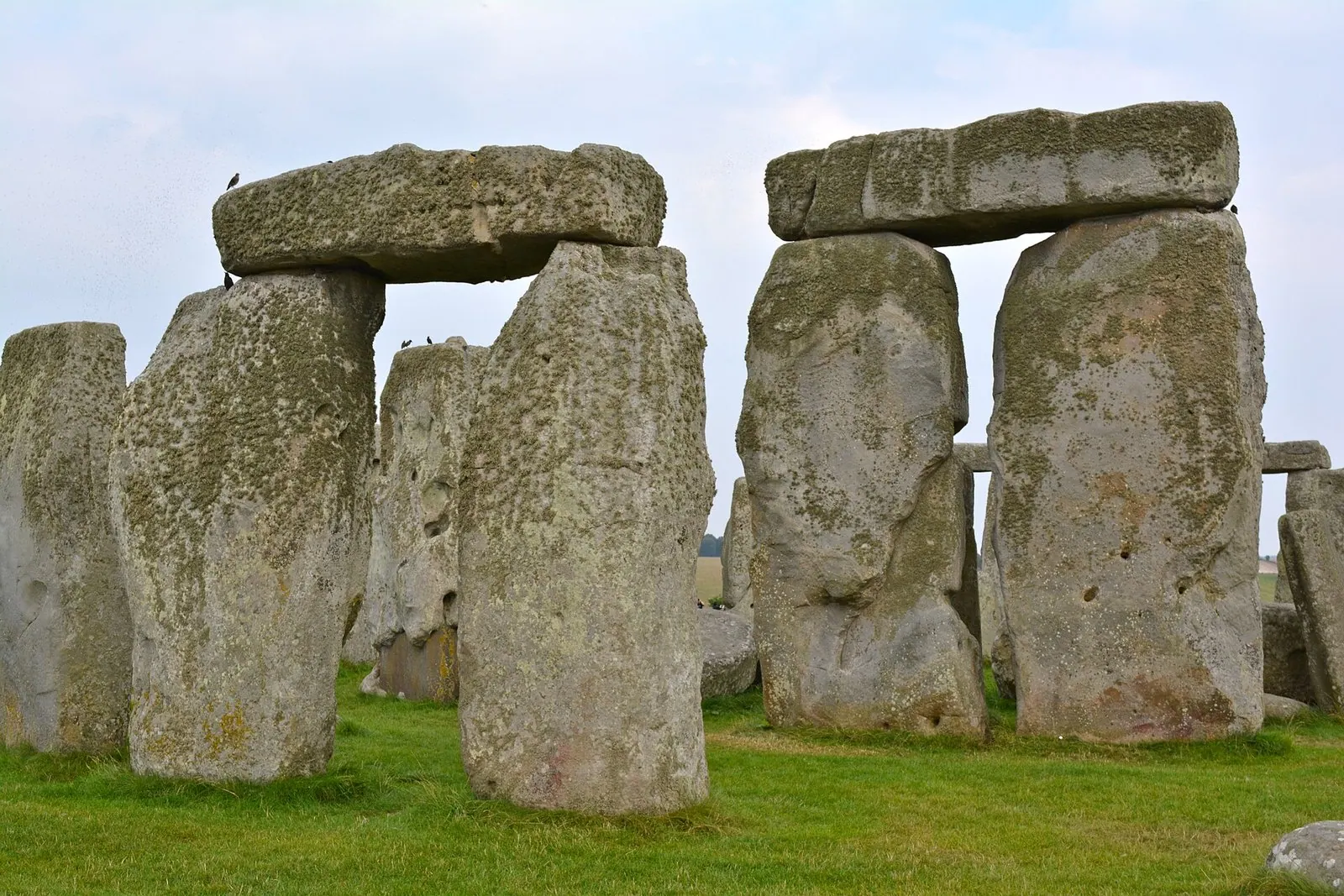
Two trilithons at Stonehenge, each a pair of tall upright stones topped by a horizontal stone, covered in yellow-green lichen against a pale sky

The great trilithons

Five trilithons, which are pairs of upright stones capped by a lintel, form a horseshoe inside the circle. The stones are joined like timber, with pegs and sockets.

About 10 min · Included in the entry ticket

The Heel Stone, a tall lichen-covered stone on open grass, with fields, a few sheep and two walkers behind under a grey sky

The Heel Stone

A large stone that has not been shaped, standing outside the circle where the Avenue meets the ancient earthwork. Seen from the centre of the circle, the midsummer sun rises beside it.

About 10 min · Included in the entry ticket

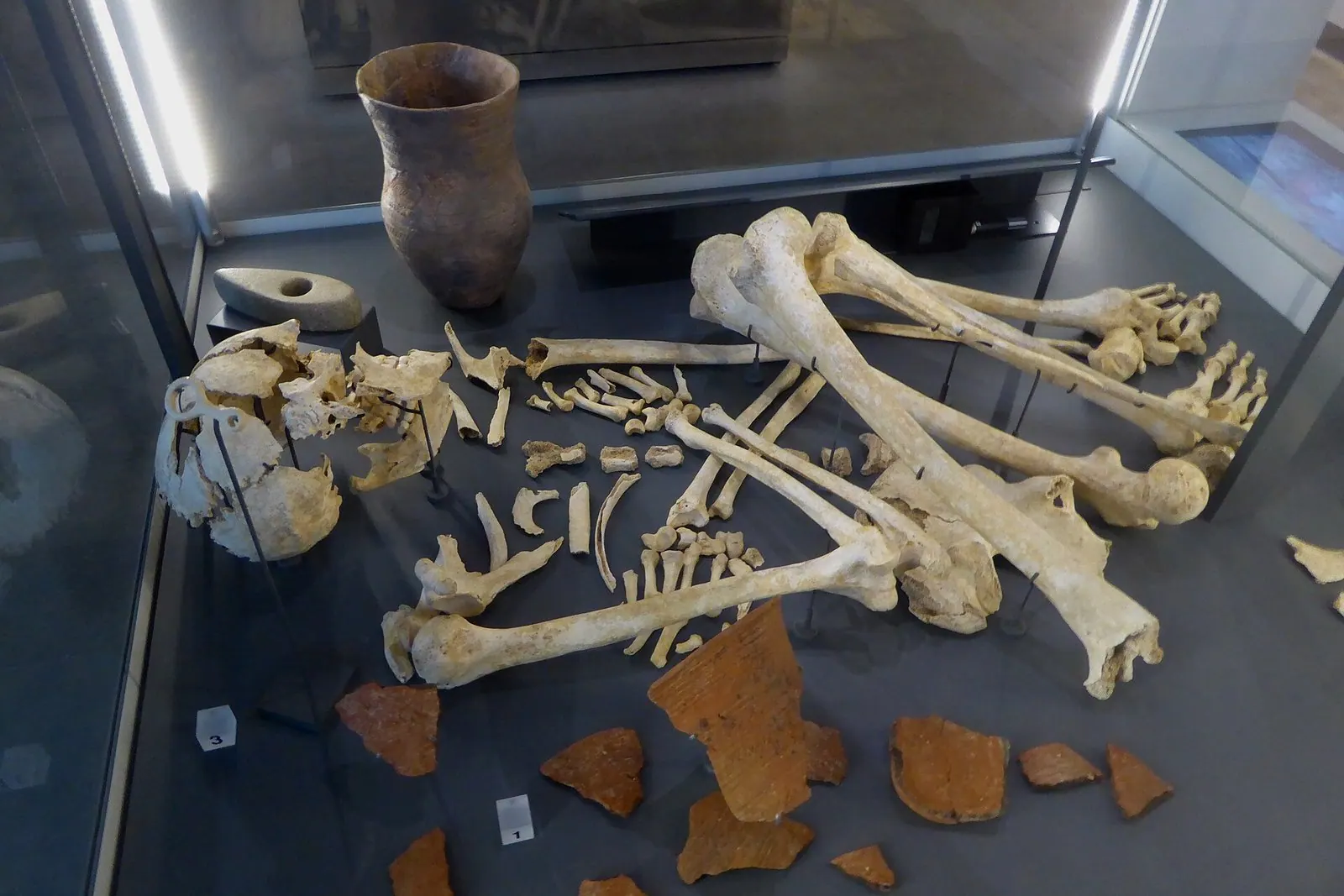
An ancient skeleton laid out in a museum display case, with a clay pot, a stone with a hole through it, and broken pottery pieces

The exhibition and the 5,500-year-old man

More than 250 objects found in the landscape, such as jewellery, pottery and tools. There is also a reconstructed face of a man who lived here 5,500 years ago.

About 30 min · Included in the entry ticket

Some objects are on loan from Salisbury Museum and Wiltshire Museum. Parts of the exhibition are dimly lit.

Reconstructed round houses with thick thatched roofs and chalk-white walls on dark gravel, with a woven fence in front and visitors in the distance

The Neolithic houses

Full-size copies of Stone Age homes outside the visitor centre, with white chalk walls, thatched roofs and wooden furniture.

About 20 min · Included in the entry ticket

English Heritage volunteers often show crafts and cooking here.

A bare tree on grassland with the low, grass-covered slopes of a burial mound behind it under a grey winter sky

Burial mounds on the way

Bronze Age burial mounds beside the walking route between the visitor centre and the stones, with information panels along the way.

About 30 min · Included in the entry ticket

Shuttle buses stop at Fargo Plantation, about halfway, so visitors can walk part of the way.

1 of 6

Swipe for all six highlights →

Practical answers

Before you go.

The questions people ask before they book.

Can I walk among the stones?

Not on a normal visit. The visitor path goes all the way around the circle and comes within about 5 metres of the stones in places. Going inside the circle needs a separate Stone Circle Experience, held outside normal opening hours with very few places. English Heritage: Stone Circle Experience → (opens in a new tab)

What is the weather like at the stones?

The stones stand in open country, and there is no shelter there. It can be cold, wet and windy in any season, so bring warm, waterproof layers and sensible shoes. English Heritage: Stonehenge questions and answers → (opens in a new tab)

What should I know before I go?

On a normal ticket you stay on a path around the stones and cannot walk among them. The site is exposed, and there is no shelter at the stones. English Heritage: Stonehenge questions and answers → (opens in a new tab)

Can I visit with a wheelchair?

Yes, for the main areas. Tarmac and grass paths reach the visitor centre and the stone circle, though the grass depends on the weather. The shuttle buses are fully wheelchair accessible. The wider landscape is not suitable for standard wheelchairs. English Heritage: Stonehenge access → (opens in a new tab)

Is there anywhere to leave my bags?

No. There is no cloakroom or left luggage, so bring only what you need. Bags may be searched at a security check on arrival, so allow a little extra time. English Heritage: Stonehenge questions and answers → (opens in a new tab)

Can I visit Stonehenge in half a day from London?

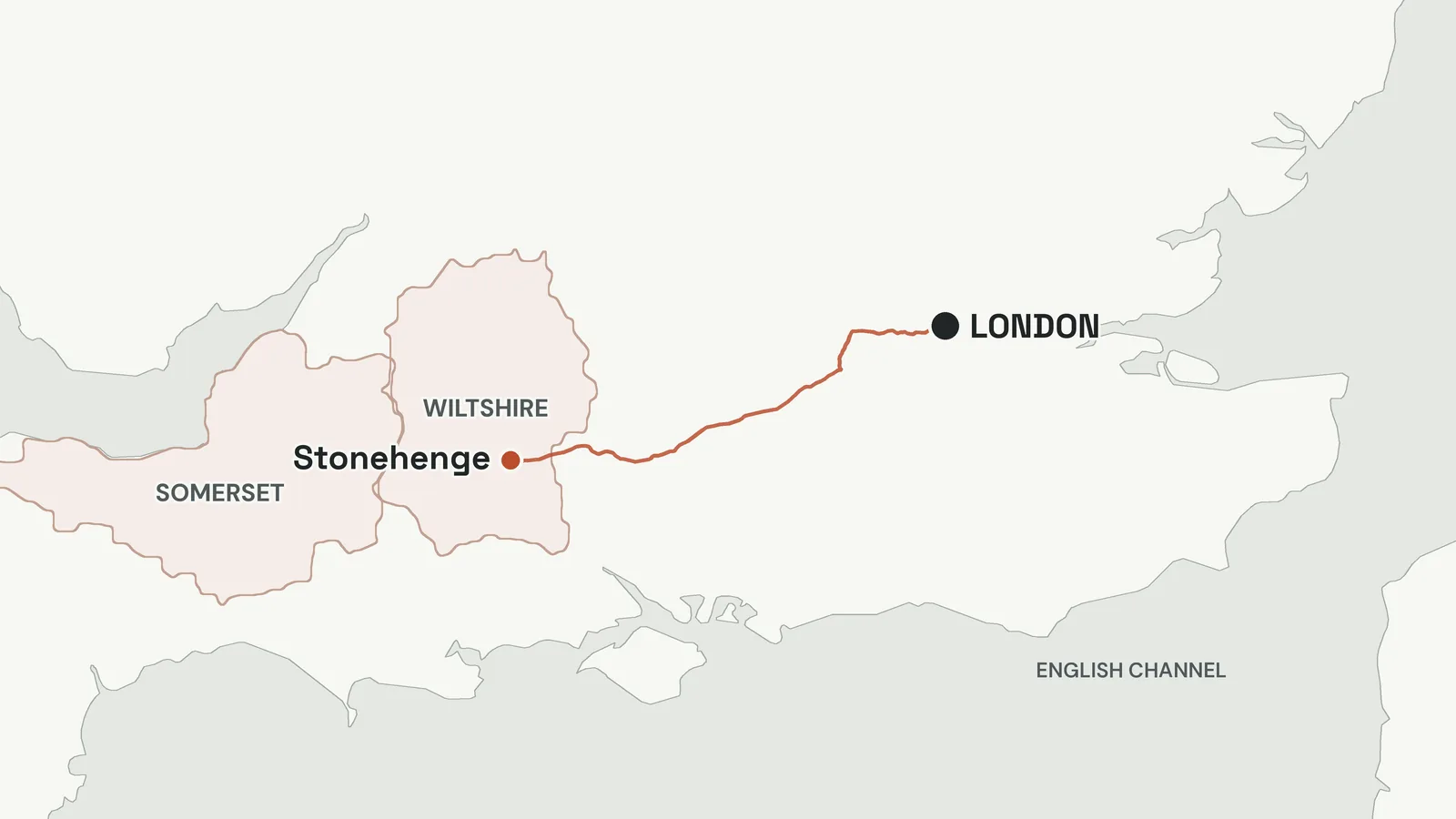
Yes. English Heritage says the journey by road from central London takes around 2 hours, and its shortest suggested visit is two hours. That makes about 6 hours there and back. By train, you go to Salisbury, then take a taxi or the hourly Stonehenge Tour Bus. English Heritage: Stonehenge, plan your visit → (opens in a new tab)

How big are the stones?

An average sarsen, one of the big stones, weighs about 25 tons. The smaller bluestones weigh 2 to 5 tons each. The visitor path keeps you back, coming within about 5 metres in places, so the stones can look smaller than you expect. English Heritage: building Stonehenge → (opens in a new tab)

Where are the toilets and somewhere to eat?

English Heritage says the toilets are at the visitor centre, not at the stone circle. They include accessible, baby and adult change facilities. The visitor centre café serves grab-and-go hot and cold food, such as soup, pasties, sandwiches and salads. You can also picnic in the monument field. English Heritage: Stonehenge facilities → (opens in a new tab)

Free day guide

Get the free Bath and Stonehenge day guide

The guide has a page for each stop, with what to see in 30, 60 or 90 minutes, and where to find toilets and food.

Unsubscribe any time. Privacy

When to go

What changes through the year.

The stones are open all year, but the hours, the crowds and the special events change with the seasons.

Spring

Around the spring equinox in March, English Heritage has offered free early-morning open access to the monument. The date and rules change each year, so check before you plan around it. English Heritage: spring equinox → (opens in a new tab)

Summer

The visitor centre stays open later in June, July and August than in the rest of the year. The last tickets are sold later in the day too. Check the hours for your date. English Heritage: Stonehenge questions and answers → (opens in a new tab)

Autumn

There are no Stone Circle Experiences in October or November. These are the small guided visits inside the circle, held outside normal opening hours. English Heritage: Stone Circle Experience → (opens in a new tab)

Winter

Winter Solstice is on Tuesday 22 December 2026. English Heritage says you must pre-book parking unless you travel by public transport, and Stonehenge is open as normal from about 1 pm that day. Expect cold, open ground in winter. English Heritage: Stonehenge → (opens in a new tab)

English Heritage lists 9:30 am to 5 pm, with last entry at 3 pm. The hours are longer in summer, so check the official page for your date. English Heritage: Stonehenge prices and opening times → (opens in a new tab)

A taste and a keepsake

Something to taste or take home from Stonehenge.

Here are a few small things from English Heritage’s café and shop at the visitor centre.

Just ideas for any free time you get.

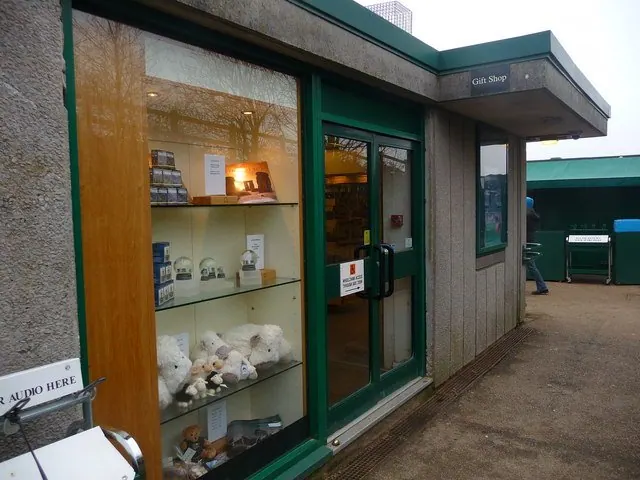
The outside of a Stonehenge gift shop with a green-trimmed door and a window display of soft toy sheep, snow globes and boxed items
Illustrative
Take home

Stone jewellery

The Stonehenge range includes jewellery crafted from local sarsen stone and Preseli bluestone, the two kinds of stone in the monument. The shop also sells books, magnets and keyrings.

Where to find itIn the visitor centre shop, or browse the online shop before your visit.

A fruity rock bun on a plain plate on a wooden café table, with a cup of coffee beside it
Illustrative
Taste

Rock cakes from the café

The café at the visitor centre makes its own rock cakes, which it calls famous. It also serves soup, hotpots, pasties and sandwiches, with items for most diets, using regional produce.

Where to find itIn the visitor centre café, only if you have time there.

A jar of golden honey with a piece of honeycomb standing in it, and a smaller jar of honey beside it
Illustrative
Taste

Honey from Salisbury Plain

English Heritage lists honey from Salisbury Plain in its "Made in Britain" Stonehenge range, alongside wine from Lyme Bay. It is sourced locally so you can take home a British-made treat.

Where to find itCheck the visitor centre shop for what is in stock.

Plan your day

Help with choosing.

Also in Bath and Stonehenge

Places on the same day trips.

All Bath and Stonehenge day trips →
Picture credits and sources

Pictures

Image sources and credits are listed here. Pictures made with AI are marked.

Tour photographs are provided by the tour operators through Viator and are shown from Viator’s own image servers.