
Jane Austen's Bath in one day
Published .
Walk the streets where Jane Austen lived, from Gay Street to Sydney Place, then stand on Gravel Walk, the Lover's Lane of her day. Yes, you can see Jane Austen's Bath in one day, and you do it on foot. The Assembly Rooms are currently closed to visitors, so see the outside and check before you go. Her homes at Sydney Place, Green Park and Gay Street are not open to visitors, so you pass them on the street.
Our pick for most people is a day bus tour from London. Bath sits in our Bath and Stonehenge region, with Stonehenge, Castle Combe and Lacock, so you can fit another place into the day and save your feet for the walking in Bath.
- Opening times and tickets: Visit Bath official site (opens in a new tab)
- Opening times and tickets: Jane Austen Centre official site (opens in a new tab)
- Opening times and tickets: Roman Baths official site (opens in a new tab)
- Opening times and tickets: No. 1 Royal Crescent official site (opens in a new tab)
- Opening times and tickets: Bath Abbey official site (opens in a new tab)
At a glance: the day plan
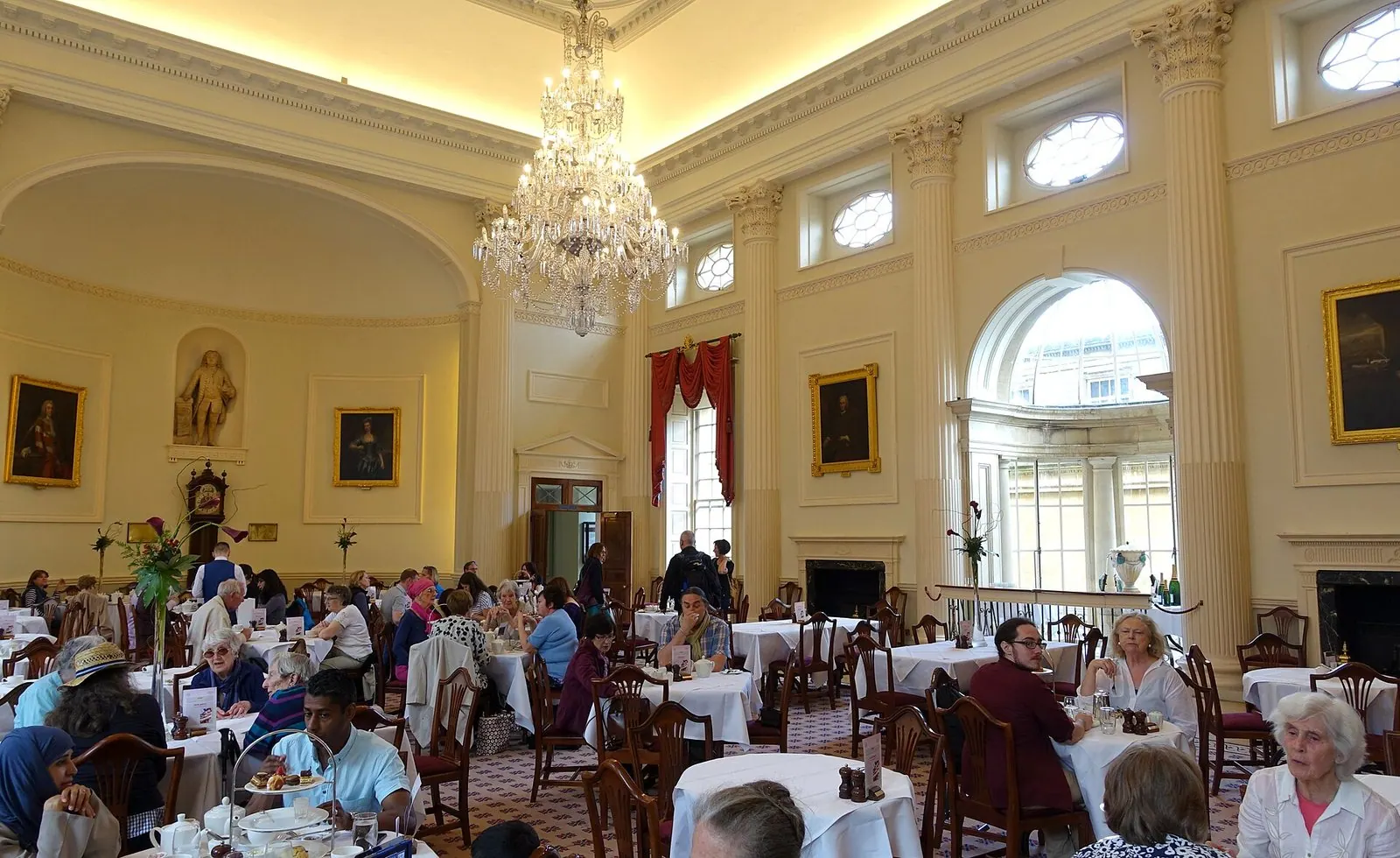
- The Pump Room · about 45 minutes
Austen described it as the place where everyone in Bath could be seen. It is a restaurant now, so book a table. Our Roman Baths guide covers the baths.
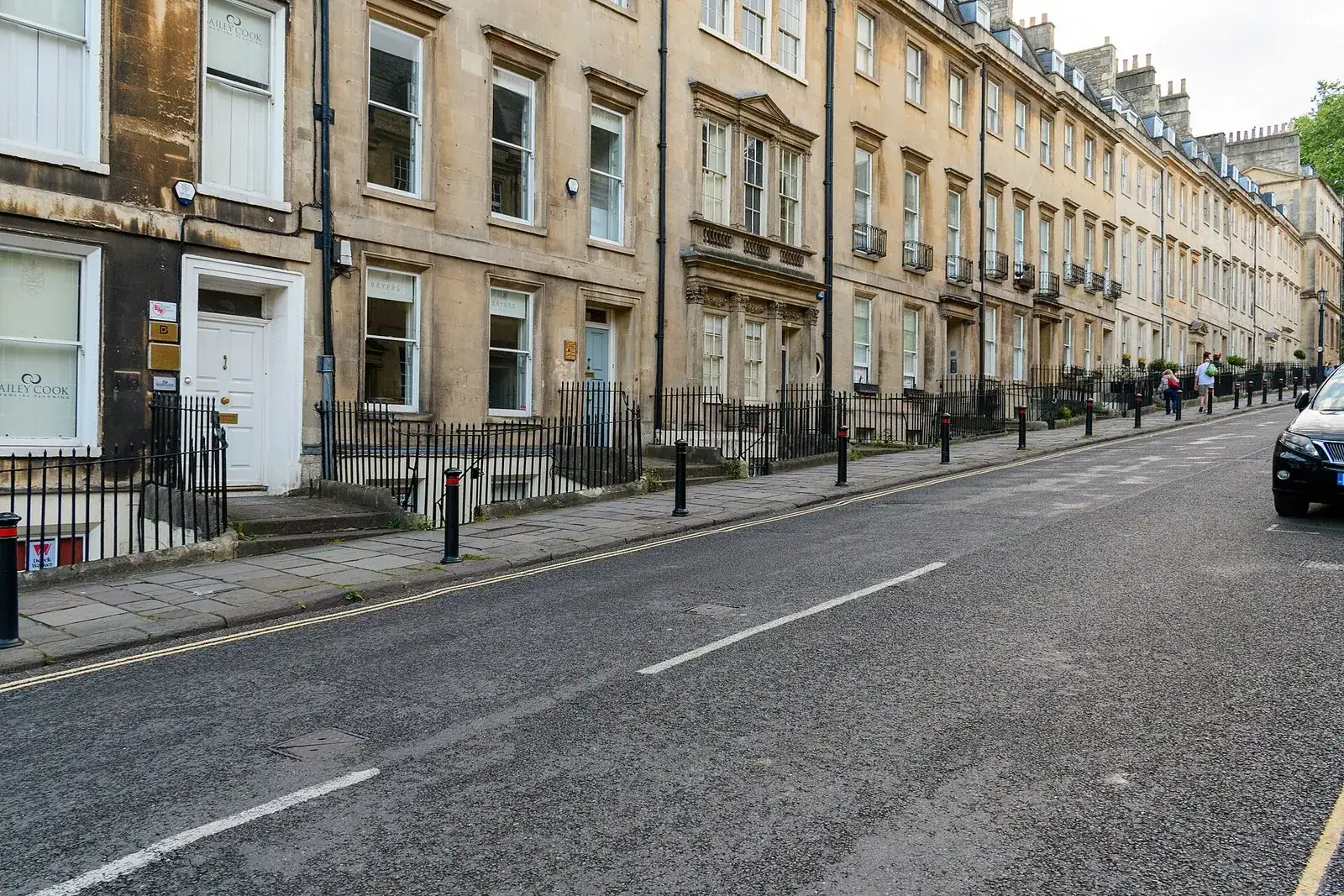
- Gay Street and No.25 · about 10 minutes
After her father died in 1805, Jane, her mother and Cassandra moved to the first floor of No.25. It is now a dental surgery. Austen put the Crofts in Gay Street in Persuasion.
- The Jane Austen Centre exhibition · about 60 minutes
The Centre allows a minimum of one hour. It is a few doors from where she lived, but it is not her home.
- Regency Tea Room · about 60 minutes
You can go without an exhibition ticket. The Centre allows a minimum of one hour.
- Gravel Walk · about 15 minutes
Gravel Walk, or Union Street, is the place where Anne Elliot and Captain Wentworth rekindle their romance.
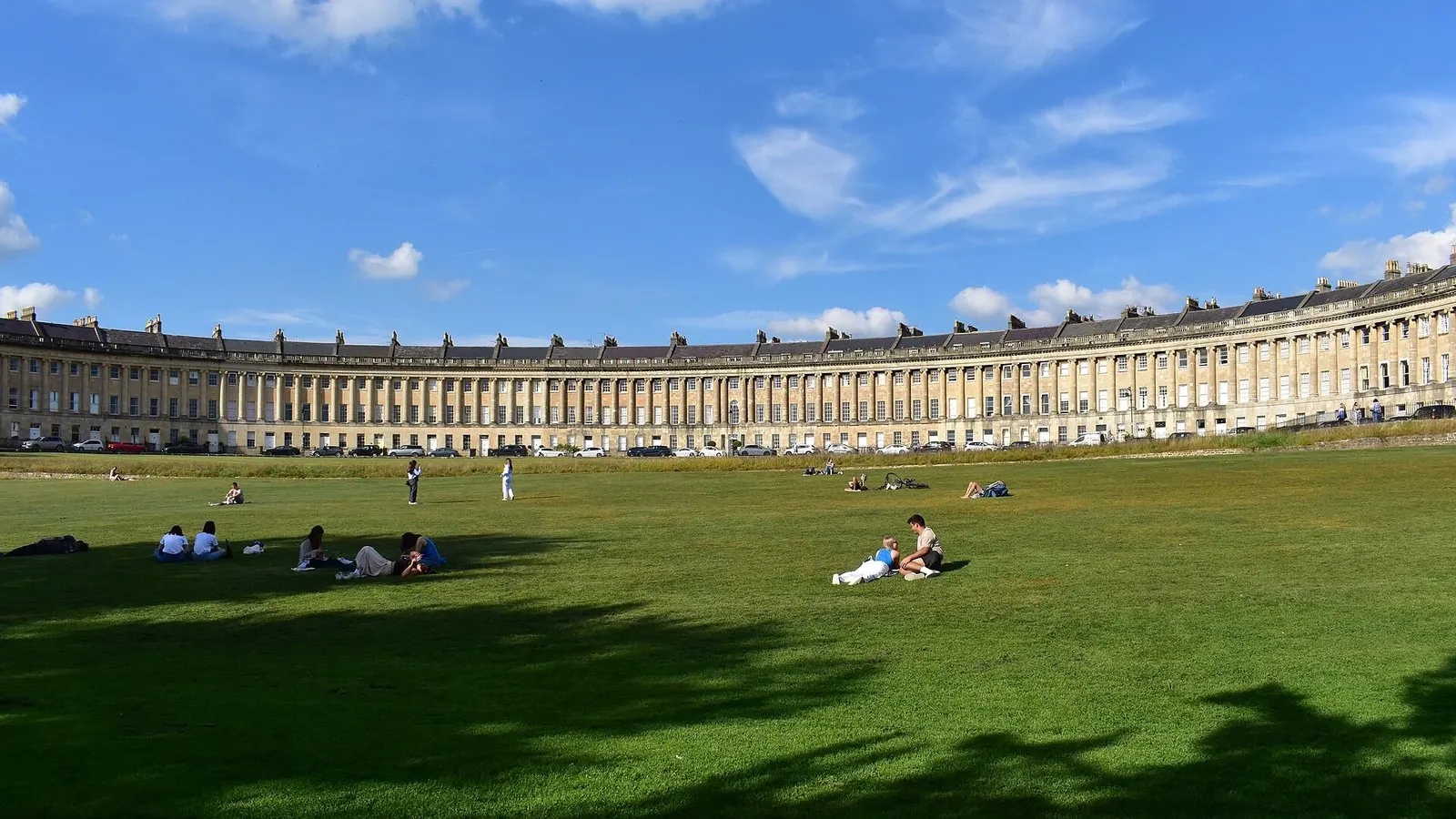
- The Royal Crescent and No.1 · about 60 minutes
The Crescent has 30 houses built between 1767 and 1775. Only No.1 is a museum, and a visit takes about an hour on average.
- The Assembly Rooms from the street · about 10 minutes
The Rooms appear in both Northanger Abbey and Persuasion, and that Austen danced there. You cannot go in at present.
- Sydney Place and Sydney Gardens · about 40 minutes
The Austens lived at No.4 until 1804. Across the road is the old Sydney Hotel, now the Holburne Museum. Austen wrote of a gala here with a concert and fireworks.
- Walk back to Bath Spa station
Check a map before you set off.
Together the stops add up to five hours, plus walking.
Does it fit?
Yes. Jane Austen's Bath fits in one day because the places are close together and you walk between them. Build the day around the Jane Austen Centre, Gravel Walk and the Royal Crescent. Add Sydney Place at the end if you have energy.
- The Assembly Rooms are currently closed to visitors. Look at the outside, and check the National Trust page before you go.
- No.1 Royal Crescent is not open every day. Its Jane Austen tour runs only on listed days, so check its page for your day.
- Book the Regency Tea Room ahead. Visit Bath's audio walk is several years old, so some places may have changed.
A simpler alternative: Short of time? Follow Visit Bath's free audio walk, which takes about an hour and a half without stops. Then add tea at the Jane Austen Centre.
Make the most of it.
Spend your best time on Gay Street, the Jane Austen Centre and the Royal Crescent. Austen ordered a gown and a bonnet soon after she arrived, so picture her shopping and walking here. These stops follow each other on Visit Bath's audio walk, so you do not go back on yourself.
If time allows
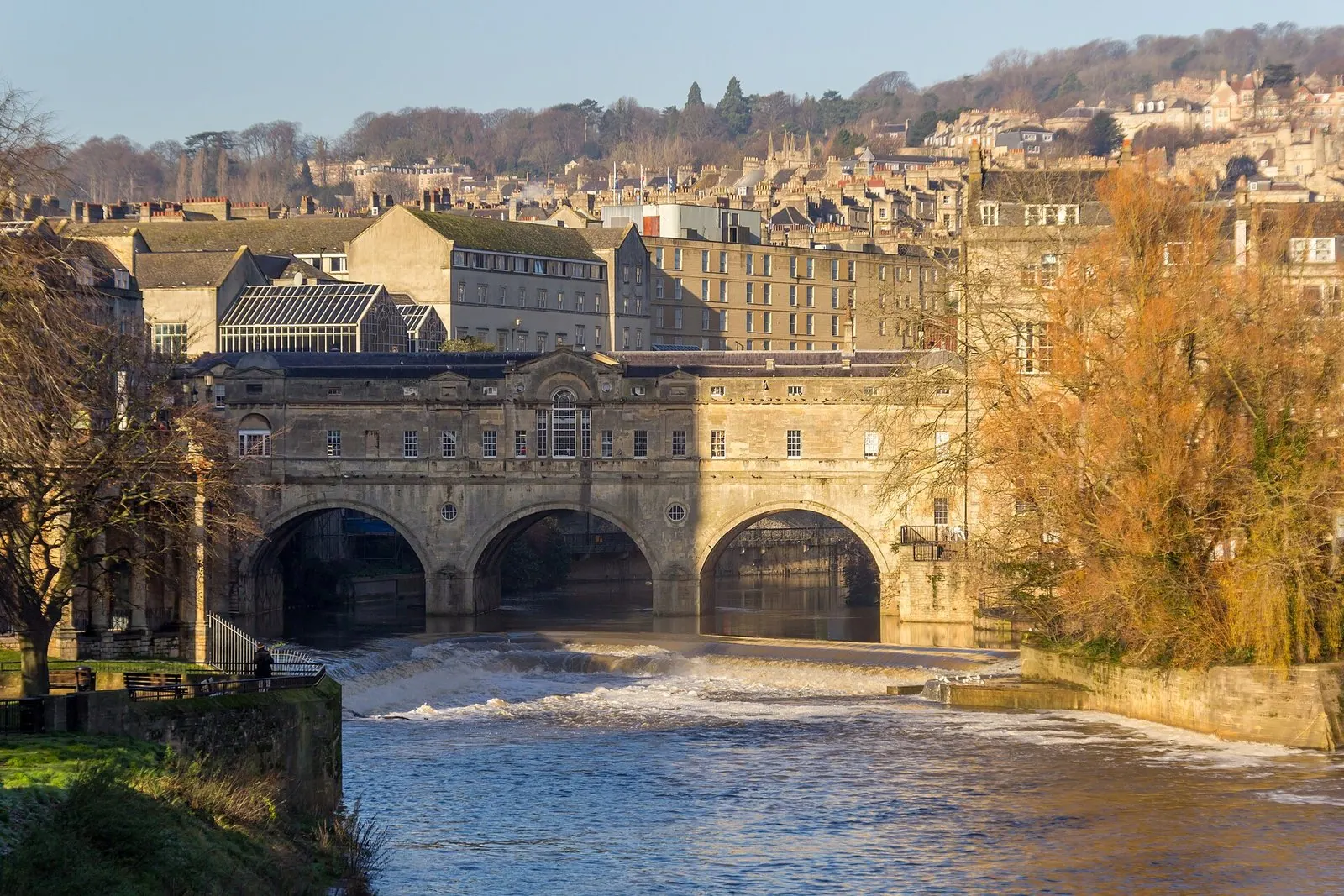
- Pulteney Bridge, built between 1769 and 1774 by Robert Adam, with shops on both sides. It is on Visit Bath's audio walk.
- The Jane Austen Festival, which runs each year in September.
If time is short, skip
- Short of time? Skip the Pump Room and Sydney Place, and keep the Centre, Gravel Walk and the Royal Crescent.
Starting point and assumptions.
Starting from: Bath Spa station, then on foot through the centre.
- You reach Bath in the morning and go home in the evening. Our guide to Bath by train from London covers the journey.
- The Jane Austen Centre is less than a 15-minute walk from Bath Spa station. No.1 Royal Crescent is a 15 to 20 minute walk from the station.
- Austen lived in Bath from 1801 until 1806.
- This plan gives visit times, not walking times, so check a map between stops.
- Visit Bath's free audio walk, In the Footsteps of Jane Austen, takes about an hour and a half without stops. We use its order of places for the middle of the day.
Based on: Checked on 7 November 2026 against Visit Bath, the National Trust, the Jane Austen Centre, No.1 Royal Crescent, the Roman Baths, Bath's local council and Historic England. Check opening days for your date.
Access, opening and return conditions.
- The Assembly Rooms are currently closed to visitors for renovation. Check the National Trust page.
- No.1 Royal Crescent is not open every day, and its Jane Austen tour runs only on listed days.
- People still live in the Royal Crescent, so only No. 1 is open as a museum. 4 Sydney Place, 27 Green Park and 25 Gay Street are homes or businesses.
Bath and Stonehenge day trips from London
Read next
Free day guide
Get the free Bath and Stonehenge day guide
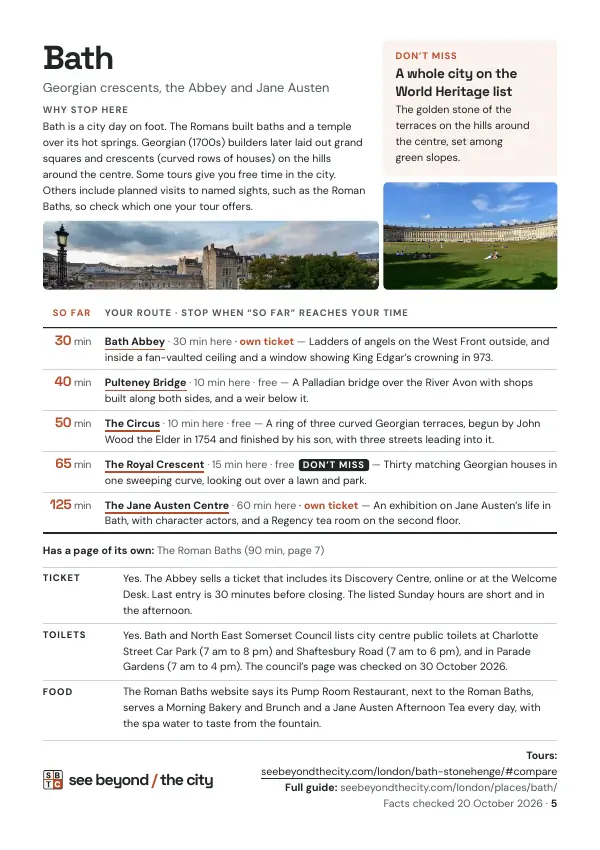
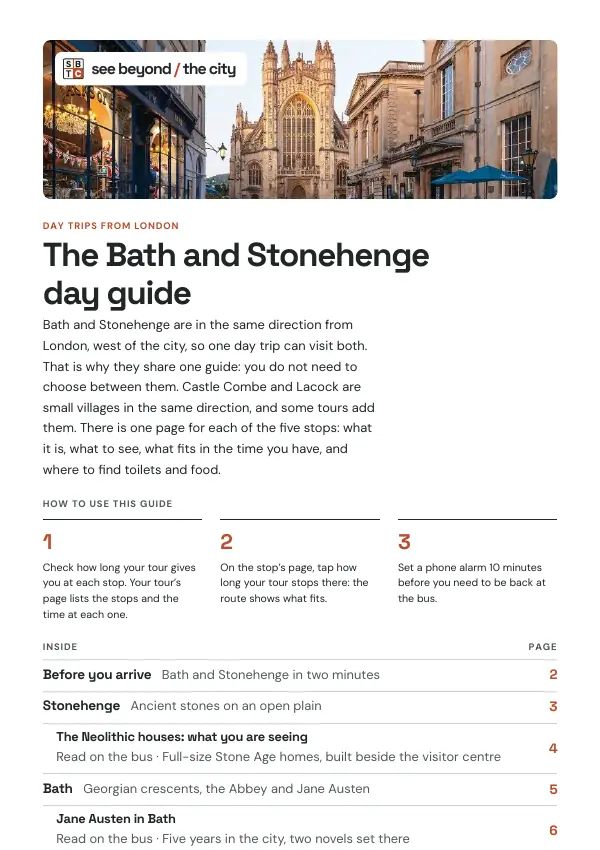
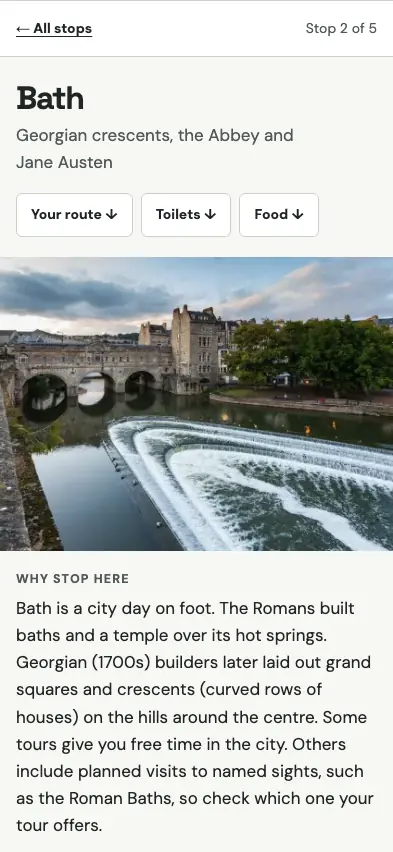
Each stop gets a page of its own in the guide, with what to see in 30, 60 or 90 minutes, and where to find toilets and food.
Check your email
We sent the guide to . Check spam if you don’t see it in a few minutes.
You have the Bath and Stonehenge guide
It is in your email: “Your free day guide from See Beyond the City”.
Next step.
Picture credits and sources
Sources
Checked on 7 November 2026.
- Jane Austen Society: Bath (opens in a new tab)
- Bath local council: Jane Austen in Sydney Gardens (opens in a new tab)
- Historic England: 1-12 Sydney Place (opens in a new tab)
- Historic England: 20-30 Green Park (opens in a new tab)
- Historic England: Royal Crescent (opens in a new tab)
- Historic England: Pulteney Bridge (opens in a new tab)
- Visit Bath: Jane Austen in Bath (opens in a new tab)
- Visit Bath: In the Footsteps of Jane Austen (opens in a new tab)
- Visit Bath: A brief history of Jane Austen in Bath (opens in a new tab)
- Visit Bath: the Jane Austen Festival (opens in a new tab)
- National Trust: Bath Assembly Rooms (opens in a new tab)
- National Trust: Jane Austen at Bath Assembly Rooms (opens in a new tab)
- Roman Baths: Pump Room Restaurant (opens in a new tab)
- No.1 Royal Crescent: visit (opens in a new tab)
- No.1 Royal Crescent: FAQs (opens in a new tab)
- No.1 Royal Crescent: Jane Austen in Bath (opens in a new tab)
- Jane Austen Centre (opens in a new tab)
- Jane Austen Centre: FAQ (opens in a new tab)
- Jane Austen Centre: Regency Tea Room (opens in a new tab)
- Jane Austen Centre: how to find us (opens in a new tab)
- Jane Austen Centre: Festival (opens in a new tab)
Pictures
Image sources and credits are listed here. Pictures made with AI are marked.
Tour photographs are provided by the tour operators through Viator and are shown from Viator’s own image servers.
- Photo by Bärbel Miemietz (CC BY-SA 4.0 (opens in a new tab)). See the original photo: The long curved terrace of the Royal Crescent in Bath, with people sitting on the sunny lawn in front under a blue sky (opens in a new tab)
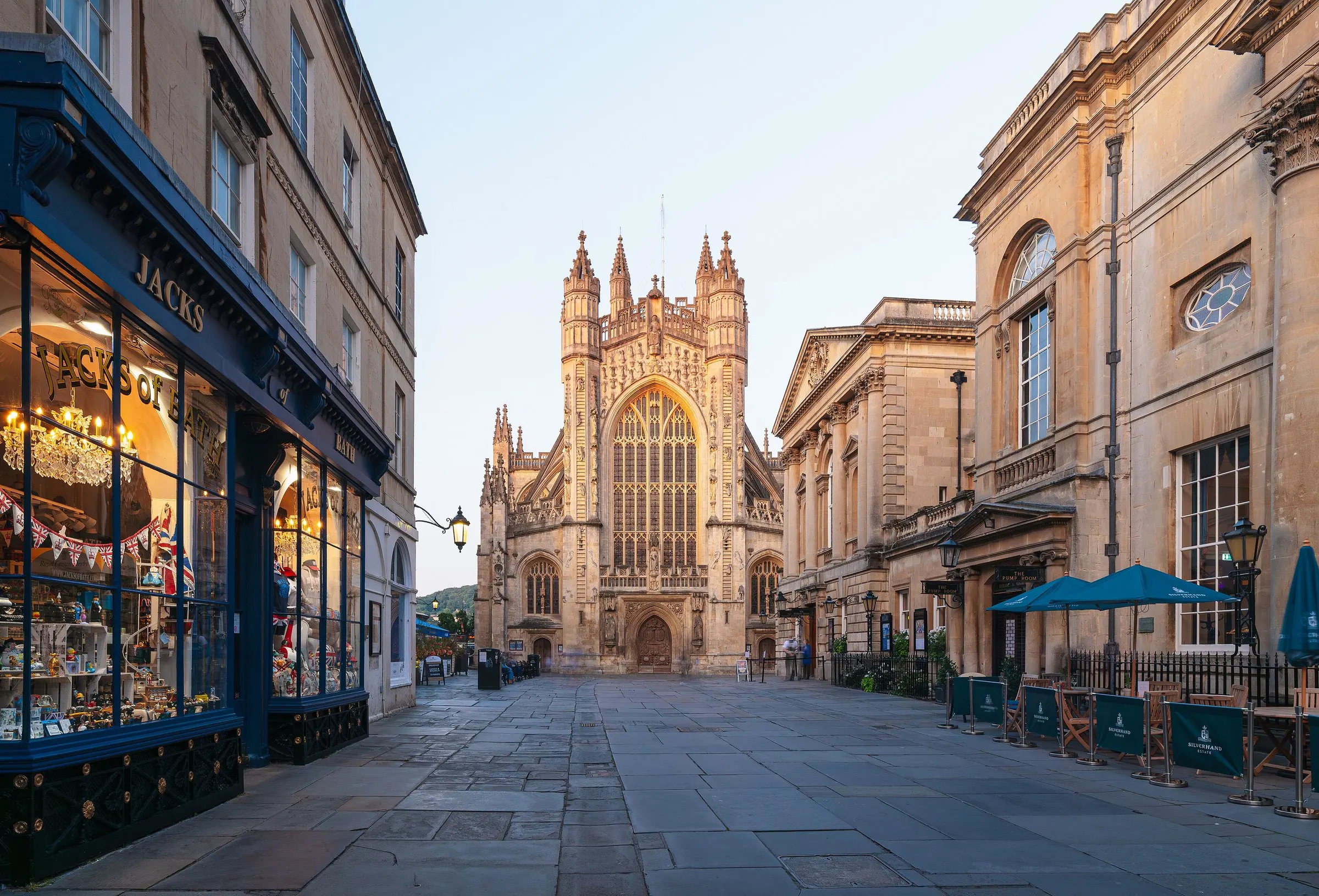
- Photo by Julian Herzog (Website) (CC BY 4.0 (opens in a new tab)). See the original photo: Bath Abbey's West Front in soft pastel evening light at the end of Abbey Church Yard, with a lit shop window at left (opens in a new tab)
- Photo by Simon Cobb (CC0 (opens in a new tab)). See the original photo: A quiet Georgian street in Bath with a terrace of honey-coloured stone houses, black iron railings, bollards and a few walkers in the distance (opens in a new tab)
- Photo by Daderot (Public domain (opens in a new tab)). See the original photo: Visitors seated at white-clothed tables in the Pump Room, a tall cream hall with a crystal chandelier, columns and gilt-framed portraits (opens in a new tab)
- Photo by Photograph by Mike Peel (www.mikepeel.net). (CC BY-SA 4.0 (opens in a new tab)). See the original photo: Pulteney Bridge in Bath, three stone arches lined with buildings, above the curved weir on the River Avon in low winter sun (opens in a new tab)