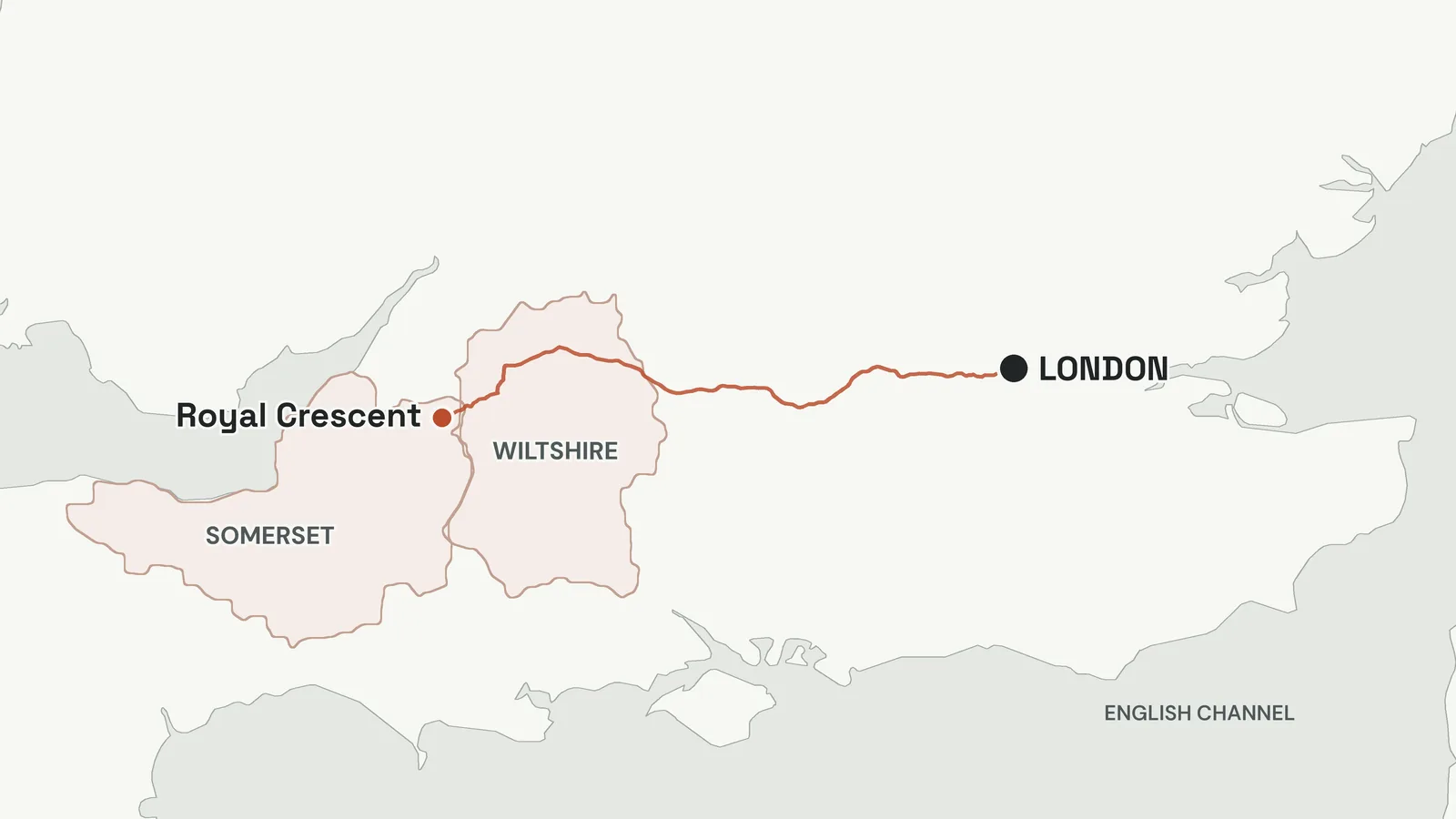
The real England, in one easy day from London
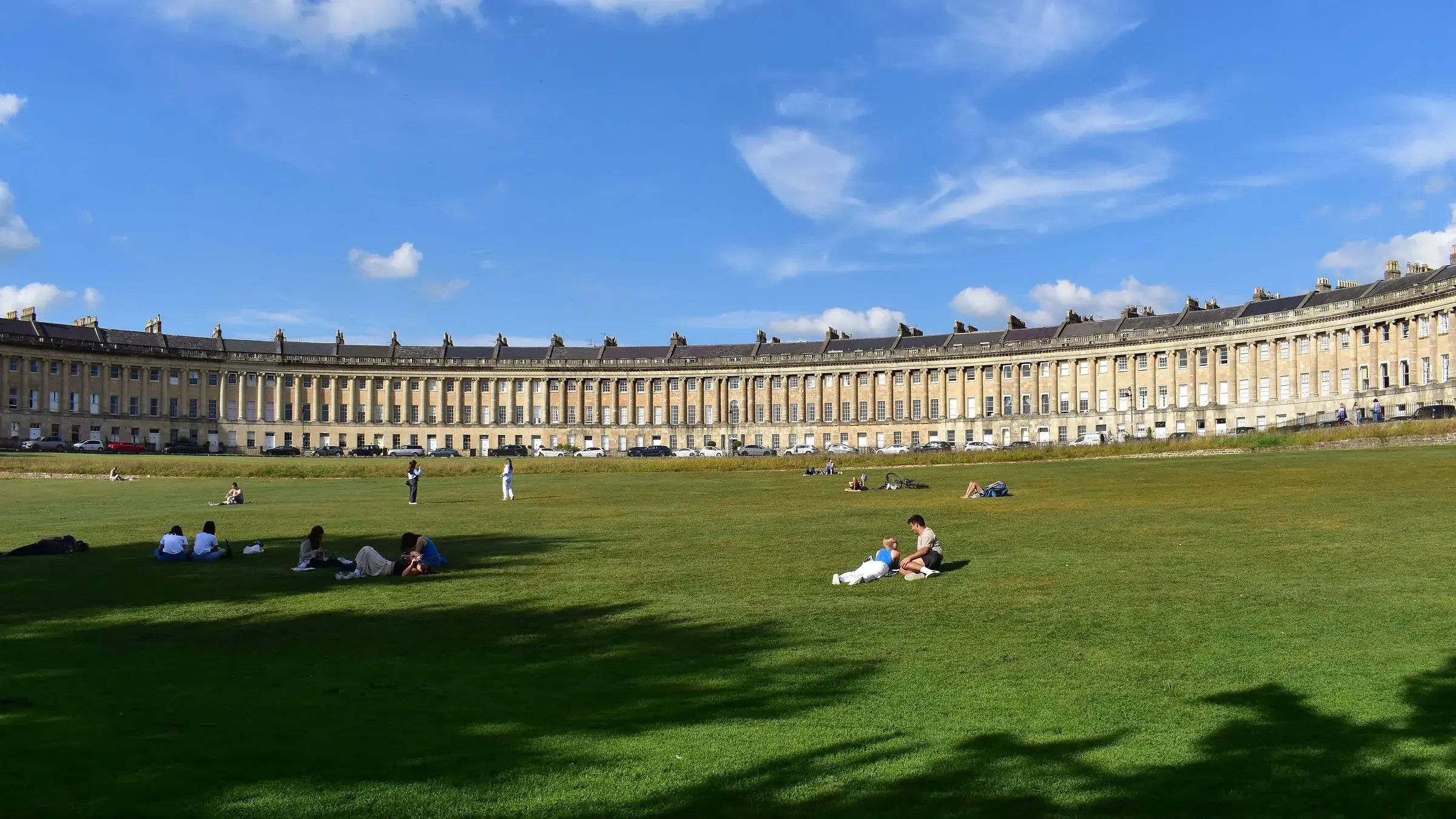
The Royal Crescent's long curved Georgian front in golden stone, seen across a wide green lawn where people sit in the sun under a blue sky

Thirty Georgian houses in one great curve

The Royal Crescent

Royal Crescent, north-west Bath · a day trip from London

See how long each tour stops in The Royal Crescent →

Why it matters

Why the Royal Crescent matters.

The Royal Crescent was built so that thirty separate homes would look like one palace. Here is how it was designed, why it faces a lawn, and what life was like inside No. 1.

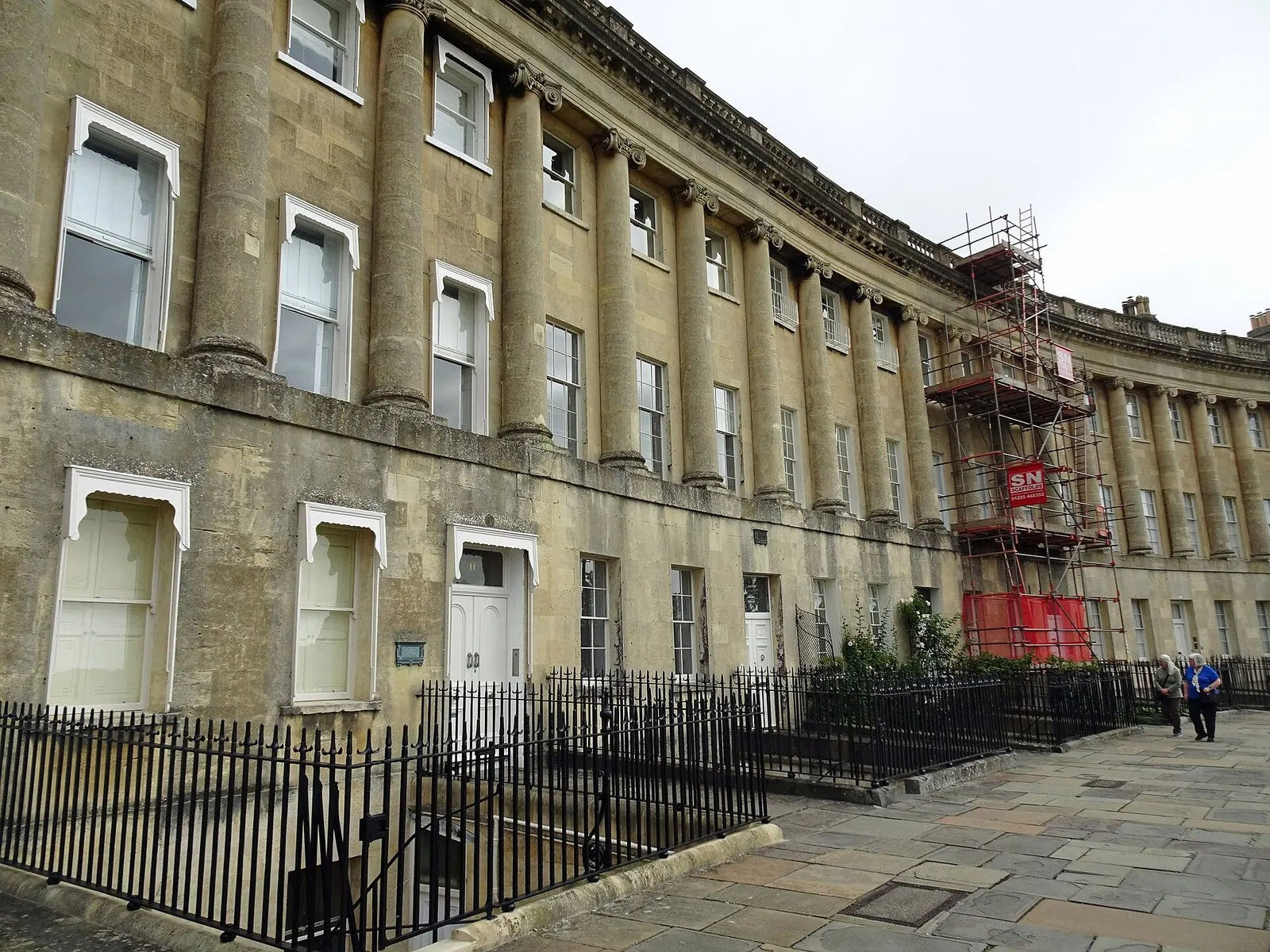
The Royal Crescent's stone front seen at an angle, with tall columns between rows of sash windows, black railings in front and scaffolding on one house

01

Thirty houses behind one front

What looks like one huge building is a row of separate homes.

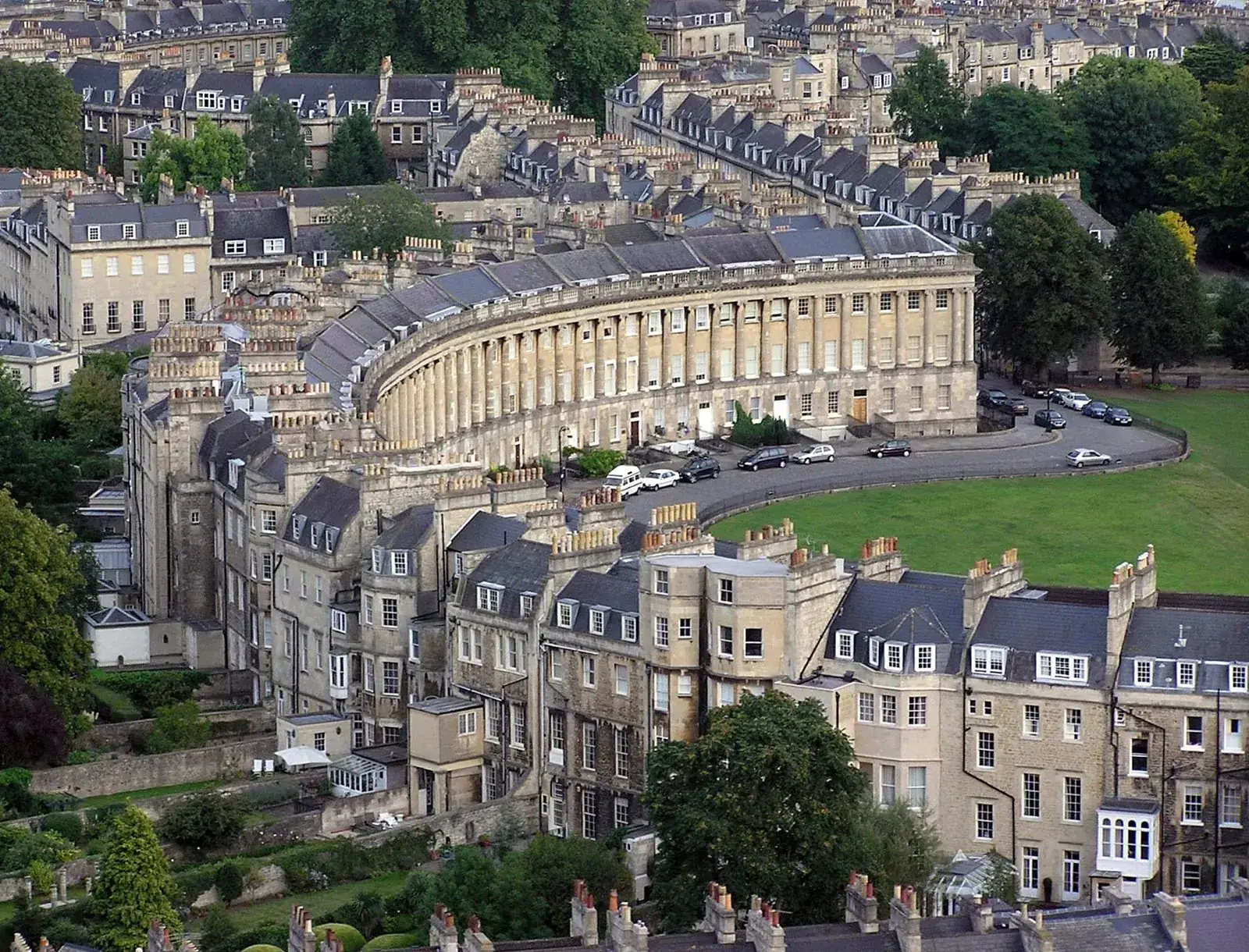
John Wood the Younger designed the Crescent, and it was built from 1767 to 1775. Historic England says it is about 152 metres long and nearly 15 metres tall. A row of 114 giant columns along the front holds the houses together, each about 6 metres tall. Behind the front are thirty separate houses. Only the centre has a little extra emphasis, an arched opening above the door of No. 16.

Look for

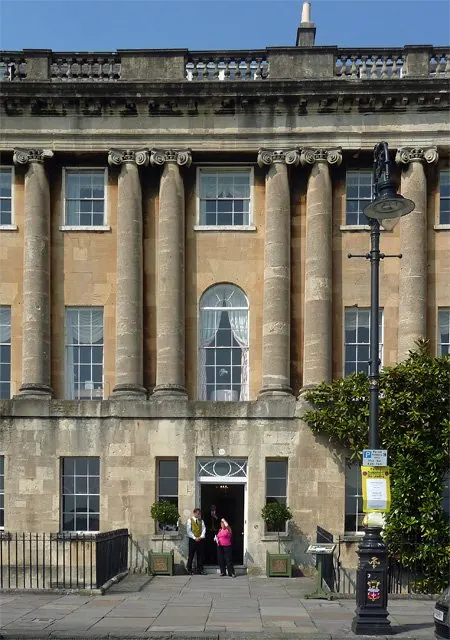
The long line of columns, and the arched opening at first-floor level in the middle of the curve.
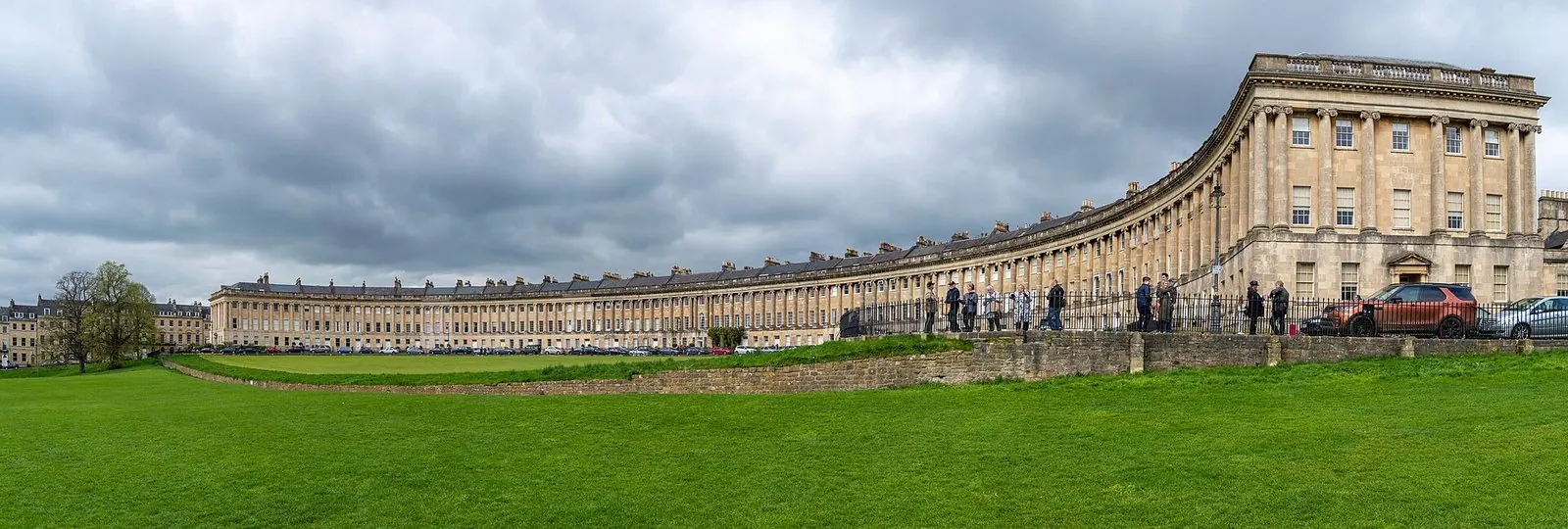
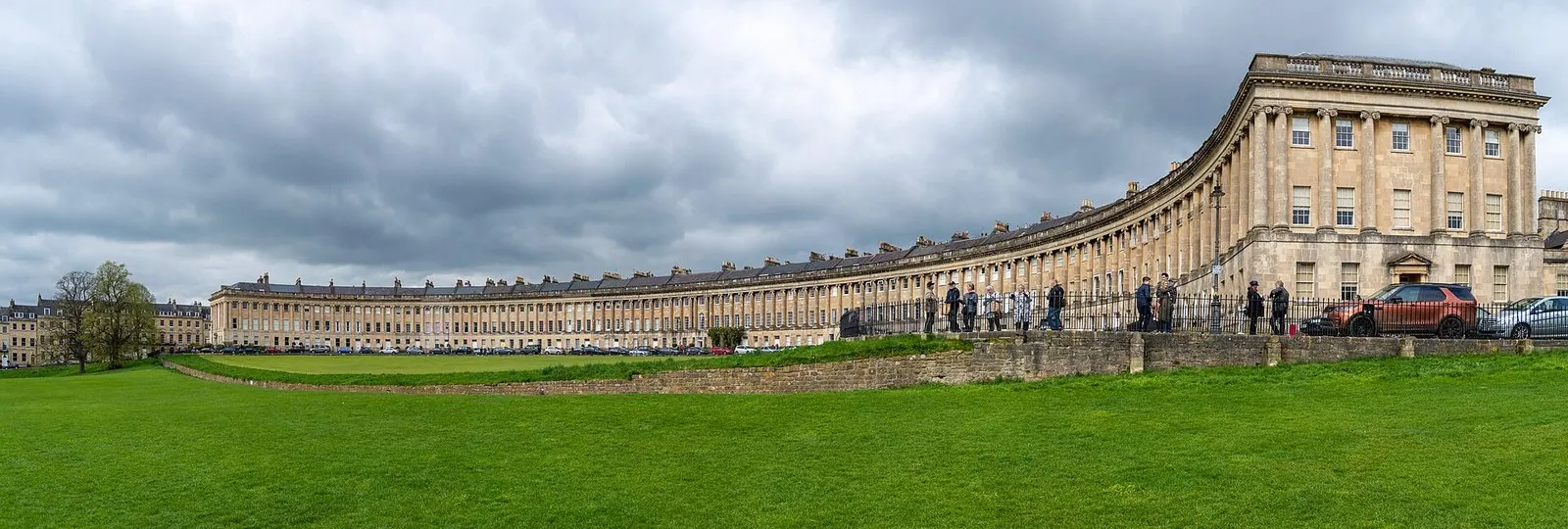
A wide panorama of the Royal Crescent's curved stone front under heavy grey clouds, with people walking along the pavement and cars parked in front

02

A view as if from a country house

The Crescent was planned to look out over open country, not a street.

The design opened up a view down to the River Avon, so rich residents felt as if they lived on a country estate. It even included a ha-ha, a hidden ditch that stops animals reaching the upper lawn. As Bath grew, the view changed. But the creation of Royal Victoria Park in 1830 and the small lawn above the ha-ha let the Crescent keep a green outlook today.

Look for

The lawn in front of the houses and the ditch at its edge, which keeps the view clear.

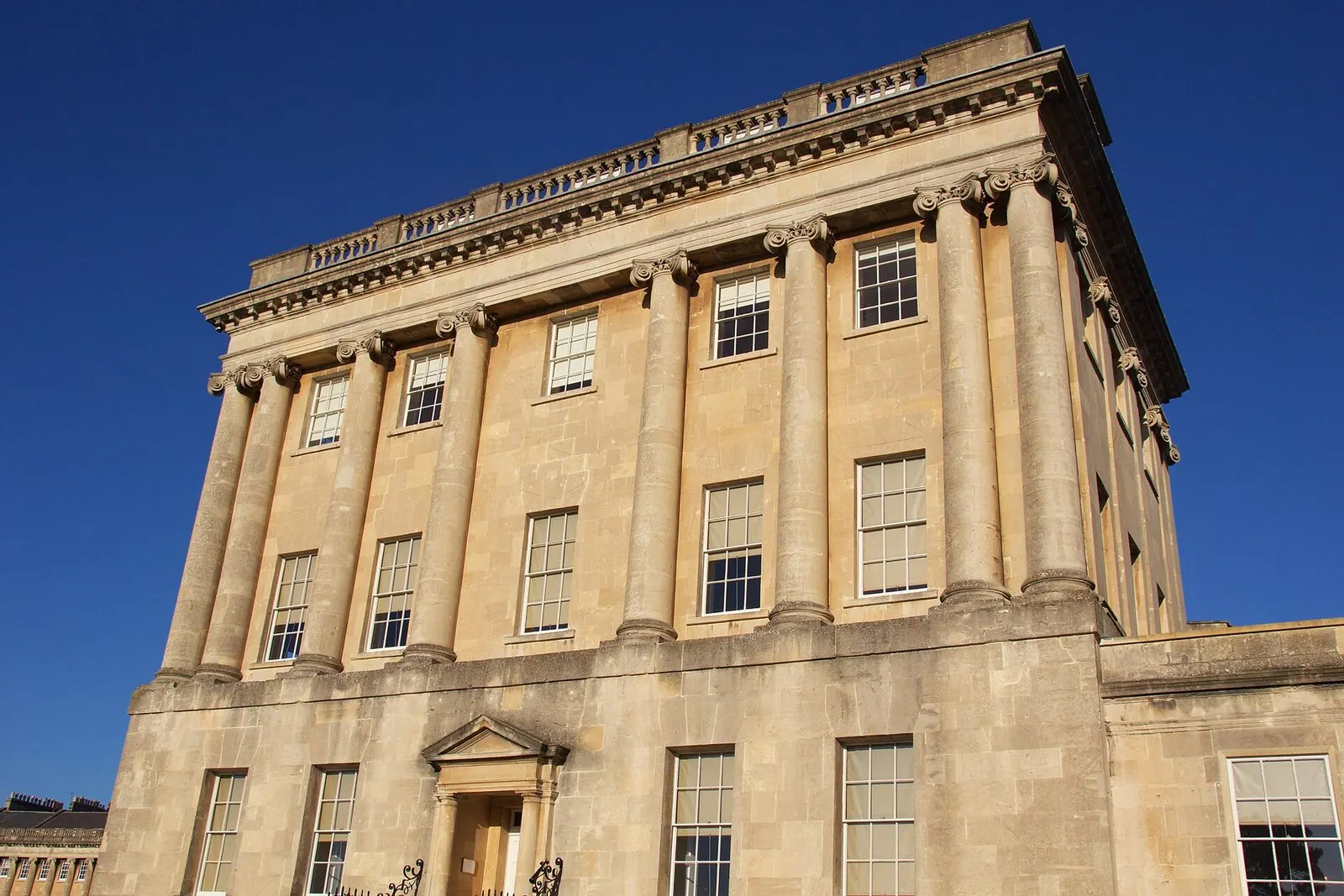
The end house of the Royal Crescent in honey-coloured stone, with tall columns, rows of sash windows and a roof balustrade against a deep blue sky

03

Above stairs and below stairs

No. 1 shows how a Georgian household lived, from the grand rooms to the servants’ hall.

No. 1, the first house in the Crescent, is a museum. It is furnished as it might have been from 1776 to 1796, when Henry Sandford rented it. Later it became a school for young ladies and a lodging house. In 1968 it was bought and given to Bath Preservation Trust, who opened it as a museum. A project in 2010 to 2013 joined it back to its service wing next door, No. 1a. Now visitors can also see the kitchen and the servants’ rooms.

Look for

The Dining Room and Parlour upstairs, and the Servants’ Hall and Housekeeper’s Room below.

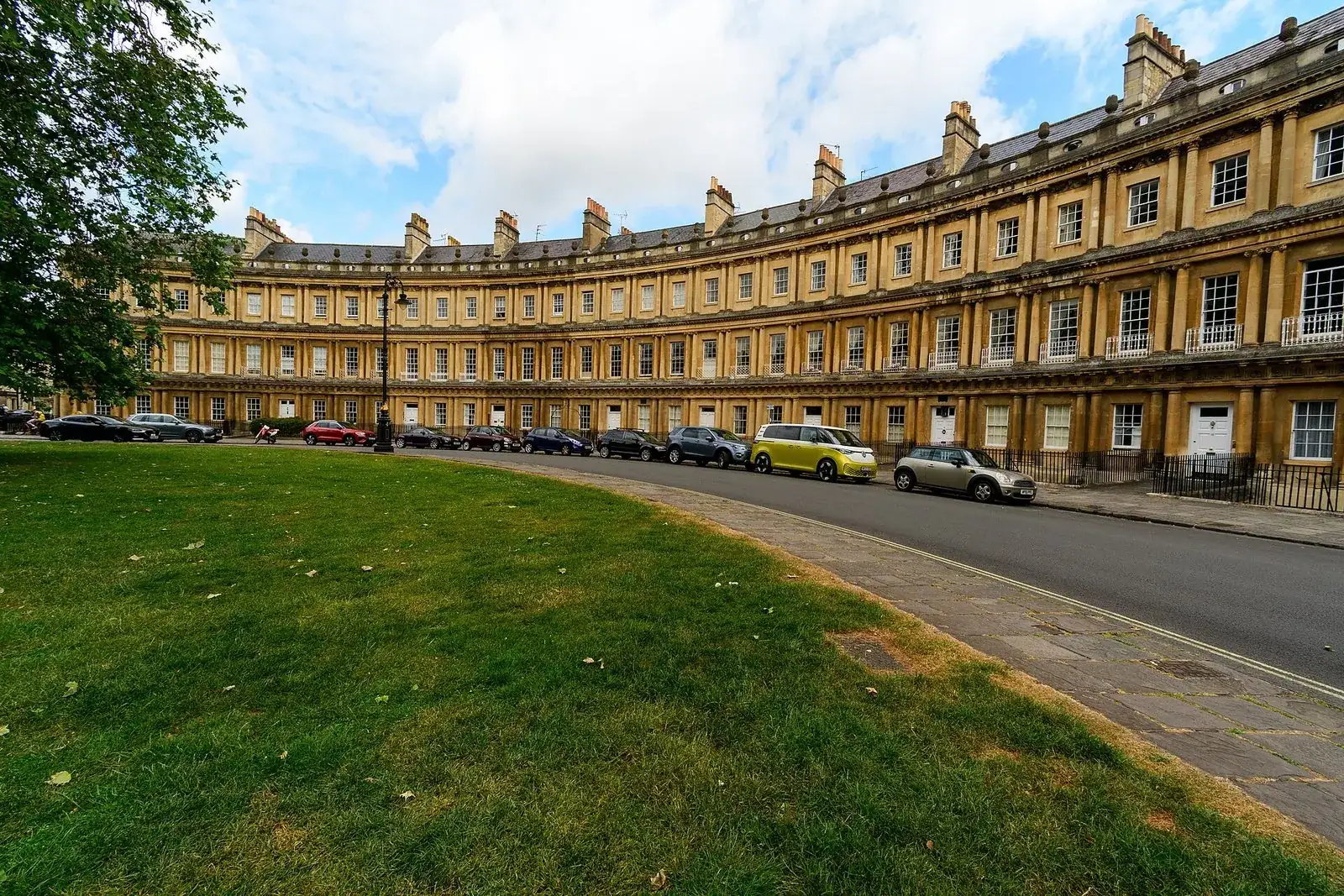
The curved honey-coloured terrace of the Circus in Bath across a grass verge and road, with a plane tree at left and blue sky

04

One part of a planned city

The Crescent is the last of three great shapes that make up Georgian Bath’s centre.

The Crescent crowns a sequence of spaces designed by John Wood the Elder and his son, Wood the Younger. First came Queen Square, built from 1729 to 1734, then the Circus, from 1754 to 1769, and then the Crescent. Together, No. 1 Royal Crescent says, they combined landscape and architecture in one of the most significant pieces of town planning in Europe. Famous guests included the anti-slavery campaigner William Wilberforce, who stayed at No. 2 in 1798.

Look for

The round Circus, a short walk away, which was built before the Crescent.

Your time there

What to see.

These are the highlights worth looking out for, if your time allows. See how long each tour stops in The Royal Crescent →

The museum at No. 1 is a separate visit. Here are the highlights in order of importance.

An aerial view of the Royal Crescent's curved terrace among Bath's rooftops, with a road, parked cars and a green lawn beside it
Don’t miss

The sweeping curved front

A curve of thirty houses, about 152 metres long, with a row of 114 tall columns along the whole front.

About 5 min · Free

One house in the Royal Crescent, with tall columns, an arched first-floor window above the entrance door, and a lamp post and two people at the door

The arched opening above No. 16

The one extra detail at the centre of the Crescent, an arched opening at first-floor level above the door.

About 5 min · Free

The Royal Crescent's curved front beyond a green lawn, with the low stone wall of the ha-ha running along the lawn's edge

The lawn and the ha-ha

The open lawn in front of the houses, and the hidden ditch at its edge that once kept animals out.

About 10 min · Free

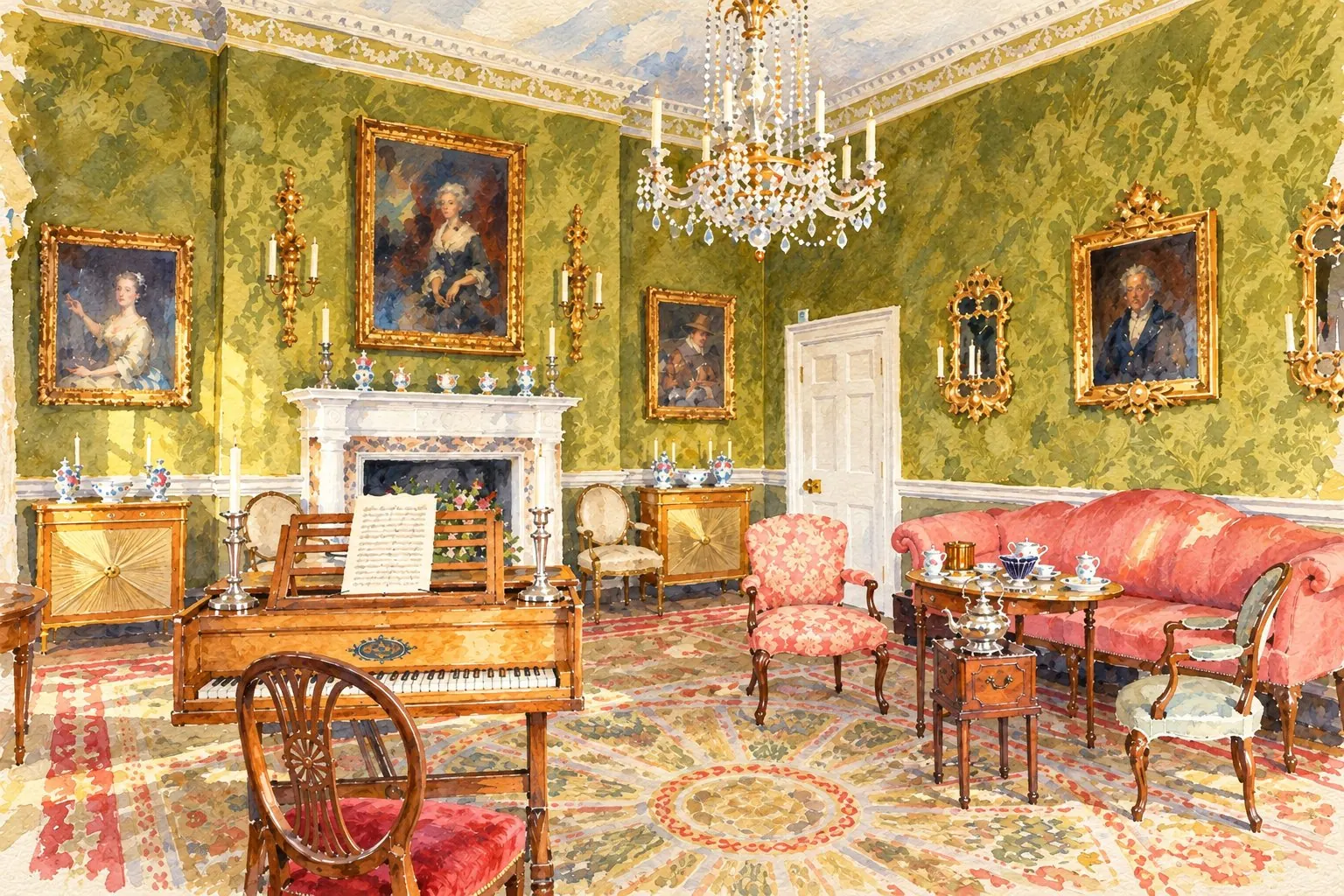
A watercolour-style painting of a Georgian drawing room with green damask walls, a square piano, a crystal chandelier, gilt-framed portraits and a tea table Illustration

The rooms of No. 1

A Georgian townhouse furnished as it might have been in 1776 to 1796, with a dining room, a parlour and a gentleman’s retreat.

About 60 min · Own ticket

A visit takes about an hour. Audio-visual tours last 40 to 55 minutes, and prams cannot go through the house.

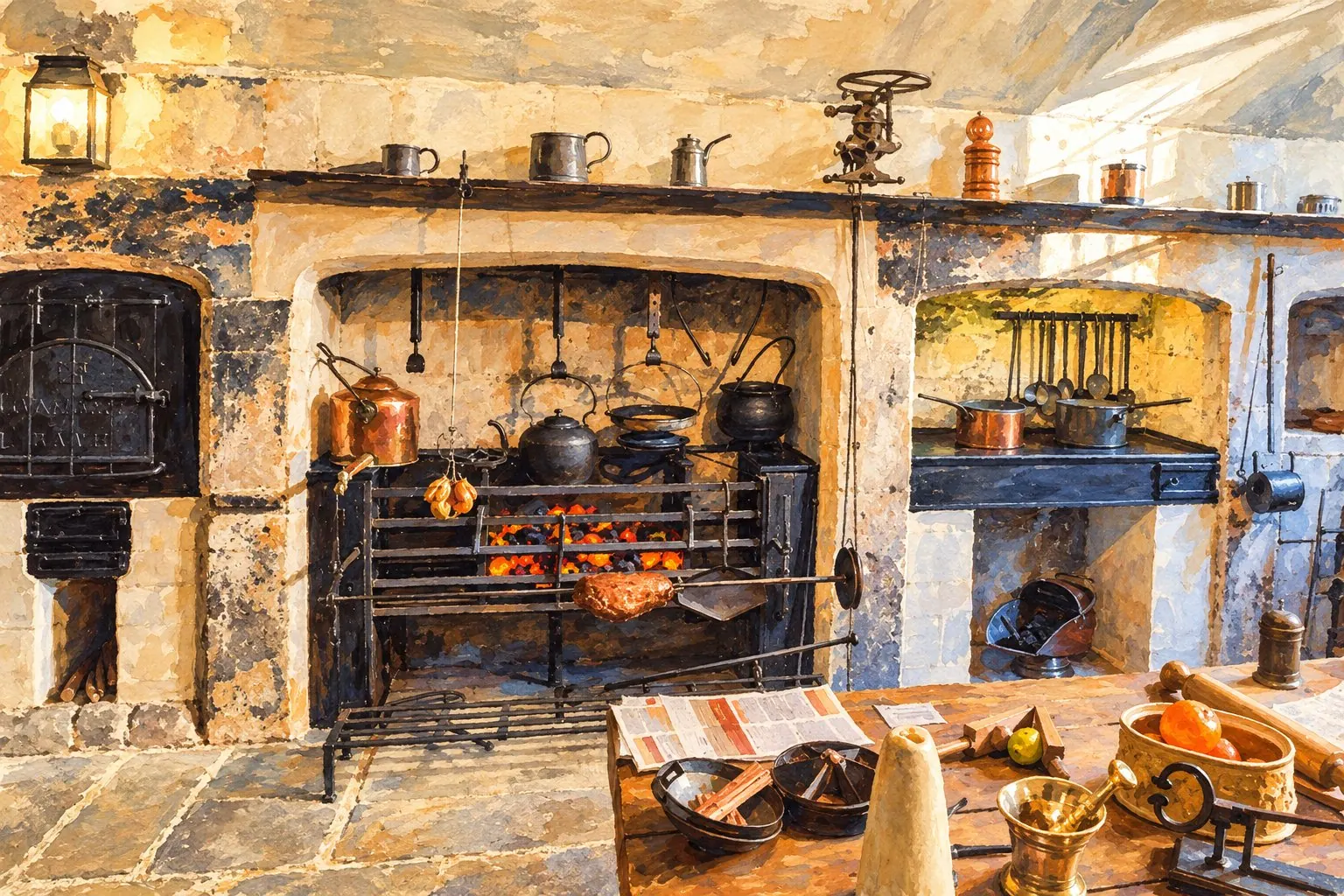
A watercolour-style painting of a Georgian kitchen with a large open fireplace, a roasting spit over glowing coals, copper pans and a wooden work table Illustration

The servants’ hall and kitchen

The rooms where the household’s servants worked, in the service wing next door, No. 1a.

About 30 min · Own ticket

A step-free route covers the servants’ hall but misses four rooms, including the kitchen.

1 of 5

Swipe for all five highlights →

Practical answers

Before you go.

The questions people ask before they book.

When is the museum at No. 1 open?

The museum is open Tuesday to Sunday, 10 am to 5:30 pm, with last entry at 4:30 pm. It is closed on Mondays except in local school holidays and bank holidays. It is also closed from 16 to 28 November and on 25 and 26 December 2026. No. 1 Royal Crescent: plan your visit → (opens in a new tab)

Can I go in without a museum ticket?

You can visit the gift shop without a ticket by walking past reception and turning right. The rooms of the museum need a ticket, which can be bought online or on the door. No. 1 Royal Crescent: the gift shop → (opens in a new tab)

What should I know before I go?

The houses are homes, flats and a hotel, so you see the front, not the inside. No. 1 is a museum with its own ticket, closed on most Mondays. No. 1 Royal Crescent: plan your visit → (opens in a new tab)

Is the museum accessible?

Partly. One route round the museum is step-free, with a lift, and it misses four rooms, the Kitchen, two bedrooms and the Withdrawing Room. A virtual iPad tour of those rooms can be borrowed. No. 1 Royal Crescent: plan your visit → (opens in a new tab)

Can I bring a pushchair?

No. Prams and buggies cannot be taken through the house because of its historic nature. Baby changing is available, and a family trail is offered for children. No. 1 Royal Crescent: plan your visit → (opens in a new tab)

When to go

What changes through the year.

The Crescent can be seen from the street all year. The museum’s opening changes with the calendar.

Spring

In late May, Royal Victoria Park holds the Foodies Festival, with chefs, food and drink and live music. The park is a short walk from the Crescent. In 2027 the festival runs from 21 to 23 May. Visit Bath: Royal Victoria Park → (opens in a new tab)

Summer

In summer, Royal Victoria Park is a good place for a picnic while you watch hot air balloons rise into the sky. The park is a short walk from the Crescent. Visit Bath: Royal Victoria Park → (opens in a new tab)

Autumn

The museum closes from 16 to 28 November 2026, so it is shut for most of late November. No. 1 Royal Crescent: plan your visit → (opens in a new tab)

Winter

The museum is closed on 25 and 26 December. Its ticket can be reused for up to 12 months, so a winter visit can be followed by a second one. No. 1 Royal Crescent: plan your visit → (opens in a new tab)

The museum opens Tuesday to Sunday. It is also open on Mondays in local school holidays and on bank holidays. Check its page for your date. No. 1 Royal Crescent: plan your visit → (opens in a new tab)

A taste and a keepsake

Something to take home from the Royal Crescent.

Here is a small keepsake from No. 1, and a place for tea nearby.

Just ideas for any free time you get.

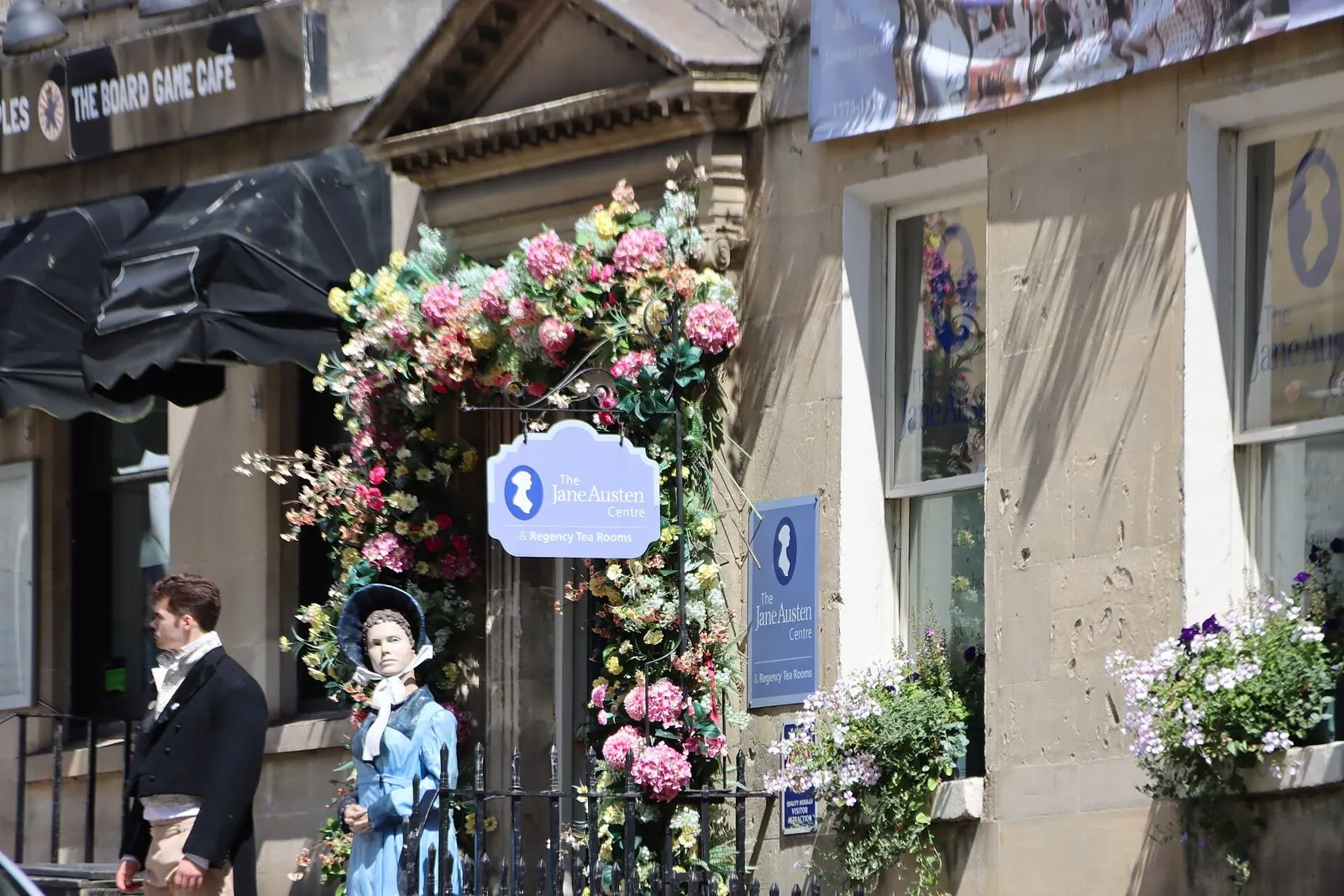
The Jane Austen Centre's doorway in Bath framed by an arch of flowers, with a costumed figure in a bonnet and a man in Regency dress passing
Take home

A Georgian gift from No. 1

The gift shop at No. 1 sells Jane Austen gifts, local interest books and maps, tea towels, teapots and mugs, and children’s games. You do not need a museum ticket to go in.

Where to find itGo past reception and turn right. The shop is open when the museum is.

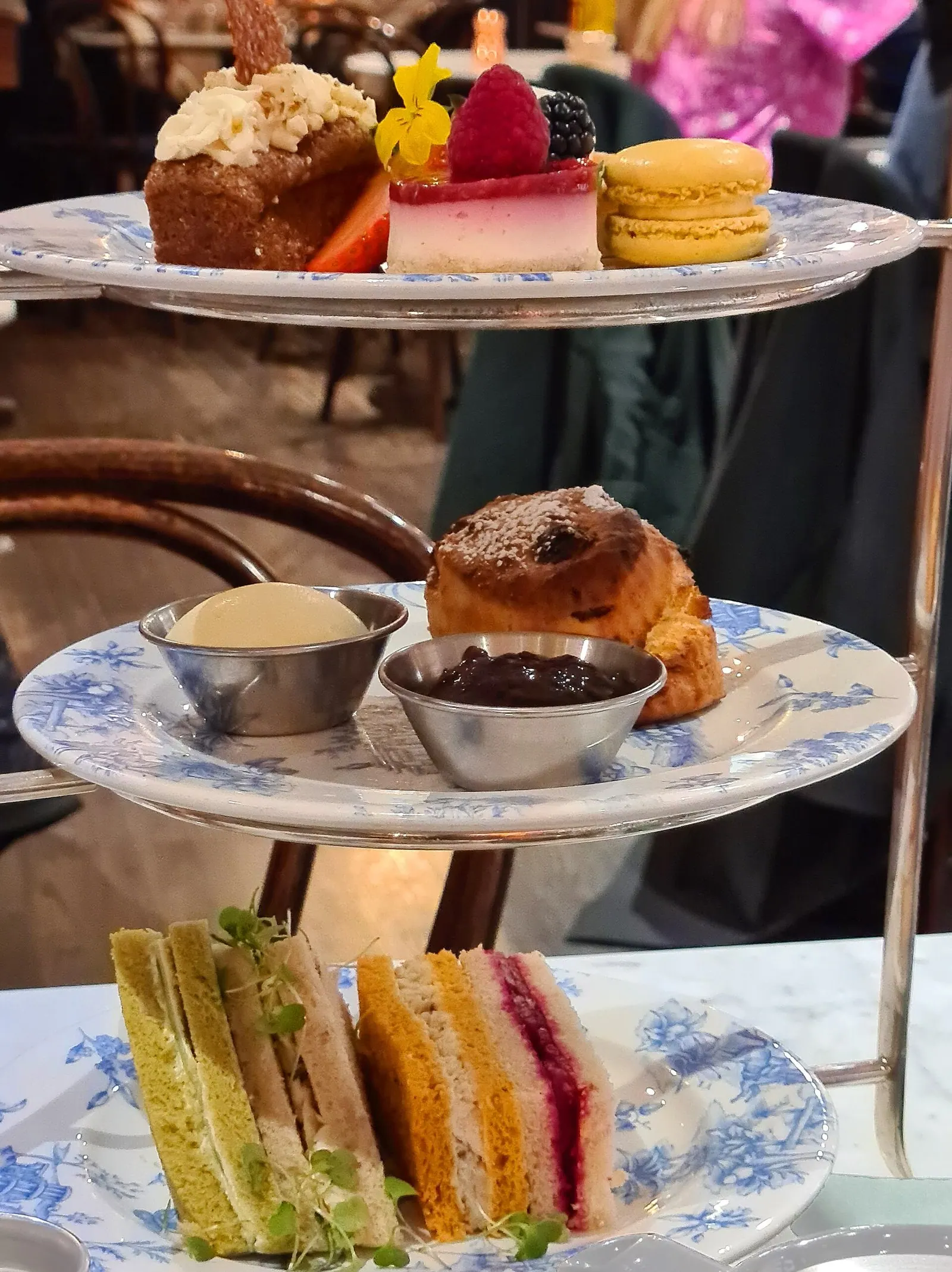
A three-tier afternoon tea stand with sandwiches below, a scone with jam and cream in the middle, and small cakes and a macaron on top
Illustrative
Taste

Afternoon tea by the Crescent

Visit Bath suggests afternoon tea at the Royal Crescent Hotel & Spa, a five-star hotel set at the heart of the Crescent.

Where to find itA hotel tea takes time, so only on a longer stop.

Plan your day

Help with choosing.

Also in Bath and Stonehenge

Places on the same day trips.

All Bath and Stonehenge day trips →
Picture credits and sources

Pictures

Image sources and credits are listed here. Pictures made with AI are marked.

Tour photographs are provided by the tour operators through Viator and are shown from Viator’s own image servers.