We sent the guide to . Check spam if you don’t see it in a few minutes.
You have the Cotswolds guide
It is in your email: “Your free day guide from See Beyond the City”.
Cotswolds day trips from London
Spend a day in honey-coloured villages.
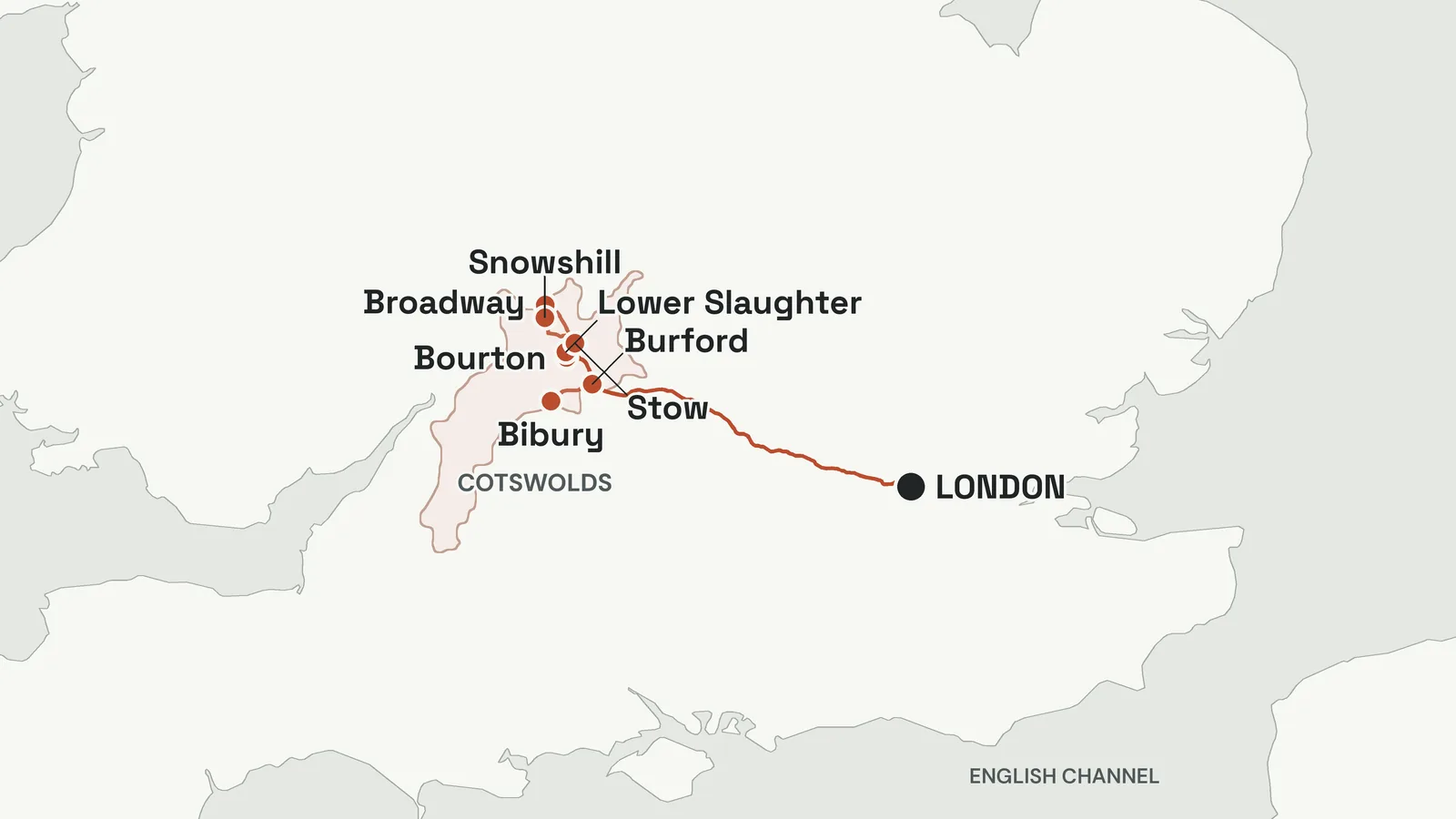
The Cotswolds is a protected landscape of rolling hills, dry stone walls and villages built from local limestone. A Cotswolds day trip from London is a series of short village stops, each with its own river or church. The villages are 83 to 95 miles from London, about 2 hours to 2 hours 20 minutes away. Pick your villages.
Each stop gives a different kind of time. It might be a quick look at a famous row of cottages or a long lunch in a market town. Start with the one you care about most.
For the famous row of weavers’ cottages
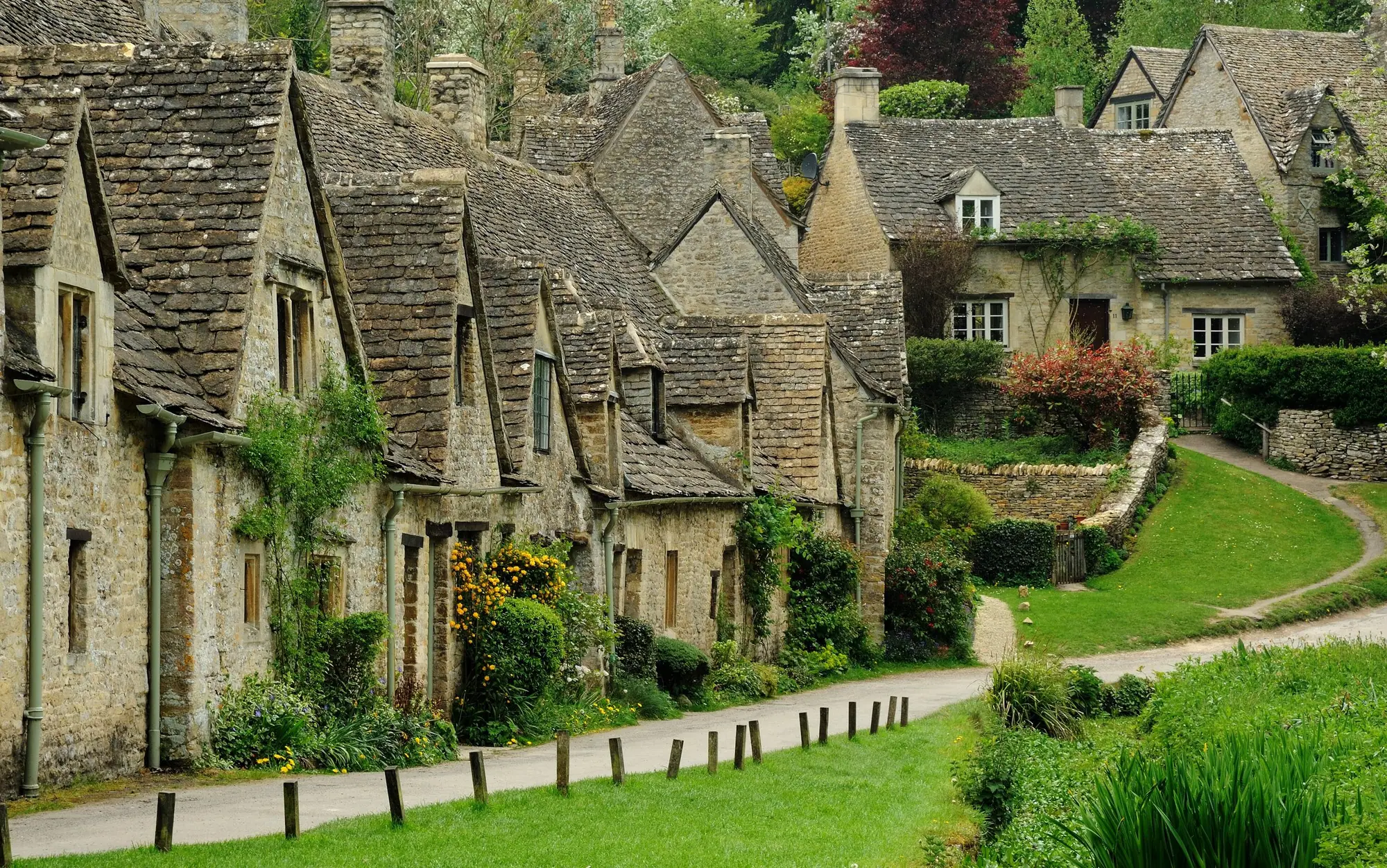
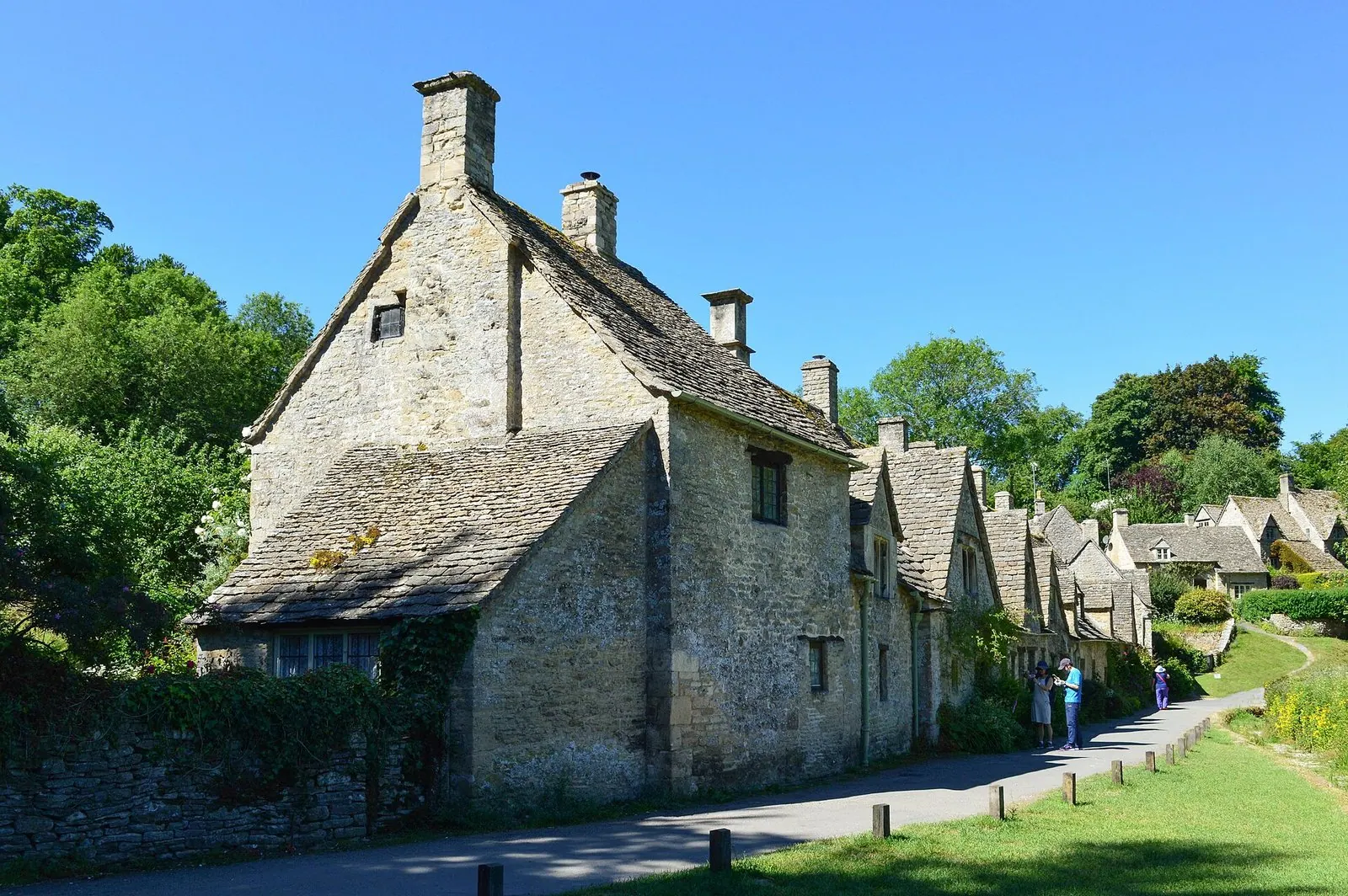
Bibury
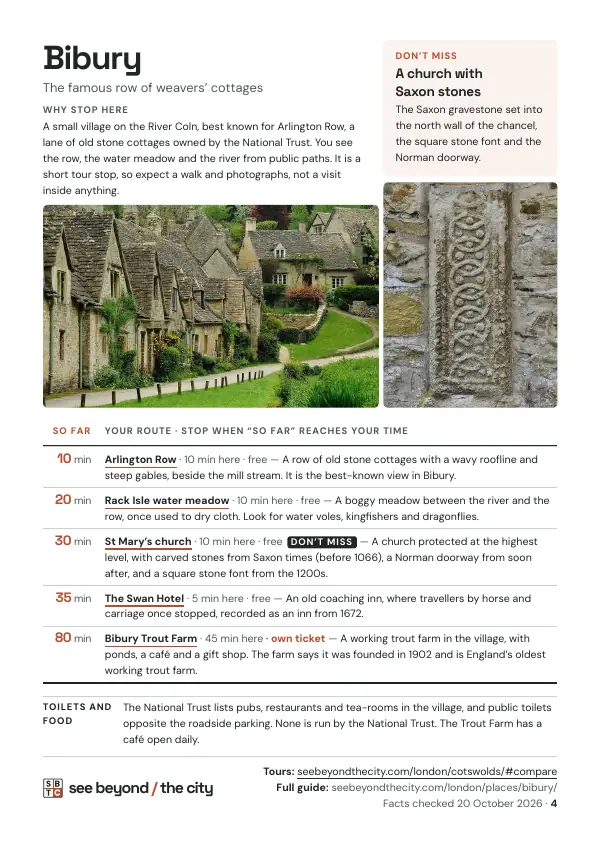
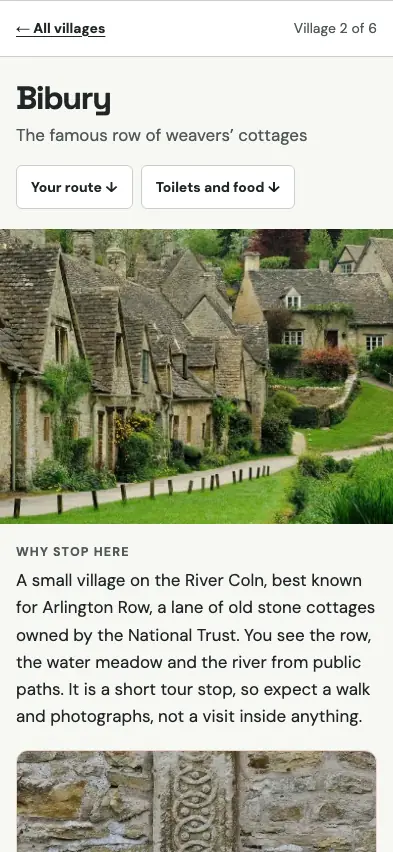
A small village on the River Coln, best known for Arlington Row, a lane of old stone cottages owned by the National Trust. You see the row, the water meadow and the river from public paths. It is a place for a walk and photographs, not a visit inside anything.
Choose this for one of the best-known Cotswold views, if a short visit suits you.
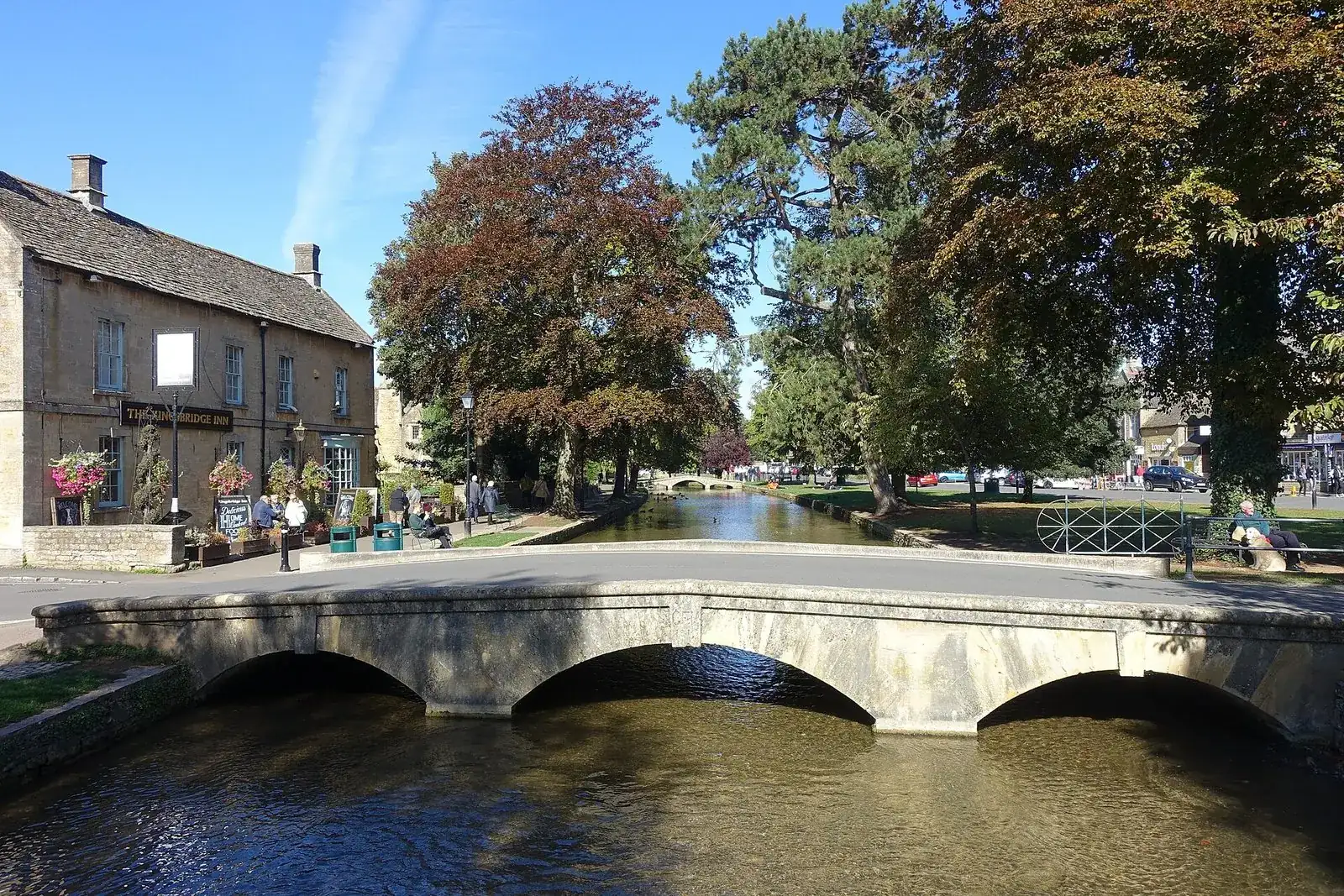
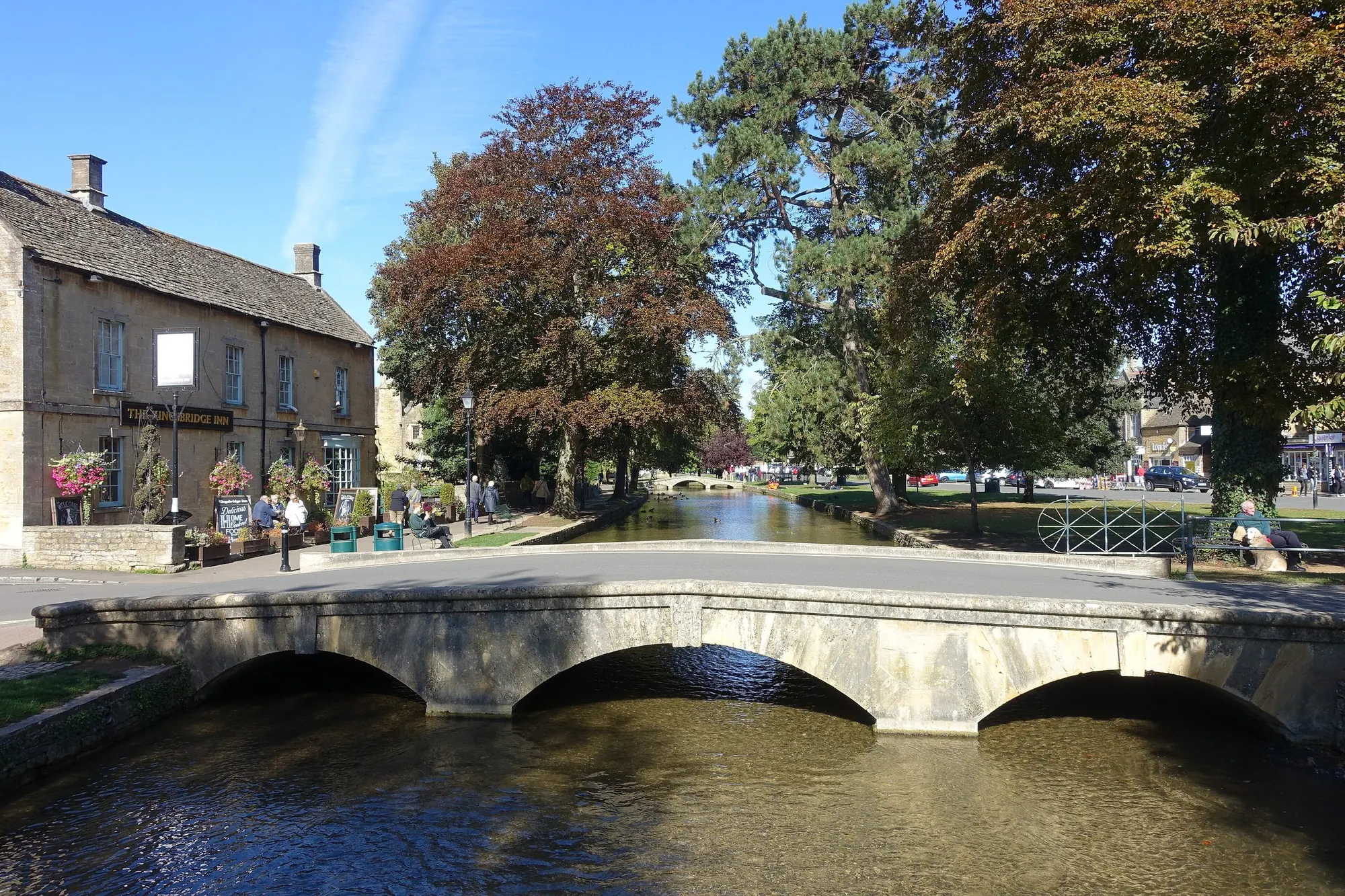
The River Windrush runs through the middle of this Cotswold stone village, under five low bridges and beside a wide green. Shops, cafés, a model of the village, a bird park and a motoring museum are close by. It is often very busy at weekends, so choose a quieter time if you can.
Choose this for an easy riverside village with shops and family attractions.
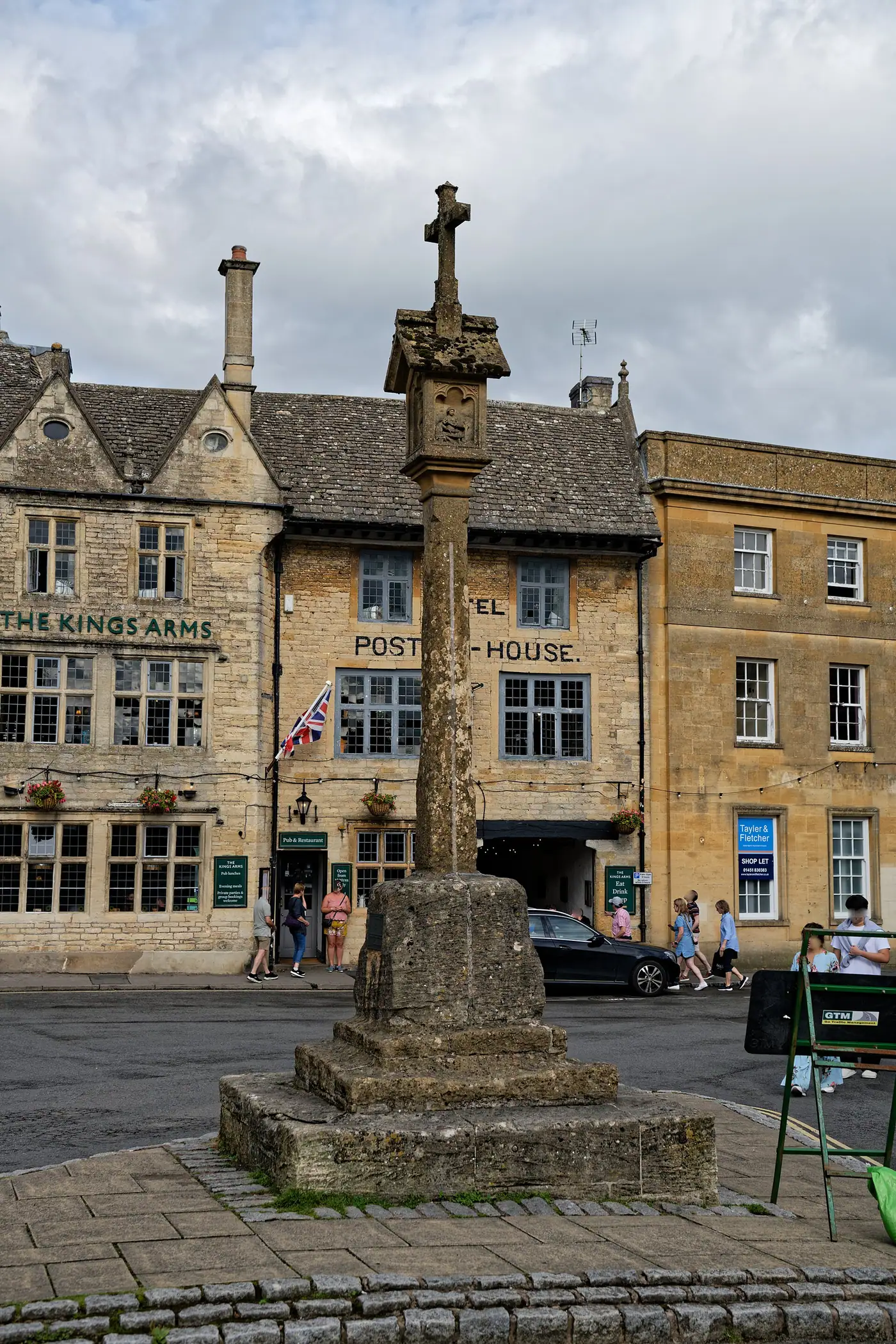
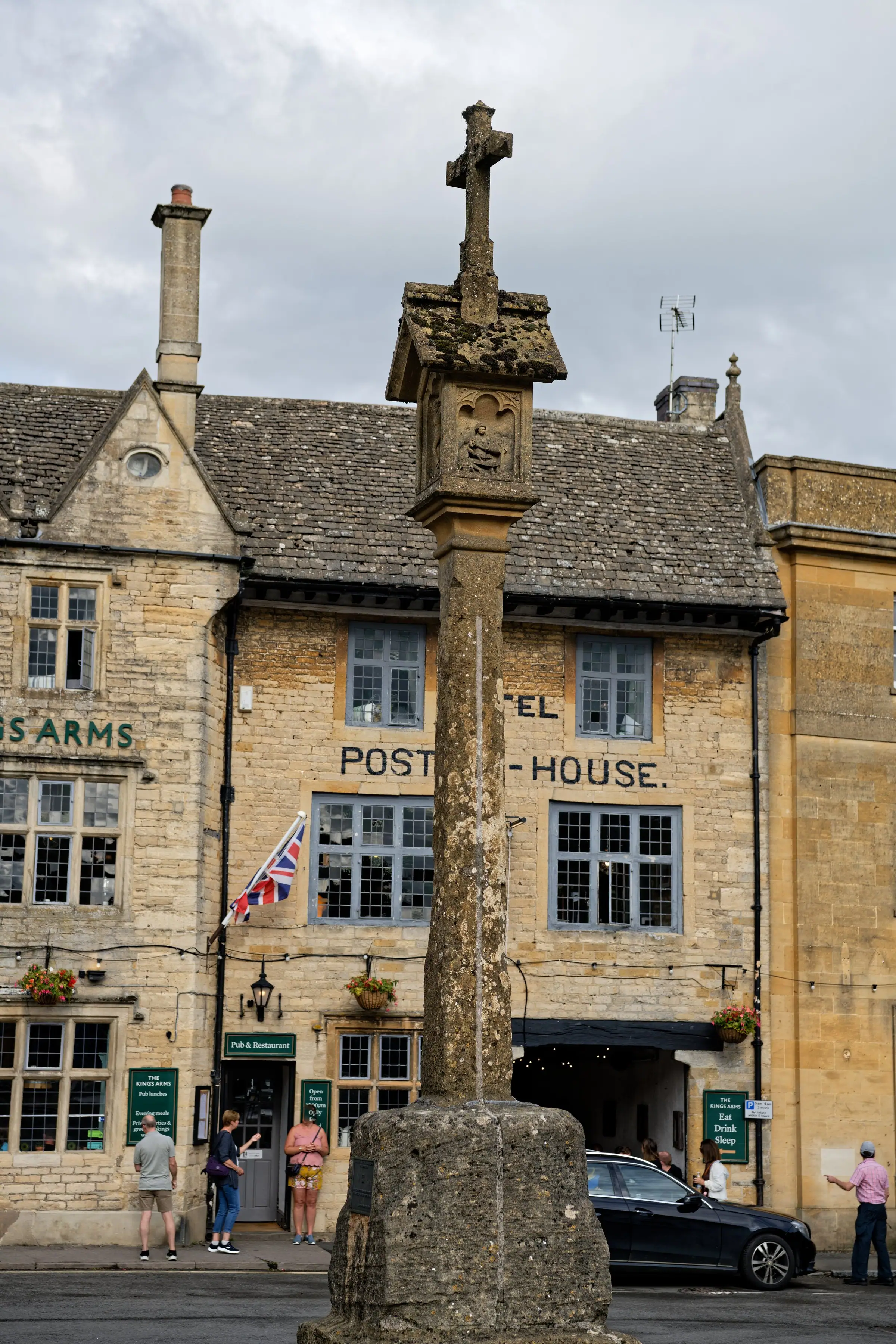
Stow-on-the-Wold is a hilltop market town built around a big square. Medieval fairs once sold thousands of sheep here, and narrow lanes still lead off the square. A Civil War battle ended on its streets in 1646, and St Edward’s north door stands between old yew trees.
Choose this for a real market square, old lanes and a church door with a story.
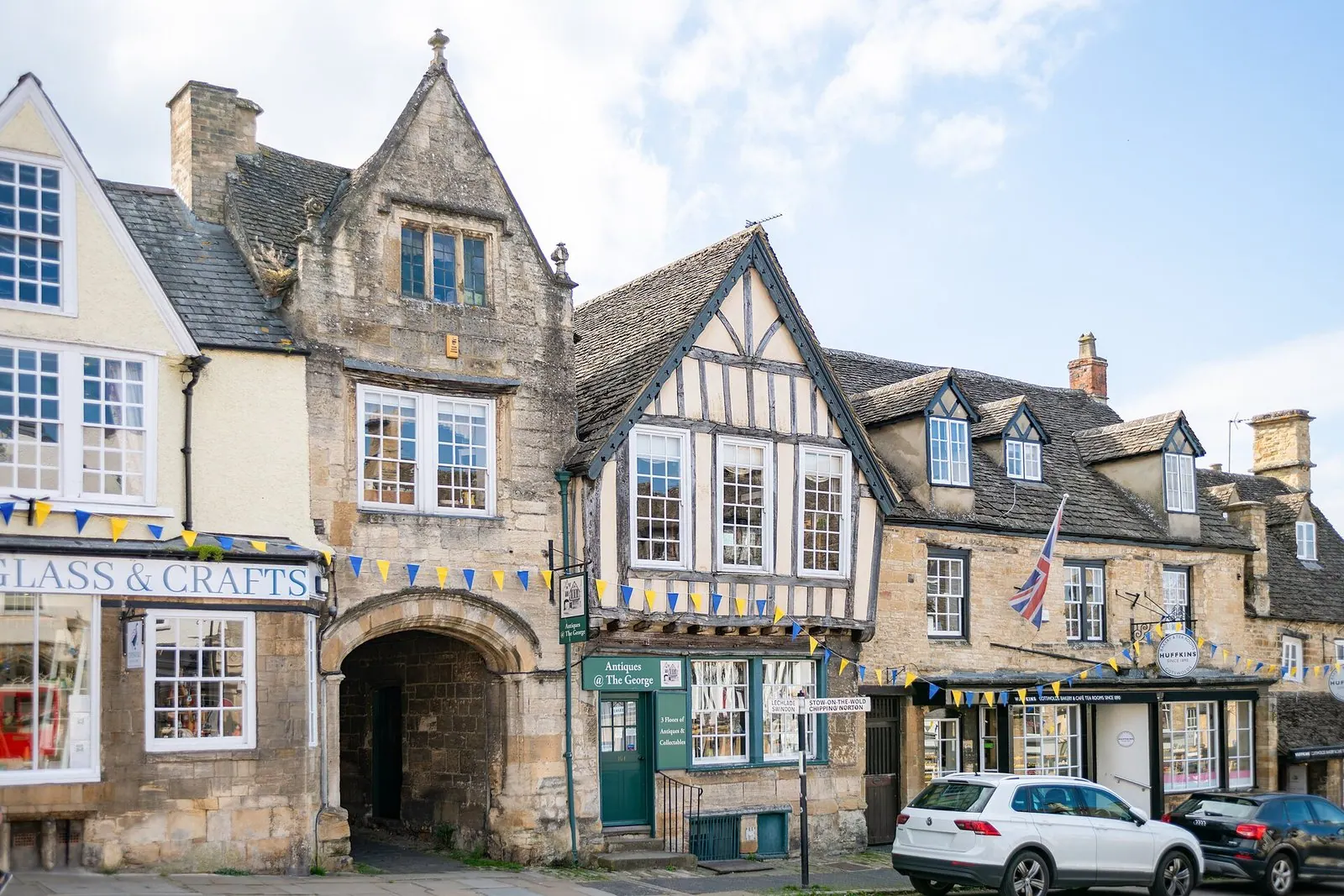
A medieval market town whose High Street runs down to the River Windrush. Look for the large wool church, where Leveller soldiers were held prisoner in 1649, and the Tolsey, the old market house. Antiques and independent shops line the street.
Choose this for an old market town, a famous church and independent shops.
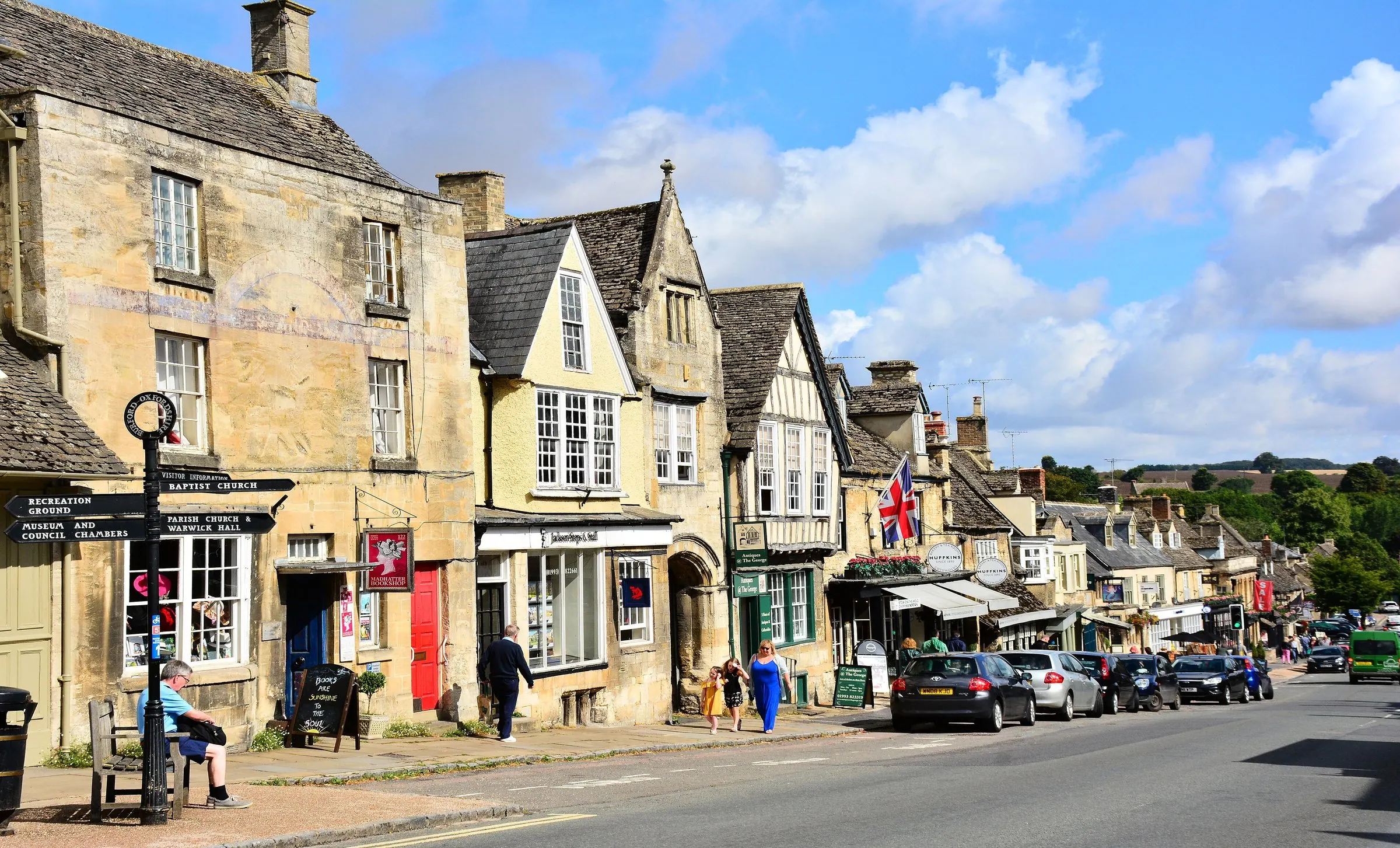
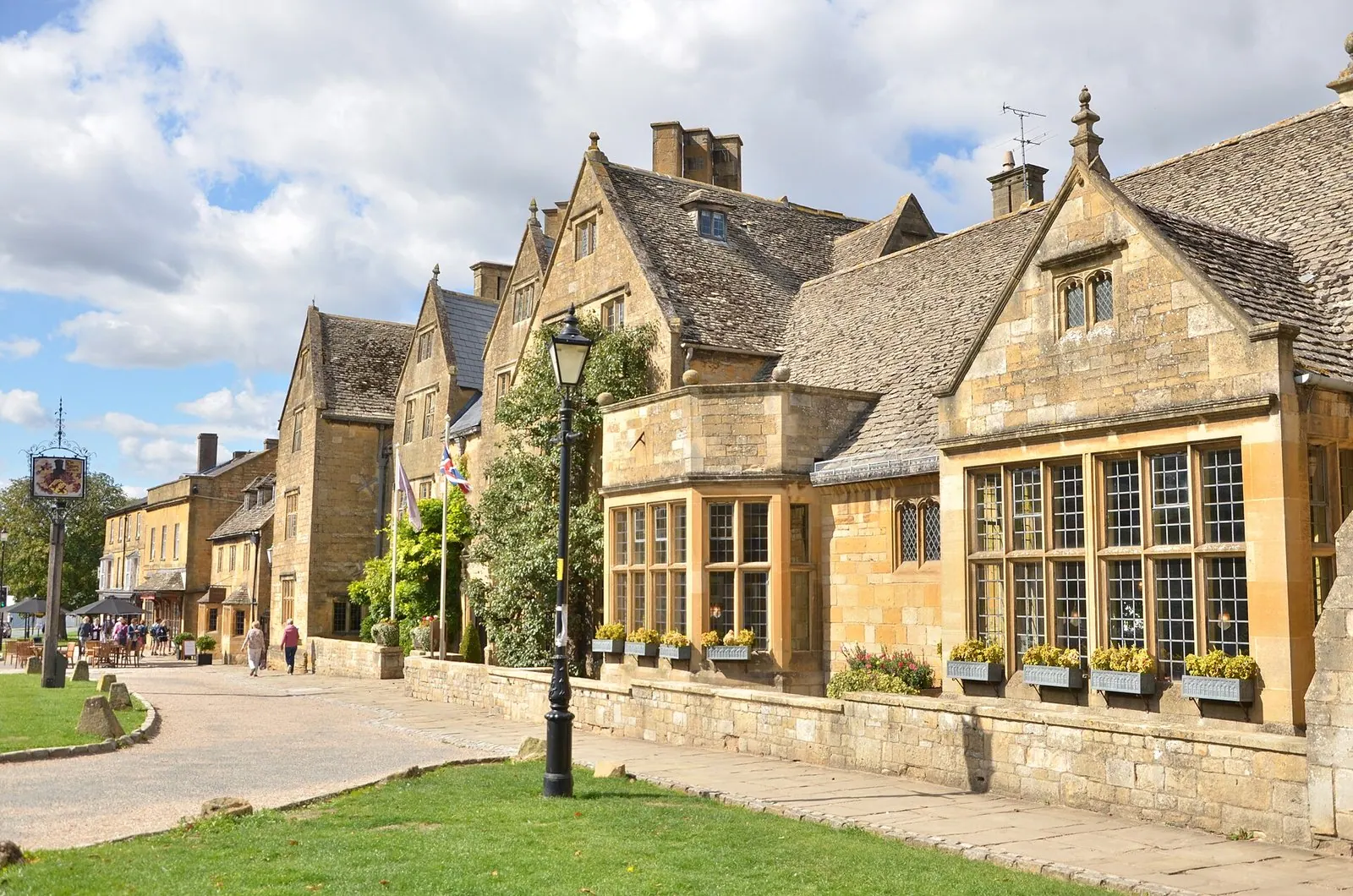
A very wide High Street of honey-coloured Cotswold stone, with independent shops, tea rooms and an old coaching inn. In the 1880s American and English artists came here each summer. Two small museums tell the story. It is a village for wandering, on the north-west edge of the Cotswolds.
Choose this for a long village street, shops and the artists' story.
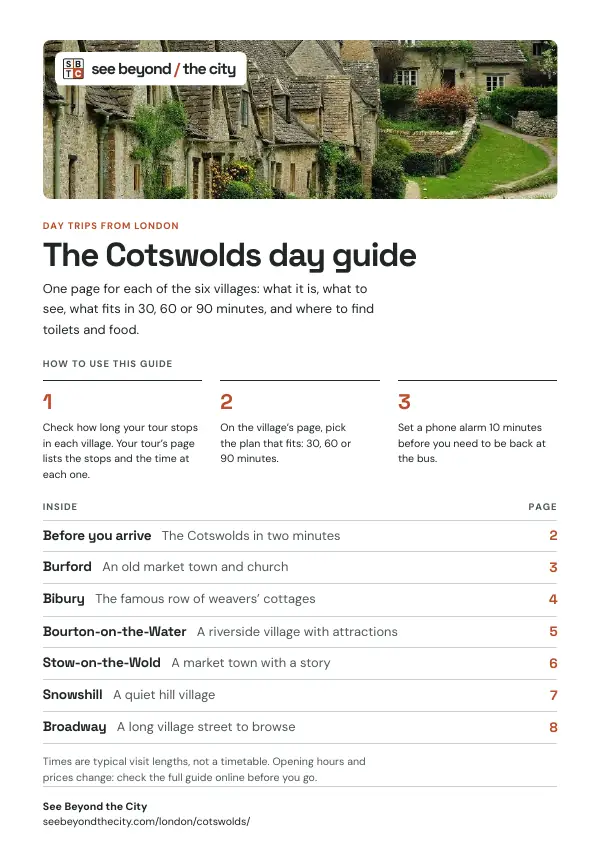
Each village gets a page of its own in the guide, with what to see in 30, 60 or 90 minutes, and where to find toilets and food.
Check your email
We sent the guide to . Check spam if you don’t see it in a few minutes.
You have the Cotswolds guide
It is in your email: “Your free day guide from See Beyond the City”.
The Cotswolds in four moments
A little history before you go.
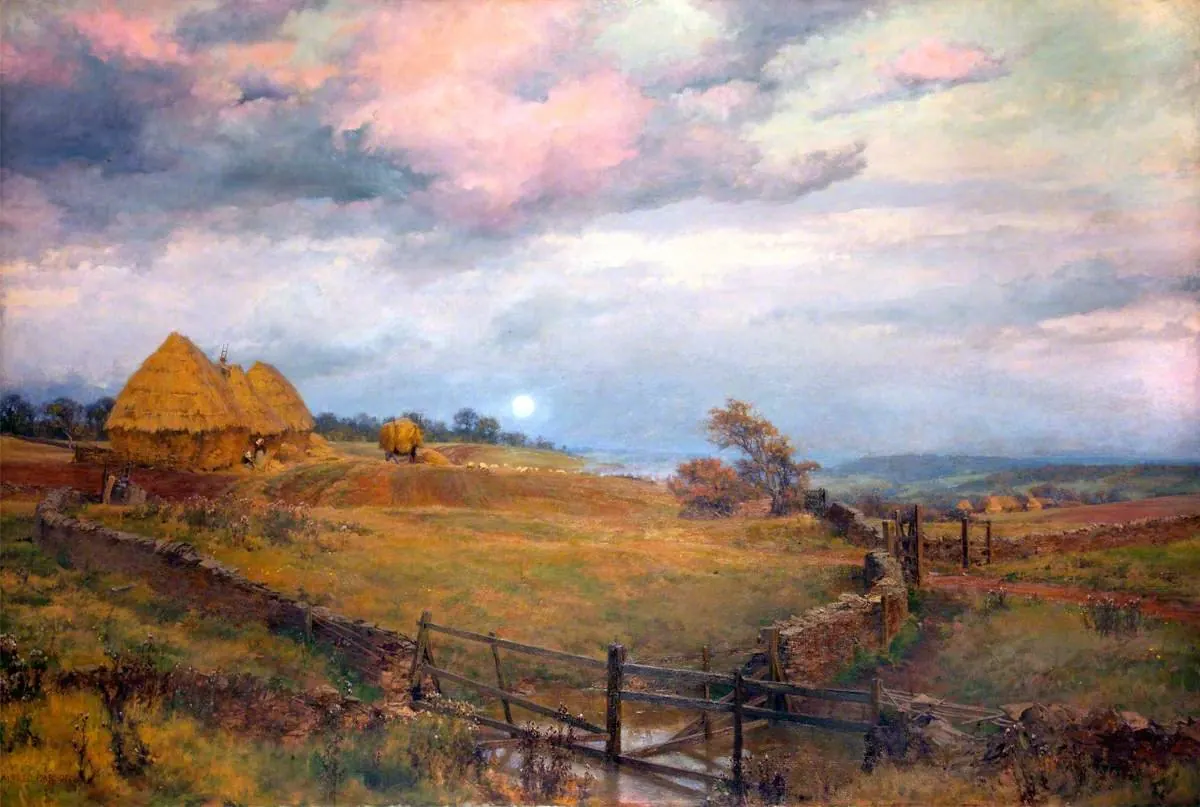
Alfred Parsons, On the Cotswolds, oil on canvas, undated (he lived 1847 to 1920). Gallery Oldham.
Over 6,000 years ago
People shape the hills
The Cotswolds National Landscape says people have lived in and shaped this landscape for more than 6,000 years. Burial mounds, hill forts and the Rollright Stones are still there to see.
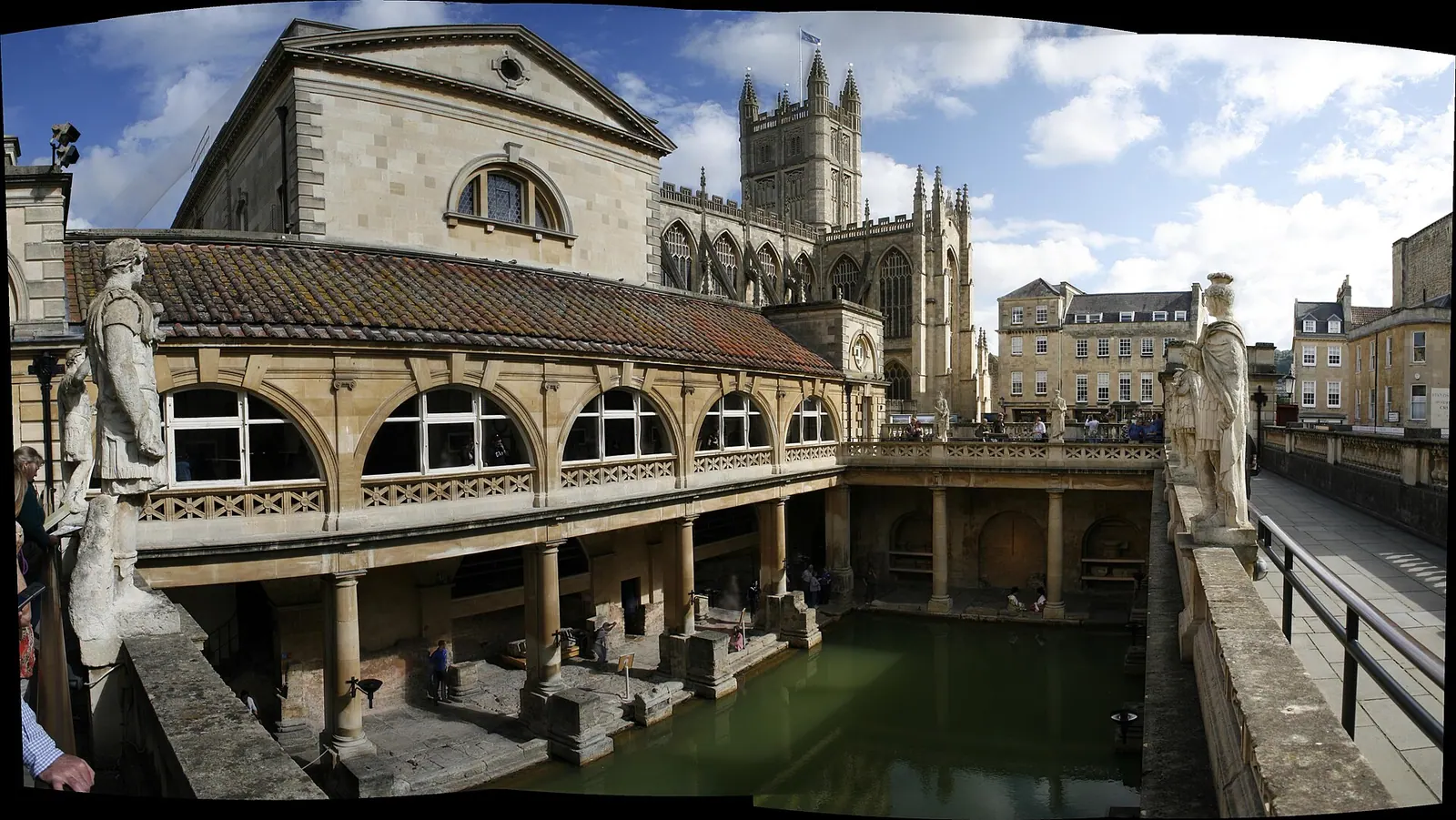
Roman engineers built the Fosse Way from Bath to Stow-on-the-Wold and Moreton-in-Marsh. The road let people and goods travel quickly between towns, farms and villas.
Money from the wool trade paid for grand churches, manor houses and market towns. The wool churches are the best-known sign of that wealth, and local stone gave the towns their look.
The Cotswolds was made an Area of Outstanding Natural Beauty in 1966. At 790 square miles it is the largest in England and Wales, and it stretches from Bath to Warwickshire and Worcestershire.
A small taste or keepsake can make a day away feel more personal. Here are three ideas to try.
Just ideas for any free time you get.
Illustrative
Take home
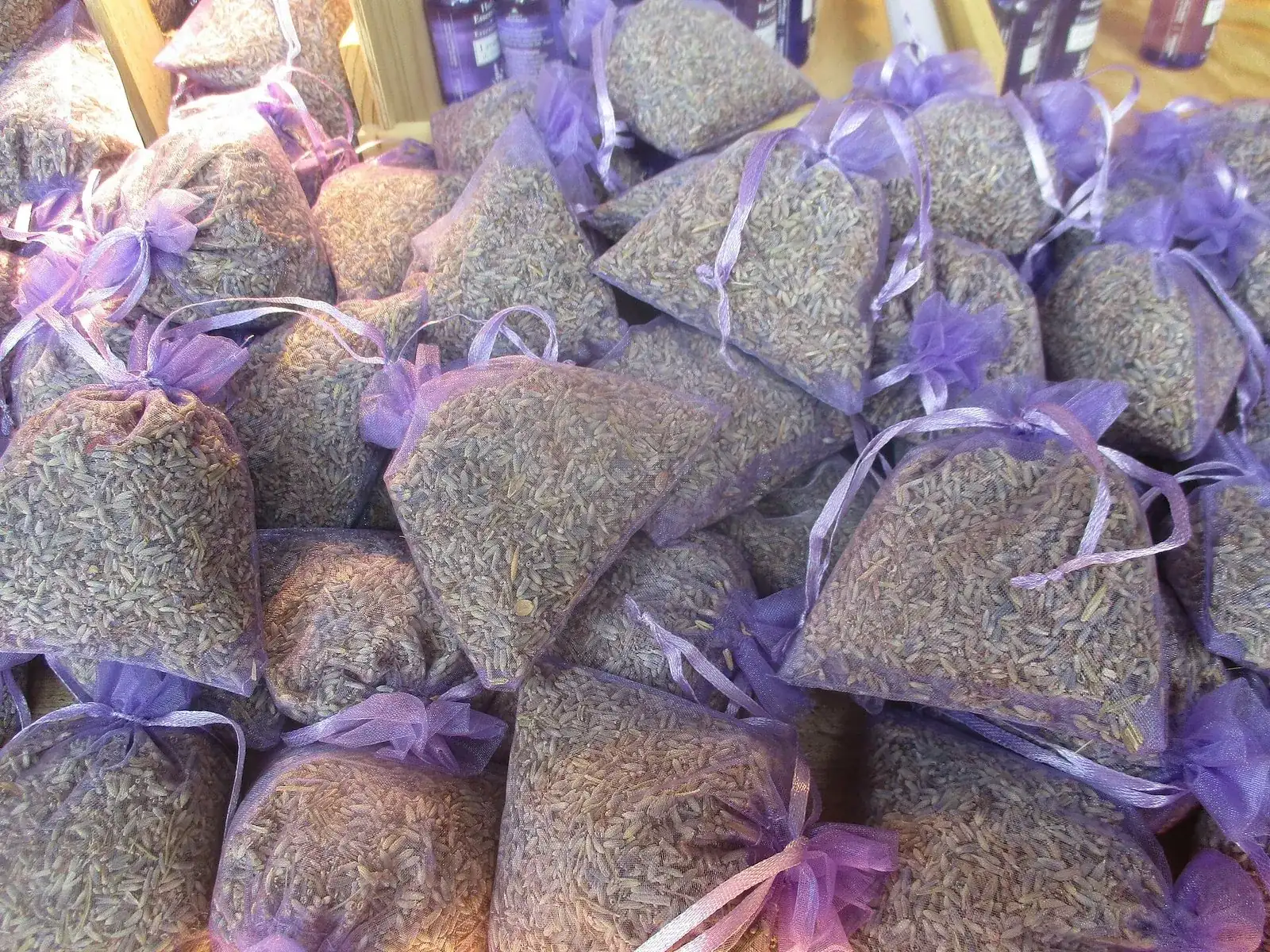
Lavender from Cotswold Lavender
The farm sells lavender gifts, skincare and home products online all year. Its own shop, the Cabin, sells them to visitors in summer.
Where to find itThe Cabin is open to visitors in summer only.
Illustrative
Taste
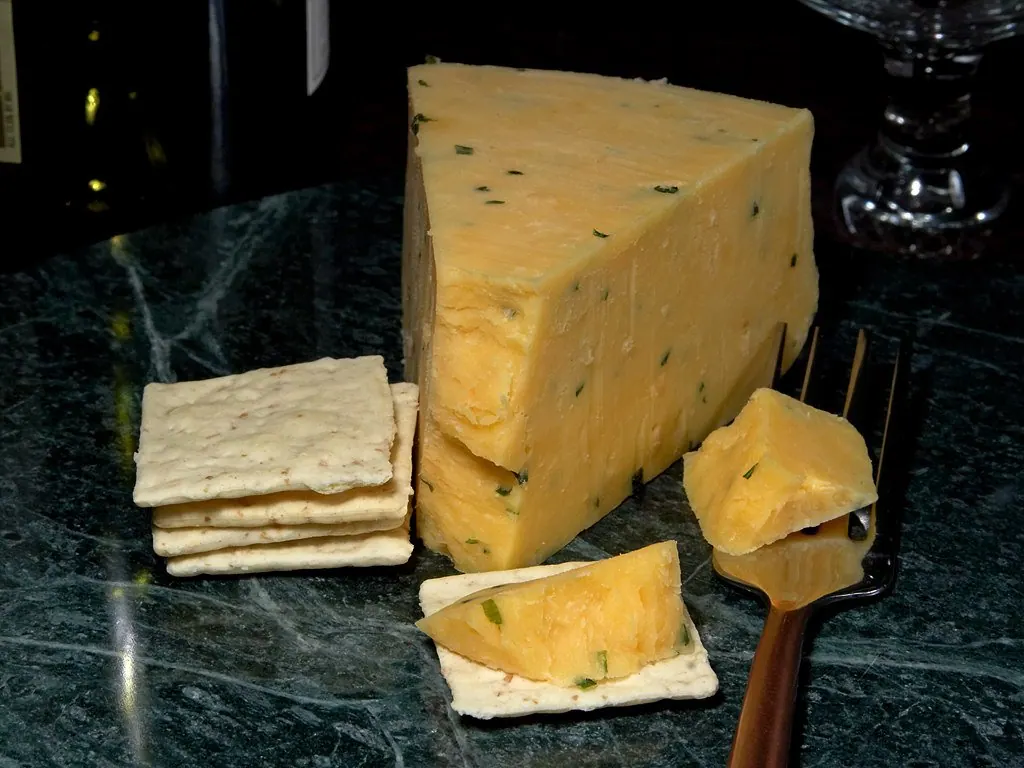
Cotswold cheese
The Cotswold Cheese Company has a shop in Stow. It says it stocks more than 120 artisan and farmhouse cheeses, from local Cotswold producers and British cheesemakers.
Where to find itCheck its opening times, and go only if you have time to shop.
Illustrative
Taste
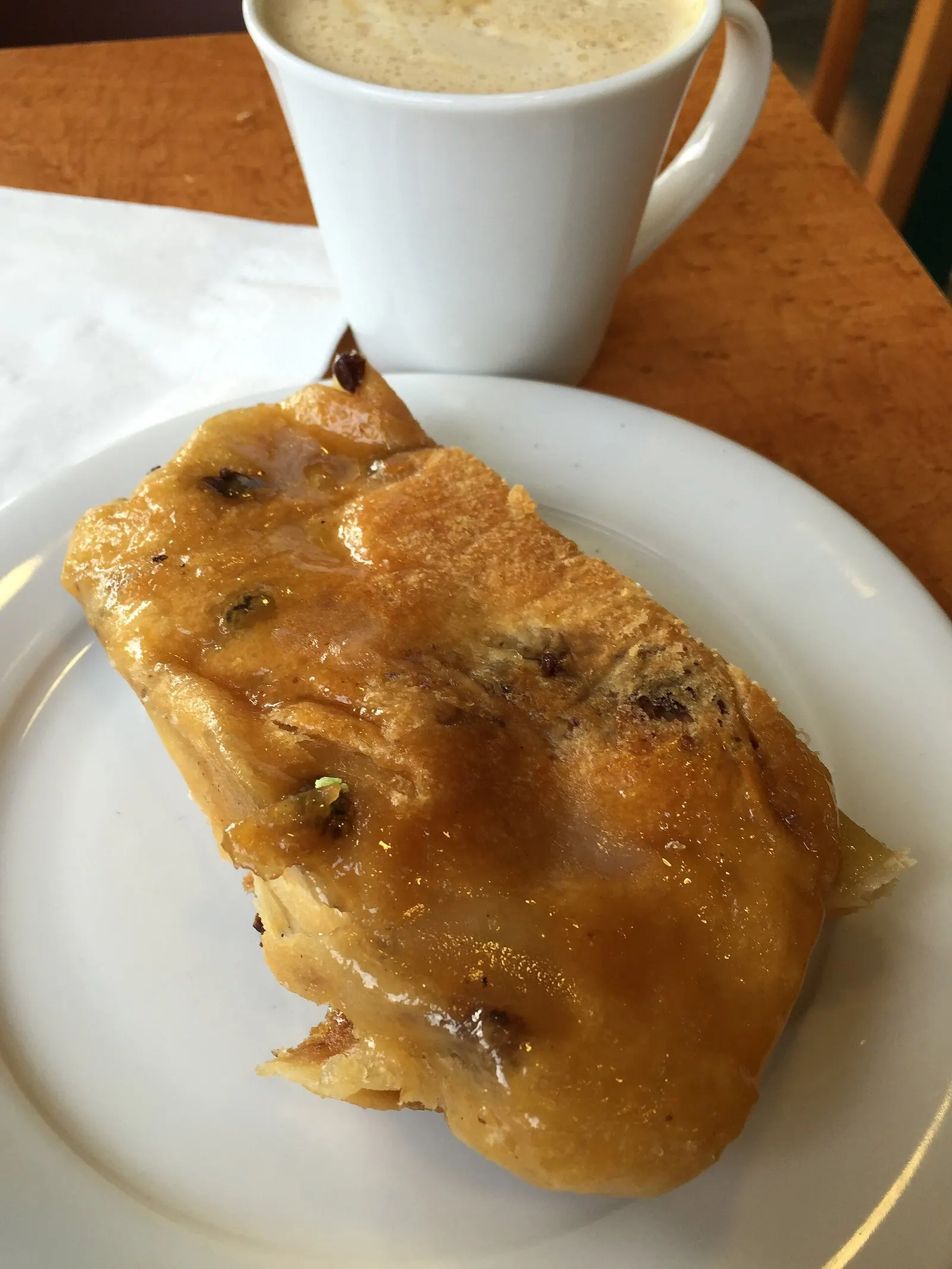
Lardy cake from Huffkins
Huffkins has a cafe and bakery in Stow. Its website lists lardy cake among its best sellers and says its bakes are made by hand in its Cotswolds bakery.
Where to find itOnly if you have time, and check that the Stow cafe has it in stock.
A story to take with you
Look for the walls that run across the hills.
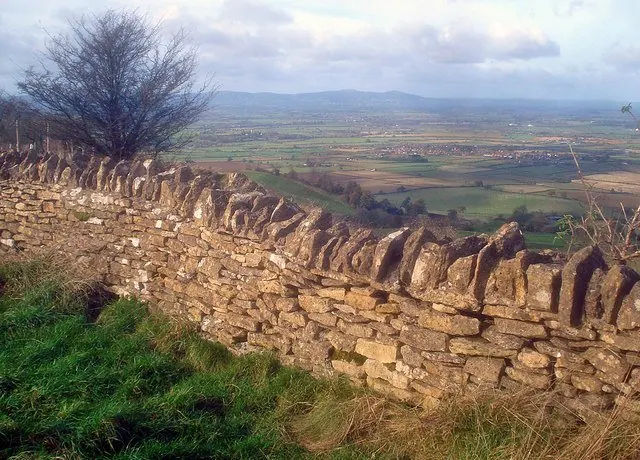
Almost every lane in the Cotswolds is edged by a dry stone wall. These walls are built from local stone with no cement. The Cotswolds National Landscape counts more than 6,000 km of them. That is almost the length of the best preserved part of the Great Wall of China. Walls like this have stood here since Neolithic times. Most of what you see today dates from the 18th and 19th centuries, when open fields and downland were fenced in. The stone is the same as in the cottages, so the walls and the villages look like parts of one landscape.
Private tour illustration. Picture made with AI for this guide (OpenAI image generation). Illustrative scene · vehicle and pickup arrangements vary by tour.
Tour details are copied from Viator. Booking links earn us commission, at no extra cost to you. Viator handles the booking; each operator provides its tour.
Get the free Cotswolds day guide
Save it to your phone before you go. There may be no signal in the villages.
Check your email
We sent the guide to . Check spam if you don’t see it in a few minutes.
You have the Cotswolds guide
It is in your email: “Your free day guide from See Beyond the City”.