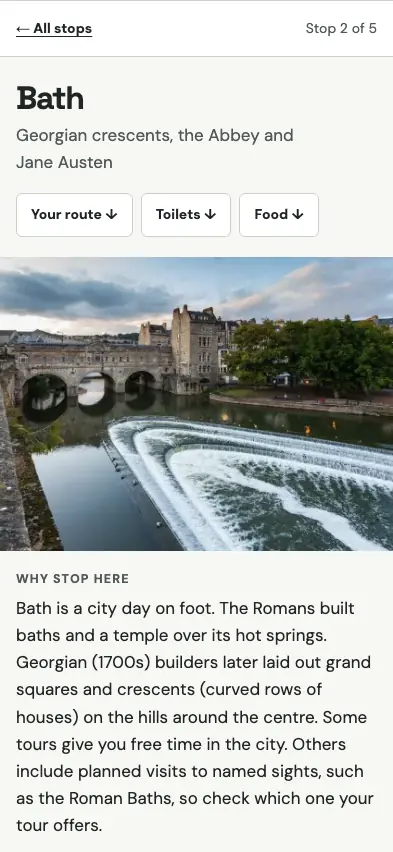
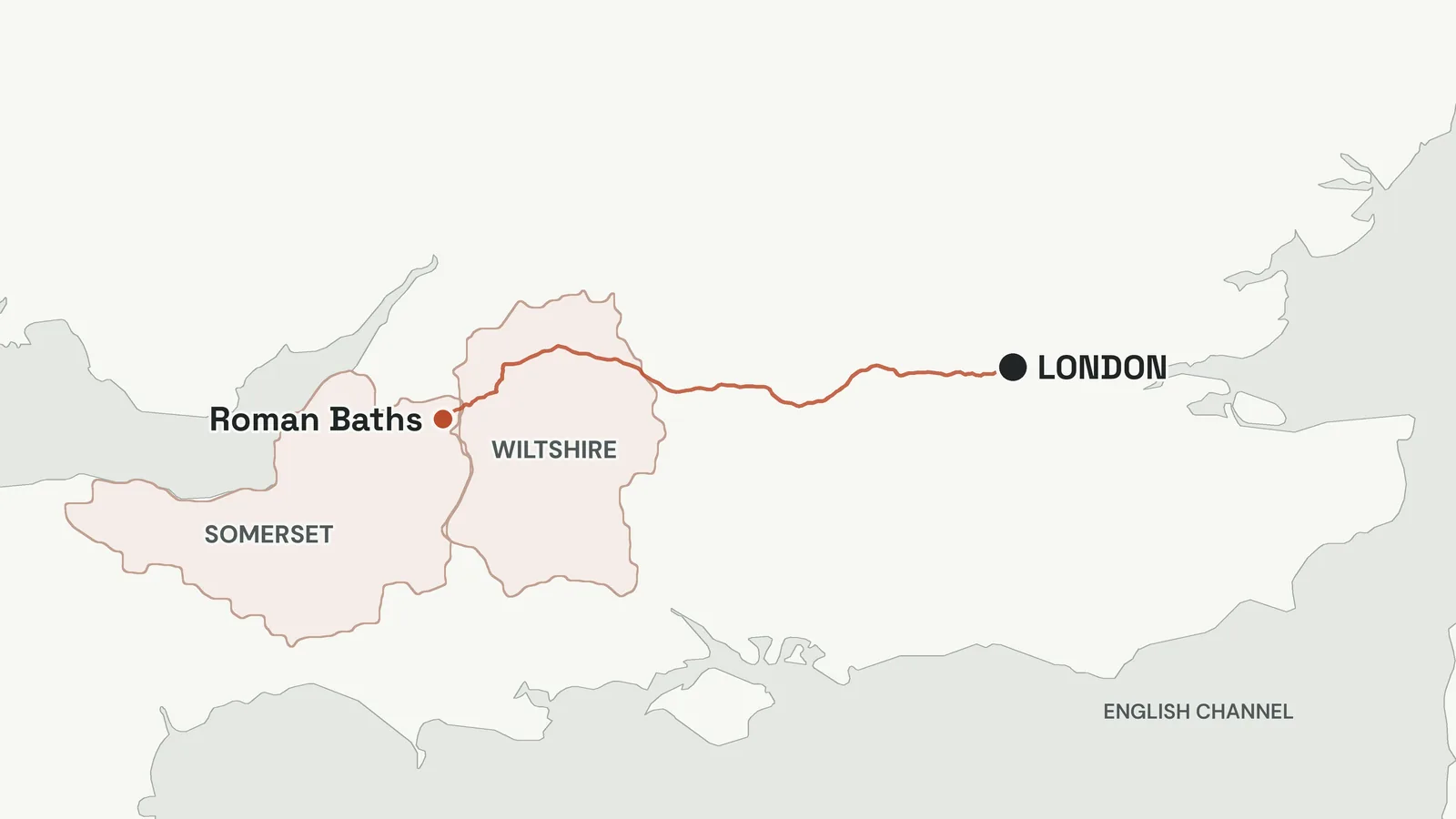
The real England, in one easy day from London
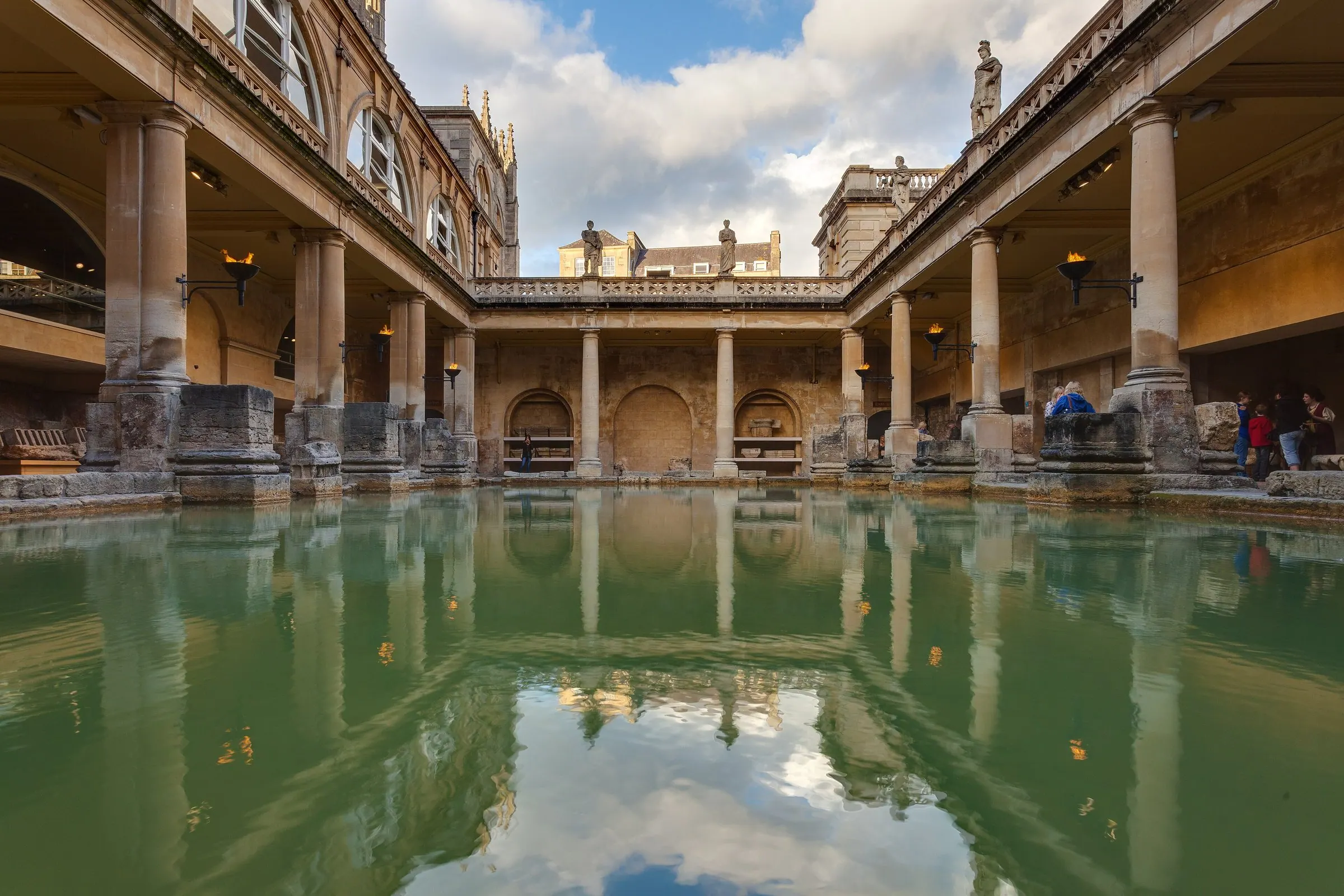
The Great Bath at the Roman Baths, its still green water reflecting stone columns, a terrace of statues and a cloudy blue sky

A Roman spa below the streets of Bath

The Roman Baths

Abbey Church Yard, central Bath · a day trip from London

See how long each tour stops in The Roman Baths →

Why it matters

Why the Roman Baths matter.

Under the Georgian (1700s) streets lies a Roman temple, a sacred spring and one of the best-preserved bath houses in Europe. Here is what to look for as you walk through it.

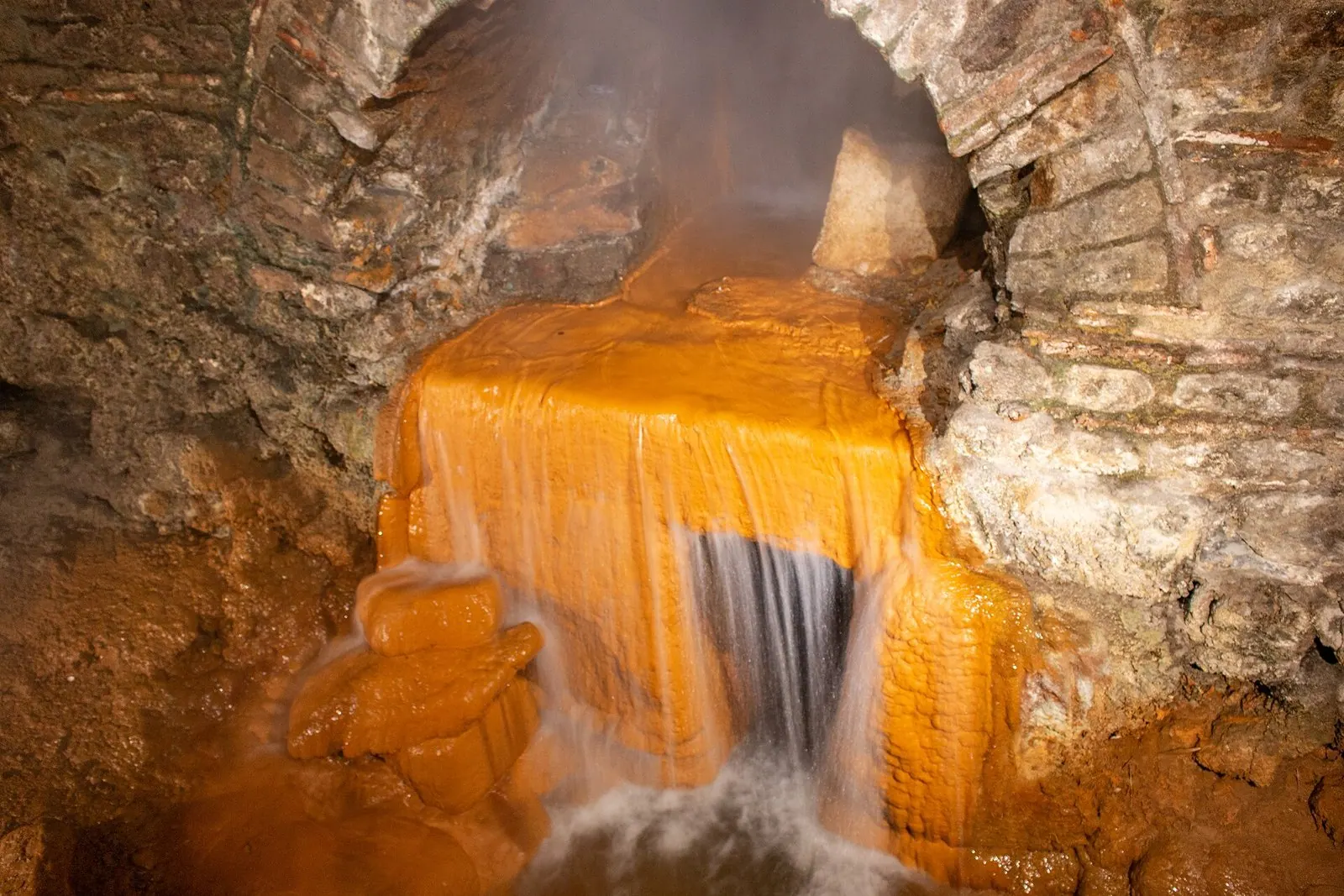
Orange, mineral-stained water tumbling through a brick and stone arch in the overflow chamber of the Sacred Spring

01

A spring that was sacred before Rome

Hot water rises here from deep in the ground, and people worshipped at the spring long before the baths.

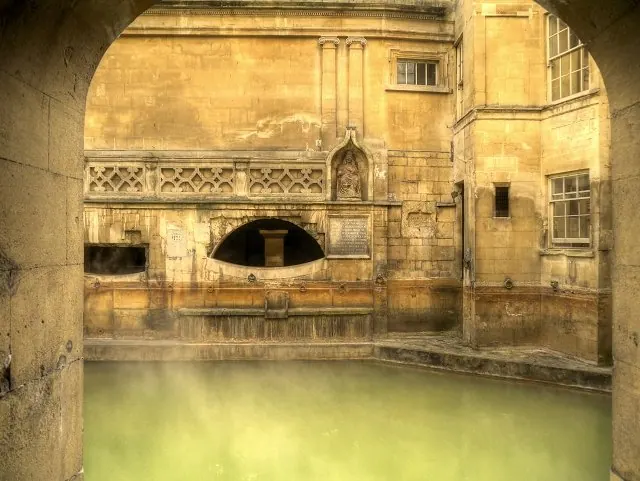
The Sacred Spring rises in the courtyard of the temple of Sulis Minerva. An earth bank sticking into the water suggests it was already a place of worship before the Romans built here. Roman engineers lined it with lead inside a stone chamber, on oak piles that still hold it up today. In the 2nd century they roofed it in a dim vaulted hall. That hall fell into the spring in the 6th or 7th century.

Look for

The spring itself, steaming in its chamber, and the King’s Bath above it, built in the 12th century on the Roman walls.
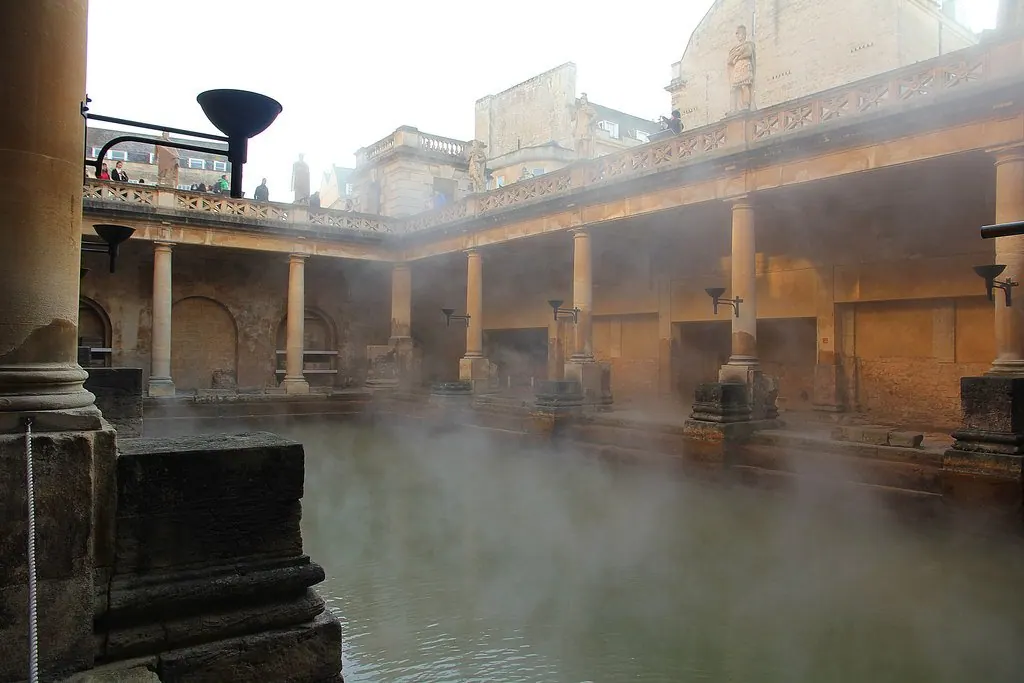
The steaming Great Bath at the Roman Baths, with stone columns and the terrace above it in misty light

02

A hot pool for a whole town

The Great Bath was an unusually big, warm swimming pool, fed straight from the spring.

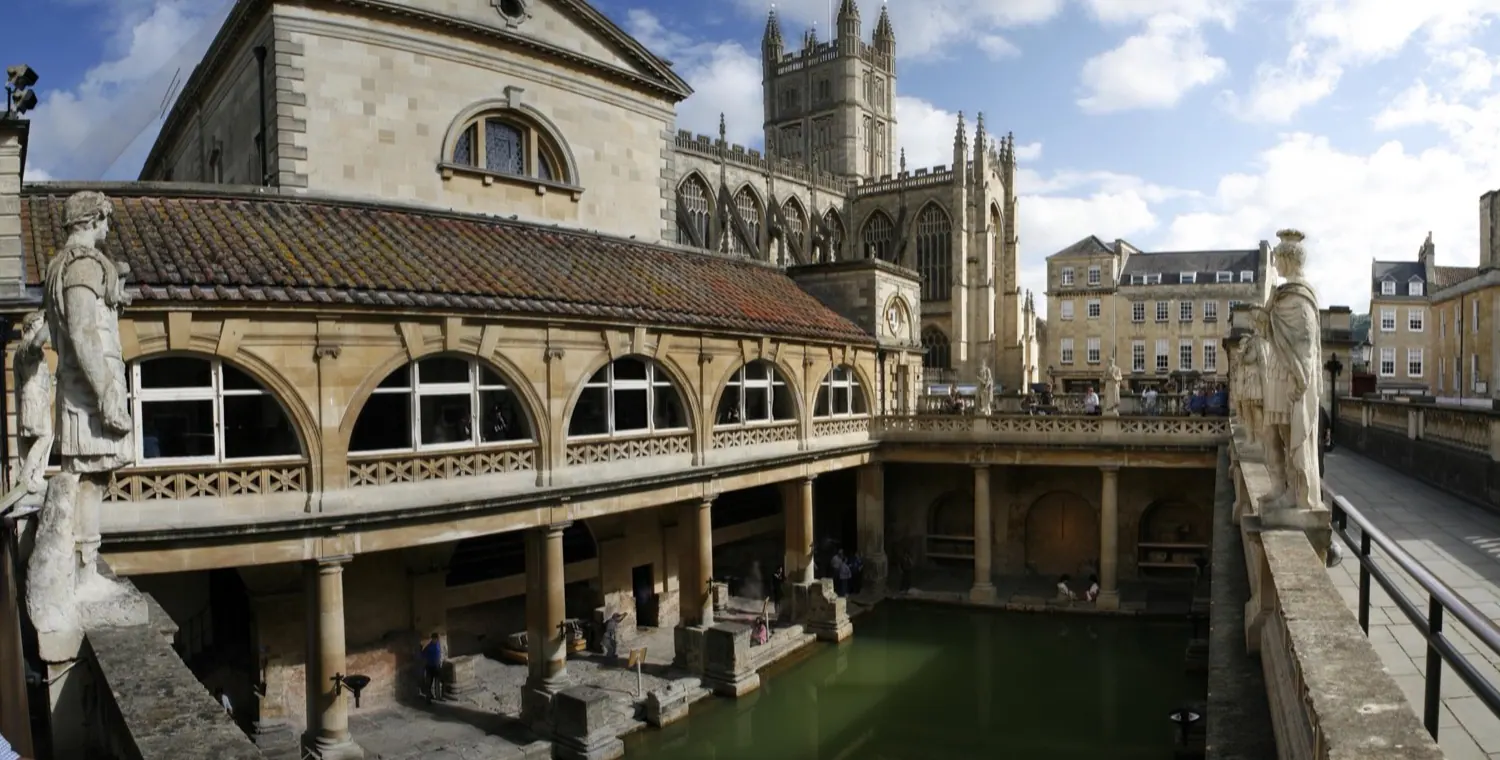
Roman bathing normally meant moving through heated rooms and ending with a cold plunge. At Bath the Great Bath was a large pool of hot water. It was lined with 45 sheets of lead, was 1.6 metres deep, and had four steep steps all round. A great arched roof once covered it, as high as 20 metres. Beside it were heated rooms with floors warmed by hot air, and a cold plunge bath. A Roman drain, big enough to walk in, still carries the water half a kilometre to the River Avon.

Look for

The Great Bath from the terrace, and the Roman drain, which you can see flowing through a glass floor beneath your feet.

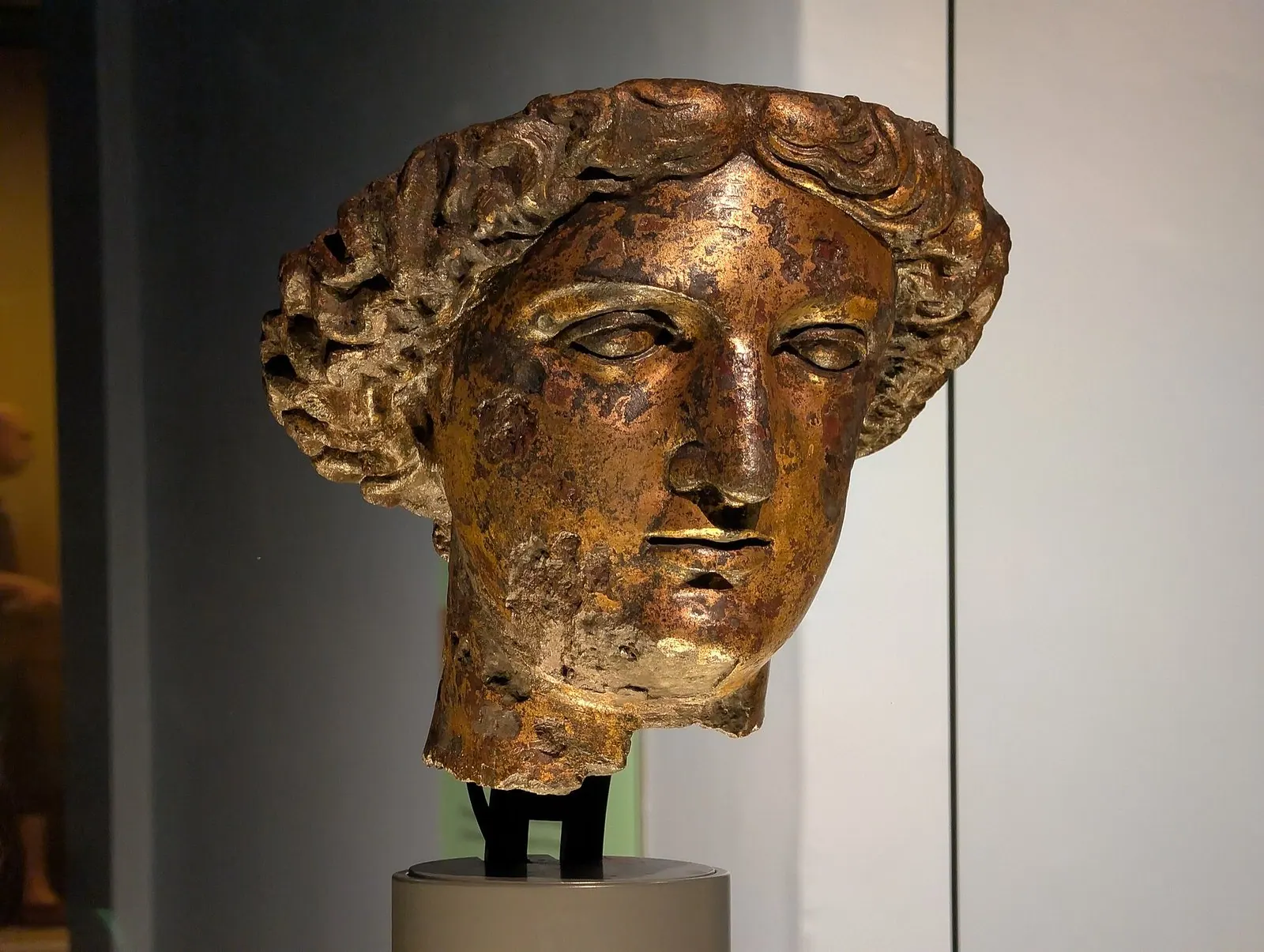
The gilded bronze head of the goddess Sulis Minerva, with curled hair and a calm face, on a museum stand

03

The goddess Sulis Minerva

The temple was for a goddess who joined a local spring spirit with the Roman Minerva.

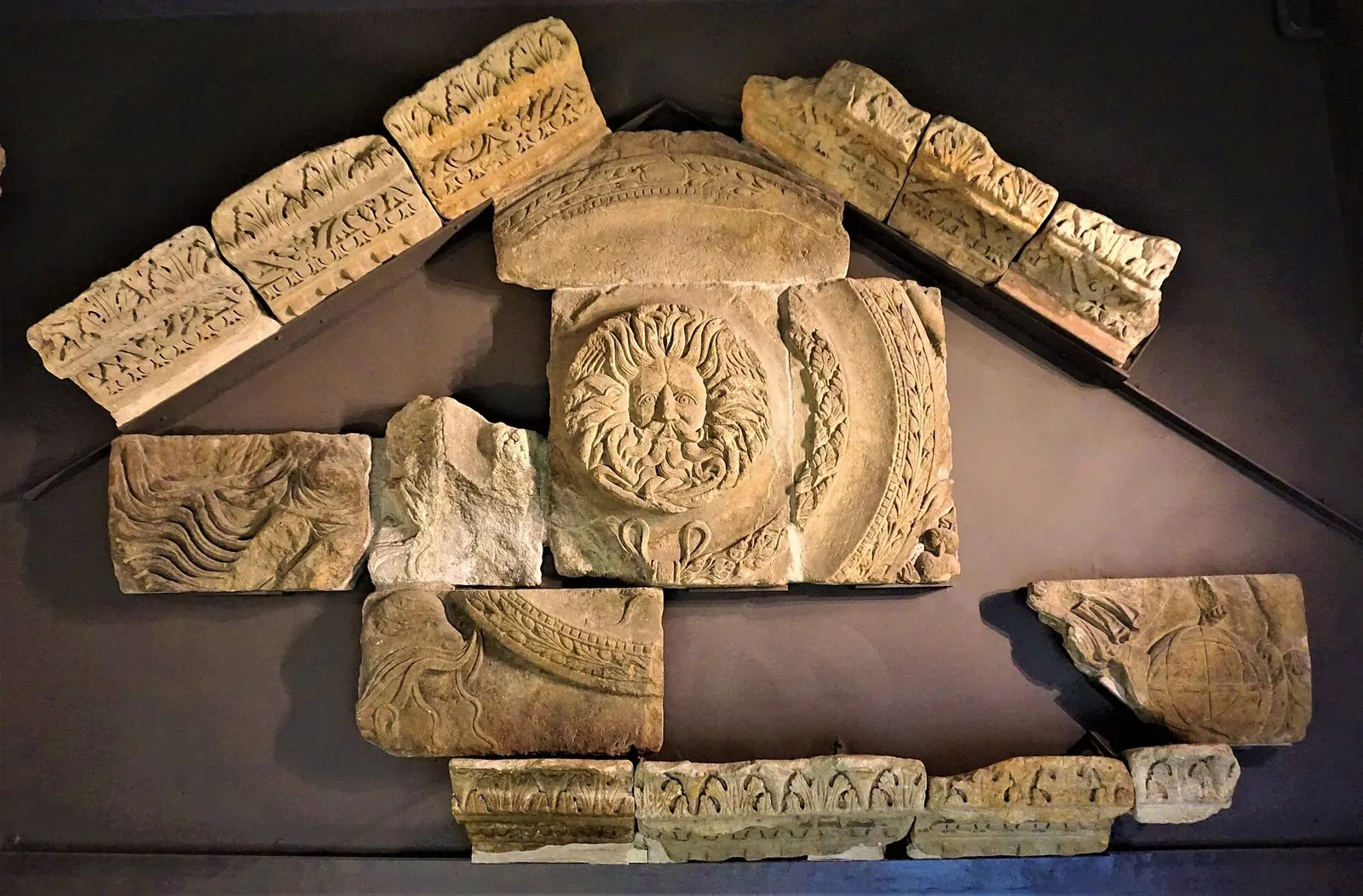
The temple was built in the later 1st century AD in a classical style that is rare in Britain. Its great carved pediment, the triangle above the columns, survives and carries a fierce head thought to be the Gorgon’s head. In 1727 workers found a gilded bronze head of the goddess, slightly bigger than life size and gilded in six layers. Only two other pieces of gilded bronze sculpture are known from Roman Britain.

Look for

The Gorgon’s head on the re-erected pediment, and the gilded bronze head of Minerva in its case.

A Roman curse tablet, a flat sheet of lead scratched with lines of tiny letters, held upright in a museum case

04

Messages to a goddess

People threw coins and written wishes into the spring.

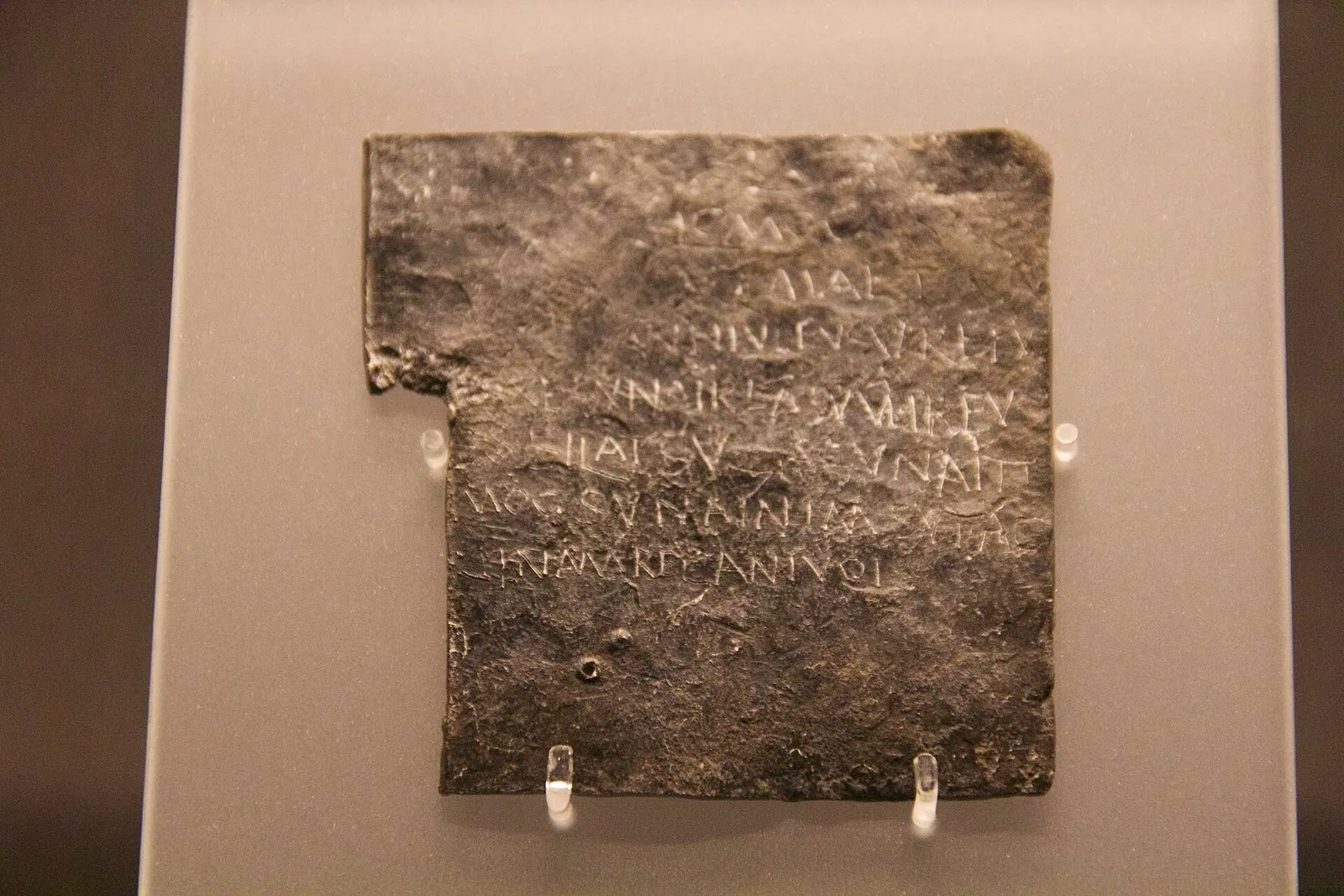
Worshippers threw offerings into the Sacred Spring throughout the Roman period. Some wrote curses on sheets of lead or pewter, rolled them up and threw them in, hoping the goddess would act. The Roman Baths’ curse tablets, which include some of Britain’s earliest prayers, are on UNESCO’s Memory of the World Register. Nearby, the museum shows the Beau Street Hoard, more than 17,000 Roman coins found in Bath in 2007.

Look for

The curse tablets and the Beau Street Hoard in the museum galleries.

Your time there

What to see.

These are the highlights worth looking out for, if your time allows. See how long each tour stops in The Roman Baths →

The route inside is one way, and below street level. The Roman Baths say to allow 90 minutes to 2 hours. Here are the highlights in order of importance.

The green water of the Great Bath at the Roman Baths, with Roman statues on the terrace and Bath Abbey's tower behind
Don’t miss

The Great Bath, from terrace to pool

Your first view of the steaming Great Bath, from the terrace, framed by statues of Roman emperors carved in 1894. Then walk round the pool itself, where the Romans walked.

About 20 min · Included in the entry ticket

The terrace has level access. You see less than a quarter of the whole site from here.

The green water of the Sacred Spring pool seen through a stone arch, with a statue niche and a plaque on the wall behind

The Sacred Spring

The chamber where hot water rises, with the King’s Bath above it and a statue of King Bladud, the legendary founder of Bath.

About 10 min · Included in the entry ticket

Carved stone pieces from the Temple of Sulis Minerva's pediment laid out on a dark wall, with a fierce bearded face at the centre

The temple pediment and Minerva’s head

The great carved pediment with its Gorgon’s head, and the gilded bronze head of the goddess Sulis Minerva.

About 10 min · Included in the entry ticket

Seats face a short film that shows how the pediment looked in Roman times.

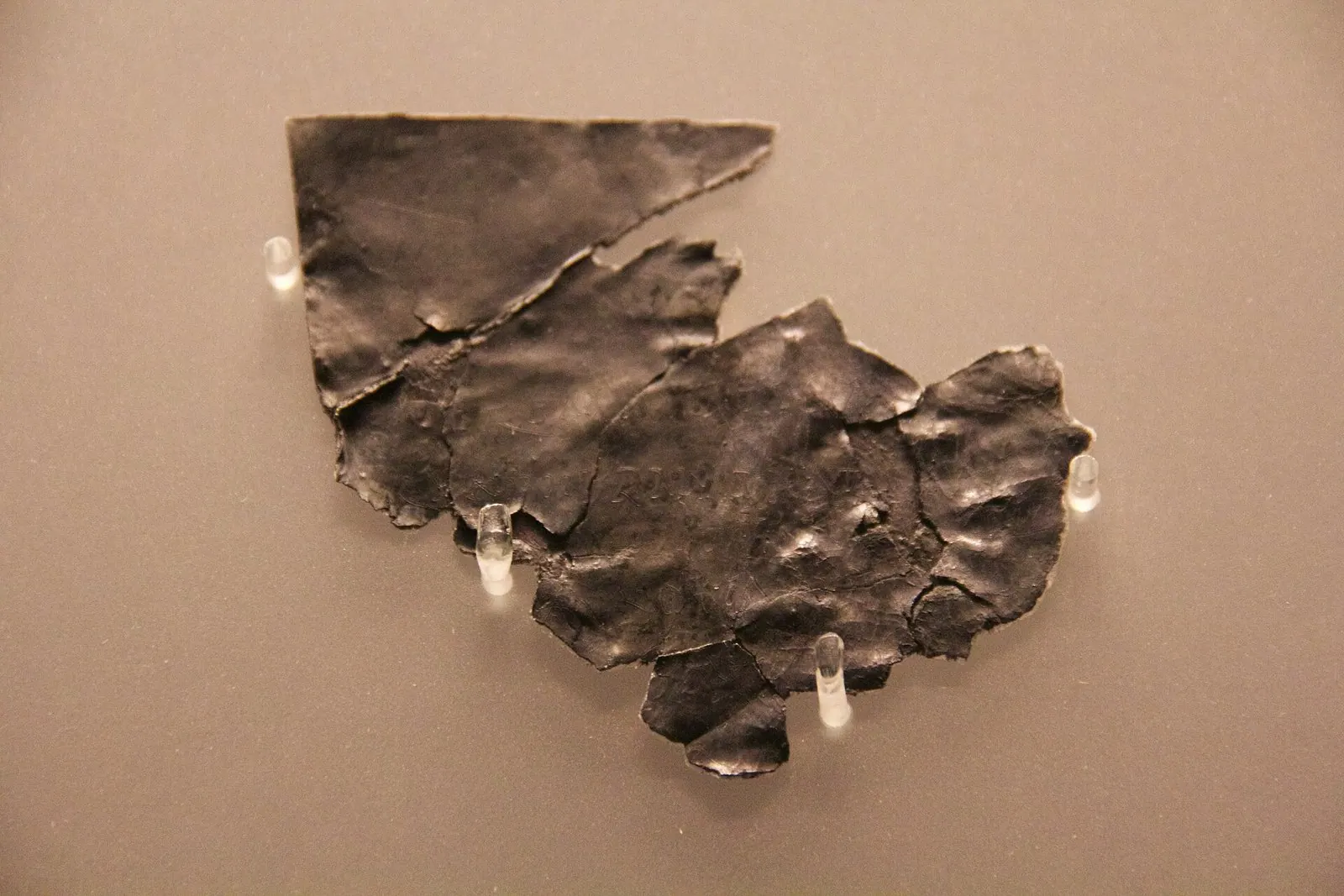
A crumpled sheet of lead, one of the curse tablets from the Roman Baths, held on small clear mounts in a museum case

The curse tablets

Rolled lead and pewter sheets with messages to the goddess, some of Britain’s earliest prayers.

About 10 min · Included in the entry ticket

The gallery on life and death includes human remains. Check the Roman Baths page for any gallery closures on your date.

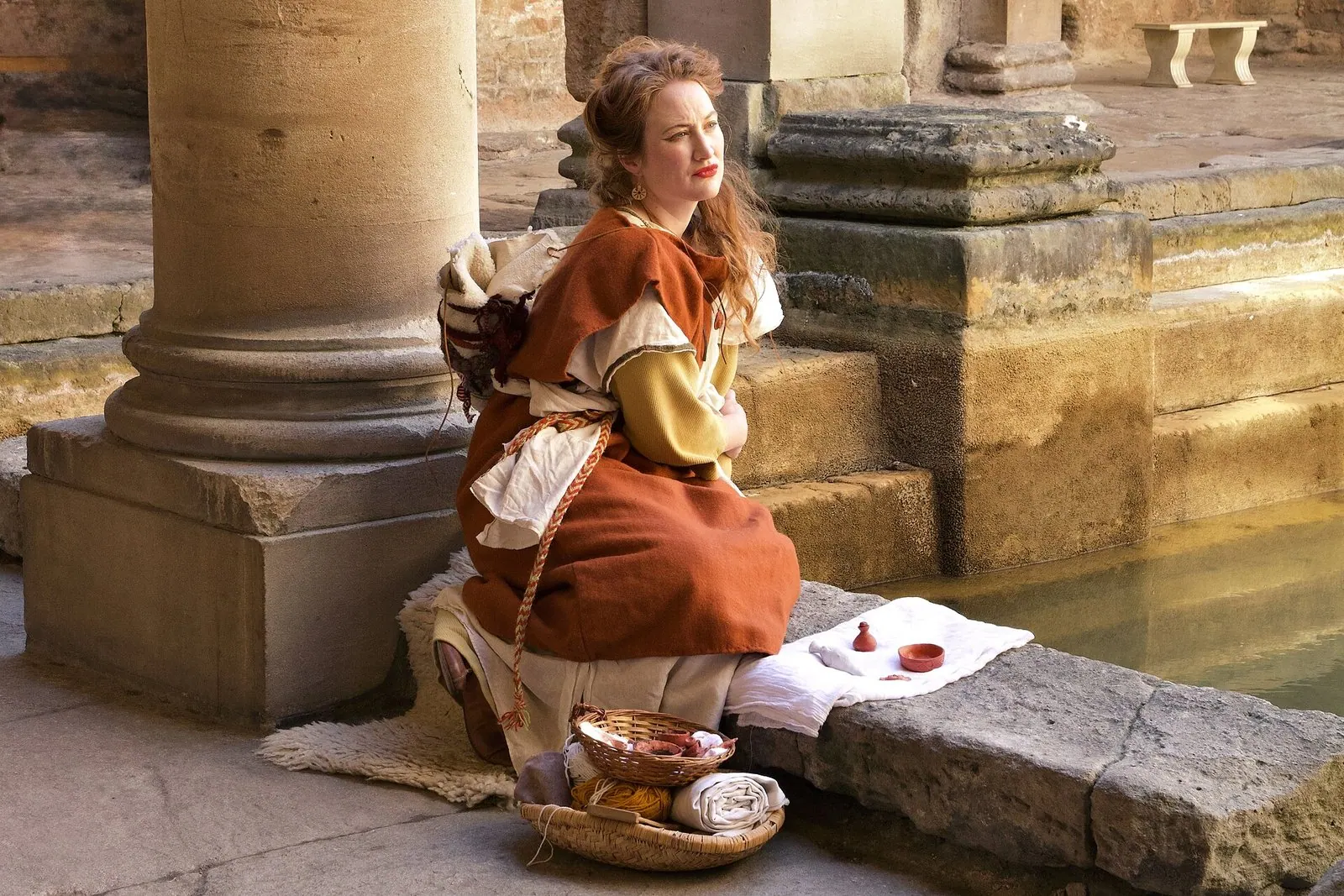
A woman dressed as a Roman sits at the edge of the Great Bath beside a basket and a white cloth, next to a stone column

The Roman characters

Costumed Romans, such as a soldier or a stonemason, based on real people who lived here 2,000 years ago.

About 15 min · Included in the entry ticket

Which characters appear changes from day to day.

1 of 5

Swipe for all five highlights →

Practical answers

Before you go.

The questions people ask before they book.

Can I swim or touch the water?

No. The water in the Great Bath is untreated and unsafe to touch or drink. Thermae Bath Spa nearby uses the same water, treated so that it is safe for bathing. Your ticket includes a chance to taste the spa water. Roman Baths: frequently asked questions → (opens in a new tab)

Is the site wheelchair accessible?

Mostly. About 90 percent is step-free, with four lifts, but the baths lie about six metres below street level. Some steps remain, and the Roman floors are uneven and can be slippery. Roman Baths: frequently asked questions → (opens in a new tab)

What should I know before I go?

Entry is by timed ticket, tickets often sell out in summer, and the route is one way. You cannot touch or drink the Great Bath water, and some steps and uneven Roman floors remain. Roman Baths: frequently asked questions → (opens in a new tab)

What can I bring in?

Backpacks up to 30 litres, kept with you. No luggage, large rucksacks or food, and only water in a sealed bottle. There is no luggage storage. Pushchairs stay in the reception hall. Roman Baths: plan your visit → (opens in a new tab)

Where are the toilets and somewhere to eat?

The Roman Baths say there are two sets of toilets. One is near the main reception, before you buy your ticket. The other is at the very end of the visit. Only water may be taken inside, so eat before or after. Their page names the Pump Room Restaurant as a favourite for afternoon tea. Roman Baths: plan your visit → (opens in a new tab)

Is an audioguide included?

Yes. Admission includes an audioguide in one of thirteen languages, and a free children’s audioguide narrated by Michael Rosen is available in five. A guided tour is an extra, in English only. Roman Baths: plan your visit → (opens in a new tab)

Can I leave and come back in?

No. The route is one way, so there is no re-entry. Plan food and shopping for before or after your visit. Roman Baths: frequently asked questions → (opens in a new tab)

Free day guide

Get the free Bath and Stonehenge day guide

The guide has a page for each stop, with what to see in 30, 60 or 90 minutes, and where to find toilets and food.

Unsubscribe any time. Privacy

When to go

What changes through the year.

The Roman Baths are open nearly every day of the year, but the hours and the light change.

Spring

At Easter the Roman Baths have stayed open later, until 8 pm with last entry at 7 pm, and the Great Bath is lit by torchlight. Check whether late openings run on this year's Easter dates. Bath & North East Somerset Council: Easter at the Roman Baths → (opens in a new tab)

Summer

Tickets often sell out in summer, so book at least 24 hours ahead. The torches around the Great Bath are lit at about 6 pm. Roman Baths: frequently asked questions → (opens in a new tab)

Autumn

In autumn the Roman Baths are open daily. After 31 October the hours change for winter, so check the official page for your date. Roman Baths: plan your visit → (opens in a new tab)

Winter

The Great Bath torches are lit at about 4 pm. The site is open every day except 25 and 26 December, and the hot spring heats the buildings in winter. Roman Baths: the Pump Room → (opens in a new tab)

The Roman Baths close early on 24 December and open later on 1 January. Check the official page for the hours on your date. Roman Baths: plan your visit → (opens in a new tab)

A taste and a keepsake

Something to taste or take home from the Roman Baths.

Here are small extras to taste or take home at the site itself, if you have time for a treat.

Just ideas for any free time you get.

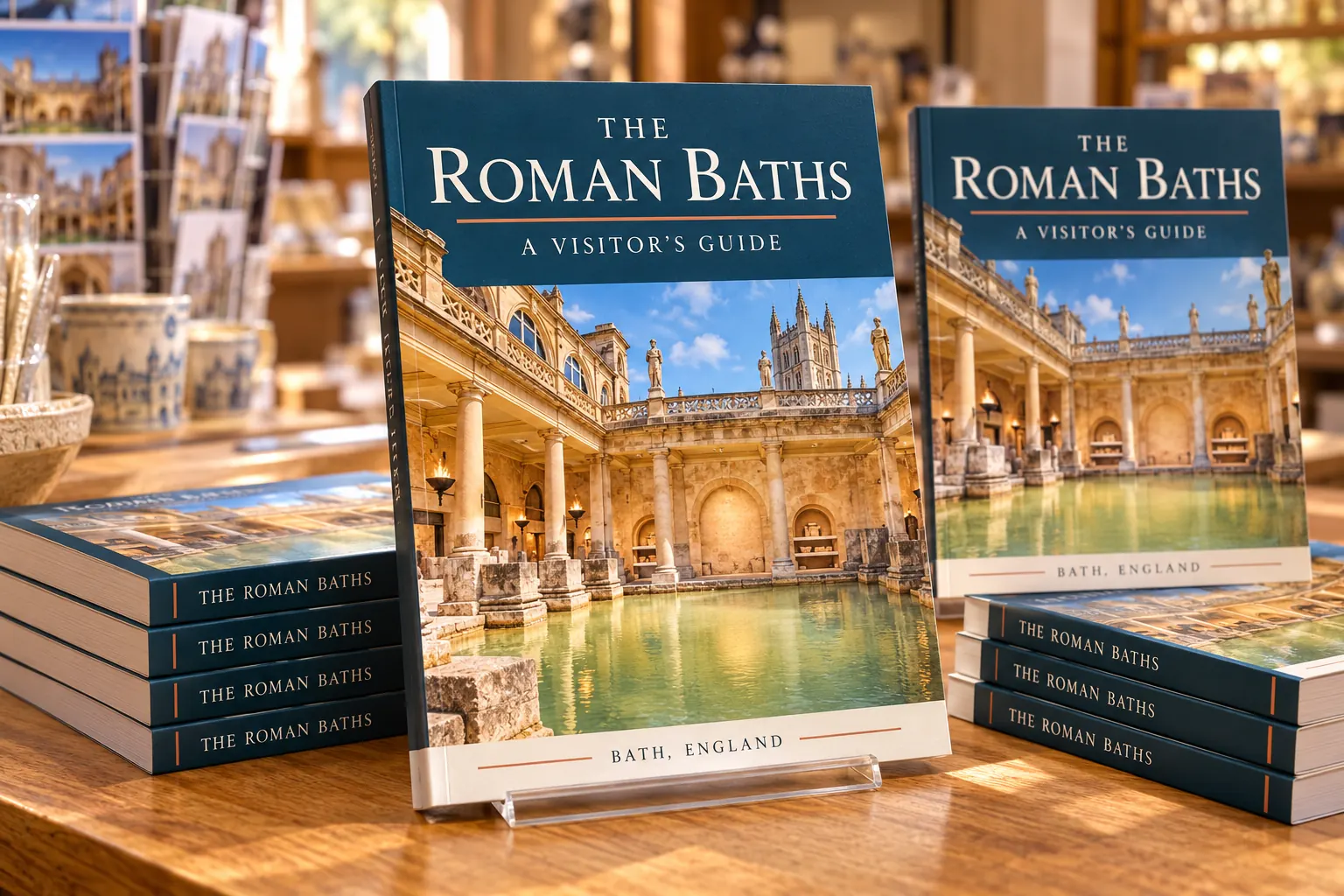
Stacks of guidebooks titled The Roman Baths on a wooden gift-shop table, one standing upright with a cover photograph of the Great Bath and Bath Abbey's tower behind it
Illustrative
Take home

The official guidebook

The shop sells the Essential Roman Baths guidebook, the official guide to the site. It explains why and how the baths were built and describes many of the greatest treasures.

Where to find itIn the Roman Baths shop, or bought with your ticket.

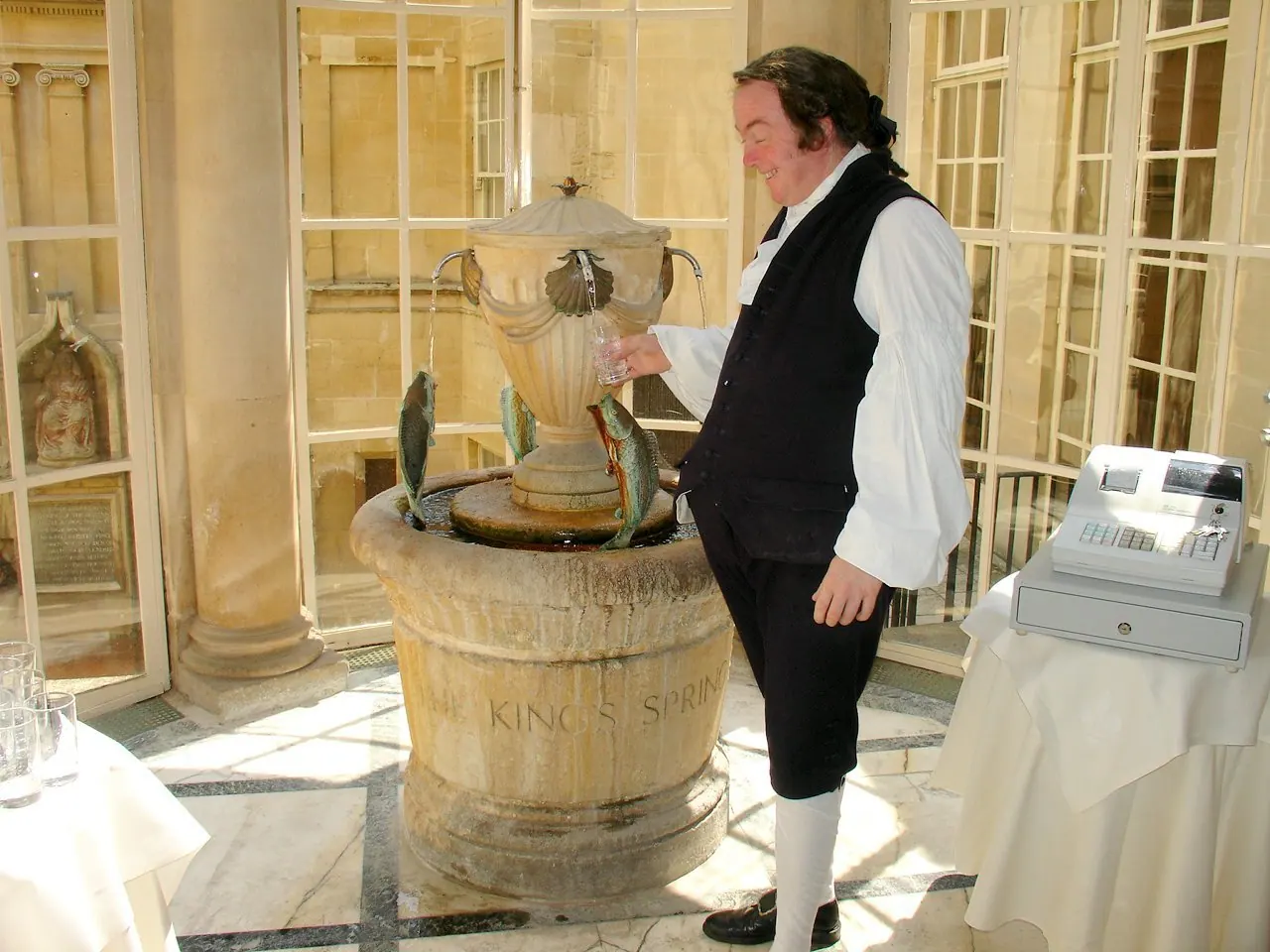
A man in eighteenth-century dress holds up a small glass of spa water beside the King's Spring drinking fountain
Taste

A taste of the spa water

At the fountain you can try the hot spa water. The Roman Baths say it contains 43 minerals and has a rather unusual taste, and that your ticket includes a chance to taste it.

Where to find itIncluded with Roman Baths admission.

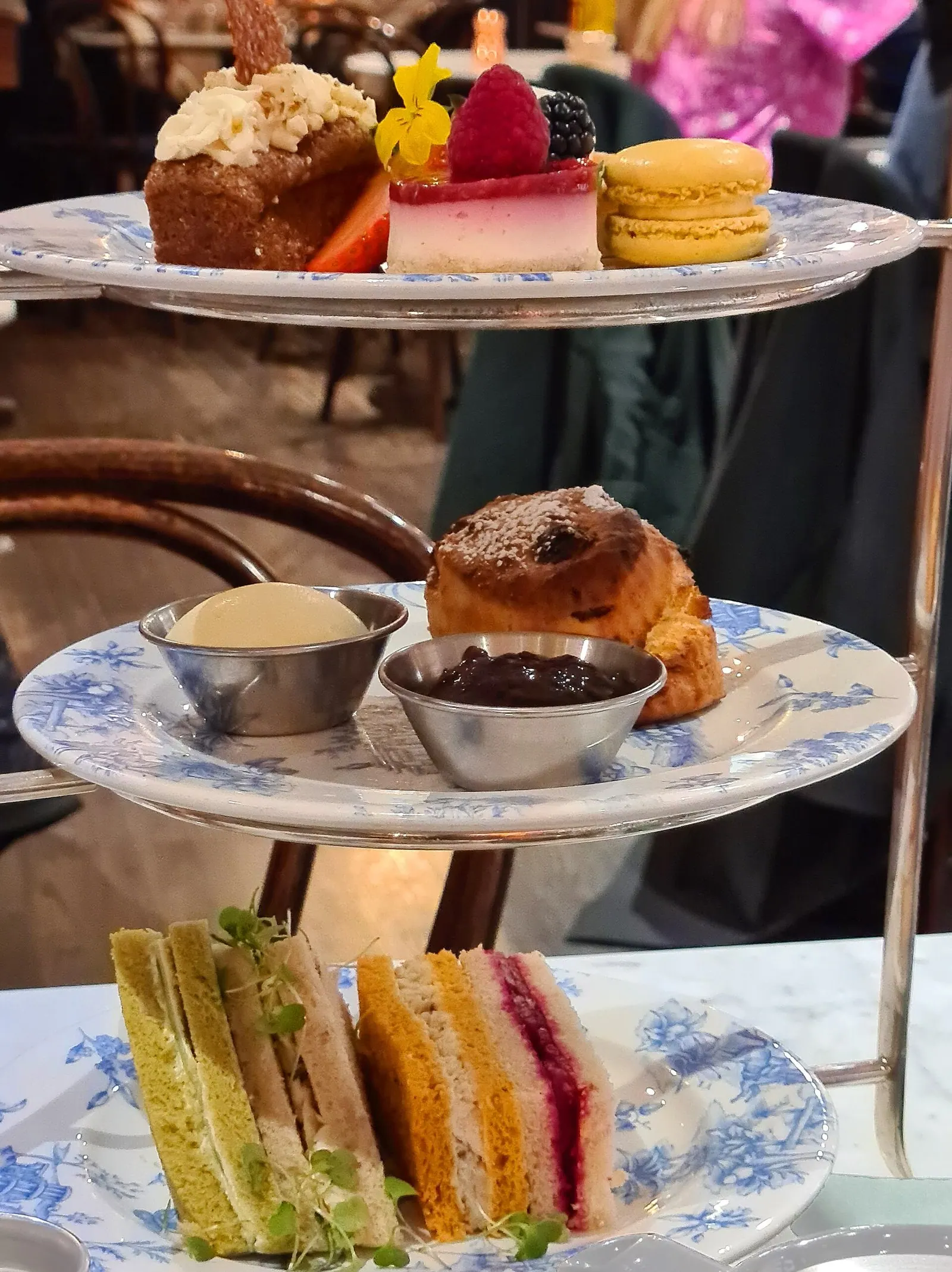
A three-tier afternoon tea stand with sandwiches below, a scone with jam and cream in the middle, and small cakes and a macaron on top
Illustrative
Taste

Jane Austen afternoon tea

The Pump Room restaurant serves a Jane Austen Afternoon Tea, inspired by Regency tea traditions. You get finger sandwiches, warm scones with clotted cream and cakes.

Where to find itIt must be booked, and it takes time, so only for a longer stop.

Plan your day

Help with choosing.

Also in Bath and Stonehenge

Places on the same day trips.

All Bath and Stonehenge day trips →
Picture credits and sources

Pictures

Image sources and credits are listed here. Pictures made with AI are marked.

Tour photographs are provided by the tour operators through Viator and are shown from Viator’s own image servers.