The real England, in one easy day from London
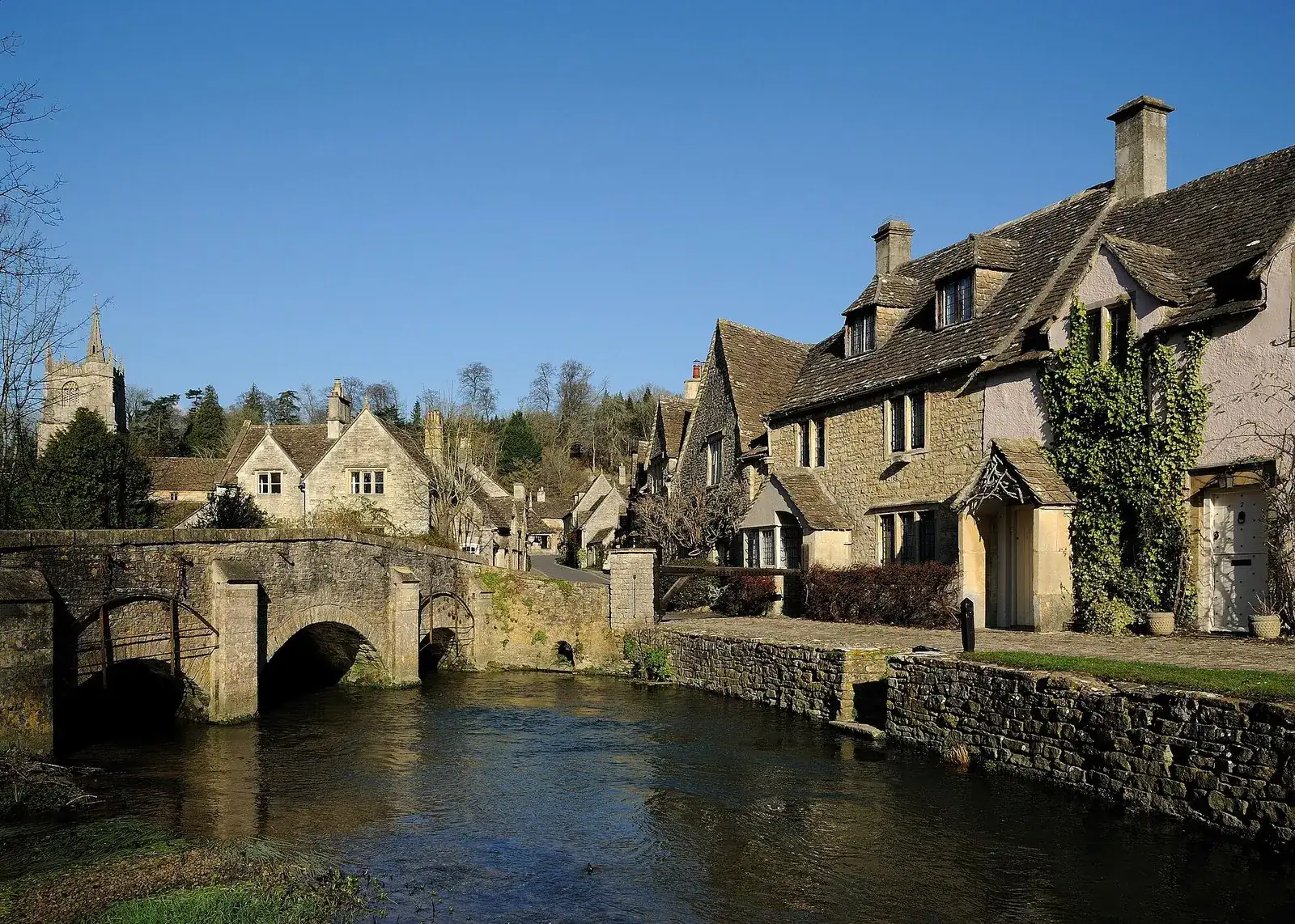
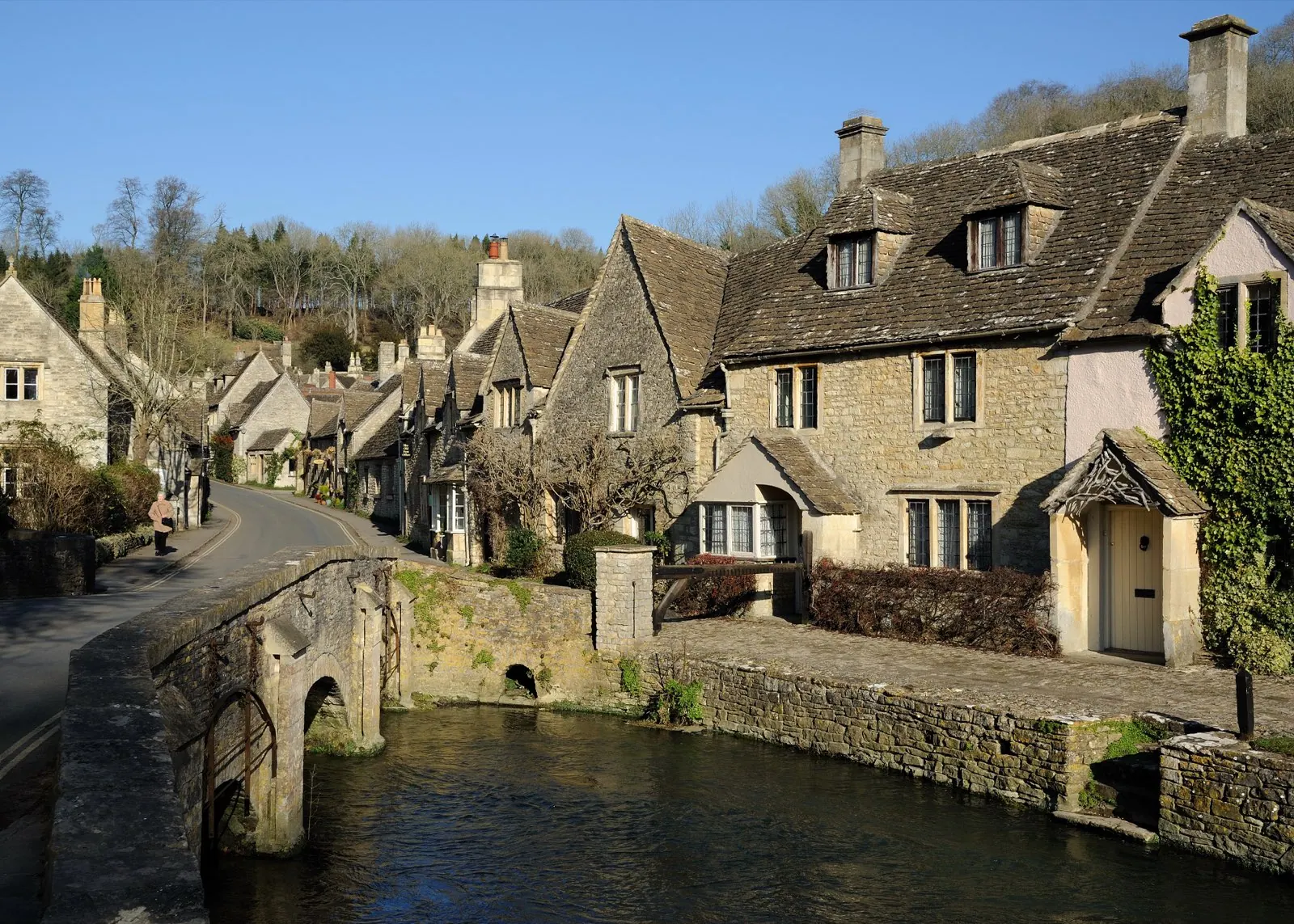
Stone cottages beside the old bridge over the By Brook in Castle Combe

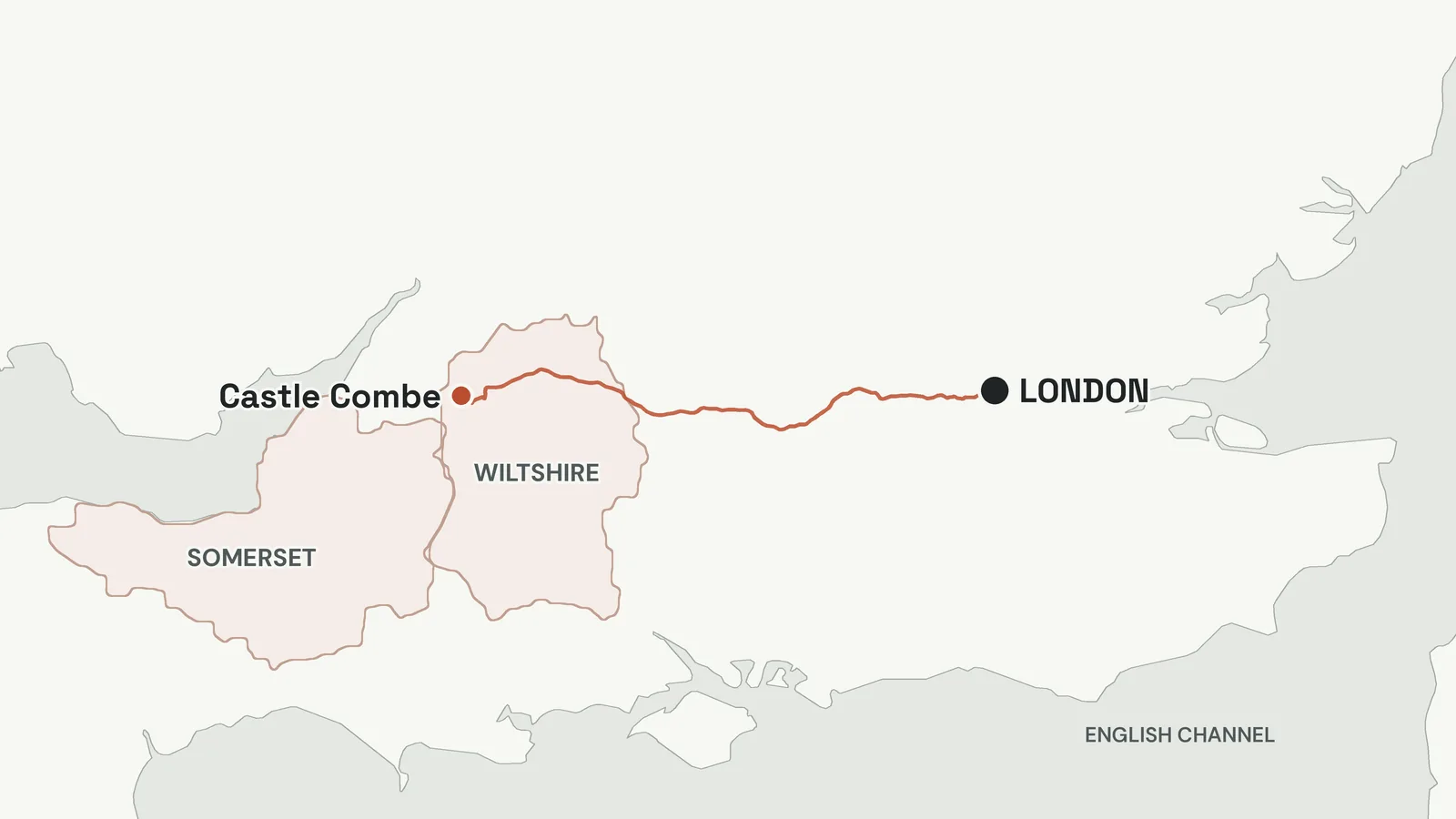
A Cotswold village to discover from London

Castle Combe

Wiltshire, near Chippenham · a day trip from London

See how long each tour stops in Castle Combe →

Why it matters

Why Castle Combe matters.

Castle Combe was a rich cloth-making village long before it was a pretty one. Here is how wool built these cottages, what the market cross and church tell you, and how film crews came to the street.

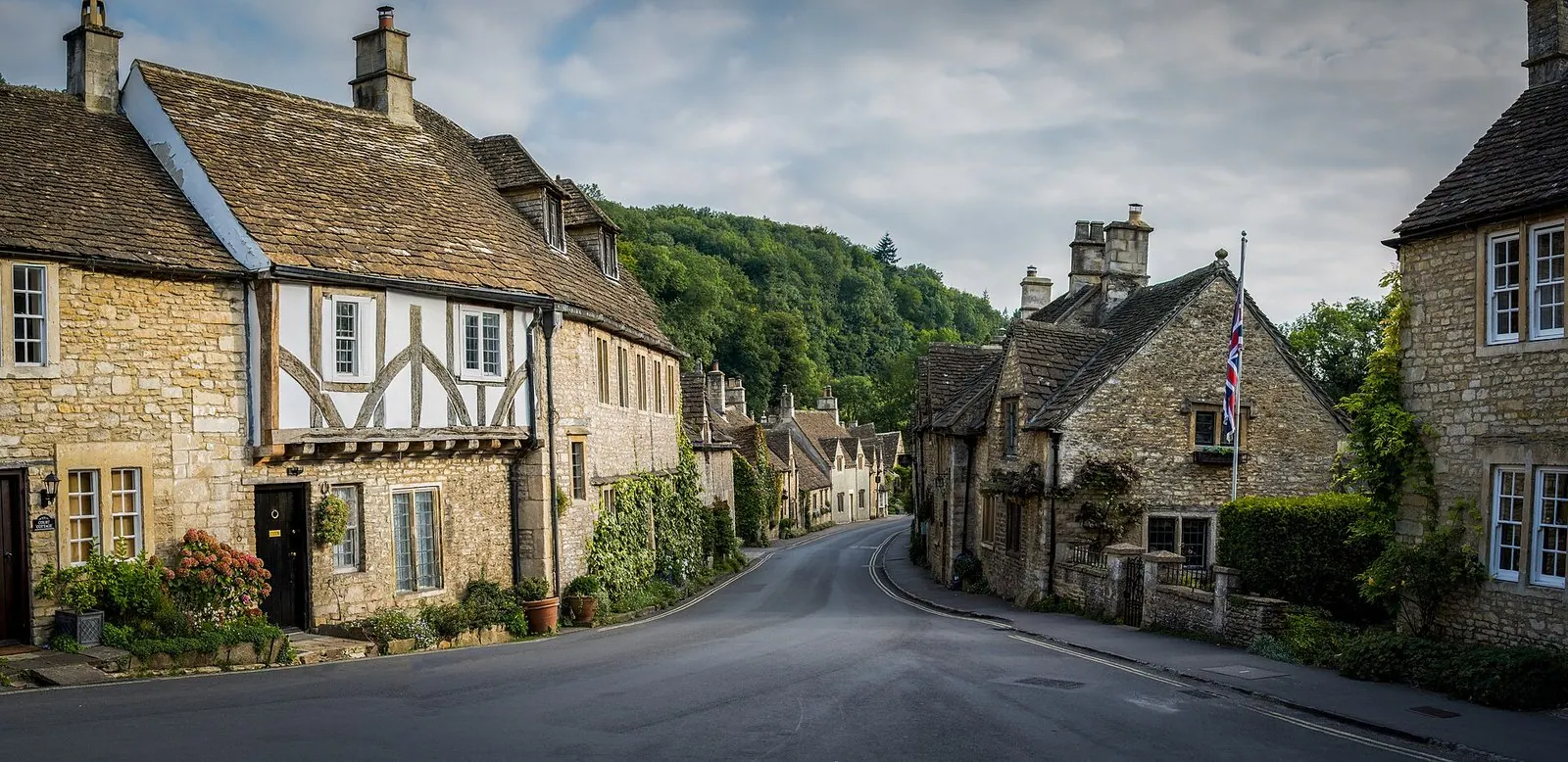
An empty village street curving between honey-stone and half-timbered cottages, with a flagpole and a wooded hill rising behind in Castle Combe

01

A cloth trade built the street

The cottages you walk past grew from a medieval weaving trade.

In the Middle Ages, fast water in the By Brook powered mills that turned local wool into cloth. A red and white cloth was sold under the village’s name. Sir John Fastolf, who owned the estate, bought it for his soldiers in France. About 50 houses were built in the 1400s. They set the street pattern you still walk today.

Look for

The tight rows of stone cottages along the street, and the brook that once drove the mills.
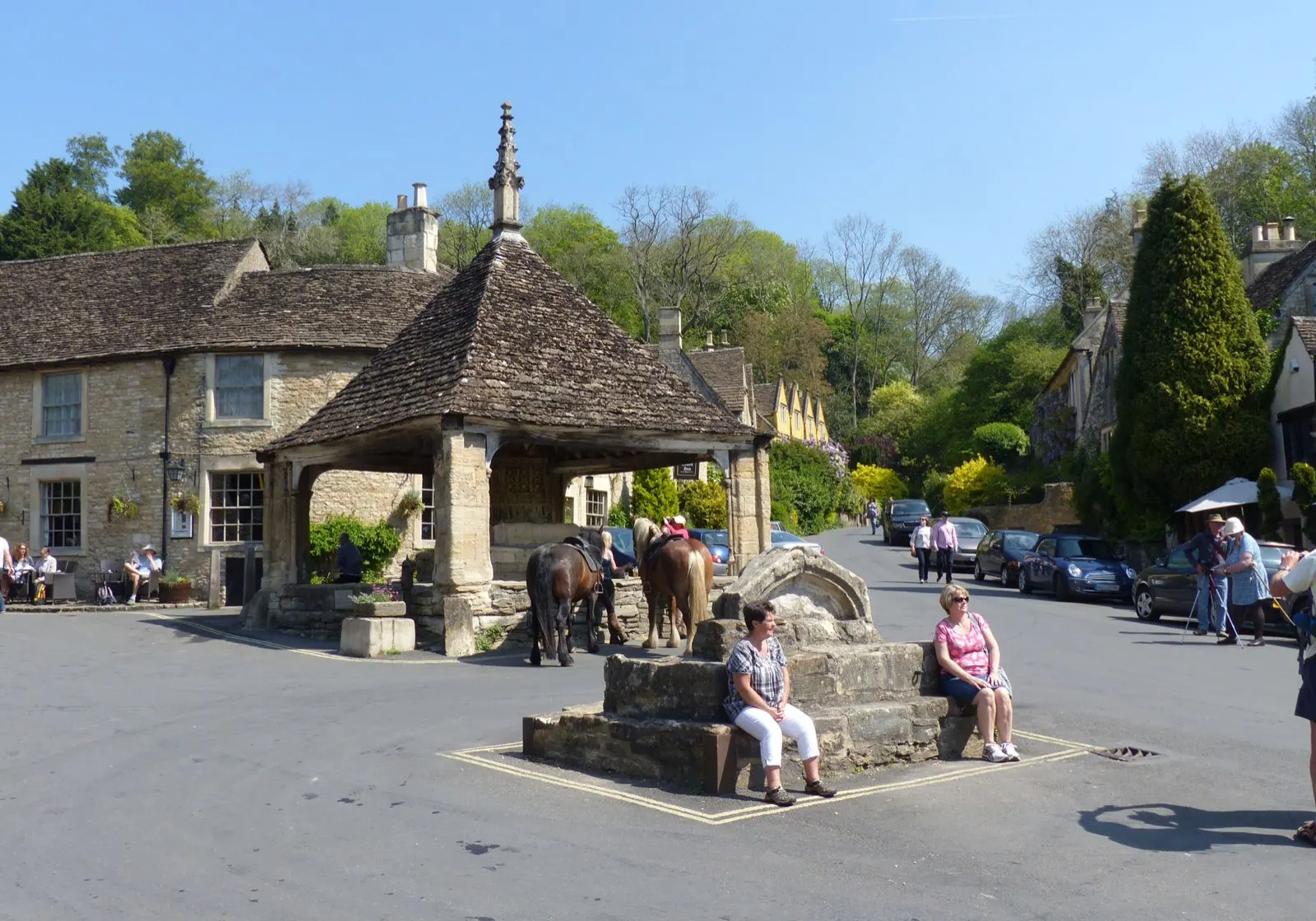
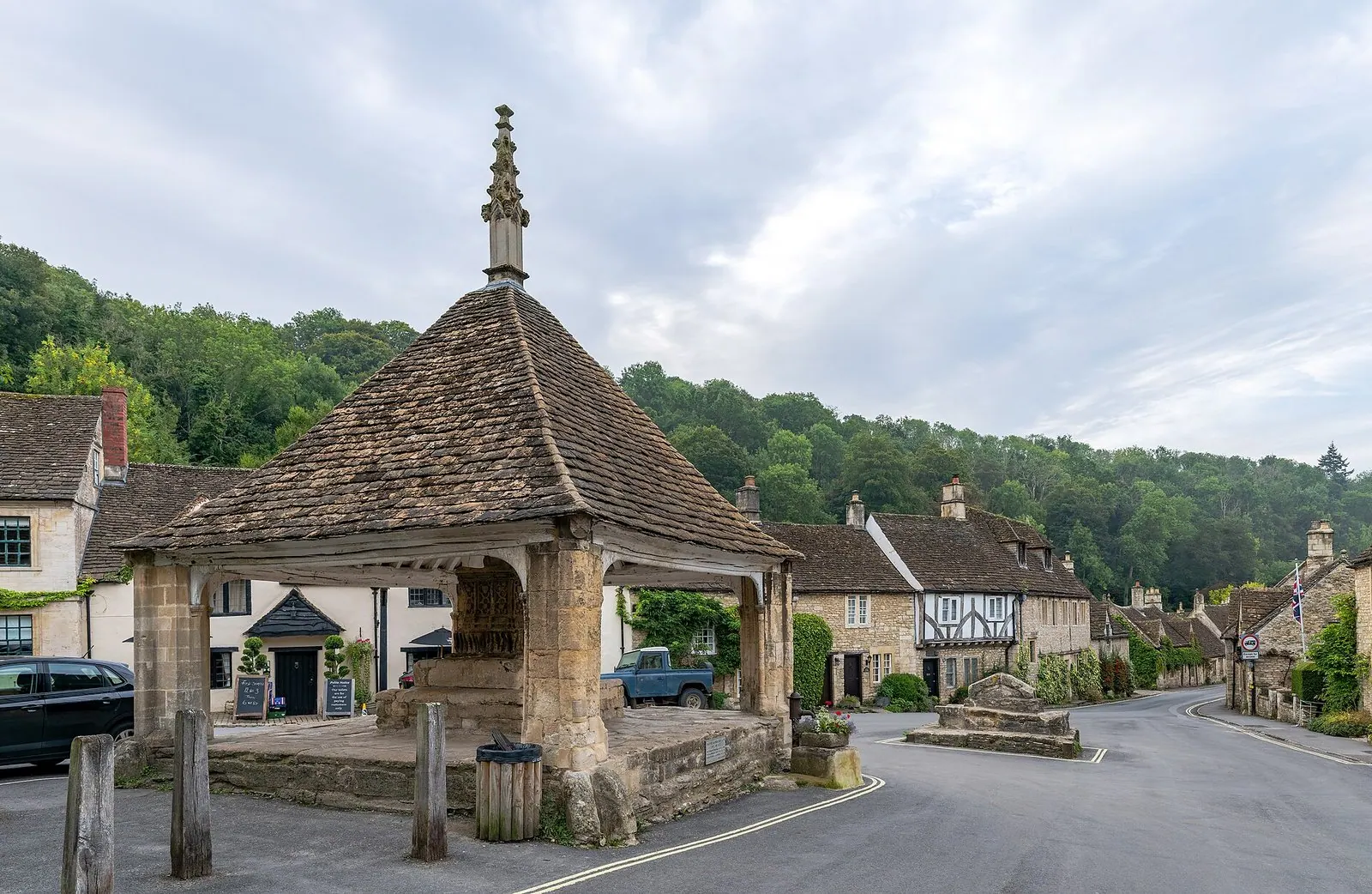
The roofed medieval market cross in Castle Combe, with stone houses around it

02

The market cross marks the old centre

The roofed stone cross beside the church is a reminder of the village market.

Historic England describes a medieval cross in the market place, with a pyramid-shaped tiled roof held up by four stone piers. The villagers repaired it in 1590. A market house once stood next to it. It was taken down about 1840 to widen the road, and the market ended early in the 1900s. The cross is protected by law.

Look for

The carved roses and shields on the stone base under the roof.

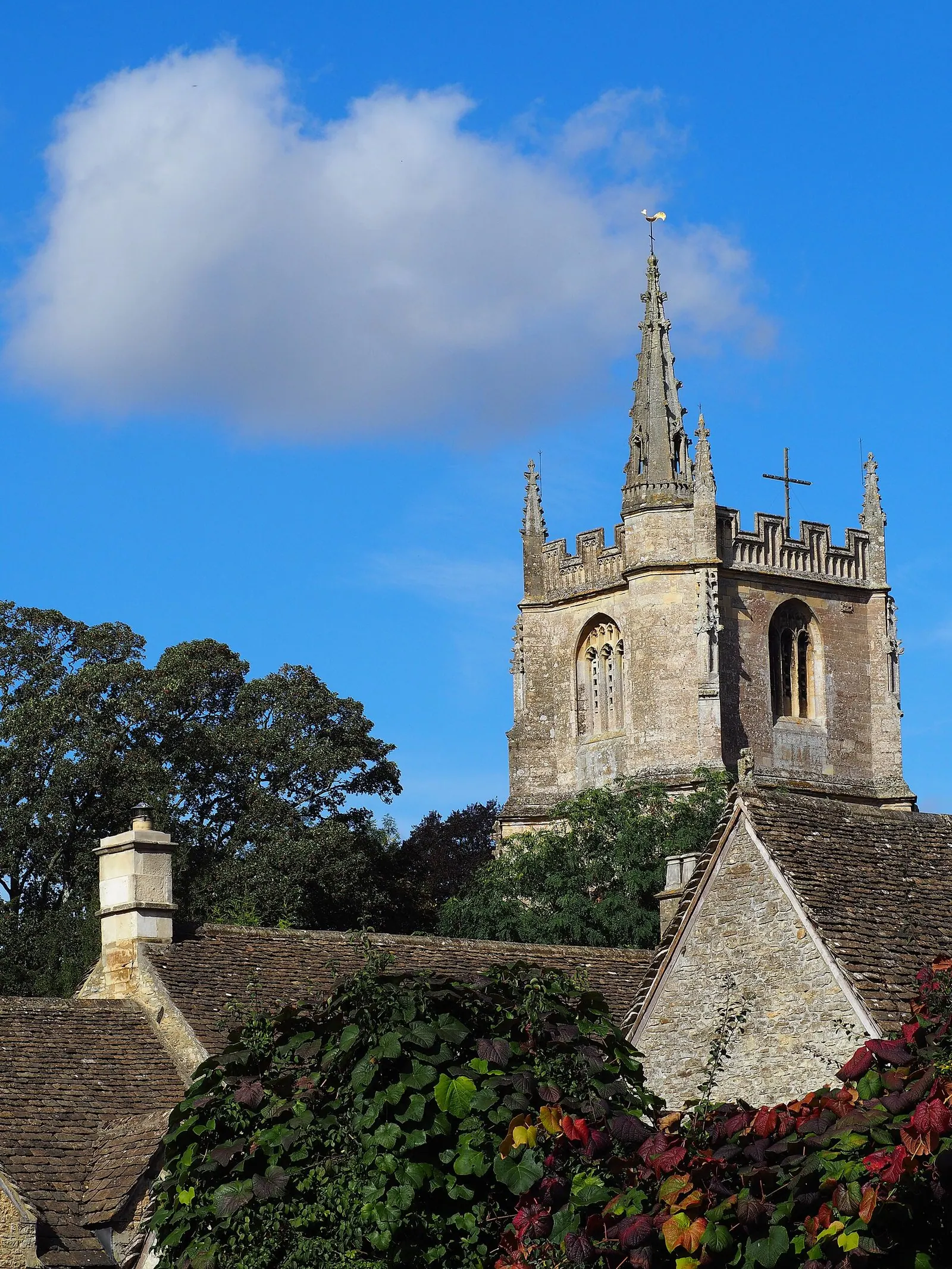
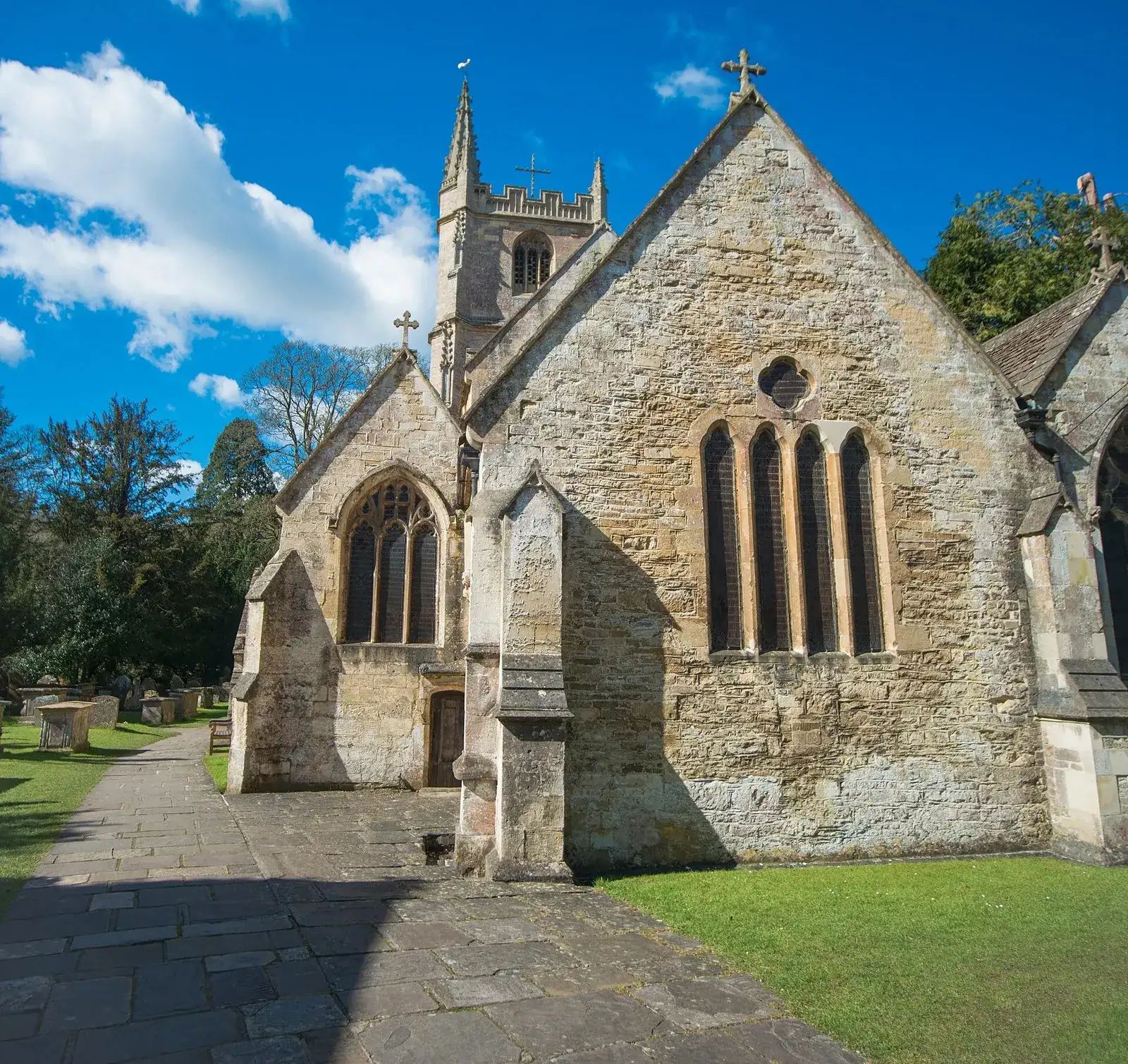
A stone church tower with battlements, corner pinnacles, a spire and a cross against a clear blue sky, with trees below.

03

The church clock has no face

Inside St Andrew’s Church, look at the base of the tower.

A faceless clock, one with no dial, stands there. It is believed to have been made by a local blacksmith and is among the oldest working clocks in the country. Wealthy wool merchants paid for the tower, which was started in 1434. Above you is fan vaulting like that in Bath Abbey. On the north side lies the stone figure of a knight who died in 1270.

Look for

The faceless clock and the vaulted ceiling above it, then the knight with crossed legs.

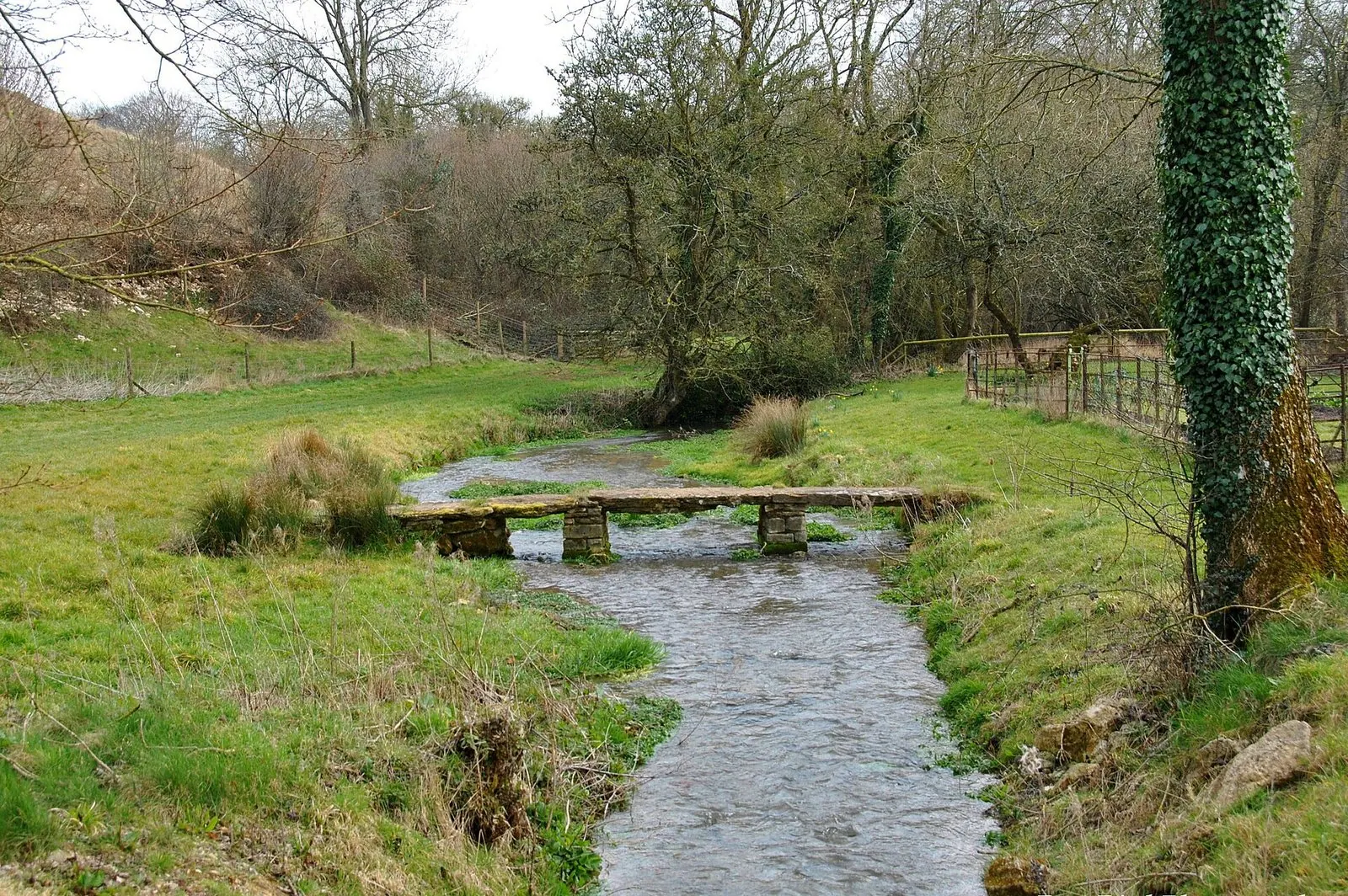
A flat stone clapper bridge crossing a stream through green grass, with bare winter trees behind.

04

A village that became a film set

In 1962 a national newspaper named Castle Combe the prettiest village in England.

Visitor numbers rose sharply afterwards, and the village was chosen as the location for a Hollywood film about Doctor Dolittle. Parts of it were rebuilt for the cameras. The By Brook was turned into a fishing harbour, and plastic cobbles were laid over the roads. A car park was built later, away from the narrow streets, to keep visitors’ cars out of the centre. The parish council adds that you may know the village from the films Stardust and War Horse.

Look for

The bridge over the By Brook and the view back up the street, the scene that cameras keep returning to.

Your time there

What to see.

These are the highlights worth looking out for, if your time allows. See how long each tour stops in Castle Combe →

Castle Combe is a living village, so the highlights are the streets and buildings themselves. The parish council says the average visit lasts just over an hour.

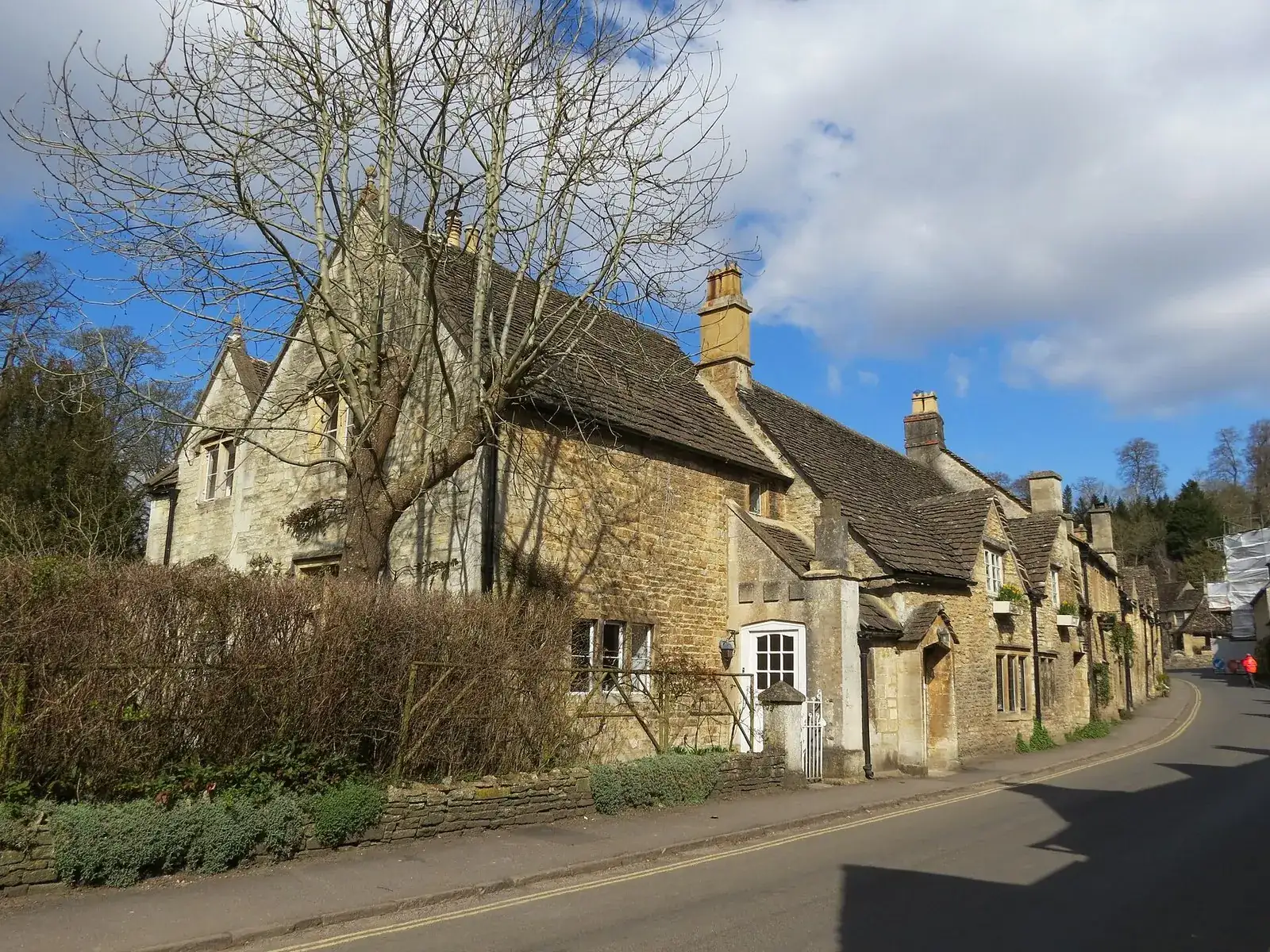
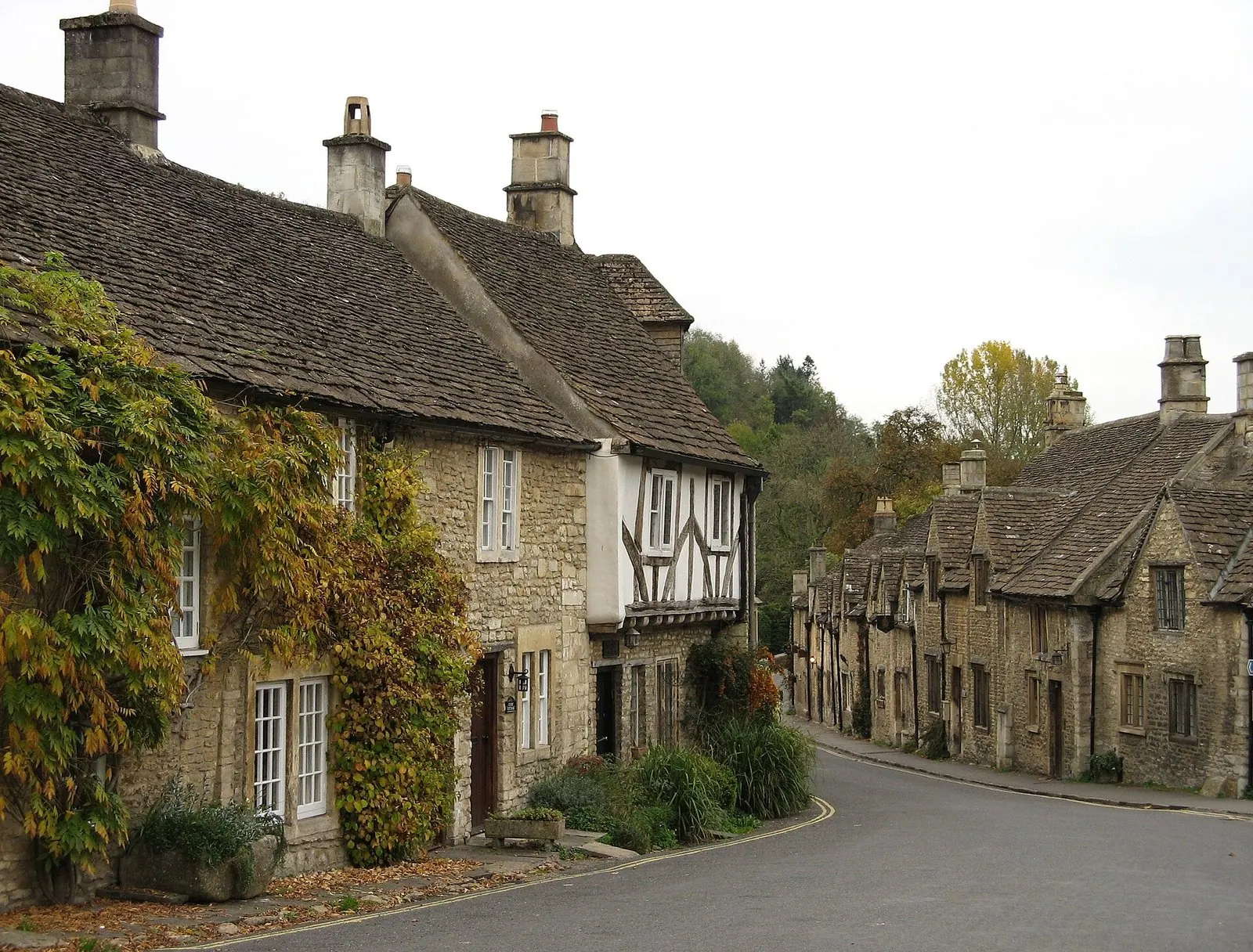
A row of honey-coloured stone cottages and a gabled house beside a bare tree and a curving road, under a blue sky with cloud.
Don’t miss

The honey-coloured cottages

Rows of old stone cottages in a wooded valley. The parish council says the village has changed very little over the centuries.

About 15 min · Free

The lanes are narrow and often have no pavements, so walkers share them with cars, bikes and horses.

The medieval market cross at Castle Combe, a stone-pillared shelter with a pyramid tile roof and finial, beside the village street with cottages and a wooded hill behind

The medieval market cross

A stone cross under a pyramid-shaped tiled roof in the market place, carved with roses and shields.

About 5 min · Free

A stone bridge over a calm brook beside honey-coloured stone cottages with ivy, with a church tower among trees and a blue sky.

The bridge over the By Brook

The stone bridge at the bottom of the street, with the brook below and the cottages rising behind it.

About 10 min · Free

Public toilets are just south of the bridge.

The gable of a stone church with a pointed window, a small round window and a cross, seen from a path, under a blue sky.

St Andrew’s Church

A church with a faceless clock, fan vaulting in the tower, and the tomb of a knight who died in 1270.

About 10 min · Free

The church is open every day of the year during daylight hours.

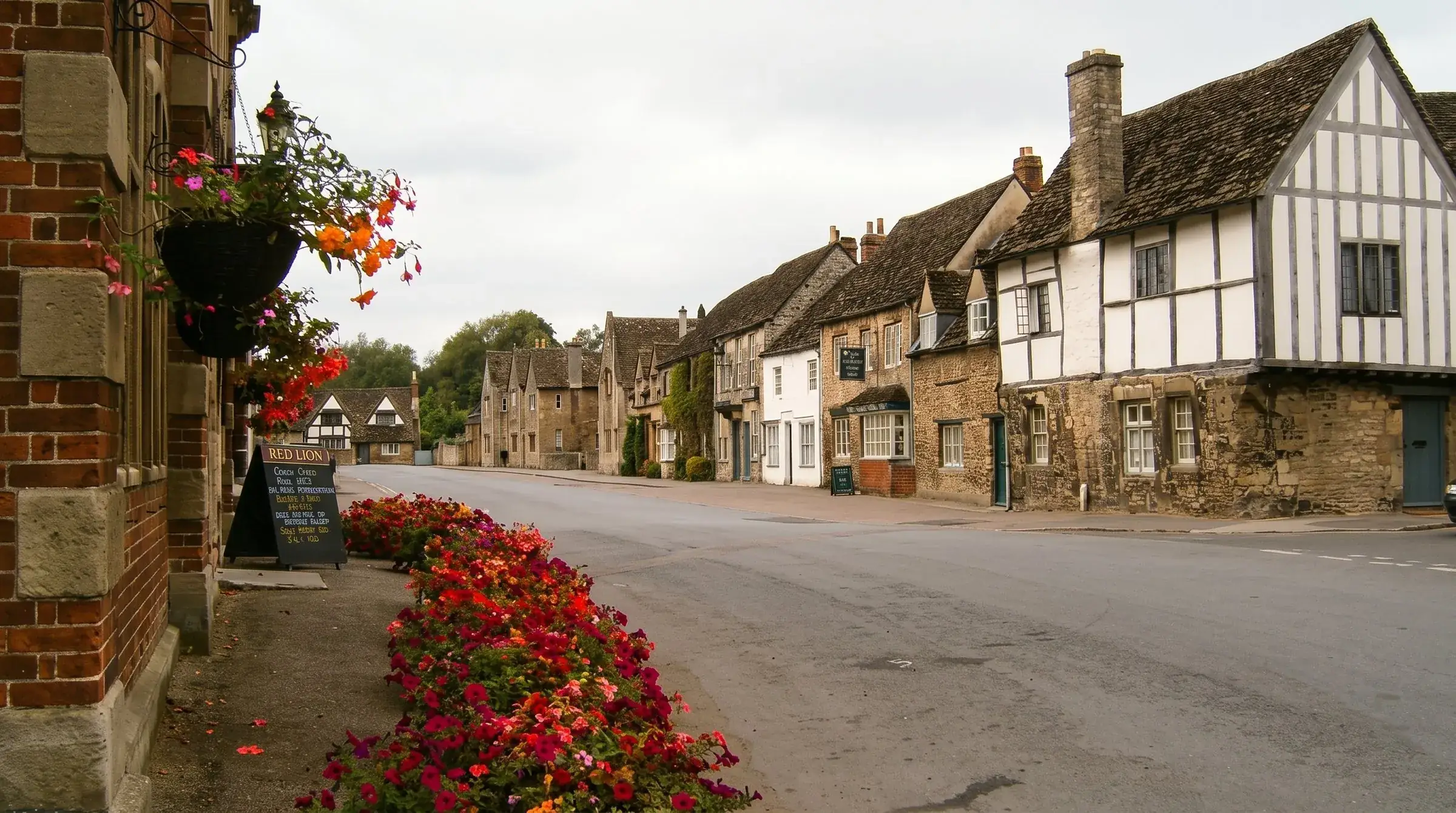
A row of ivy-covered stone cottages with a half-timbered house along a curving road under a grey sky.

The old buildings round the market place

Houses and inns from the 1500s and 1600s, such as the Old Court House, built early in the 1500s, and the White Hart.

About 10 min · Free

1 of 5

Swipe for all five highlights →

Choose your day

Which day suits you?

Practical answers

Before you go.

The questions people ask before they book.

Can I reach Castle Combe from London?

It is in north-west Wiltshire, close to Bath and Lacock.

Do I need a ticket to visit the village?

No. Castle Combe is a village where people live, and there is no charge to walk its streets. St Andrew’s Church is open every day in daylight hours. Bybrook Benefice: St Andrew, Castle Combe → (opens in a new tab)

What should I know before I go?

This is a lived-in village. About 50 people live in the centre, the lanes are narrow and often have no pavements, and there are no rows of gift shops. Castle Combe Parish Council: visiting responsibly → (opens in a new tab)

Is the village easy to walk around?

The lanes are narrow and often have no pavements. Walkers share them with cars, delivery vans, bikes and horses, so keep children close. The visitor car park is in Upper Castle Combe, a walk away from the old centre. Castle Combe Parish Council: visiting responsibly → (opens in a new tab)

Are there toilets, shops or cafés?

Public toilets are just south of the bridge over the By Brook. There are no rows of gift shops. The parish council names the Castle Inn, the White Hart and the Manor House Hotel for lunch or dinner, and asks visitors to enjoy a cream tea. Book ahead if you plan to eat. Castle Combe Parish Council: visiting responsibly → (opens in a new tab)

When is Castle Combe quietest?

Early morning or late afternoon, and on weekdays. The parish council says spring and autumn are calmer than summer, and that early morning or late afternoon is calmer than the midday crowds. It says weekdays are better than weekends, and asks visitors to avoid bank holidays, when the car park is likely to be full. Castle Combe Parish Council: visiting responsibly → (opens in a new tab)

How can I be a good visitor?

Stay out of private gardens and do not lean on windowsills. Keep paths and the road clear when you take photographs, and respect residents’ privacy. Take your litter with you if the bins are full. Castle Combe Parish Council: visiting responsibly → (opens in a new tab)

Compare

Compare day trips from London.

Booking links earn us commission, at no extra cost to you. Viator handles the booking.

Compare all Bath and Stonehenge tours →

Free day guide

Get the free Bath and Stonehenge day guide

The guide has a page for each stop, with what to see in 30, 60 or 90 minutes, and where to find toilets and food.

Unsubscribe any time. Privacy

When to go

What changes through the year.

The village is open to walkers all year, but the parish council says when it is quietest.

Spring

Spring and autumn are the shoulder seasons that the parish council recommends, when the village is calmer than in summer. Avoid bank holidays, when the car park is likely to be full. Castle Combe Parish Council: visiting responsibly → (opens in a new tab)

Summer

In the summer months the village can be flooded with visitors, which spoils their own enjoyment and is a constant problem for residents. Weekdays are better than weekends. Castle Combe Parish Council: visiting responsibly → (opens in a new tab)

Autumn

Autumn is one of the quieter shoulder seasons. Early morning or late afternoon visits are calmer than the midday crowds, whatever the season. Castle Combe Parish Council: visiting responsibly → (opens in a new tab)

Winter

The parish council says winter is its favourite time to visit, for the village’s peace. Wrap up warm, because the street runs down a narrow wooded valley. Castle Combe Parish Council: visiting responsibly → (opens in a new tab)

Keep to signed footpaths and keep dogs on a lead, because wildlife restoration work is under way around the village. Castle Combe Parish Council: visiting responsibly → (opens in a new tab)

A taste and a keepsake

Something to taste or take home from Castle Combe.

These are small extras to taste or take home from Castle Combe.

Just ideas for any free time you get.

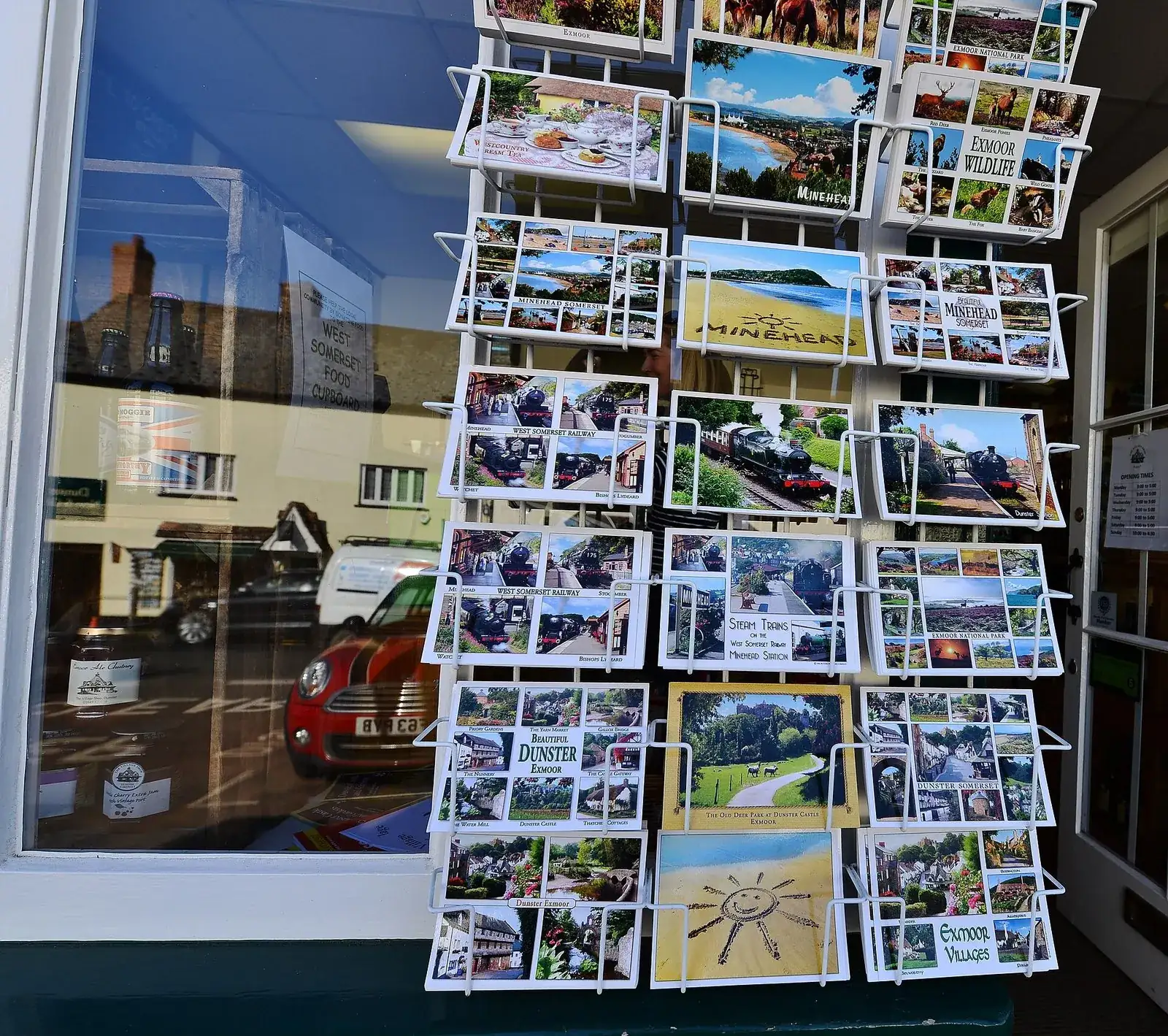
Wire racks of English postcards showing steam trains, beaches and gardens, with a car reflected in the shop window.
Illustrative
Take home

A postcard from the church

St Andrew’s Church sells postcards, greetings cards, books and bookmarks. It is a quiet, low-cost souvenir of the village.

Where to find itIn the church, which is open in daylight hours.

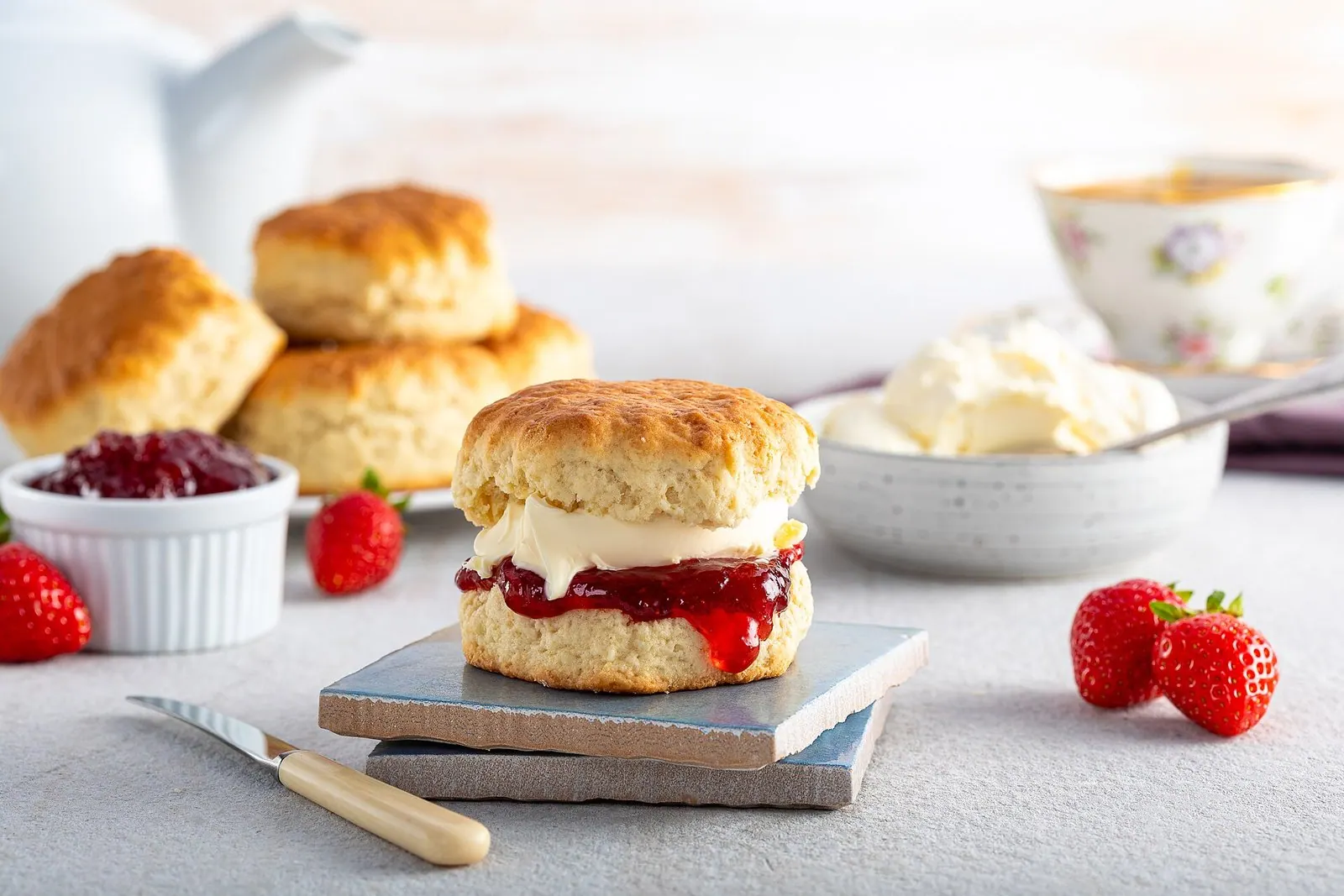
A split scone with strawberry jam and clotted cream on a slate tile, with more scones, a bowl of cream and a teacup behind.
Illustrative
Taste

A cream tea

The parish council asks visitors to support local businesses by enjoying a cream tea, which means tea with scones, jam and cream. It also names the Manor House Hotel, the Castle Inn and the White Hart for lunch or dinner.

Where to find itOnly if you have enough time.

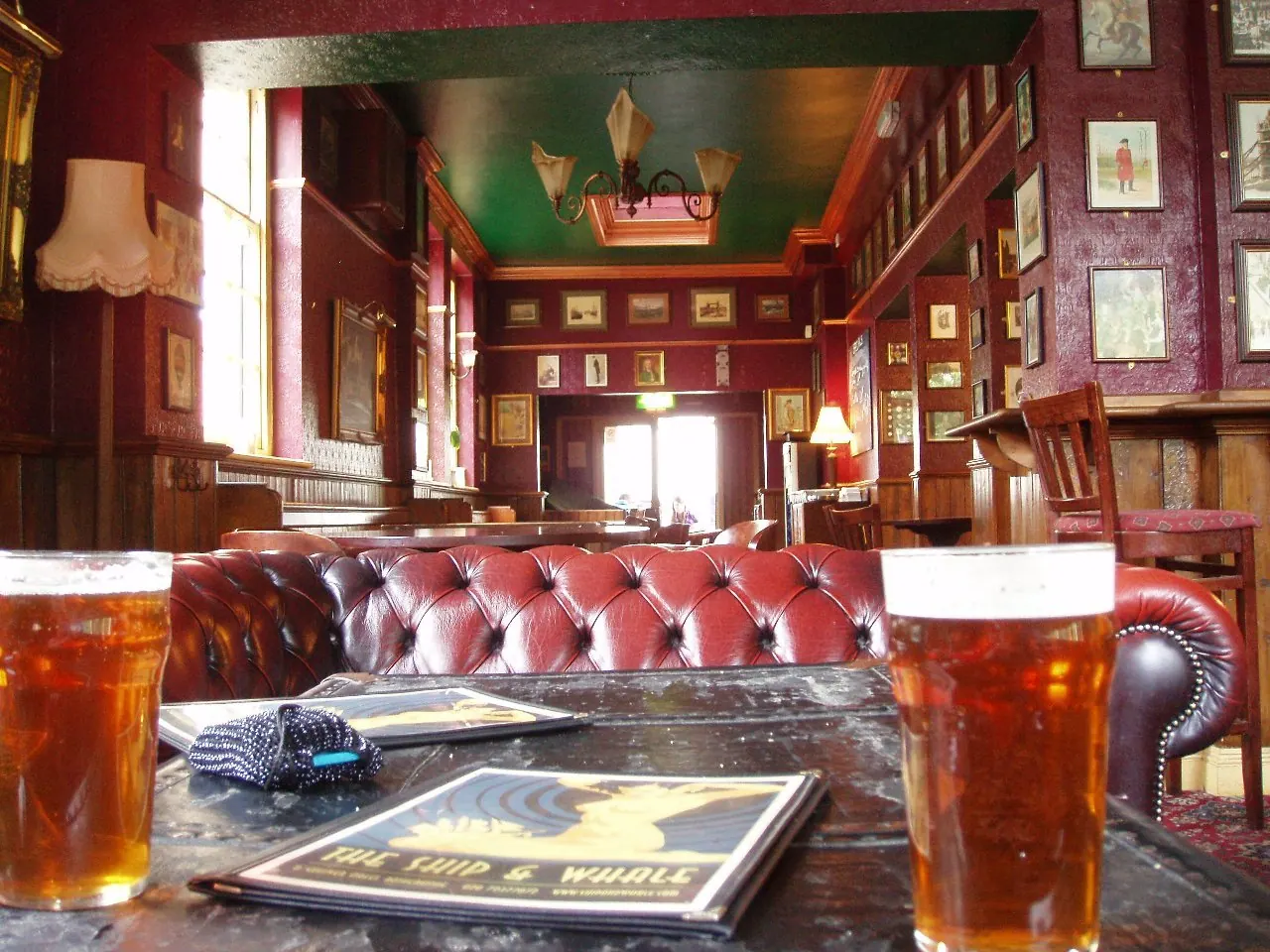
The inside of an old pub with red leather sofas, framed pictures and two pints of ale on a table in the foreground.
Illustrative
Taste

Local ale by the fire

The parish council calls the Castle Inn a cosy village inn with local ales and hearty food. It sits just across from the Manor House Hotel.

Where to find itA pub stop needs more time than most village visits allow.

Plan your day

Help with choosing.

Also in Bath and Stonehenge

Places on the same day trips.

All Bath and Stonehenge day trips →
Picture credits and sources

Pictures

Image sources and credits are listed here. Pictures made with AI are marked.

Tour photographs are provided by the tour operators through Viator and are shown from Viator’s own image servers.