The real England, in one easy day from London
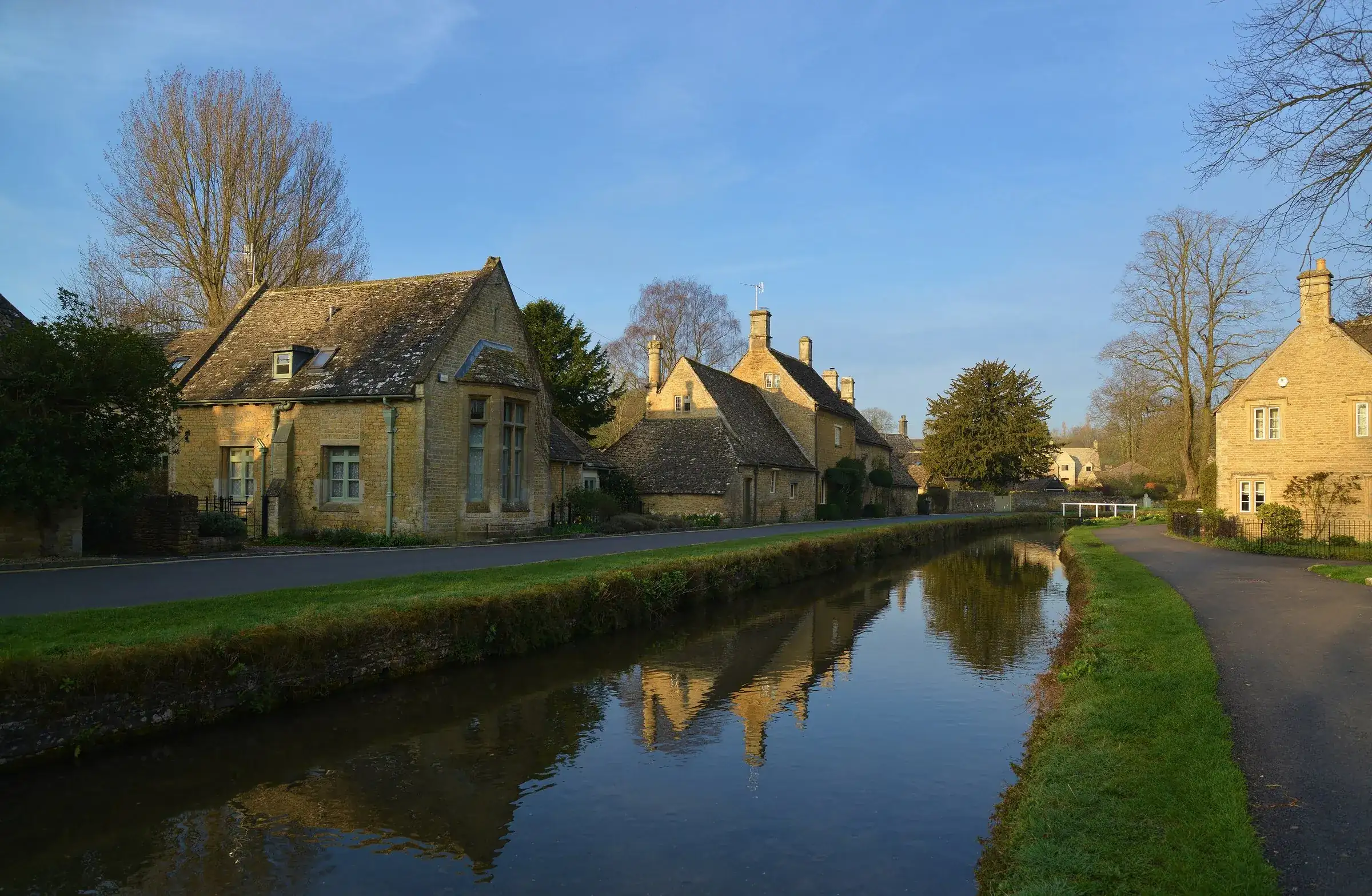
The River Eye running straight beside a quiet road in Lower Slaughter, with honey-stone cottages reflected in the water in evening light

A stone village beside a shallow stream

Lower Slaughter

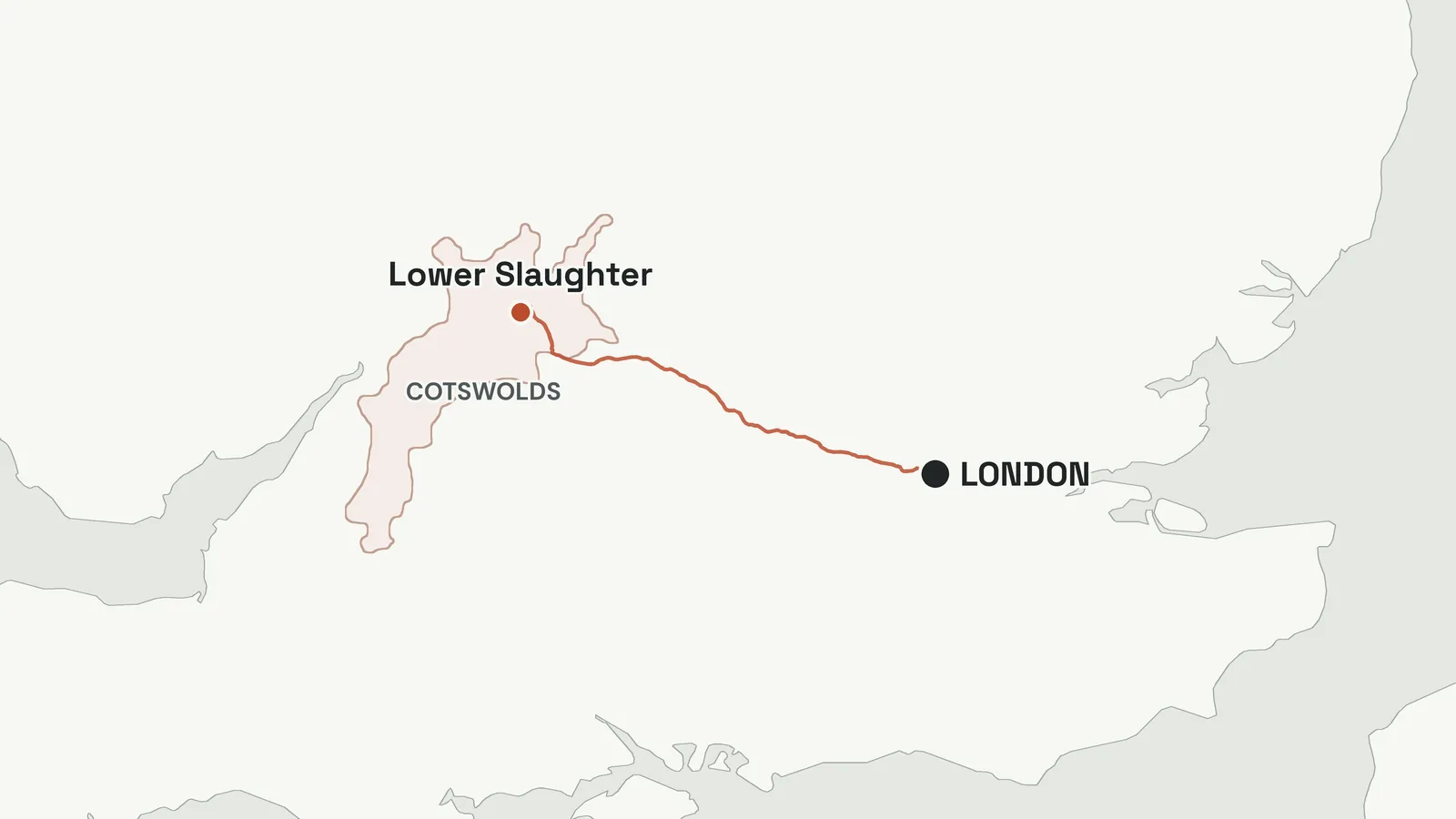
In the Cotswolds, near Bourton-on-the-Water · a day trip from London

Why it matters

Why Lower Slaughter matters.

Lower Slaughter is small, but its stream, mill and old stone houses show how an English village grew beside water. Here is what the name means, how the village is laid out, what the mill is, and who shaped it.

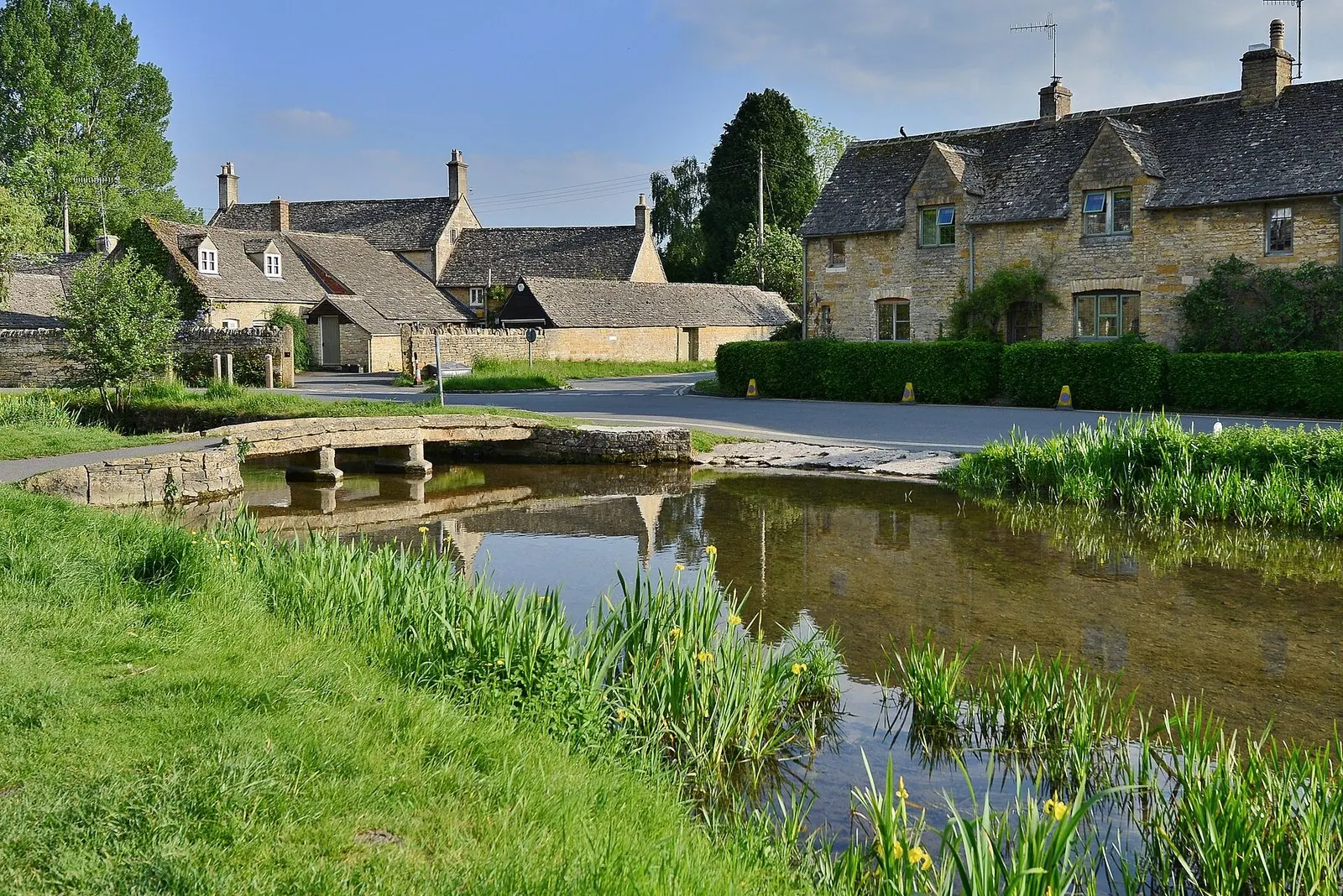
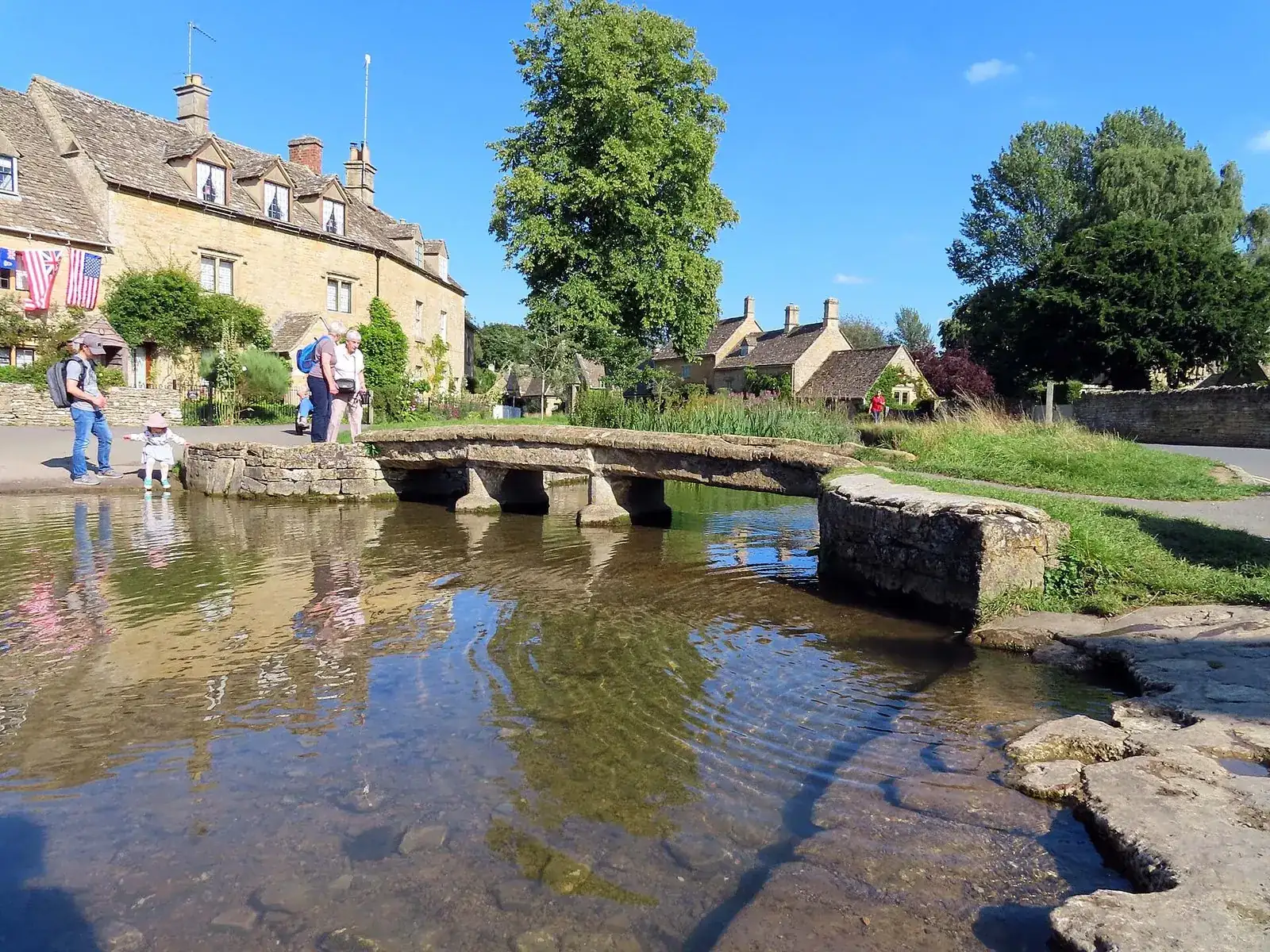
A low stone slab footbridge over the shallow, clear River Eye, with stone cottages behind and a few people on the bank, in bright sun

01

A fierce name with a muddy meaning

The name sounds violent, but historians think it points to wet ground, not to bloodshed.

There is no sign that the name Slaughter means killing. The Victoria County History, a respected series of county history books, says nobody is sure what the word means. It may mean a muddy place or a ditch. The name may first have belonged to a ford on the stream, which carried it in the year 779, before either village used it. An old idea that a battle was fought here in 626 comes only from guessing at the word’s meaning. The idea rests on that guess alone.

Look for

The wide, shallow stream that runs through the village, the kind of wet ground the name may describe.
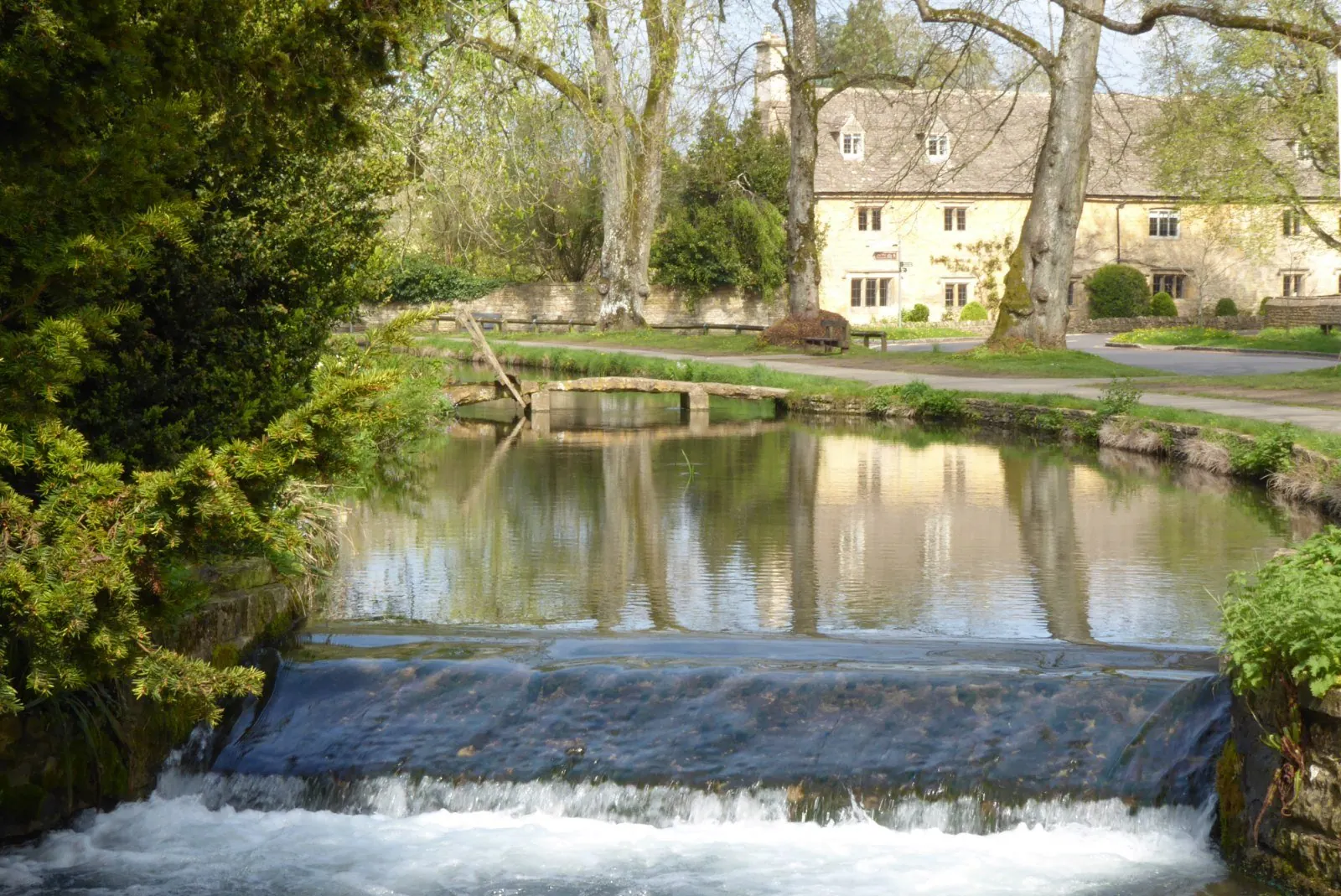
The River Eye pooling above a small weir, with a stone footbridge beyond, mature trees and a pale stone house reflected in the water

02

A village built round a stream

The houses stand round a small green, and the shallow stream is the heart of the village.

The county history says the houses were built round a green, which may once have been larger. It calls the stream the Slaughter or Ey brook, and today’s maps label it the River Eye. Where it passes the village it is broad and shallow, and it is crossed by several simple stone bridges. Most houses are built of local stone with Cotswold stone roofs. The older ones date from the late 1500s and early 1600s, and many have windows divided by upright stone bars, called mullions.

Look for

The simple stone bridges over the stream, and the stone-framed windows on the older houses.

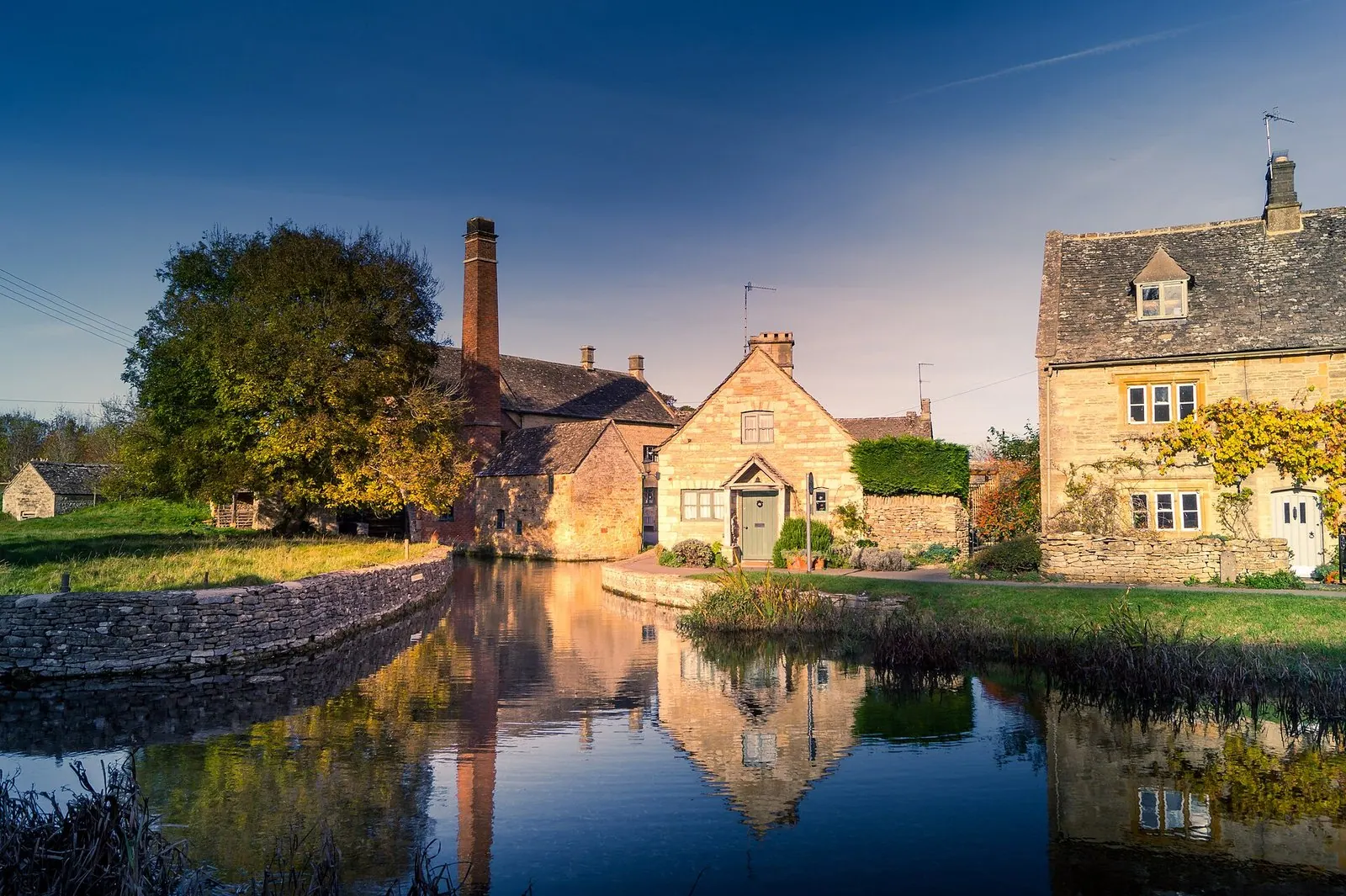
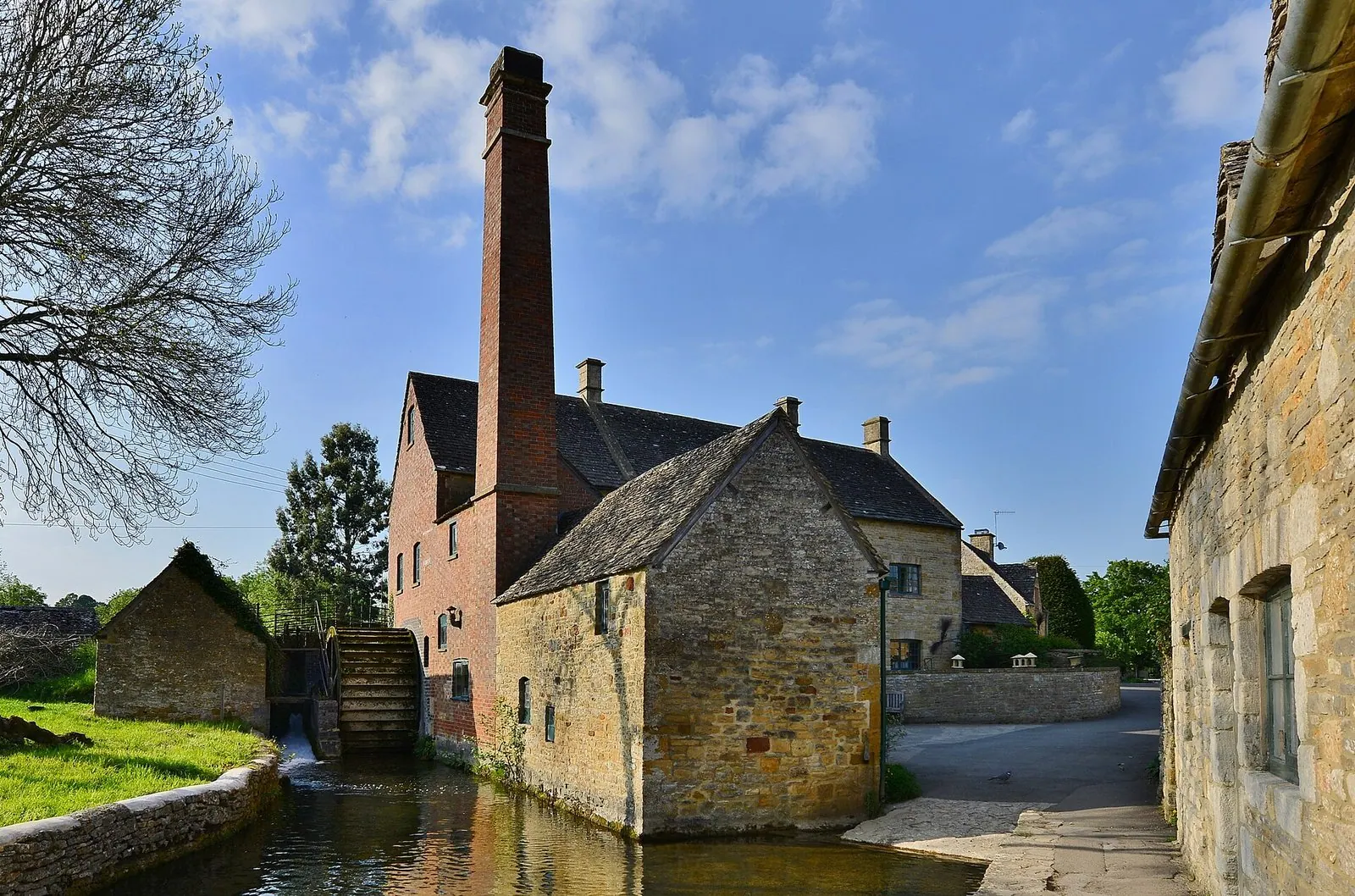
The old red-brick mill with its tall brick chimney and waterwheel beside a stone building, with a narrow stream and lane in front, under a blue sky

03

The red-brick mill by the water

A tall red-brick chimney and an iron waterwheel make the mill the most noticeable building in the village.

Historic England lists the mill as a building of special interest. It dates from the early 1800s, and is partly red brick and partly rough stone. A tall brick chimney stands at the south end, beside a large iron waterwheel. When the listing was last updated in 1986, most of the old gearing and grinding machinery was still inside. Historic England calls it the only large brick building in the village, and part of a much-loved view that looks like a postcard. The Domesday Book of 1086 lists two mills here, and the county history thinks one stood on this stream.

Look for

The chimney and wheel, seen from outside. The mill is seen from outside, and its old museum and shop have closed.

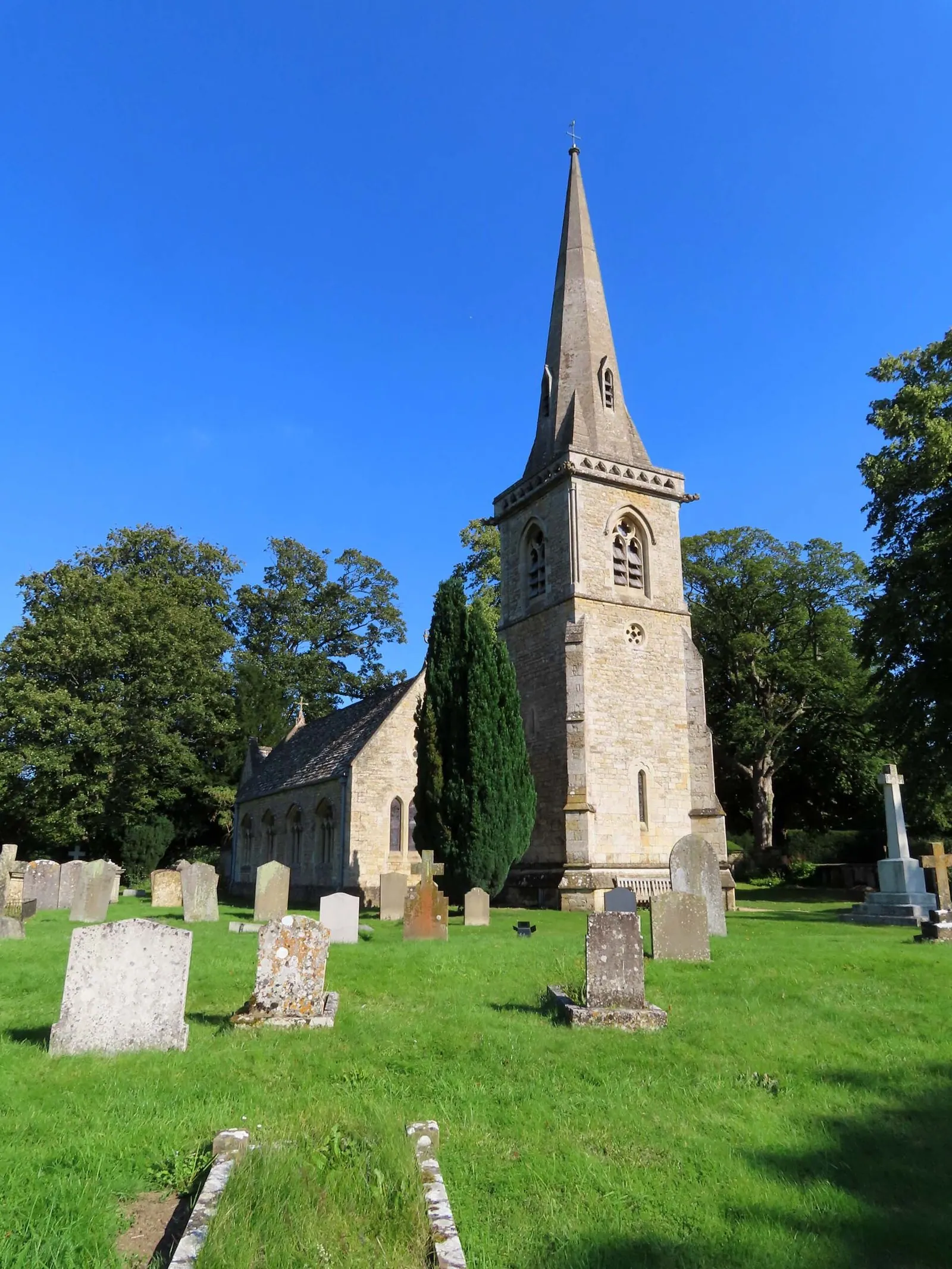
A small stone church with a tall spire, its churchyard of old gravestones in the foreground, under a deep blue sky

04

A village shaped by one family

For about 350 years one family, the Whitmores, held the manor and shaped the village.

The lord of the manor was the main landowner of the village. The Crown granted the manor to Sir William Whitmore in 1611. The county history, written in the 1960s, calls it unusual that one family still held it. His son Richard built the manor house in 1656, and it is now a hotel. In the 1800s the family lived there and, the history says, strongly shaped village life. Charles Shapland Whitmore paid for St Mary’s Church to be almost entirely rebuilt in 1867. The family also gave the land for the reading room of 1887, now the village hall.

Look for

St Mary’s Church with its tower and spire, and the village hall with its clock and 1887 datestone on the front gable.

Your time there

What to see.

These are the highlights worth looking out for, if your time allows.

Most of Lower Slaughter is seen from its lanes and bridges. Here are the highlights in order of interest.

A small stone slab bridge across a still stream, with stone cottages, green lawns and yellow flag irises along the bank in soft sunshine
Don’t miss

The River Eye and its bridges

A broad, shallow stream runs through the middle of the village. Several simple stone bridges cross it, and its banks are lined with neat stonework.

About 10 min · Free

The old mill's tall red-brick chimney and stone buildings beside a still millpond, with cottages and autumn leaves reflected in the water

The red-brick mill

A tall brick chimney and a large iron waterwheel beside the water, in a mill building from the early 1800s.

About 5 min · Free

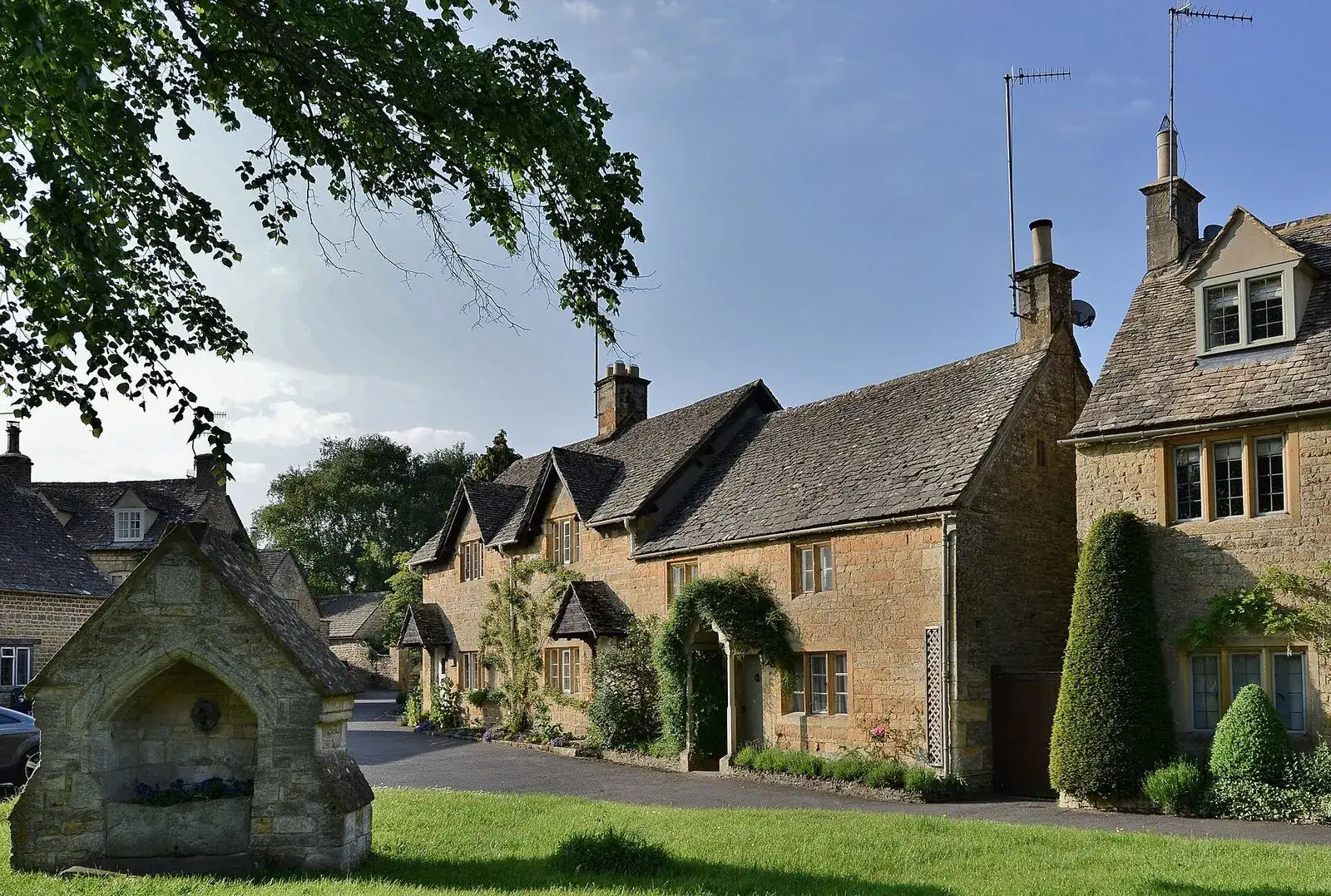
Honey-coloured stone cottages around a village green, with a small stone shelter on the left and clipped yew trees on the right

The green and the stone houses

Houses of local stone with Cotswold stone roofs stand round the green. Many date from the late 1500s and early 1600s.

About 5 min · Free

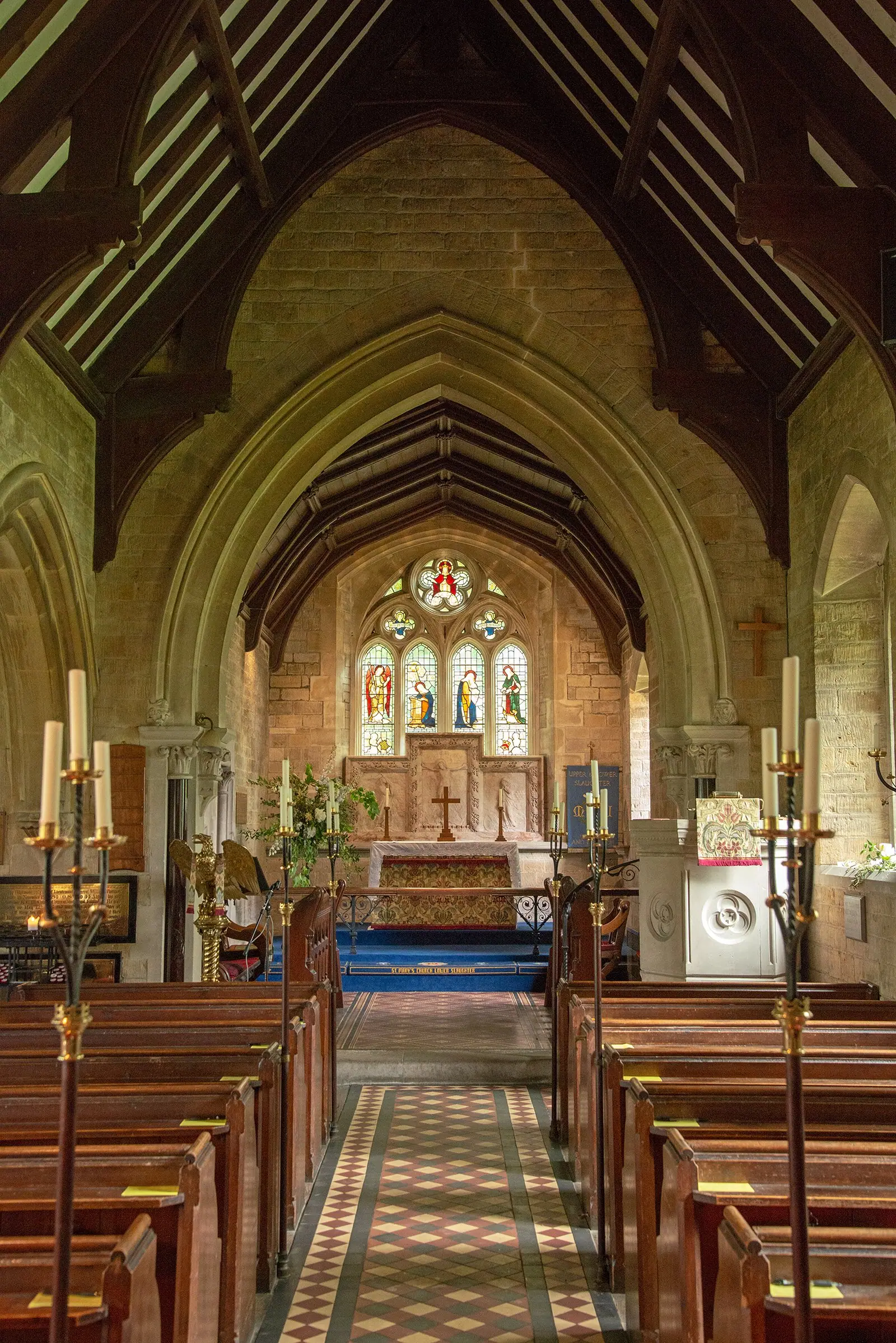
The inside of a small stone church, looking along the aisle past wooden pews to the altar and a stained glass window, with tall candlesticks beside the aisle

St Mary’s Church

A stone church with a tower and spire, almost entirely rebuilt in 1867. It keeps a row of arches from the late 1100s or early 1200s.

About 10 min · Free

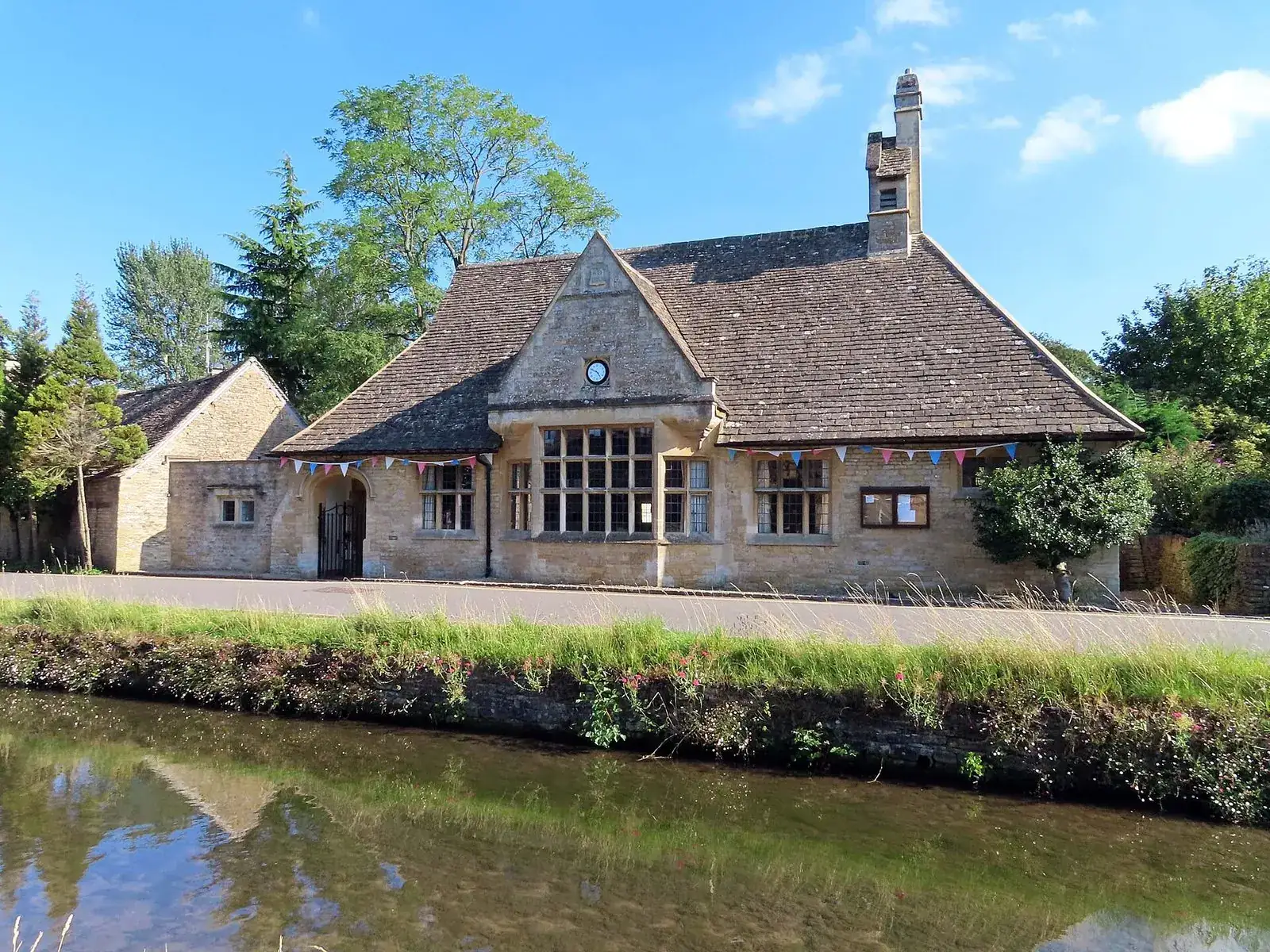
A stone village hall with a gabled front, a clock and bunting along its eaves, seen across a narrow stream

The village hall

A listed hall on the bank of the River Eye, built in 1887 as a reading room for the village.

About 5 min · Free

Local artists hold exhibitions here for several weeks between Easter and early autumn.

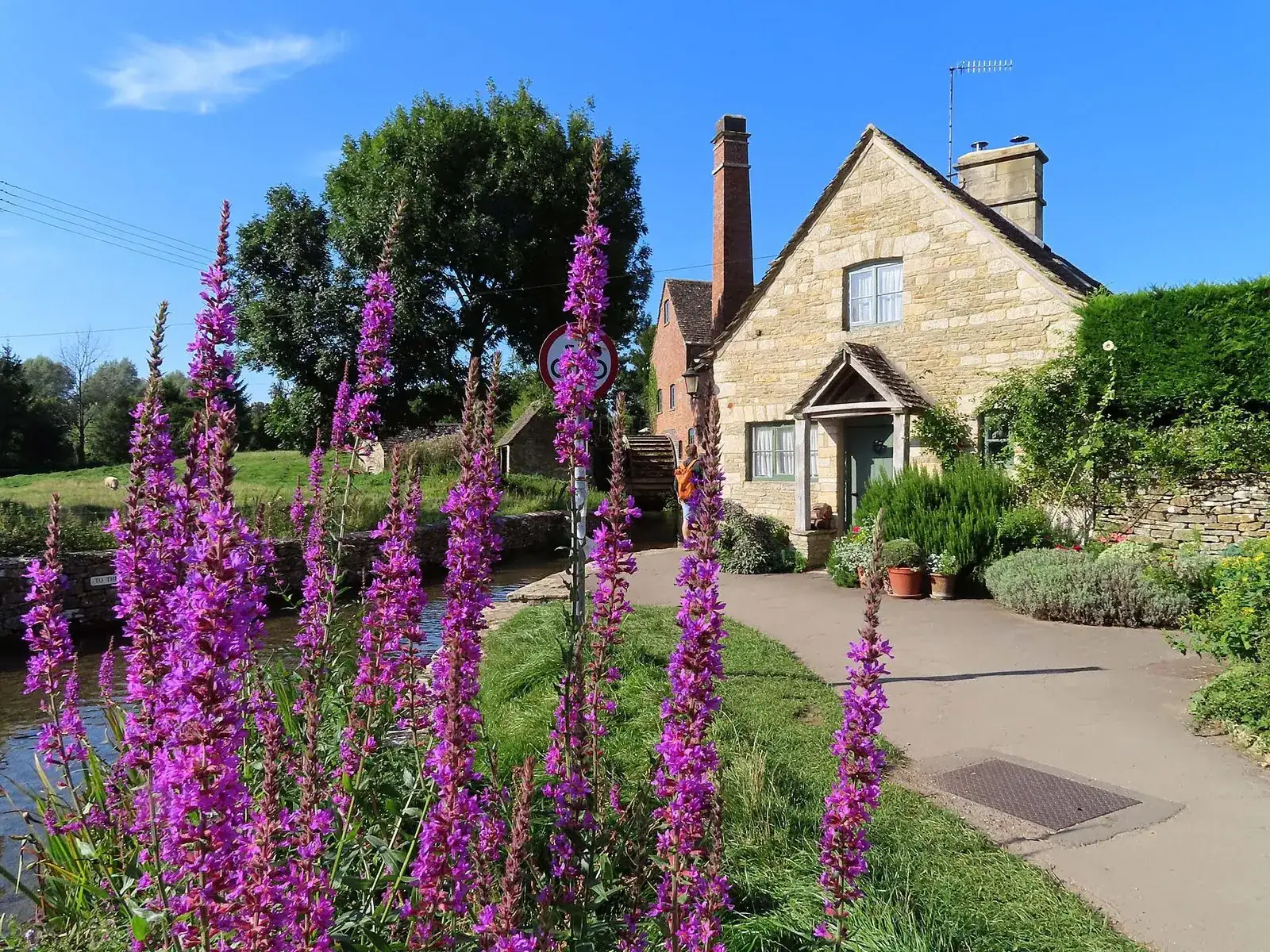
A path beside a stream leads past a stone cottage and the red-brick mill chimney, with tall purple loosestrife flowers in the foreground

The footpath towards Upper Slaughter

Beyond the mill a public footpath leads on through gates and over a footbridge towards Upper Slaughter, the next village. It forms part of the Wardens Way walking route.

About 60 min · Free

1 of 6

Swipe for all six highlights →

Practical answers

Before you go.

The questions people ask before they book.

Do I need a ticket for the village?

Walking the lanes, bridges and public footpaths costs nothing. Private buildings, such as the old mill, the inn and the hotel, set their own rules. Cotswolds National Landscape: Bourton on the Water, follow trickling rivers → (opens in a new tab)

Can I go inside the old mill?

Treat it as a view from outside. Its museum, cafe and shop closed under the earlier owners. In 2024 the new owner planned a restoration, with a coffee shop, museum and shop. Check before you go. Cotswold Journal: street trading consent at the Old Mill (2024) → (opens in a new tab)

What should I know before I go?

It is a small village, and the old mill’s museum and shop have closed. There is little to go inside, so a short visit covers the lanes and the river. Cotswold Journal: street trading consent at the Old Mill (2024) → (opens in a new tab)

Can buses or minibuses drive into the village?

The parish council says a 1995 traffic order bars buses with nine or more seats. Local buses and hotel drop-offs are the exceptions. Ask your operator where your vehicle will stop. Lower Slaughter Parish Council: bus and parking rules → (opens in a new tab)

Are there public toilets in Lower Slaughter?

Cotswold District Council lists no public toilets here. It lists two in Bourton-on-the-Water, the next village south. Plan a stop in Bourton-on-the-Water. Cotswold District Council: public toilets → (opens in a new tab)

When to go

What changes through the year.

The village can be seen all year, but the busiest weeks and the village hall exhibitions follow the calendar.

Spring

The village hall’s art exhibitions begin around Easter. They are held by local artists, who show their own art and craft work. Lower Slaughter Parish Council: our village hall → (opens in a new tab)

Summer

The parish council says buses add to congestion in the village, especially in the holiday periods, so expect it to be busier then. Lower Slaughter Parish Council: bus and parking rules → (opens in a new tab)

Autumn

The exhibitions in the village hall run until the early autumn, so they may have ended by an October visit. Lower Slaughter Parish Council: our village hall → (opens in a new tab)

Winter

The village hall's art exhibitions run only between Easter and the early autumn, so none are shown in winter. Check the parish council for other village events. Lower Slaughter Parish Council: our village hall → (opens in a new tab)

We found no official source for winter or for flowers and colour in the village, so we leave them out. Check the parish council page for hall exhibitions in your month. Lower Slaughter Parish Council: our village hall → (opens in a new tab)

A taste and a keepsake

Something to taste in Lower Slaughter.

These are small extras to taste or take home from Lower Slaughter. Each is a private business.

Just ideas for any free time you get.

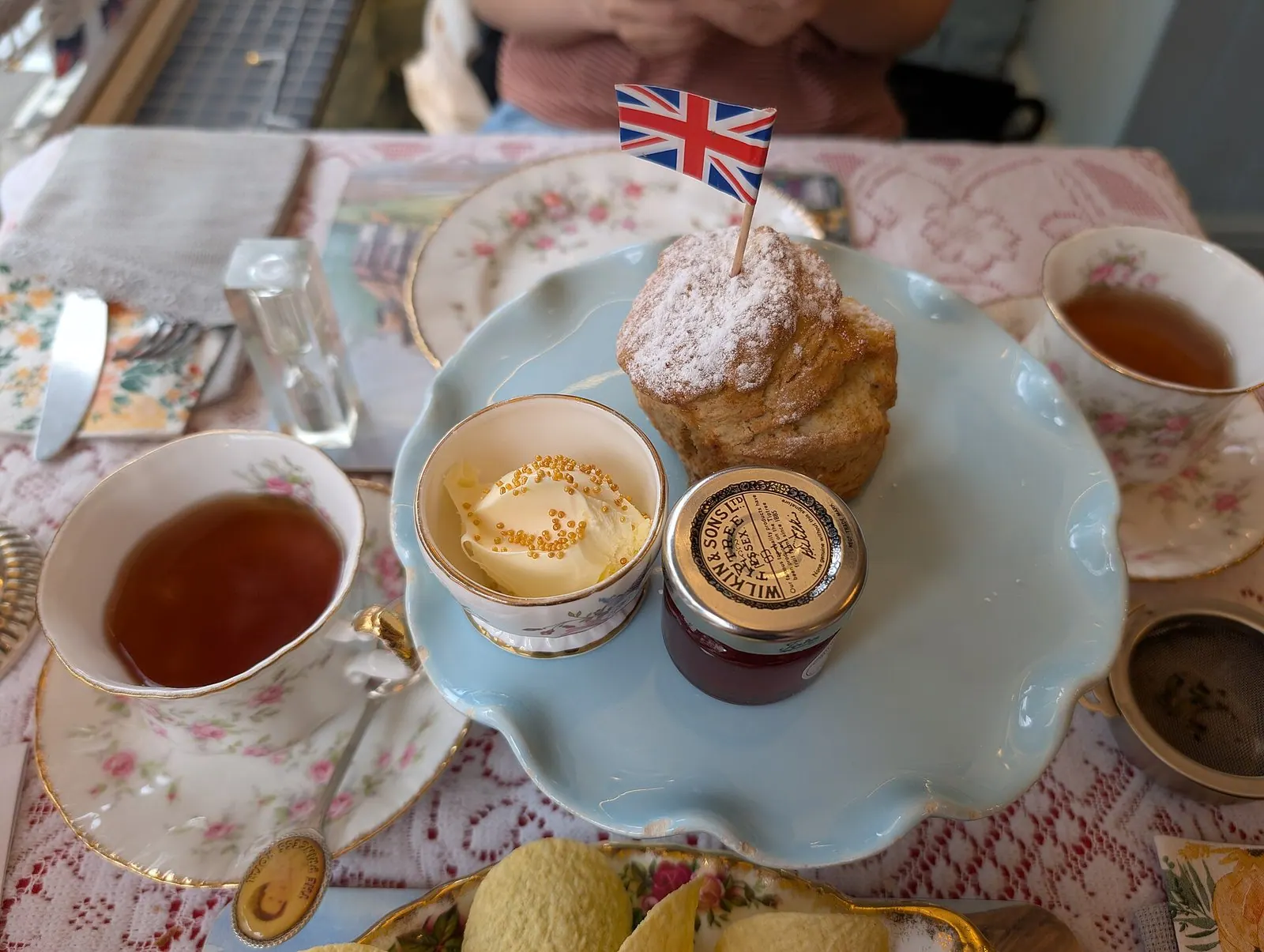
A scone with icing sugar and a small Union Jack flag, with clotted cream, a jar of jam and two cups of tea on a pale blue stand
Illustrative
Taste

Afternoon tea at the manor

The Slaughters Manor House is a 17th-century manor house hotel. It serves traditional afternoon tea in its bar, lounges and gardens, with sandwiches, scones and the classics.

Where to find itA hotel, so it suits a longer visit or a stay.

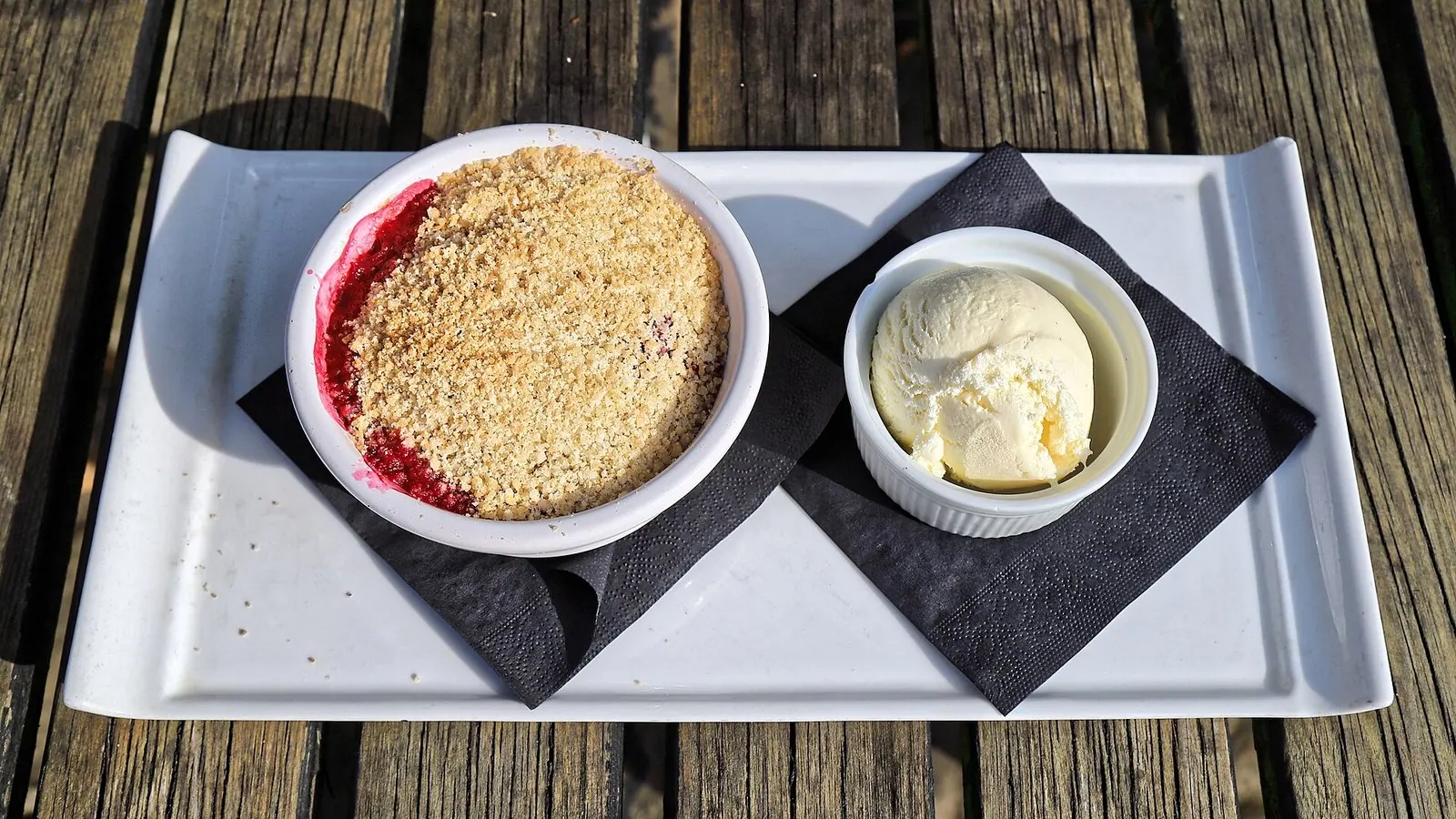
A raspberry and apple crumble in a white dish beside a small dish of vanilla ice cream, on a tray on a wooden outdoor table
Illustrative
Taste

Pie and pint at the inn

The Slaughters Country Inn says it serves seasonal dishes made with local Cotswold produce. It describes a pie and a pint by the fire, and a line-up of local ales.

Where to find itOnly if you have time to sit down.

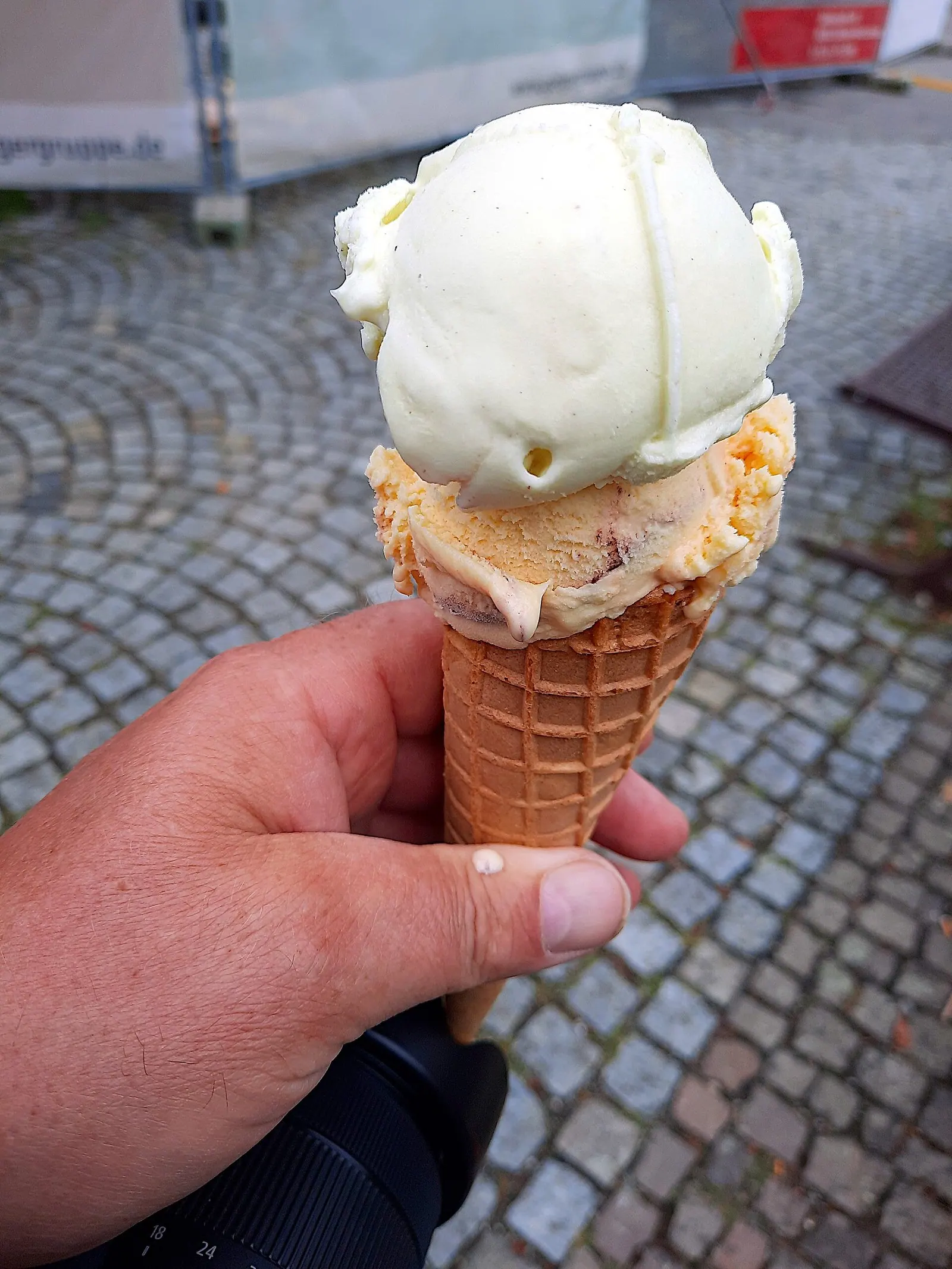
A hand holding an ice cream cone with a scoop of pale vanilla on top of an orange-peach scoop, over a cobbled pavement
Illustrative
Taste

Ice cream from the Field Kitchen

When it is in season, the inn’s outdoor Field Kitchen serves fresh bagels, warm flatbreads and ice cream in its garden.

Where to find itOnly when the Field Kitchen is open for the season, so check on the day.

Plan your day

Help with choosing.

Also in The Cotswolds

Places on the same day trips.

All The Cotswolds day trips →
Picture credits and sources

Pictures

Image sources and credits are listed here. Pictures made with AI are marked.

Tour photographs are provided by the tour operators through Viator and are shown from Viator’s own image servers.