The real England, in one easy day from London
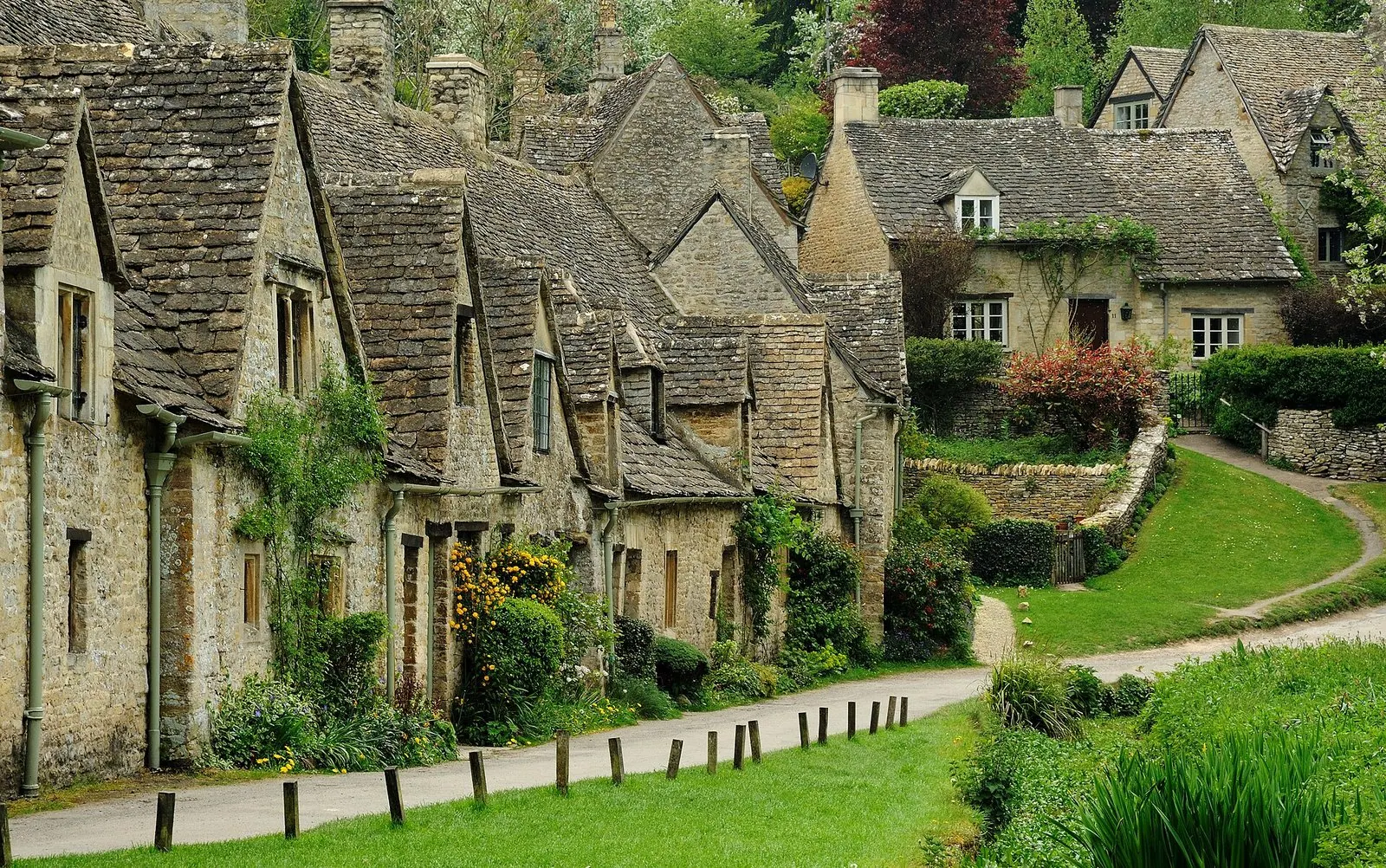
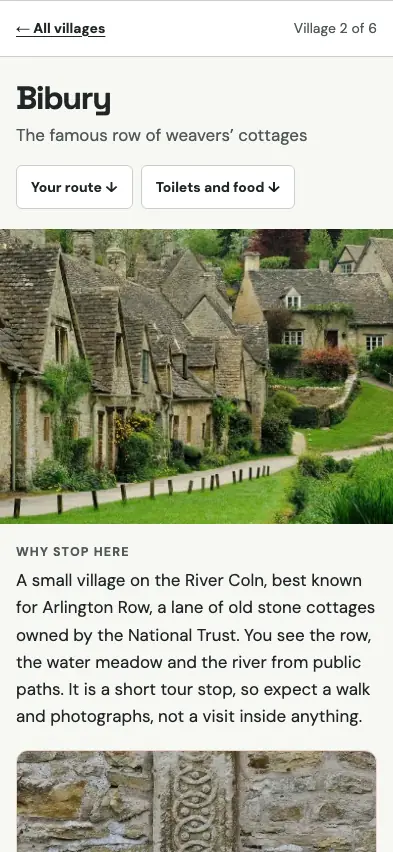
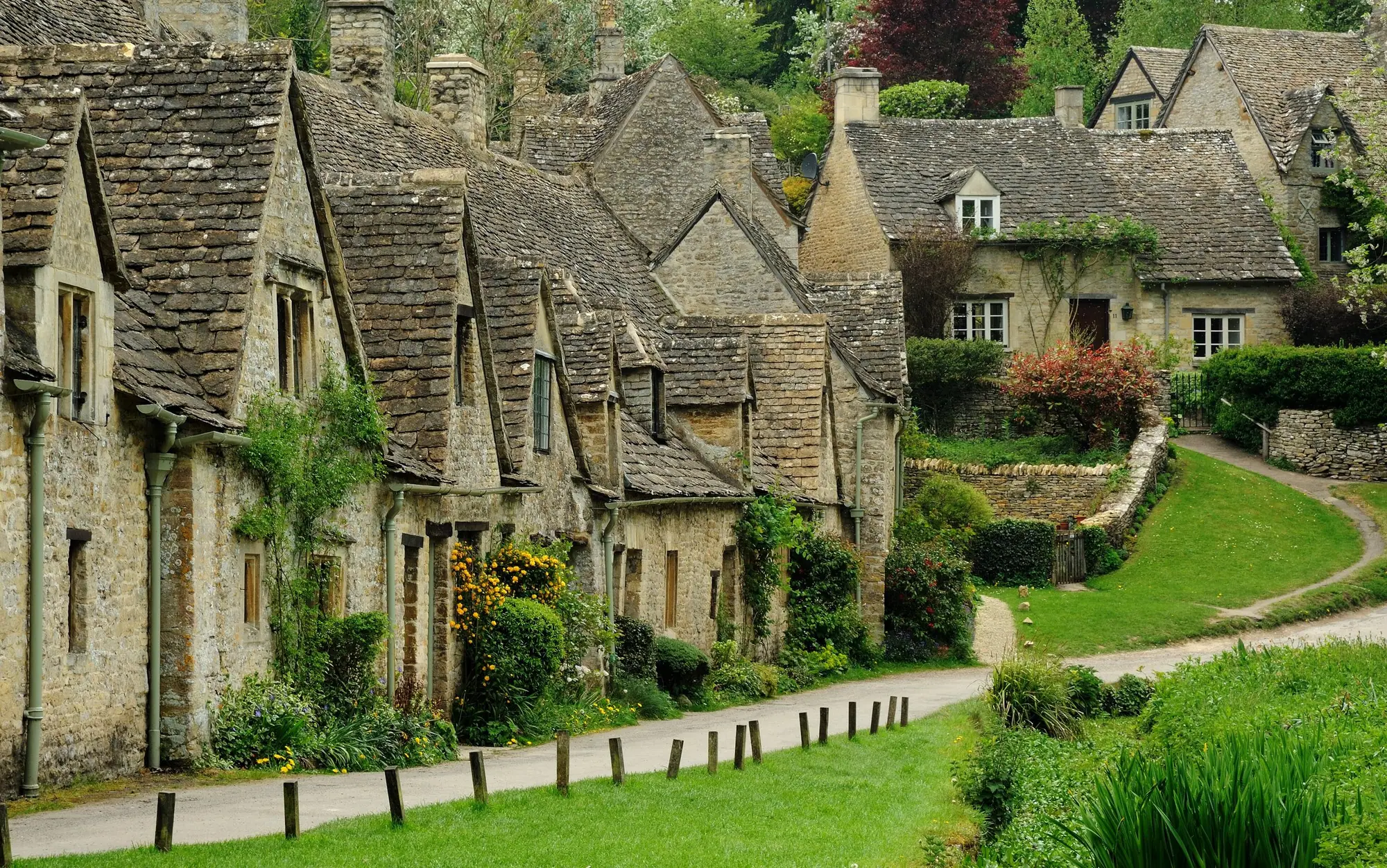
Steep stone gables and moss-covered roofs of Arlington Row seen from above, with a curving grass path and flowering shrubs in front.

A Cotswold village of old weavers’ cottages

Bibury

In the Cotswolds, near Cirencester · a day trip from London

See how long each tour stops in Bibury →

Why it matters

Why Bibury matters.

Bibury is a small village. The wool trade left it a famous row of cottages, a meadow named for drying racks and a church with Saxon stones. Here is what to look for.

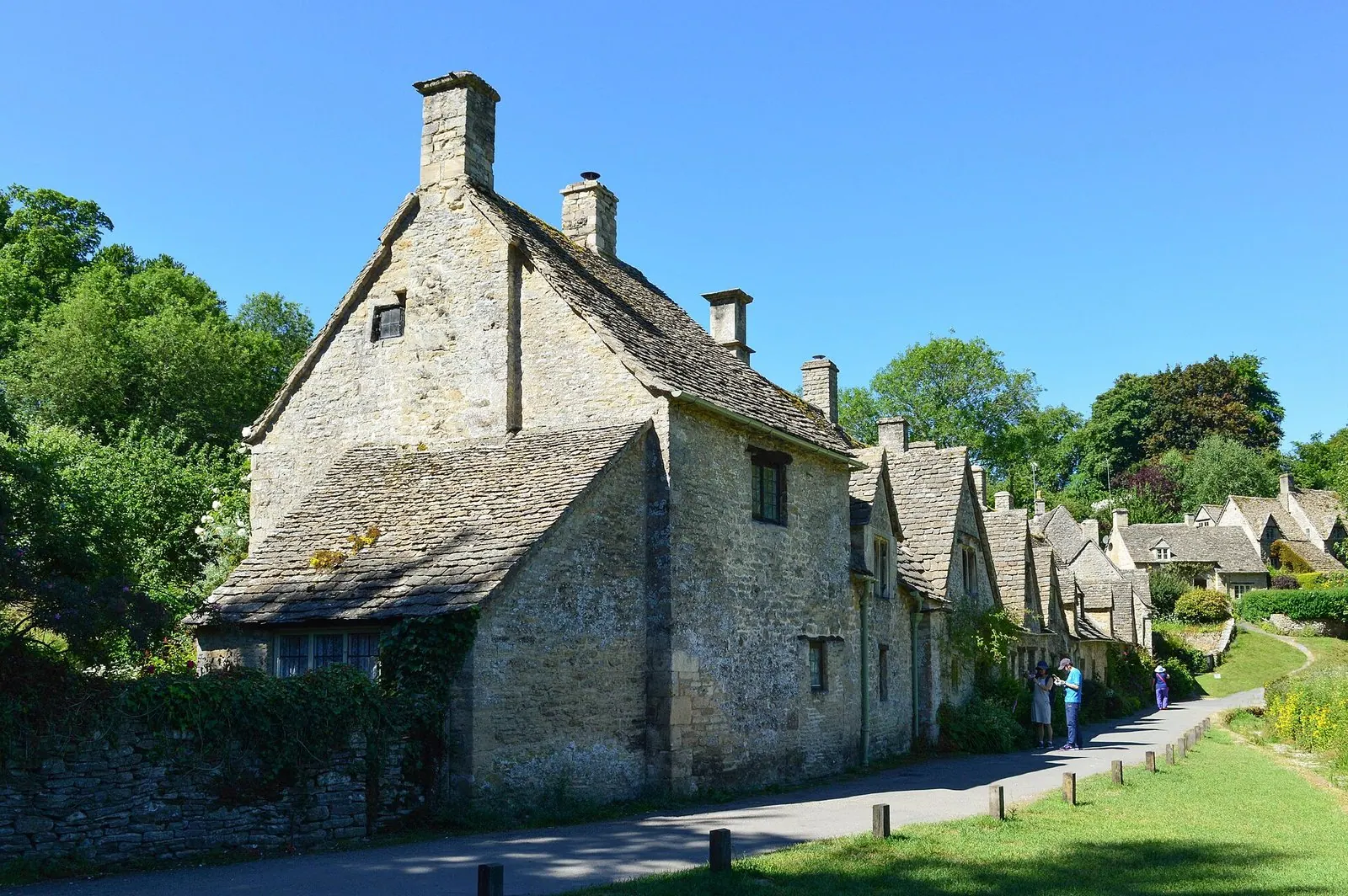
A gabled stone corner house in the foreground and Arlington Row stretching away along a sunlit lane under a blue sky.

01

A wool store becomes weavers’ homes

Arlington Row began as a store for wool and was later turned into cottages for weavers.

The National Trust believes Arlington Row was built around 1380 as a wool store for monks. In the 17th century it was turned into a row of cottages for weavers, the people who make cloth. Historic England lists the row at Grade I, its top grade, and says the inside was divided up when it became houses. The Royal Society of Arts repaired it in 1929, and the National Trust restored it in the early 1970s. People still live in the cottages, so there is no public access to them or their gardens.

Look for

The wavy roofline and the steep gables along the front. Look from the path, and respect the people who live there.
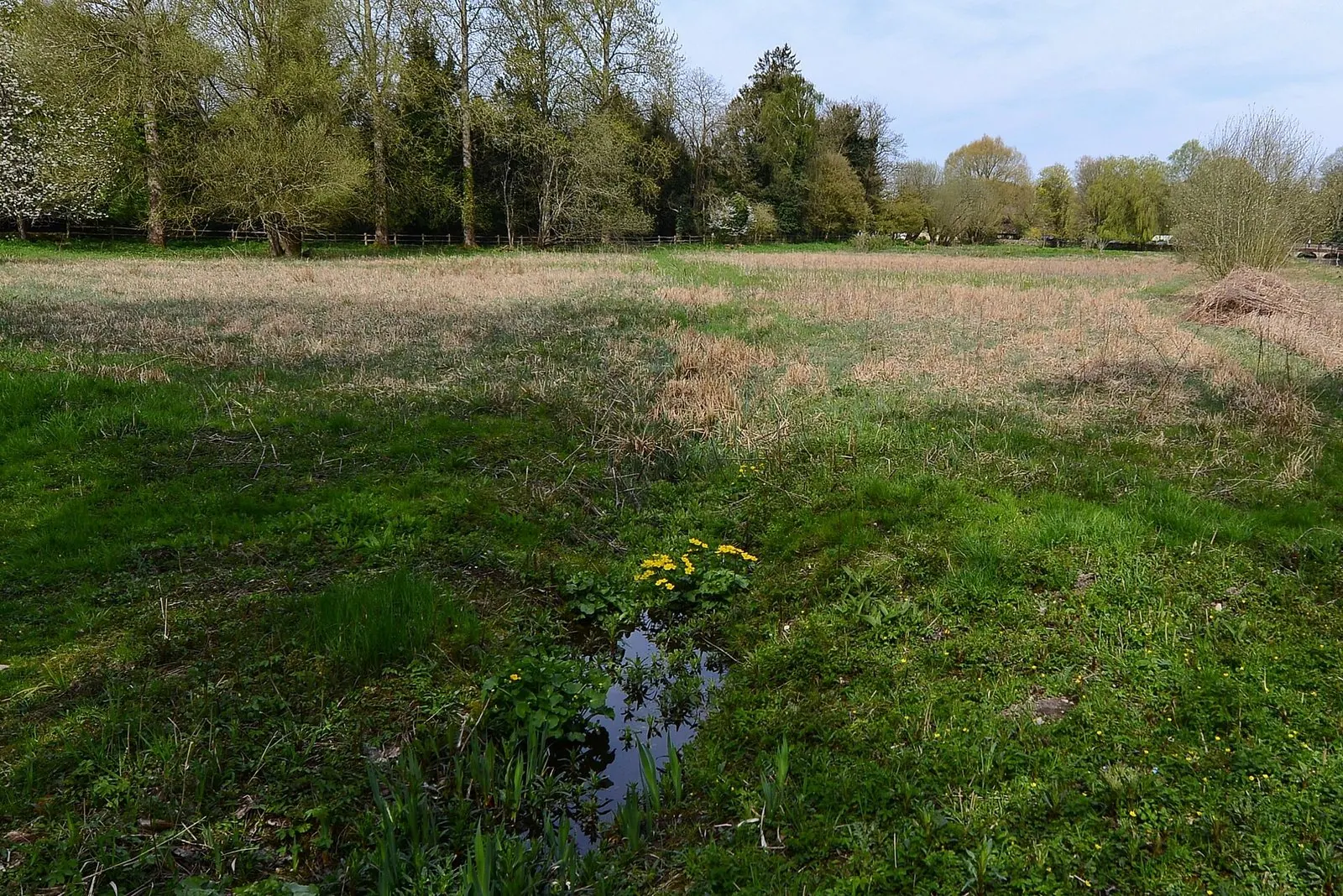
A damp meadow of reeds and short grass with a small pool and yellow marsh marigolds in the foreground, and trees along the far edge

02

Where cloth dried on racks

The meadow in front of the row is named for the racks where wet cloth was hung to dry.

Rack Isle is a boggy water meadow between the River Coln and the row. The National Trust says wool was once hung out to dry here on racks, after it was washed. The county history says fulled cloth was evidently dried on Rack Isle. Fulled means pressed to make it thicker. It adds that the meadow was linked to Arlington Mill by 1680. Today the meadow is a home for wildlife. The National Trust names water voles, marsh orchids, flag iris and marsh marigolds, and says you might see kingfishers and dragonflies.

Look for

Yellow flag iris and pink ragged robin in early summer, and a small herd of Belted Galloway cattle in late summer.

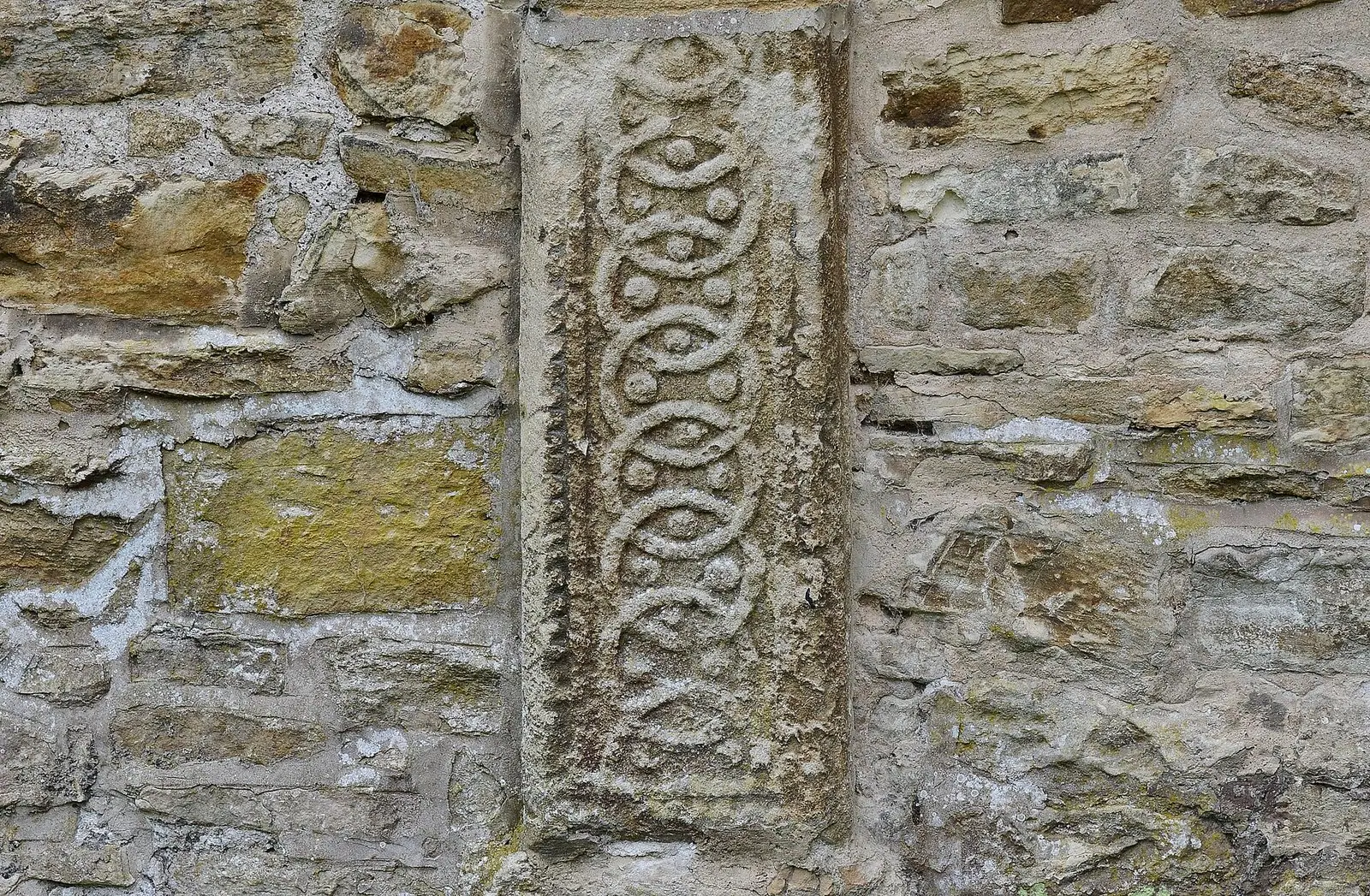
A narrow stone slab carved with woven interlace pattern set into a rough stone wall of mixed honey-coloured and grey blocks.

03

A church with Saxon stones

St Mary’s church still holds carved stones from before the Norman Conquest of 1066.

Historic England dates the present church to the mid to late 11th century, with much later work. It also records a carved Saxon stone in the chancel wall and Saxon pilasters, flat columns, in the north aisle. The church’s own page lists a Saxon gravestone, a Norman doorway and a 13th-century font. The county history says a church stood here by the year 899. The church’s own account is that the first church probably came soon after a land grant made between 721 and 743. It says Bibury means “Beaga’s enclosure”, but admits no one knows for certain.

Look for

The Saxon gravestone set into the north wall of the chancel, the square stone font and the Norman doorway.

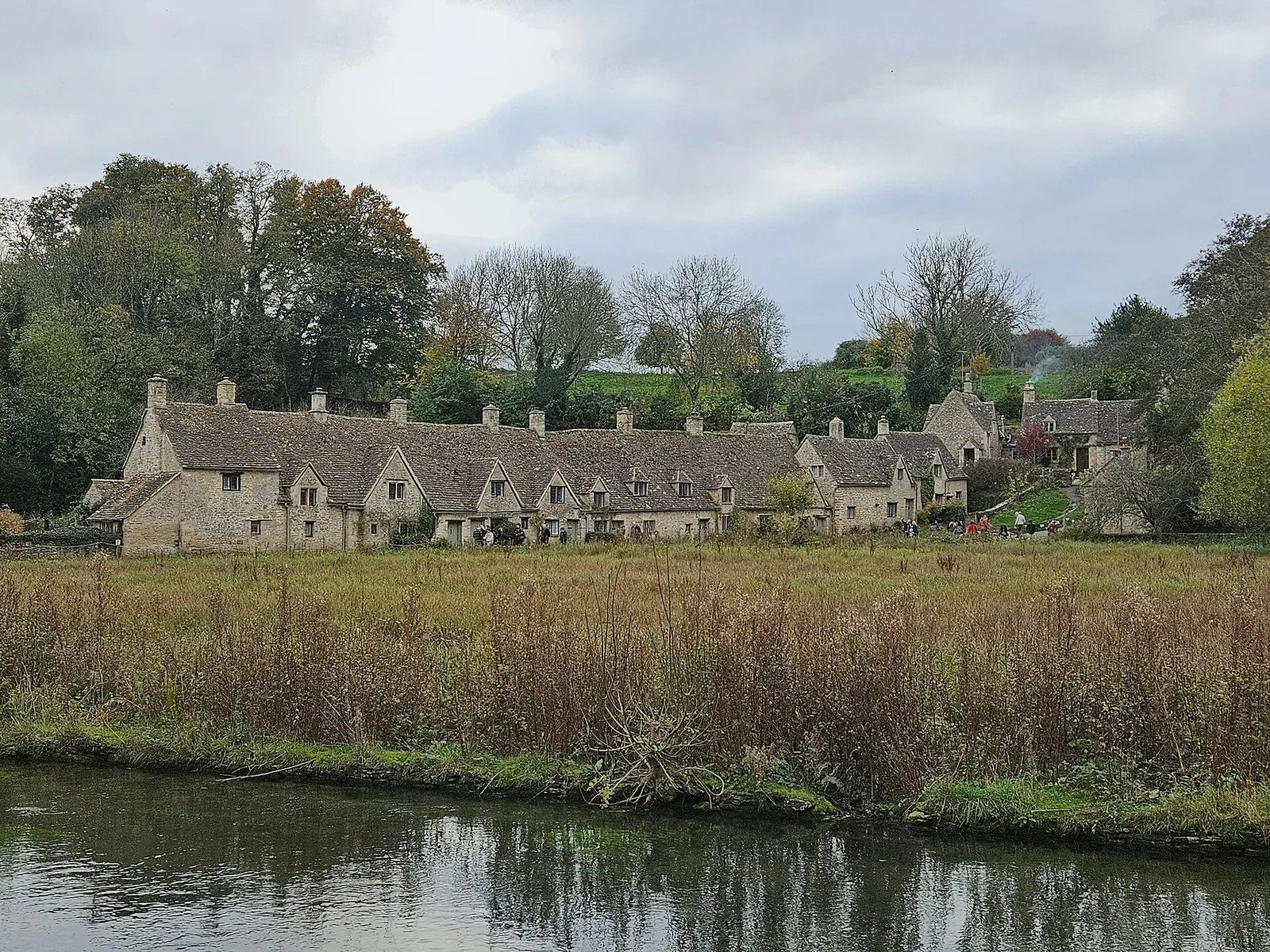
Arlington Row's low line of stone cottages seen across a brown reedy meadow and a stream, under a grey sky.

04

The village William Morris admired

A famous saying credits William Morris with calling Bibury the most beautiful village in England.

The National Trust says William Morris called Bibury “the most beautiful village in England”. The county history gives the words as “surely the most beautiful village in England”. It traces them to a travel book of 1905, so treat them as a quotation attributed to him. Historic England says that since Morris’s “discovery”, the row has been seen as the most picturesque in the Cotswolds. The county history adds that the poet Alexander Pope wrote of the “pleasing prospect of Bibury” in 1726. The book A Cotswold Village (1898) then made the village widely famous.

Look for

The view of the row across the meadow, the scene that made the village famous.

Your time there

What to see.

These are the highlights worth looking out for, if your time allows. See how long each tour stops in Bibury →

Most things to do in Bibury are outdoors and free: Arlington Row, the river meadow and the old church. The Trout Farm has its own ticket. Here are the highlights, with Arlington Row first.

Rows of steep stone gables and moss-covered roofs of Arlington Row seen from above, with a curving grass path and flowering shrubs.
Don’t miss

Arlington Row

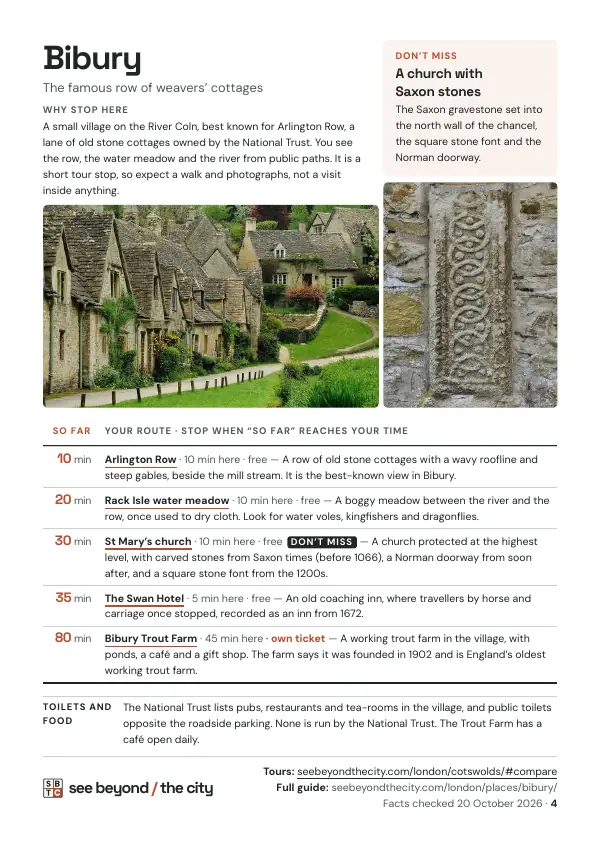
A row of old stone cottages with a wavy roofline and steep gables, beside the mill stream. It is the best-known view in Bibury.

About 10 min · Free

The cottages are lived in. The National Trust asks visitors to respect the residents’ privacy.

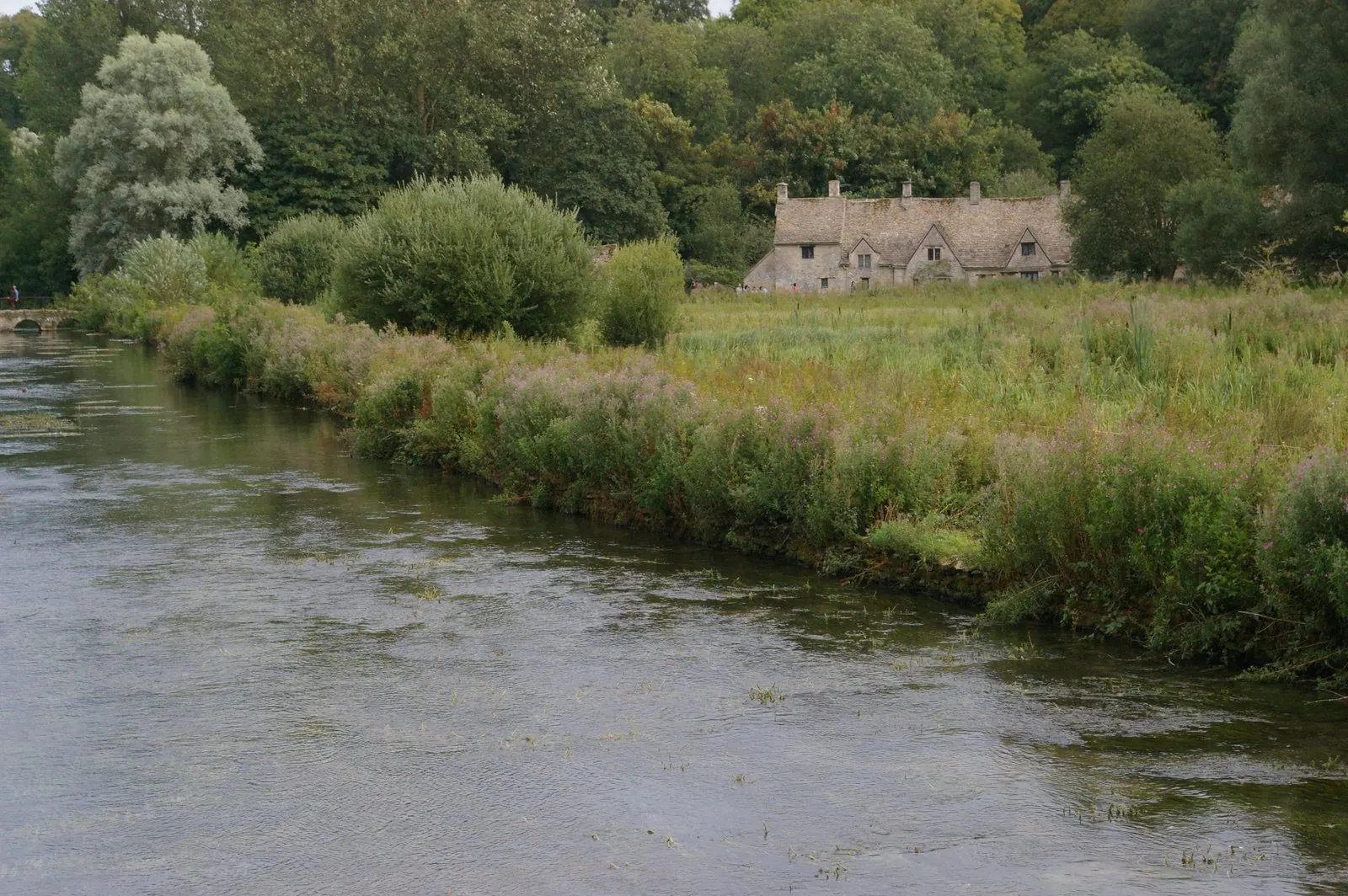
The River Coln beside a wet green meadow with tall plants and shrubs, and Arlington Row's stone cottages small among trees in the distance.

Rack Isle water meadow

A boggy meadow between the river and the row, once used to dry cloth. Look for water voles, kingfishers and dragonflies.

About 10 min · Free

The National Trust lists a level tarmac route in front of the row and around Rack Isle.

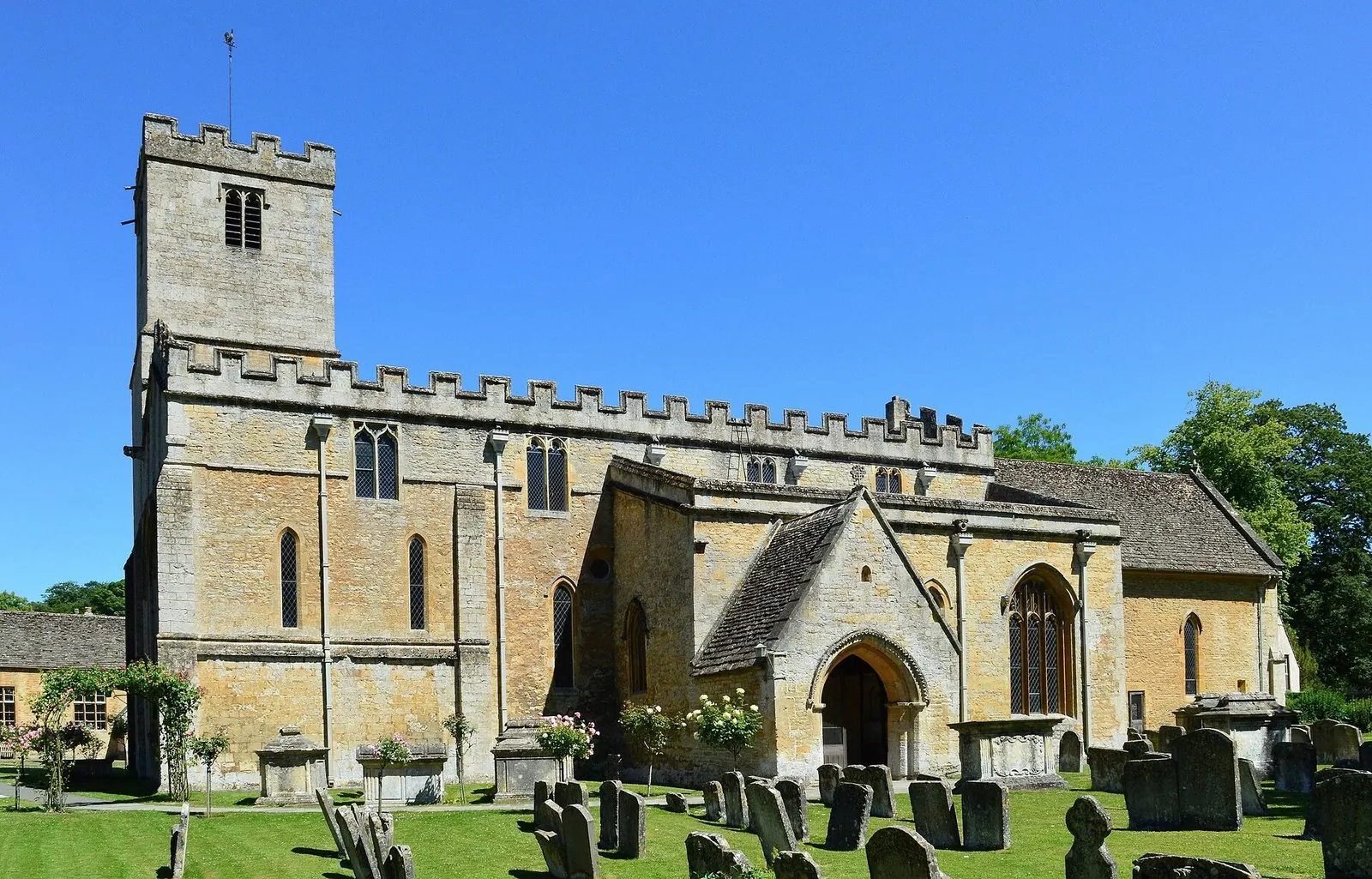
A stone church with a battlemented tower and nave and a gabled porch, seen across a churchyard with headstones under a deep blue sky.

St Mary’s church

A church protected at the highest level, with carved stones from Saxon times (before 1066), a Norman doorway from soon after, and a square stone font from the 1200s.

About 10 min · Free

Opening hours (checked 20 October 2026): the church’s page says it is usually open from about 8 am until 6 pm, or later in summer.

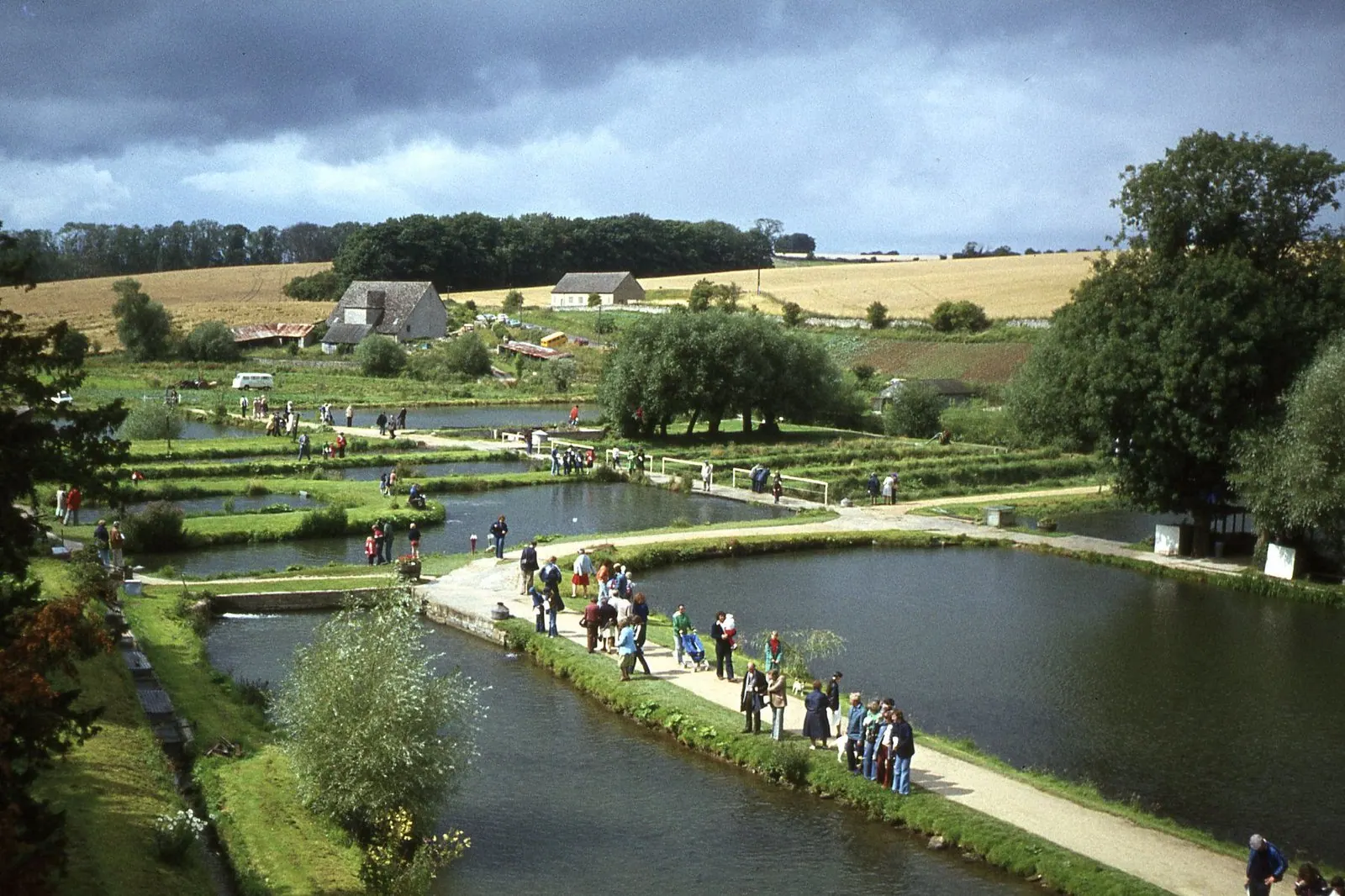
Visitors walk along paths between several rectangular trout ponds, with farm buildings, willow trees and fields on the hill beyond under a dark sky

Bibury Trout Farm

A working trout farm in the village, with ponds, a café and a gift shop. The farm says it was founded in 1902 and is England’s oldest working trout farm.

About 45 min · Own ticket

The farm charges admission. You can use its café and shop without paying it, the farm says.

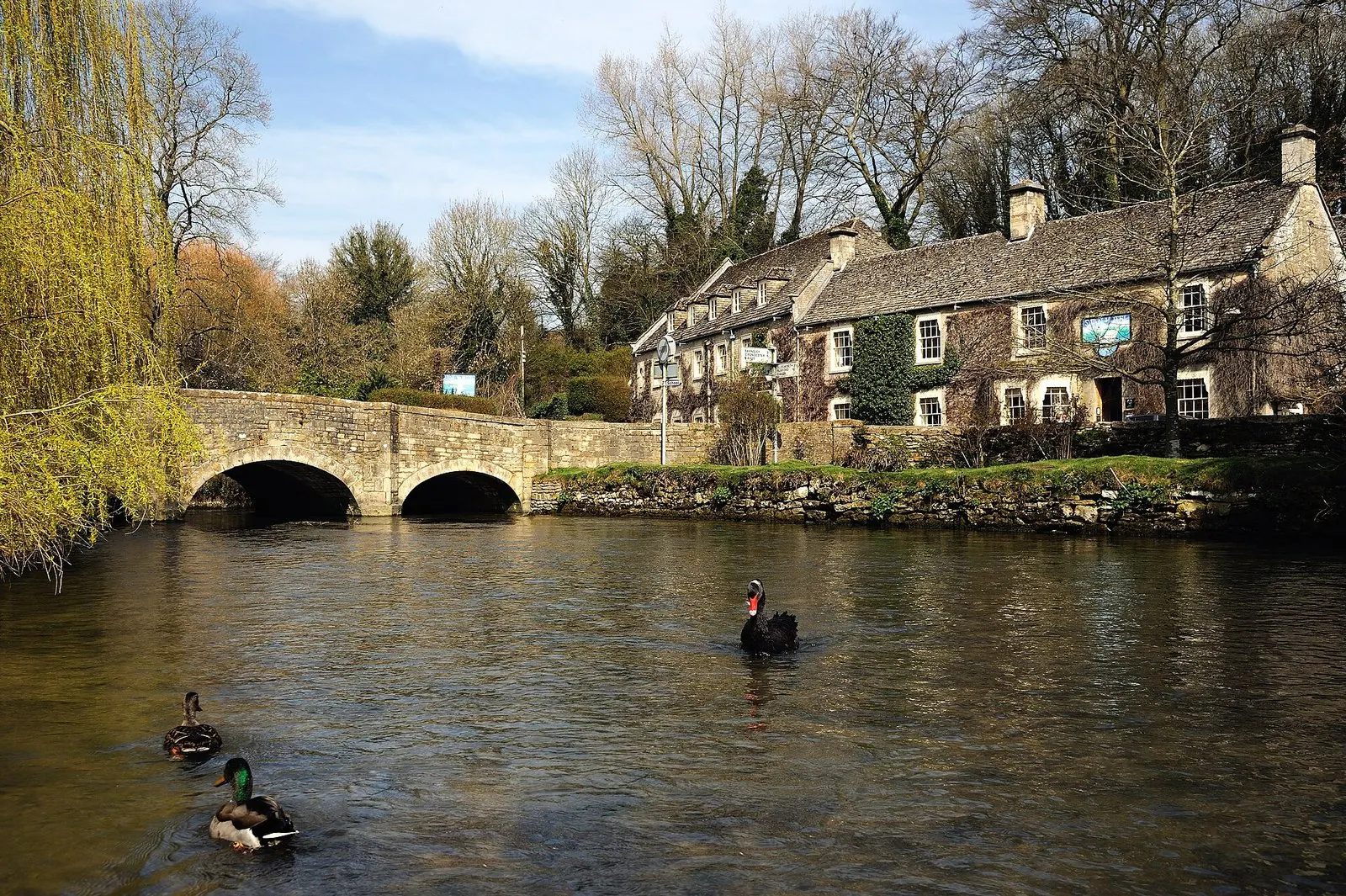
An ivy-covered stone hotel behind a two-arched stone bridge over a calm river, with a black swan and ducks on the water.

The Swan Hotel

An old coaching inn, where travellers by horse and carriage once stopped, recorded as an inn from 1672.

About 5 min · Free

1 of 5

Swipe for all five highlights →

Practical answers

Before you go.

The questions people ask before they book.

How far is Bibury from London?

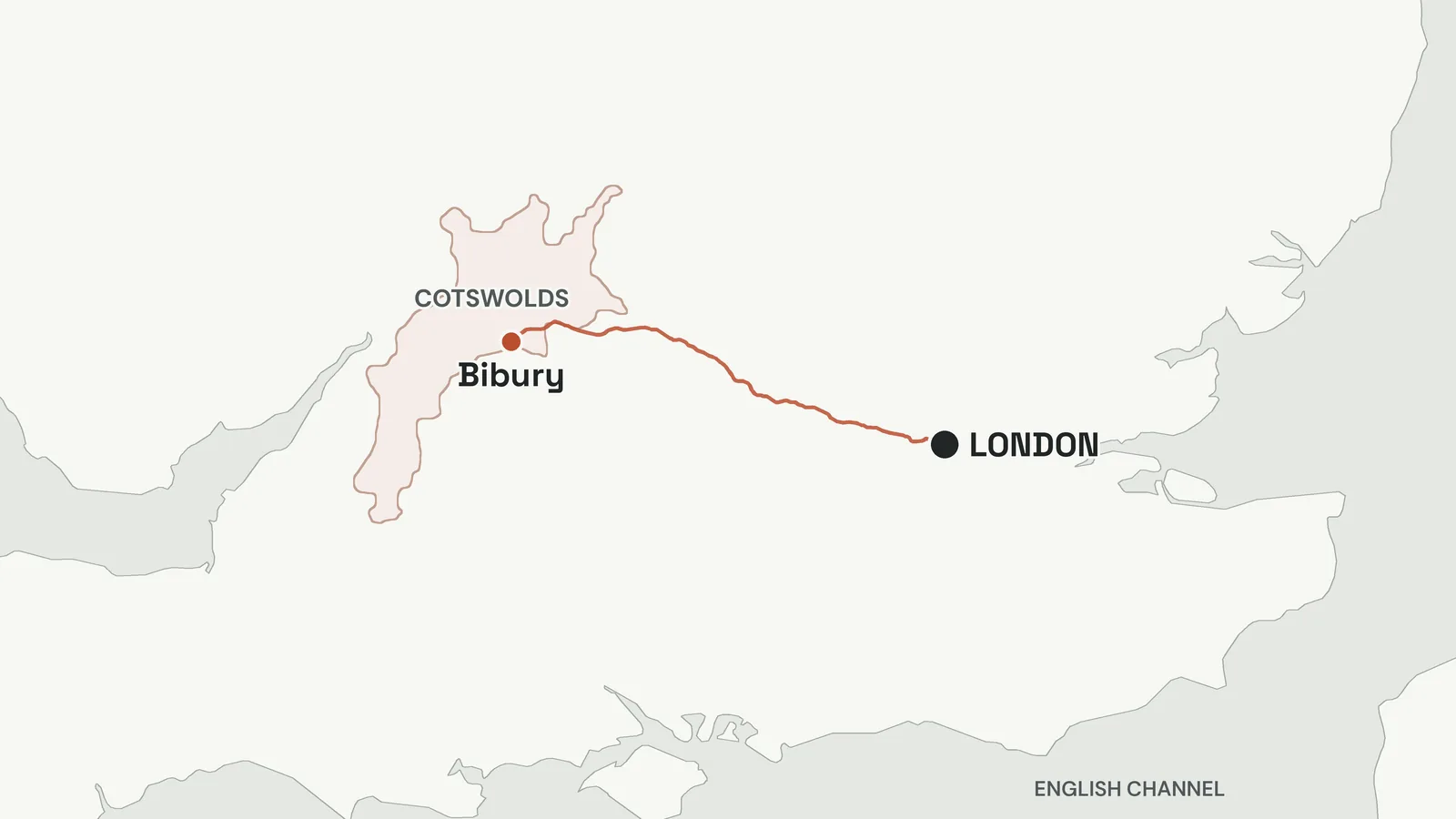
About 83 miles (134 km) by road, roughly 2 hours each way without traffic. Allow about 2 hours each way from London. OpenStreetMap road routing (OSRM), retrieved 29 October 2026 → (opens in a new tab)

Can I go inside Arlington Row?

No. The cottages are private homes, and two are holiday lets. The National Trust says there is no public access to the cottages or their gardens. Please respect the residents’ privacy. National Trust: Bibury → (opens in a new tab)

What should I know before I go?

The cottages are private homes with no public access, so you see them from outside. The National Trust says parking can be busy. National Trust: Bibury → (opens in a new tab)

Do I pay to see Arlington Row and the river?

The National Trust lists no entry charge for the row or Rack Isle, which are seen from public footpaths. Parking and the Trout Farm are not run by the National Trust. National Trust: Bibury → (opens in a new tab)

Is the ground easy to walk on?

The National Trust lists a level tarmac route in front of Arlington Row and around Rack Isle. One small bridge over the mill stream is narrow, and the footpath beside it can be narrow too. Dogs are welcome on leads. National Trust: Bibury → (opens in a new tab)

Where can I eat, and is there a toilet?

The National Trust lists pubs, restaurants and tea-rooms in the village, and public toilets opposite the roadside parking. None is run by the National Trust. The Trout Farm has a café open daily. National Trust: Bibury → (opens in a new tab)

Can I use the Trout Farm café without paying for the farm?

Yes. The farm says you are welcome to use its café and shop without paying farm admission. It also welcomes dogs on a lead. Bibury Trout Farm: frequently asked questions → (opens in a new tab)

Where do tour buses stop in the village?

Gloucestershire County Council closed the bays for large buses in the centre of the village and put in a marked bus-stop clearway for dropping off and picking up, with a 10-minute wait. It asks drivers to move on afterwards. It calls this a trial and last reviewed its page in July 2025, so ask your operator how your tour arrives. Gloucestershire County Council: parking changes for large buses in Bibury → (opens in a new tab)

Compare

Compare day trips from London.

Booking links earn us commission, at no extra cost to you. Viator handles the booking.

Compare all The Cotswolds tours →

Free day guide

Get the free Cotswolds day guide

The guide has a page for each village, with what to see in 30, 60 or 90 minutes, and where to find toilets and food.

Unsubscribe any time. Privacy

When to go

What changes through the year.

The village and the river meadow can be visited all year. What you see on the meadow, and what the Trout Farm offers, changes with the season.

Spring

The Trout Farm has run a free Easter egg hunt through the Easter holidays, included in admission. Check its website for this year's Easter activities. Bibury Trout Farm: Easter → (opens in a new tab)

Summer

Yellow flag iris and pink ragged robin flower on the meadow in early summer. A small herd of Belted Galloway cattle grazes Rack Isle in late summer. National Trust: things to do in Bibury → (opens in a new tab)

Autumn

At October half term in 2026 (24 October to 1 November), the Trout Farm’s website lists a Halloween trail, with a spooky trail around the ponds. Bibury Trout Farm: Halloween → (opens in a new tab)

Winter

The Trout Farm lists a Bibury Christmas Market among its events, but its page gives no dates, so check with the farm before planning a winter visit. Bibury Trout Farm: Christmas Market → (opens in a new tab)

The Trout Farm and the church change their opening hours through the year. Check their pages for your date before you plan the stop. Bibury Trout Farm → (opens in a new tab)

A taste and a keepsake

Something to taste or take home from Bibury.

These are small extras to taste or take home from Bibury.

Just ideas for any free time you get.

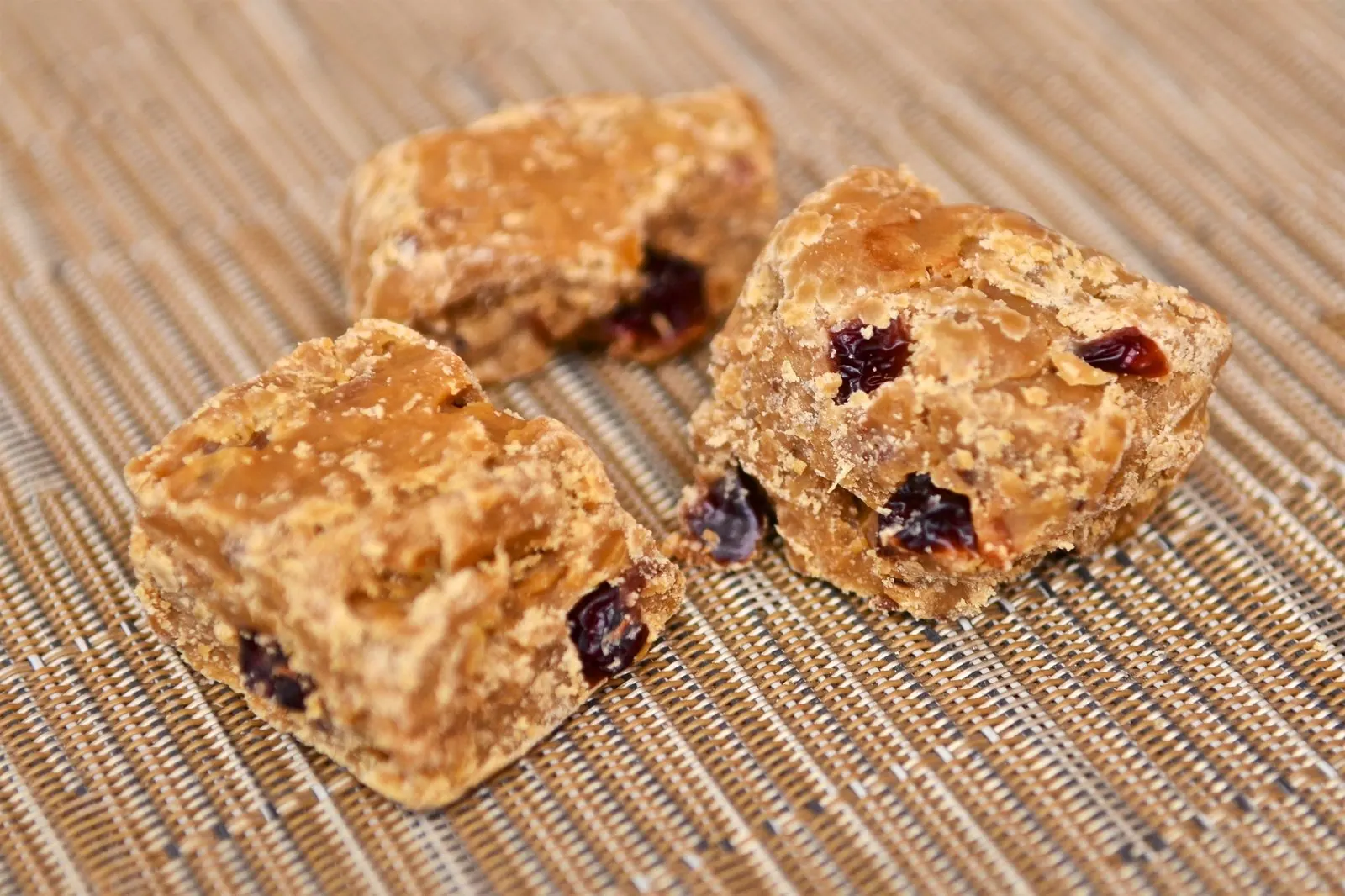
Three pieces of fudge studded with dried cranberries on a woven mat.
Illustrative
Take home

Honey, fudge and Arlington Row prints

The farm shop sells local Cotswold honey, fudge and lavender products. It also sells framed prints of Arlington Row and William Morris china and textiles.

Where to find itIn the Trout Farm shop, which you can use without paying farm admission.

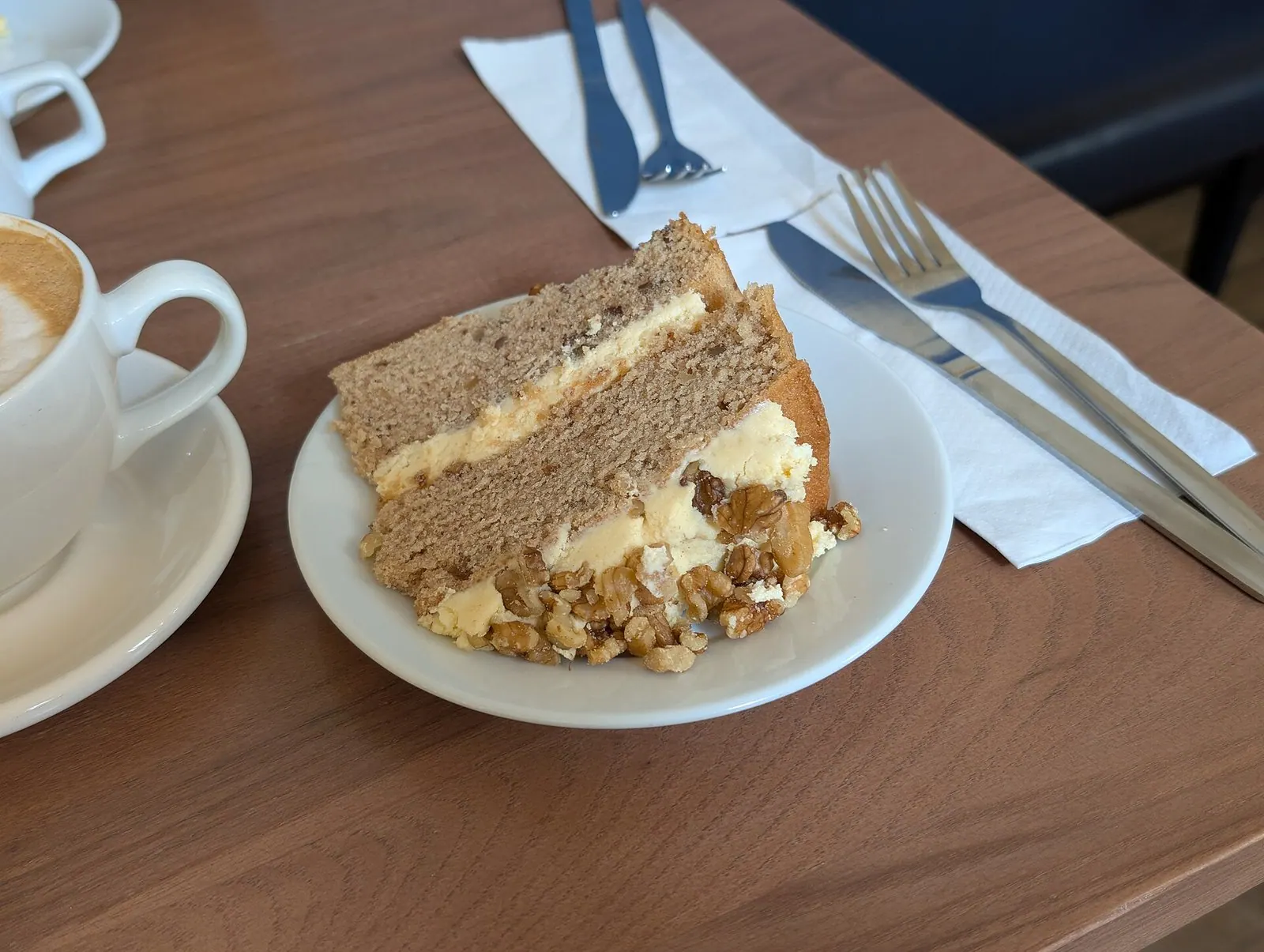
A slice of coffee and walnut layer cake on a white plate with a fork and knife, beside a cup of cappuccino on a wooden table.
Illustrative
Taste

Trout and cake at the café

The Trout Farm café serves its own trout with locally sourced dishes, home-made cakes, soups and ice cream. It has plenty of outdoor seats.

Where to find itOpen daily, with later hours in July and August. Only if you have time.

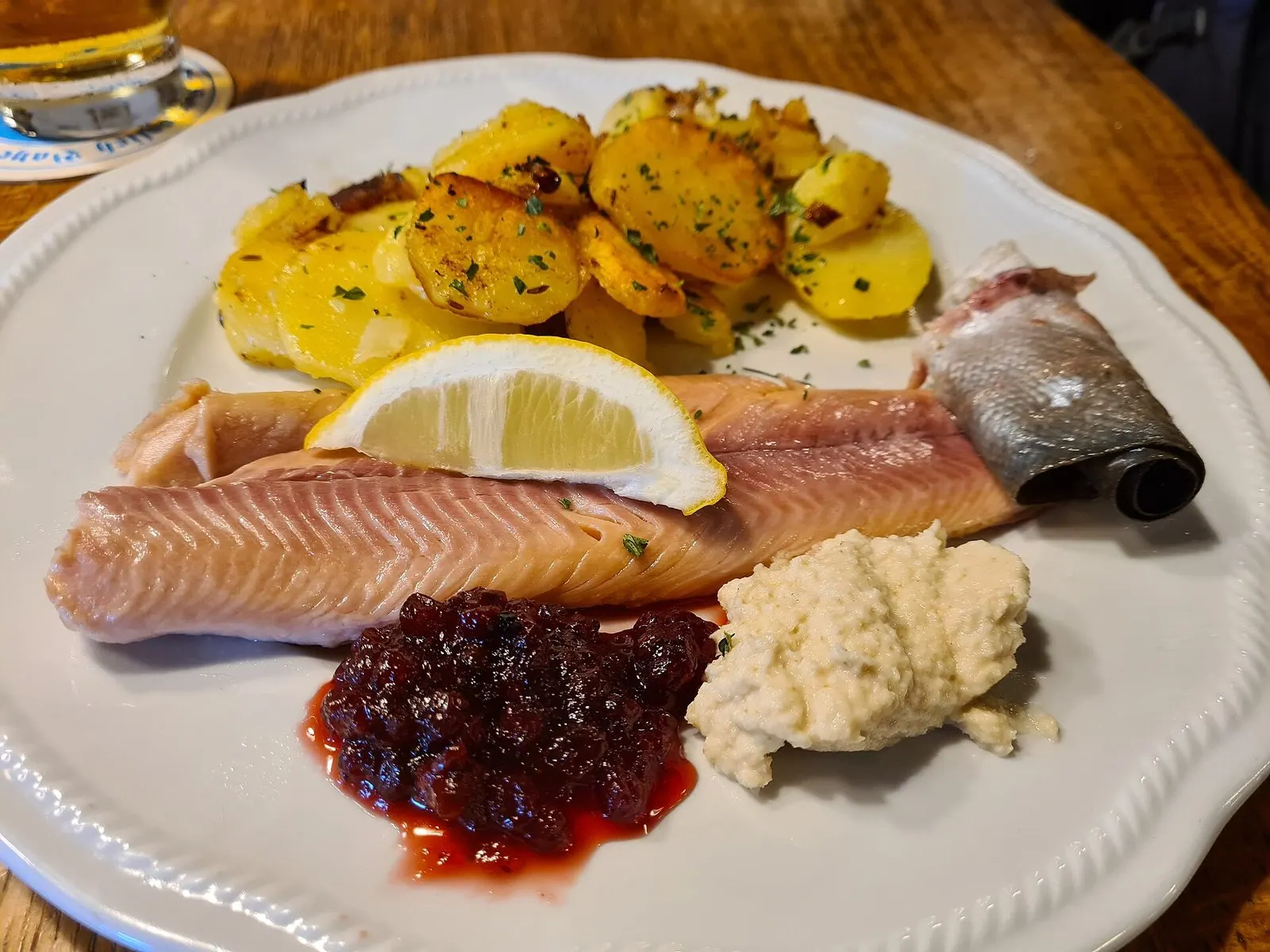
A smoked trout fillet with lemon, fried potatoes, horseradish cream and cranberry sauce on a white plate.
Illustrative
Taste

Smoked trout fish cakes and pâté

The farm’s fish counter sells marinated trout fillets, smoked trout fish cakes, pies and pâté. The farm smokes its trout on site.

Where to find itOpen daily from 9 am, the farm says. Fresh fish needs to stay cold all day.

Plan your day

Help with choosing.

Also in The Cotswolds

Places on the same day trips.

All The Cotswolds day trips →
Picture credits and sources

Pictures

Image sources and credits are listed here. Pictures made with AI are marked.

Tour photographs are provided by the tour operators through Viator and are shown from Viator’s own image servers.