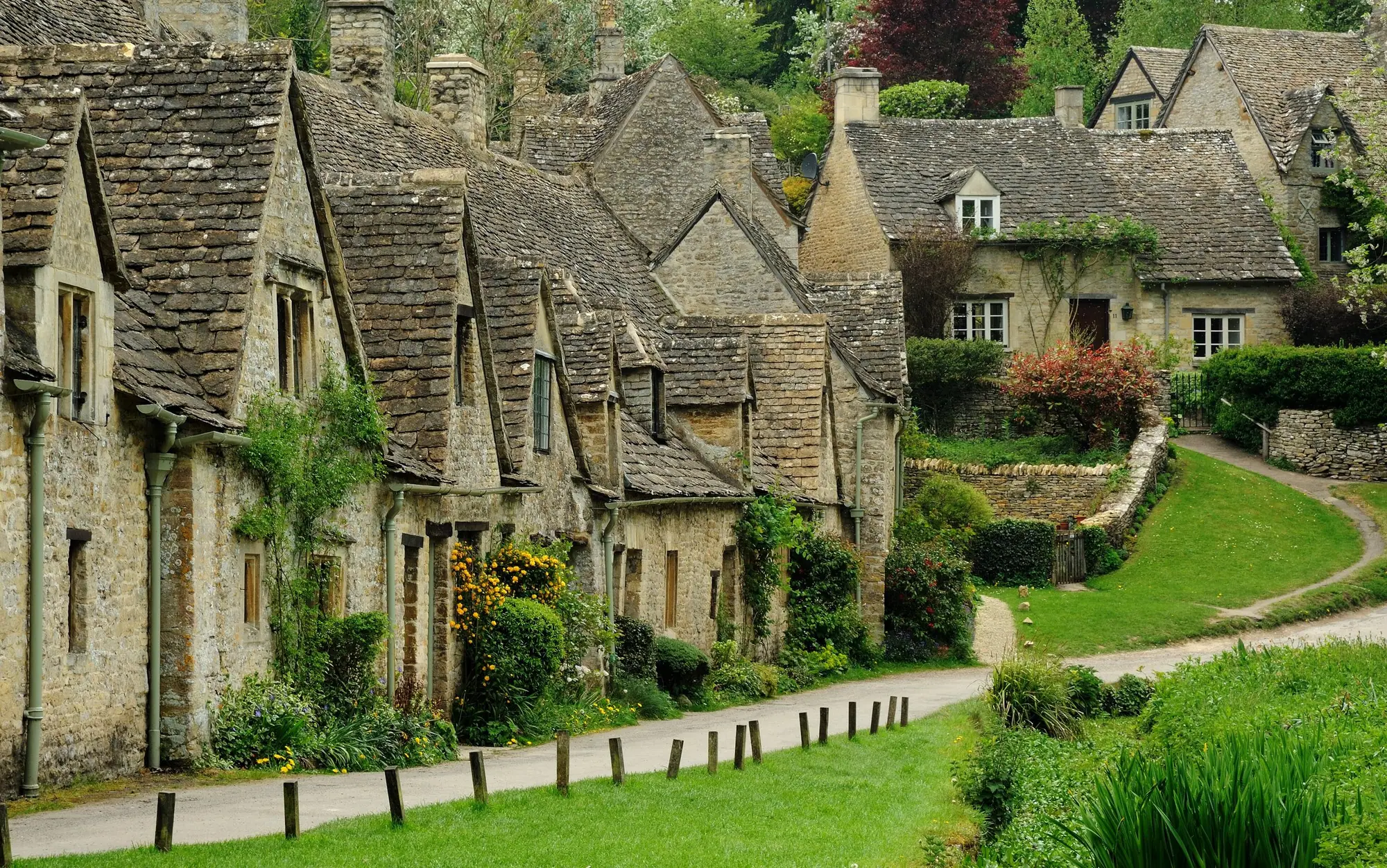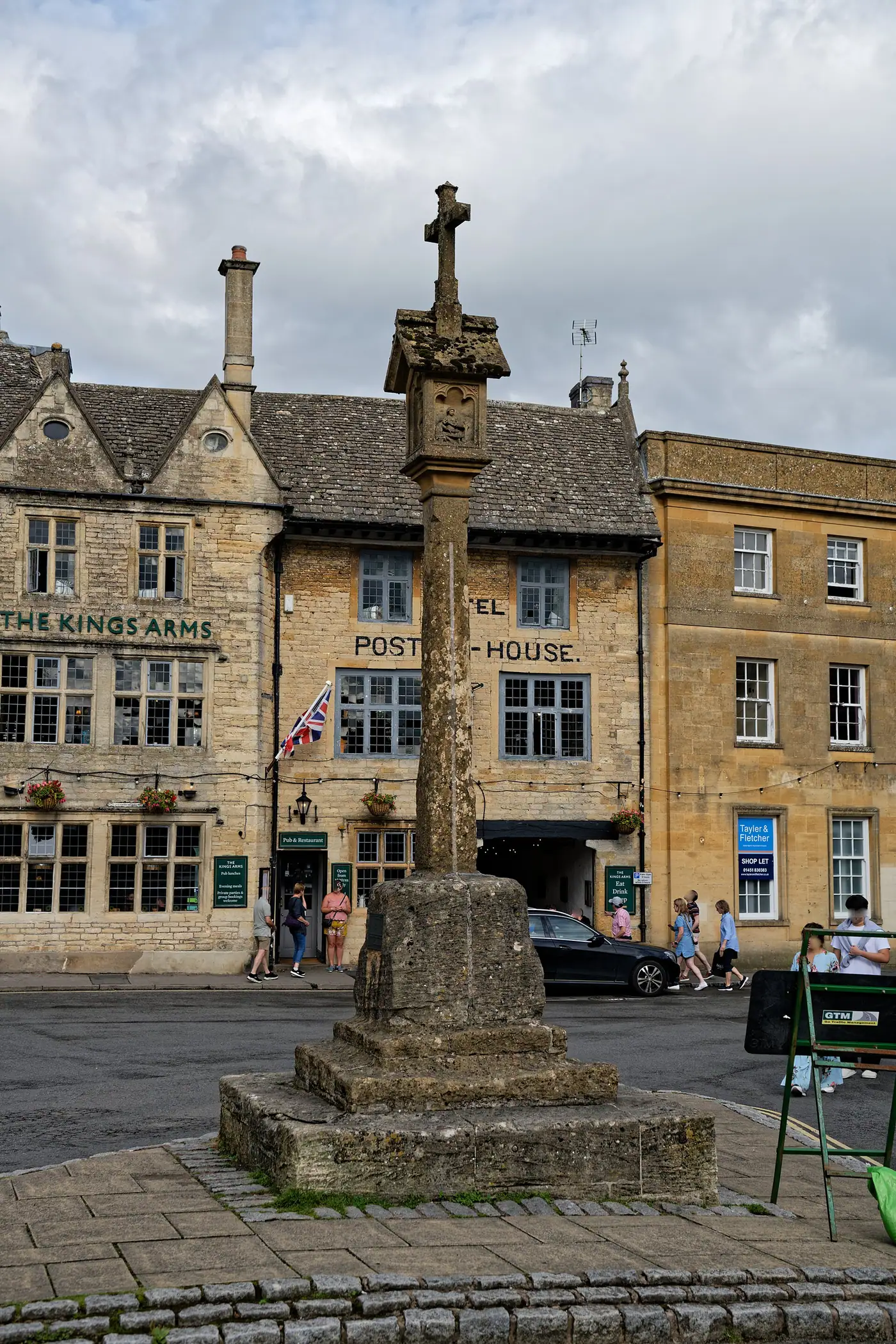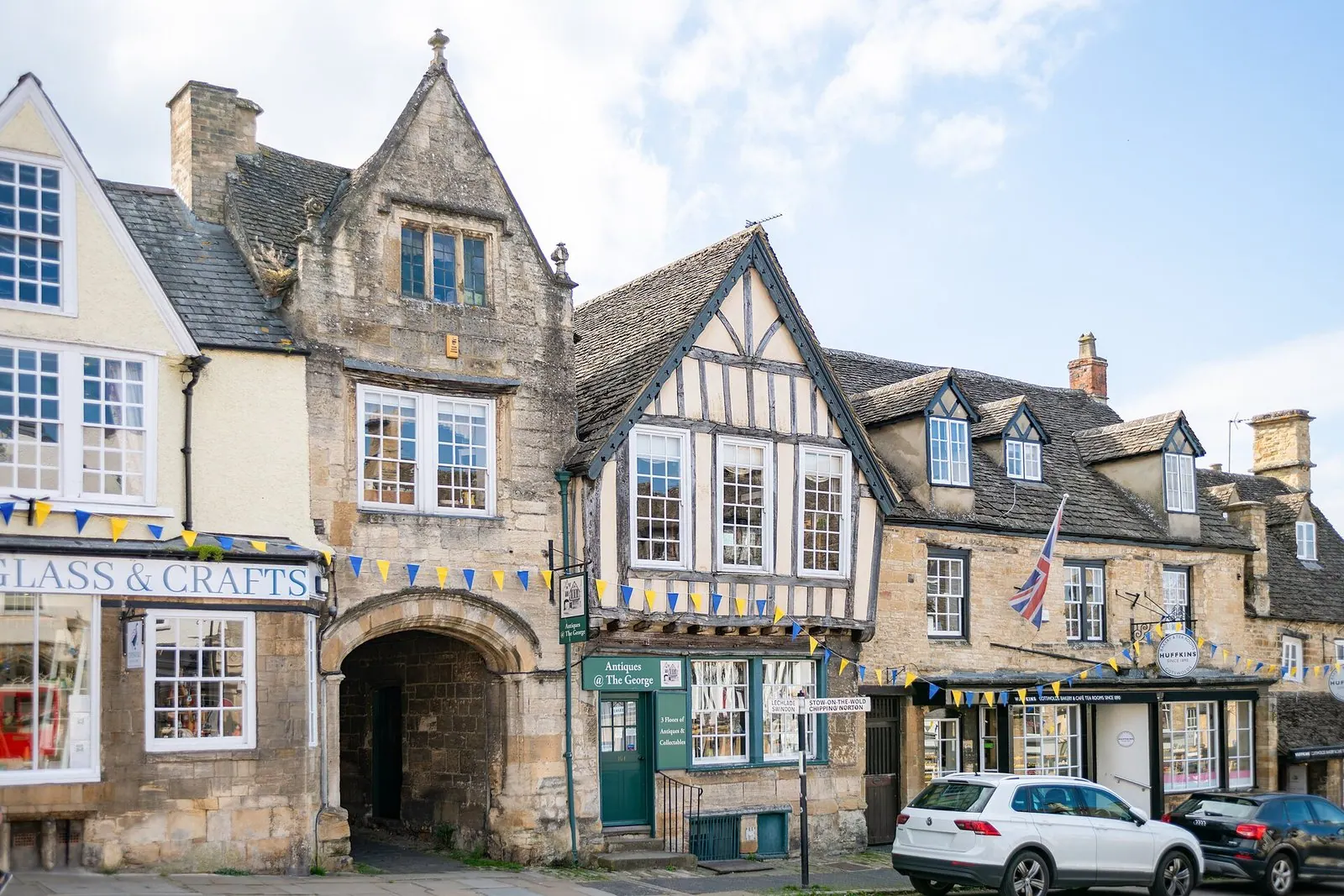
The real England, in one easy day from London
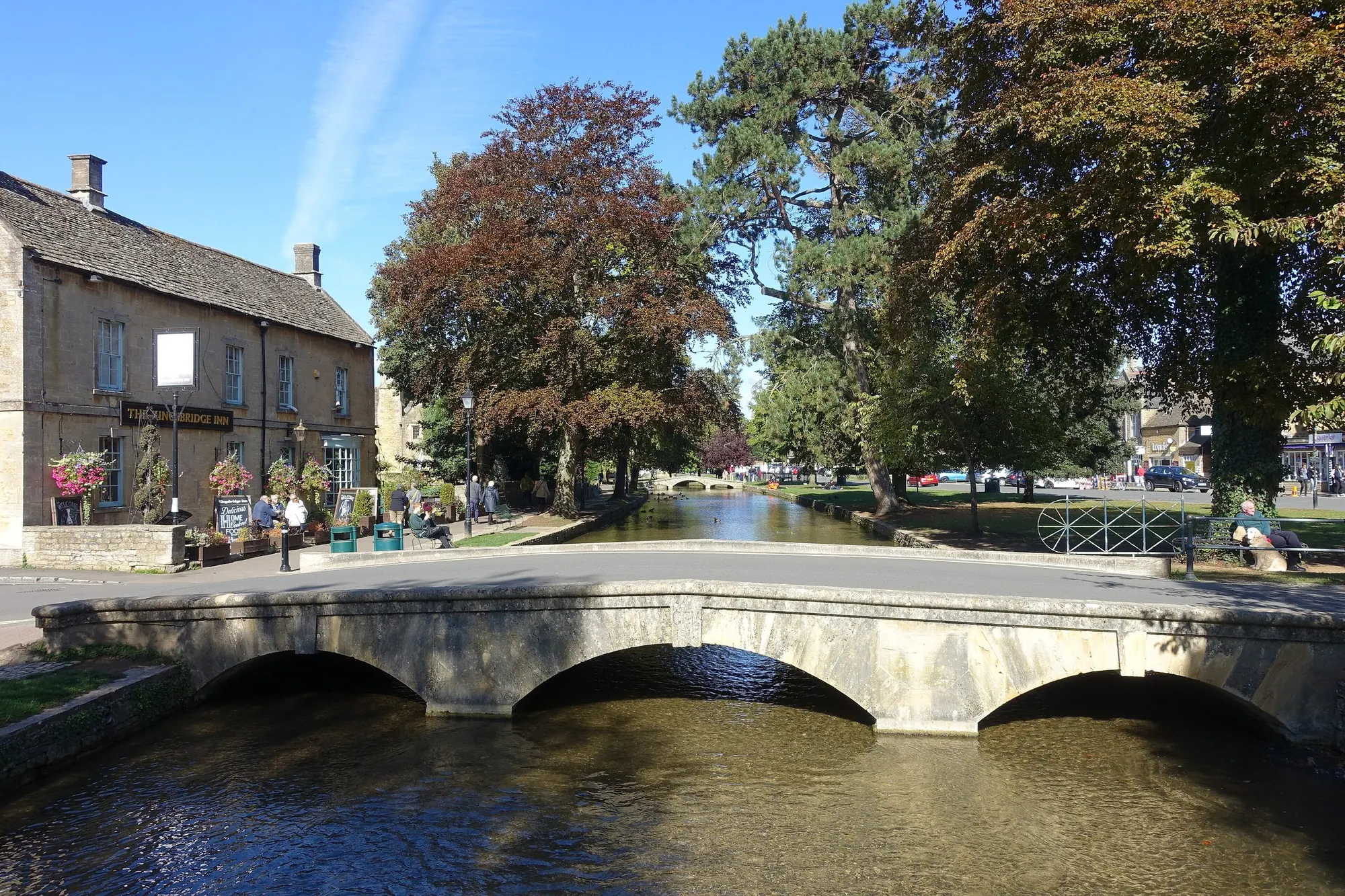
A low three-arched stone bridge over the River Windrush, with large trees, shops with hanging baskets and a blue sky behind.

A Cotswold village on a river of low stone bridges

Bourton-on-the-Water

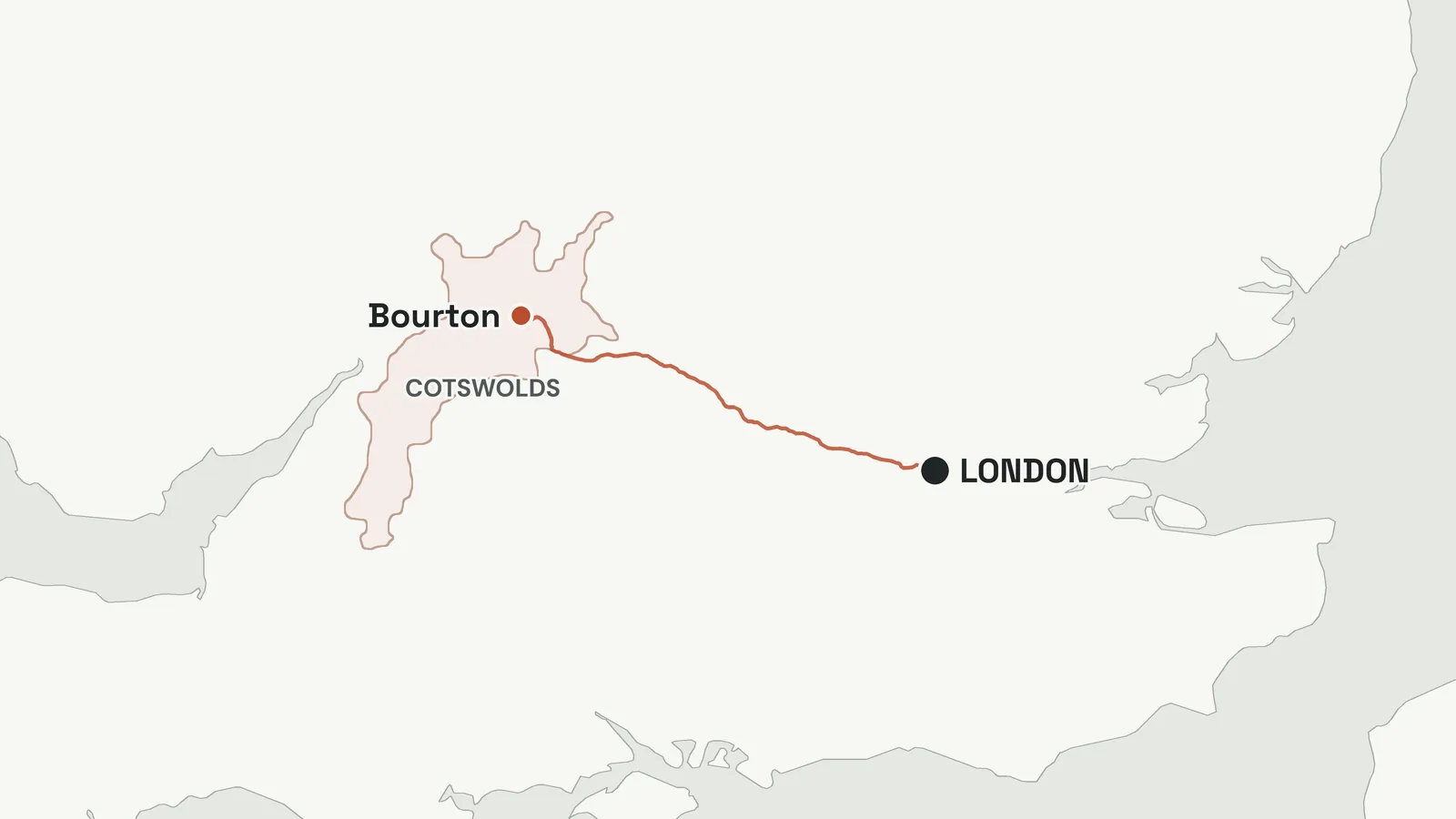
In the Cotswolds, on the River Windrush · a day trip from London

See how long each tour stops in Bourton-on-the-Water →

Why it matters

Why Bourton-on-the-Water matters.

Bourton grew beside a river and an ancient camp, and became one of the best-known visitor villages in the Cotswolds. Here are the bridges, the Iron Age camp, the Model Village and the story of how visitors came.

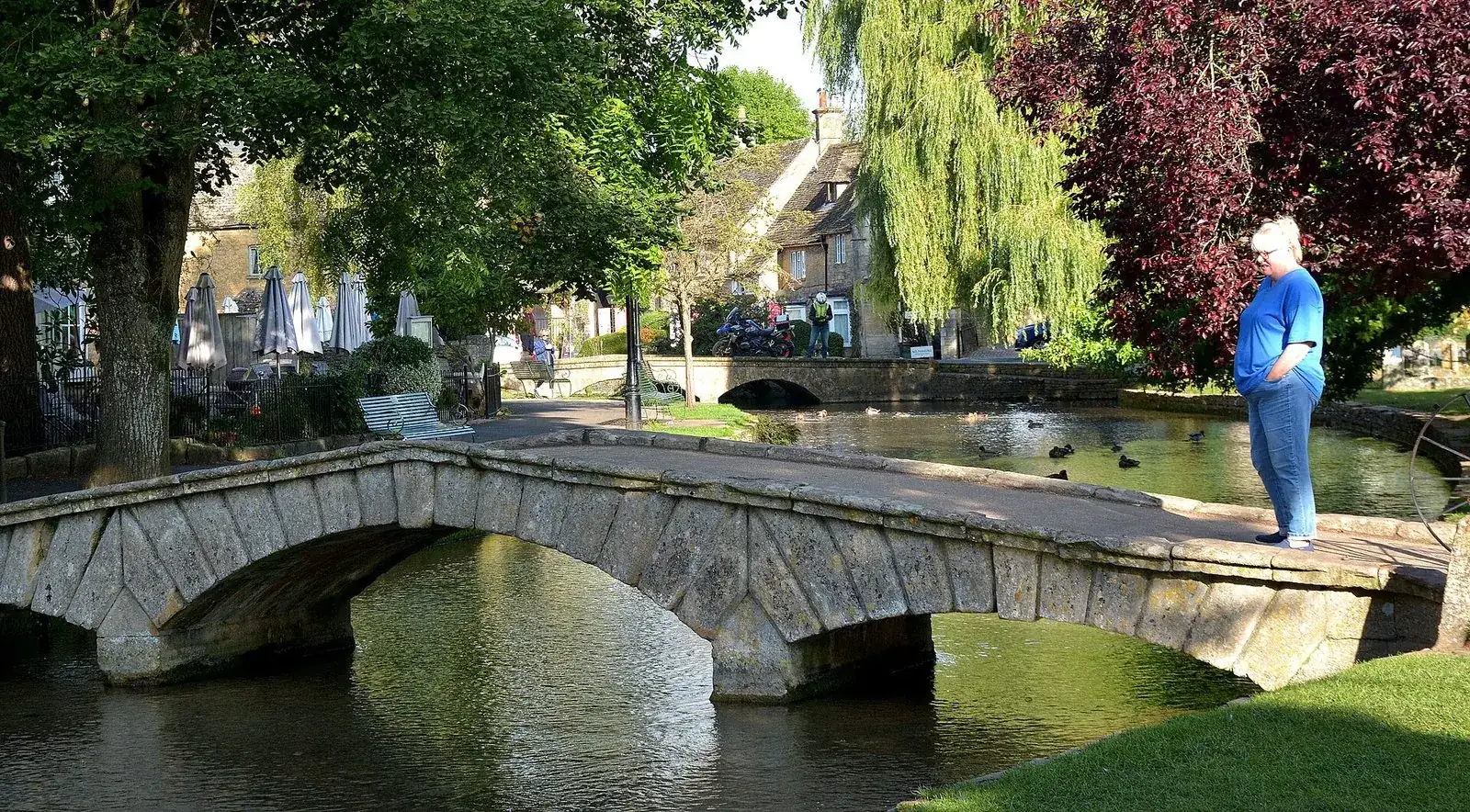
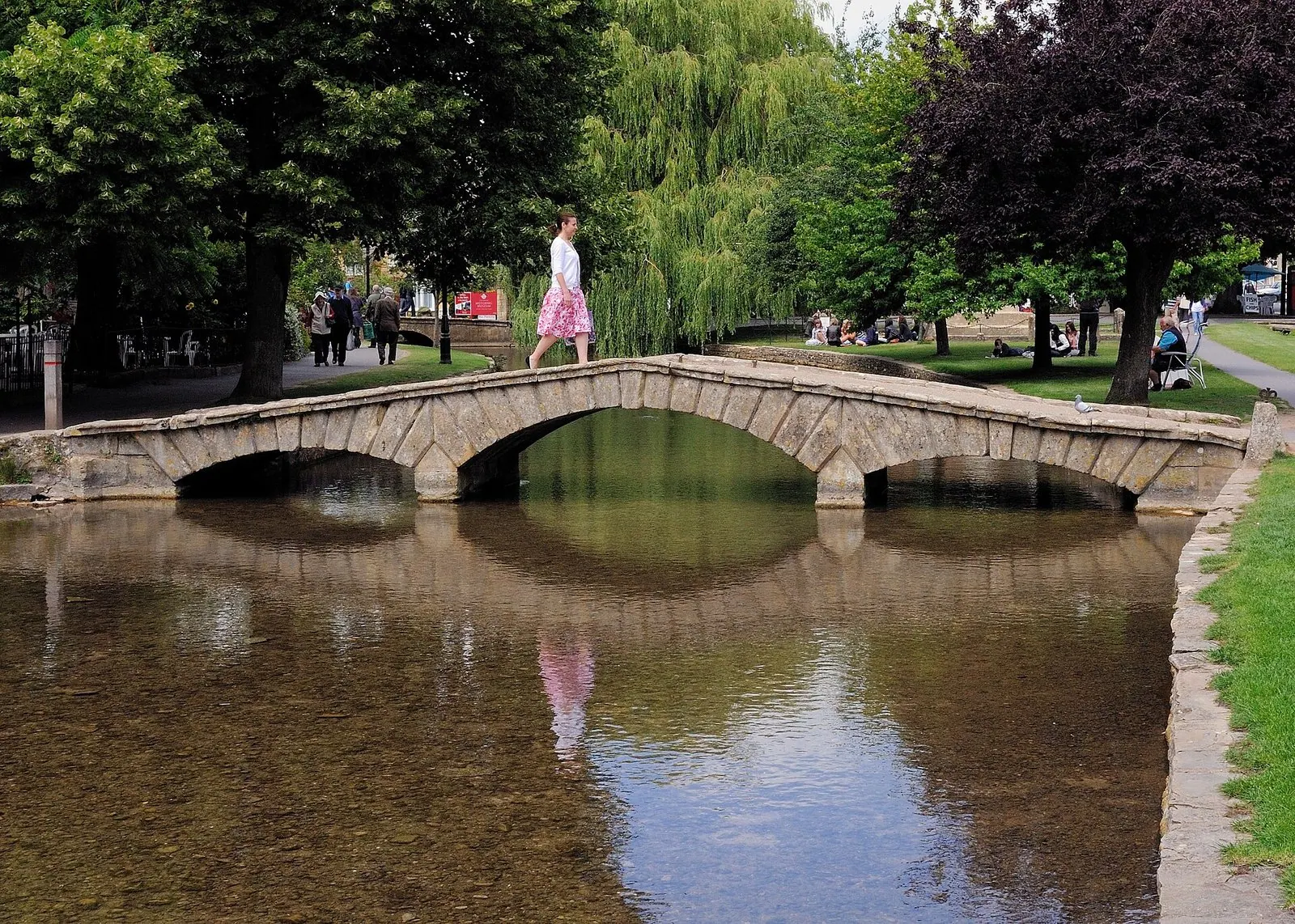
A low arched stone footbridge reflected in calm river water, with a walker in a pink skirt crossing and willow trees behind.

01

Five low bridges over the Windrush

Five small stone bridges cross the river, and they give the village its nickname, the Venice of the Cotswolds.

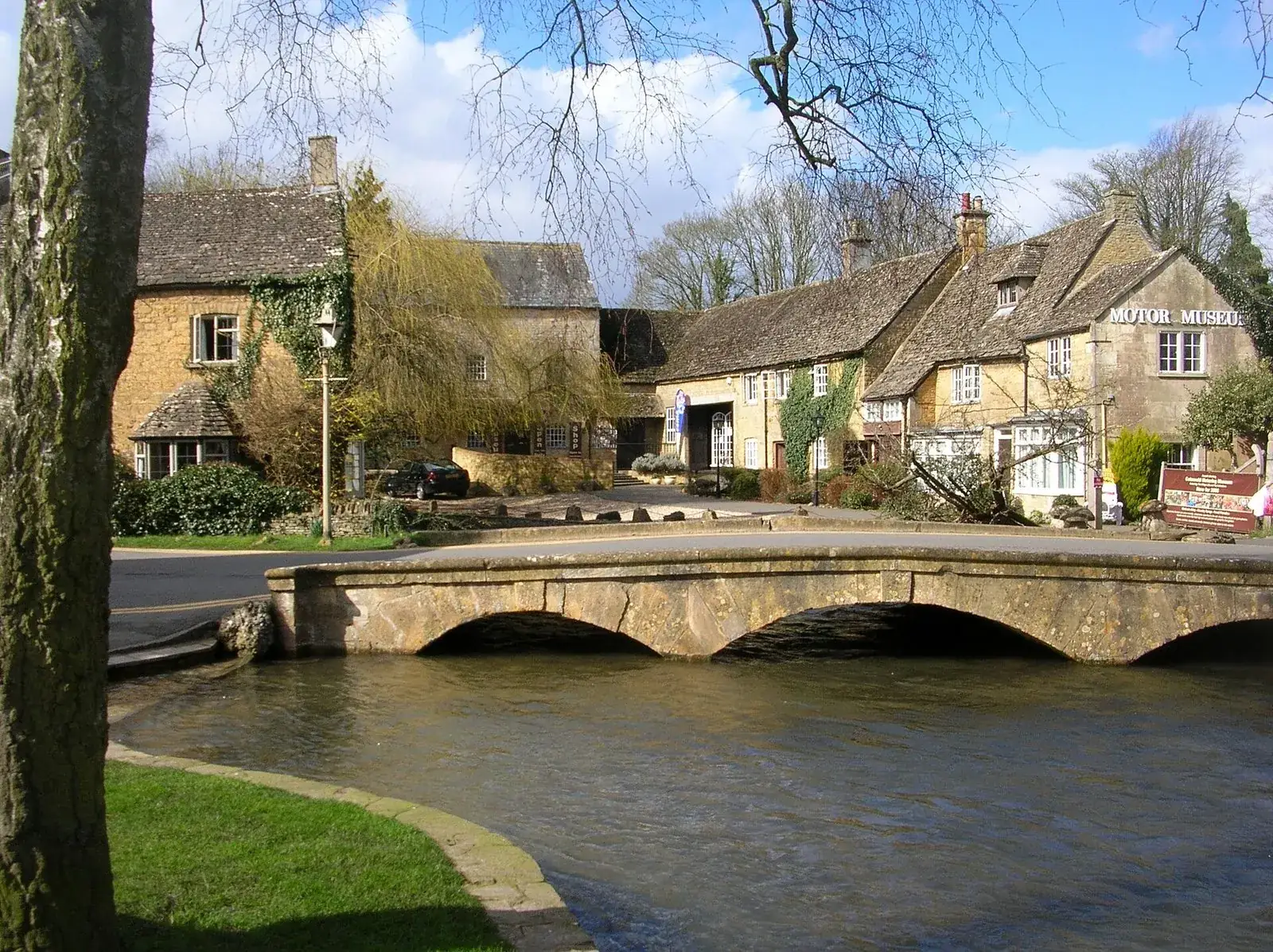
The River Windrush flows through the middle of the village, and five stone bridges cross it. The oldest is Mill Bridge, built in 1654. The Coronation Bridge, built in 1953, replaced an earlier wooden one. Cotswold District Council says all the bridges have three arches, are slightly humped, and have very low sides. “Venice of the Cotswolds” is a nickname that the Parish Council uses on its own website, and so do tourism guides.

Look for

The footbridge called High Bridge, in the middle of the green, and how low the sides of every bridge are.
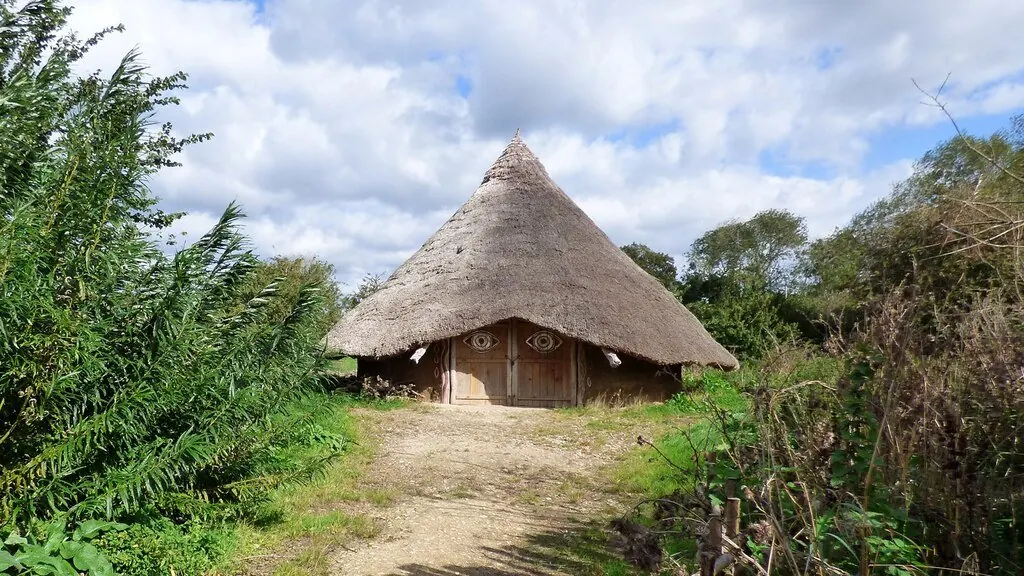
A replica Iron Age roundhouse with a thatched conical roof and wooden double doors painted with eyes, on a dirt track among tall grass and trees

02

The village beside an Iron Age camp

The name Bourton means a village beside a fort, and the fort was an Iron Age camp just east of the village.

Bourton comes from two Saxon words. Burh means a fort or camp, and ton means an estate or village. The fort was Salmonsbury Camp, an Iron Age enclosure of about 23 hectares, defended by a double bank and ditch. Historic England lists it as a scheduled monument, which means the law protects it. Digs found people living there from the late Stone Age or early Bronze Age to the end of the Roman period. A small Roman town stood just over a kilometre to the west.

Look for

The camp lies on the village’s eastern edge, not in the centre. Its banks survive up to 2 metres high on three sides, so treat it as background to the name.

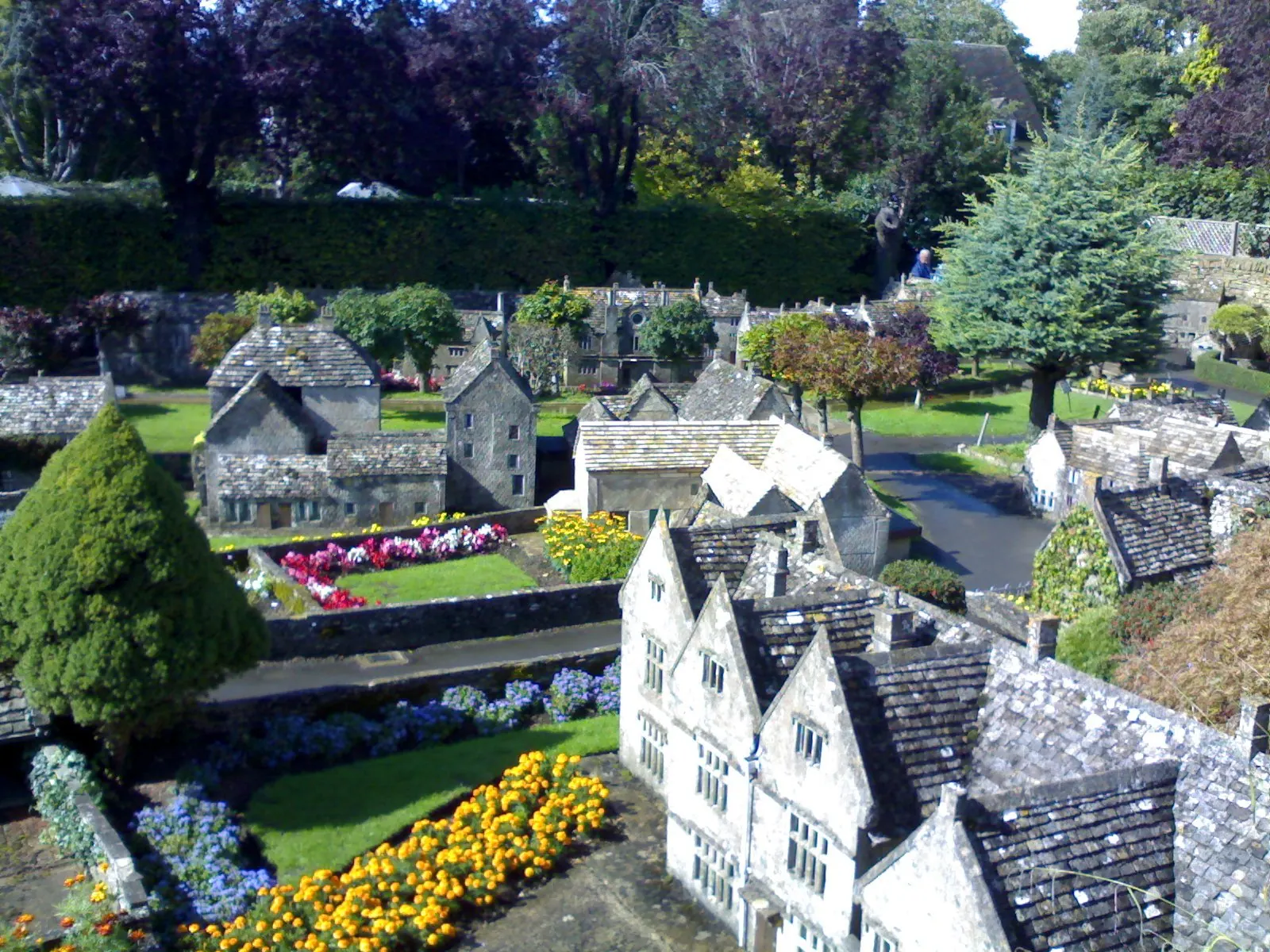
A view down over small stone model houses, trees and flower beds with a tall blue-green conifer beside them.

03

A village in miniature

In the garden of the Old New Inn is a model of Bourton itself, built from local stone in the 1930s.

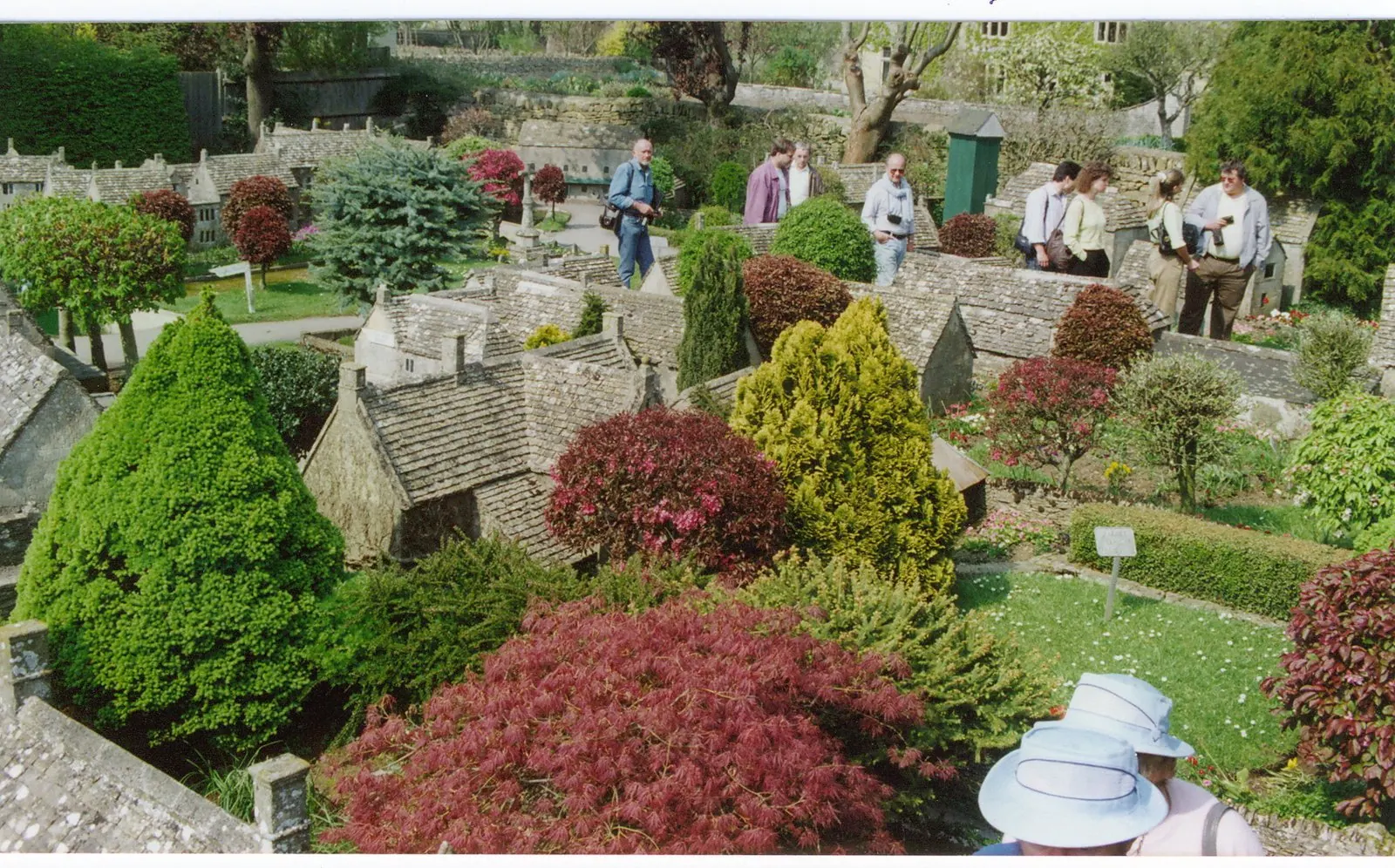
The landlord of the Old New Inn built the Model Village in the inn’s garden to attract visitors. The inn says work was under way in 1936, and Cotswold District Council says it opened in 1937. It is a copy of the village at one-ninth of its real size, as it looked in the 1930s. Skilled craftsmen built it in Cotswold stone. The council calls it one of the first model villages in the country.

Look for

The tiny stone buildings copied from the real streets. The paths are narrow, and pushchairs, mobility scooters and motorised wheelchairs cannot go in.

A three-arched stone bridge over a calm river, with honey-coloured stone buildings and a museum sign beyond it.

04

How Bourton became a day-trip village

Motor travel brought visitors in the 1900s, and the village added attractions to welcome them.

Cotswold District Council says holiday traffic grew after the First World War as more people travelled by motor vehicle. The Model Village was followed by Birdland, the Perfumery, a motor museum and a model railway. More tea shops, souvenir shops and guest houses came too. A local firm, Pulham’s, began by carrying visitors over the hills from Cheltenham by horse-drawn charabanc, and its buses still run today. The council statement says the motor museum building was once a working water mill.

Look for

The Cotswold Motoring Museum beside Mill Bridge, in the former Lower Mill.

Your time there

What to see.

These are the highlights worth looking out for, if your time allows. See how long each tour stops in Bourton-on-the-Water →

Most of Bourton is the river, the green and the streets around them, which cost nothing to enjoy. The attractions charge their own entry and need more time. Here are the highlights.

A woman in blue stands on a low arched stone footbridge over the river, beside a weeping willow and a copper beech.
Don’t miss

The River Windrush and its bridges

Clear water running between wide grass banks planted with trees, crossed by five low, slightly humped stone bridges.

About 15 min · Free

The council’s conservation statement says the bridges have very low sides.

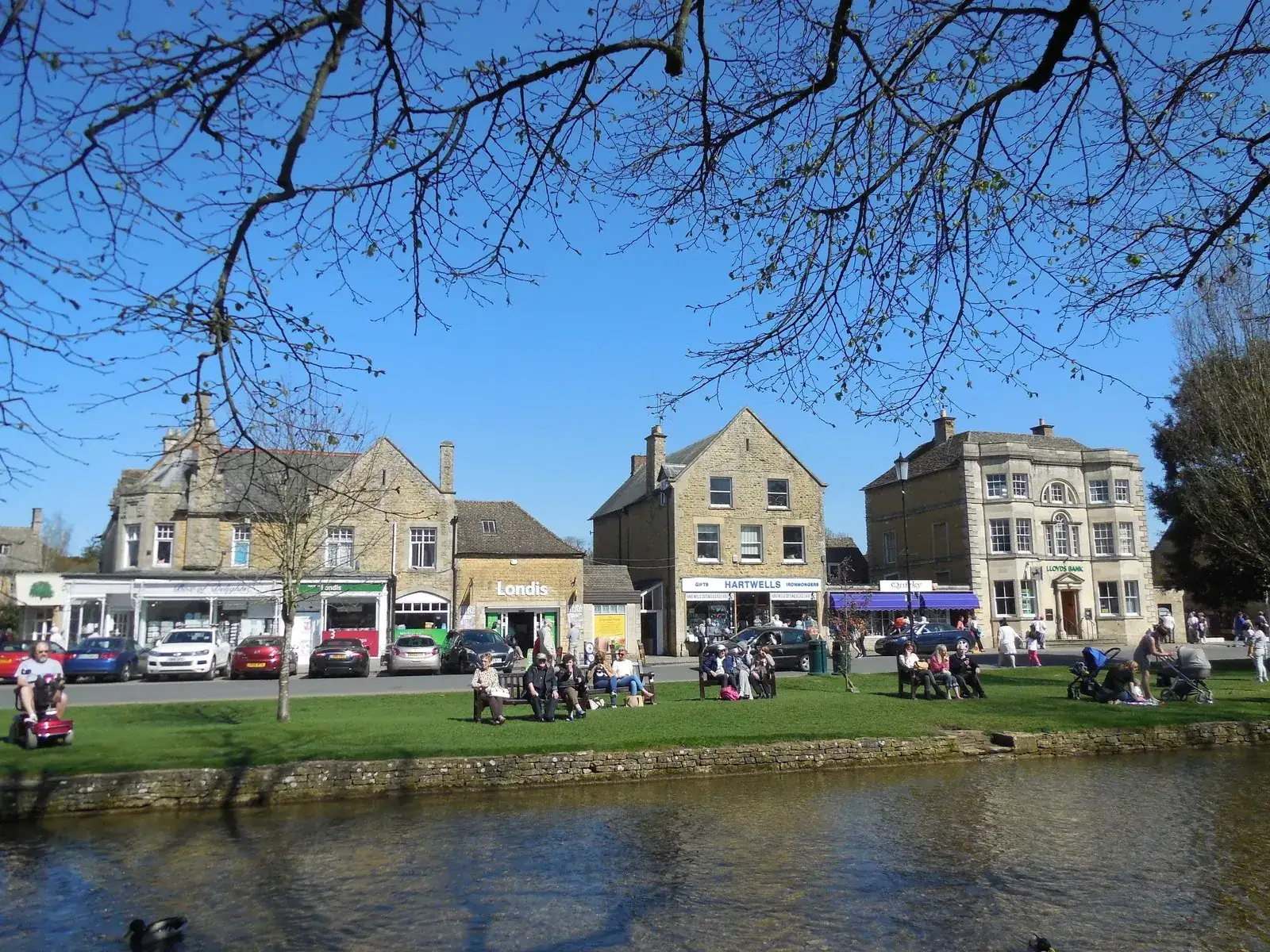
Shops, a bank and parked cars facing a village green where people sit on benches, seen across the River Windrush through bare branches

Shops and tea rooms by the river

Independent boutiques, craft shops, galleries and gift shops, with cafés and tea rooms where you can have coffee or afternoon tea by the river.

About 30 min · Free

Visitors lean over a model village full of coloured shrubs and small stone buildings.

The Model Village

A one-ninth scale copy of Bourton in Cotswold stone, in the garden of the Old New Inn.

About 45 min · Own ticket

The paths are narrow. Pushchairs, mobility scooters and motorised wheelchairs cannot go in, and disabled visitors use a side gate.

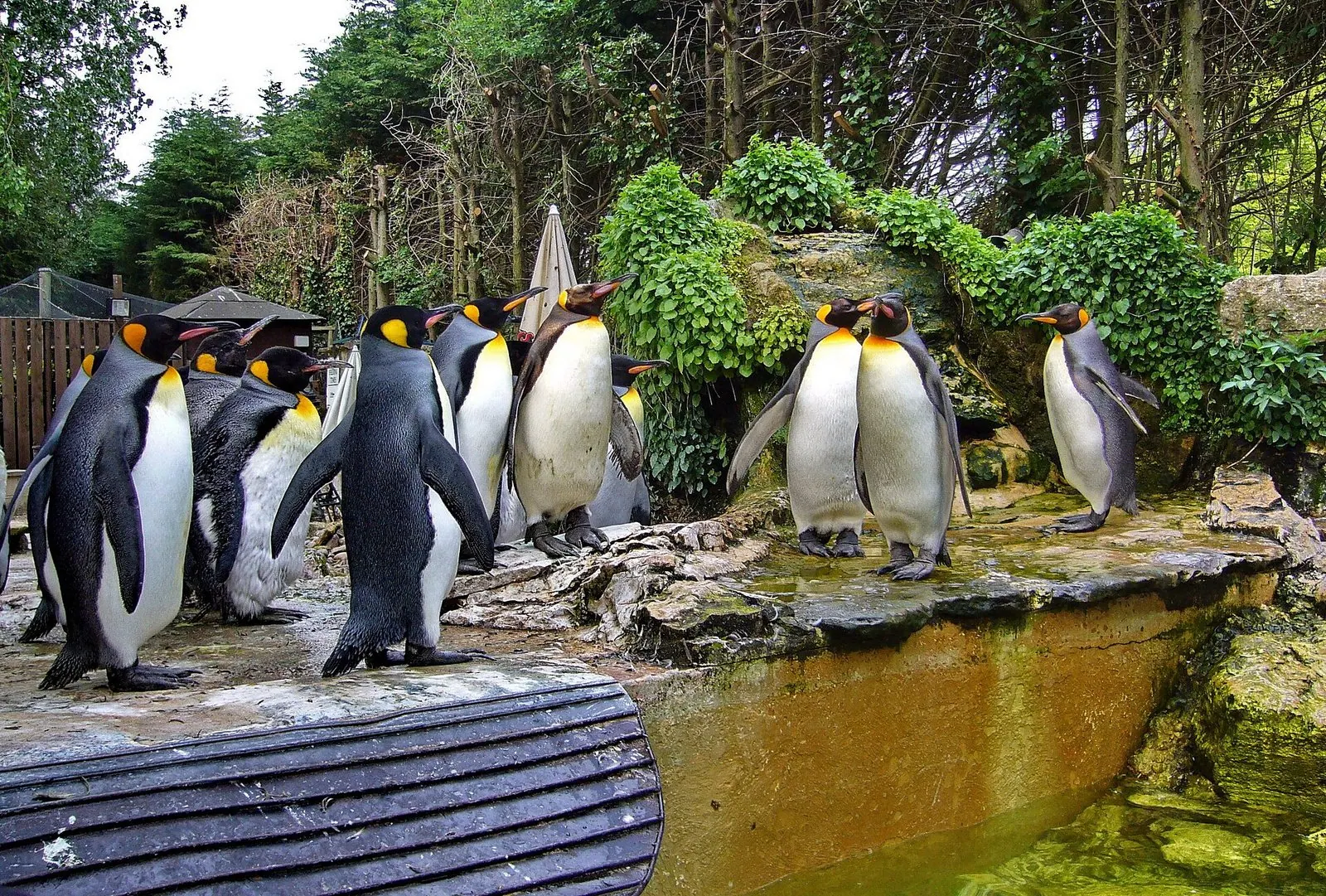
A group of king penguins standing together on a rock ledge among green plants, with trees behind.

Birdland Park and Gardens

More than 500 birds in nine acres of garden and woodland beside the river, including penguins, flamingos and owls. Birdland says it has England’s only breeding group of king penguins.

About 90 min · Own ticket

Opening days (checked 20 October 2026): Birdland lists daily opening, except Christmas Eve and Christmas Day. Tickets are sold online or at the gate.

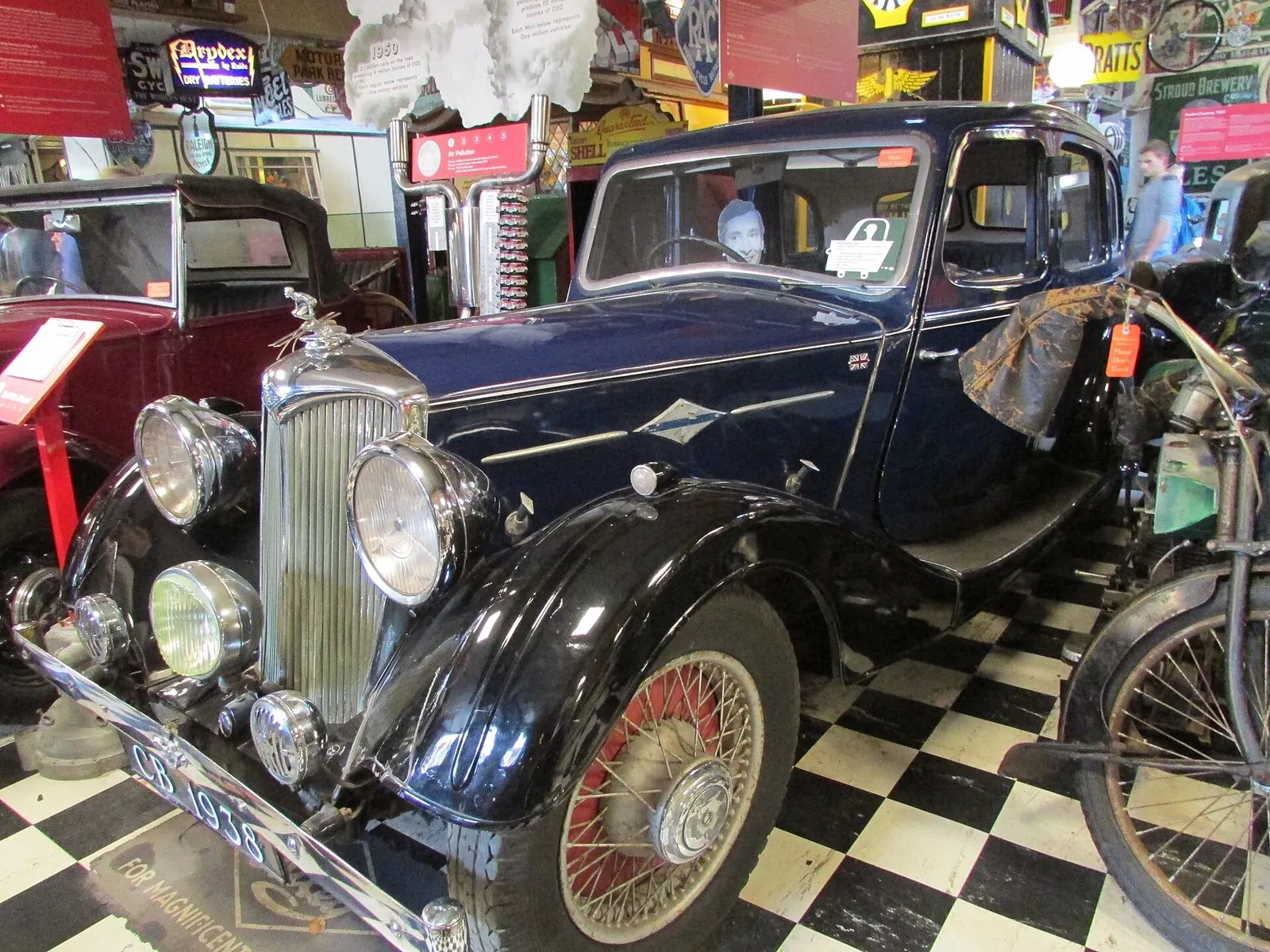
A black 1930s Riley saloon with chrome headlamps on a chequered floor, with other cars and displays behind.

The Cotswold Motoring Museum

Cars, motorbikes, caravans, toys and memorabilia from 20th-century motoring.

About 45 min · Own ticket

The museum says disabled access is available throughout, and that dogs are welcome.

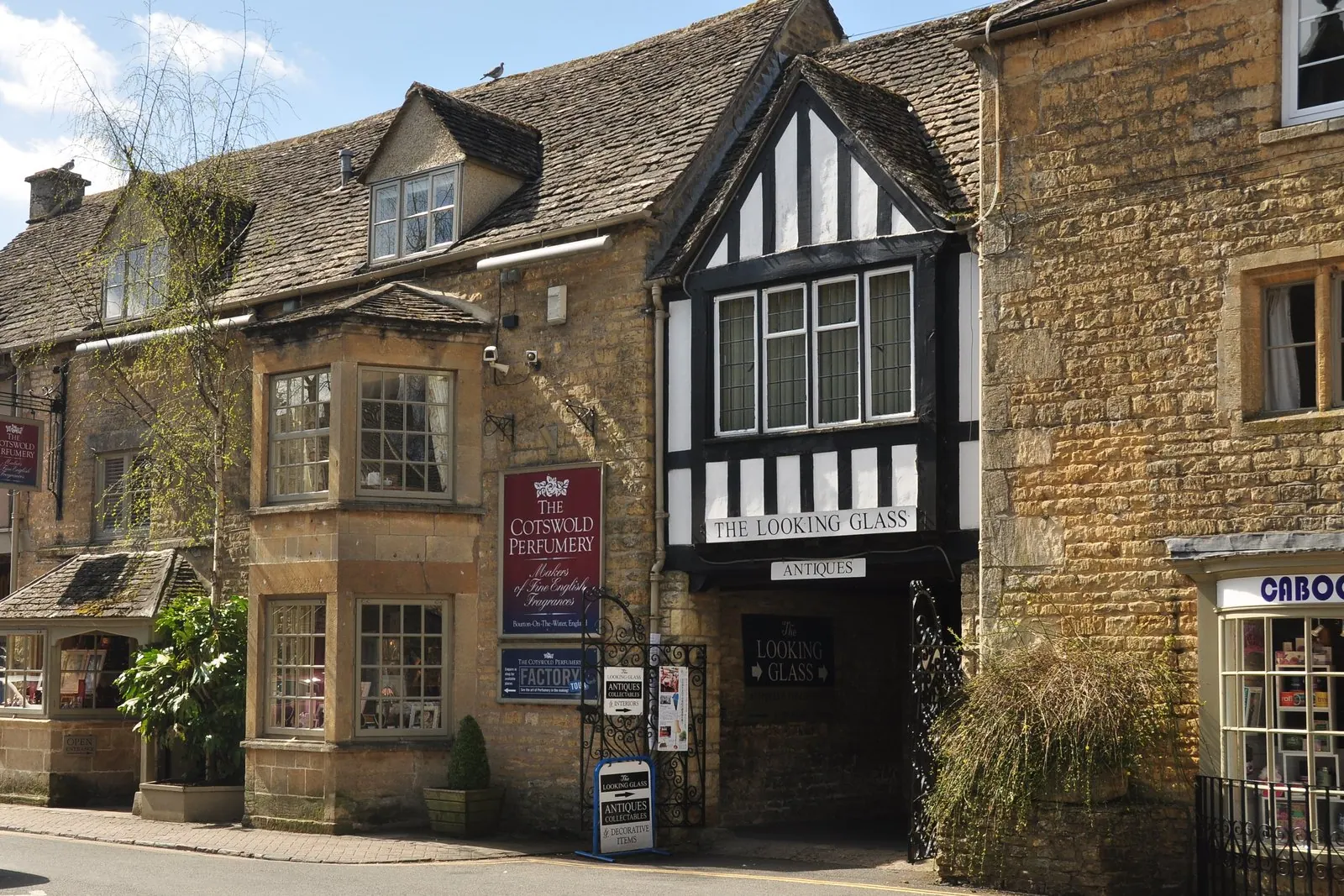
The Cotswold Perfumery's stone shopfront on Victoria Street in Bourton-on-the-Water, with its maroon sign and bay window beside the black-and-white Looking Glass antiques building

The Cotswold Perfumery

A family perfume maker on Victoria Street, started in 1966, with a shop and perfume-making courses in its own teaching room.

About 20 min · Free

Shop hours change with the season, and courses are booked separately.

1 of 6

Swipe for all six highlights →

Practical answers

Before you go.

The questions people ask before they book.

How far is Bourton-on-the-Water from Burford?

About 10 miles (15 km) by road, roughly 20 minutes without traffic. Allow about 20 minutes to drive between the two. OpenStreetMap road routing (OSRM), retrieved 29 October 2026 → (opens in a new tab)

Do I need a ticket for the village?

No. The Parish Council says Bourton is a village with no entry fee. The Model Village, Birdland and other attractions sell their own tickets. Check the exact tour page for what it includes. Bourton-on-the-Water Parish Council: Visiting Bourton → (opens in a new tab)

What should I know before I go?

Bourton is a popular village that can feel as busy as a seaside resort on holidays and sunny weekends. The Parish Council says it is quieter early or late in the day. Bourton-on-the-Water Parish Council: Visiting Bourton → (opens in a new tab)

Will Bourton be crowded?

Often. The Parish Council says the village can be as busy as a seaside resort on holidays and sunny weekends. It says the earlier or later in the day you visit, the quieter and calmer it is. Bourton-on-the-Water Parish Council: Visiting Bourton → (opens in a new tab)

Where can I have tea or a light lunch in Bourton?

Visit Cotswolds says Bourton has cafés, restaurants and tea rooms, and lists The Chestnut Tree, a tea room and licensed restaurant in the village. You can have coffee or afternoon tea by the river. Visit Cotswolds: Bourton-on-the-Water → (opens in a new tab)

When is Bourton quietest?

Earlier or later in the day. The Parish Council says the village can be as busy as a seaside resort on holidays and sunny weekends, and that the earlier or later in the day you visit, the quieter and calmer it is. Bourton-on-the-Water Parish Council: Visiting Bourton → (opens in a new tab)

Are there public toilets?

Yes. Cotswold District Council lists two public toilet sites in Bourton, at the Church Rooms and on Rissington Road. Both have disabled facilities and baby changing, and both charge a small fee. Cotswold District Council: public toilets → (opens in a new tab)

Can I bring a pushchair or use a wheelchair?

The Model Village has narrow paths. Pushchairs, mobility scooters and motorised wheelchairs cannot go in, though disabled visitors can use a side gate. Check each attraction’s own page for its access. The Old New Inn: the Model Village → (opens in a new tab)

Compare

Compare day trips from London.

Booking links earn us commission, at no extra cost to you. Viator handles the booking.

Compare all The Cotswolds tours →

Free day guide

Get the free Cotswolds day guide

The guide has a page for each village, with what to see in 30, 60 or 90 minutes, and where to find toilets and food.

Unsubscribe any time. Privacy

When to go

What changes through the year.

The village streets and the river are open all year. How busy the village is, and when the attractions close, changes with the season.

Spring

Visit Cotswolds says spring and summer bring lively riverside scenery and busy attractions. Visit Cotswolds: Bourton-on-the-Water → (opens in a new tab)

Summer

On August Bank Holiday Monday, Bourton Rovers football club plays a match in the River Windrush. Goalposts stand in the water and crowds line the banks. A heritage site says it began in the early 1920s, though nobody is sure. Playing Pasts (a heritage site): the Bourton River Match → (opens in a new tab)

Autumn

Visit Cotswolds says autumn brings a quieter pace and beautiful seasonal colours. Visit Cotswolds: Bourton-on-the-Water → (opens in a new tab)

Winter

The Model Village closes at 3:30 pm in winter time (Greenwich Mean Time). It is closed on Christmas Day and Boxing Day (26 December). The Old New Inn: the Model Village → (opens in a new tab)

Dates and hours change from year to year. The bank holiday match is a village event, not part of any tour, so check each attraction’s own page for your date. Visit Cotswolds: Bourton-on-the-Water → (opens in a new tab)

A taste and a keepsake

Something to taste or take home from Bourton.

These are small extras to taste or take home from Bourton-on-the-Water.

Just ideas for any free time you get.

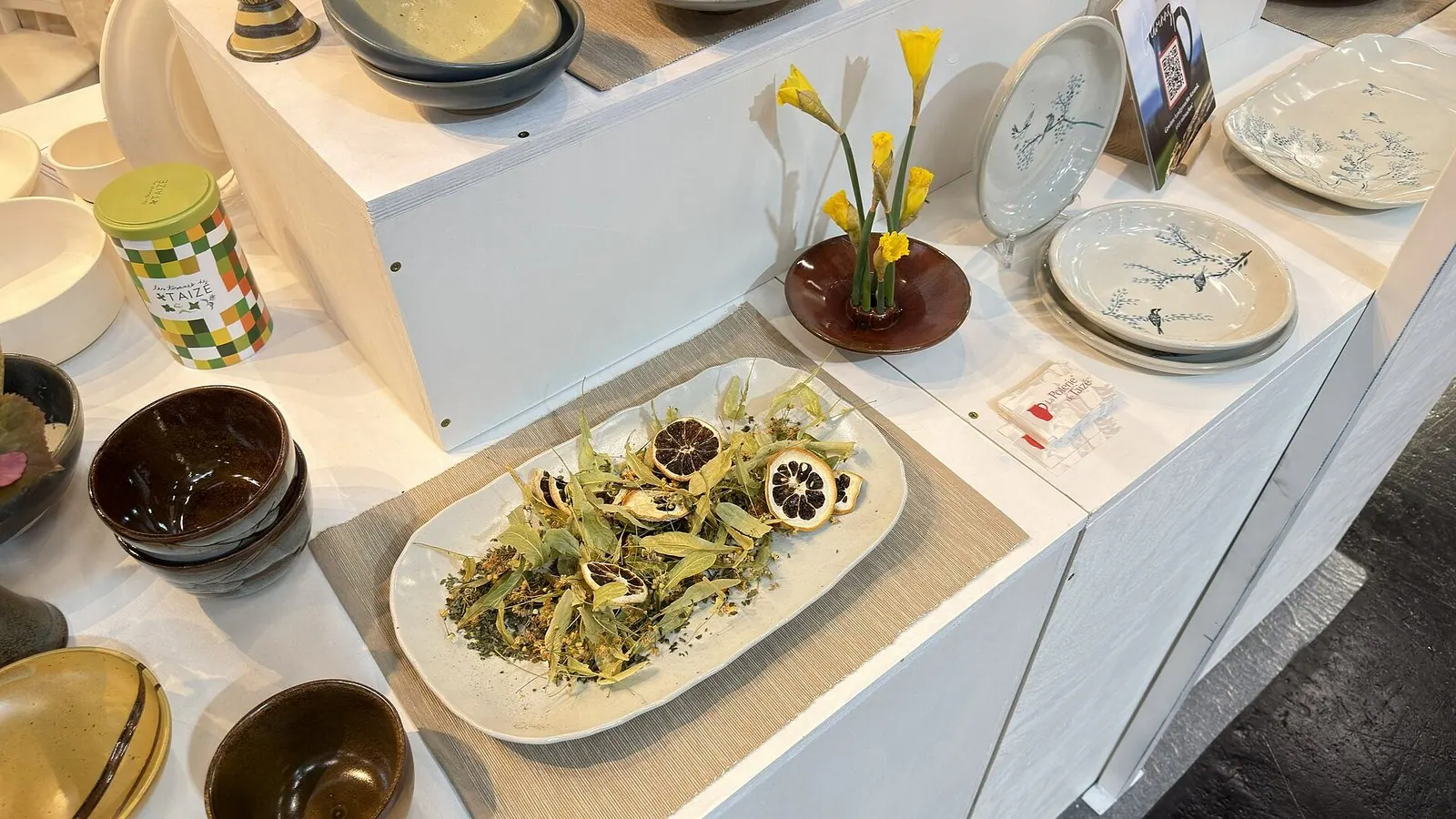
Stoneware plates and bowls on white display shelves, with a large plate of dried herbs and lemon slices.
Illustrative
Take home

A hand-made pot

Cotswold Pottery is a country studio making a wide range of ceramics, all hand made by John and Jude Jelfs. Visit Cotswolds lists it among Bourton’s shops.

Where to find itCheck its opening days before you plan a visit.

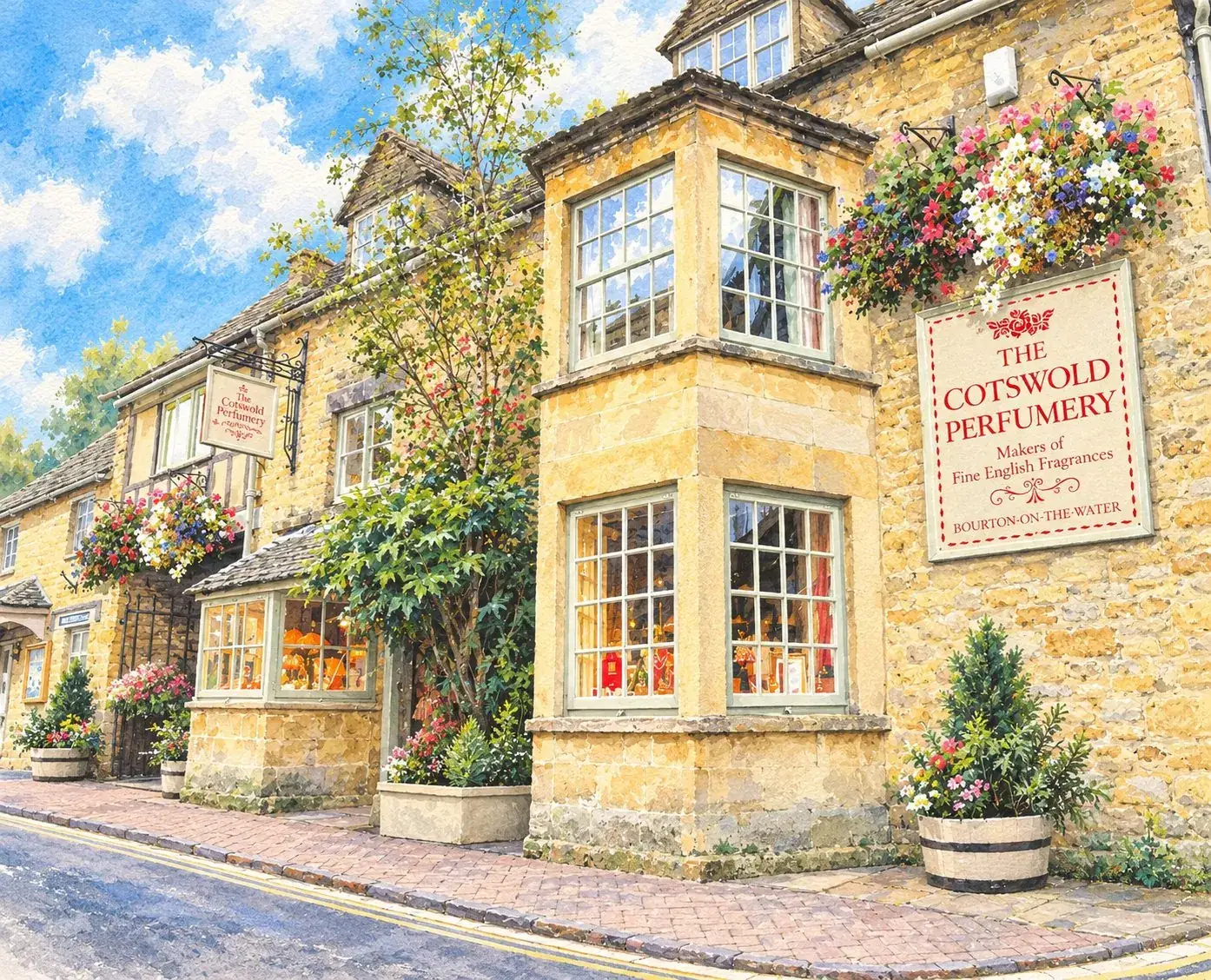
A watercolour-style picture of the Cotswold Perfumery, a honey-coloured stone shopfront with two bay windows, hanging flower baskets and a cream sign in Bourton-on-the-Water
Illustrative
Take home

A scent from the Perfumery

The Cotswold Perfumery on Victoria Street is a family business that started in 1966. It also runs perfume-making courses.

Where to find itShop hours are listed by season, and courses are booked separately.

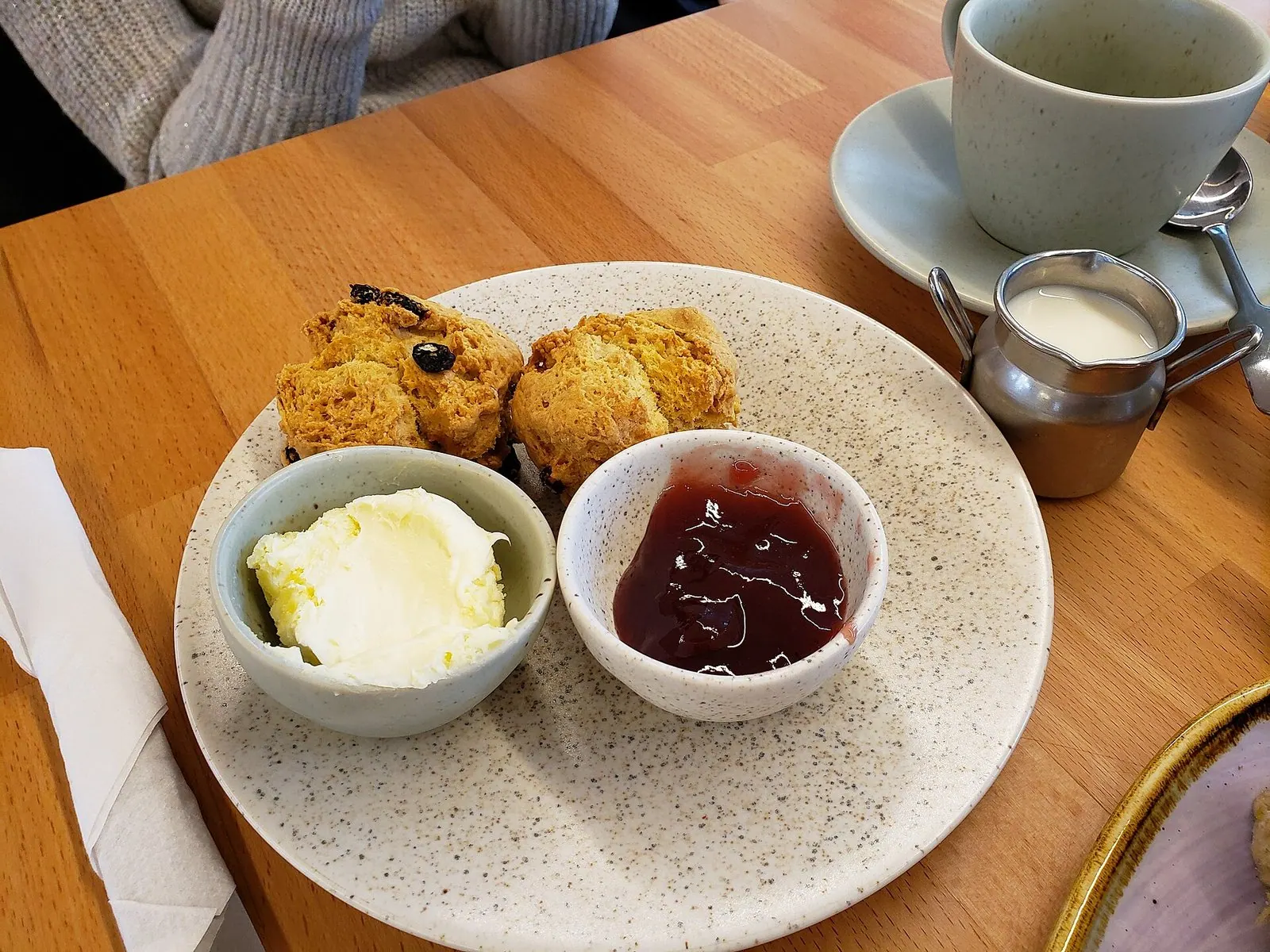
Two fruit scones on a speckled plate with small bowls of clotted cream and jam, beside a milk jug and cup.
Illustrative
Taste

Afternoon tea by the river

Visit Cotswolds says Bourton has cafés, restaurants and tea rooms, including a relaxed coffee or afternoon tea by the riverside.

Where to find itOnly if your free time allows.

Plan your day

Help with choosing.

Also in The Cotswolds

Places on the same day trips.

All The Cotswolds day trips →
Picture credits and sources

Pictures

Image sources and credits are listed here. Pictures made with AI are marked.

Tour photographs are provided by the tour operators through Viator and are shown from Viator’s own image servers.