The real England, in one easy day from London
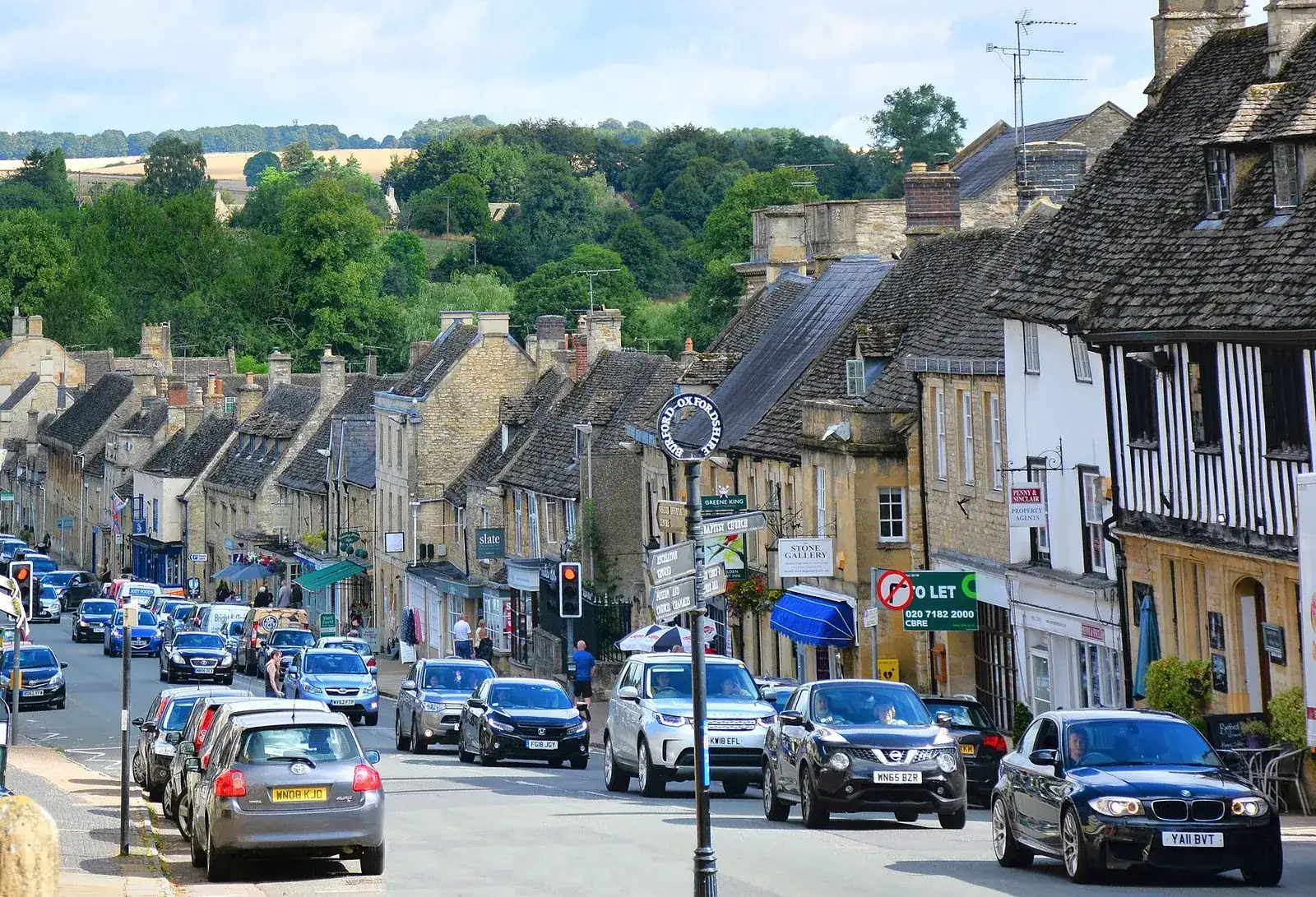
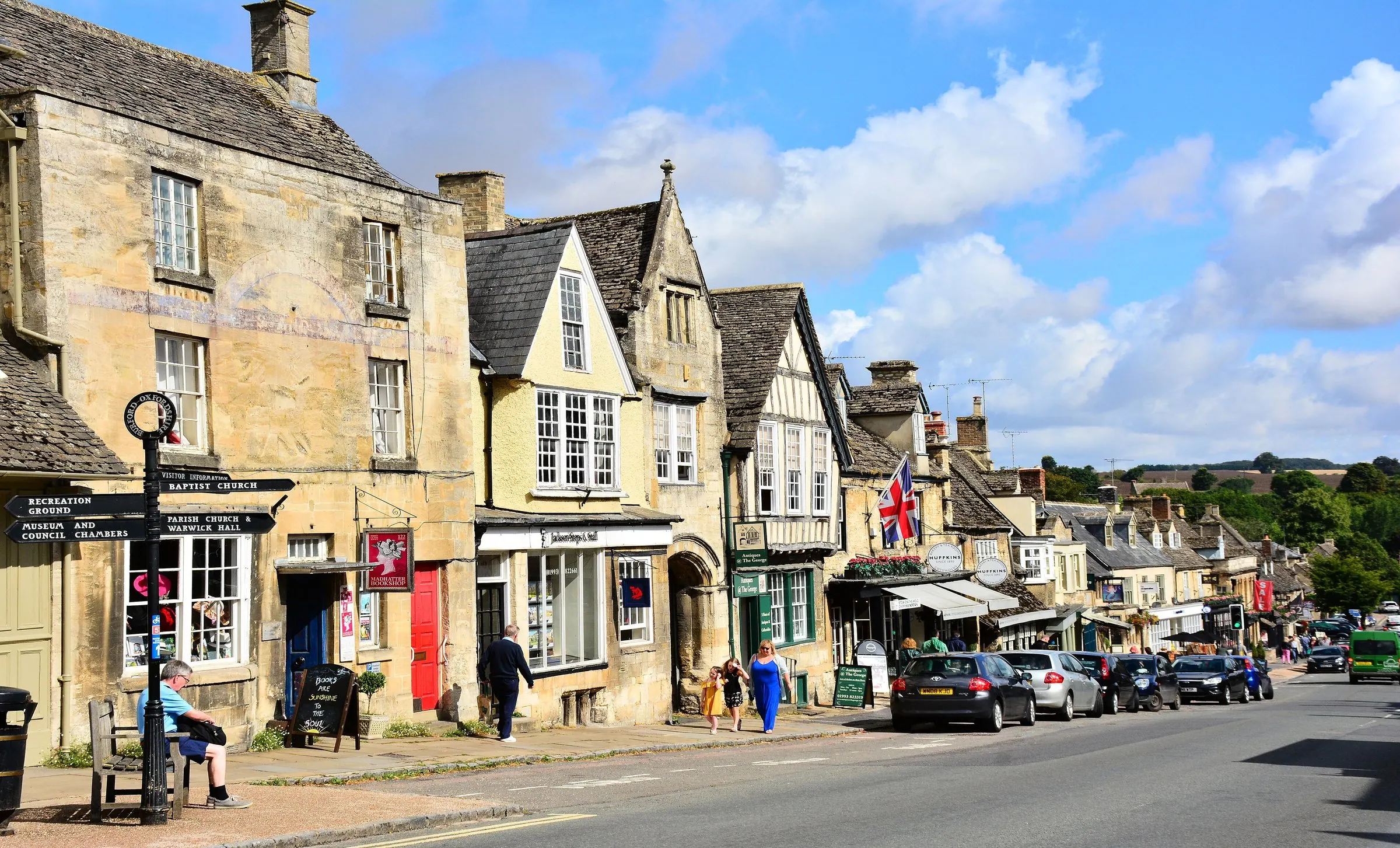
Burford High Street sloping away between stone and half-timbered buildings with Union flags, parked cars along the kerb and white clouds in a blue sky.

A medieval market town on the River Windrush

Burford

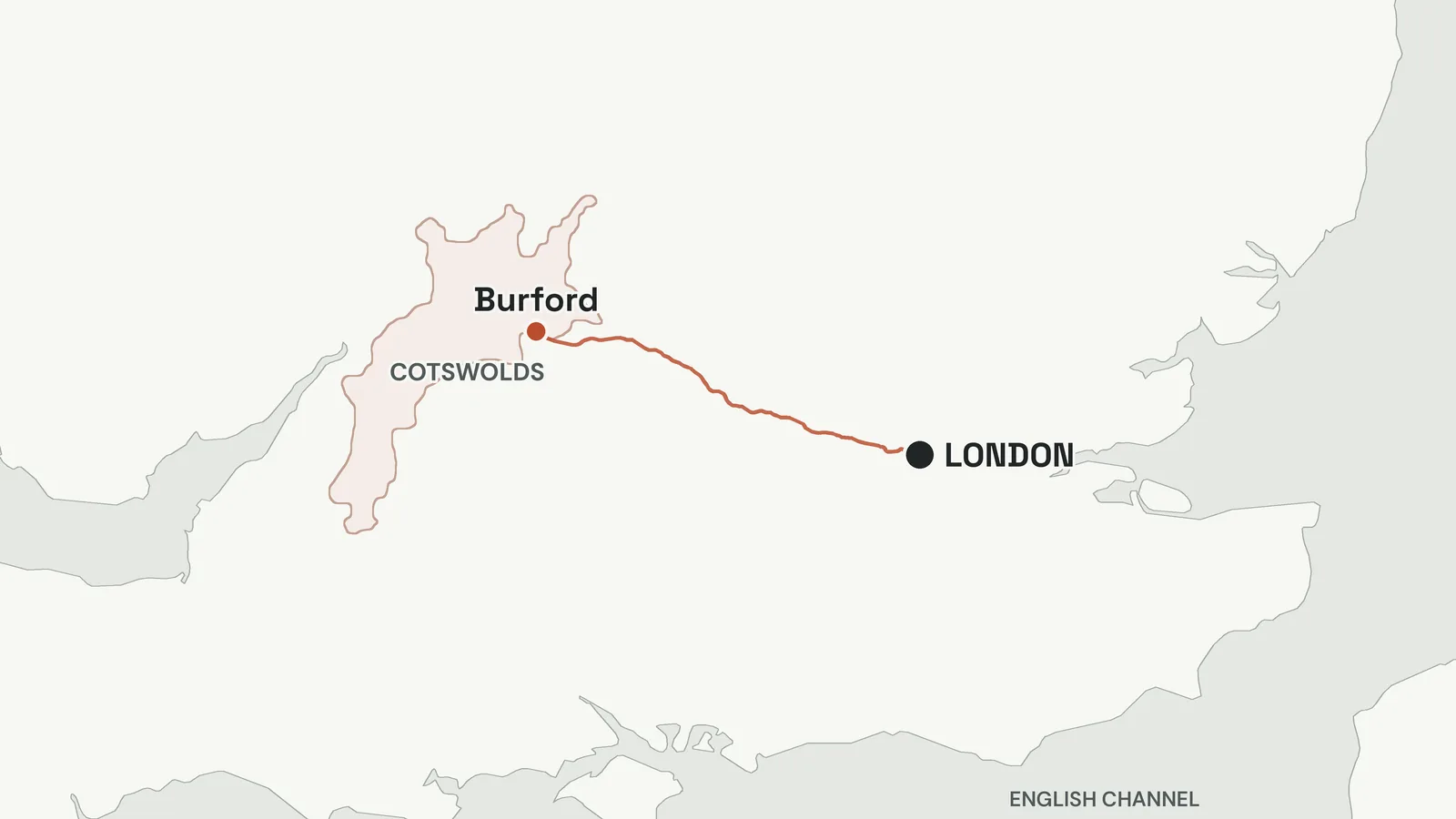
On the River Windrush, at the Cotswolds edge · a day trip from London

See how long each tour stops in Burford →

Why it matters

Why Burford matters.

Burford began as a market town around 1090 and grew rich on wool. The town council still calls it the Gateway to the Cotswolds. Here is how the market began, how wool built the church, what happened to the Levellers, and why the town has changed so little.

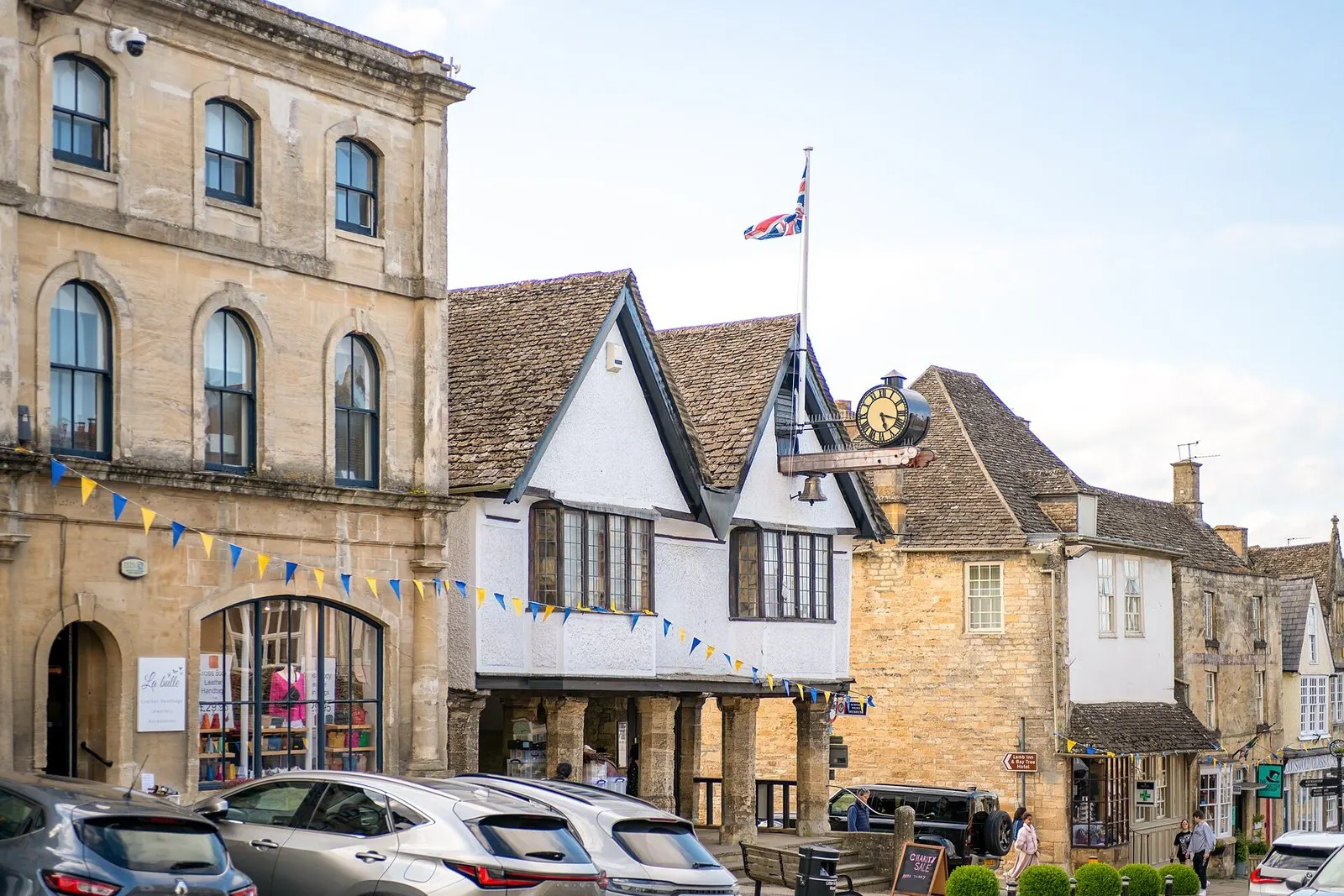
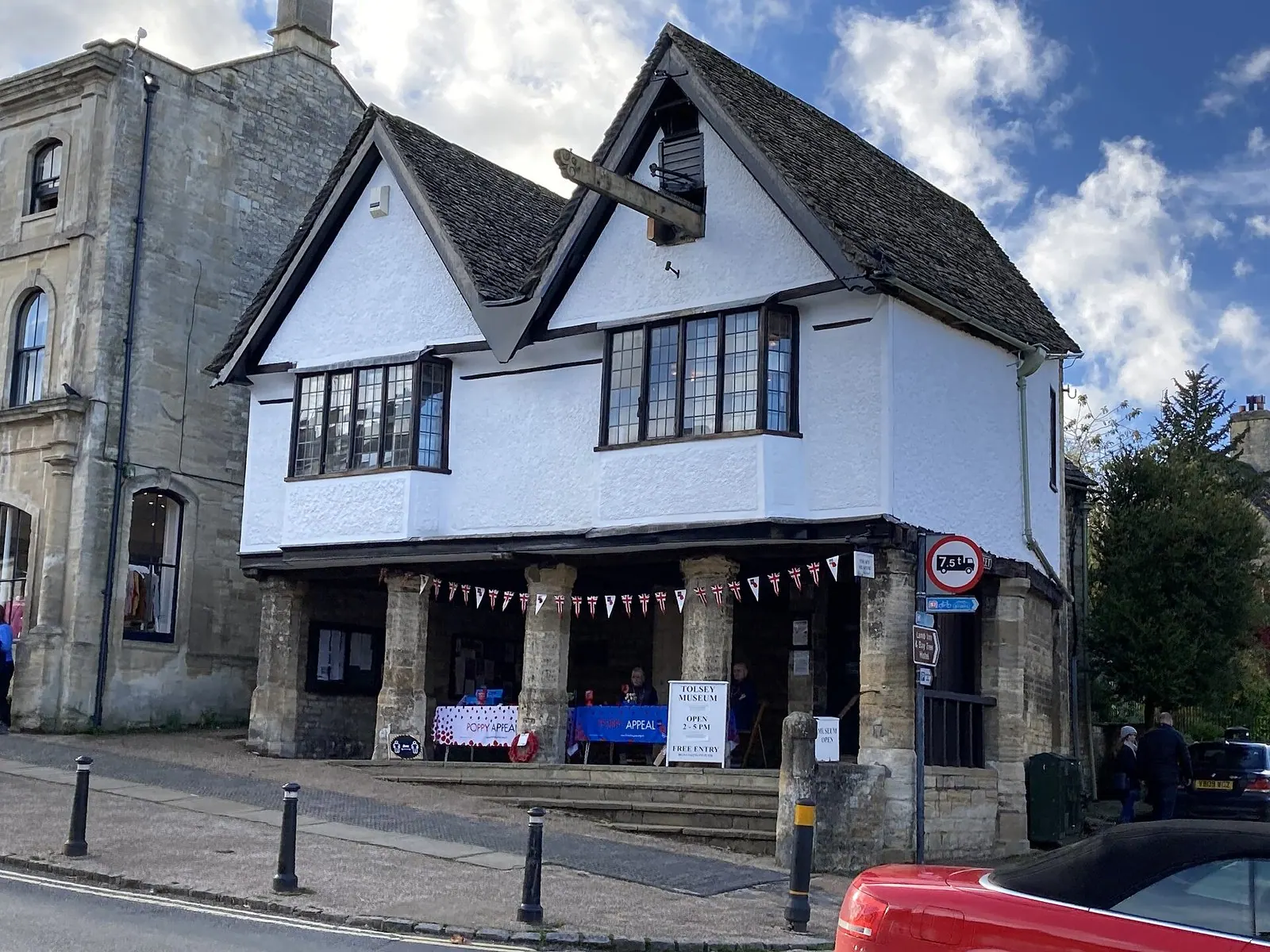
A white timber-framed market house with two gables stands on stone piers, with bunting along its front and a blue sky with clouds behind.

01

A market town since about 1090

Around 1090 Burford was given one of England’s earliest town charters, which let its people hold a market.

The town council says Burford’s first certain mention is in the Domesday Book of 1086. Around 1090 Robert Fitzhamon gave the town a charter (a written list of rights). It let people hold a market, rent out their property, and sell their leases or leave them to others. It also freed them from the feudal system, in which a lord ruled the land and the people on it. A merchant guild ran the town under an Alderman, and the town took Fitzhamon’s coat of arms as its seal. The council says Burford “prides itself on being The Gateway to the Cotswolds”.

Look for

The Tolsey on the High Street, the old market house where traders paid tolls and the Borough Court met.
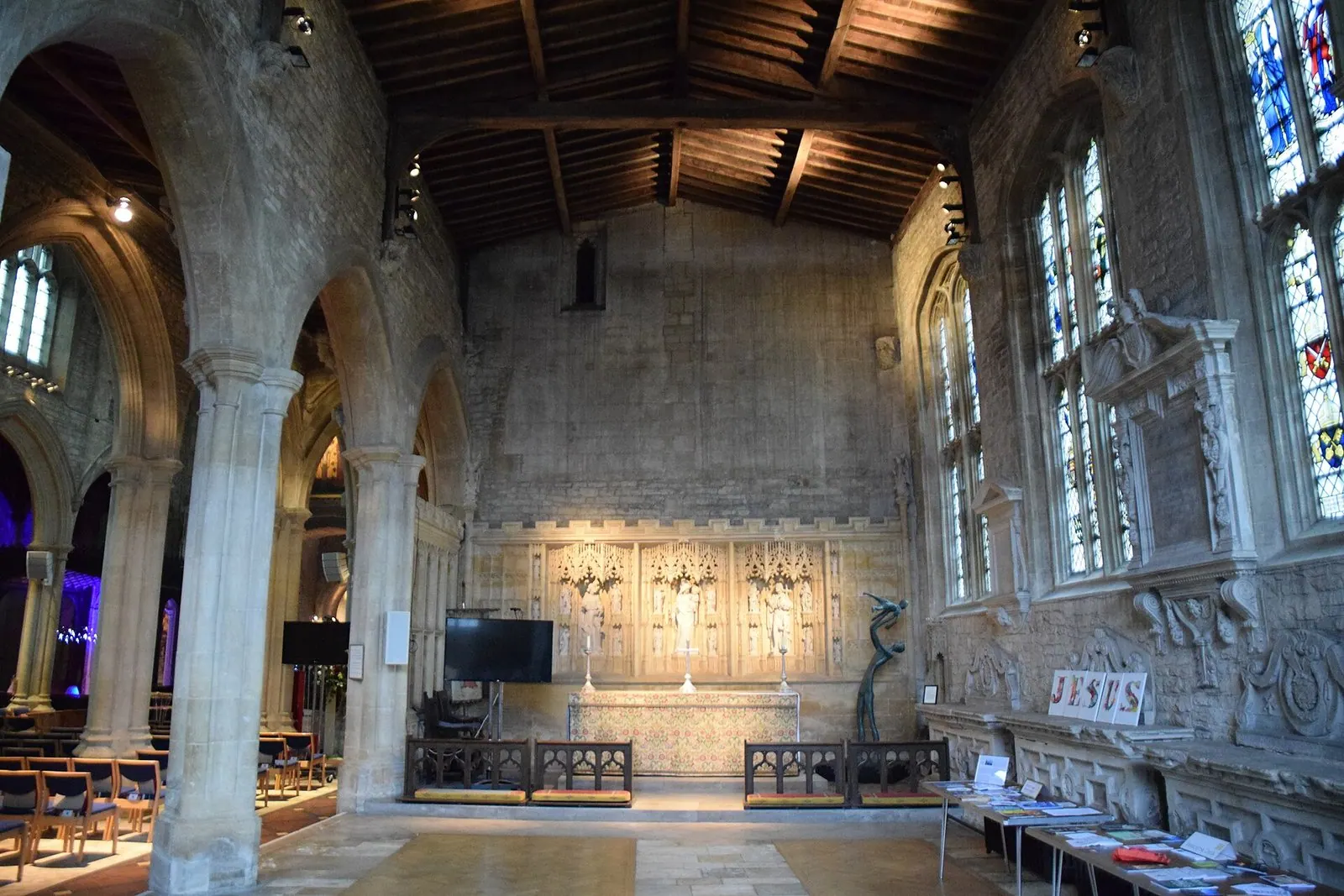
A wide stone chapel with arched arcade, a carved altar screen at the far end and carved wall monuments below stained glass windows.

02

Wool built the town and its church

Sheep farming brought wool, weavers and wealth, and merchants helped to build a very large church.

The town council says sheep farming gave Burford its wool, its mills, its weavers and its tanners. Historic England calls the church of St John the Baptist a large Cotswold wool church. The church says the Lady Chapel began in the 13th century as a guild chapel, a chapel for the town’s leading traders. In 1396 work began on the present church, with its nave, spire and side chapels. The guild chapel was then built into it. Historic England dates the church’s crossing tower and west doorway to the 12th century.

Look for

The tombs of the Silvester family in the Lady Chapel, many carved with their merchant marks, which were a trader’s personal sign.

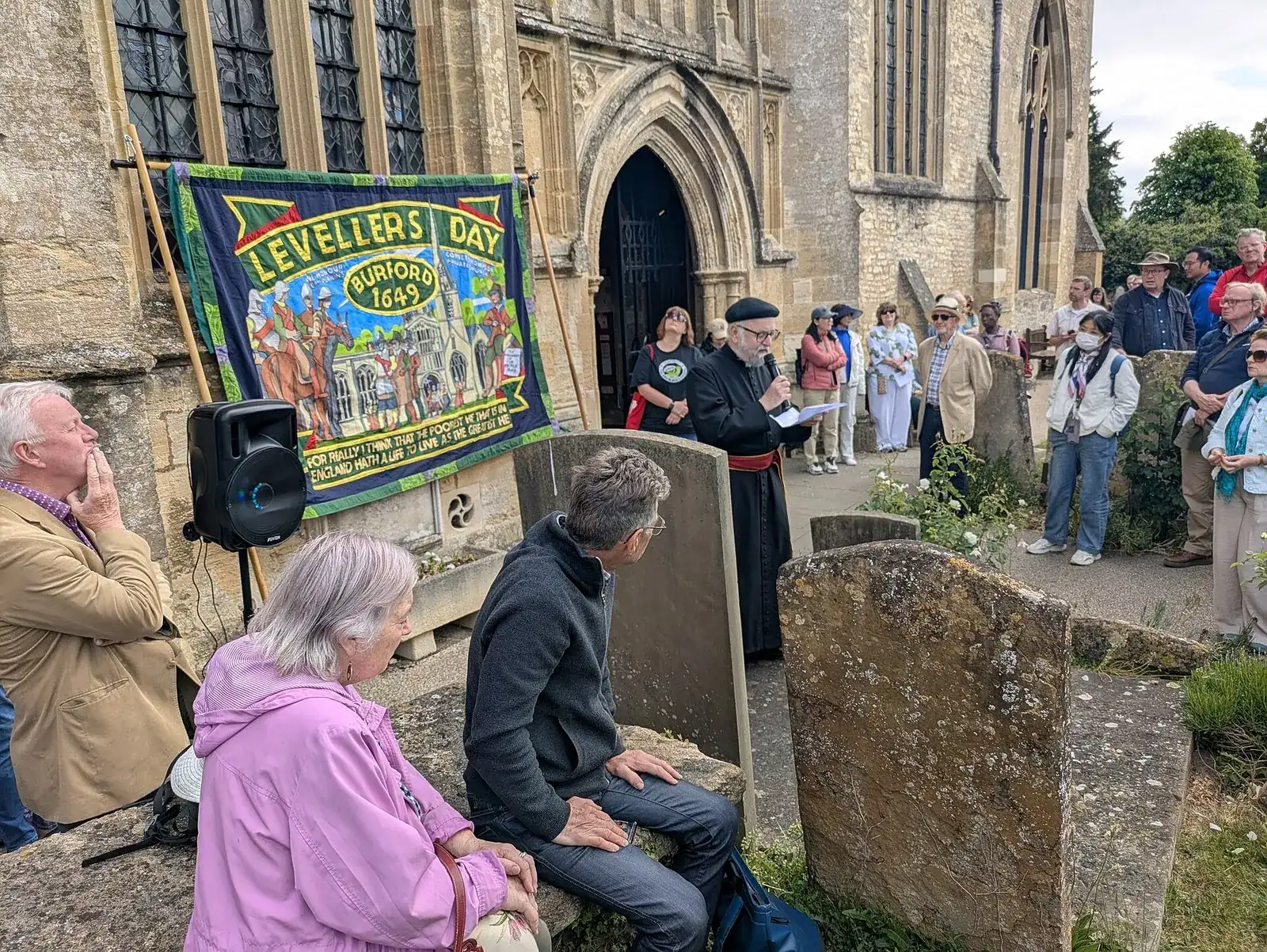
A speaker in clerical dress addresses a group in a churchyard beside a Levellers Day Burford 1649 banner, with the church door behind.

03

The Levellers locked in the church, 1649

In May 1649 about 340 Leveller soldiers were held prisoner in Burford’s church, and their leaders were shot.

The Levellers wanted a more equal society during the English Civil War. In 1649 soldiers angry about unpaid wages mutinied, meaning they refused orders, and began to march. Government troops caught them near Burford. About 340 prisoners were locked in the church, and the ringleaders were shot. The Levellers Day organisers say three men died in the churchyard on 17 May. The church gives 16 May and says it has no evidence of where the shootings happened. The other prisoners were pardoned.

Look for

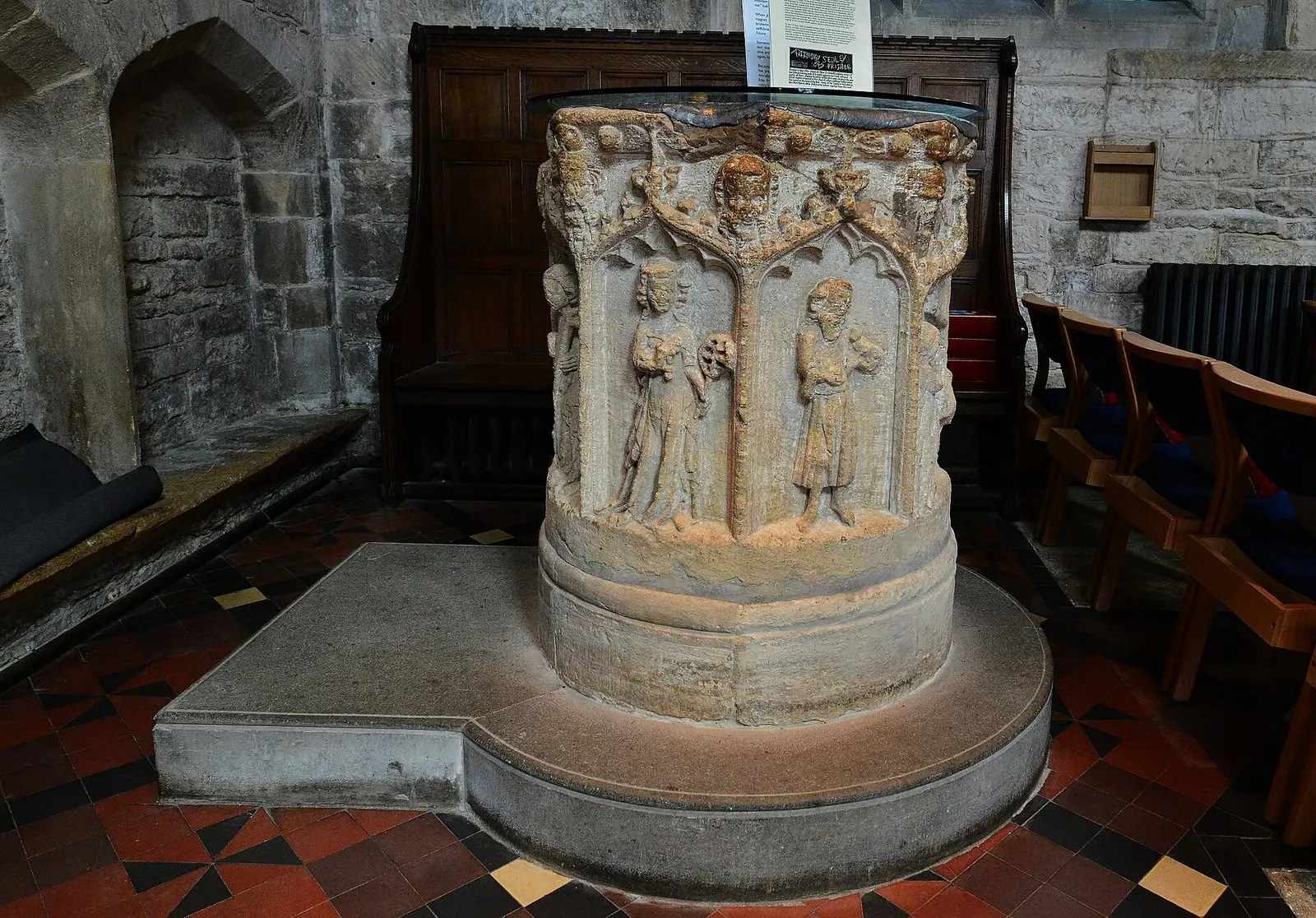
Anthony Sedley’s name and the date 1649, carved by a prisoner into the lead of the font. Also look for the plaque on the church wall.

The honey-coloured front of an old inn with pointed gables, a half-timbered bay, an arched passage and a red door, with bunting along its front.

04

A town the railway missed

When the stagecoaches stopped and the market closed, Burford fell quiet, and that kept its old buildings.

Burford sits on a crossroads, so many horse-drawn coaches and inns once served it. The town council says the railways passed it by. The last stagecoach came through in 1850, and a farming depression killed the market in 1870. The town declined until the motor car brought visitors back. Because the railway never came, the museum says almost no industry and no mass housing arrived either. It says well over 90 percent of Burford’s old properties are listed, which means the law protects them.

Look for

The old inn fronts and stone houses along the High Street, most of them protected buildings.

Your time there

What to see.

These are the highlights worth looking out for, if your time allows. See how long each tour stops in Burford →

Burford is a small town, so most highlights are on or near the High Street. Here are the highlights in order of importance.

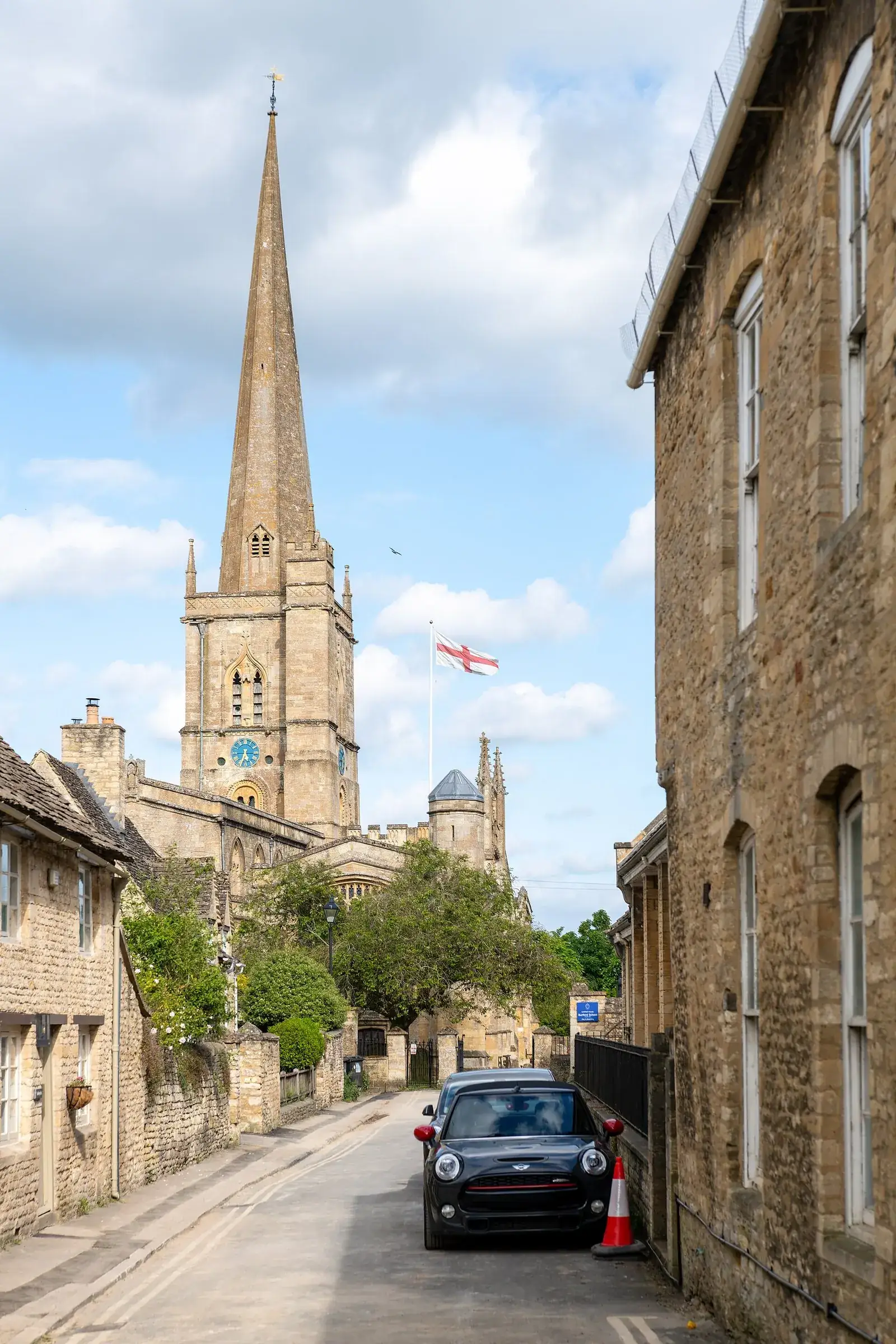
A tall stone church spire and clock tower rise above rooftops and trees under a blue sky with clouds, with a red-and-white flag on a pole.
Don’t miss

The church of St John the Baptist

A very large church paid for by the wool trade, with a 12th-century tower and west doorway, a carved stone ceiling in the porch, many tombs and stained glass. The Harman tomb has carved people from the Americas, the earliest known in Britain, the church says.

About 15 min · Free

Opening hours (checked 4 November 2026): Monday to Saturday, 10 am to 4 pm. Sunday, 1 pm to 4 pm. The church asks for donations and gives free printed guides.

Burford High Street sloping downhill between stone and half-timbered buildings, with a long queue of cars filling the road.

The High Street

A street of stone houses and historic shops that runs downhill to the River Windrush. Burford is known for antiques, independent shops and small boutiques.

About 15 min · Free

A street of stone and white half-timbered buildings with a clock on a bracket and a flag pole, under a pale sky.

The Tolsey

The 16th-century market house, a timber frame raised on stone piers (columns), with a clock on the front. Traders paid tolls here, and the Borough Court met. It is now the town museum.
About 20 min · Free

Free entry. Opening hours (checked 20 October 2026): 2 pm to 5 pm daily, April to October. Weekends only, November and December. Stairs only, and no toilets.

A stone font carved with standing figures under pointed arches, on a stone plinth and tiled floor, with a notice and wooden panelling behind.

The Levellers’ marks in the church

In 1649 Leveller soldiers, who wanted a more equal society, were held prisoner in this church. One of them, Anthony Sedley, carved his name in the lead of the font. A plaque on the church wall remembers the soldiers who were executed.

About 5 min · Free

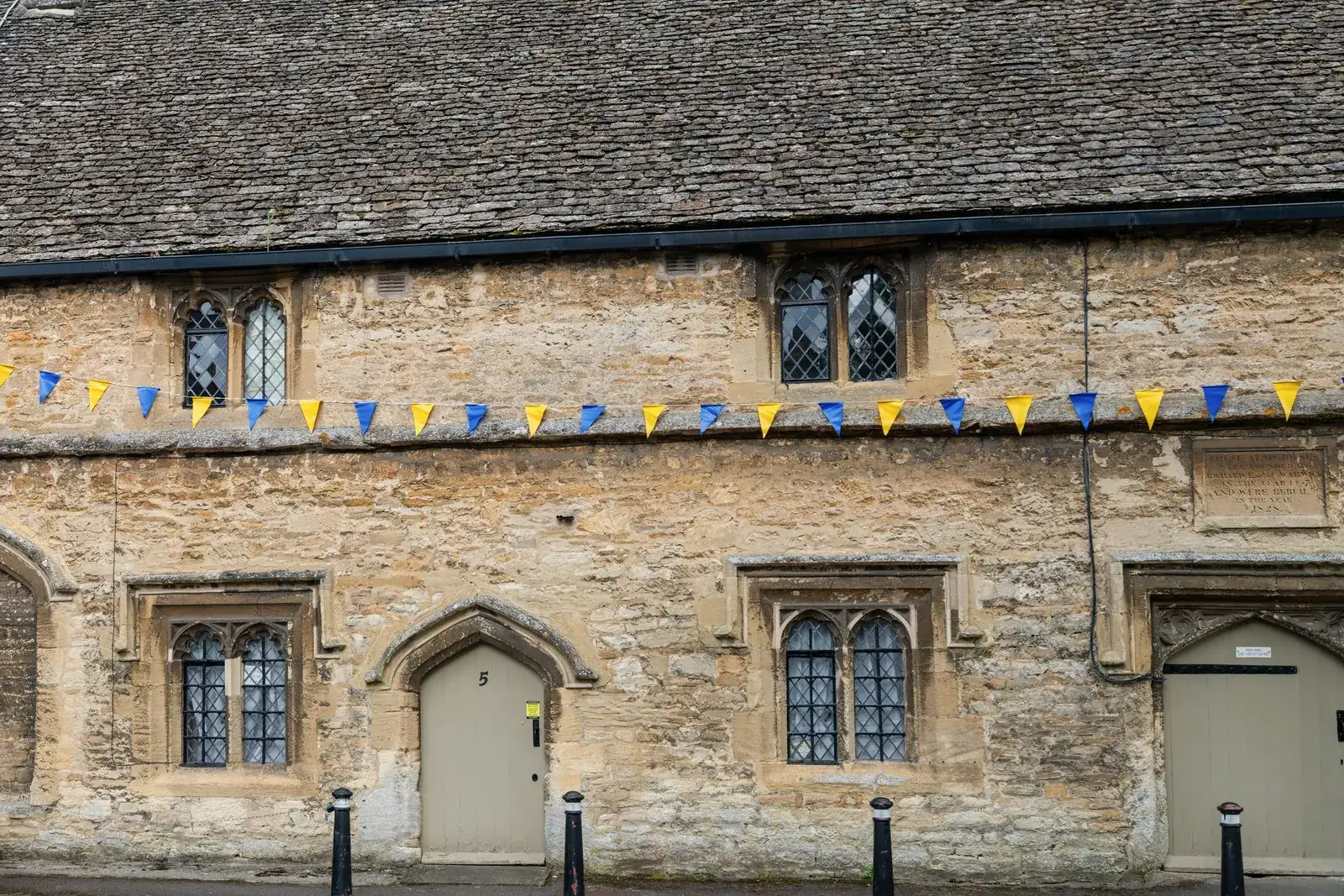
The honey-coloured stone front of the Great Almshouses in Burford, with pointed-arch doors, small leaded windows and blue and yellow bunting

The Great Almshouses

Almshouses are charity homes for poor people. A tablet over the central door says Richard, Earl of Warwick founded these in 1457 and that they were rebuilt in 1828. They stand on Church Lane.

About 5 min · Free

1 of 5

Swipe for all five highlights →

Choose your day

Which day suits you?

Loading the day trips…

Practical answers

Before you go.

The questions people ask before they book.

How far is Burford from Bourton-on-the-Water?

About 10 miles (15 km) by road, roughly 20 minutes without traffic. Allow about 20 minutes to drive between the two. OpenStreetMap road routing (OSRM), retrieved 29 October 2026 → (opens in a new tab)

Is the church open when I visit?

Opening hours (checked 4 November 2026): Monday to Saturday, 10 am to 4 pm. Sunday, 1 pm to 4 pm. The church is shut at Christmas, Easter and on New Year’s Day, and on some other dates for services and events (it lists 6 November as closed after midday). Check its page for your day. Burford Church: visitors → (opens in a new tab)

What should I know before I go?

The Tolsey Museum opens only from 2 pm, is closed from January to March, and is up a flight of stairs. Check its opening times before you plan on going inside. Burford Tolsey Museum and Archive → (opens in a new tab)

Is the Tolsey Museum open, and is it free?

Entry is free and donations are welcome. Opening hours (checked 20 October 2026): 2 pm to 5 pm daily from April to October, and weekends only in November and December. It is closed from January to March, and volunteers sometimes cannot open it. Burford Tolsey Museum and Archive → (opens in a new tab)

Are there steps or slopes?

Visit Cotswolds says the High Street runs downhill towards the River Windrush. The Tolsey Museum is on the first floor and has stairs only. It has no toilets, and the Archive building nearby is more accessible. Burford Tolsey Museum and Archive → (opens in a new tab)

Is there somewhere to eat?

Yes. Visit Cotswolds lists traditional pubs, tearooms and restaurants in Burford. Huffkins has a café and bakery on the High Street, in a listed building with original beams. Visit Cotswolds: Burford → (opens in a new tab)

Are there public toilets?

Yes. West Oxfordshire District Council lists two public toilets in Burford, one on the High Street and one at Guildenford Car Park. Both are open 7.30 am to 7.30 pm and have baby changing. The disabled toilets need a Radar key. The council’s page was checked on 28 October 2026. West Oxfordshire District Council: public toilets → (opens in a new tab)

Compare

Compare day trips from London.

Booking links earn us commission, at no extra cost to you. Viator handles the booking.

Compare all The Cotswolds tours →

Free day guide

Get the free Cotswolds day guide

The guide has a page for each village, with what to see in 30, 60 or 90 minutes, and where to find toilets and food.

Unsubscribe any time. Privacy

When to go

What changes through the year.

The streets are open all year, but Levellers Day, the museum and the pace of the town change with the seasons.

Spring

Levellers Day is held on the Saturday nearest 17 May. It has singing, a march, talks and music, and remembers the soldiers of 1649. Levellers Day: about the Levellers and Burford → (opens in a new tab)

Summer

Visit Cotswolds says spring and summer bring lively street scenes and walks beside the river. Visit Cotswolds: Burford → (opens in a new tab)

Autumn

Visit Cotswolds says autumn brings quieter lanes and rich seasonal colours. Visit Cotswolds: Burford → (opens in a new tab)

Winter

The Tolsey Museum is open at weekends only in November and December, and is closed from January to March. Burford Tolsey Museum and Archive → (opens in a new tab)

The church, the museum and the shops keep their own hours. Check the church and museum pages for your date before you plan to go inside. Visit Cotswolds: Burford → (opens in a new tab)

A taste and a keepsake

Something to taste or take home from Burford.

These are small extras to taste or take home from Burford.

Just ideas for any free time you get.

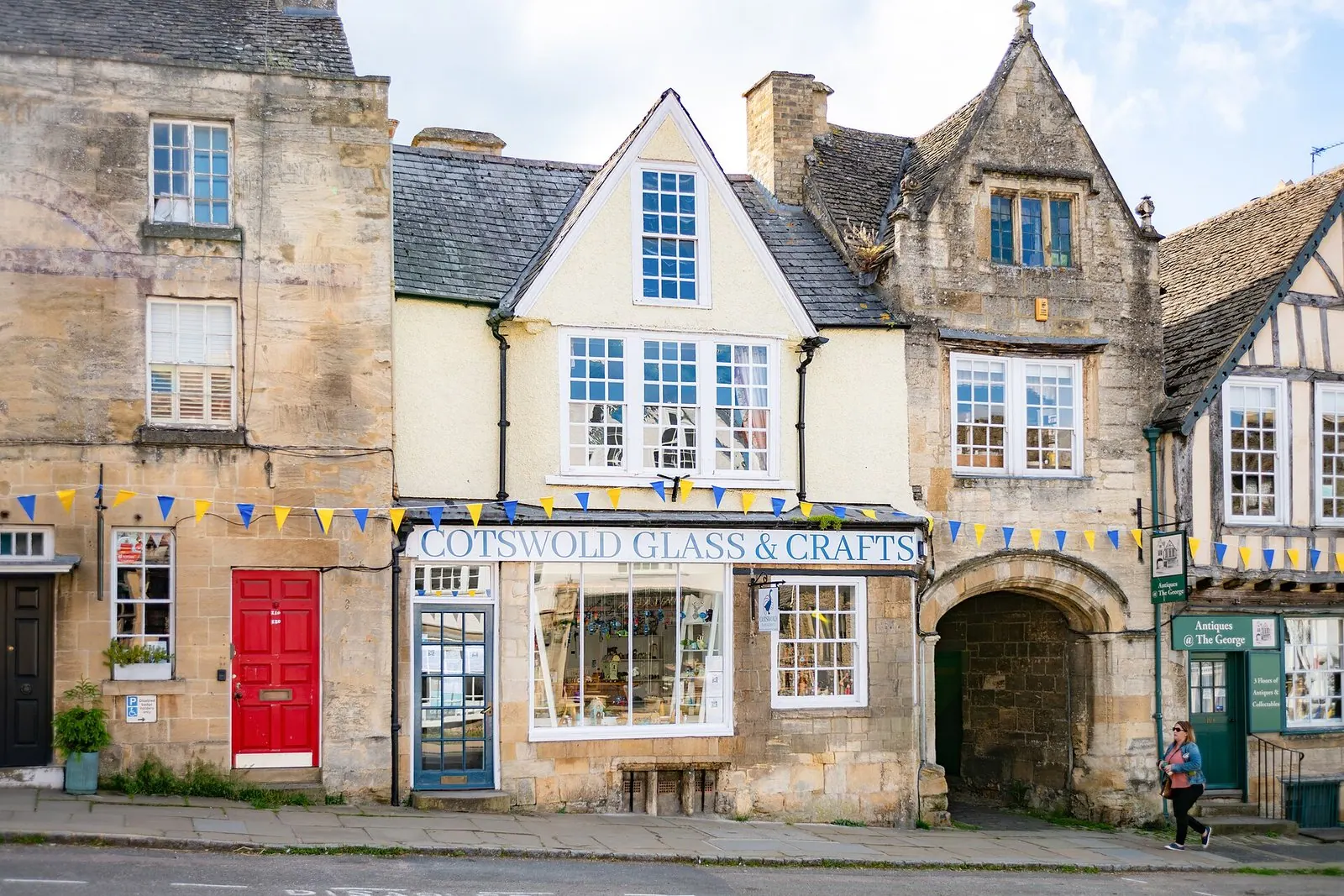
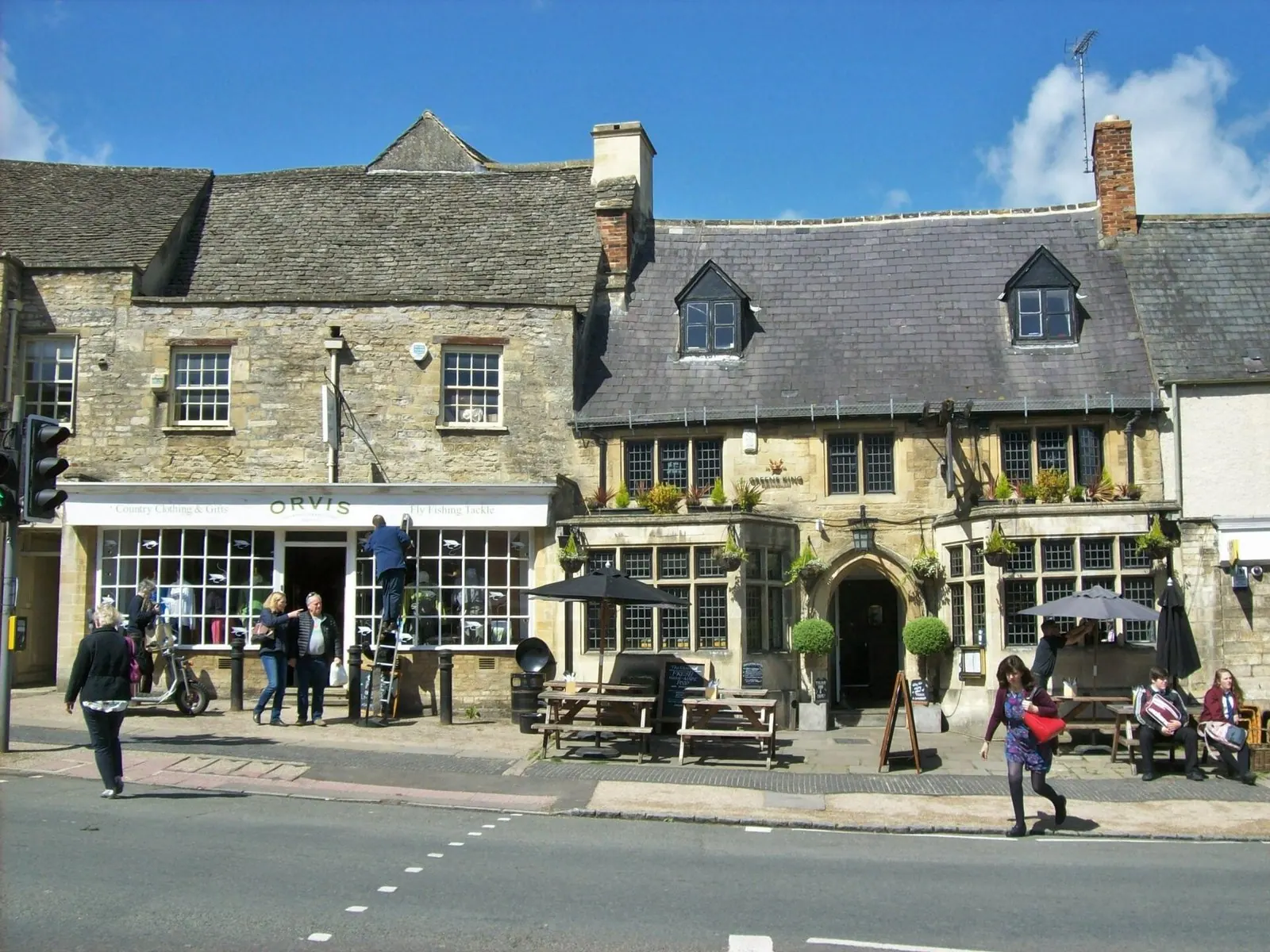
A row of stone buildings with a shop and a pub, with parasols and benches outside and people walking past.
Take home

Antiques and small gifts

Visit Cotswolds says Burford is known for antiques, independent shops and small boutiques. They sell unusual gifts, homewares and crafts in the old streets.

Where to find itAlong the High Street, whenever the shops are open.

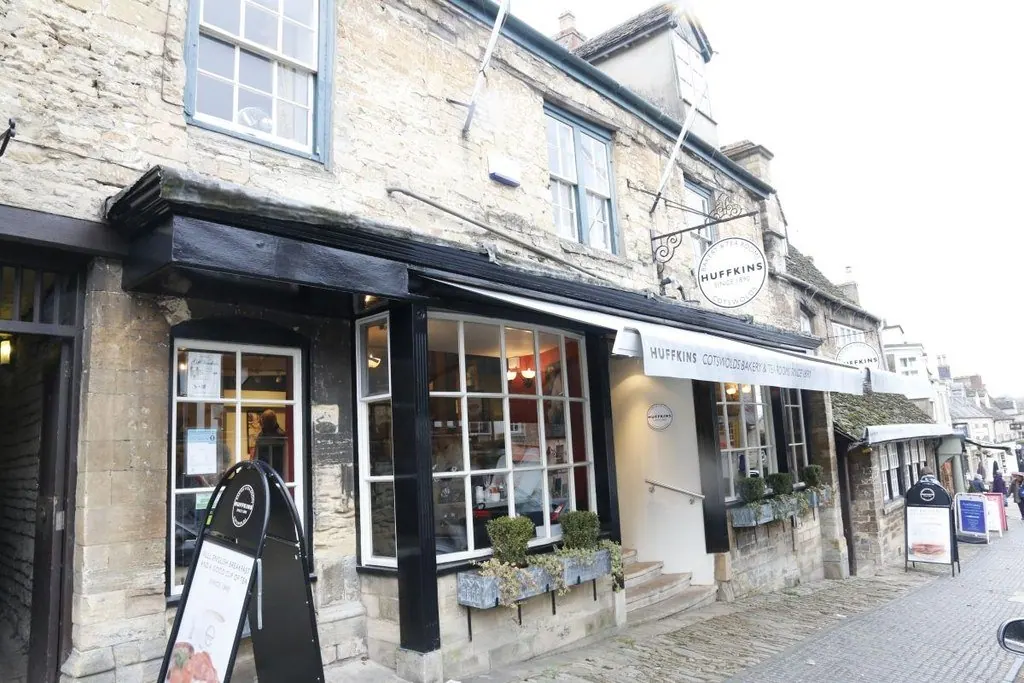
A shopfront with a round hanging sign reading Huffkins and an awning lettered Cotswolds Bakery and Tea Rooms.
Taste

Tea or a treat at Huffkins

Huffkins serves breakfast, lunch and afternoon tea in a listed High Street building with original beams. Its bakery shop is next door, and a medieval courtyard is open for warmer days.

Where to find itOn the High Street, only if you have time. Its tearoom and shop keep different hours.

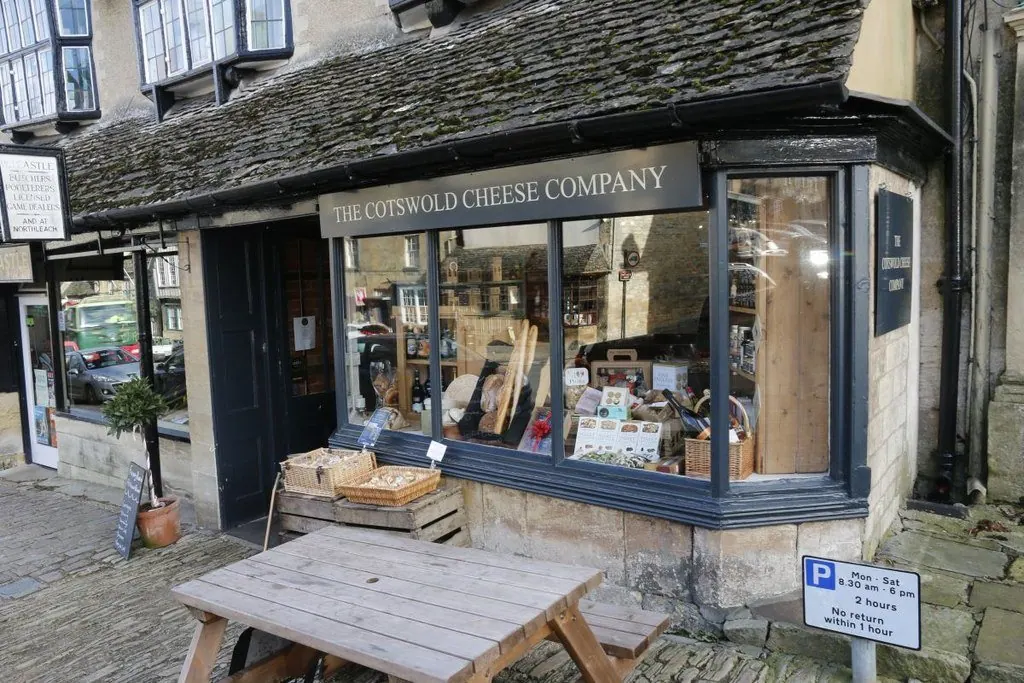
The Cotswold Cheese Company shop with a lettered sign over a bay window displaying cheese and goods, with a wooden table outside.
Taste

Cheese from a local shop

The Cotswold Cheese Company has a shop in Burford. It says it stocks more than 120 artisan and farmhouse cheeses, from Cotswold makers, other British makers and abroad.

Where to find itOnly if you have time to browse. Check the shop’s opening hours.

Plan your day

Help with choosing.

Also in The Cotswolds

Places on the same day trips.

All The Cotswolds day trips →
Picture credits and sources

Pictures

Image sources and credits are listed here. Pictures made with AI are marked.

Tour photographs are provided by the tour operators through Viator and are shown from Viator’s own image servers.