Day trips from London
The Bath and Stonehenge day guide
Bath and Stonehenge are in the same direction from London, west of the city, so one day trip can visit both. That is why they share one guide: you do not need to choose between them. Castle Combe and Lacock are small villages in the same direction, and some tours add them. There is one page for each of the five stops: what it is, what to see, what fits in the time you have, and where to find toilets and food.
How to use this guide
- Check how long your tour gives you at each stop. Your tour’s page lists the stops and the time at each one.
- On the stop’s page, tap how long your tour stops there: the route shows what fits.
- Set a phone alarm 10 minutes before you need to be back at the bus.
Before you arrive
Bath and Stonehenge in two minutes
One honey-coloured stone for a whole city
Bath is built of Bath stone, an oolitic limestone (a rock made of tiny round grains) laid down in a shallow sea in the Jurassic period. The International Union of Geological Sciences says it weathers to an attractive honey colour. Its use across the city gives Bath a united look.
Why the water in Bath is hot
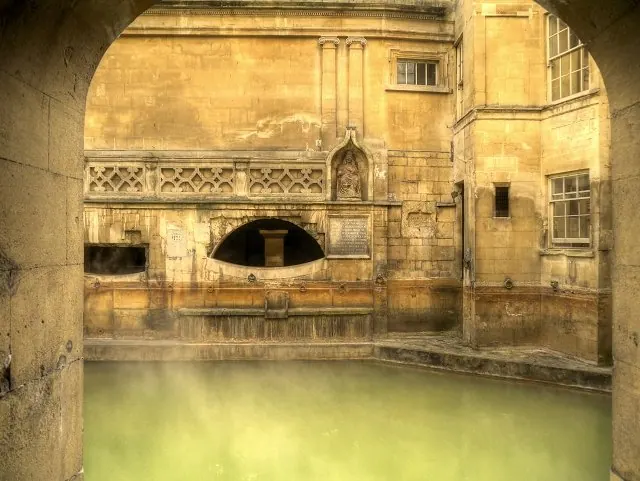
Visit Bath says the hot springs deliver over one million litres of mineral-rich water every day. Bath is the only place in the UK where the mineral water comes out hot. Rainwater probably enters the ground through limestone to the north, west and south of the city.
Two kinds of stone at Stonehenge
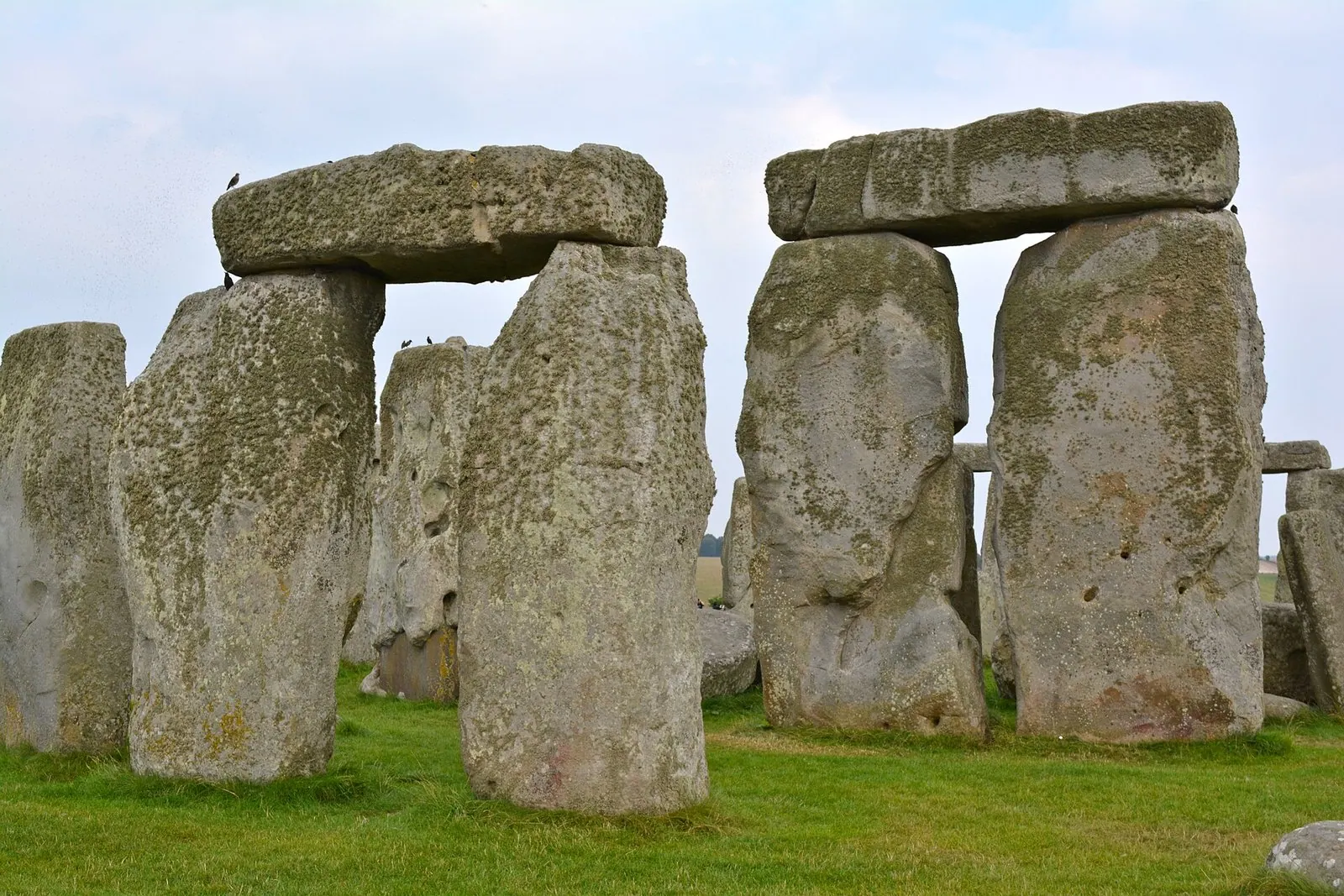
English Heritage says there are two types of stone at Stonehenge. The large sarsens most likely came from West Woods, near Marlborough, weighing 25 tons each on average. The smaller bluestones all came from the Preseli Hills in south-west Wales.
A little history
- About 2500 BC
The stones are raised
English Heritage says the stone circle at Stonehenge was built in the late Neolithic period, about 2500 BC, after an earlier ditch-and-bank monument. It was changed over about 1,500 years.
- 1st century AD
The Romans find the springs
The Romans founded a town at Bath in the 1st century AD and used the natural hot springs as a thermal spa. Their temple and baths still lie at the heart of the city.
- 973
A king is crowned in Bath
King Edgar was crowned King of All England in Bath on Whitsunday in 973. The service was put together by Dunstan, Archbishop of Canterbury, and a window in Bath Abbey shows the crowning.
- The 1700s
The Georgian city
In the 18th century Bath grew into an elegant spa city. UNESCO says its crescents, terraces and squares were planned to join architecture, town planning and landscape.
Why stop here
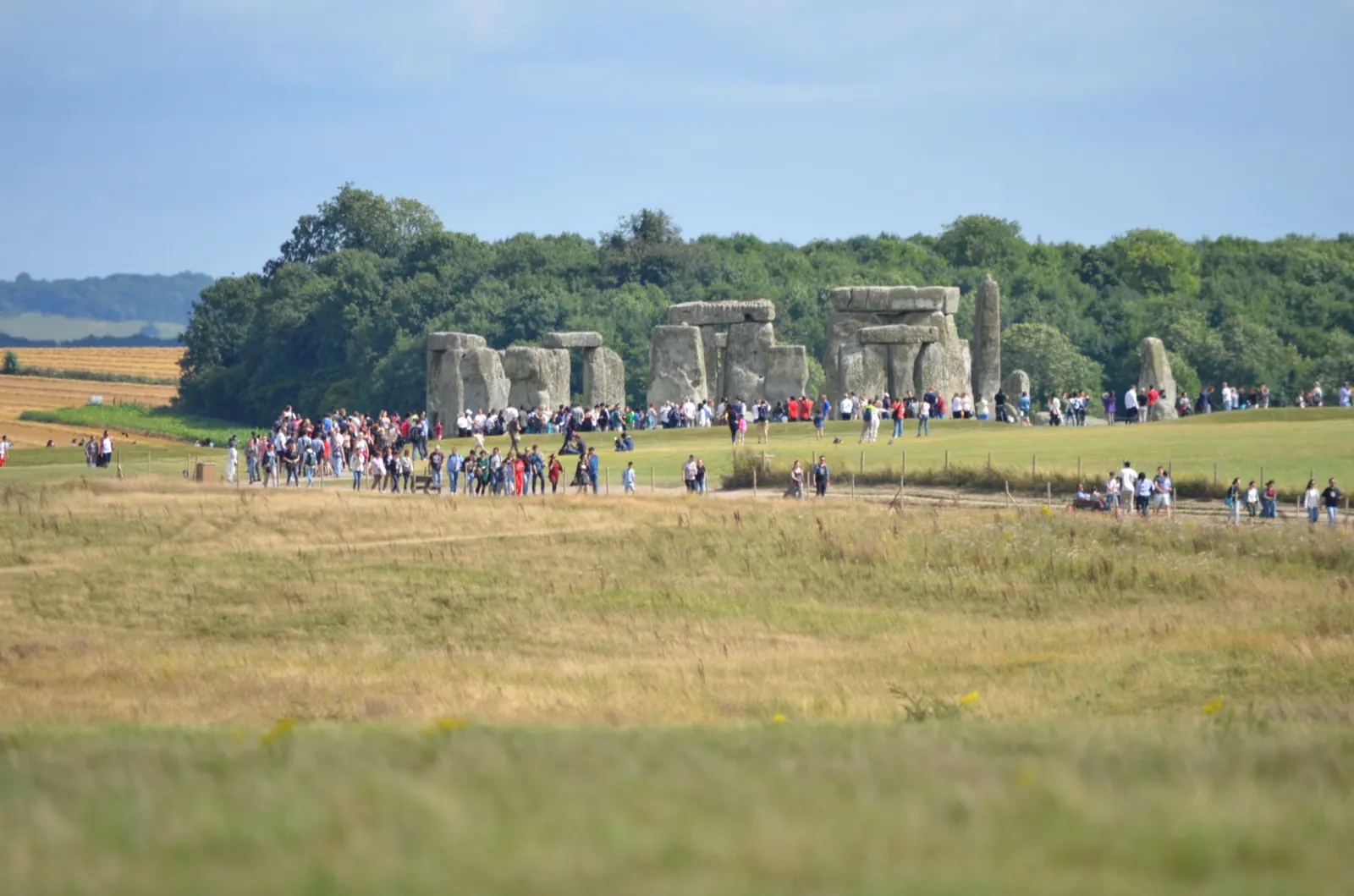
Leave the city streets for wide grassland and a ring of giant stones. A visit starts at the visitor centre, with its exhibition and rebuilt Neolithic (Stone Age) houses. A shuttle bus then takes you out to the stones. It is an outdoor stop with big skies and little shelter, so it feels very different from a day in Bath.
Don’t miss
Stones brought from far away
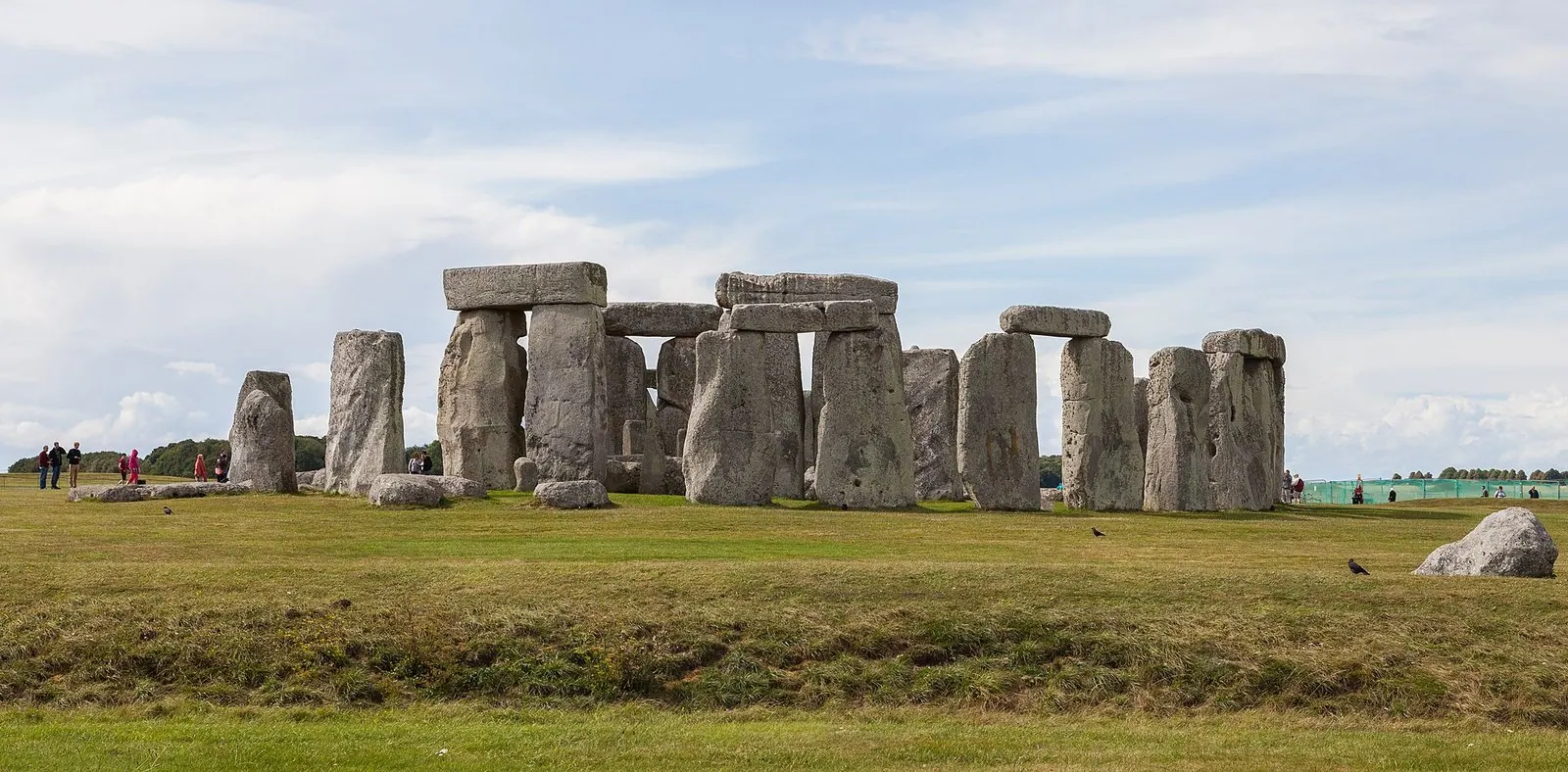
The tall sarsens of the outer ring, with stone lintels across the top. Among them are the smaller bluestones, which can look bluish when wet.
Your route
The Stone Circle
The ring of tall sarsen stones with lintels across the top, and the smaller bluestones inside. A path goes all the way around the circle.
The great trilithons
Five trilithons, which are pairs of upright stones capped by a lintel, form a horseshoe inside the circle. The stones are joined like timber, with pegs and sockets.
The Heel Stone
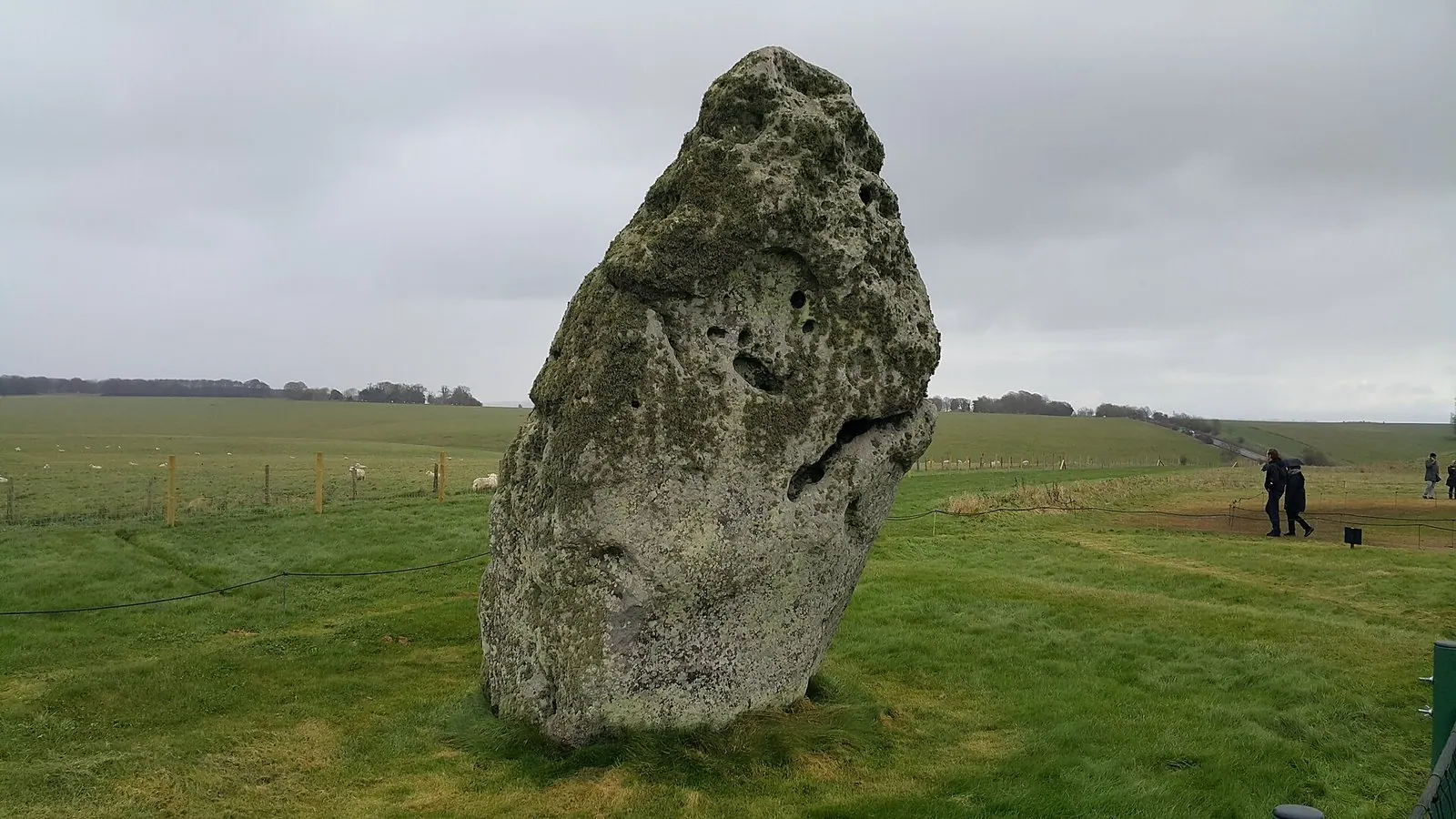
A large stone that has not been shaped, standing outside the circle where the Avenue meets the ancient earthwork. Seen from the centre of the circle, the midsummer sun rises beside it.
The exhibition and the 5,500-year-old man
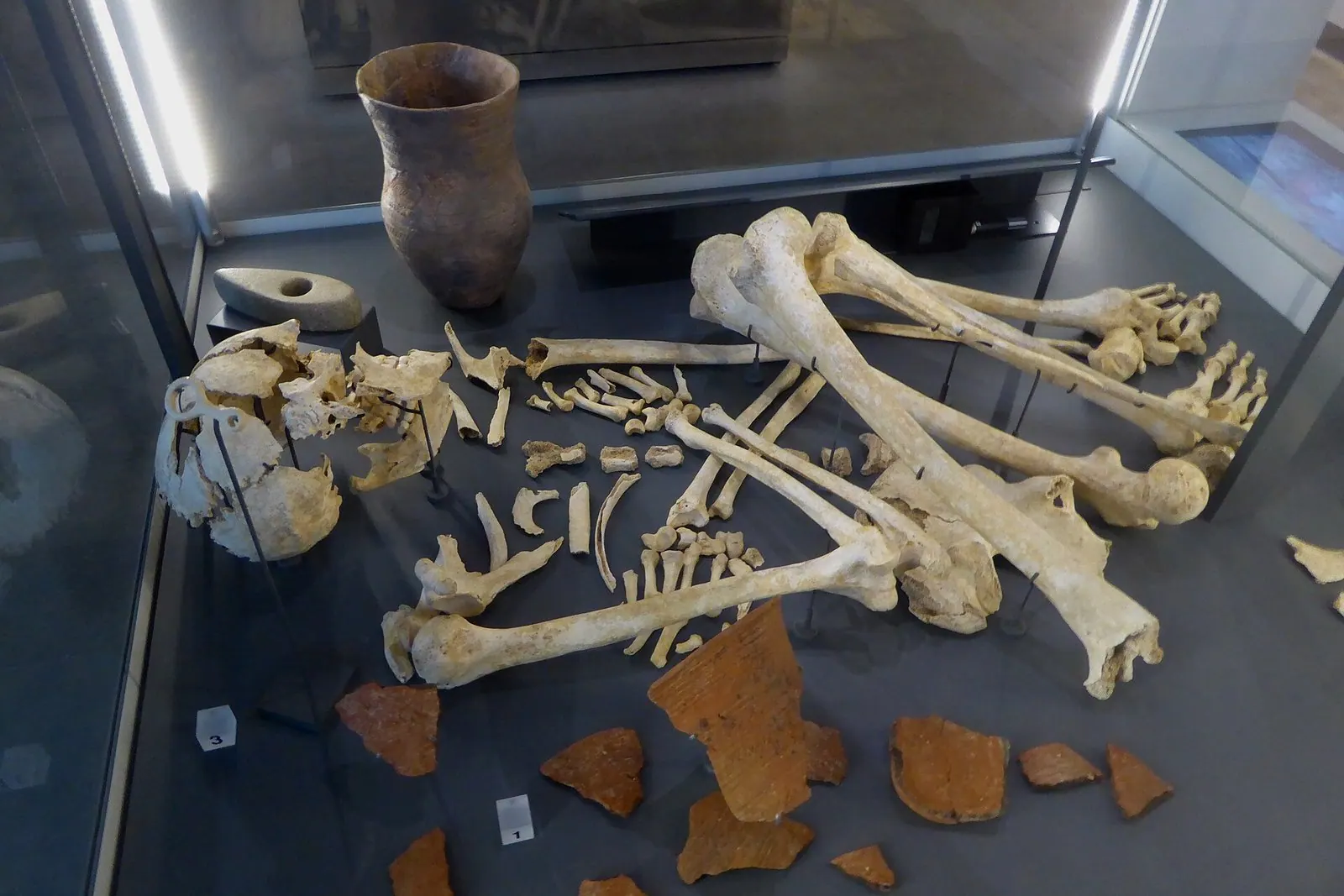
More than 250 objects found in the landscape, such as jewellery, pottery and tools. There is also a reconstructed face of a man who lived here 5,500 years ago.
The Neolithic houses
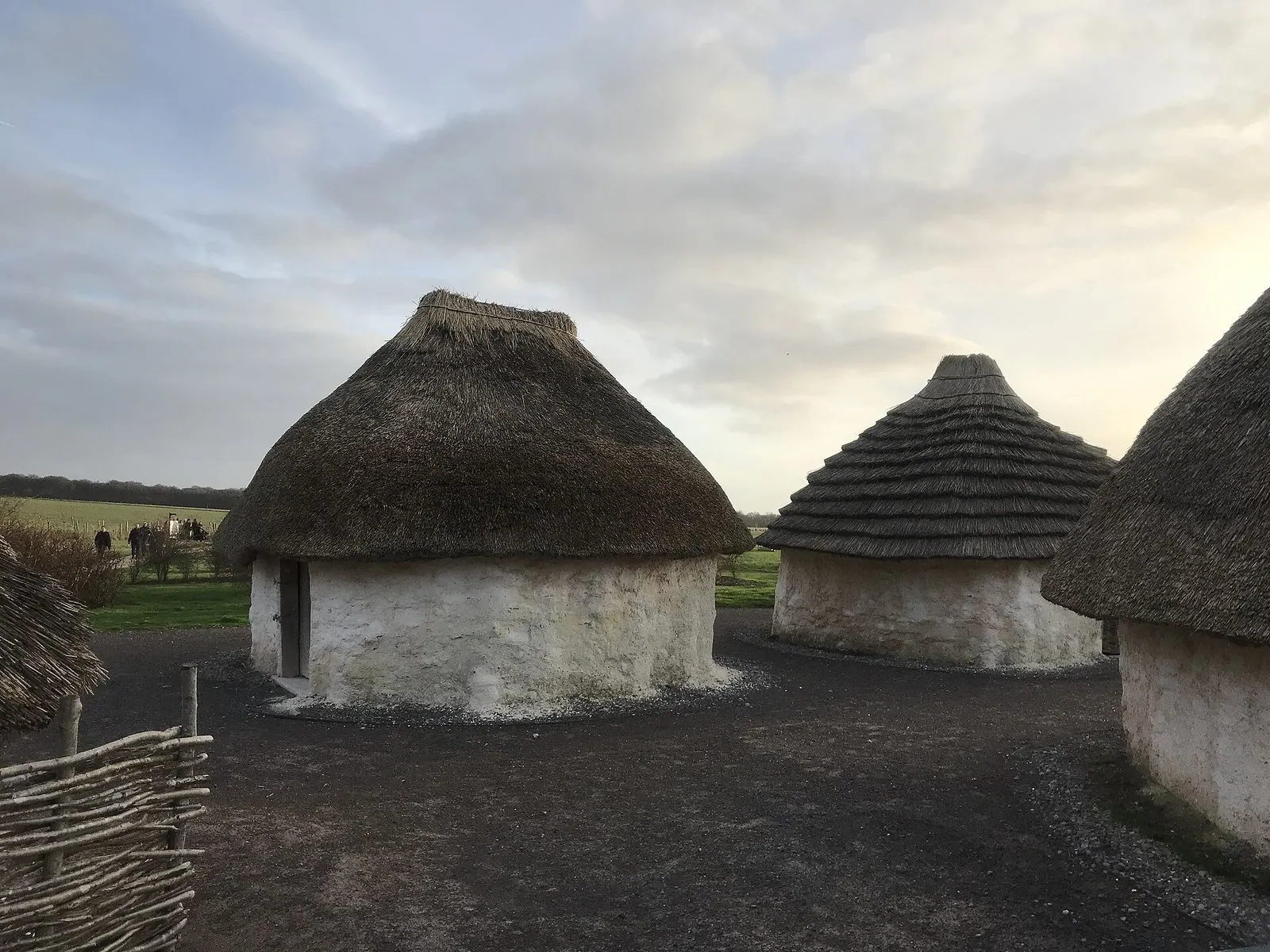
Full-size copies of Stone Age homes outside the visitor centre, with white chalk walls, thatched roofs and wooden furniture.
Burial mounds on the way
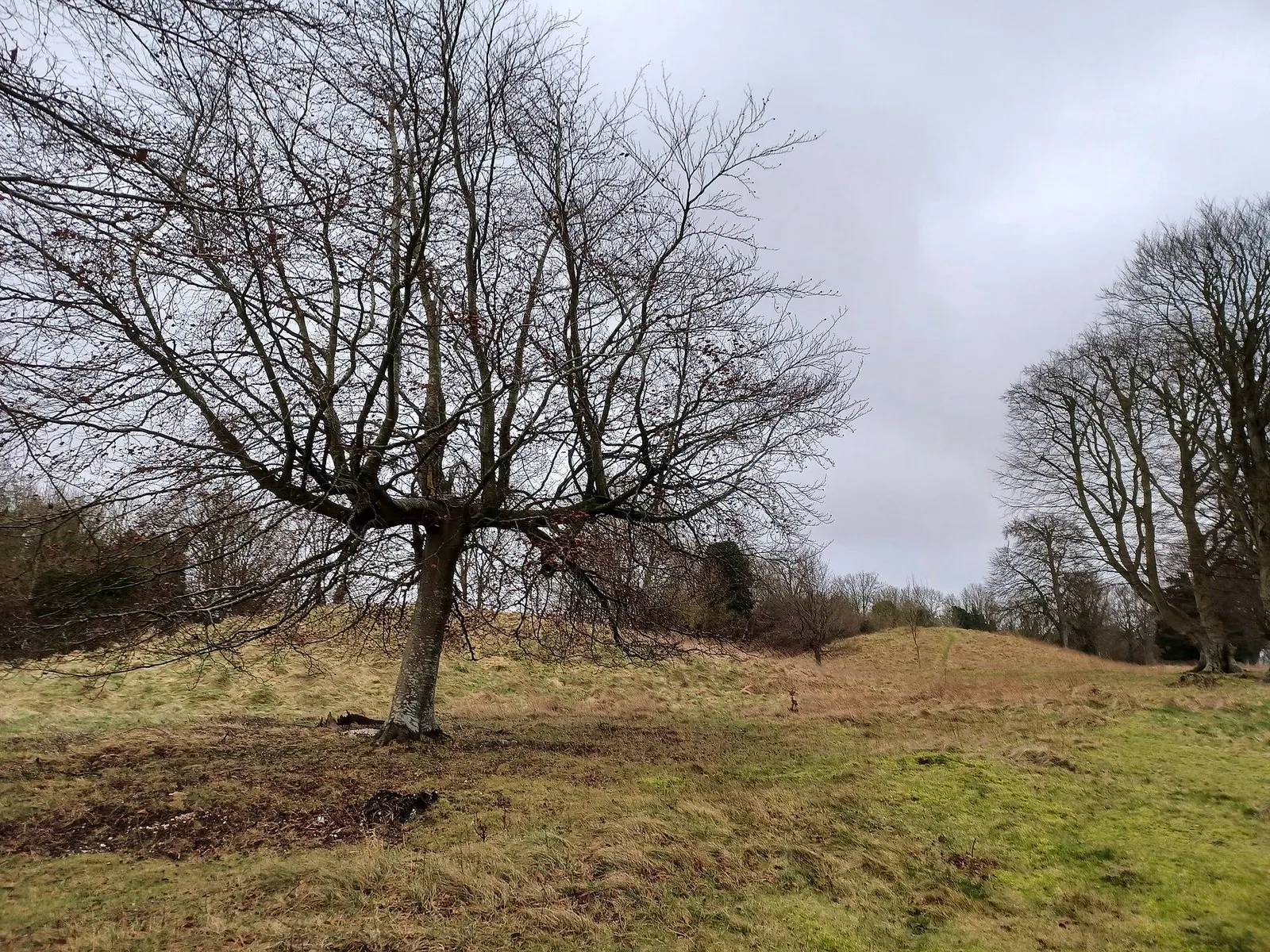
Bronze Age burial mounds beside the walking route between the visitor centre and the stones, with information panels along the way.
Toilets and food
English Heritage says the toilets are at the visitor centre, not at the stone circle. They include accessible, baby and adult change facilities. The visitor centre café serves grab-and-go hot and cold food, such as soup, pasties, sandwiches and salads. You can also picnic in the monument field.
Sources (7)
Read on the bus
The Neolithic houses: what you are seeing
Full-size Stone Age homes, built beside the visitor centre
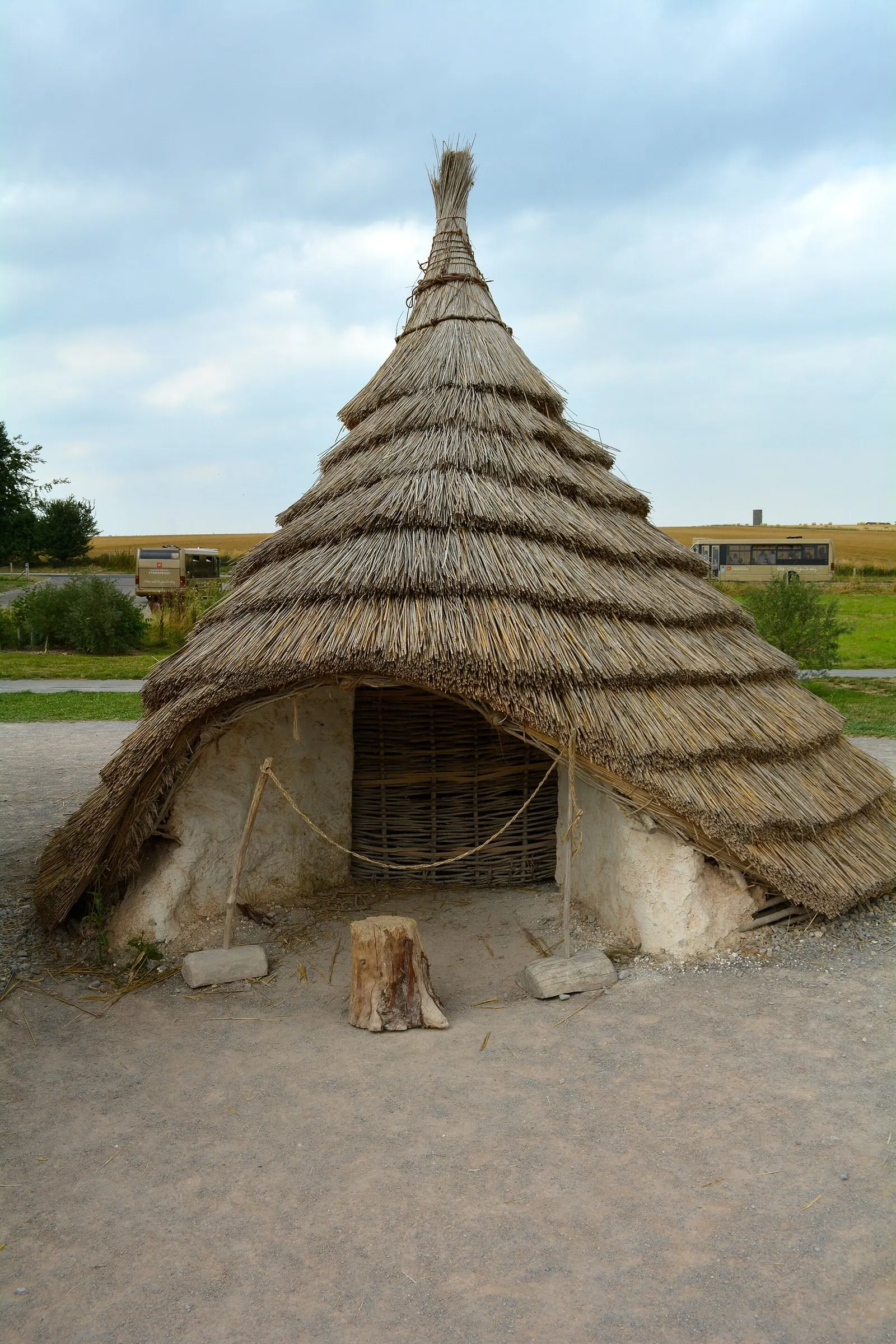
Neolithic means New Stone Age, the time before metal tools. These houses are modern copies, but they follow real homes from about 4,500 years ago. Read this on the bus, then step inside and compare.
Based on real digs
Archaeologists dug at Durrington Walls in 2006 and 2007, a large ceremonial enclosure (a space marked out by a bank) just over a mile north-east of the stones. They found the remains of houses, and English Heritage built these copies from what they found.
Who lived there, and when
Radiocarbon dating (a test that measures the age of old material) showed the originals date from about 2500 BC, when the giant sarsen stones were being raised. So the people in the originals lived nearby while Stonehenge was being built.
How the copies were made
A team of 60 English Heritage volunteers built them from local materials: hazel-rod frames, wheat-straw thatch, and walls of chalk, hay and water. The work used over 20 tonnes of chalk and about 5,000 hazel rods.
A link to the builders
English Heritage says the houses help join the ancient stones to the people who lived and worked here. Volunteers show the builders’ skills, such as grinding grain with a quern (a hand stone mill) and making rope from rushes.
What to look for inside
The hearth
The fire's smoke rises through the thatched roof. English Heritage says the white chalk walls and floor reflect sunlight and hold the fire's heat.
The beds
Beds stand around the walls. English Heritage says the furniture is wooden or woven.
Storage and shelves
Look for storage and shelving around the walls. English Heritage lists them with the beds and seating.
The single room
Each house is one room, five metres on each side, and English Heritage calls it bright and airy.
Sources (1)
Why stop here
Bath is a city day on foot. The Romans built baths and a temple over its hot springs. Georgian (1700s) builders later laid out grand squares and crescents (curved rows of houses) on the hills around the centre. The Roman Baths and the Abbey stand side by side in the middle.
Don’t miss
A whole city on the World Heritage list
The golden stone of the terraces on the hills around the centre, set among green slopes.
Your route
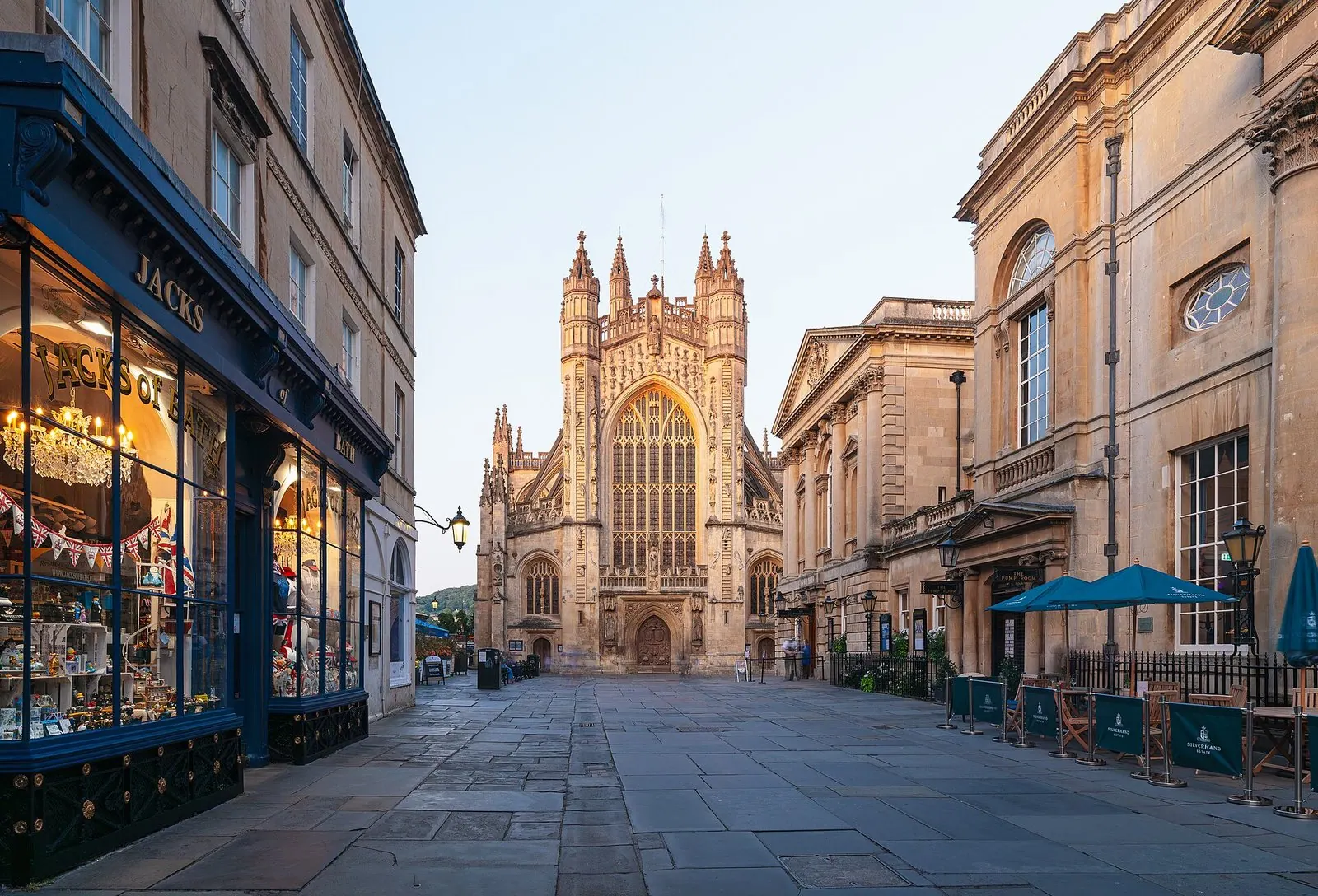
Bath Abbey
Ladders of angels on the West Front outside, and inside a fan-vaulted ceiling and a window showing King Edgar’s crowning in 973.
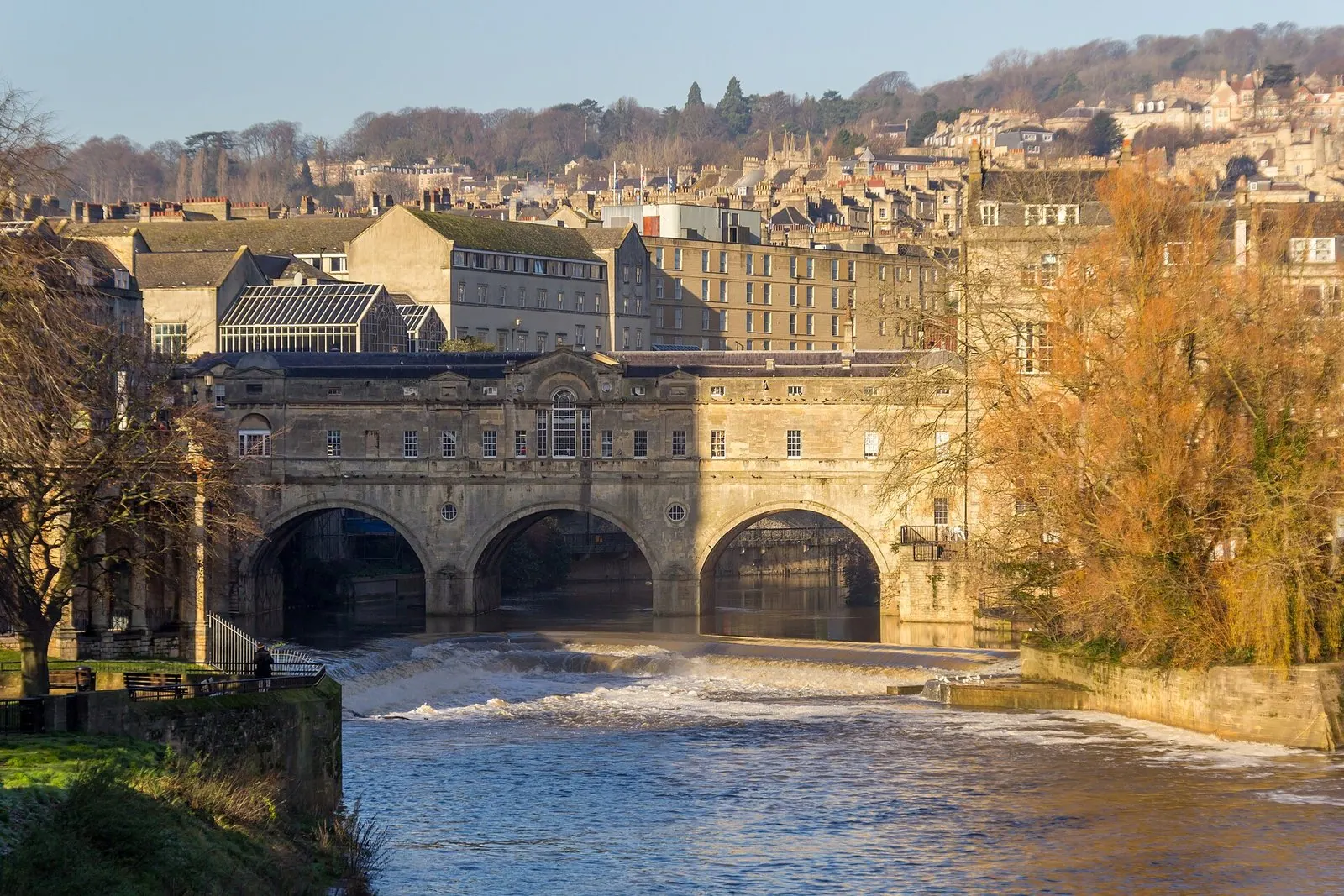
Pulteney Bridge
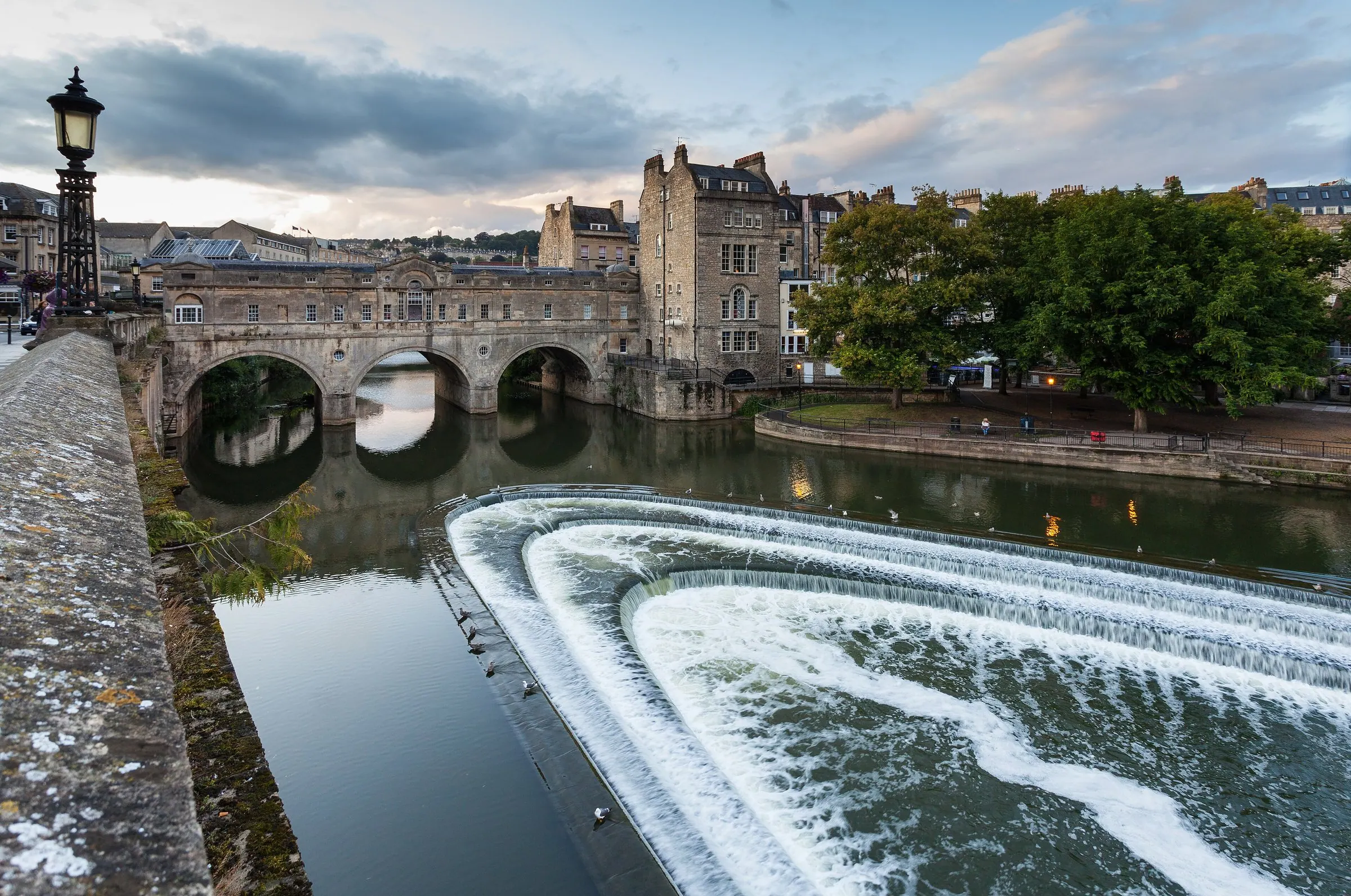
A Palladian bridge over the River Avon with shops built along both sides, and a weir below it.
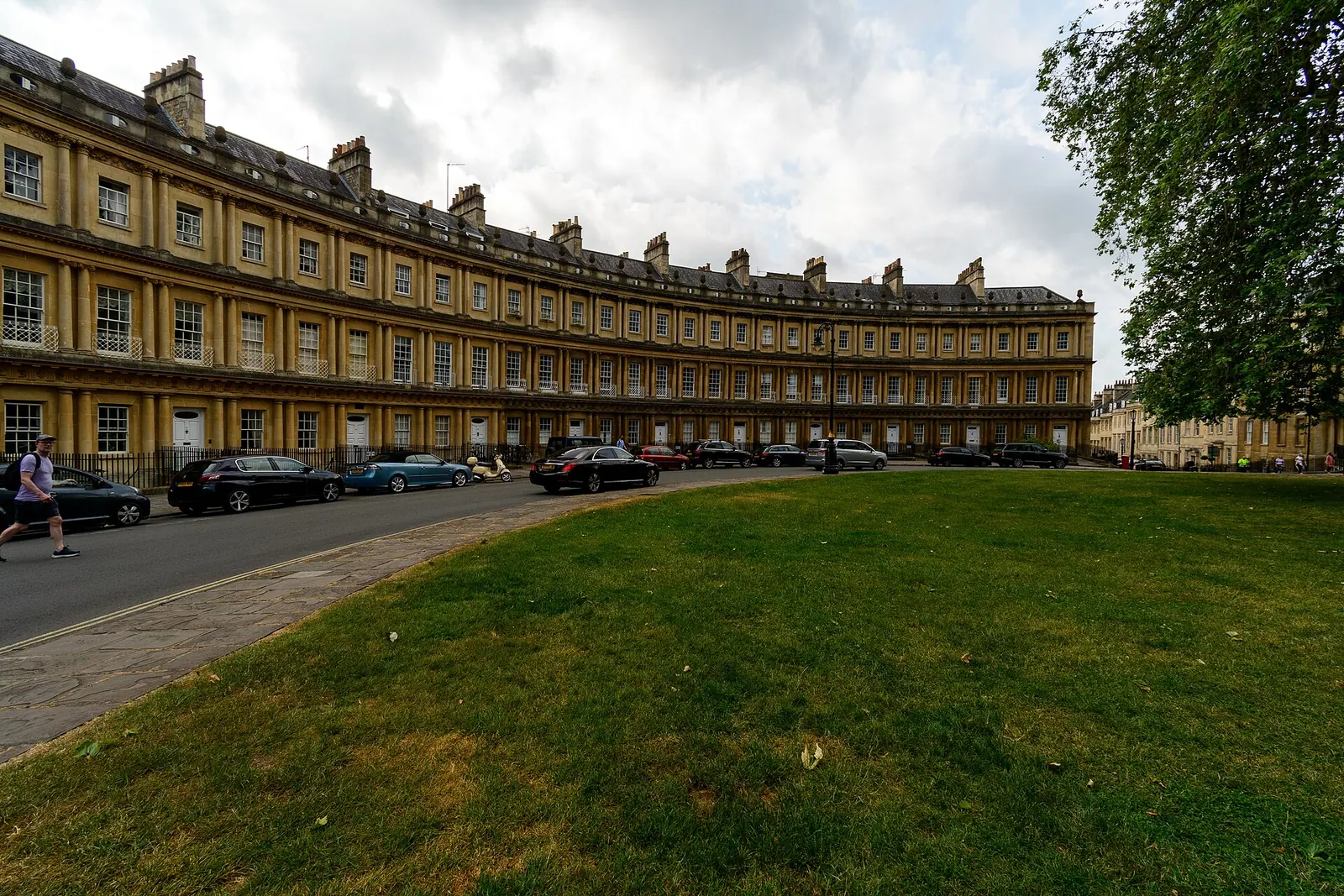
The Circus
A ring of three curved Georgian terraces, begun by John Wood the Elder in 1754 and finished by his son, with three streets leading into it.
The Royal Crescent
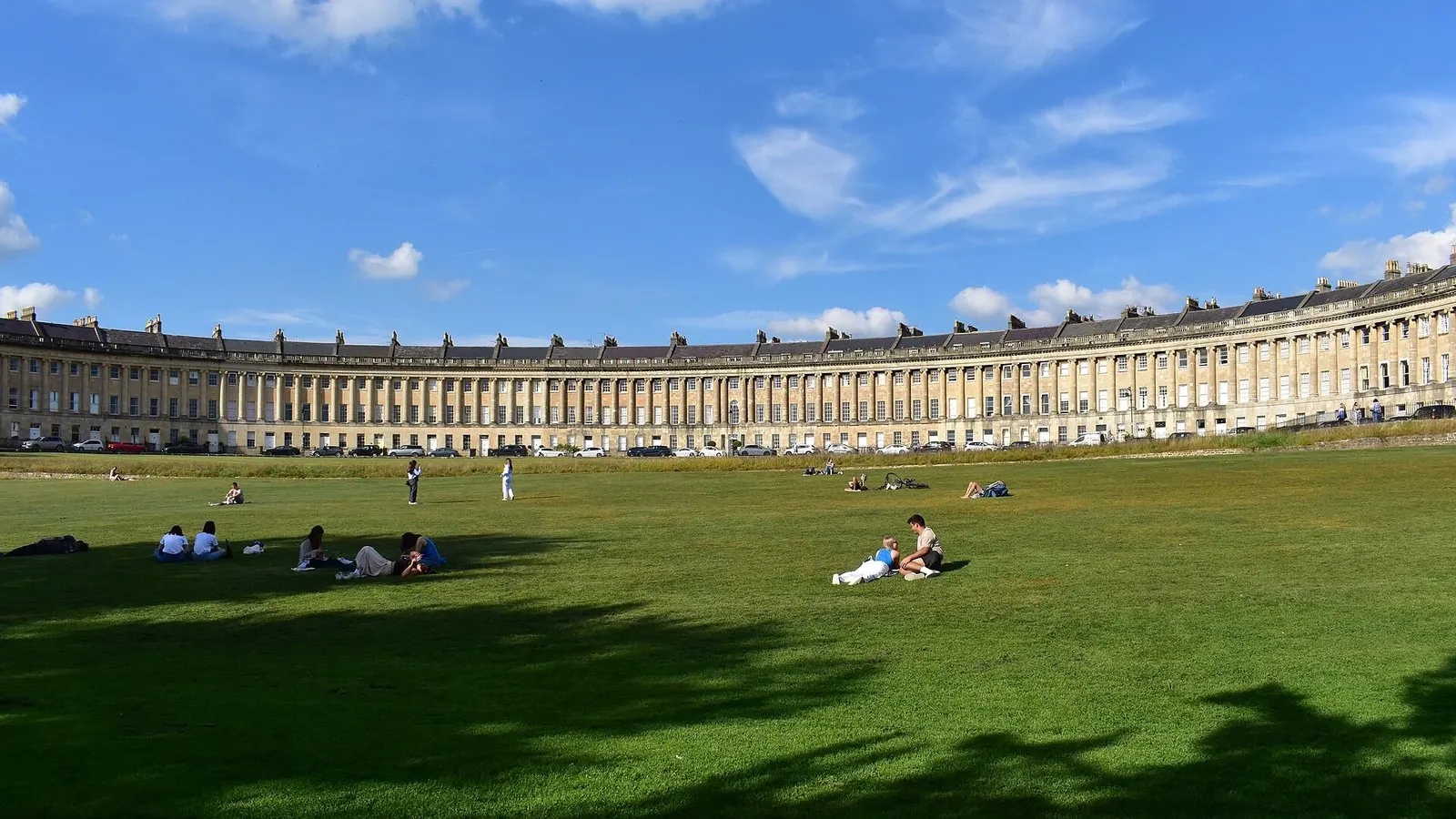
Thirty matching Georgian houses in one sweeping curve, looking out over a lawn and park.
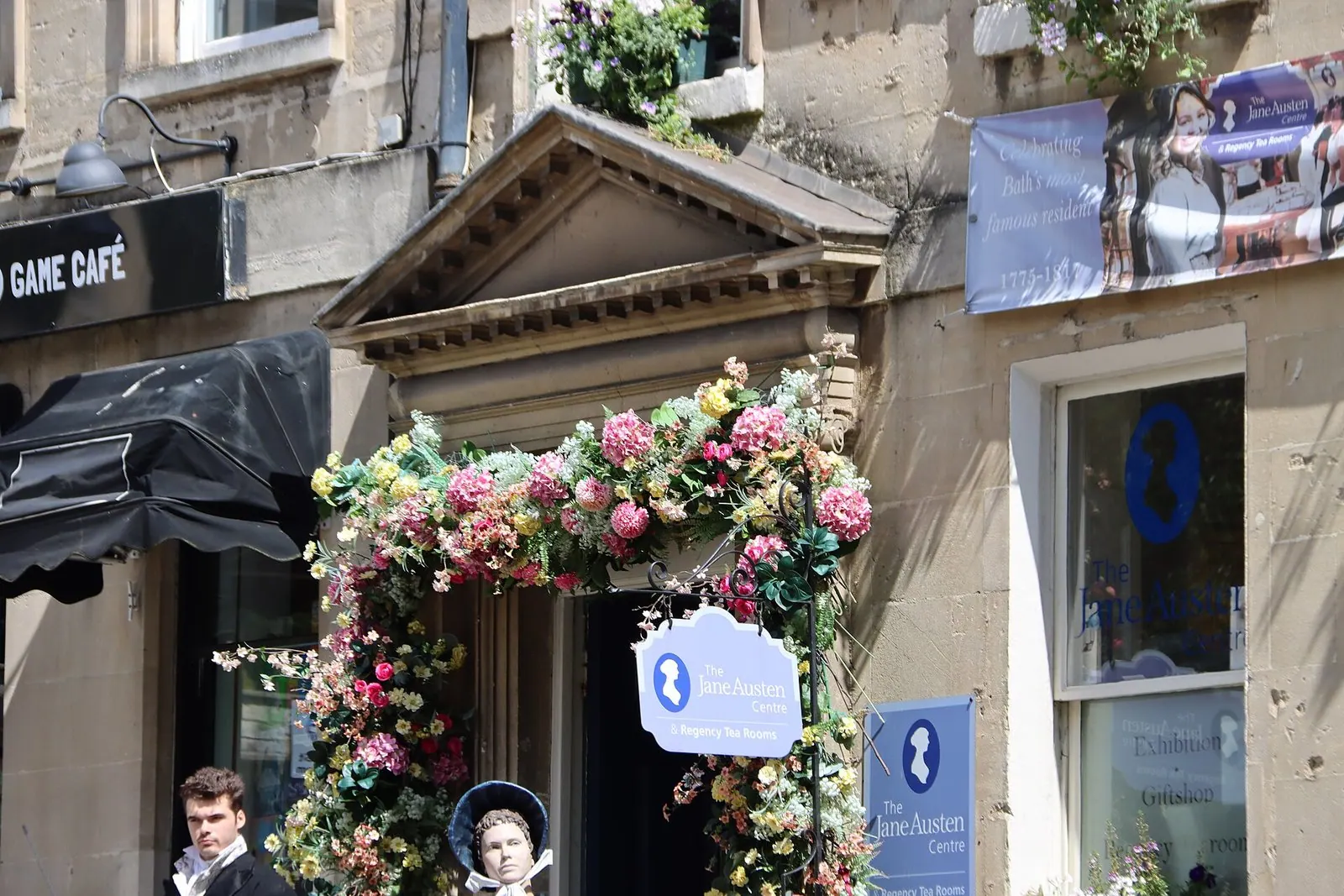
The Jane Austen Centre
An exhibition on Jane Austen’s life in Bath, with character actors, and a Regency tea room on the second floor.
The Roman Baths · 90 min · page 7
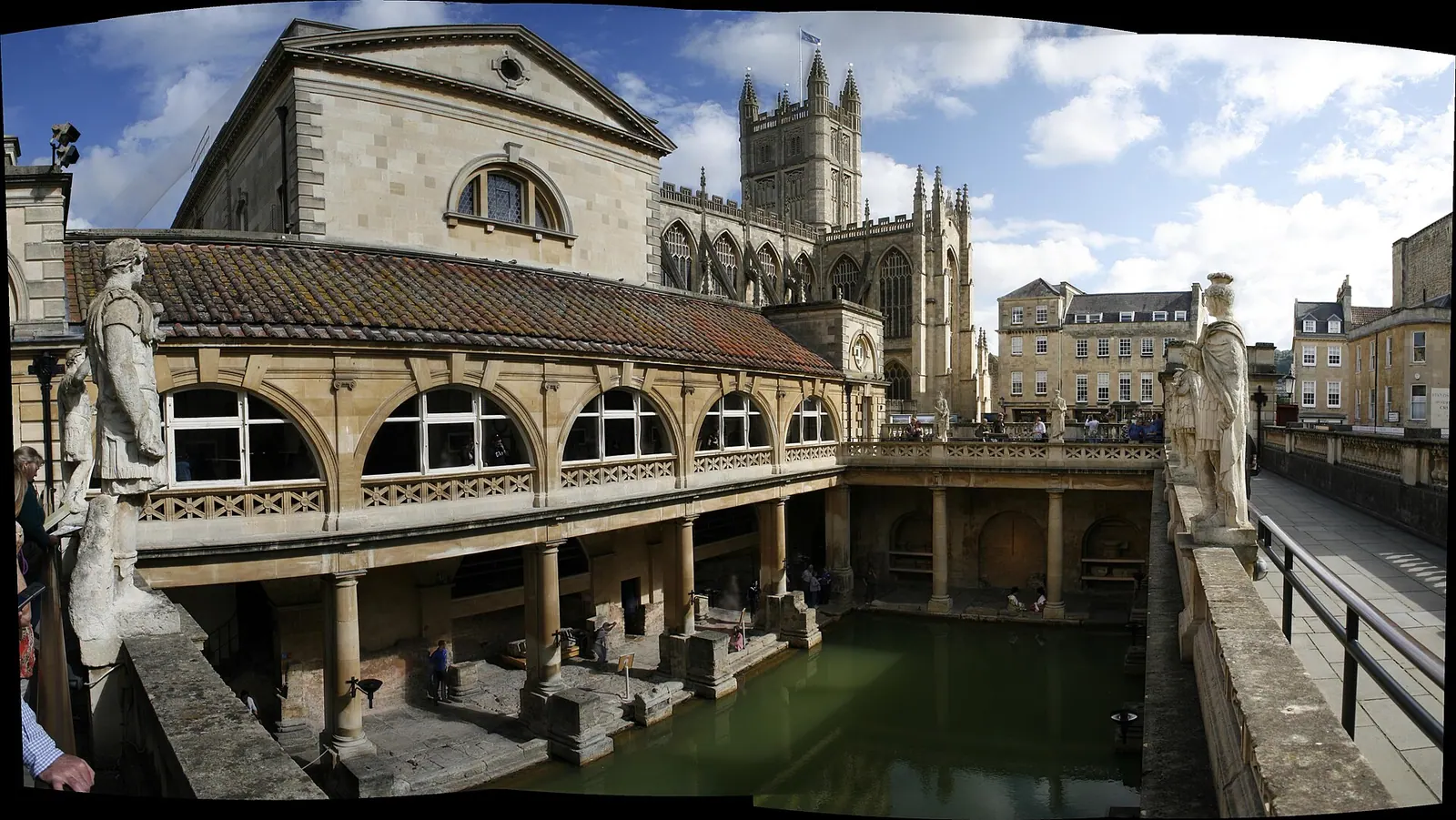
The Great Bath with steam rising, the Sacred Spring where hot water bubbles up, the remains of the temple, and thousands of Roman finds.
Ticket
Yes. The Abbey sells a ticket that includes its Discovery Centre, online or at the Welcome Desk. Last entry is 30 minutes before closing. The listed Sunday hours are short and in the afternoon.
Toilets
Yes. Bath and North East Somerset Council lists city centre public toilets at Charlotte Street Car Park (7 am to 8 pm) and Shaftesbury Road (7 am to 6 pm), and in Parade Gardens (7 am to 4 pm). The council’s page was checked on 30 October 2026.
Food
The Roman Baths website says its Pump Room Restaurant, next to the Roman Baths, serves a Morning Bakery and Brunch and a Jane Austen Afternoon Tea every day, with the spa water to taste from the fountain.
Sources (9)
Read on the bus
Jane Austen in Bath
Five years in the city, two novels set there
Jane Austen lived in Bath from 1801 to 1806 and wrote very little there. Yet all six of her novels mention Bath, and two of them, Northanger Abbey and Persuasion, are set partly in the city.
Why the Austens moved to Bath
In 1801 her father, Rev. George Austen, retired. Jane, her parents and her sister Cassandra left their Hampshire home for lodgings in Bath. Her father died there in January 1805, and the women then depended on Jane’s brothers for money. Jane left Bath in 1806.
What Bath gave her writing
Visit Bath, quoting the Jane Austen Centre, says Bath was a constant source of inspiration. Jane went to balls and concerts, and her output while she lived there was small. It adds that she remembered her time in Gay Street fondly.
Published after her death
Neither Bath novel appeared in her lifetime. An early version of Northanger Abbey, then called Susan, was sold in 1803 but not printed. Jane died in July 1817, aged 41. Both novels were published that December, the first time her name was given as the author.
Bath in the two novels
In Northanger Abbey, Catherine Morland visits Bath and spends her mornings in the Pump Room. In Persuasion, Anne Elliot and Captain Wentworth find their love again there, and Visit Bath points to Gravel Walk and Union Street.
Austen places you may pass anyway
4 Sydney Place
The Austen family home in Bath, from 1801 to 1804.
25 Gay Street
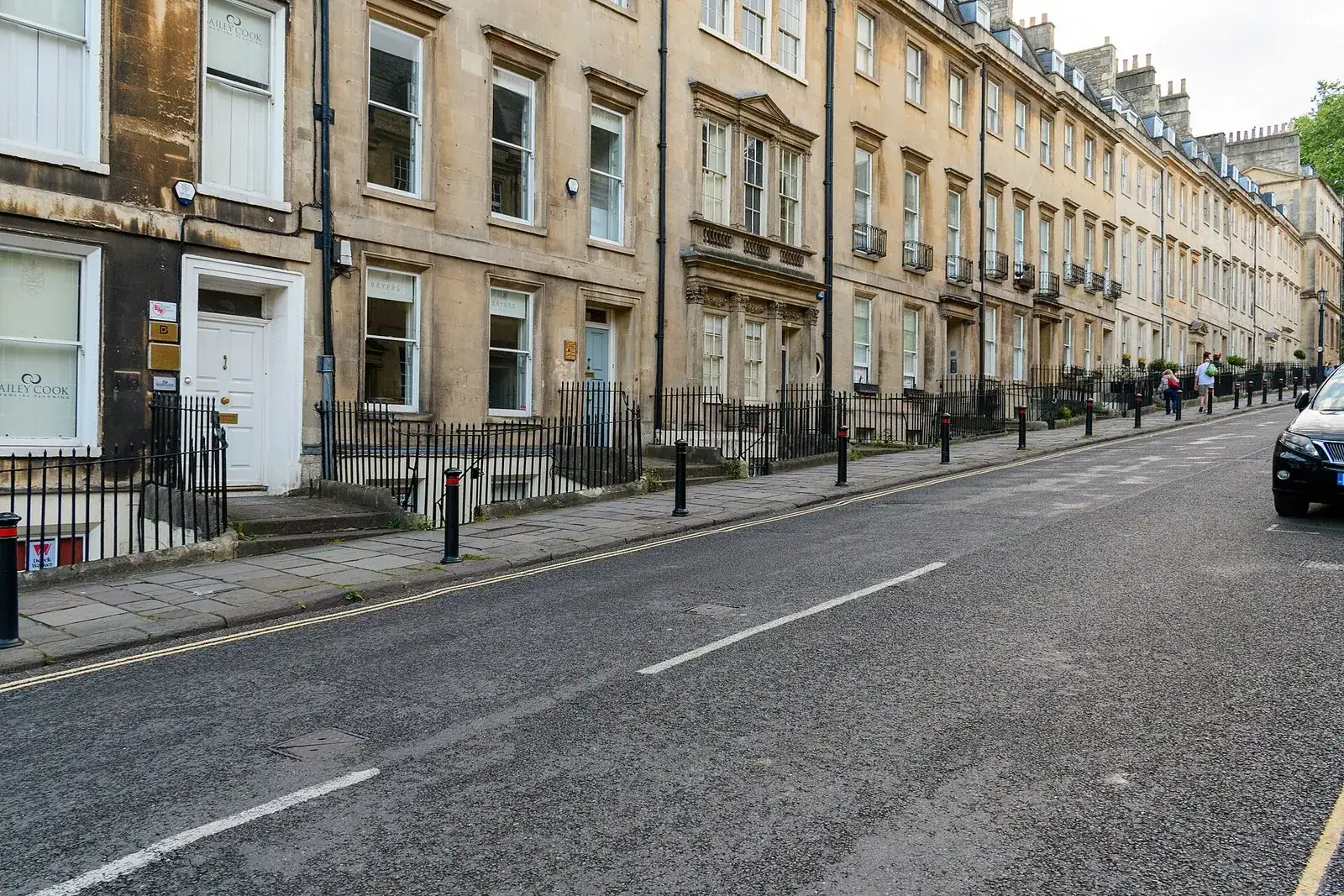
After her father died, the family lodged here. The Jane Austen Centre is a few doors away, at 40 Gay Street.
The Pump Room
In Northanger Abbey, Catherine and her hosts walk up and down here each morning, looking at everybody.
The Assembly Rooms
Visit Bath says it gave Jane and her characters great entertainment. The National Trust says it is closed for renovation and hopes to reopen in 2027.
The Royal Crescent
On a Sunday in Northanger Abbey, Catherine and Isabella hurry here from the crowded Pump Room for fresh air.
Sources (5)
Why stop here
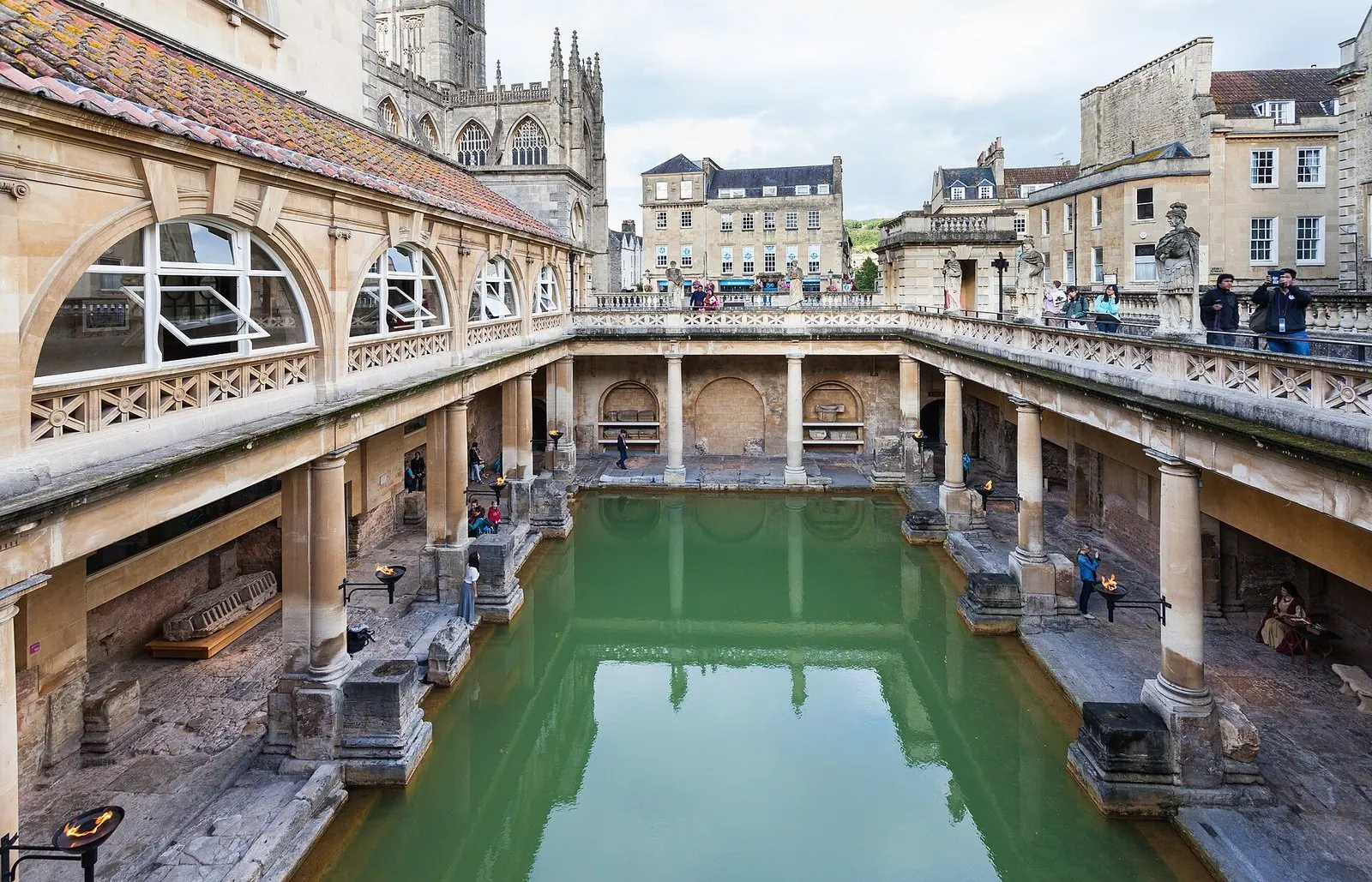
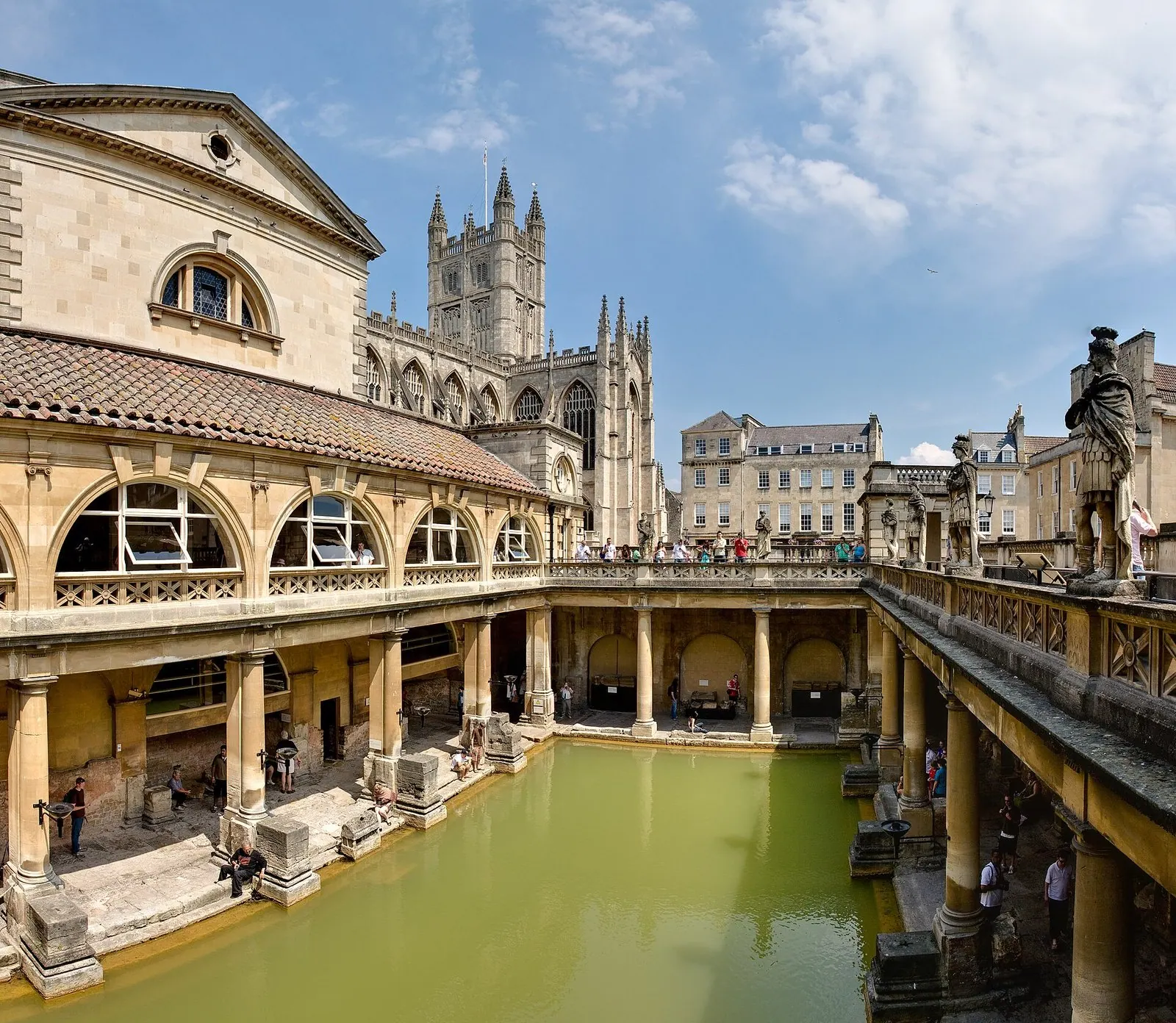
Step below the street to the heart of Roman Bath. Walk above the steaming Great Bath and see the spring where hot water still rises. Find a temple, carved stone and objects thrown to a goddess. It is a ticketed museum visit with its own time slot.
Don’t miss
Messages to a goddess
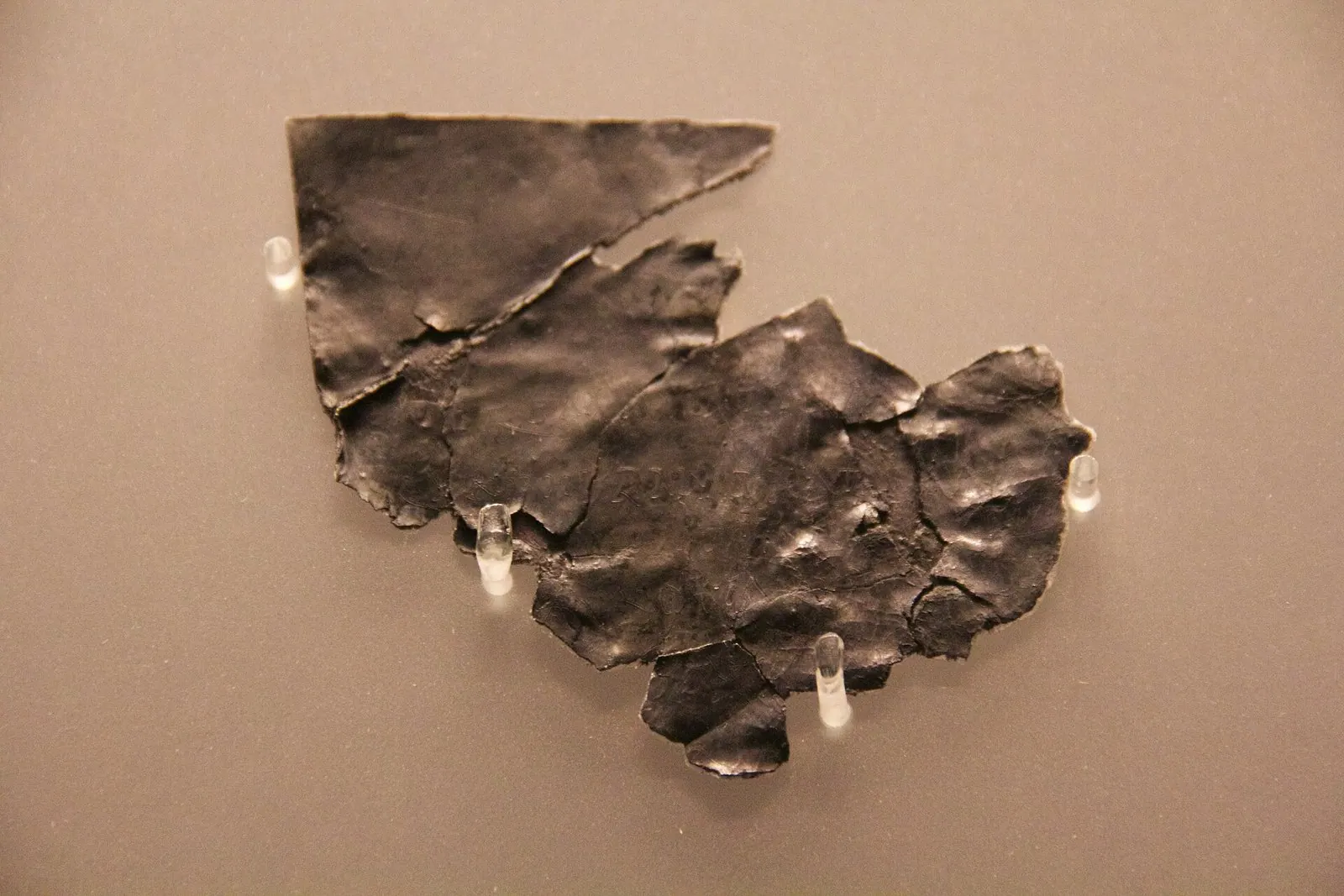
The curse tablets and the Beau Street Hoard in the museum galleries.
Your route
The Great Bath, from terrace to pool
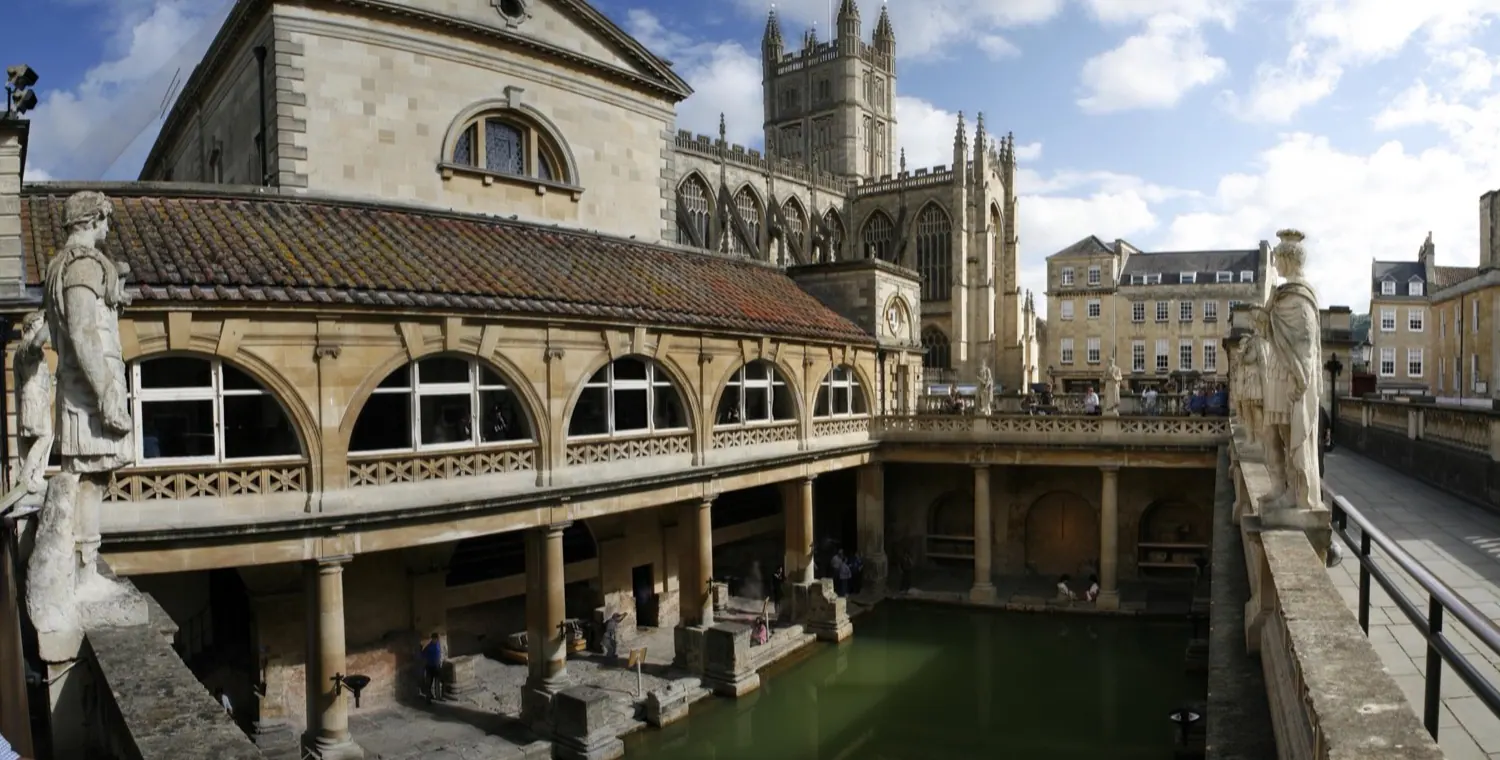
Your first view of the steaming Great Bath, from the terrace, framed by statues of Roman emperors carved in 1894. Then walk round the pool itself, where the Romans walked.
The Sacred Spring
The chamber where hot water rises, with the King’s Bath above it and a statue of King Bladud, the legendary founder of Bath.
The temple pediment and Minerva’s head
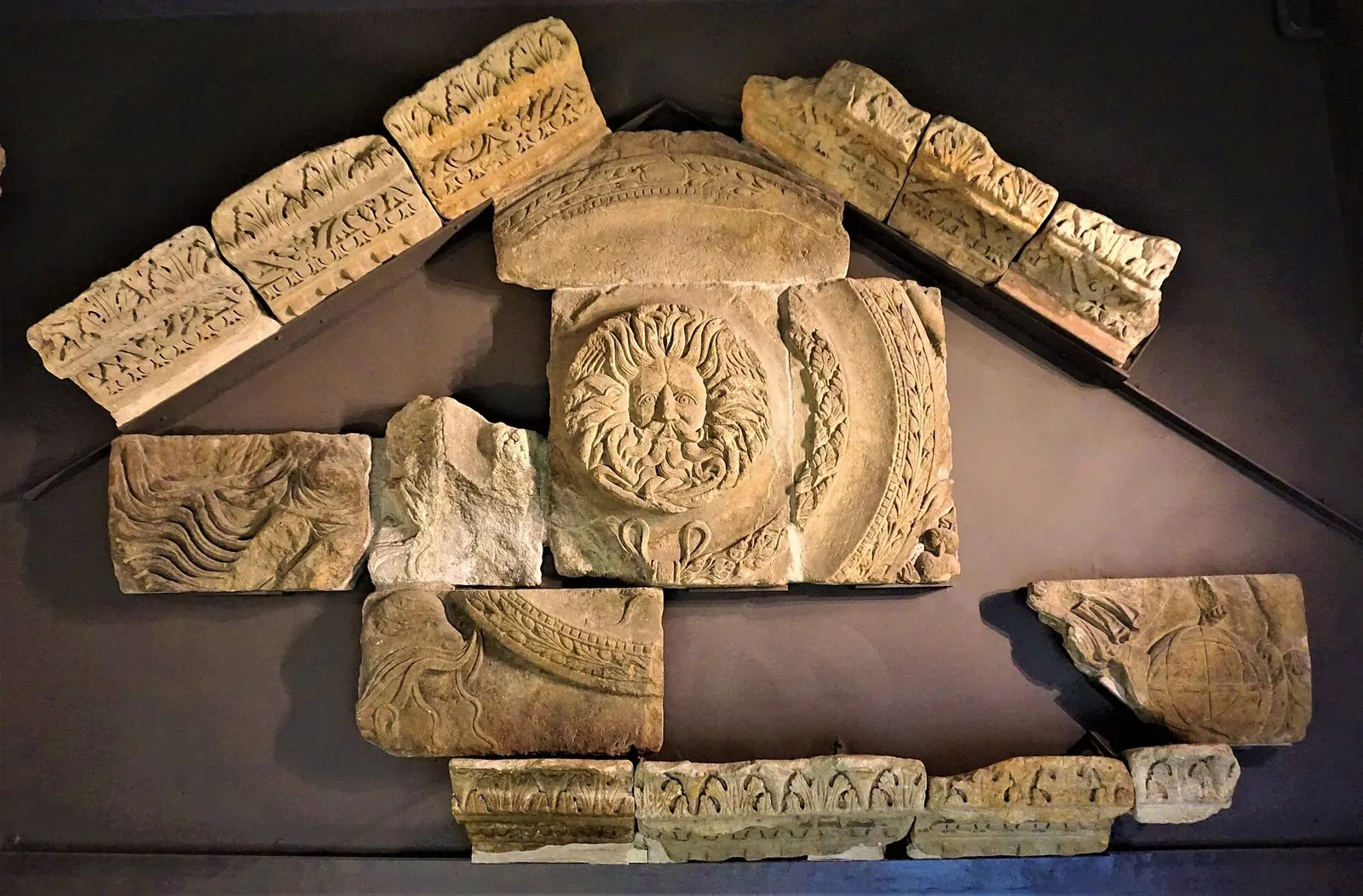
The great carved pediment with its Gorgon’s head, and the gilded bronze head of the goddess Sulis Minerva.
The curse tablets
Rolled lead and pewter sheets with messages to the goddess, some of Britain’s earliest prayers.
The Roman characters
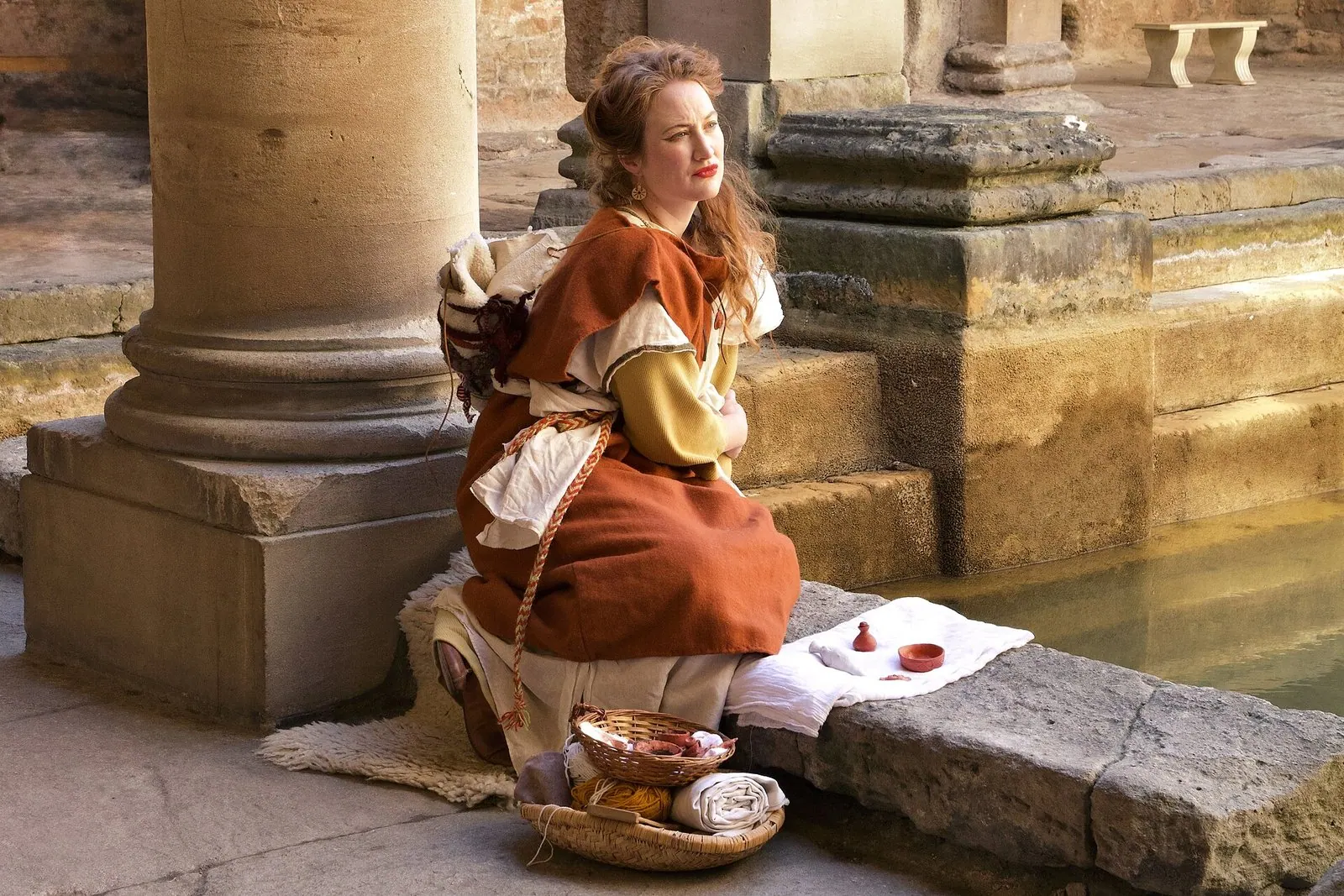
Costumed Romans, such as a soldier or a stonemason, based on real people who lived here 2,000 years ago.
Ticket
No. Time in Bath and entry to the Roman Baths are separate. On the exact tour page, look for a Roman Baths visit and whether the entry ticket is included. If you buy your own, book a time slot at least a day ahead. Tickets often sell out in summer.
Toilets and food
The Roman Baths say there are two sets of toilets. One is near the main reception, before you buy your ticket. The other is at the very end of the visit. Only water may be taken inside, so eat before or after. Their page names the Pump Room Restaurant as a favourite for afternoon tea.
Sources (4)
Why stop here
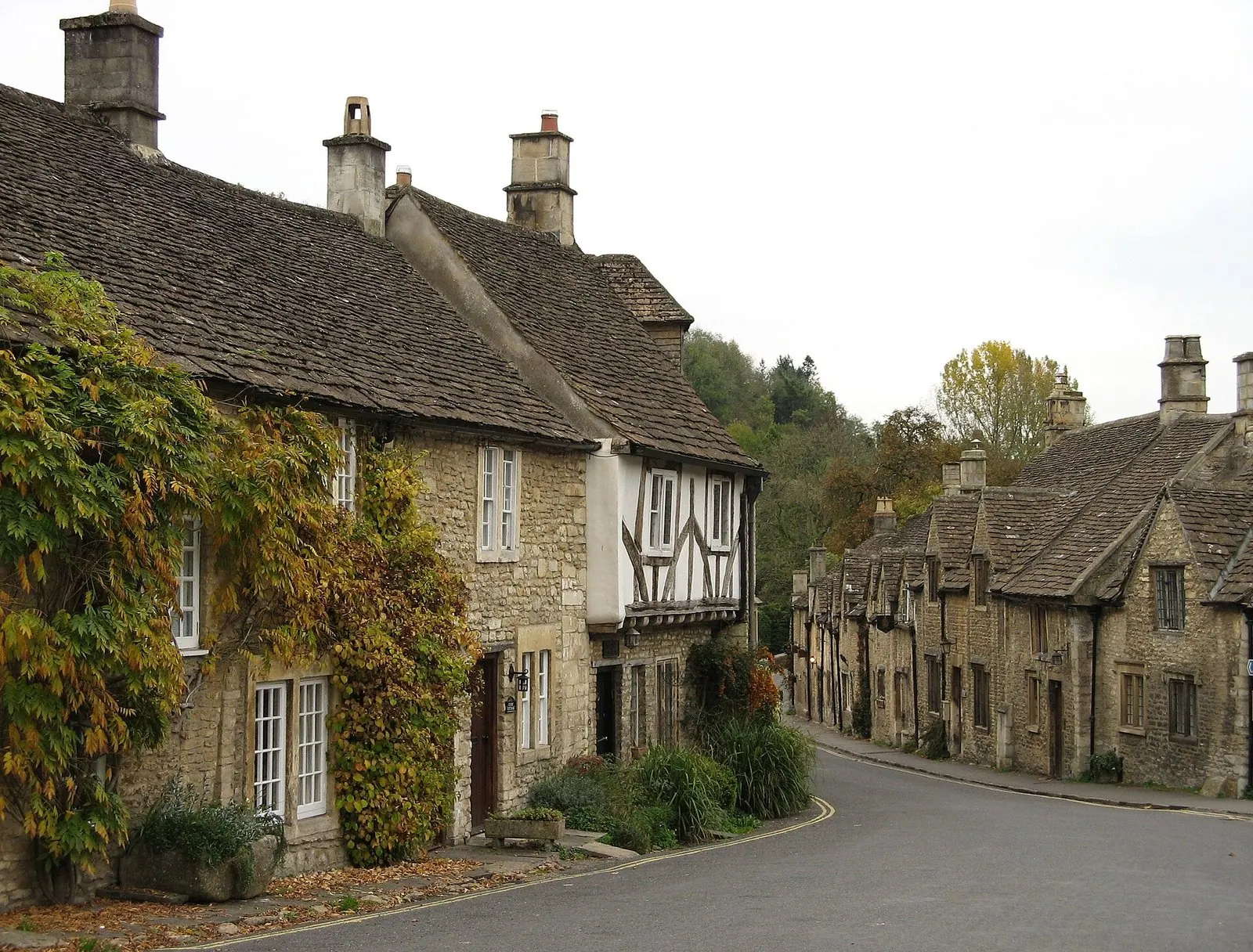
Castle Combe is a quiet village for a short, slow walk. Old stone cottages line one small street that runs from a medieval market cross down to a bridge over the By Brook. It is a place for looking and taking photographs, not a day of shops or sights.
Don’t miss
A village that became a film set
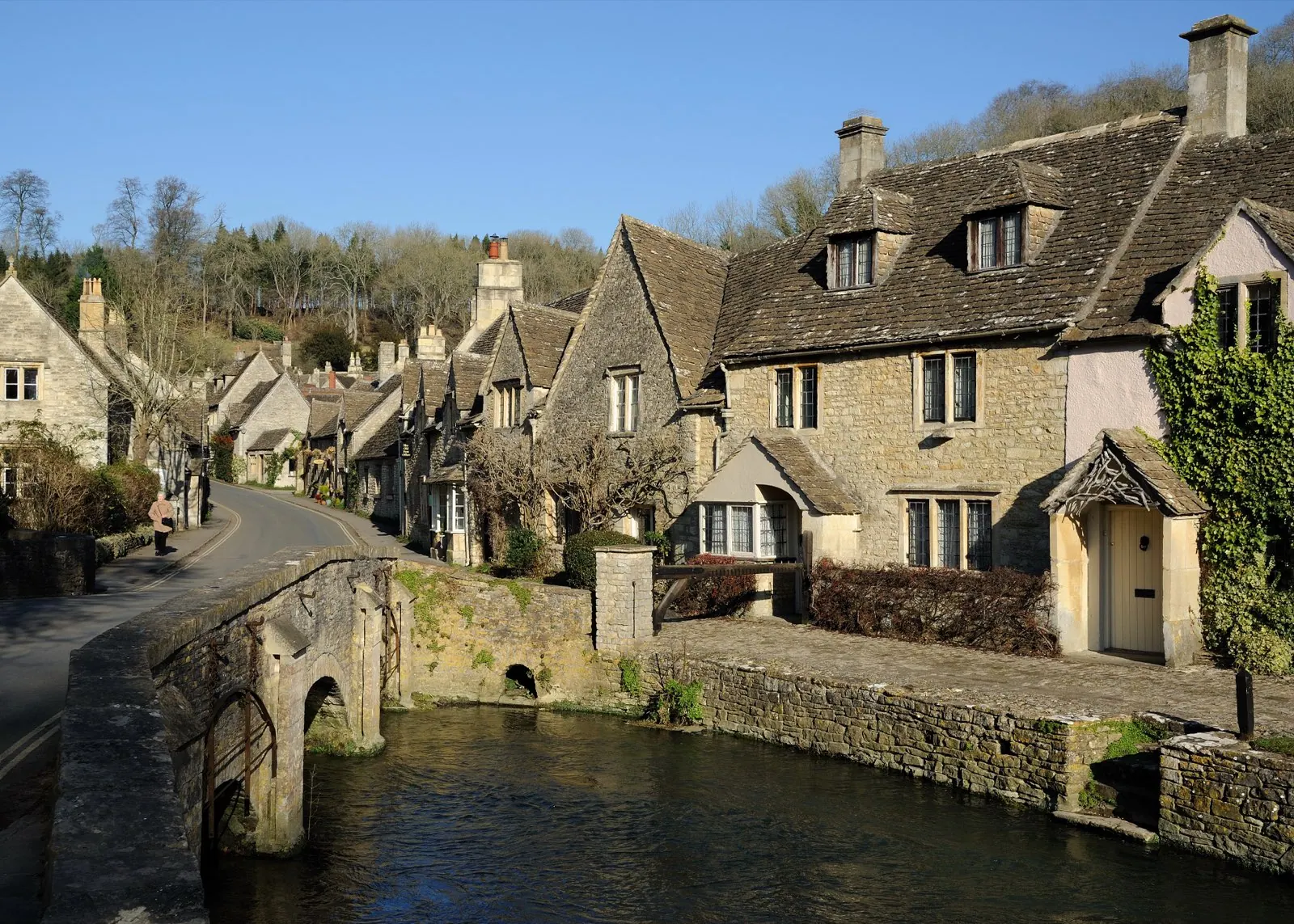
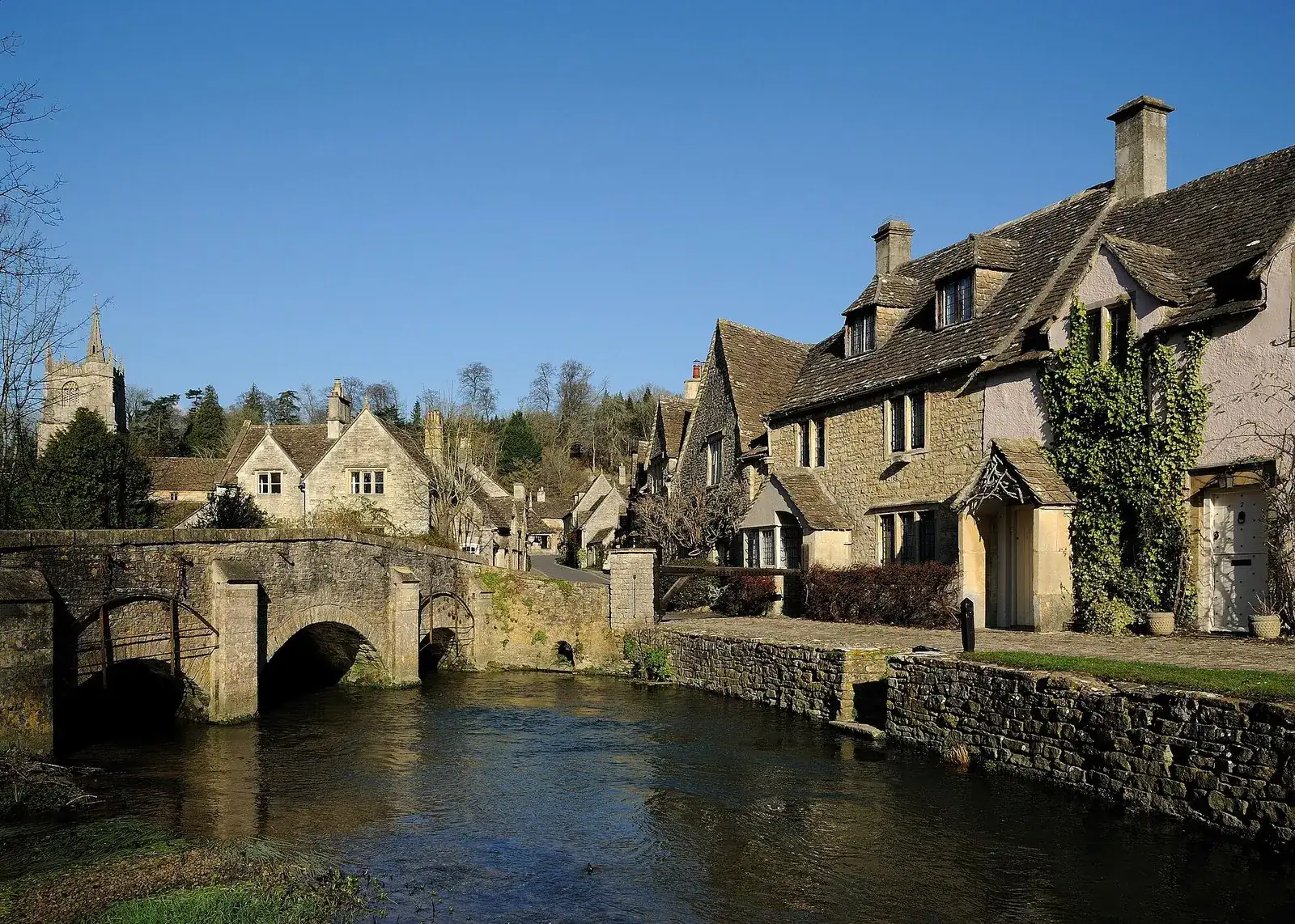
The bridge over the By Brook and the view back up the street, the scene that cameras keep returning to.
Your route
The honey-coloured cottages
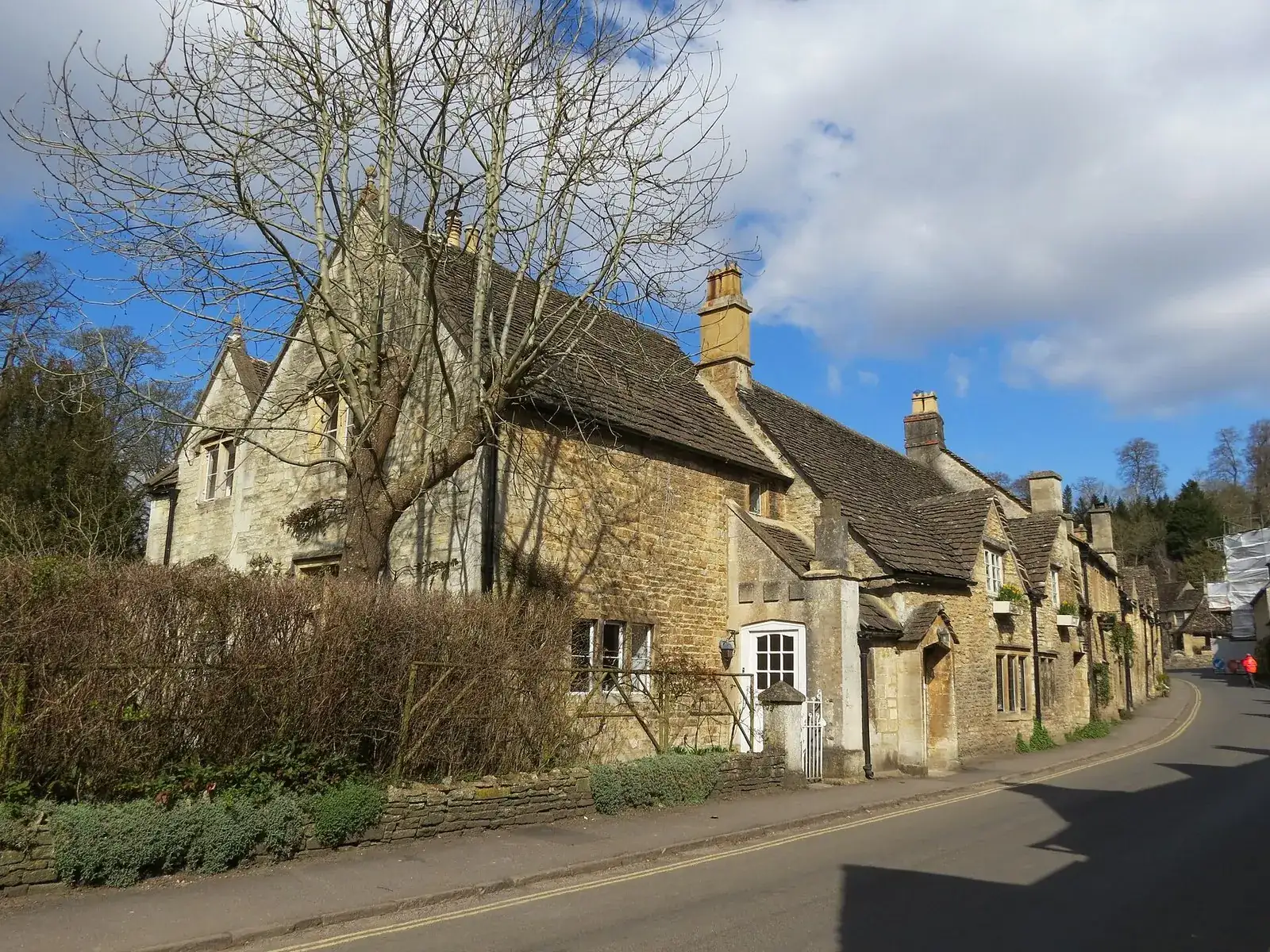
Rows of old stone cottages in a wooded valley. The parish council says the village has changed very little over the centuries.
The bridge over the By Brook
The stone bridge at the bottom of the street, with the brook below and the cottages rising behind it.
The medieval market cross
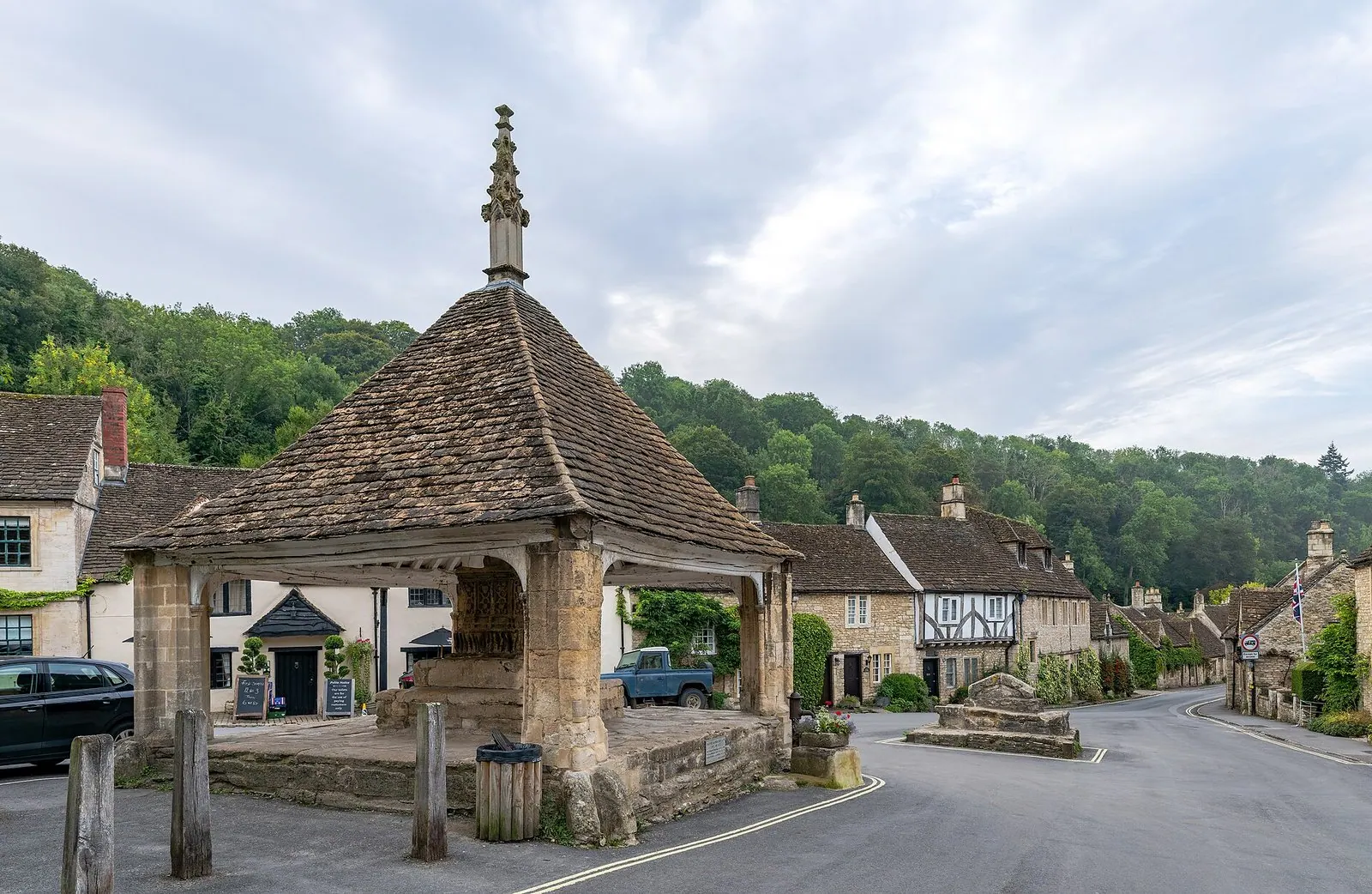
A stone cross under a pyramid-shaped tiled roof in the market place, carved with roses and shields.
St Andrew’s Church
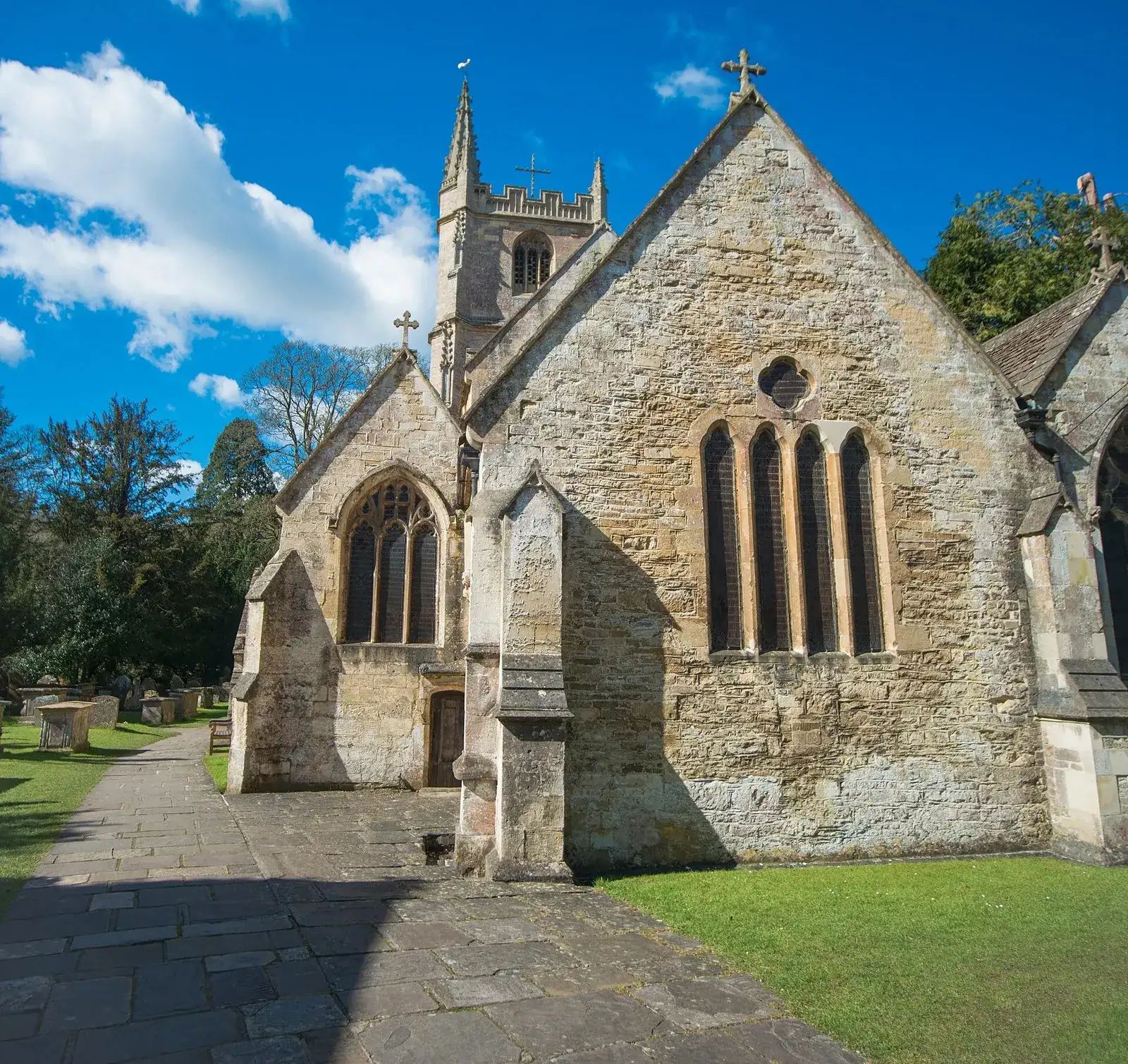
A church with a faceless clock, fan vaulting in the tower, and the tomb of a knight who died in 1270.
The old buildings round the market place
Houses and inns from the 1500s and 1600s, such as the Old Court House, built early in the 1500s, and the White Hart.
Toilets and food
Public toilets are just south of the bridge over the By Brook. There are no rows of gift shops. The parish council names the Castle Inn, the White Hart and the Manor House Hotel for lunch or dinner, and asks visitors to enjoy a cream tea. Book ahead if you plan to eat.
Quieter time
Early morning or late afternoon, and on weekdays. The parish council says spring and autumn are calmer than summer, and that early morning or late afternoon is calmer than the midday crowds. It says weekdays are better than weekends, and asks visitors to avoid bank holidays, when the car park is likely to be full.
Sources (4)
Lacock
Harry Potter, Pride and Prejudice, Downton Abbey, Wolf Hall, Cranford and The Wolfman
Why stop here
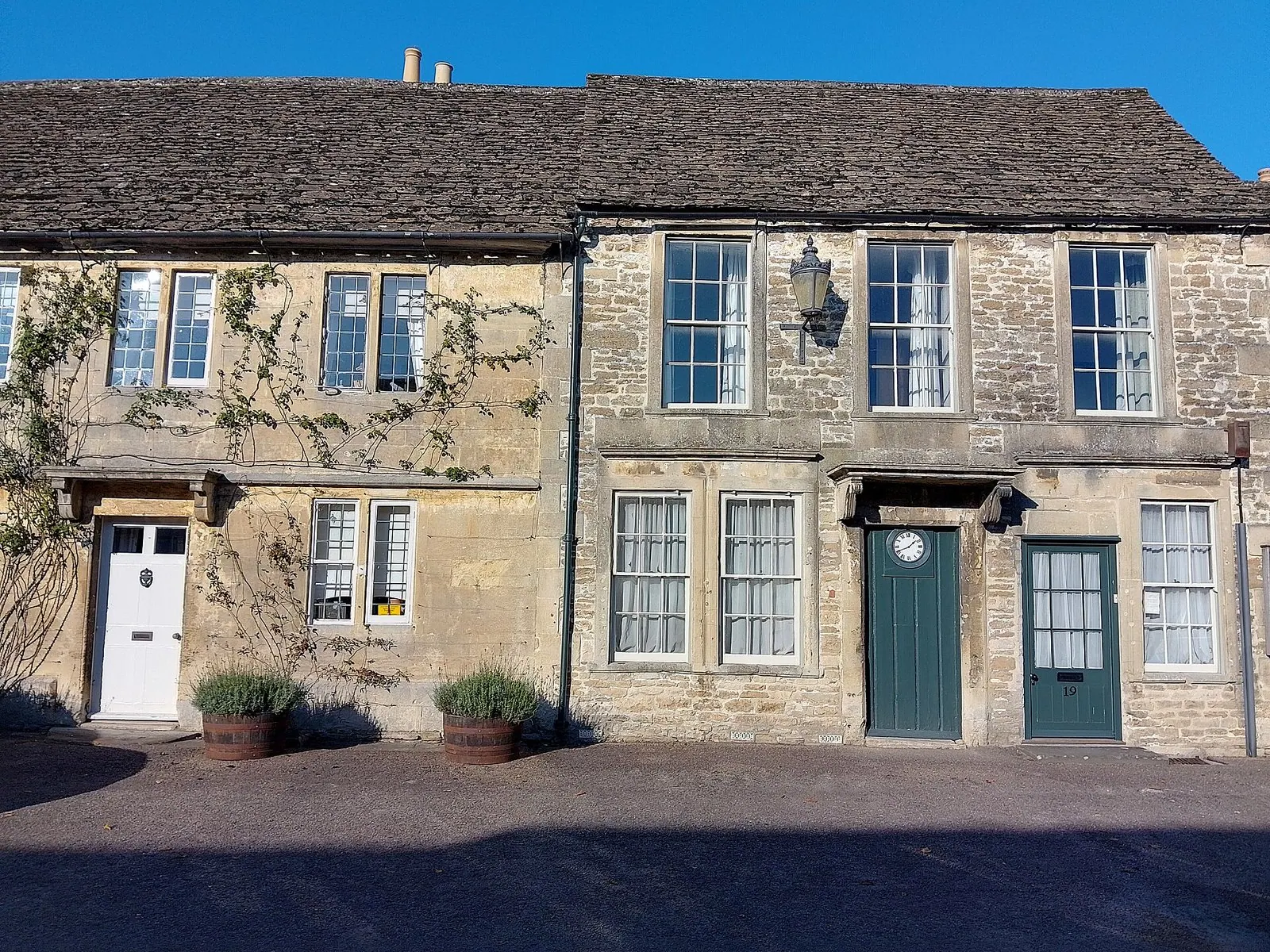
Four old streets of timber-framed cottages, a medieval tithe barn (a large old barn) and a ford, all cared for by the National Trust. Beside them stands the abbey where Fox Talbot made the first photographic negative in 1835. The village streets are free to walk.
Don’t miss
A village laid out on a grid
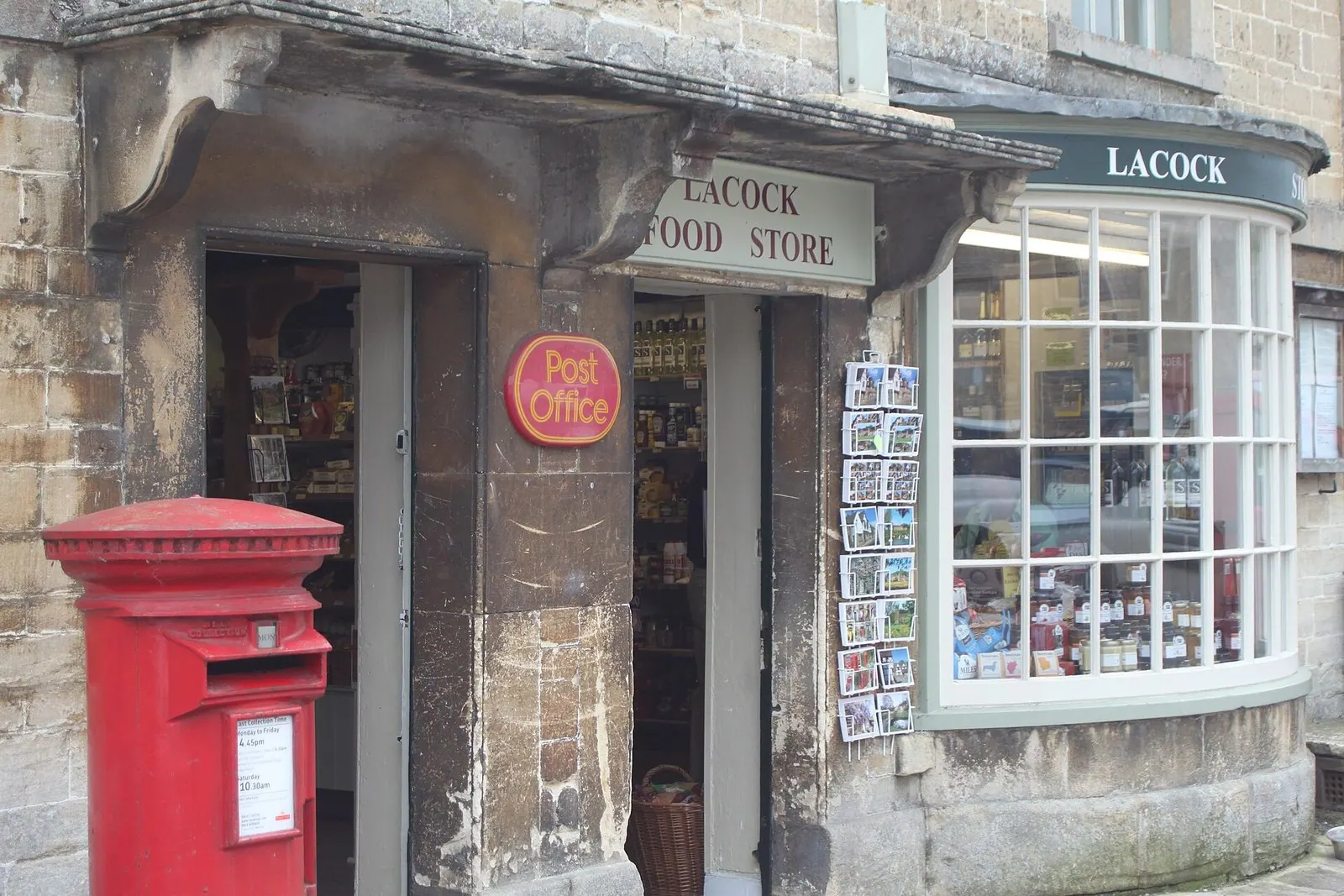
The window of the old shop at 2 High Street, and the 14th-century tithe barn.
Your route
The four village streets
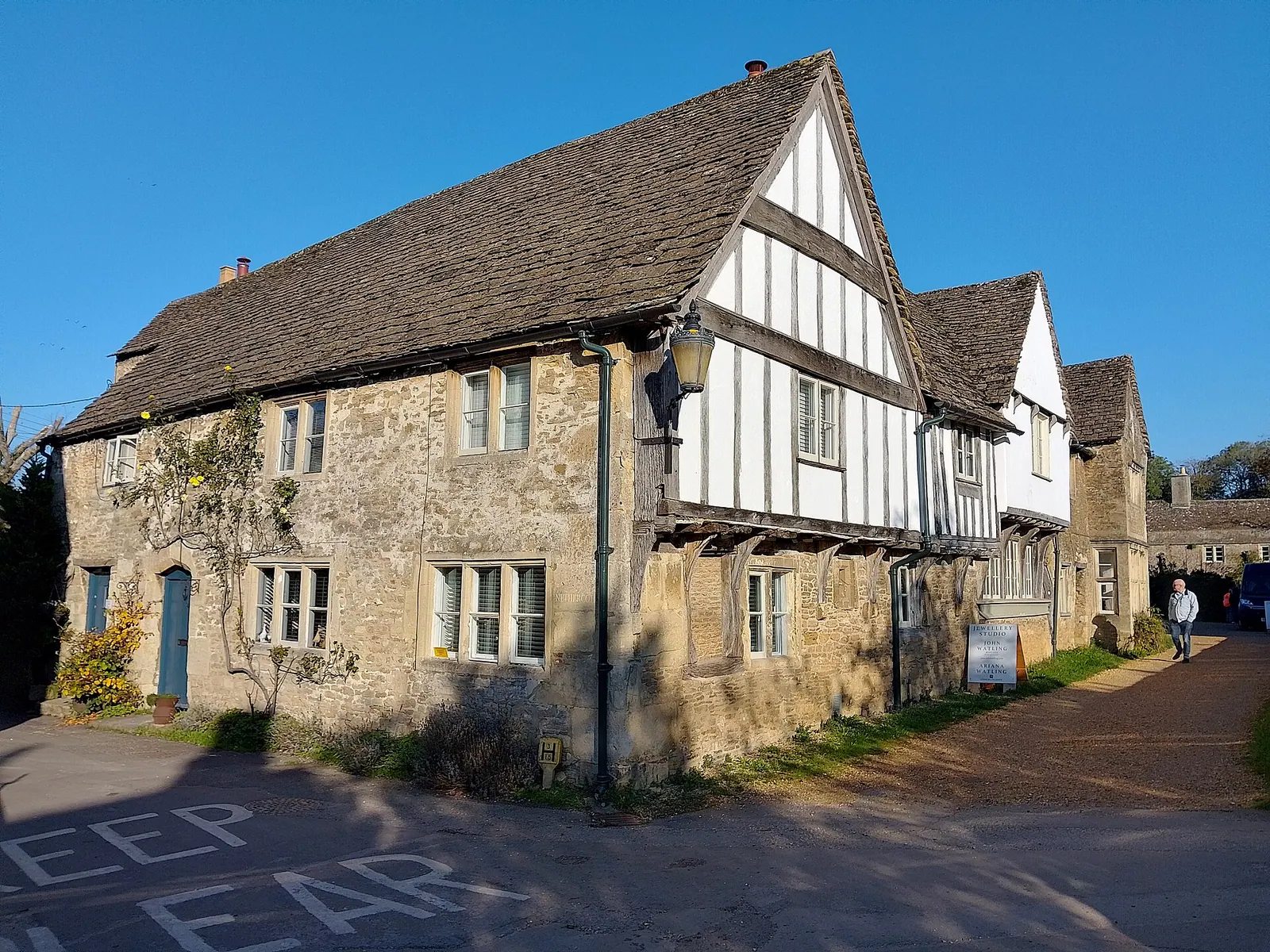
Timber-framed cottages, small shops, pubs and a bakery along a medieval grid of streets.
The shop window at 2 High Street
A shop window arranged in the style of the early 1900s by Miss Butler, the last shopkeeper, and left untouched since.
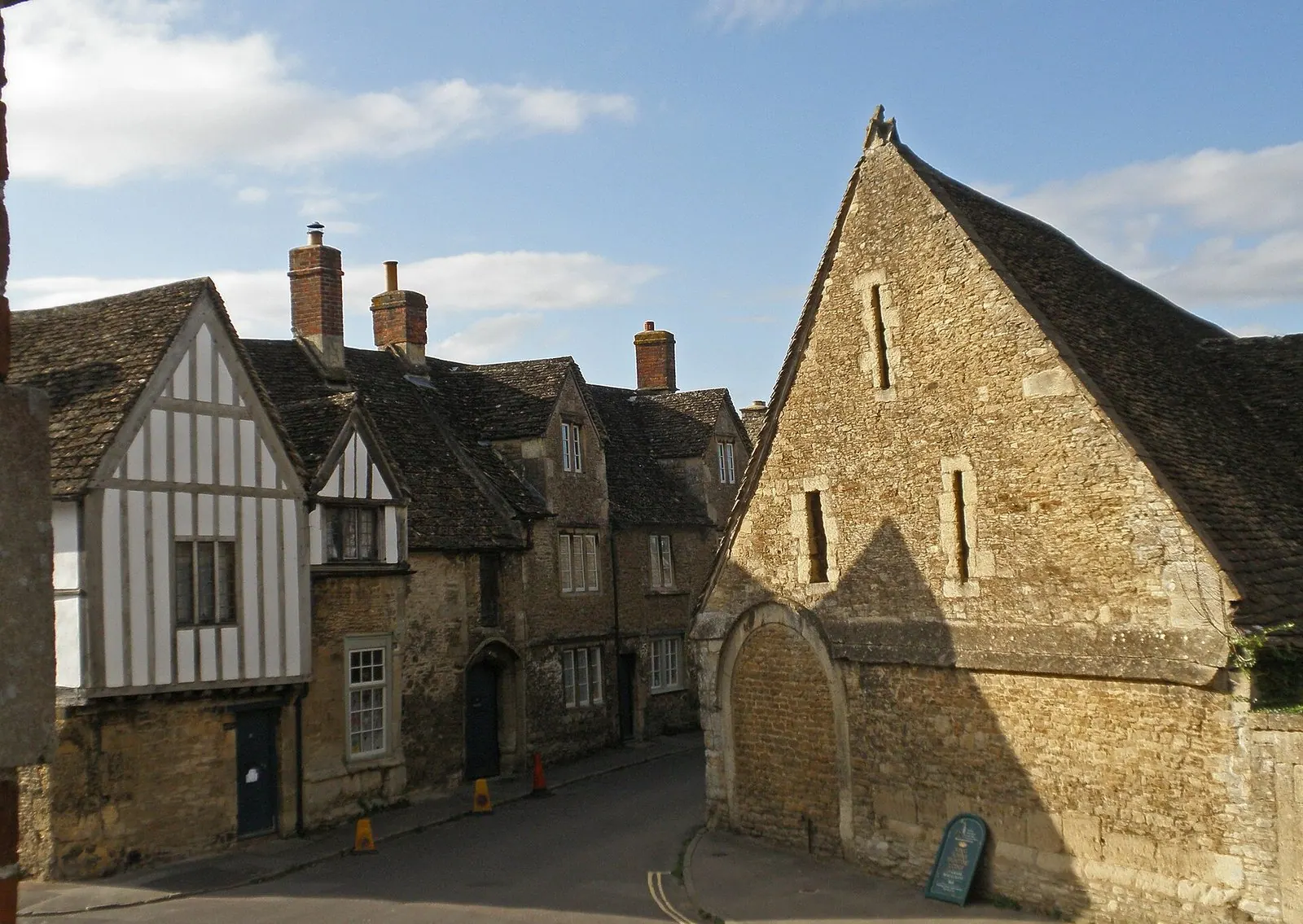
The medieval tithe barn
A medieval barn from the 1300s, standing in the village.
Film and TV locations
The abbey’s cloisters stood in for parts of Hogwarts in two Harry Potter films, and the village’s timber-framed houses have appeared in Pride and Prejudice (BBC, 1995) and Cranford.
Lacock Abbey and its cloister
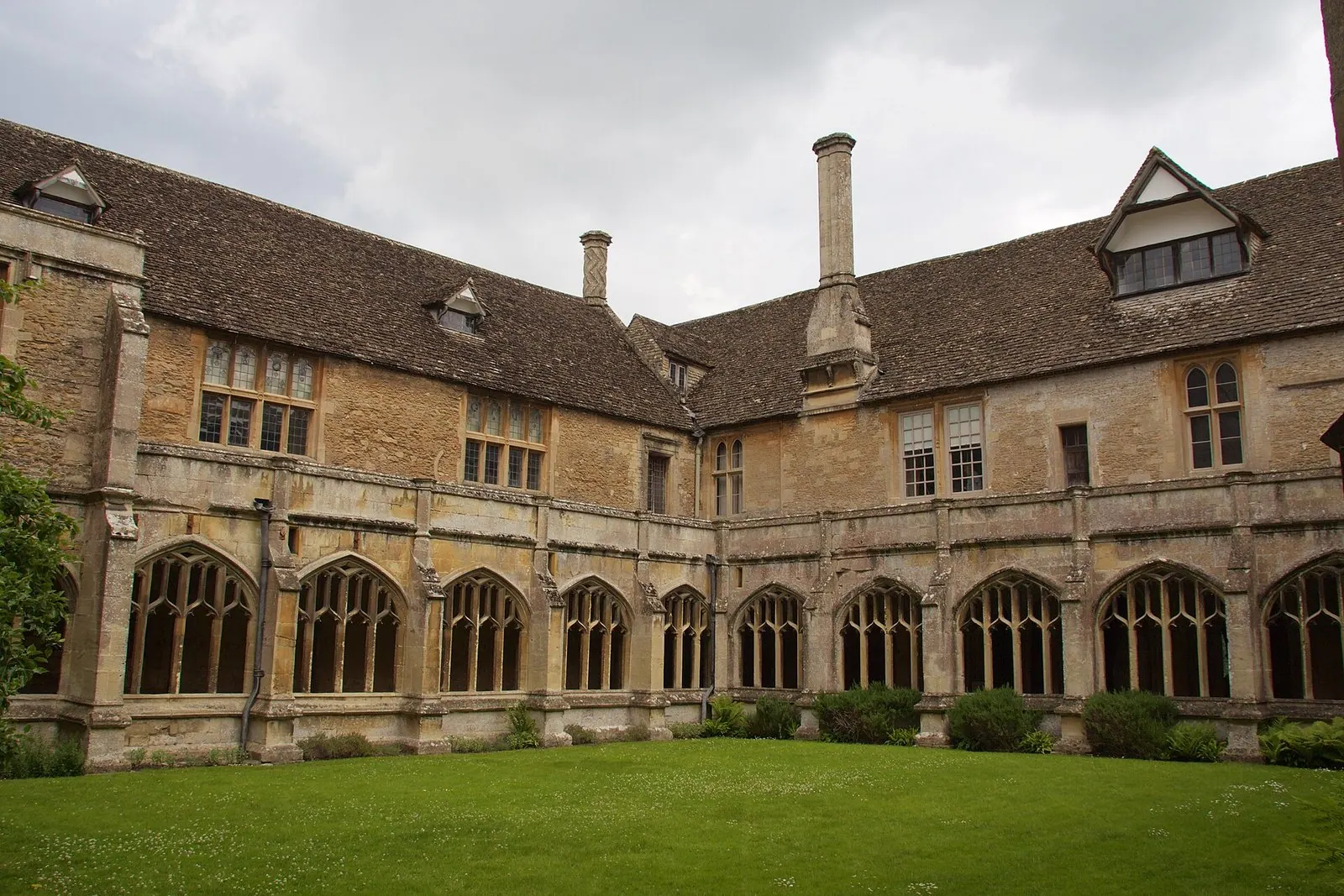
A country house with monastic roots and an original medieval cloister, once home to Fox Talbot.
The Fox Talbot Museum
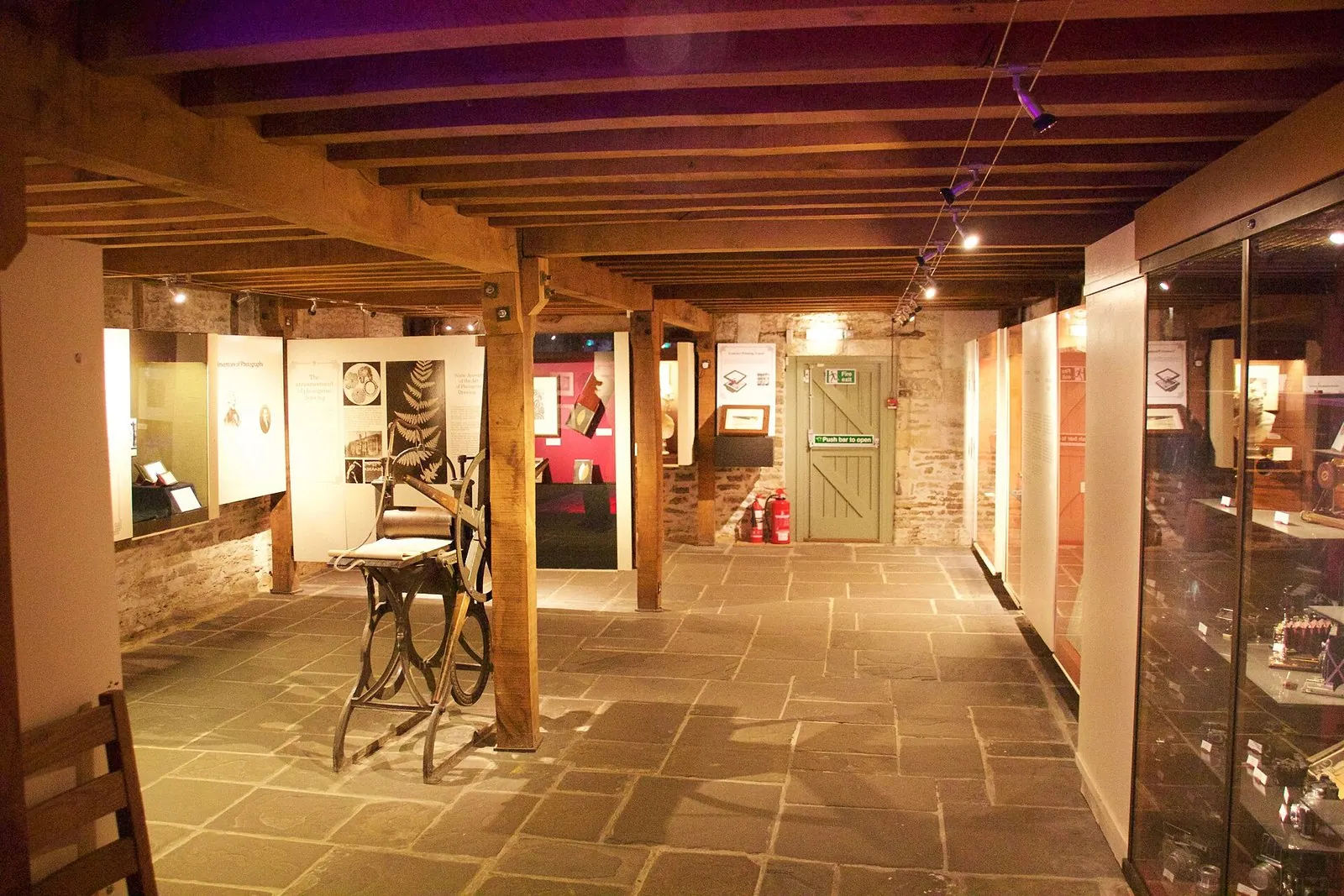
Early cameras and objects from the birth of photography, in a 16th-century barn, plus changing exhibitions.
Toilets and food
The Stables Café in the village serves drinks, light lunches, cakes and ice cream, and there are shops, pubs and a bakery. Toilets are in the abbey courtyard and by the Stables Café.
Sources (6)
More days out from London
Each region has its own page, with every day trip to compare.
Ready to choose a tour?
See every Bath and Stonehenge day trip side by side.
Compare Bath and Stonehenge day trips
Spotted a change?
Opening times and prices change. Reply to the email this guide came in and tell us what you found.
Travelling with someone?
Forward the email, so they have the guide on their phone too.
Sources
Stonehenge
The Neolithic houses: what you are seeing
Bath
Jane Austen in Bath
The Roman Baths
Castle Combe
Lacock
Photo credits (44)


 see beyond / the city
Day trips from London
The Bath and Stonehenge day guide
Bath and Stonehenge are in the same direction from London, west of the city, so one day trip can visit both. That is why they share one guide: you do not need to choose between them. Castle Combe and Lacock are small villages in the same direction, and some tours add them. There is one page for each of the five stops: what it is, what to see, what fits in the time you have, and where to find toilets and food.
How to use this guide
- 1Check how long your tour gives you at each stop. Your tour’s page lists the stops and the time at each one.
- 2On the stop’s page, tap how long your tour stops there: the route shows what fits.
- 3Set a phone alarm 10 minutes before you need to be back at the bus.
Inside
Page
seebeyondthecity.com/london/bath-stonehenge/
see beyond / the cityBefore you arrive · read this on the way
Bath and Stonehenge in two minutes
One honey-coloured stone for a whole city
Bath is built of Bath stone, an oolitic limestone (a rock made of tiny round grains) laid down in a shallow sea in the Jurassic period. The International Union of Geological Sciences says it weathers to an attractive honey colour. Its use across the city gives Bath a united look.
Look for: The warm cream-to-honey colour of the Royal Crescent, the Circus and the Abbey.
Why the water in Bath is hot
Visit Bath says the hot springs deliver over one million litres of mineral-rich water every day. Bath is the only place in the UK where the mineral water comes out hot. Rainwater probably enters the ground through limestone to the north, west and south of the city.
Look for: The steam rising from the Great Bath at the Roman Baths.
Two kinds of stone at Stonehenge
English Heritage says there are two types of stone at Stonehenge. The large sarsens most likely came from West Woods, near Marlborough, weighing 25 tons each on average. The smaller bluestones all came from the Preseli Hills in south-west Wales.
Look for: The tall grey sarsens of the outer ring, and the smaller stones inside them.
A little history
- About 2500 BC
The stones are raised
English Heritage says the stone circle at Stonehenge was built in the late Neolithic period, about 2500 BC, after an earlier ditch-and-bank monument. It was changed over about 1,500 years.
- 1st century AD
The Romans find the springs
The Romans founded a town at Bath in the 1st century AD and used the natural hot springs as a thermal spa. Their temple and baths still lie at the heart of the city.
- 973
A king is crowned in Bath
King Edgar was crowned King of All England in Bath on Whitsunday in 973. The service was put together by Dunstan, Archbishop of Canterbury, and a window in Bath Abbey shows the crowning.
- The 1700s
The Georgian city
In the 18th century Bath grew into an elegant spa city. UNESCO says its crescents, terraces and squares were planned to join architecture, town planning and landscape.
see beyond / the cityStonehenge
Ancient stones on an open plain
Why stop here
Leave the city streets for wide grassland and a ring of giant stones. A visit starts at the visitor centre, with its exhibition and rebuilt Neolithic (Stone Age) houses. A shuttle bus then takes you out to the stones. It is an outdoor stop with big skies and little shelter, so it feels very different from a day in Bath.
Don’t miss
Stones brought from far away
The tall sarsens of the outer ring, with stone lintels across the top. Among them are the smaller bluestones, which can look bluish when wet.
The Stone Circle · 40 min here · in the entry ticketDon’t miss — The ring of tall sarsen stones with lintels across the top, and the smaller bluestones inside. A path goes all the way around the circle.
The great trilithons · 10 min here · in the entry ticket — Five trilithons, which are pairs of upright stones capped by a lintel, form a horseshoe inside the circle. The stones are joined like timber, with pegs and sockets.
The Heel Stone · 10 min here · in the entry ticket — A large stone that has not been shaped, standing outside the circle where the Avenue meets the ancient earthwork. Seen from the centre of the circle, the midsummer sun rises beside it.
The exhibition and the 5,500-year-old man · 30 min here · in the entry ticket — More than 250 objects found in the landscape, such as jewellery, pottery and tools. There is also a reconstructed face of a man who lived here 5,500 years ago.
The Neolithic houses · 20 min here · in the entry ticket — Full-size copies of Stone Age homes outside the visitor centre, with white chalk walls, thatched roofs and wooden furniture.
Burial mounds on the way · 30 min here · in the entry ticket — Bronze Age burial mounds beside the walking route between the visitor centre and the stones, with information panels along the way.
Allow at least 40 minutes here: the first stop is The Stone Circle.
English Heritage says the toilets are at the visitor centre, not at the stone circle. They include accessible, baby and adult change facilities. The visitor centre café serves grab-and-go hot and cold food, such as soup, pasties, sandwiches and salads. You can also picnic in the monument field.
see beyond / the city see beyond / the cityThe Neolithic houses: what you are seeing
Full-size Stone Age homes, built beside the visitor centre
Neolithic means New Stone Age, the time before metal tools. These houses are modern copies, but they follow real homes from about 4,500 years ago. Read this on the bus, then step inside and compare.
Based on real digs
Archaeologists dug at Durrington Walls in 2006 and 2007, a large ceremonial enclosure (a space marked out by a bank) just over a mile north-east of the stones. They found the remains of houses, and English Heritage built these copies from what they found.
Who lived there, and when
Radiocarbon dating (a test that measures the age of old material) showed the originals date from about 2500 BC, when the giant sarsen stones were being raised. So the people in the originals lived nearby while Stonehenge was being built.
How the copies were made
A team of 60 English Heritage volunteers built them from local materials: hazel-rod frames, wheat-straw thatch, and walls of chalk, hay and water. The work used over 20 tonnes of chalk and about 5,000 hazel rods.
A link to the builders
English Heritage says the houses help join the ancient stones to the people who lived and worked here. Volunteers show the builders’ skills, such as grinding grain with a quern (a hand stone mill) and making rope from rushes.
What to look for inside
The hearth
The fire's smoke rises through the thatched roof. English Heritage says the white chalk walls and floor reflect sunlight and hold the fire's heat.
The beds
Beds stand around the walls. English Heritage says the furniture is wooden or woven.
Storage and shelves
Look for storage and shelving around the walls. English Heritage lists them with the beds and seating.
The single room
Each house is one room, five metres on each side, and English Heritage calls it bright and airy.
see beyond / the city Bath
Georgian crescents, the Abbey and Jane Austen
Why stop here
Bath is a city day on foot. The Romans built baths and a temple over its hot springs. Georgian (1700s) builders later laid out grand squares and crescents (curved rows of houses) on the hills around the centre. The Roman Baths and the Abbey stand side by side in the middle.
Don’t miss
A whole city on the World Heritage list
The golden stone of the terraces on the hills around the centre, set among green slopes.
Bath Abbey · 30 min here · own ticket — Ladders of angels on the West Front outside, and inside a fan-vaulted ceiling and a window showing King Edgar’s crowning in 973.
Pulteney Bridge · 10 min here · free — A Palladian bridge over the River Avon with shops built along both sides, and a weir below it.
The Circus · 10 min here · free — A ring of three curved Georgian terraces, begun by John Wood the Elder in 1754 and finished by his son, with three streets leading into it.
The Royal Crescent · 15 min here · freeDon’t miss — Thirty matching Georgian houses in one sweeping curve, looking out over a lawn and park.
The Jane Austen Centre · 60 min here · own ticket — An exhibition on Jane Austen’s life in Bath, with character actors, and a Regency tea room on the second floor.
Has a page of its own: The Roman Baths (90 min, page 7)
Yes. The Abbey sells a ticket that includes its Discovery Centre, online or at the Welcome Desk. Last entry is 30 minutes before closing. The listed Sunday hours are short and in the afternoon.
Yes. Bath and North East Somerset Council lists city centre public toilets at Charlotte Street Car Park (7 am to 8 pm) and Shaftesbury Road (7 am to 6 pm), and in Parade Gardens (7 am to 4 pm). The council’s page was checked on 30 October 2026.
The Roman Baths website says its Pump Room Restaurant, next to the Roman Baths, serves a Morning Bakery and Brunch and a Jane Austen Afternoon Tea every day, with the spa water to taste from the fountain.
see beyond / the city see beyond / the cityJane Austen in Bath
Five years in the city, two novels set there
Jane Austen lived in Bath from 1801 to 1806 and wrote very little there. Yet all six of her novels mention Bath, and two of them, Northanger Abbey and Persuasion, are set partly in the city.
Why the Austens moved to Bath
In 1801 her father, Rev. George Austen, retired. Jane, her parents and her sister Cassandra left their Hampshire home for lodgings in Bath. Her father died there in January 1805, and the women then depended on Jane’s brothers for money. Jane left Bath in 1806.
What Bath gave her writing
Visit Bath, quoting the Jane Austen Centre, says Bath was a constant source of inspiration. Jane went to balls and concerts, and her output while she lived there was small. It adds that she remembered her time in Gay Street fondly.
Published after her death
Neither Bath novel appeared in her lifetime. An early version of Northanger Abbey, then called Susan, was sold in 1803 but not printed. Jane died in July 1817, aged 41. Both novels were published that December, the first time her name was given as the author.
Bath in the two novels
In Northanger Abbey, Catherine Morland visits Bath and spends her mornings in the Pump Room. In Persuasion, Anne Elliot and Captain Wentworth find their love again there, and Visit Bath points to Gravel Walk and Union Street.
Austen places you may pass anyway
4 Sydney Place
The Austen family home in Bath, from 1801 to 1804.
25 Gay Street
After her father died, the family lodged here. The Jane Austen Centre is a few doors away, at 40 Gay Street.
The Pump Room
In Northanger Abbey, Catherine and her hosts walk up and down here each morning, looking at everybody.
The Assembly Rooms
Visit Bath says it gave Jane and her characters great entertainment. The National Trust says it is closed for renovation and hopes to reopen in 2027.
The Royal Crescent
On a Sunday in Northanger Abbey, Catherine and Isabella hurry here from the crowded Pump Room for fresh air.
see beyond / the city The Roman Baths
Roman Britain up close
Why stop here
Step below the street to the heart of Roman Bath. Walk above the steaming Great Bath and see the spring where hot water still rises. Find a temple, carved stone and objects thrown to a goddess. It is a ticketed museum visit with its own time slot.
Don’t miss
Messages to a goddess
The curse tablets and the Beau Street Hoard in the museum galleries.
The Great Bath, from terrace to pool · 20 min here · in the entry ticket — Your first view of the steaming Great Bath, from the terrace, framed by statues of Roman emperors carved in 1894. Then walk round the pool itself, where the Romans walked.
The Sacred Spring · 10 min here · in the entry ticket — The chamber where hot water rises, with the King’s Bath above it and a statue of King Bladud, the legendary founder of Bath.
The temple pediment and Minerva’s head · 10 min here · in the entry ticket — The great carved pediment with its Gorgon’s head, and the gilded bronze head of the goddess Sulis Minerva.
The curse tablets · 10 min here · in the entry ticketDon’t miss — Rolled lead and pewter sheets with messages to the goddess, some of Britain’s earliest prayers.
The Roman characters · 15 min here · in the entry ticket — Costumed Romans, such as a soldier or a stonemason, based on real people who lived here 2,000 years ago.
No. Time in Bath and entry to the Roman Baths are separate. On the exact tour page, look for a Roman Baths visit and whether the entry ticket is included. If you buy your own, book a time slot at least a day ahead. Tickets often sell out in summer.
The Roman Baths say there are two sets of toilets. One is near the main reception, before you buy your ticket. The other is at the very end of the visit. Only water may be taken inside, so eat before or after. Their page names the Pump Room Restaurant as a favourite for afternoon tea.
see beyond / the city Castle Combe
A short walk in a stone village
Why stop here
Castle Combe is a quiet village for a short, slow walk. Old stone cottages line one small street that runs from a medieval market cross down to a bridge over the By Brook. It is a place for looking and taking photographs, not a day of shops or sights.
Don’t miss
A village that became a film set
The bridge over the By Brook and the view back up the street, the scene that cameras keep returning to.
The honey-coloured cottages · 15 min here · free — Rows of old stone cottages in a wooded valley. The parish council says the village has changed very little over the centuries.
The bridge over the By Brook · 10 min here · freeDon’t miss — The stone bridge at the bottom of the street, with the brook below and the cottages rising behind it.
The medieval market cross · 5 min here · free — A stone cross under a pyramid-shaped tiled roof in the market place, carved with roses and shields.
St Andrew’s Church · 10 min here · free — A church with a faceless clock, fan vaulting in the tower, and the tomb of a knight who died in 1270.
The old buildings round the market place · 10 min here · free — Houses and inns from the 1500s and 1600s, such as the Old Court House, built early in the 1500s, and the White Hart.
Public toilets are just south of the bridge over the By Brook. There are no rows of gift shops. The parish council names the Castle Inn, the White Hart and the Manor House Hotel for lunch or dinner, and asks visitors to enjoy a cream tea. Book ahead if you plan to eat.
Early morning or late afternoon, and on weekdays. The parish council says spring and autumn are calmer than summer, and that early morning or late afternoon is calmer than the midday crowds. It says weekdays are better than weekends, and asks visitors to avoid bank holidays, when the car park is likely to be full.
see beyond / the city Lacock
Harry Potter, Pride and Prejudice, Downton Abbey, Wolf Hall, Cranford and The Wolfman
Why stop here
Four old streets of timber-framed cottages, a medieval tithe barn (a large old barn) and a ford, all cared for by the National Trust. Beside them stands the abbey where Fox Talbot made the first photographic negative in 1835. The village streets are free to walk.
Don’t miss
A village laid out on a grid
The window of the old shop at 2 High Street, and the 14th-century tithe barn.
The four village streets · 20 min here · free — Timber-framed cottages, small shops, pubs and a bakery along a medieval grid of streets.
The shop window at 2 High Street · 5 min here · freeDon’t miss — A shop window arranged in the style of the early 1900s by Miss Butler, the last shopkeeper, and left untouched since.
The medieval tithe barn · 10 min here · free — A medieval barn from the 1300s, standing in the village.
Film and TV locations · 20 min here · free — The abbey’s cloisters stood in for parts of Hogwarts in two Harry Potter films, and the village’s timber-framed houses have appeared in Pride and Prejudice (BBC, 1995) and Cranford.
Lacock Abbey and its cloister · 60 min here · own ticket — A country house with monastic roots and an original medieval cloister, once home to Fox Talbot.
The Fox Talbot Museum · 45 min here · own ticket — Early cameras and objects from the birth of photography, in a 16th-century barn, plus changing exhibitions.
The Stables Café in the village serves drinks, light lunches, cakes and ice cream, and there are shops, pubs and a bakery. Toilets are in the abbey courtyard and by the Stables Café.
see beyond / the city see beyond / the cityMore days out from London
Each region has its own page, with every day trip to compare.
Ready to choose a tour?
See every Bath and Stonehenge day trip side by side. seebeyondthecity.com/london/bath-stonehenge/#compare
The Cotswolds
Cotswold villages & market towns
Bibury · Bourton-on-the-Water · Stow-on-the-Wold
Up to about 153 km · 95 miles
Get the Cotswolds day guide
seebeyondthecity.com/london/cotswolds/
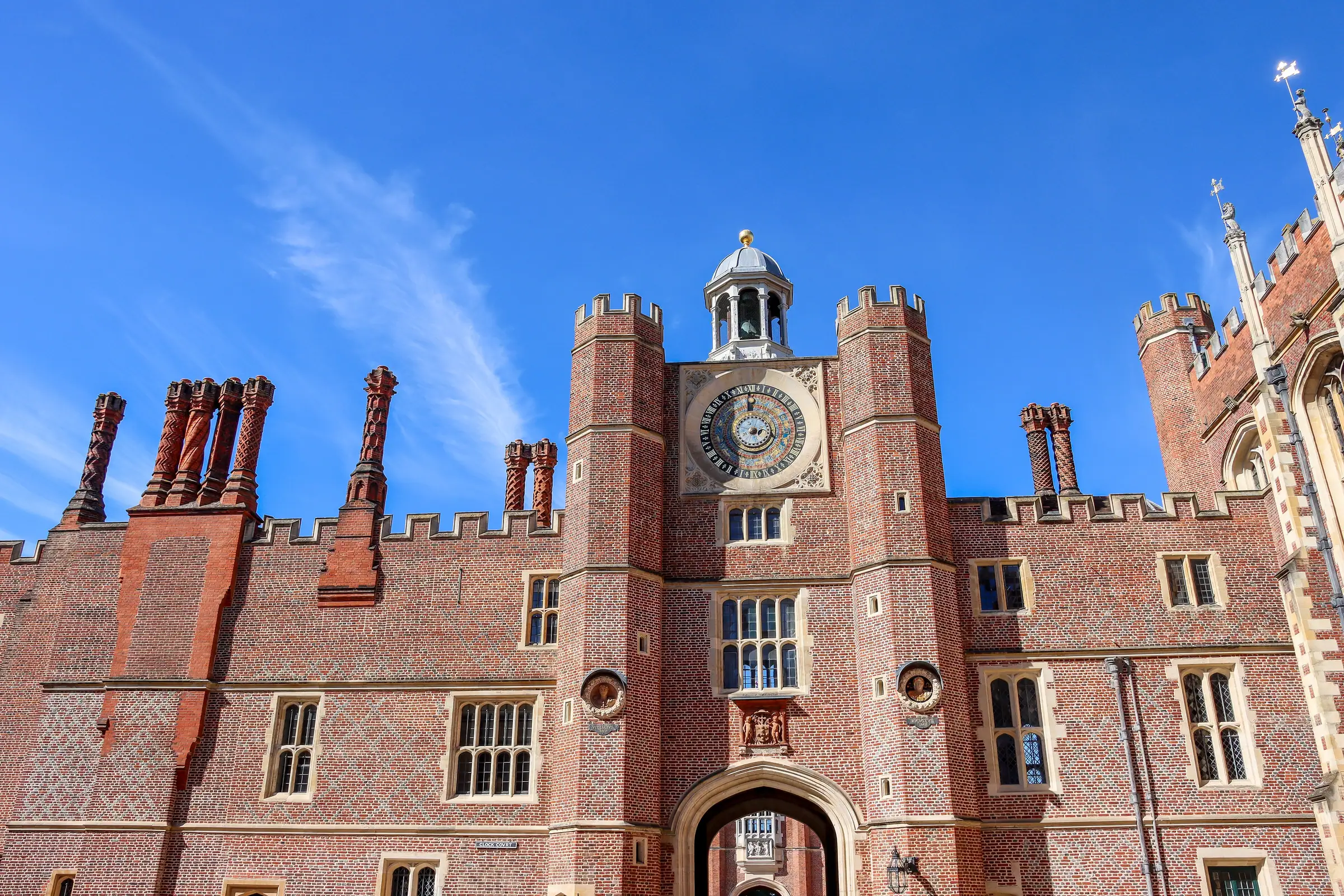
Hampton Court
Hampton Court Palace
Hampton Court Palace
Get the Hampton Court day guide
seebeyondthecity.com/london/hampton-court/
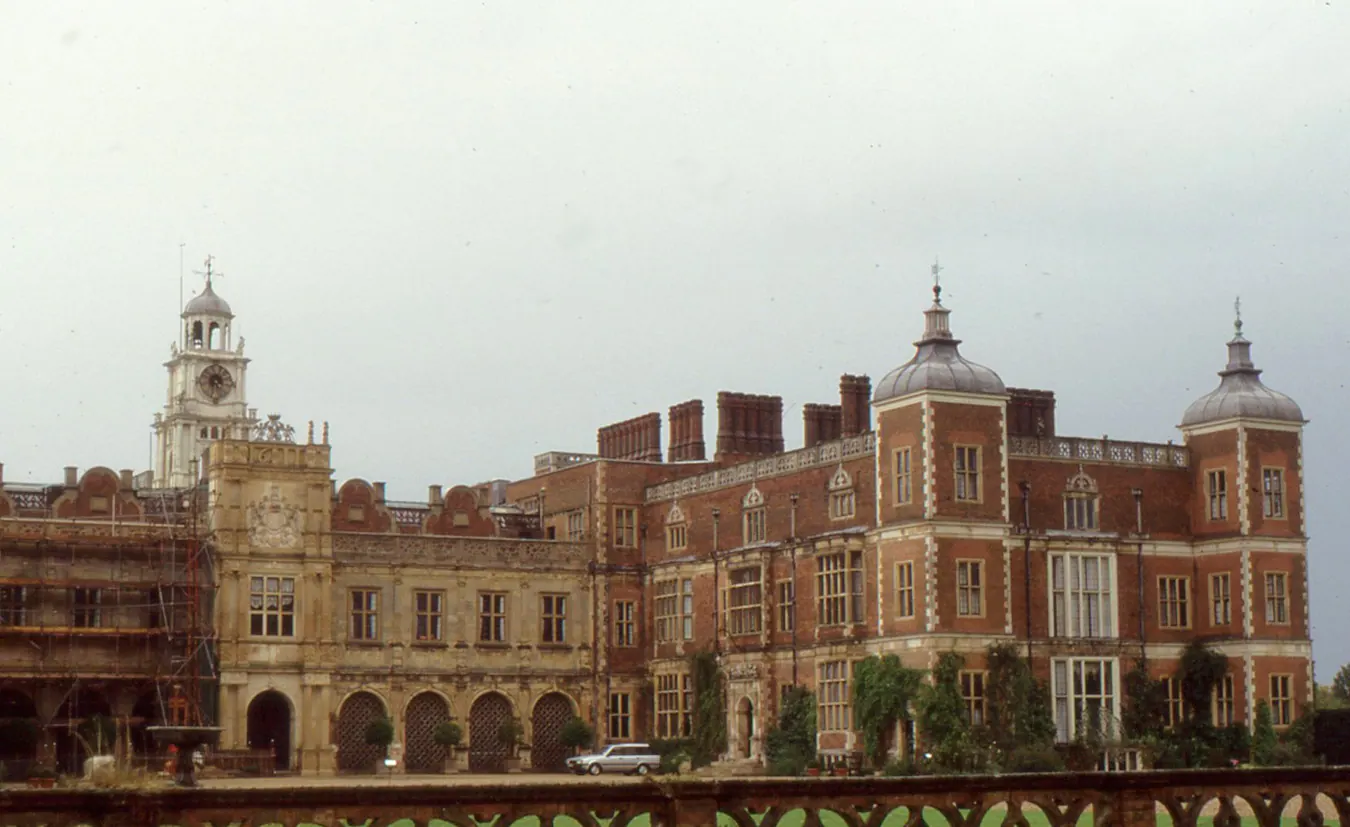
Hatfield
Hatfield House
Hatfield House
Get the Hatfield day guide
seebeyondthecity.com/london/hatfield/
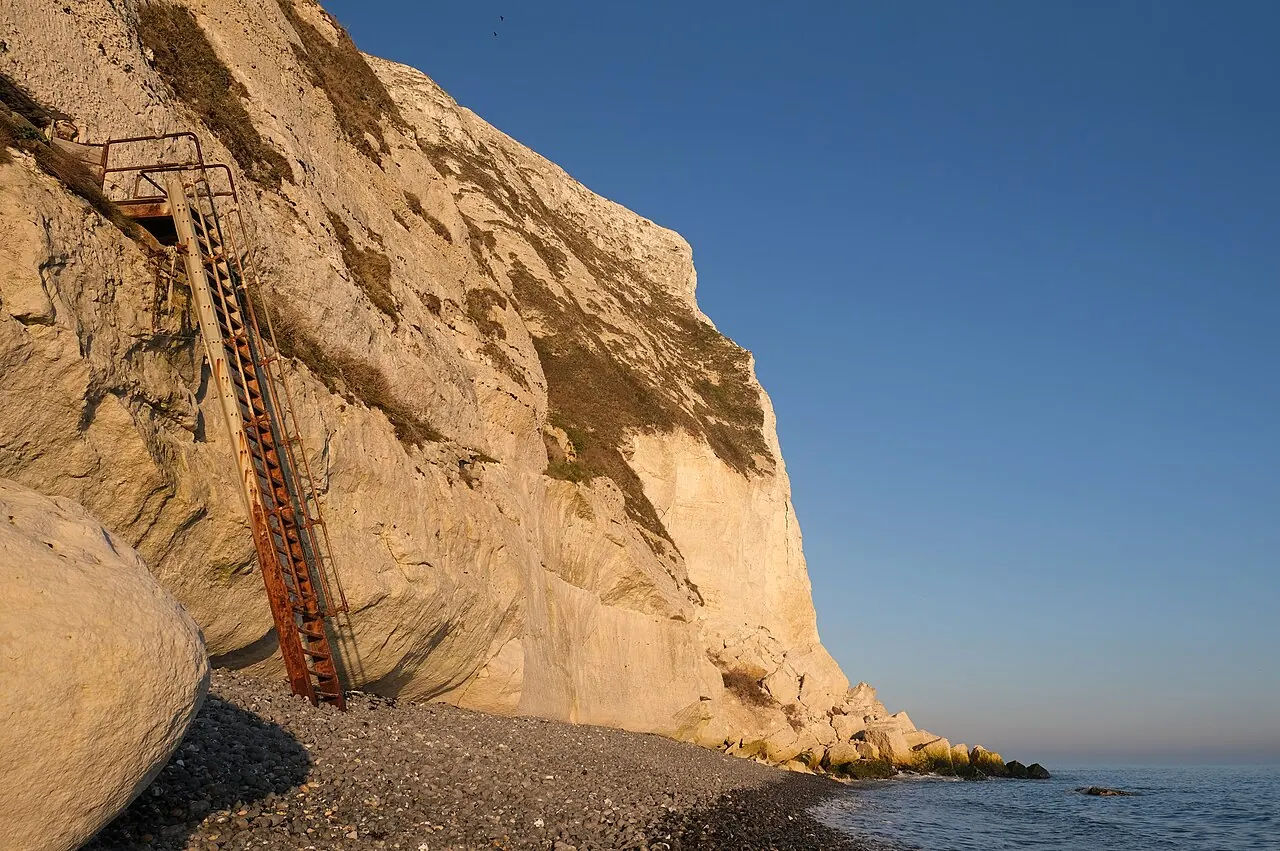
Kent
Cliffs, castles & Canterbury
White Cliffs of Dover · Canterbury · Leeds Castle
Up to about 120 km · 75 miles
Get the Kent day guide
seebeyondthecity.com/london/kent/
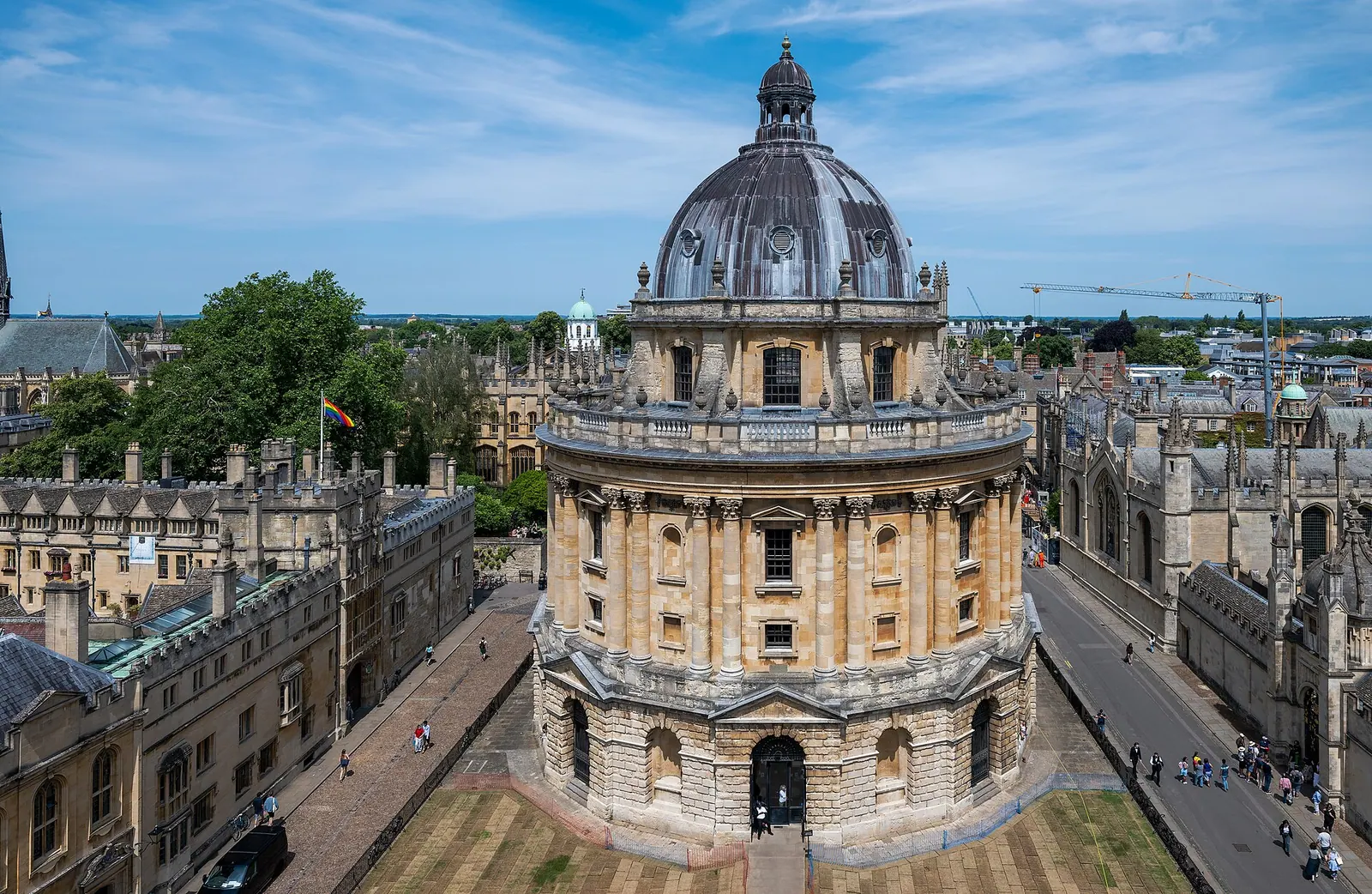
Oxford and Stratford
Oxford, Stratford & Warwick
Oxford · Stratford-upon-Avon · Warwick Castle
Up to about 163 km · 101 miles
Get the Oxford and Stratford day guide
seebeyondthecity.com/london/oxford-stratford/
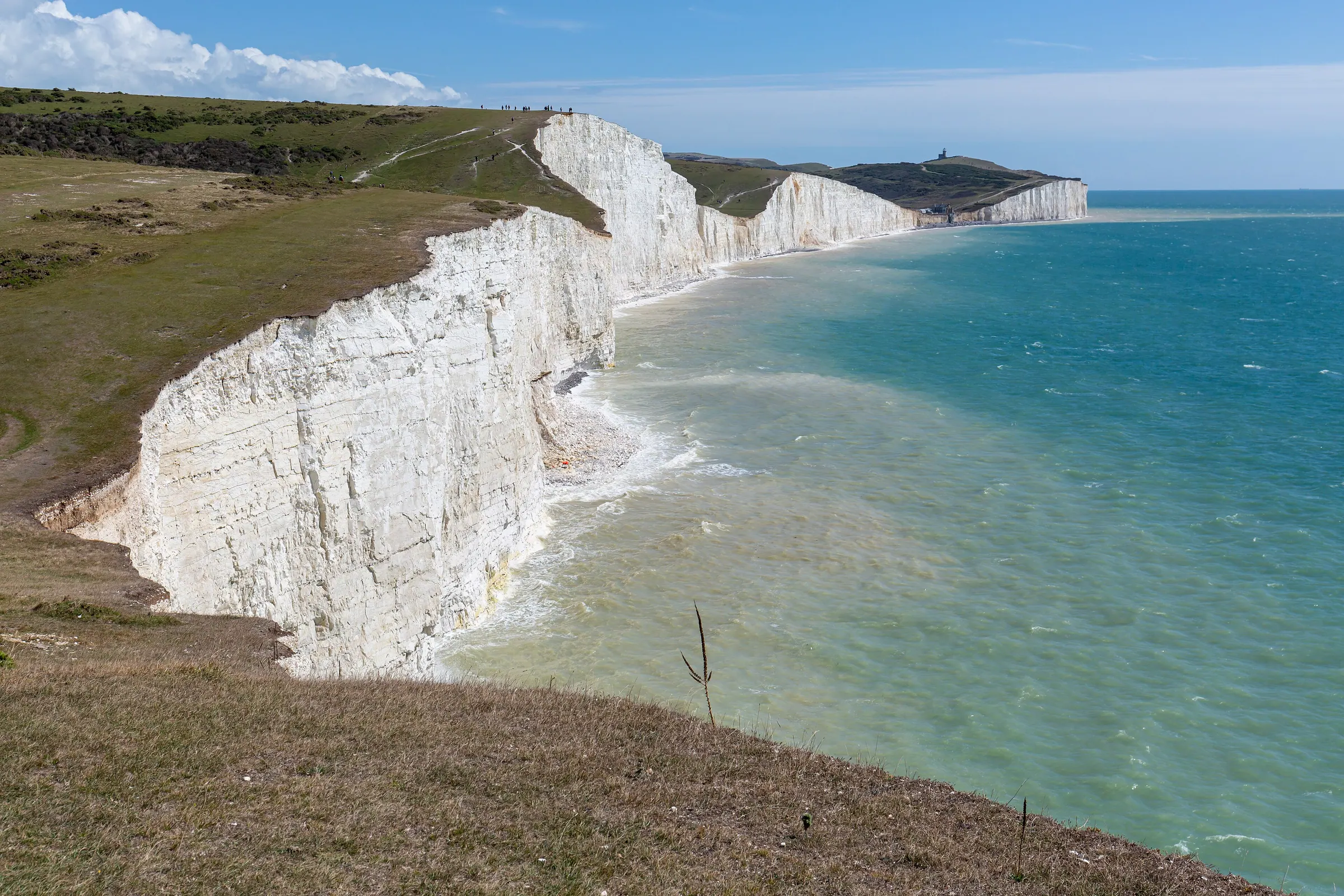
Seven Sisters and Brighton
Seven Sisters & Brighton
Seven Sisters · Brighton · Beachy Head
Up to about 121 km · 75 miles
Get the Seven Sisters and Brighton day guide
seebeyondthecity.com/london/sussex/
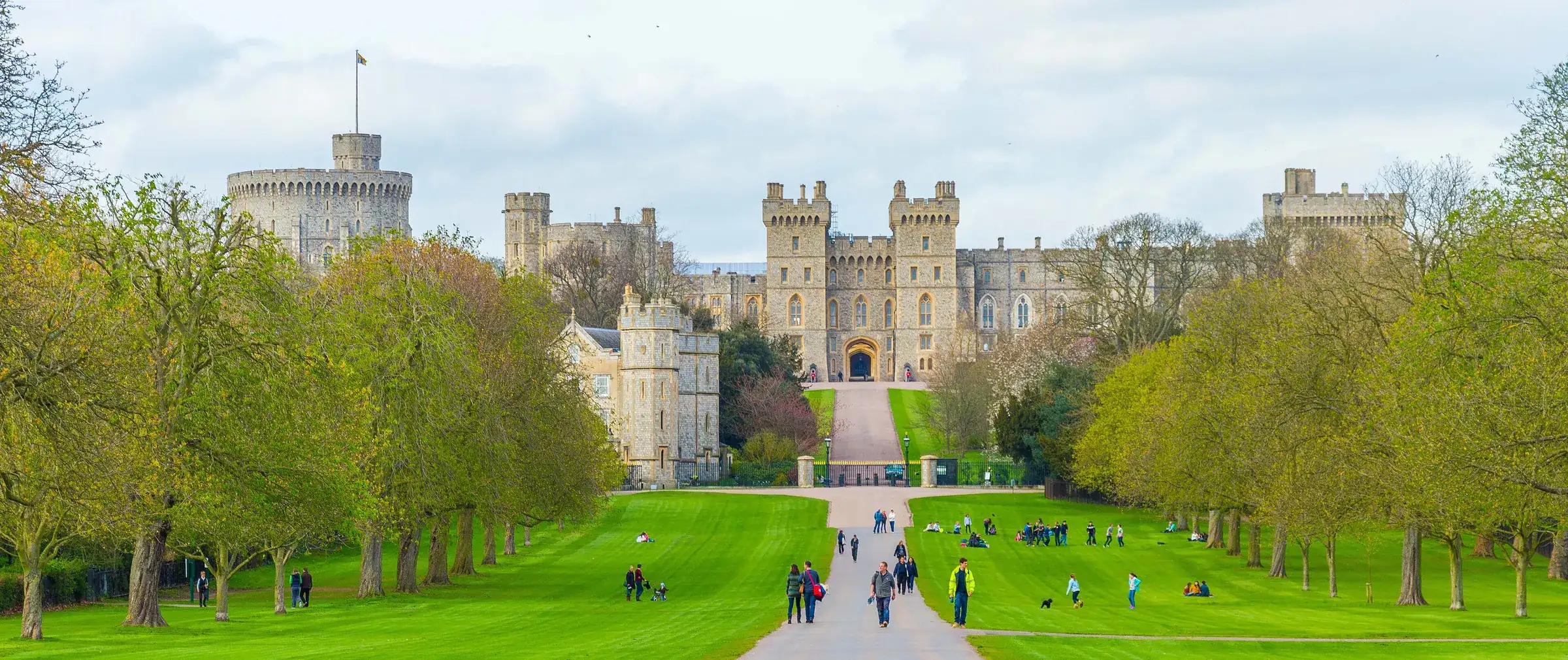
Windsor
Windsor Castle and royal Windsor
Windsor Castle · St George's Chapel · Windsor town
About 36 km · 22 miles
Get the Windsor day guide
seebeyondthecity.com/london/windsor/
Spotted a change?
Opening times and prices change. Reply to the email this guide came in and tell us what you found.
Travelling with someone?
Forward the email, so they have the guide on their phone too.
see beyond / the citysee beyond / the citySources
Stonehenge
English Heritage: building Stonehenge
English Heritage: Stonehenge questions and answers
English Heritage: Stonehenge glossary
English Heritage: Stonehenge exhibitions
English Heritage: Neolithic houses
The Neolithic houses: what you are seeing
Bath
No. 1 Royal Crescent: plan your visit
Historic England: Pulteney Bridge
Jane Austen in Bath
Visit Bath: a brief history of Jane Austen in Bath
see beyond / the cityPhoto credits