Day trips from London
The Kent day guide
One page for each of the five stops on Kent day trips: what it is, what to see, what fits in the time you have, and where to find toilets and food.
How to use this guide
- Check how long your tour gives you at each stop. Your tour’s page lists the stops and the time at each one.
- On the stop’s page, tap how long your tour stops there: the route shows what fits.
- Set a phone alarm 10 minutes before you need to be back at the bus.
Before you arrive
Kent in two minutes
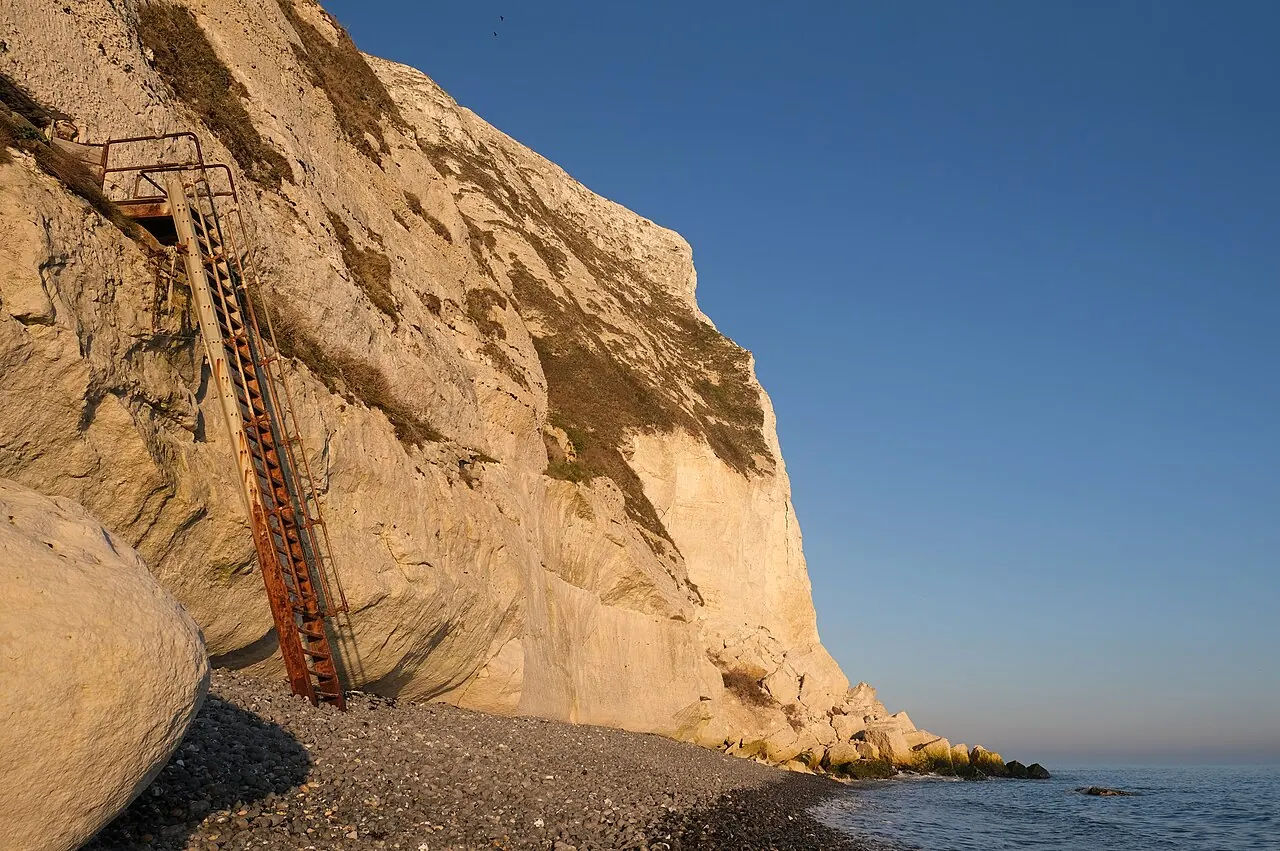
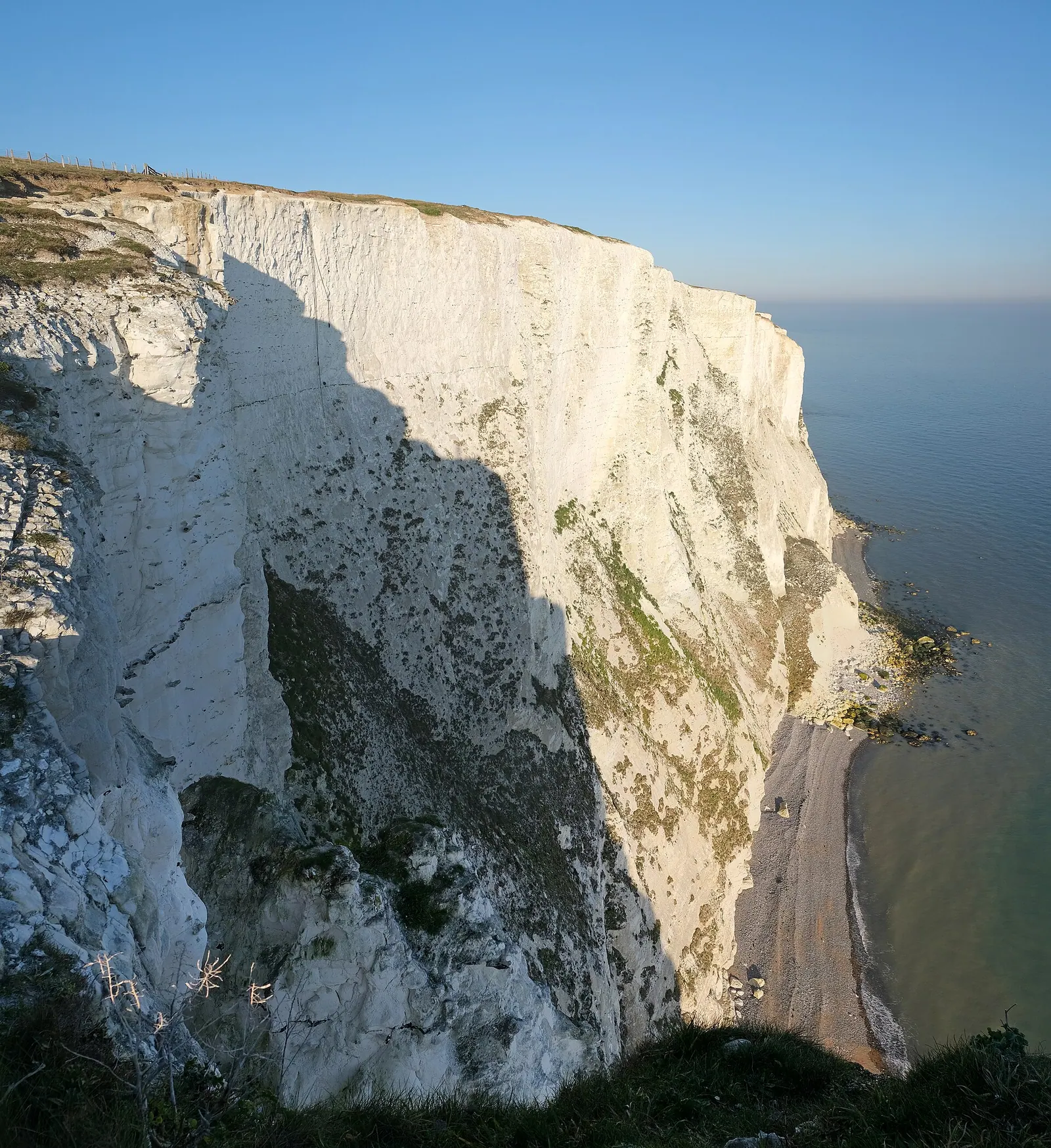
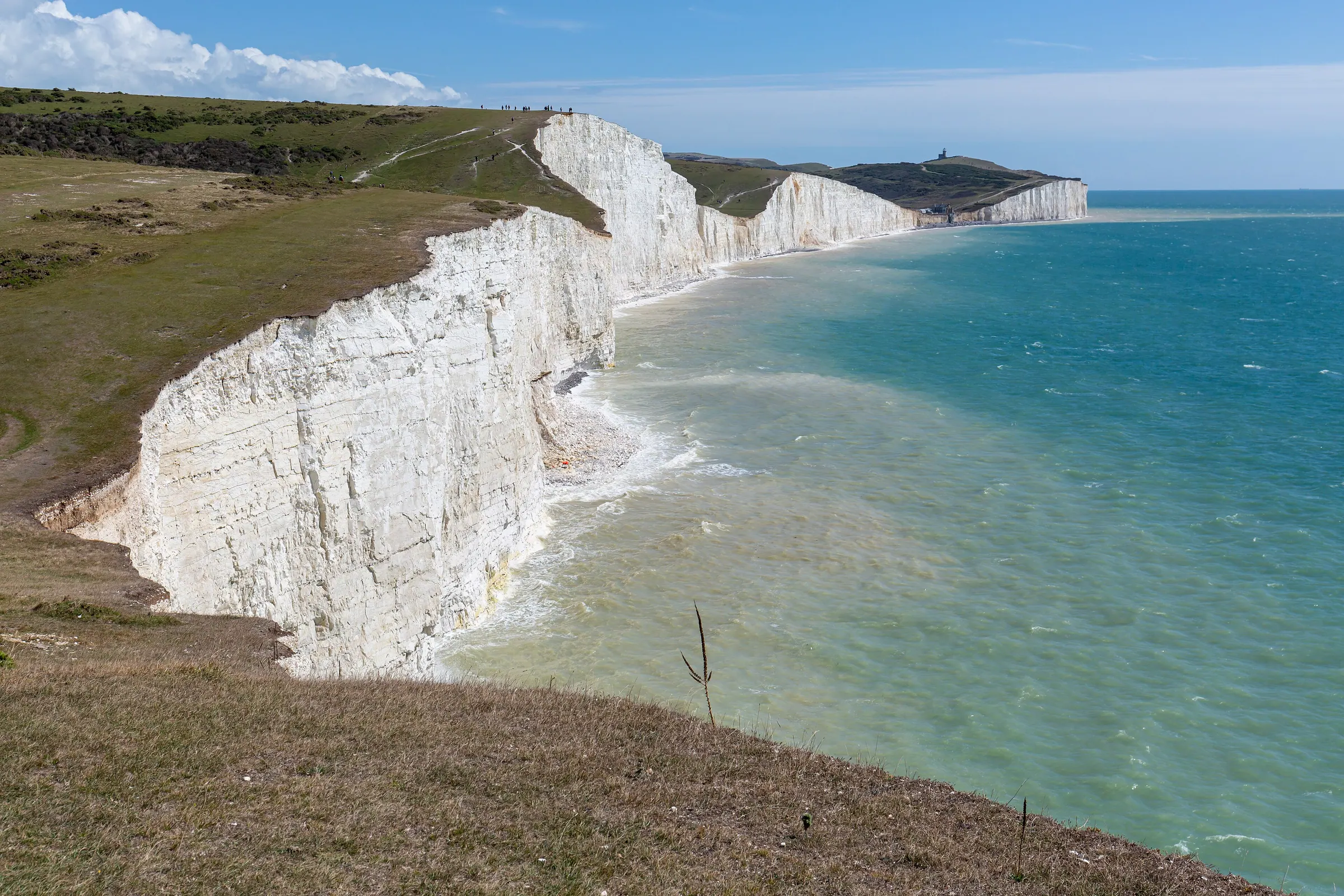
Why the White Cliffs are white
The cliffs are made of chalk, a soft white limestone. The National Trust says it formed from tiny green algae that lived in the sea. When they died, their remains sank to the seabed. Over millions of years the seabed rose above the sea.
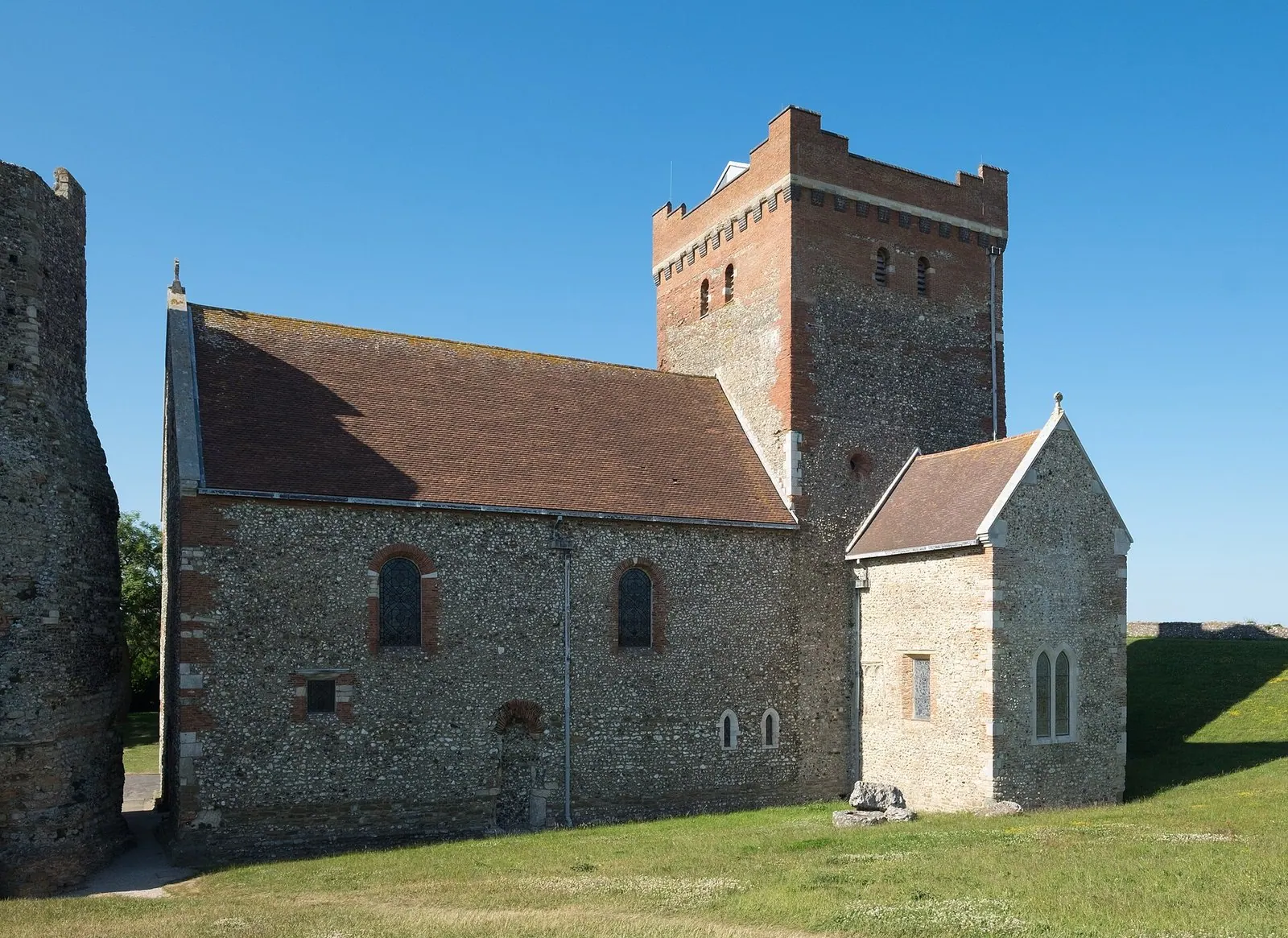
Flint, brick and tile in the villages
Under much of east Kent lies chalk, and in places the soil on top is clay full of flints. The Kent Downs landscape assessment says villages here were traditionally built of local flint, brick and tile. Many are little more than a church, a manor and some farm cottages.
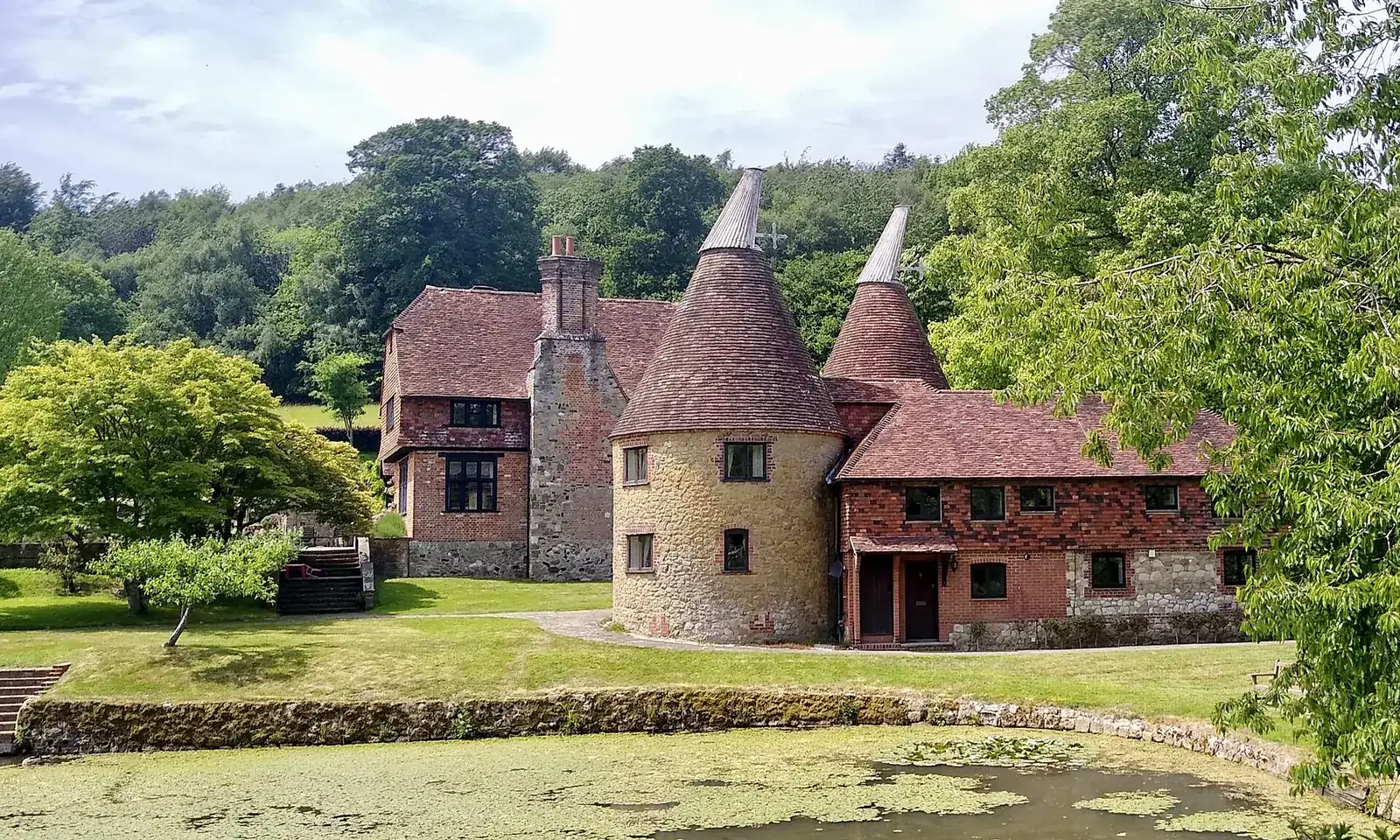
Oast houses and hop gardens
The Kent Downs assessment says east Kent was once a place of widespread hop growing. Oast houses, the buildings used for drying hops, still dot the countryside, although almost no hop gardens are in production there now.
A little history
- A very old story
The white horse
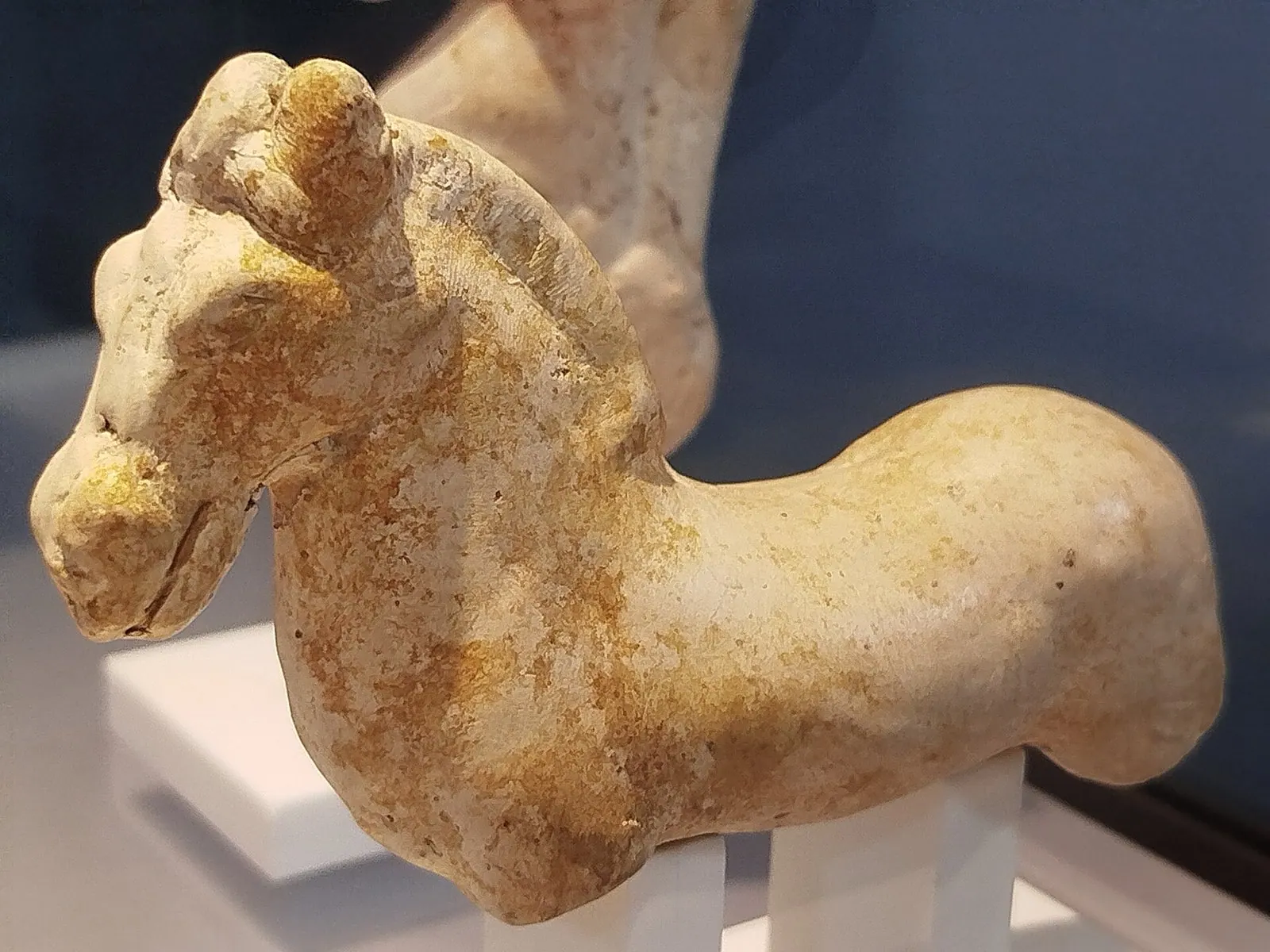
No one knows for sure where Kent’s white horse comes from. A famous story links it to Hengist and Horsa, but that is legend. The horse is still the county’s emblem today.
- 597
Augustine and Canterbury
St Augustine arrived in Kent in 597, sent by Pope Gregory the Great. He set up the first cathedral at Canterbury, and the Archbishop of Canterbury still has his seat there.
- 1066 (a legend)
Invicta, unconquered
Kent’s motto is Invicta, Latin for unconquered. A local legend says it began when the men of Kent made a deal with William the Conqueror. It is a story, not proven history.
- Today
The Garden of England
Kent is called the Garden of England because of its fruit orchards. The orchard fruit and juice are good things to taste while you are here.
Why stop here
The White Cliffs are cliffs of chalk (a soft white rock) beside the sea, with grass above them. This is the part of the day for looking at the view, walking outside and feeling far from London’s streets. You can walk above the coast and watch the sea (the English Channel) change in the light, and even a short visit gives you the view.
Don’t miss
Britain’s front door
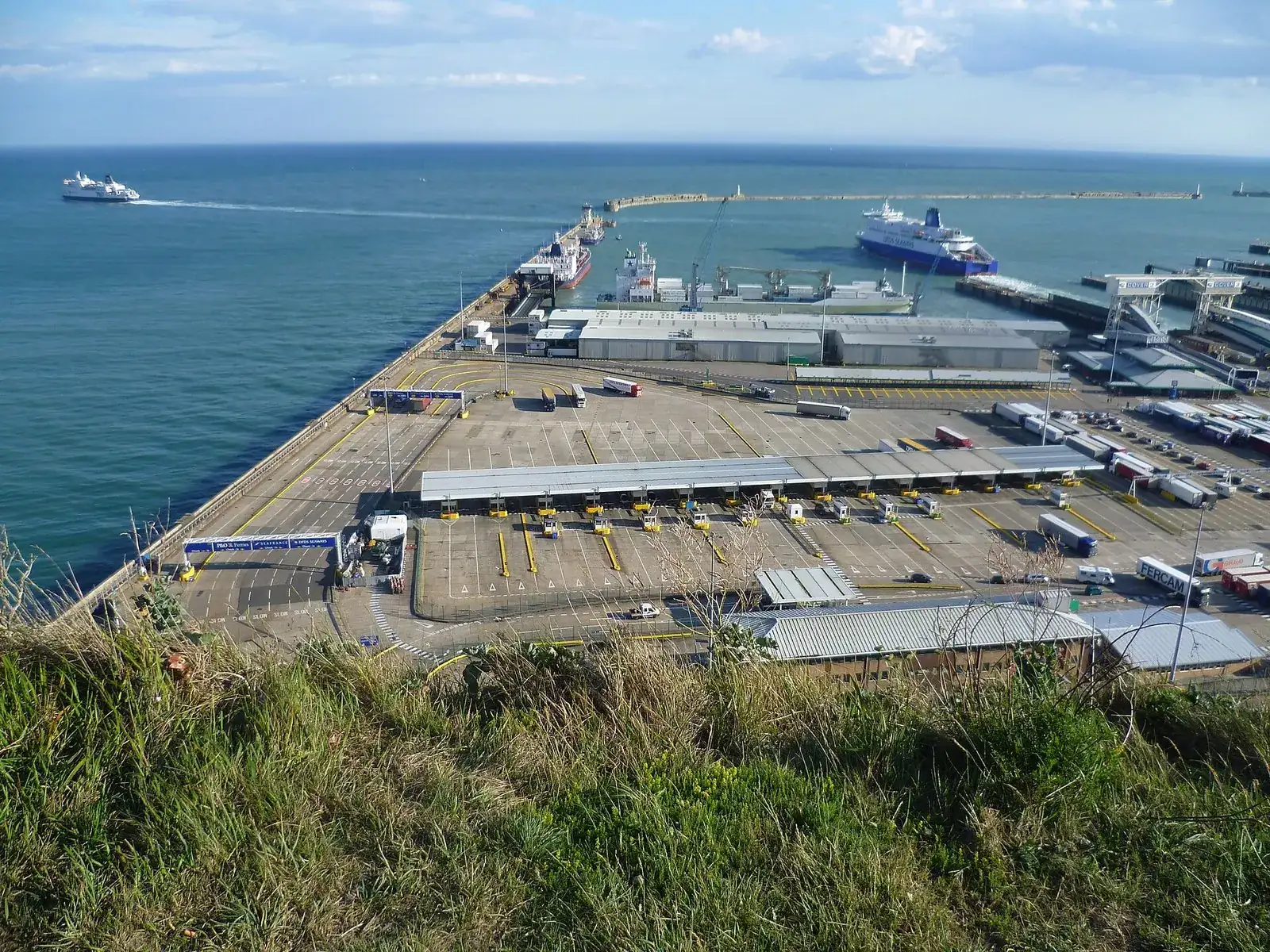
The French coast on the horizon (only on a clear day), the ferries in Dover Harbour, and Dover Castle on the hill behind it.
Your route
First viewpoint
Dover Harbour and its ferries below you, Dover Castle on the hill behind, and the French coast on a clear day.
Along the clifftop path
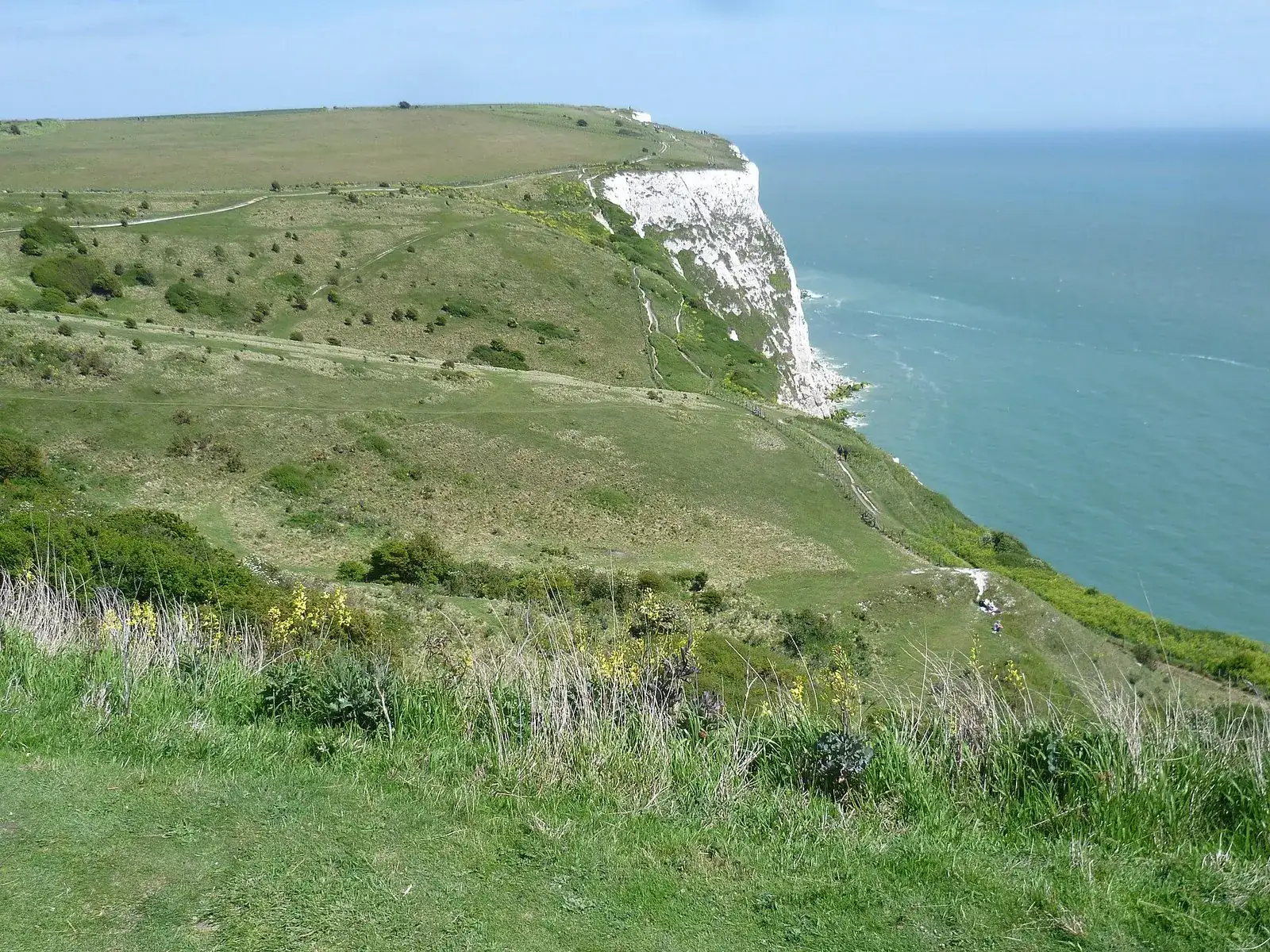
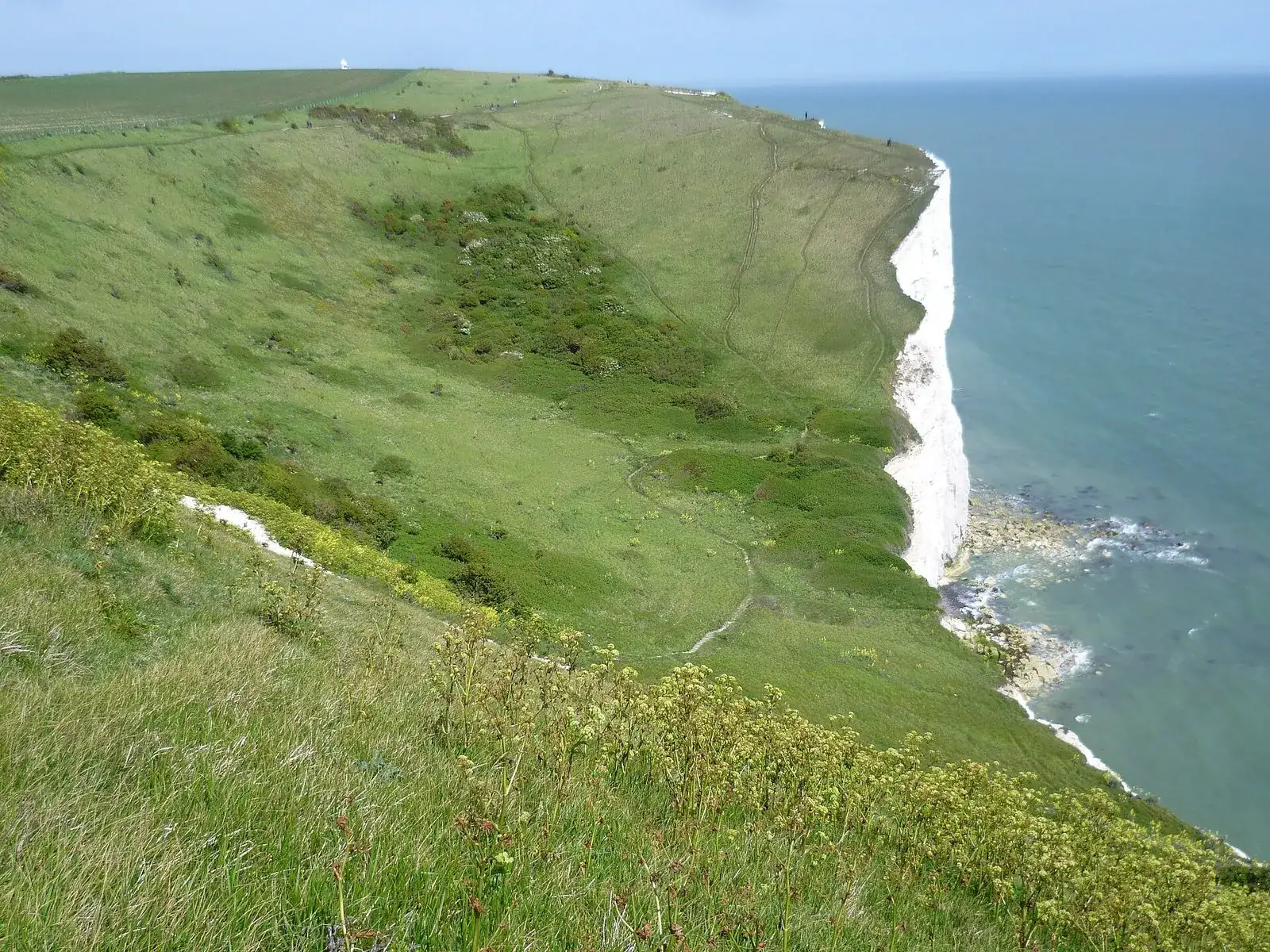
Open chalk grassland, grazing ponies and cattle, and in summer wild flowers and blue butterflies.
The Visitor Centre
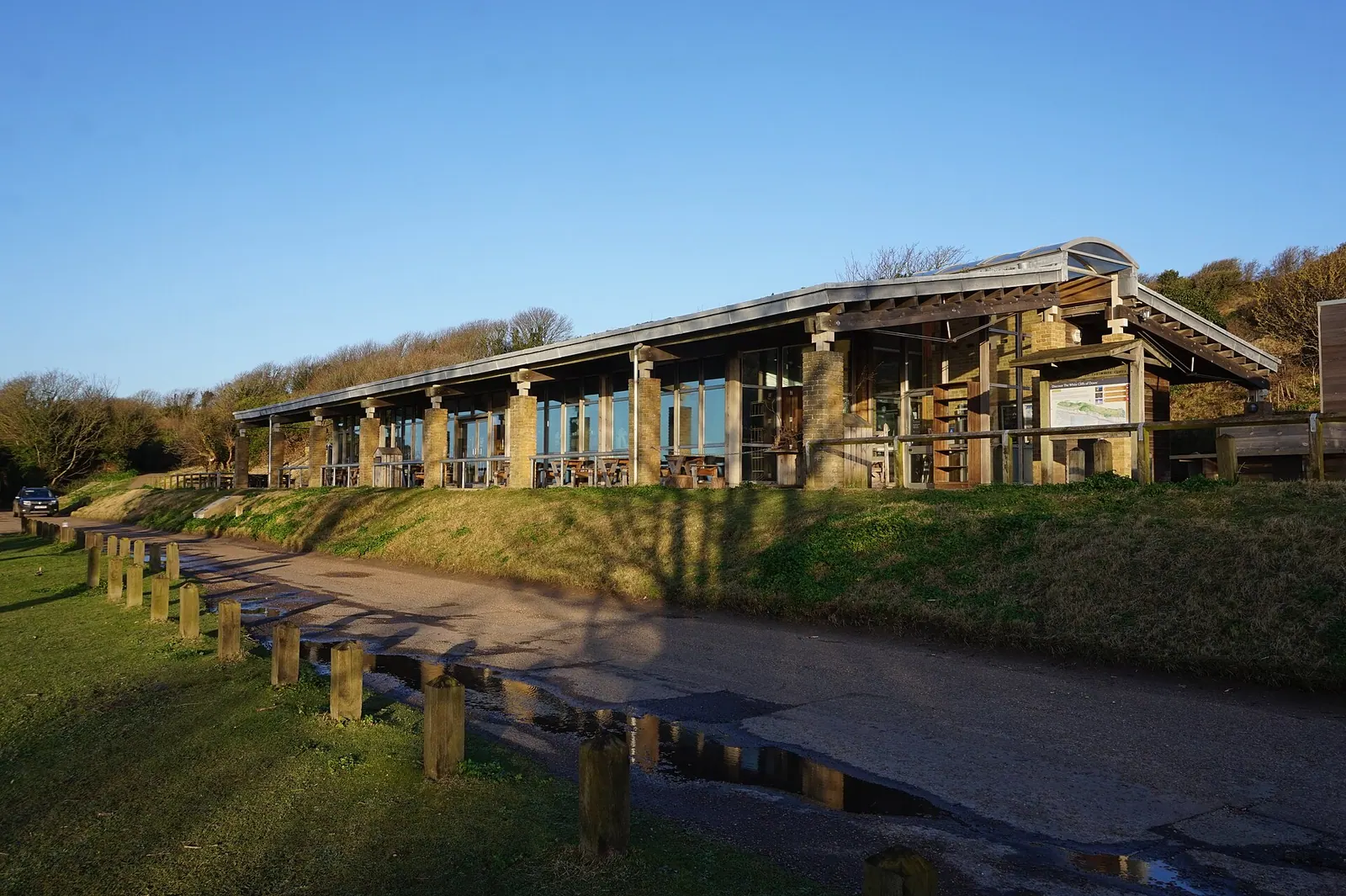
A shop with gifts and local products, a second-hand bookshop, and a café with a view of the docks and the sea.
Fan Bay and the Deep Shelter tunnels
The site of a Second World War gun battery, with tunnels hidden in the chalk. A guided visit takes you down into the Deep Shelter.
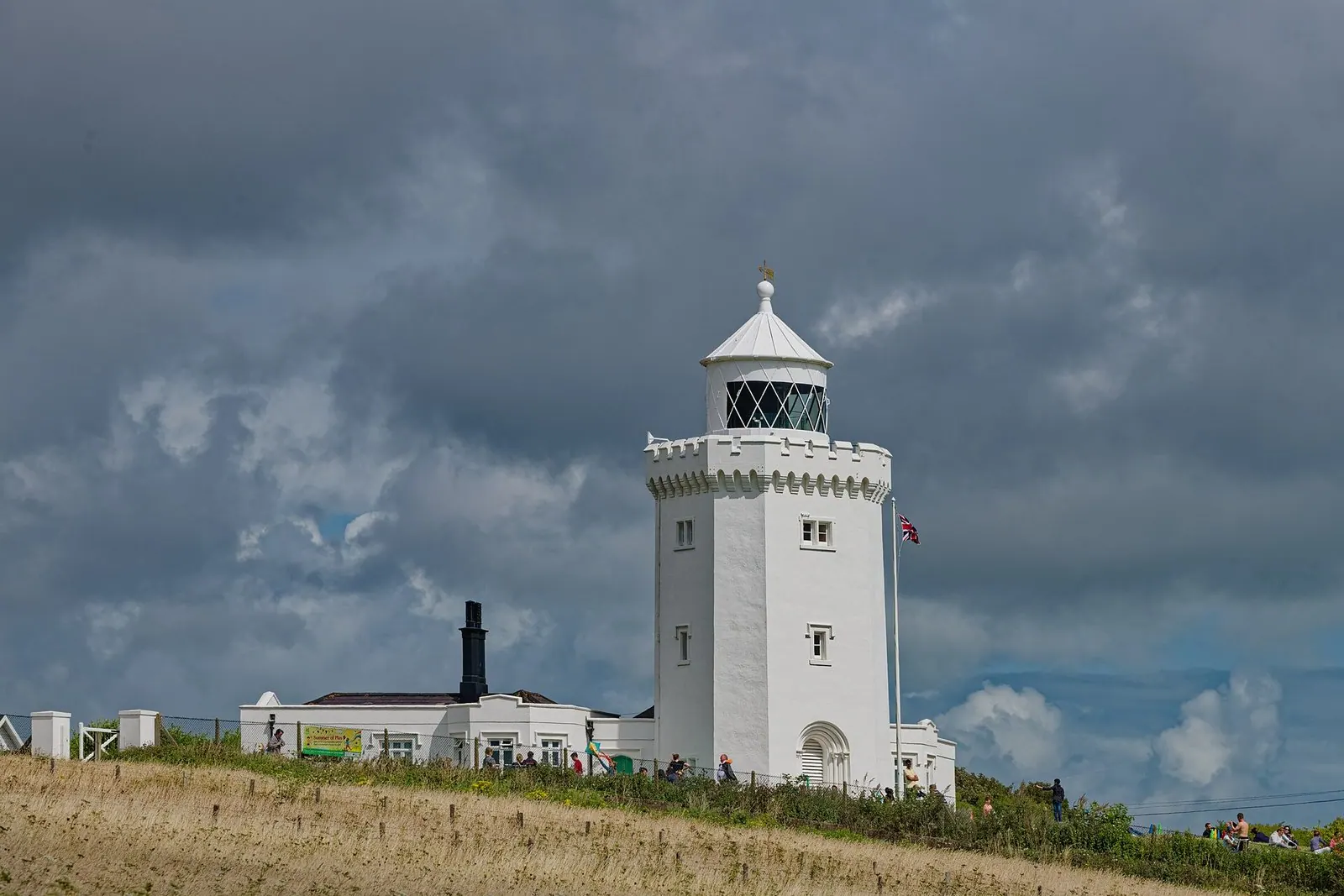
South Foreland Lighthouse
A Victorian lighthouse built to warn ships away from the Goodwin Sands.
Ticket
There is no entry charge to walk on the cliffs. Parking is charged unless you are a National Trust member or Blue Badge holder, and the lighthouse tower tour and Fan Bay are charged separately. Fan Bay and the lighthouse open on set days in season, so check before you plan to visit them.
Toilets and food
The National Trust says the visitor centre is 150 metres from the bus parking. Toilets are at the back of the building. The cafeteria and the shop are at the front. The National Trust page was checked on 30 October 2026.
Sources (4)
Why stop here
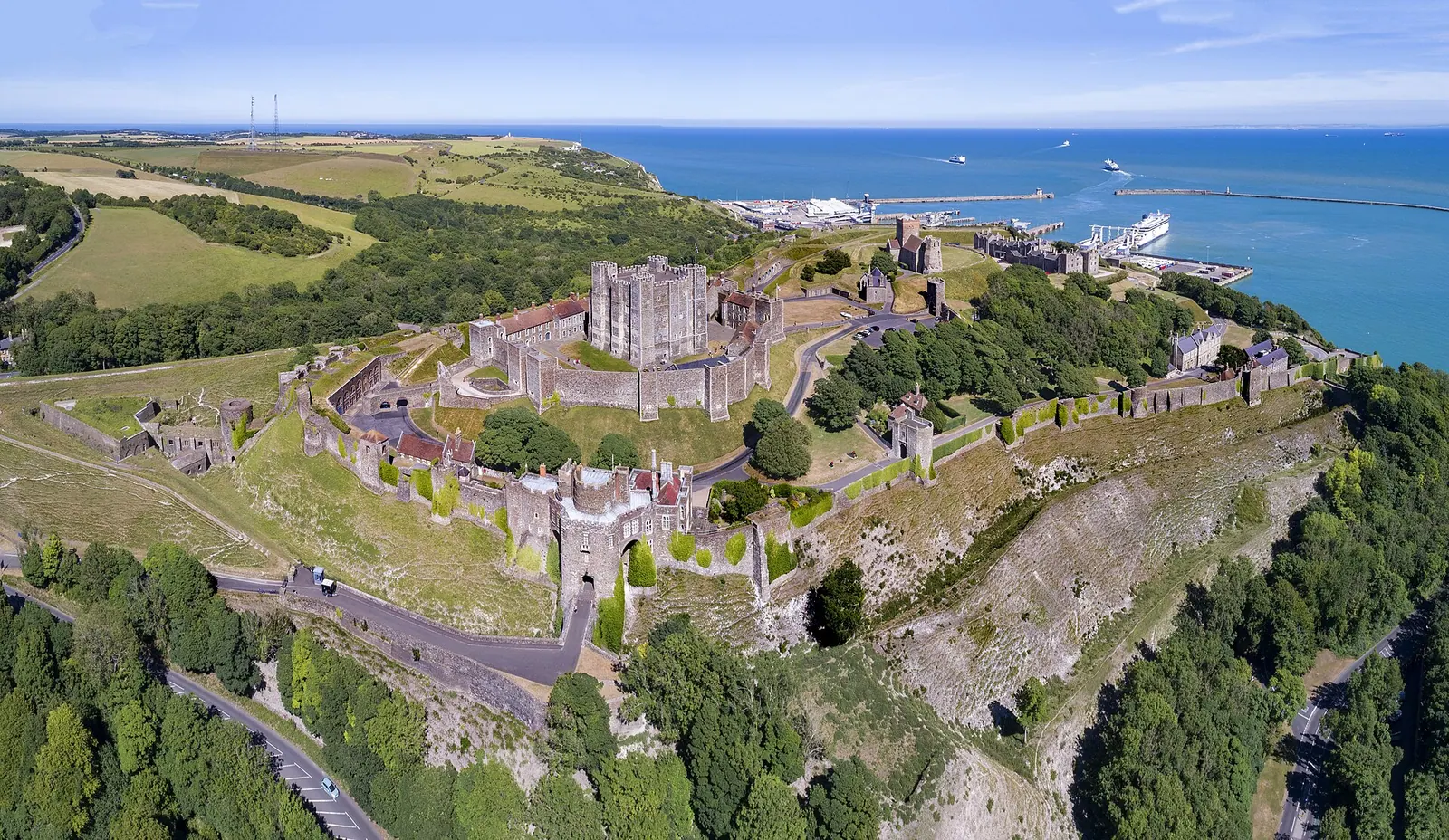
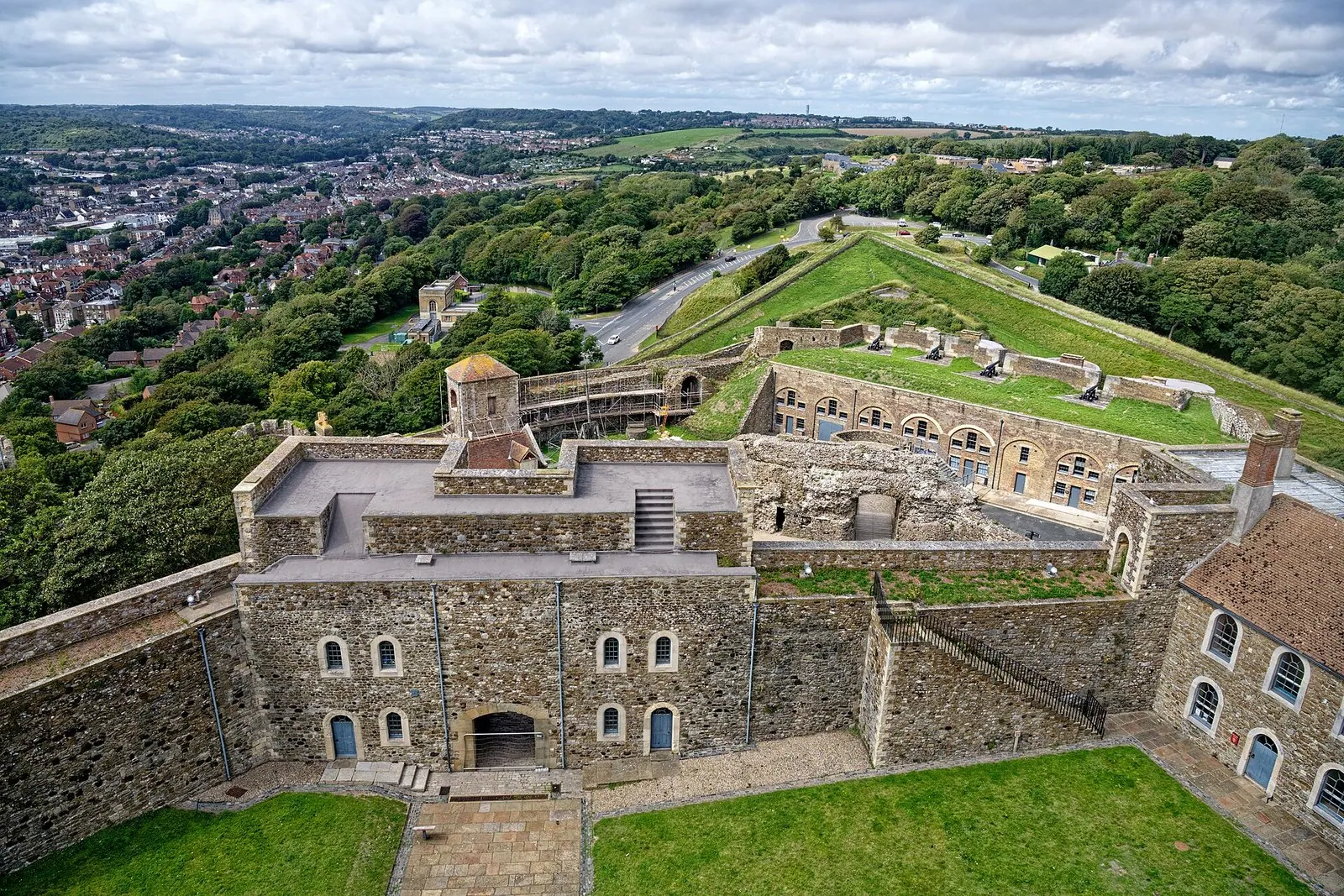
Dover Castle is a fortress on a hill above the town of Dover. It has a huge Great Tower and a long history of defending the coast. Choose it when you want the castle itself to be part of your day, with Canterbury or the cliffs. Allow time to go inside. Going inside needs an entry ticket.
Don’t miss
A Roman lighthouse and a Saxon church
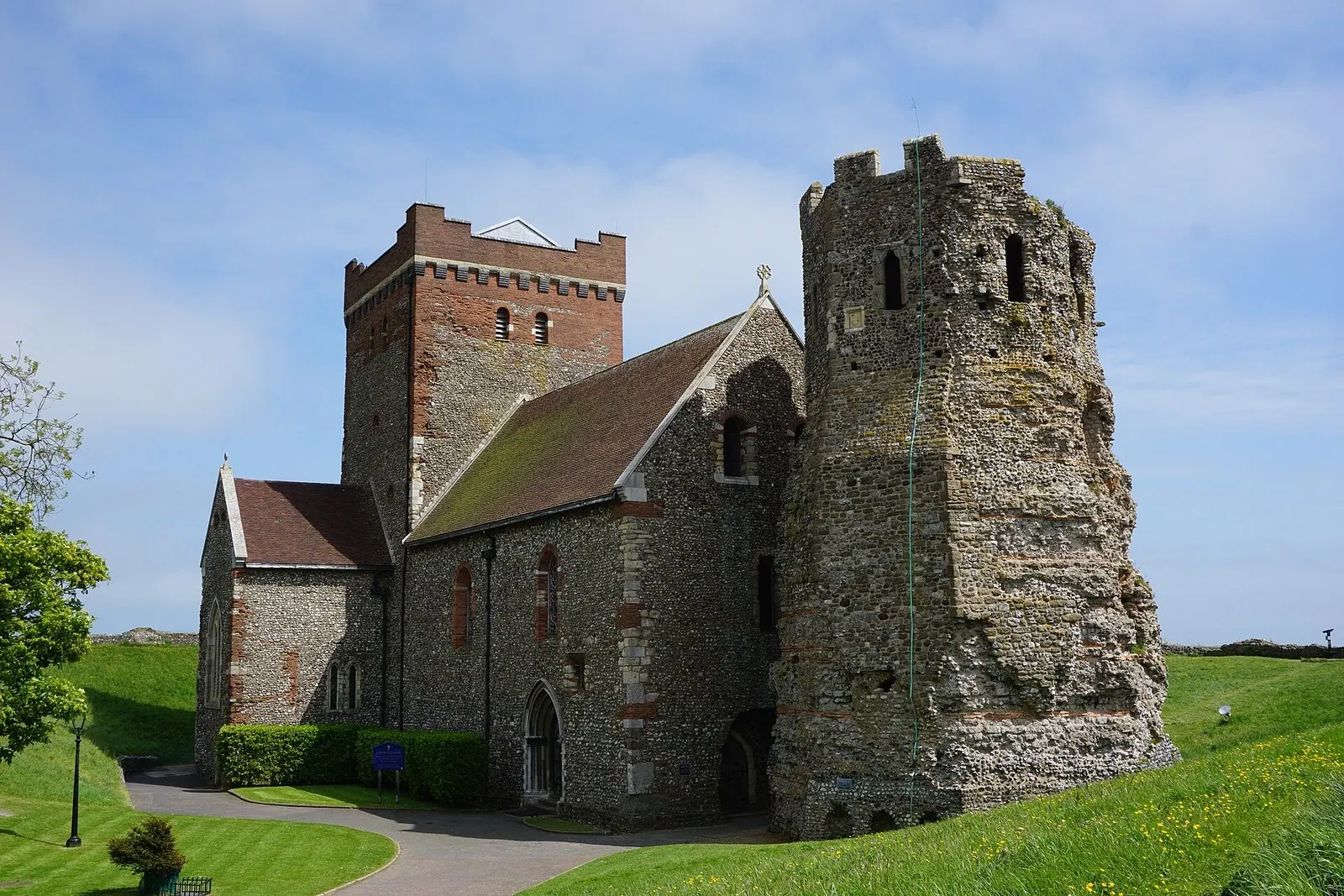
Lines of thin red Roman tiles in the lighthouse walls, and more Roman tiles around the church windows. The top part of the lighthouse was rebuilt in the Middle Ages.
Your route
The Great Tower
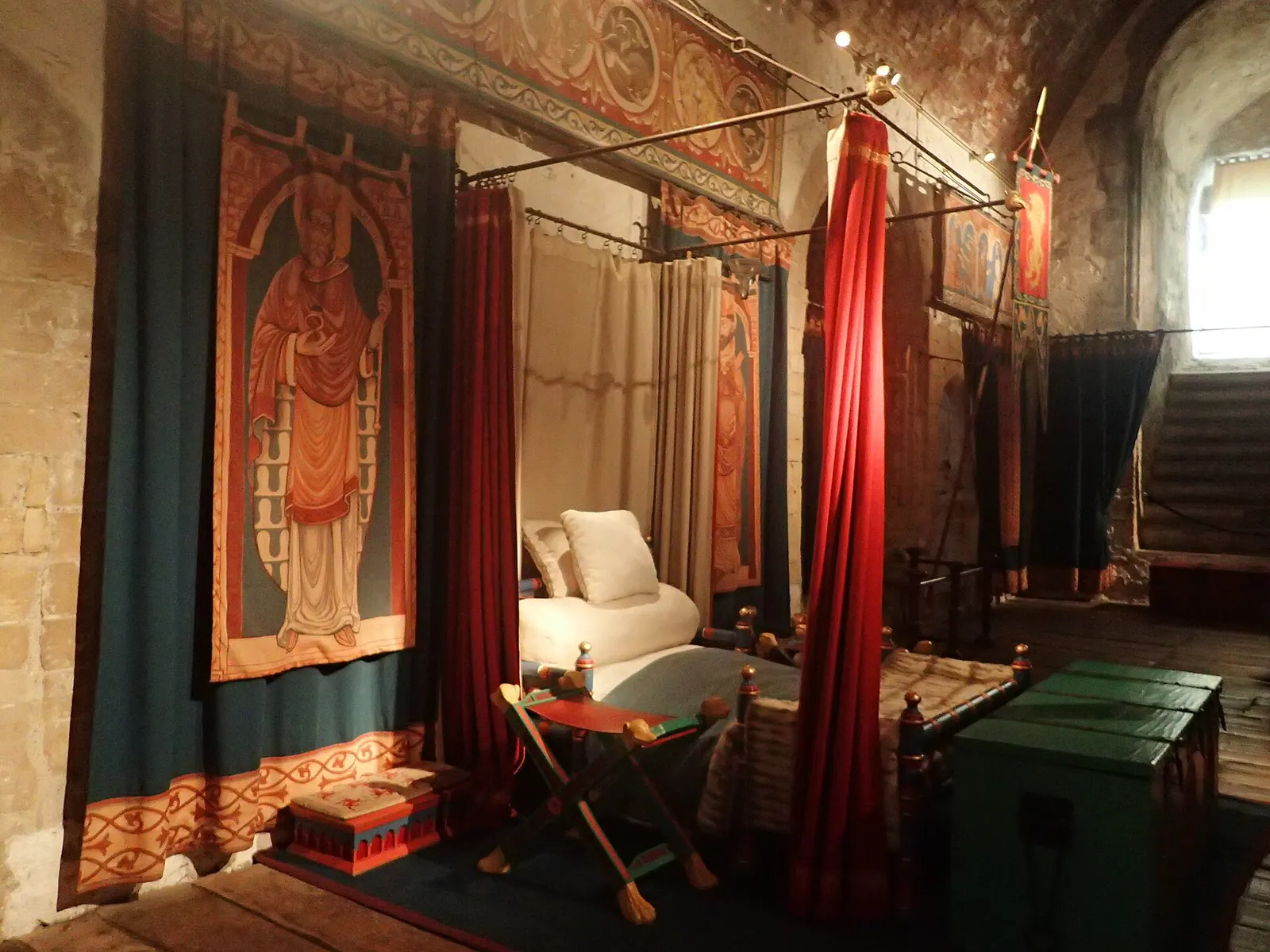
Henry II’s royal palace, with furnished medieval rooms, and views over the castle and the English Channel from the top. From 9 November 2026 two rooms are closed up for conservation work.
Roman lighthouse and St Mary in Castro
Britain’s oldest standing lighthouse, built by the Romans, beside the Anglo-Saxon church on its grassy mound.
Fire Command Post and Ramsay statue
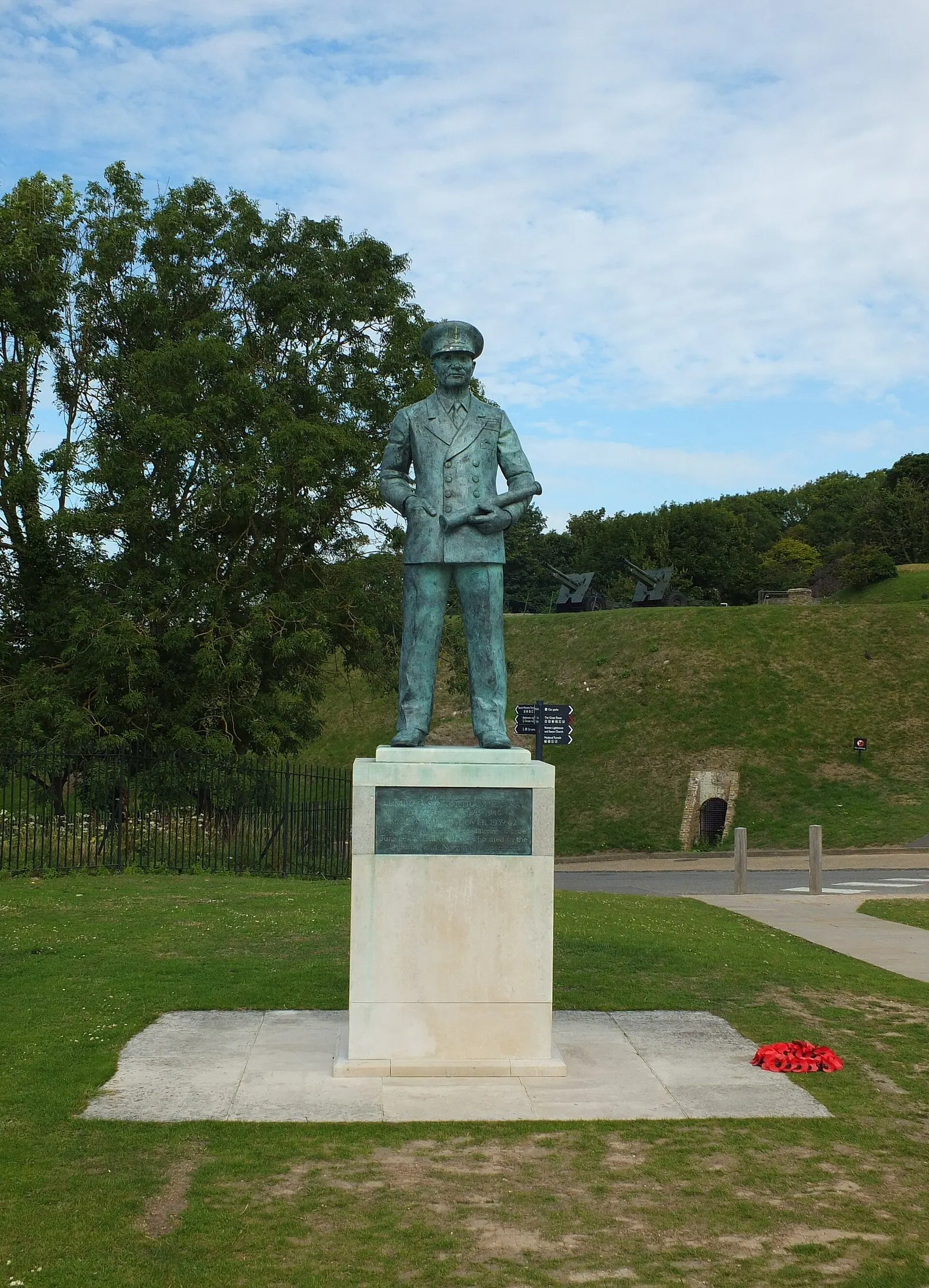
A First World War lookout above the cliffs, with wide views of the Channel and the White Cliffs, and the statue of Admiral Ramsay nearby.
Underground Hospital, Secret Wartime Tunnels
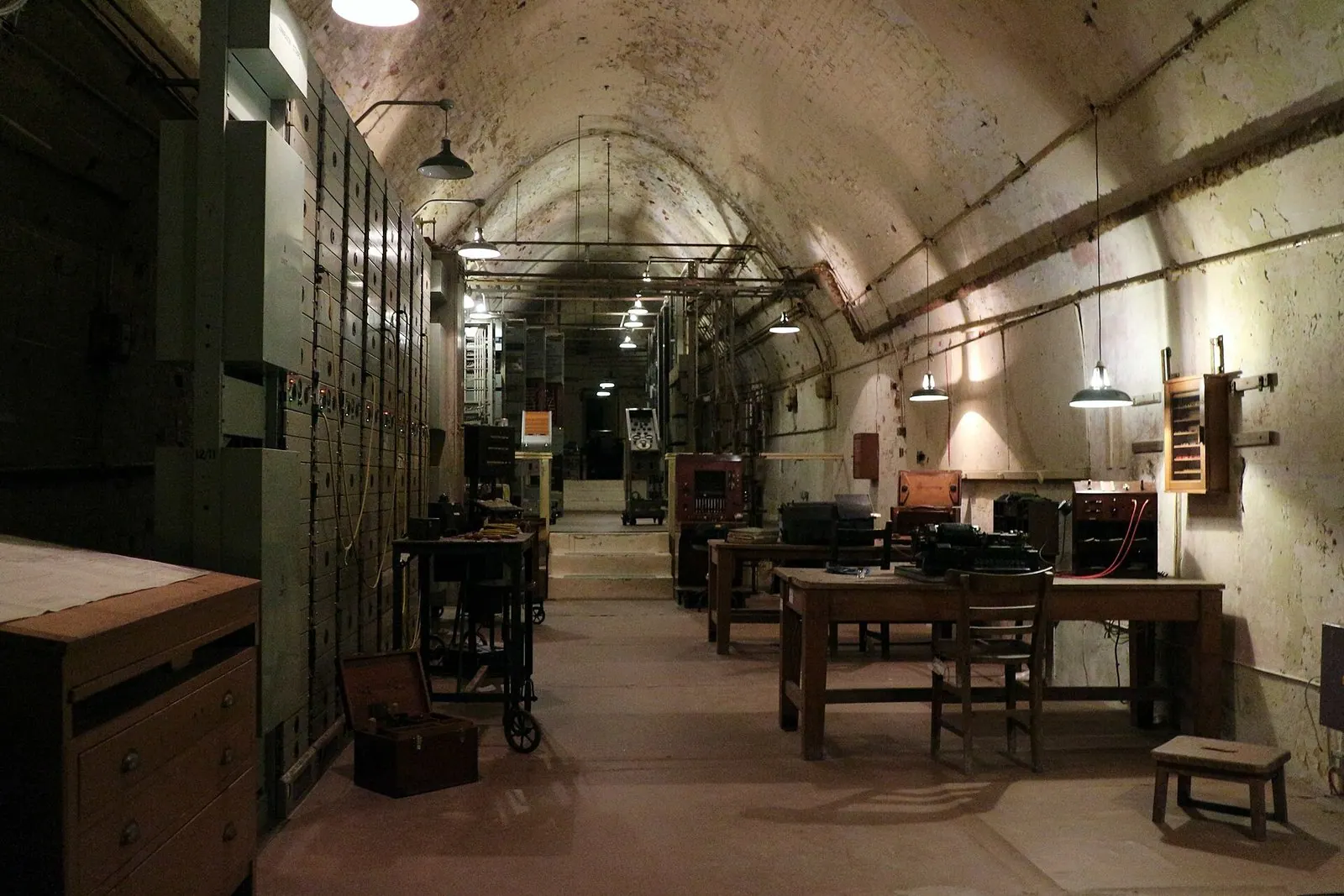
A guided tour of the Second World War hospital in the chalk, with its operating theatre, wards and corridors.
Under Siege and the Spur
An exhibition about the siege of 1216, the medieval tunnels under the north defences, and the Spur viewpoint where the attackers camped.
Toilets and food
English Heritage says the castle has male, female and disabled toilets in five places. The main restaurant is the NAAFI, with hot food, sandwiches and soup. A small Tunnels Tea Room sells sandwiches, cakes and ice cream. You can also eat a picnic in the grounds. The page was checked on 30 October 2026.
Sources (7)
Why stop here
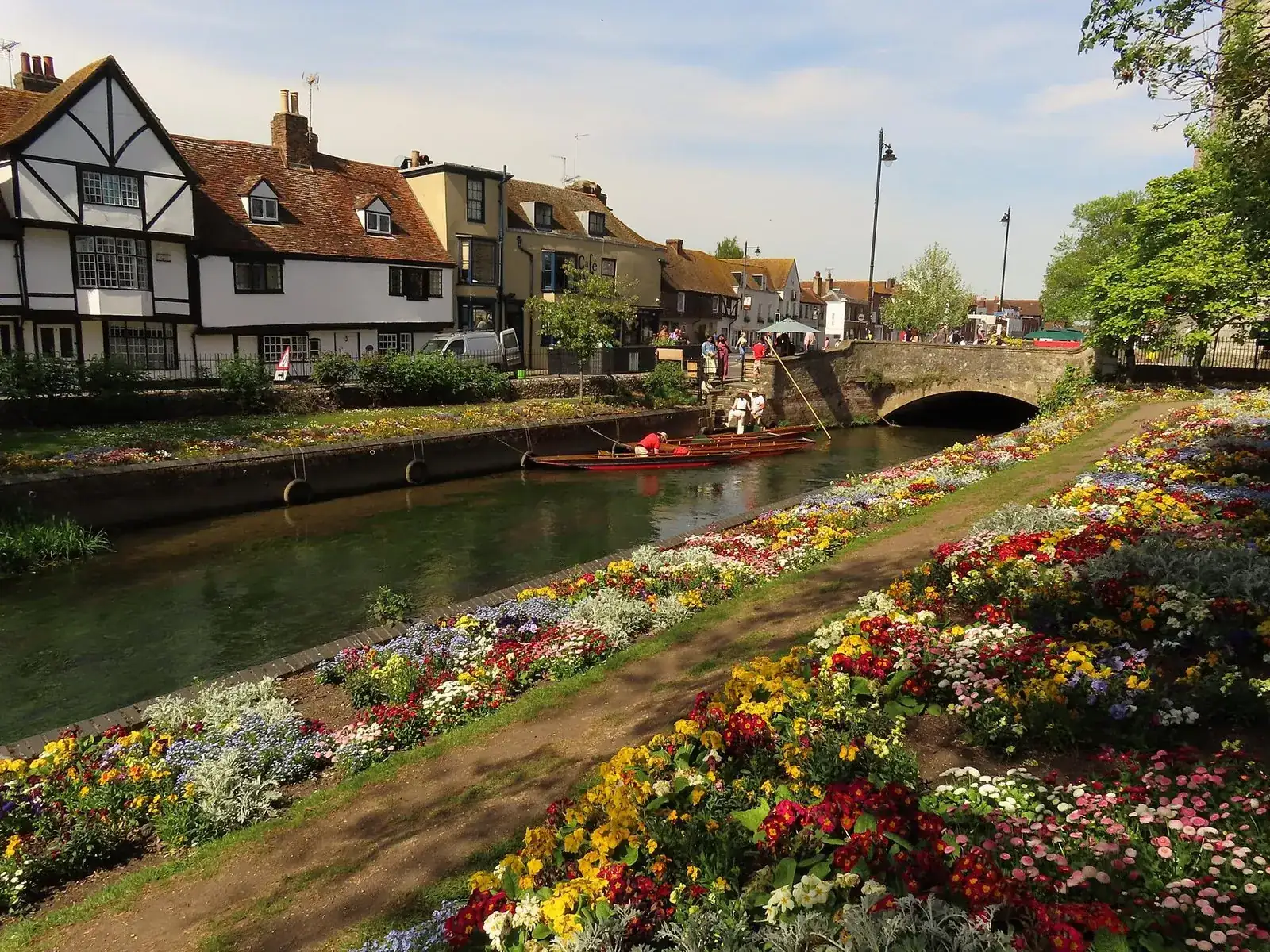
Canterbury is a historic city you can walk around. You can see old streets, the Westgate Towers and a river with gardens and punts (flat boats pushed with a long pole). Time here is for wandering and finding a place to take a break. Going inside the cathedral needs its own entry ticket.
Don’t miss
A city gate built against invasion
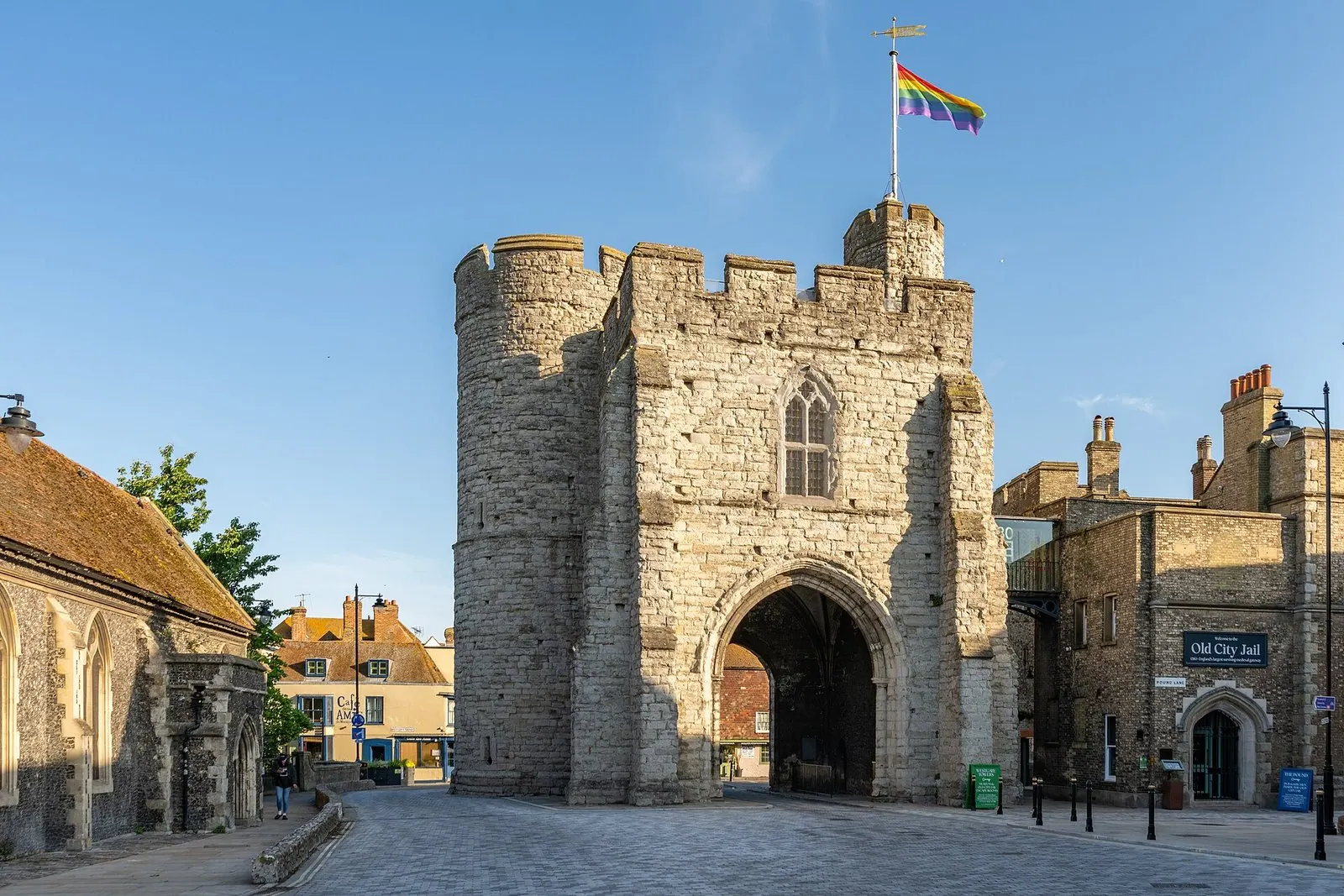
The small openings for guns in the round towers, and the stone bridge over the river in front of the gate. Inside, the only way up is a narrow staircase of five flights.
Your route
Westgate Gardens
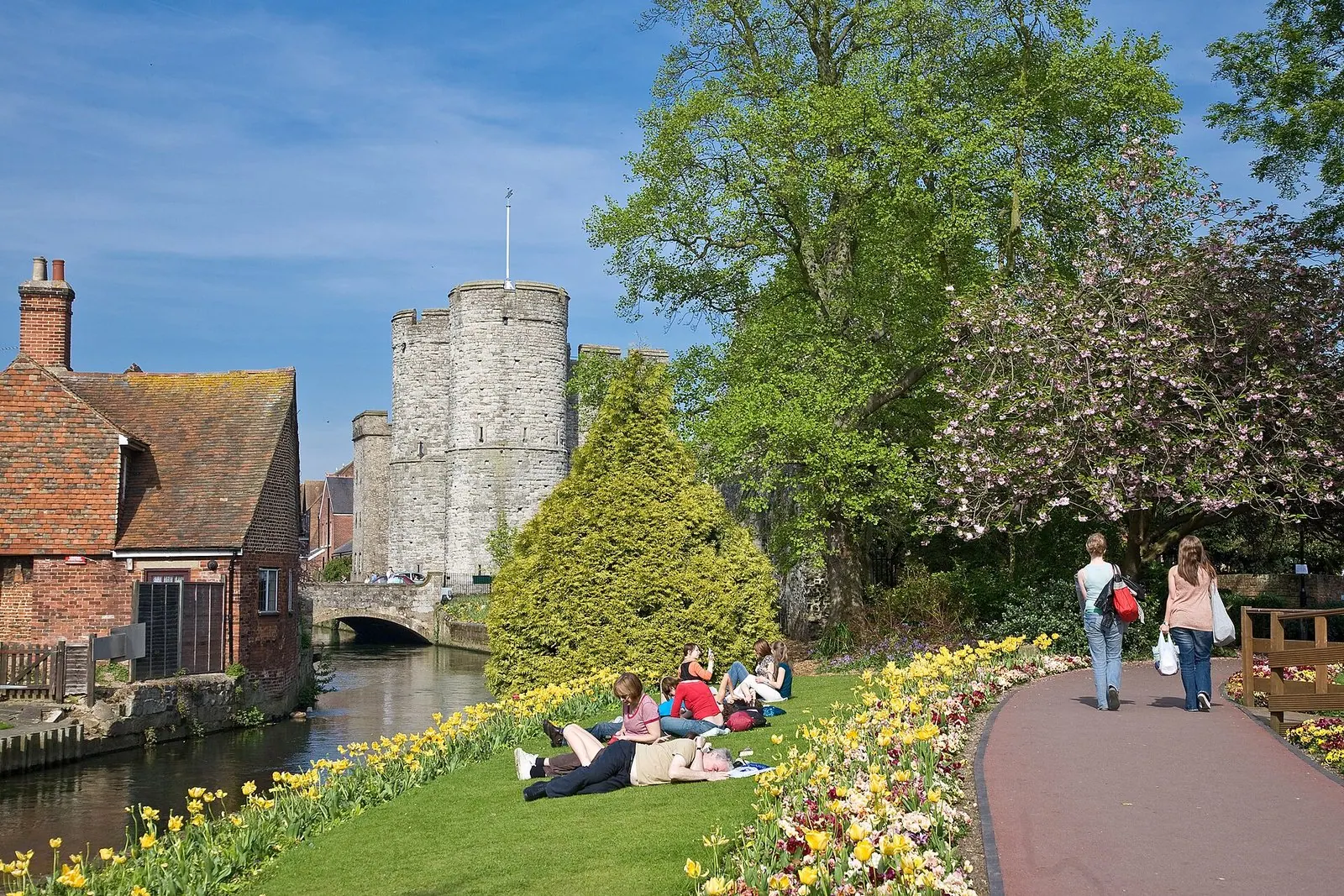
Lawns and flower beds beside the River Stour, and a plane tree more than 200 years old. Punt trips run on the river from mid-March to the end of October.
Westgate Towers
The largest medieval city gate still standing in England, built from 1379, with a small museum inside and a climb to the battlements for a view over the city roofs.
The Old Weavers' House, Eastbridge Hospital and Greyfriars
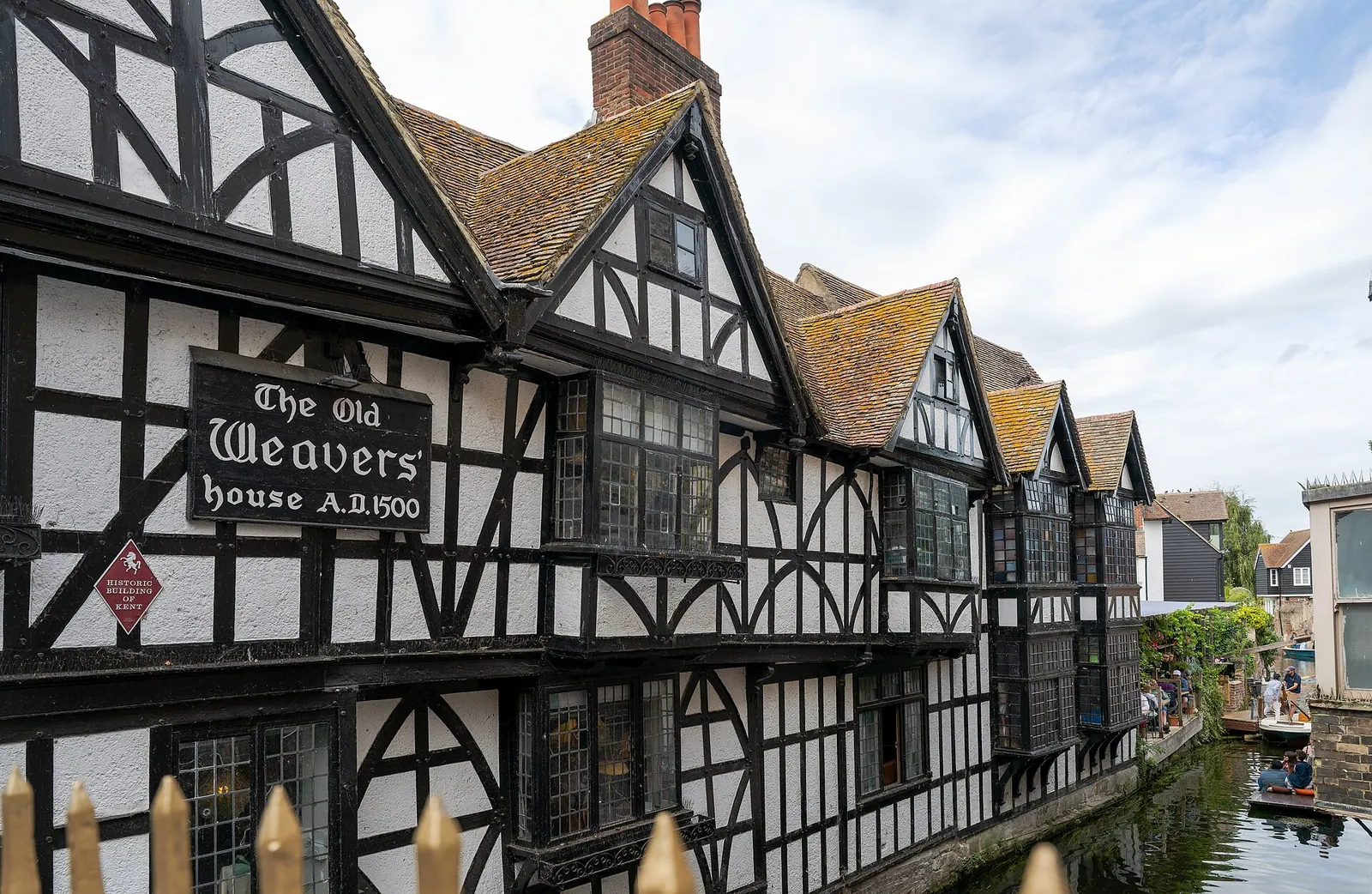
The timber-framed Old Weavers' House by the river, and close by on the main street Eastbridge Hospital, which has welcomed pilgrims since 1190. Next door, the Franciscan Gardens hold Greyfriars Chapel.
The Beaney
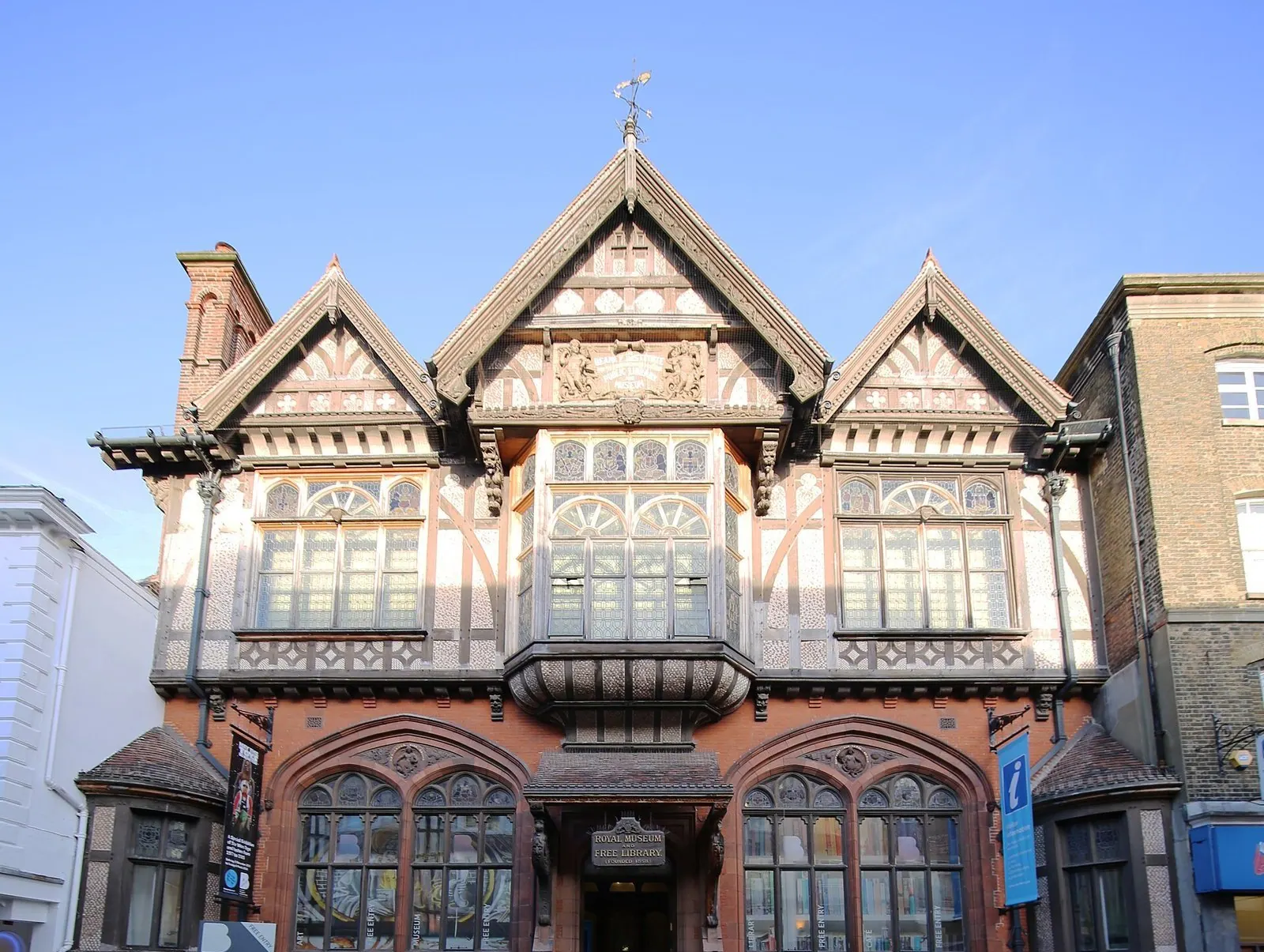
Canterbury's museum, art gallery and library, in a grand building of 1897 to 1899 on the High Street.
Canterbury Roman Museum
The mosaic floor of a Roman town house, found after the bombing of 1942, with Roman objects from the city around it.
St Augustine's Abbey
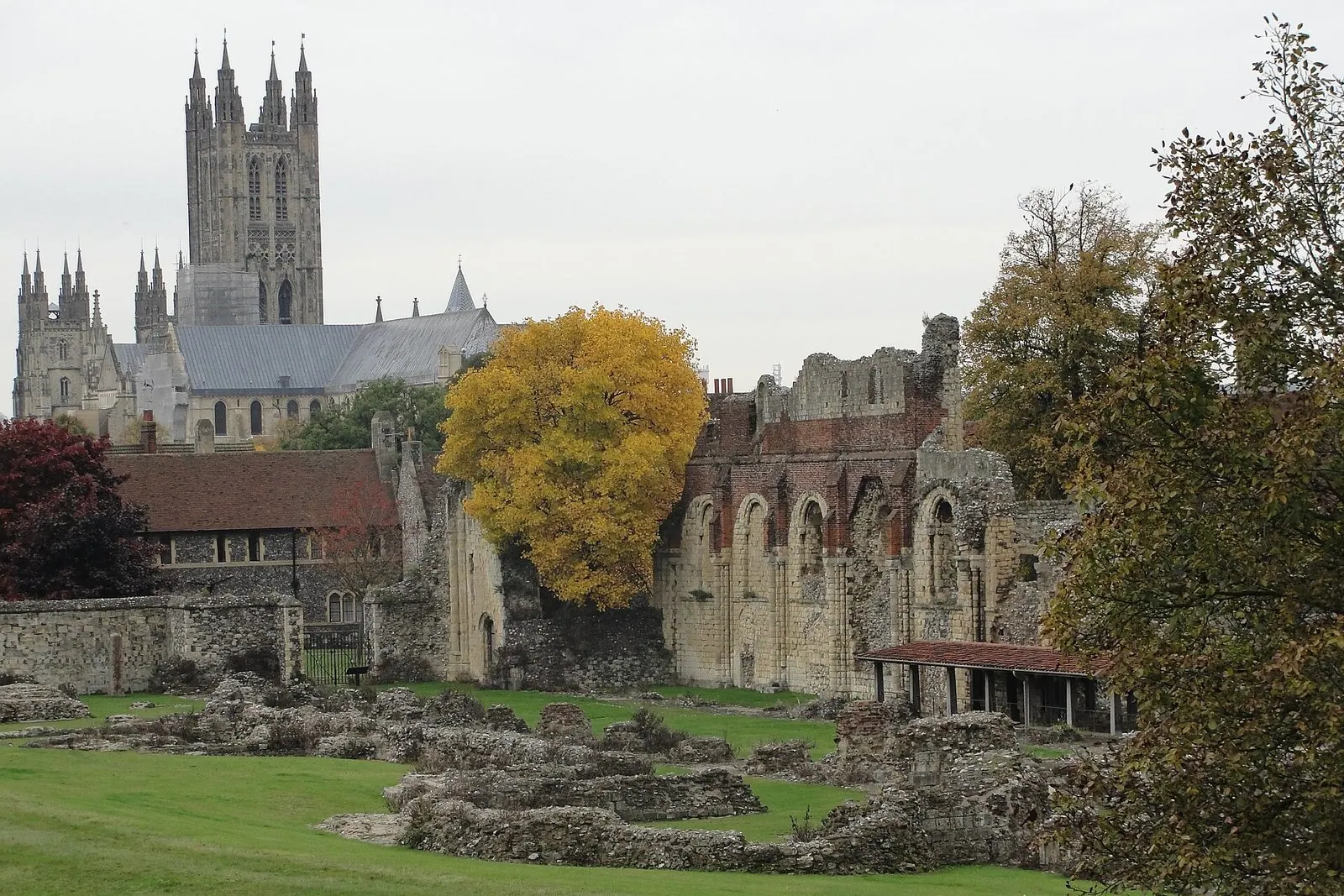
The ruins of the abbey that Augustine founded after 597. There is a small museum, a free audio tour and a virtual reality view of the abbey in the early 1500s.
Canterbury Cathedral · 60 min · page 6
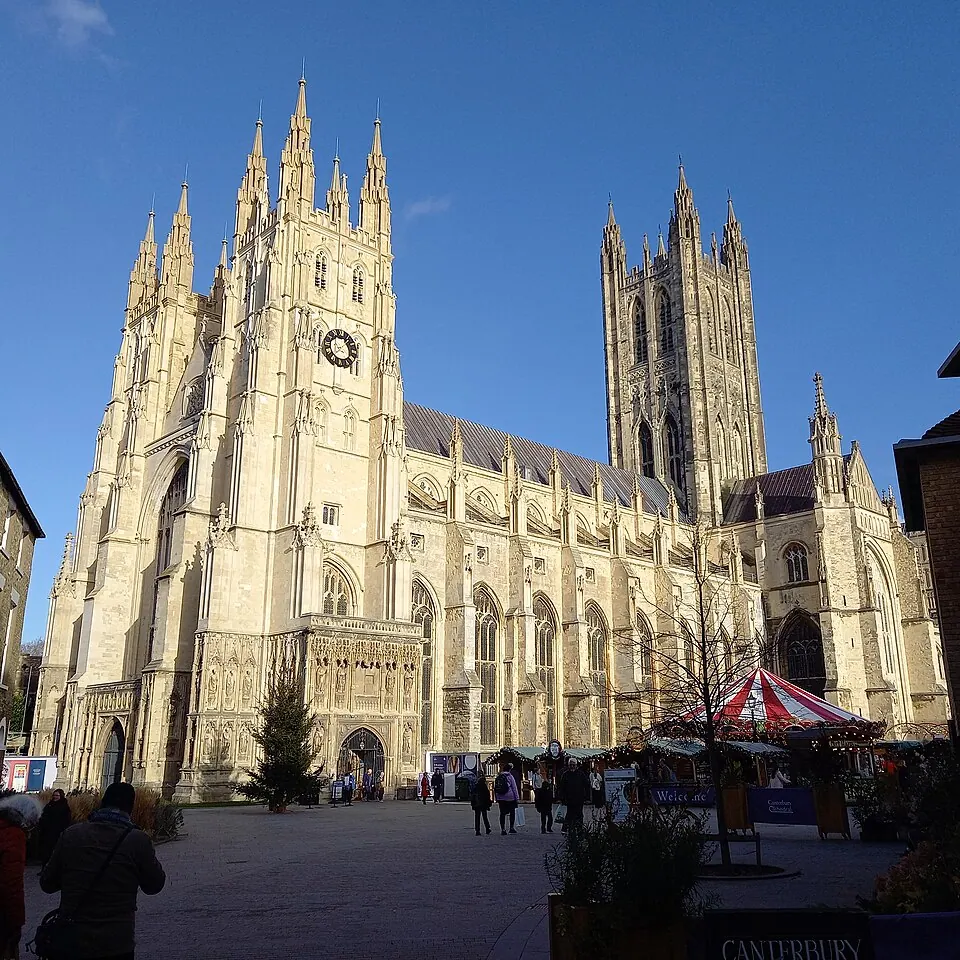
The cathedral where Thomas Becket was murdered in 1170. You reach it through Christ Church Gate, on the small square called the Buttermarket.
Toilets
Visit Canterbury says the West End, by Westgate Gardens, has cafes, restaurants and bars. A mobile cafe runs at Tower House in summer. It says the Toddler’s Cove playground, further along the river path, has toilets and a refreshment van.
Food
The Goods Shed, next to Canterbury West station, calls itself a farmers market, food hall and restaurant. Lunch is served Tuesday to Sunday, 12 pm to 3 pm. It is closed on Mondays.
Sources (8)
Why stop here
Go inside the cathedral in the middle of Canterbury. You can see the nave (the long main hall) and the crypt (a room under the church), which is the oldest part of the building. There is also stained glass from the Middle Ages. It is a visit with its own entry ticket.
Don’t miss
Look up into the central tower
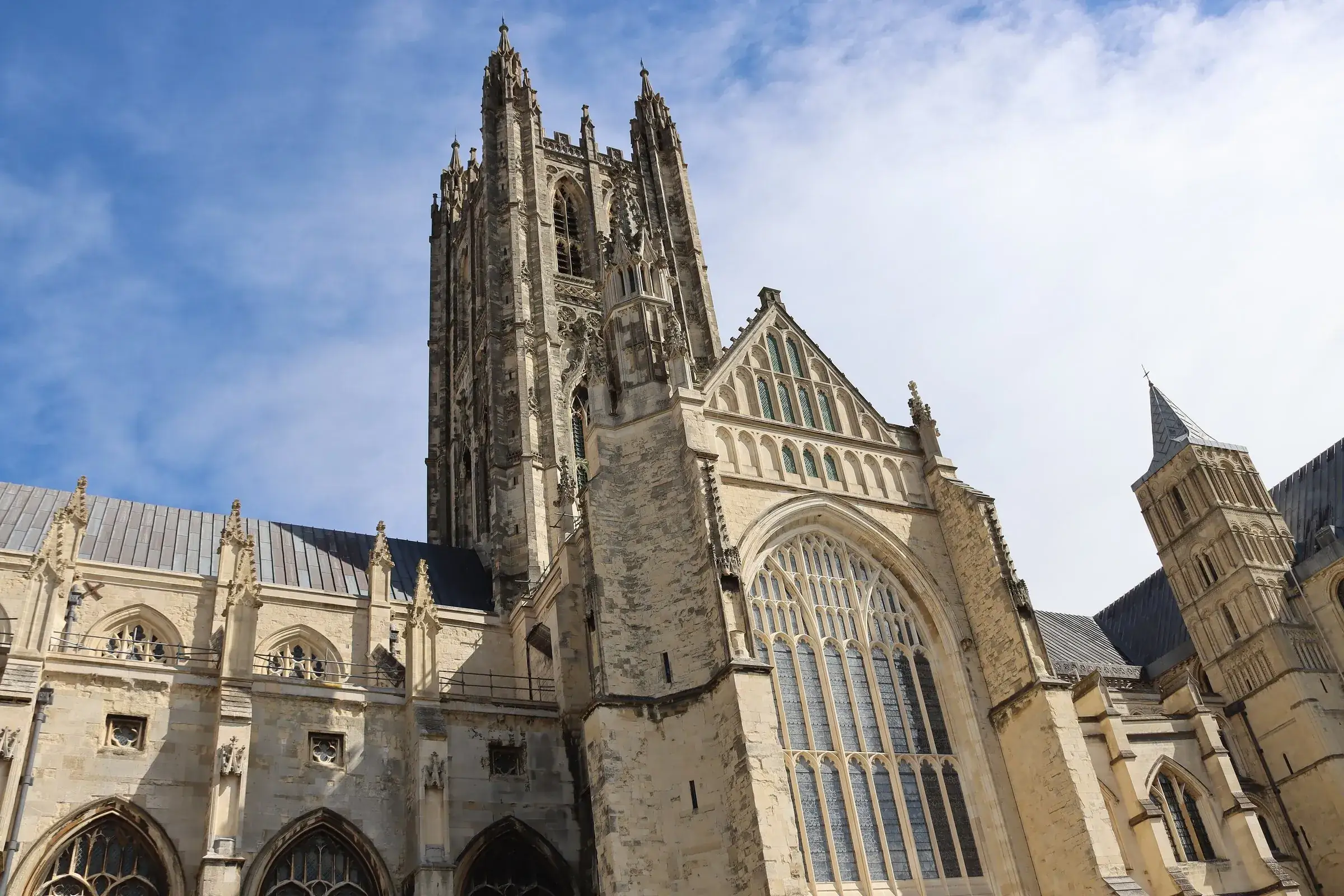
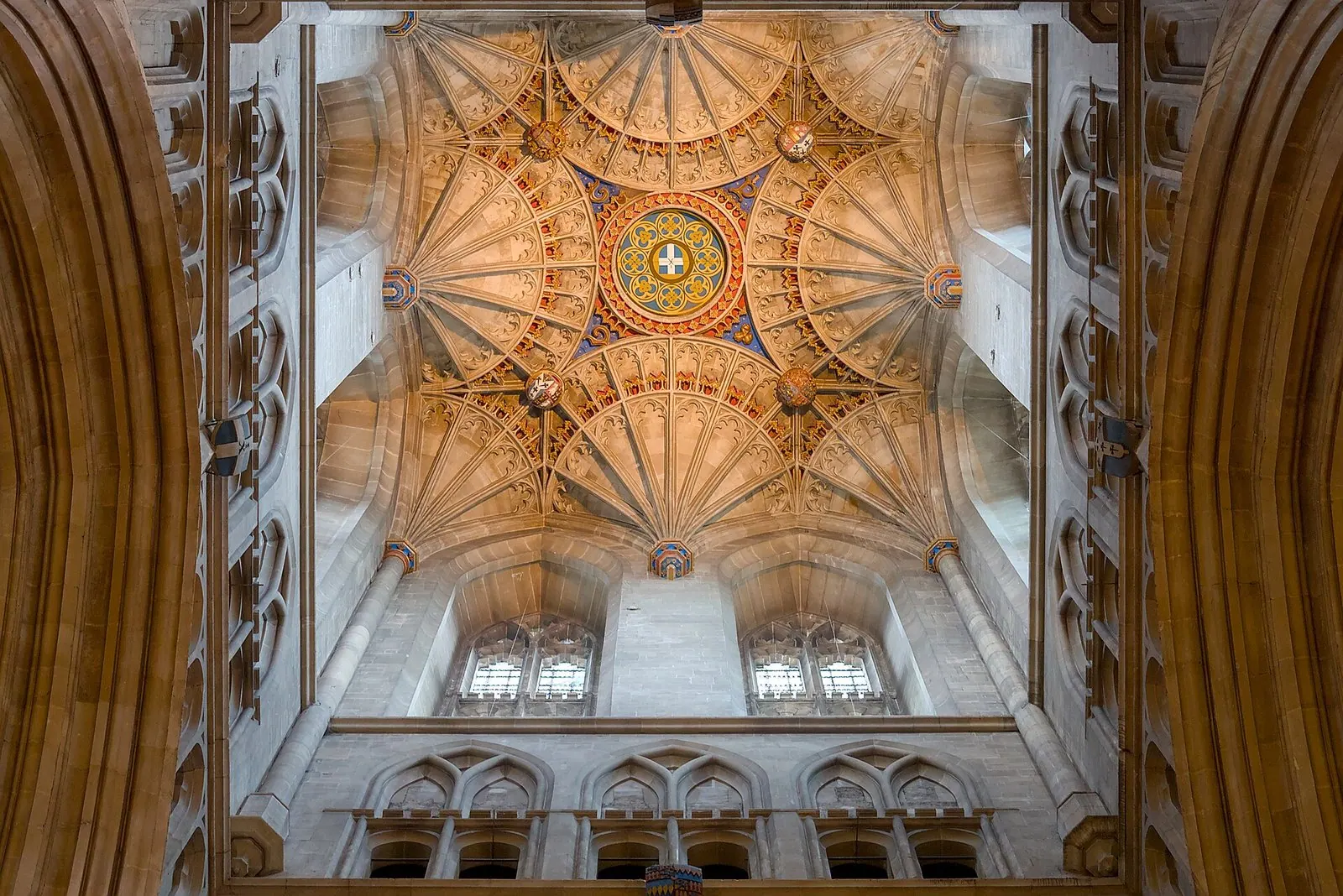
From the top of the Pulpitum Steps, the fan-shaped stone ceiling high inside the tower. Watch your step while you look up. Outside, the same tower rises above the middle of the roof.
Your route
The nave
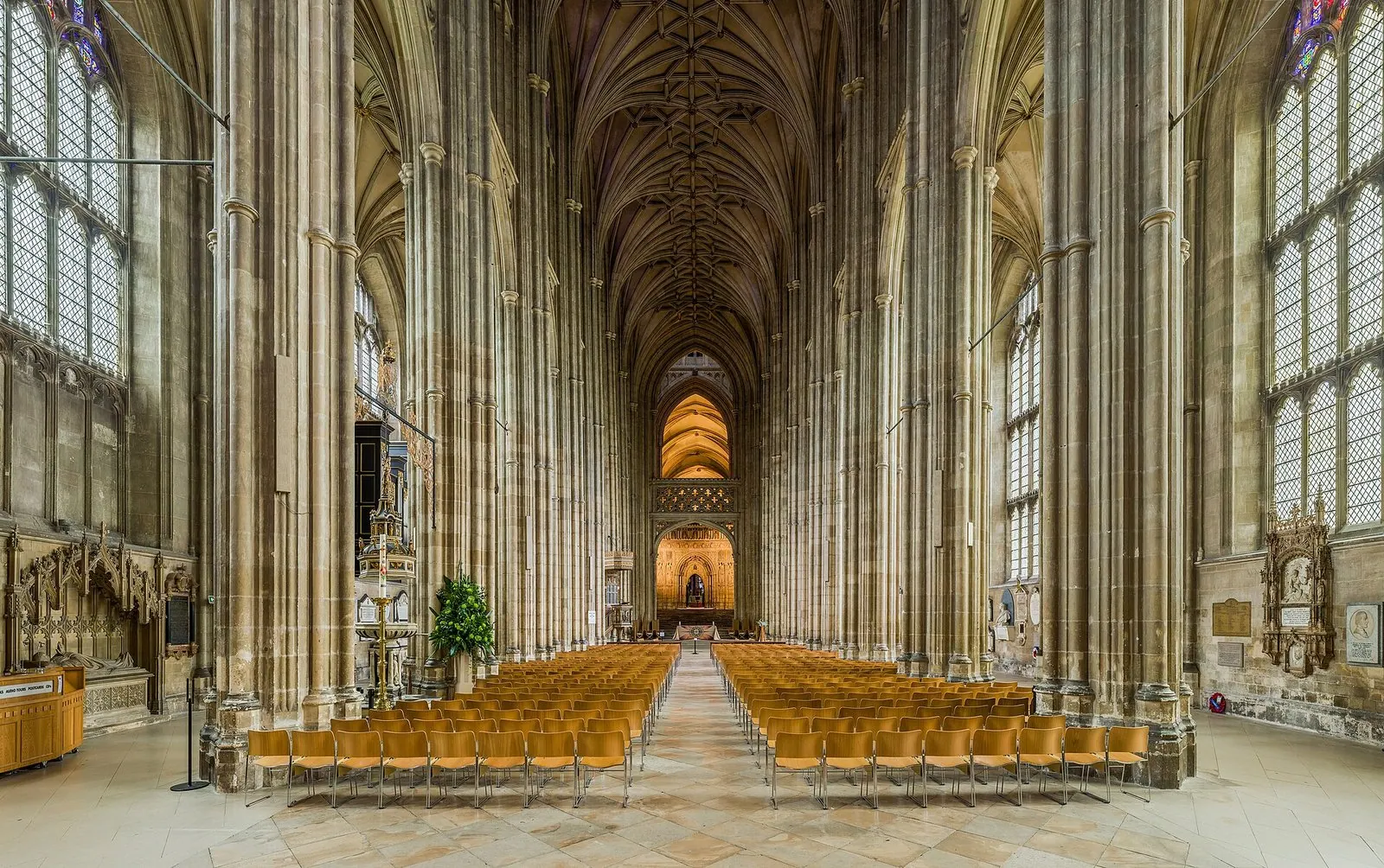
The main visitor door leads into the nave, the long main hall rebuilt between 1377 and 1405. Just inside, look for the Canterbury Cross carved in stone.
The Martyrdom
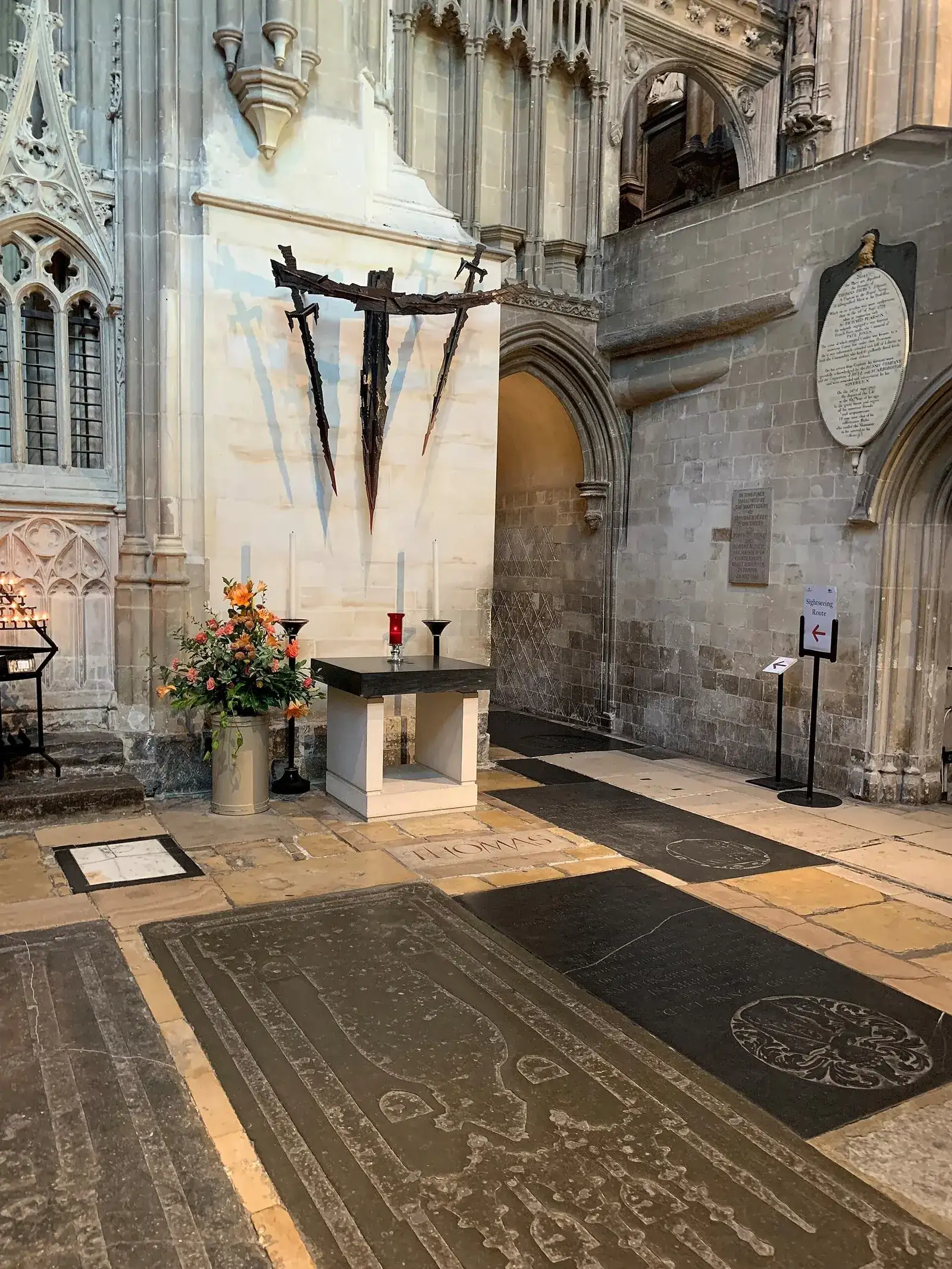
The place where Thomas Becket was killed in 1170, with his name in the floor, an altar and the sculpture of swords above it.
The crypt
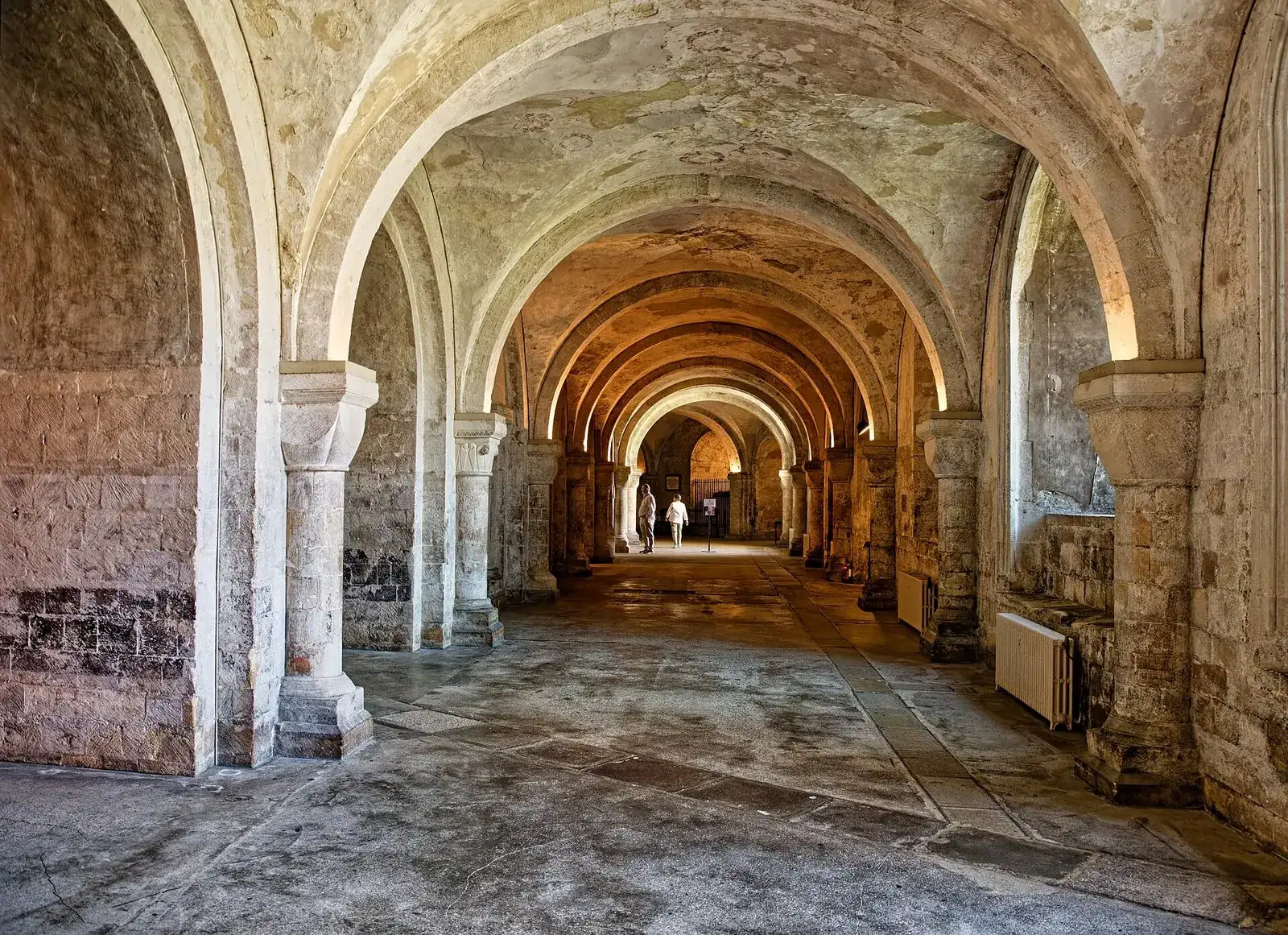
The oldest part of the cathedral, with round Norman arches, carved columns and the place of Becket’s first tomb.
Pulpitum Steps and Bell Harry Tower
Climb to the top of the steps and look straight up into the fan vaulting of the central tower. The stone screen here is carved with Lancastrian kings.
Trinity Chapel
The candle that marks where Becket’s shrine stood. The Miracle Windows are all around it, and the tomb of the Black Prince is close to the shrine site.
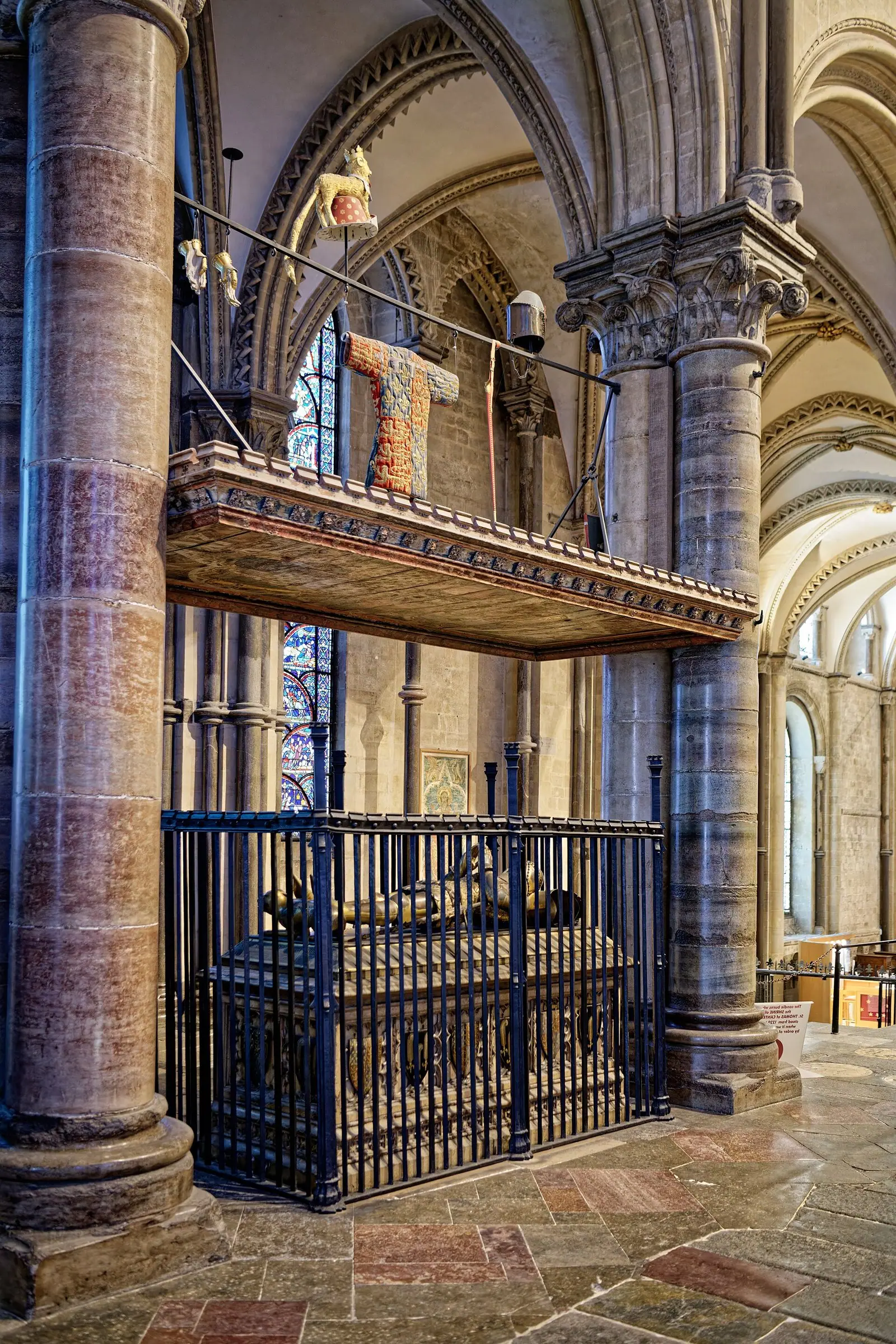
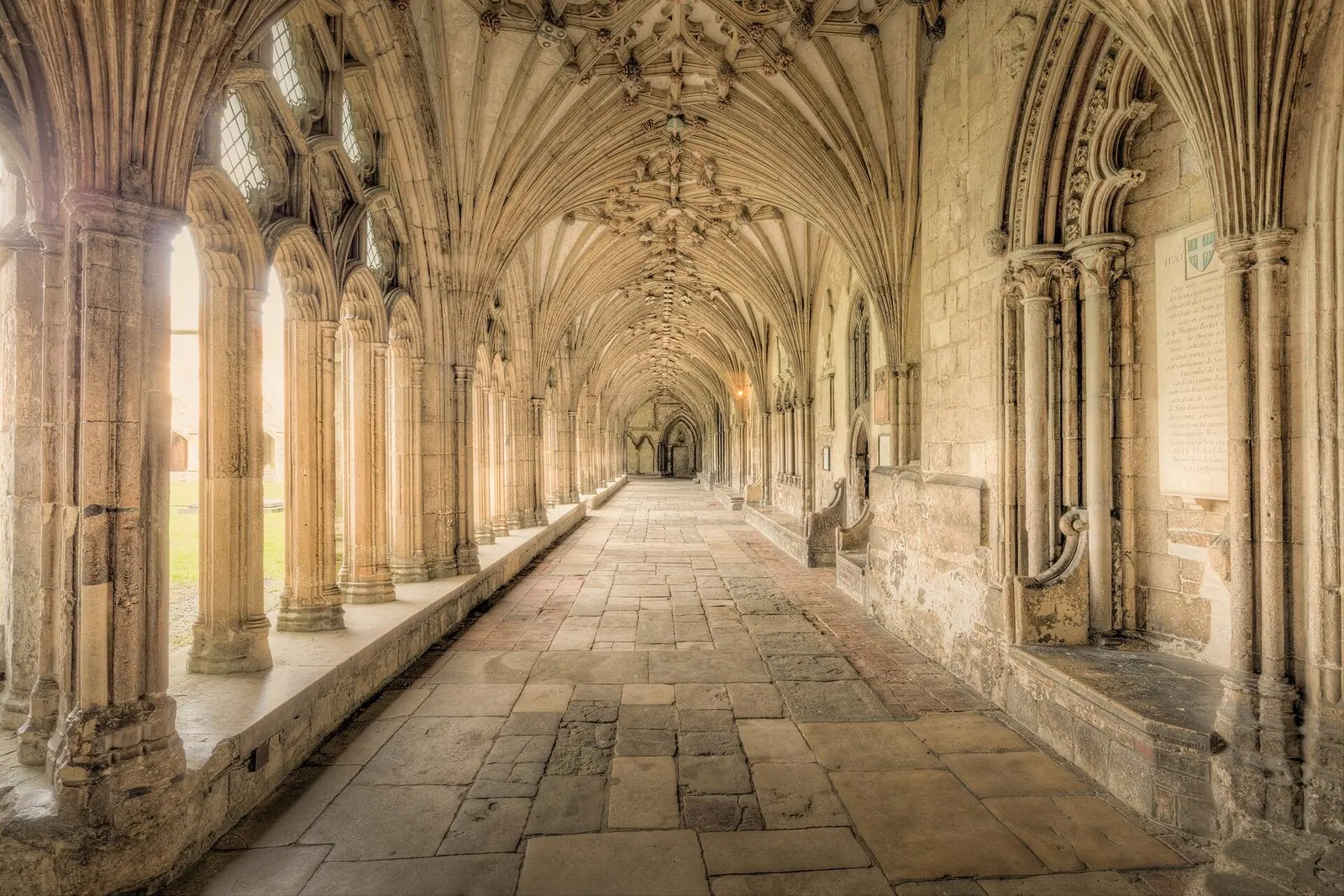
Great Cloister and Chapter House
The covered walk of the monks’ monastery, with over 800 carved shields, green men, rabbits and a mermaid. Beside it is the Chapter House, where the monks met every day.
Ticket
Sightseeing needs a ticket, bought online or at the Visitor Centre. Going to a service or into a chapel to pray is always free. On Sundays the grounds and shop open before the cathedral church does, so check the day's hours.
Toilets and food
Canterbury Cathedral says its public toilets are open 9.00 am to 6.30 pm daily. Its café, The Lounge at Cathedral Lodge, is open 10.00 am to 4.00 pm for coffee, lunch and snacks. In summer you can eat outside in the Campanile Garden. The cathedral page was checked on 30 October 2026.
Sources (6)
Read on the bus
Thomas Becket: the murder and the pilgrims
A murder in 1170, a saint, and centuries of pilgrims
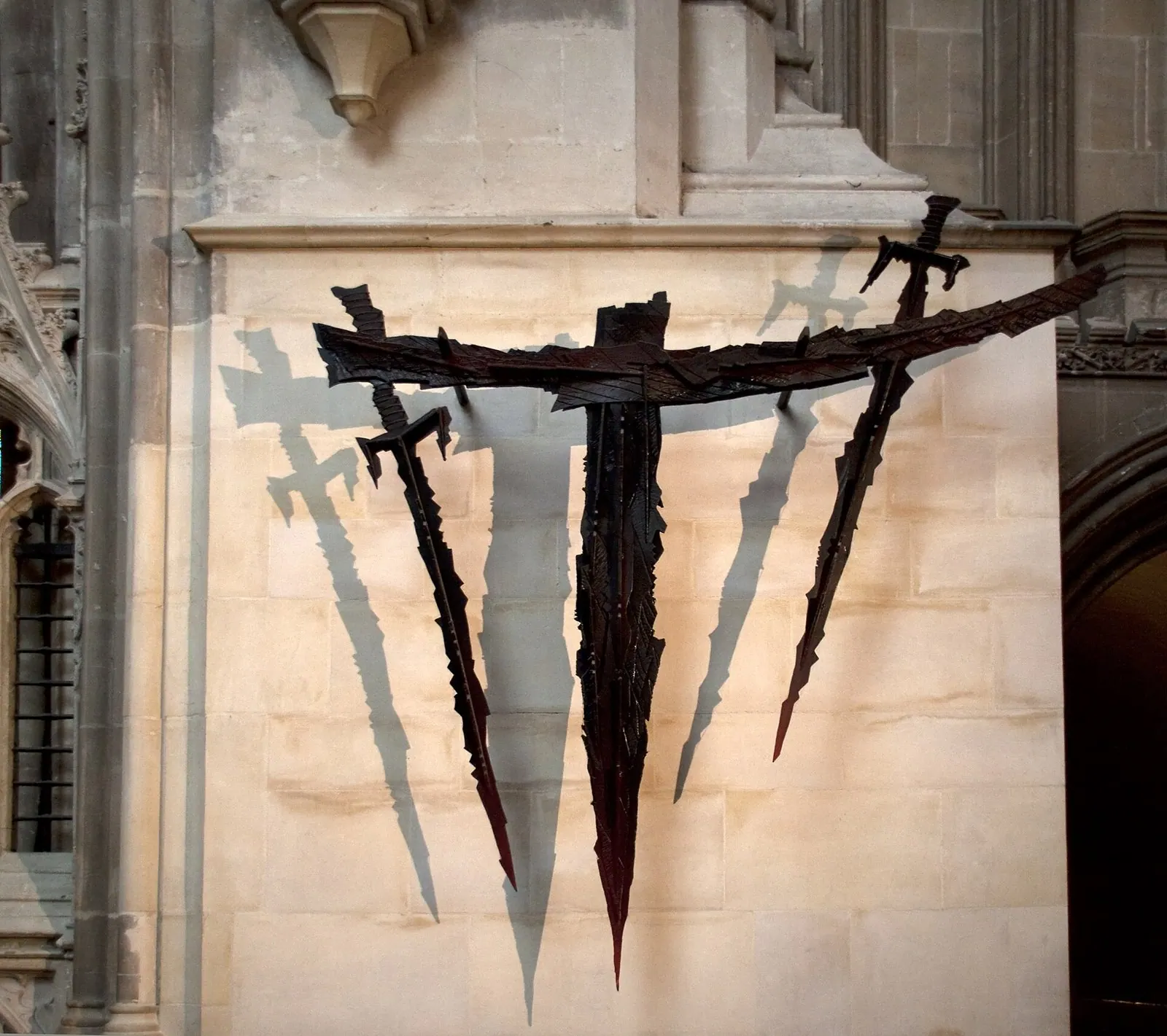
Thomas Becket was Archbishop of Canterbury. On 29 December 1170, four knights killed him inside his own cathedral. This page tells the story, and why pilgrims came here for hundreds of years.
The murder, 1170
Becket and King Henry II argued for many years. The story says the king cried, “Who will rid me of this turbulent priest?” Four knights rode to Canterbury and killed Becket in the north-west transept. One sword blow was so hard that the tip of the blade broke on the stone floor.
A saint
Soon people said that sick pilgrims were healed through Becket. The Pope made him a saint in 1173. A stone in the floor with the name THOMAS marks the place where he died.
The shrine and the windows
A Canterbury monk, Benedict of Peterborough, wrote the miracle stories down. Between 1180 and 1220, glass makers turned dozens of them into pictures for twelve windows around the Trinity Chapel. In 1220 Becket’s body was moved into a new shrine there, and pilgrims came from across Europe to pray. Henry VIII had the shrine destroyed in 1538.
Chaucer’s pilgrims
Geoffrey Chaucer’s poem, The Canterbury Tales, follows pilgrims who ride from London to Becket’s shrine, telling stories on the way. The next page is about them.
Sources (3)
Read on the bus
The Canterbury Tales: why Canterbury?
A famous poem about pilgrims on the road to Becket
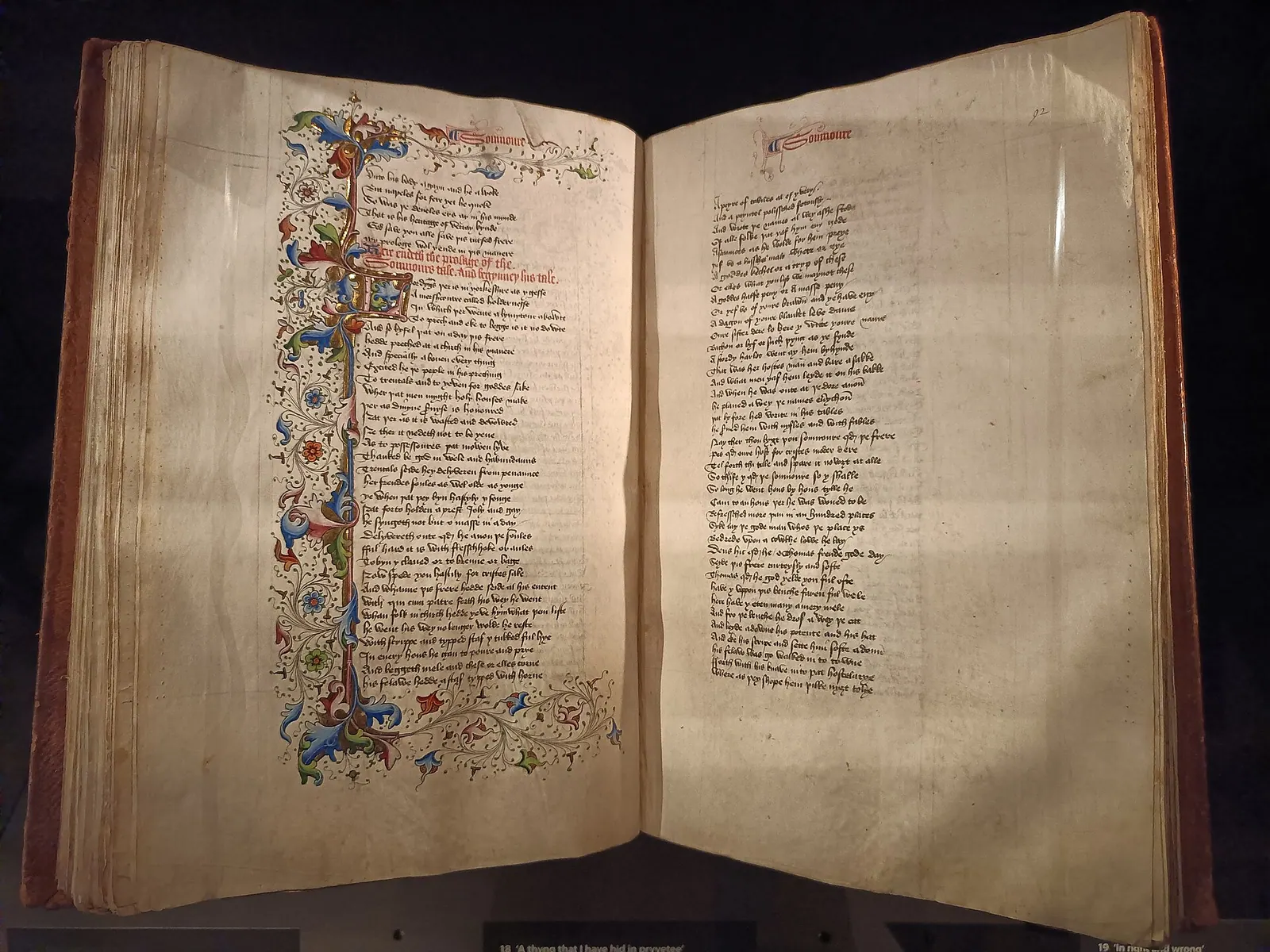
The Canterbury Tales is a poem by Geoffrey Chaucer. A pilgrim is a person who travels to a holy place. Chaucer’s pilgrims ride from London to Canterbury, telling stories on the way.
Who was Geoffrey Chaucer?
Chaucer was born in London in 1342, the son of a rich wine merchant. He worked at the king’s court and collected taxes at the Port of London. The cathedral’s learning site says he never finished the Tales.
Why Canterbury?
The pilgrims are going to the shrine (the holy resting place) of Thomas Becket. He was killed in the cathedral in 1170 (see the page before this one) and made a saint in 1173. The cathedral says this made Canterbury the third most important Christian pilgrimage site in the world, after Jerusalem and Rome.
The contest, and the missing end
About thirty pilgrims meet at the Tabard Inn in Southwark, across the river from London. The innkeeper plans 120 stories, and the best teller wins a dinner paid for by the others. But the poem stops on the road, and the pilgrims never reach Canterbury.
The Tales in Canterbury today
The Canterbury Tales Experience, in St Margaret’s Street, is a walk-through show that follows the pilgrims from the Tabard Inn to Canterbury. Check its website for opening times.
Pilgrims you will meet
The Knight
A respected soldier who had ridden to war farther from home than almost any other man.
The Wife of Bath
A cloth-maker from near Bath. She had married five times and had been to Jerusalem three times.
The Miller
A big, strong man who always won the wrestling prize and could break a door by running at it with his head.
Sources (5)
Why stop here
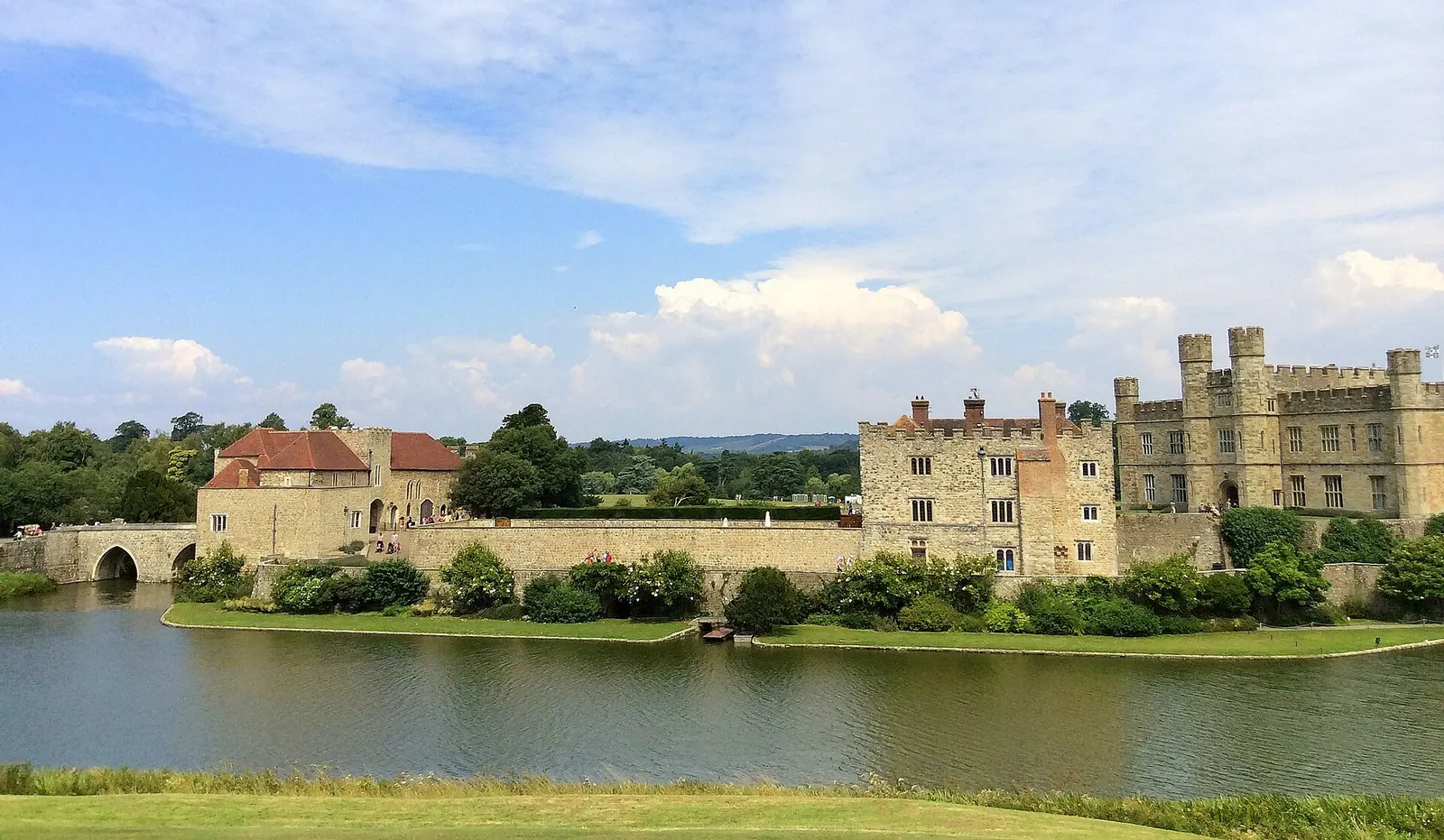
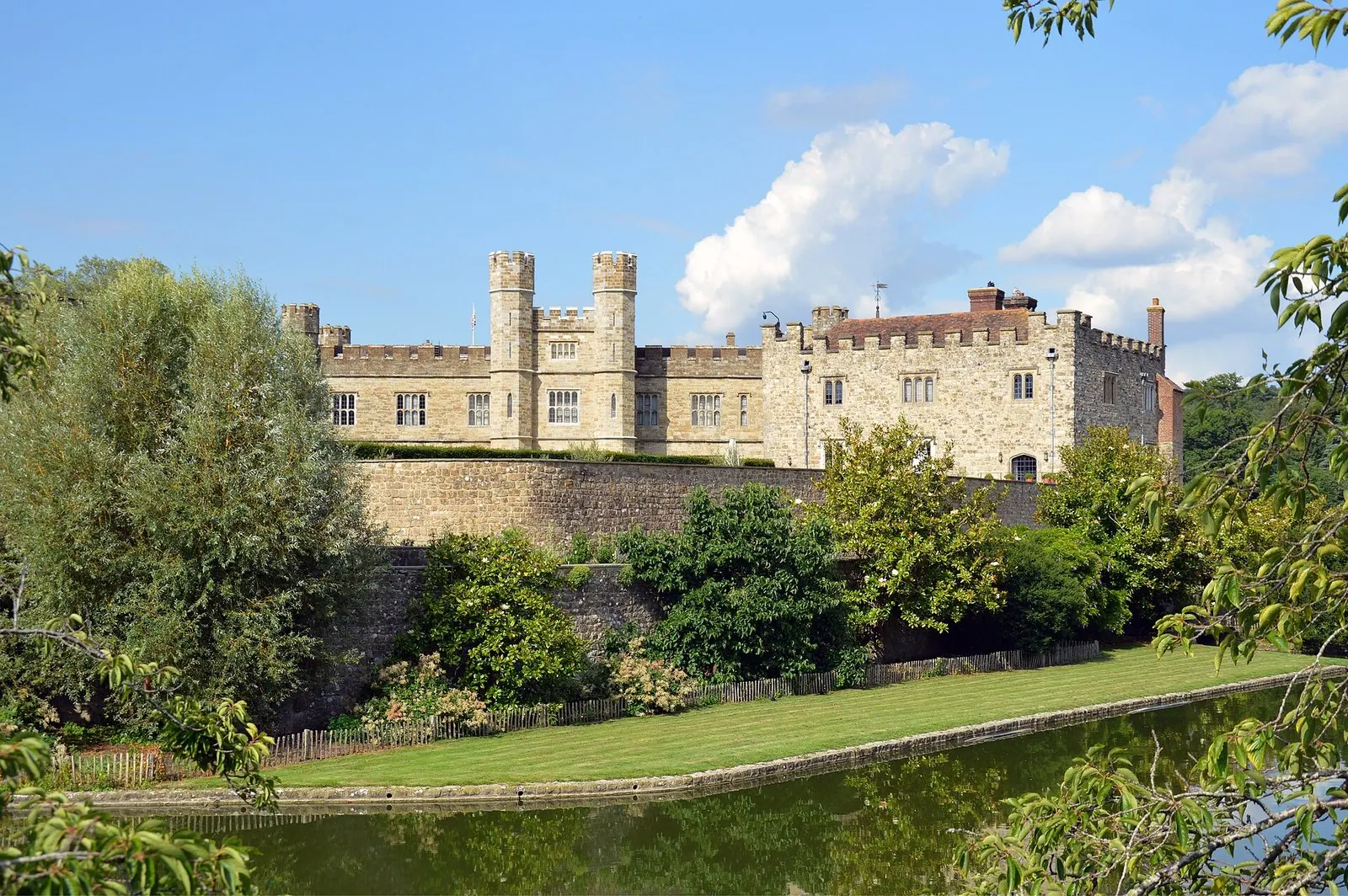
A castle reflected in water, rooms shaped by centuries of owners, and gardens to relax in. Leeds Castle brings royal history and the atmosphere of a country-house visit into one day from London. It is the place to choose if you would rather spend your day in and around one castle than move between several stops.
Don’t miss
A castle for queens
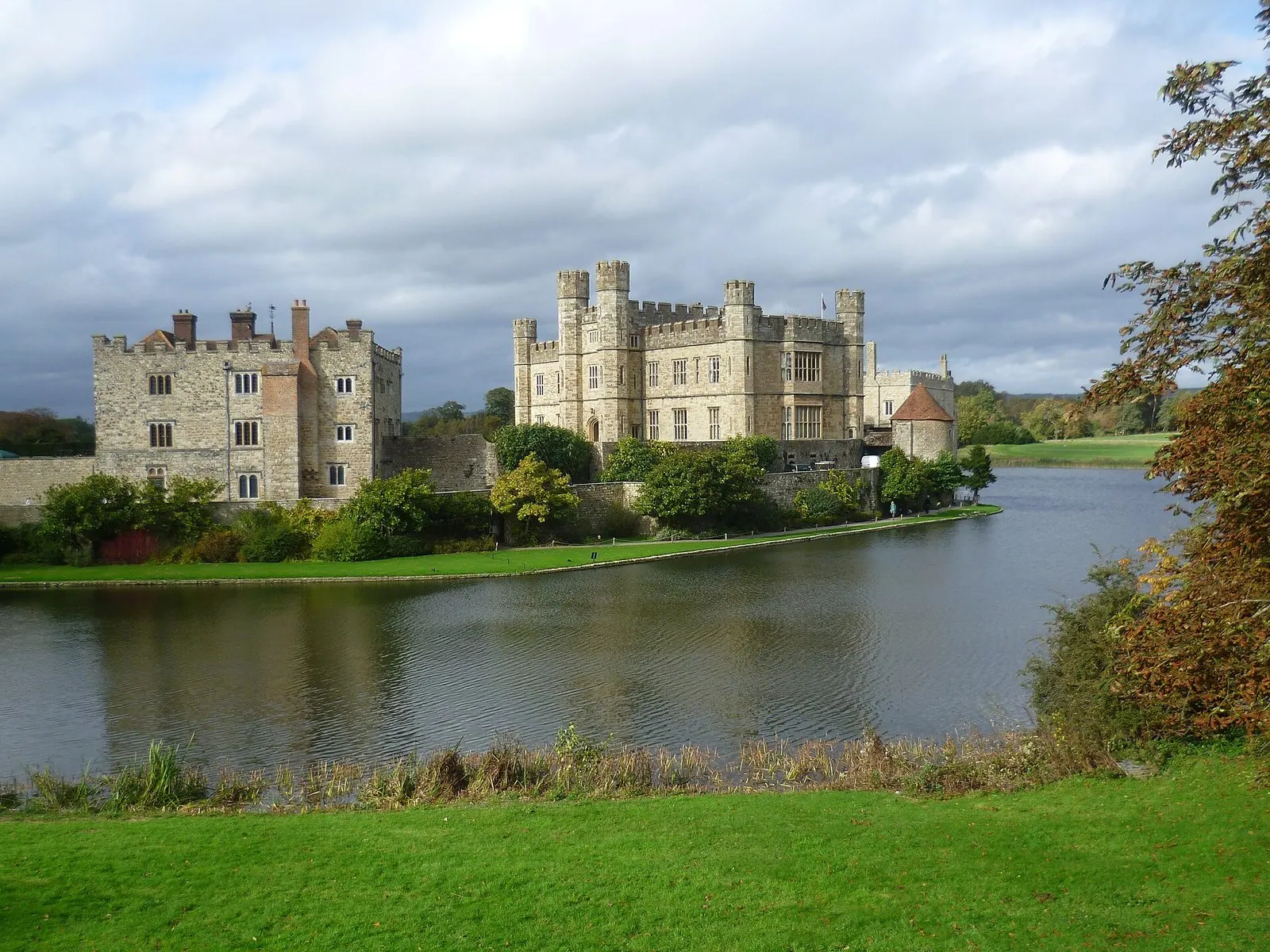
The Gloriette on the smaller island, joined to the main castle by a stone bridge with arches over the water. A multimedia guide, which comes with some tickets, tells the queens’ stories.
Your route
Cedar Lake and the first view
From the cascade at Cedar Lake, your first full view of the castle on its water.
The castle
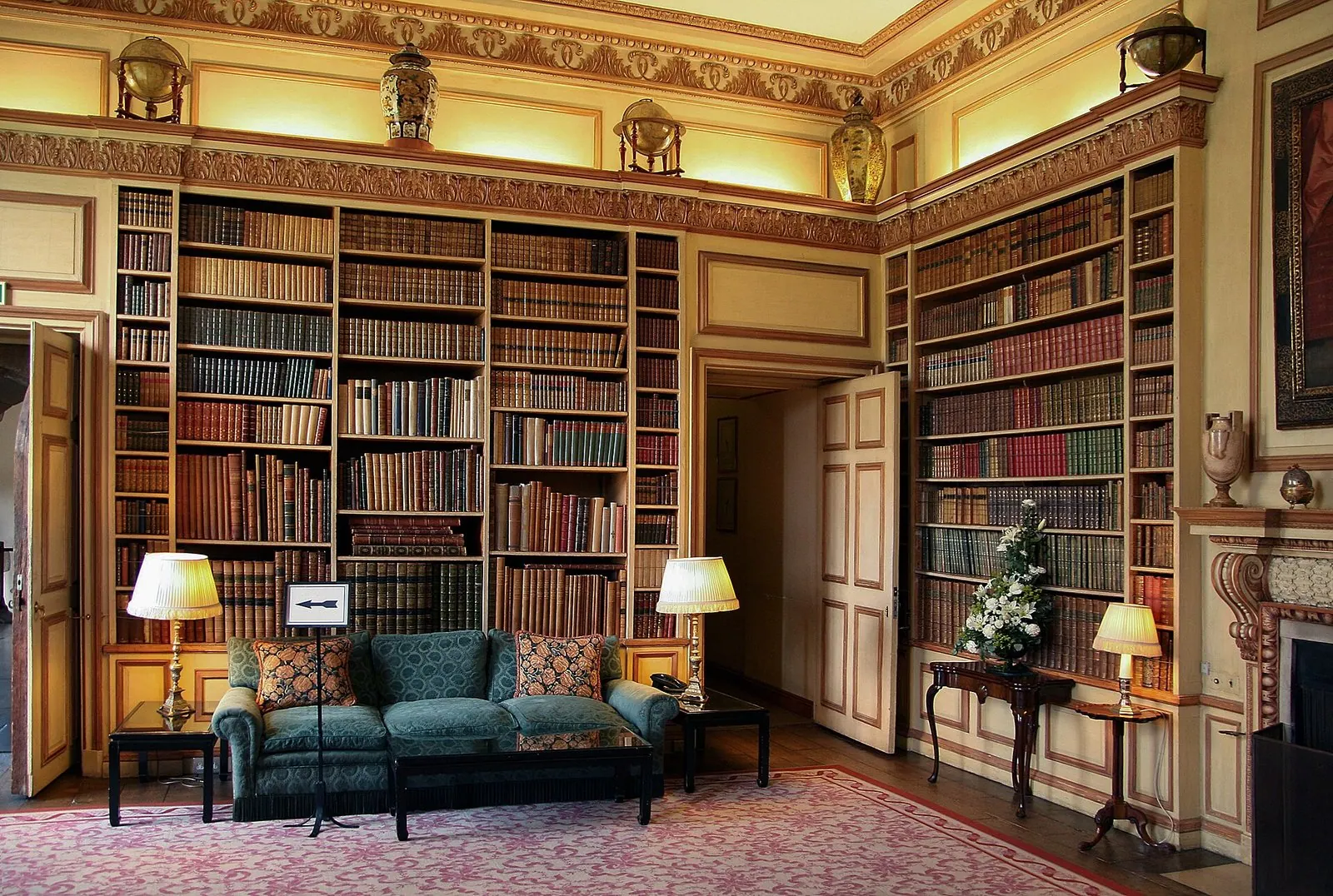
Cross the drawbridge to the castle island. Inside are the library and dining room, Lady Baillie’s rooms upstairs, and the drawing rooms.
The Dog Collar Museum
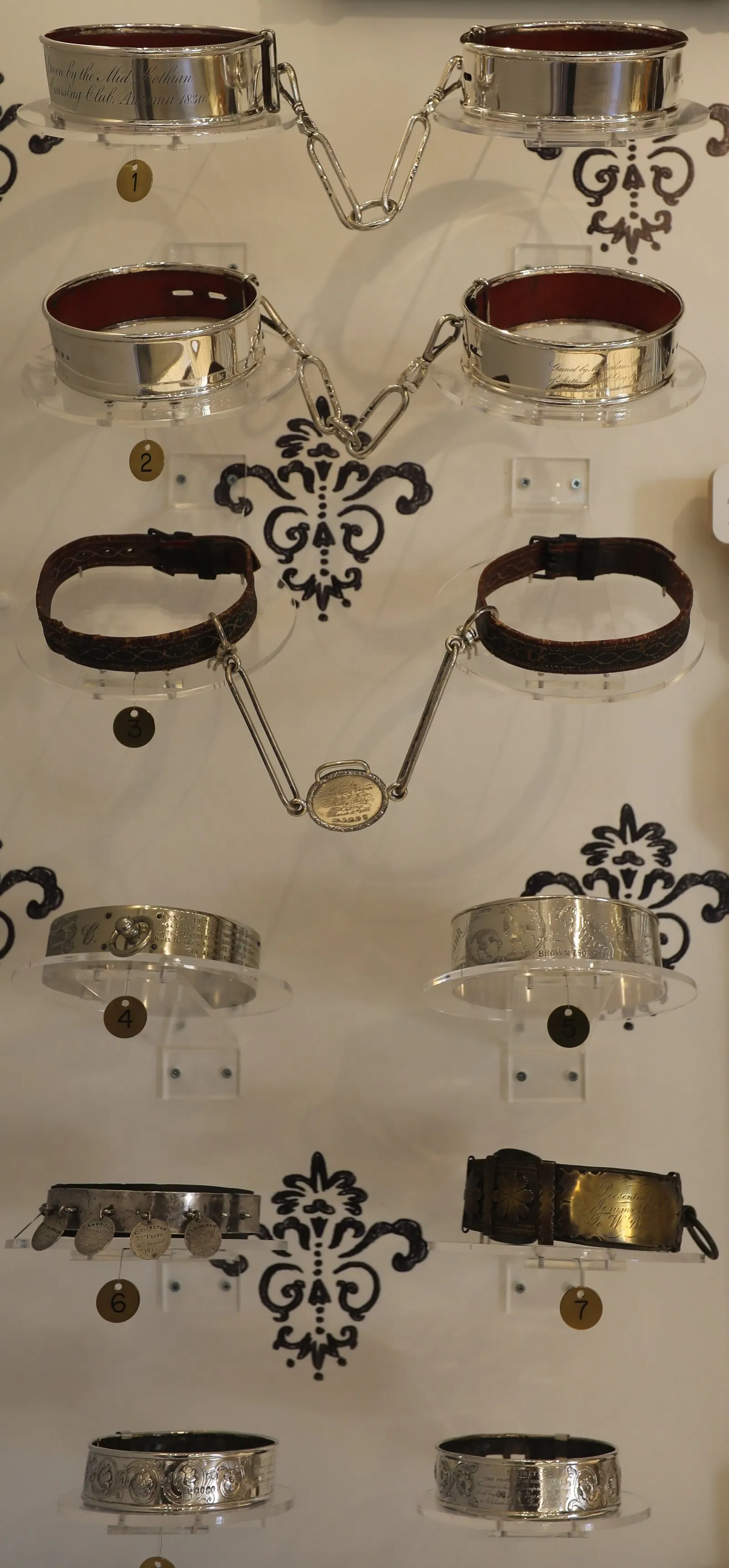
A small museum of dog collars beside the castle. The collars range from a Spanish iron collar of the late 1400s to modern ones made from tyres, beads and plastic.
The Culpeper Garden
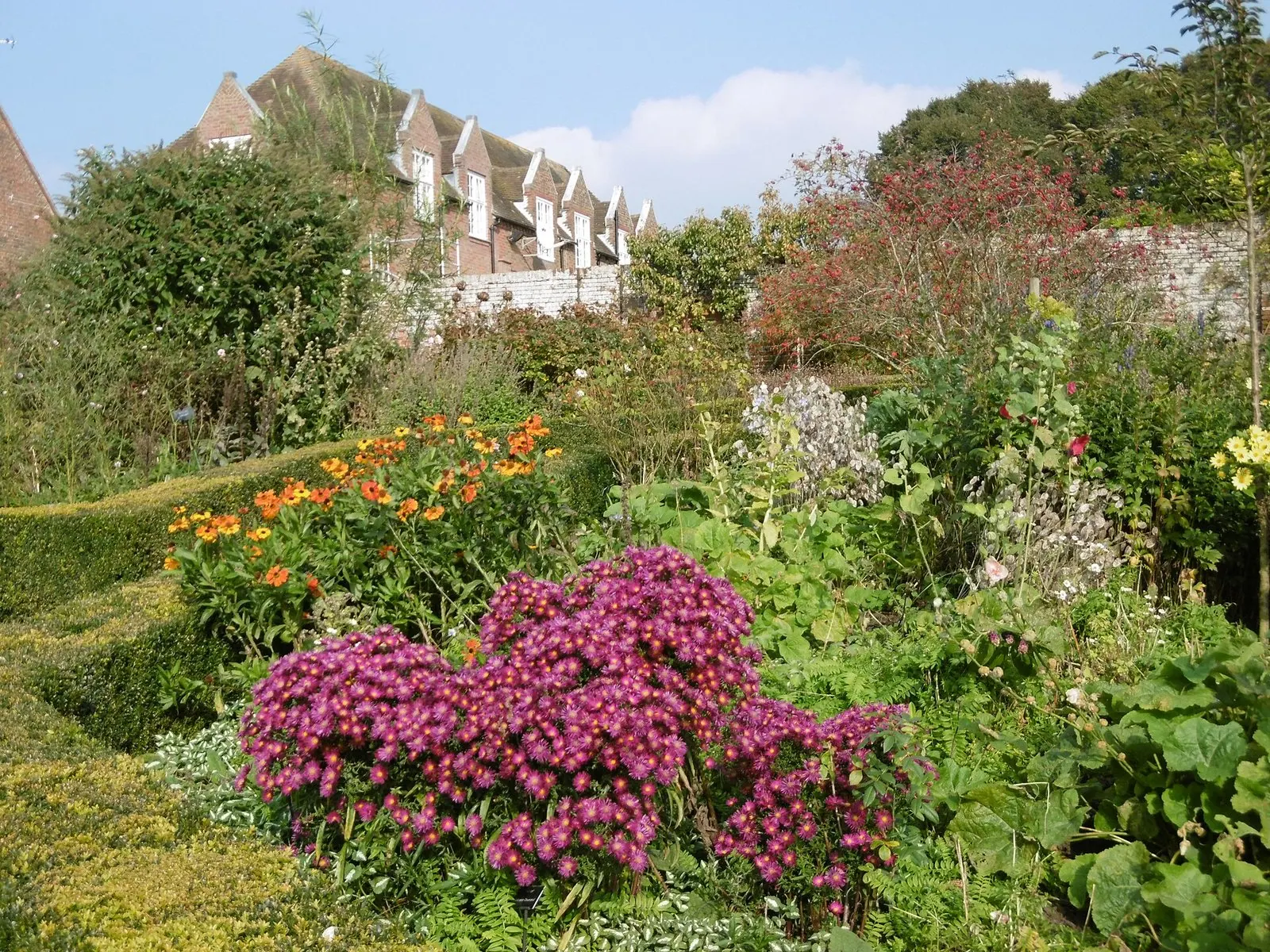
A cottage garden of roses, lupins and poppies inside low box hedges, where the castle’s kitchen garden once grew.
Lady Baillie Mediterranean Garden Terraces
A sunny terraced garden with herbs and fragrant plants, and views across the Great Water.
The Maze and Grotto
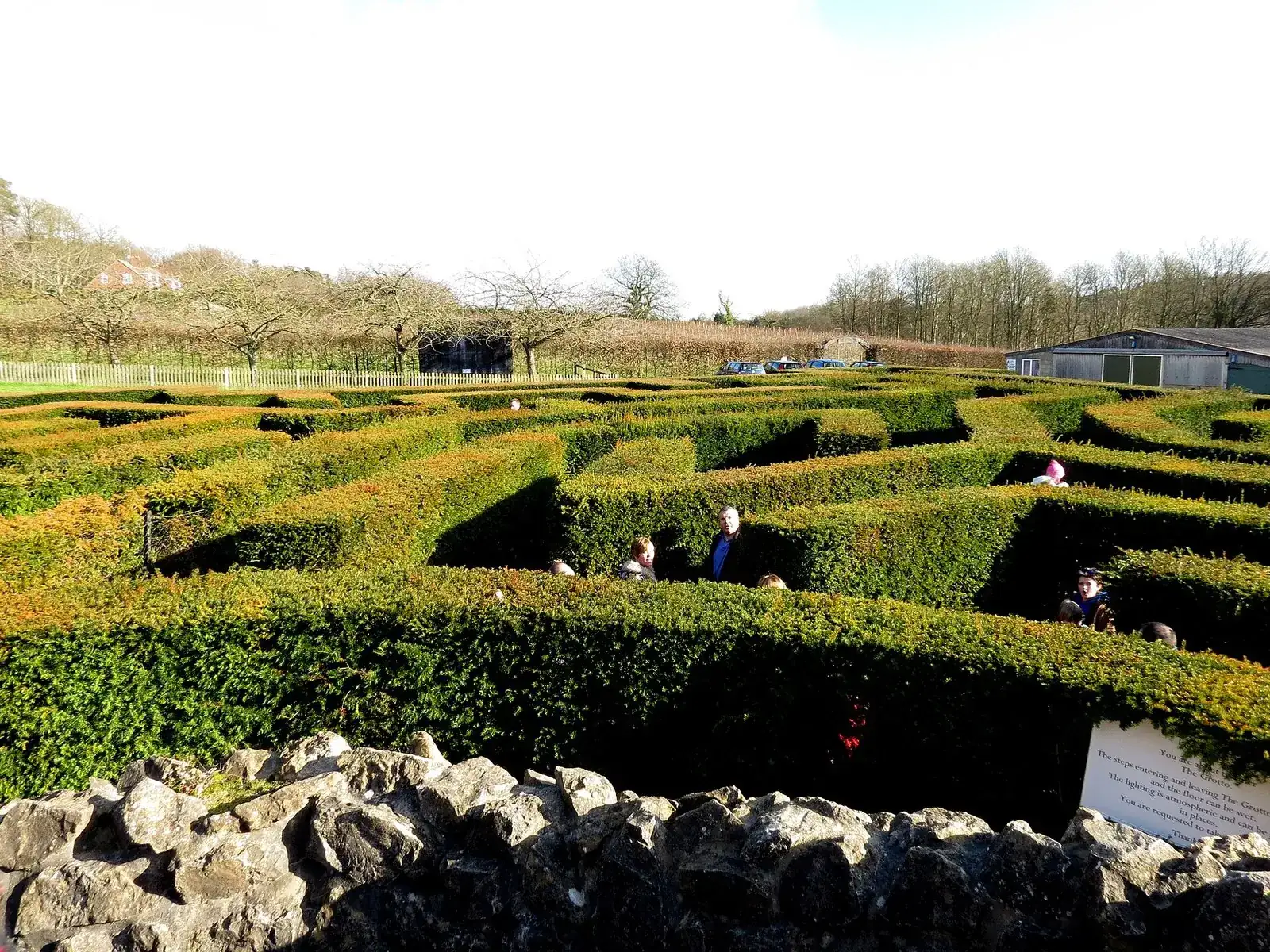
A maze of 2,400 yew trees. From the mound at its centre you see the circular pattern, and an underground grotto with mythical creatures leads you back out.
Toilets and food
Leeds Castle lists accessible toilets at the main entrance, on the Castle Island, near the Stable Courtyard and near the Knight’s Stronghold playground. Its page names the Maze Café, the seasonal Boathouse catering outlet and Castle View Restaurant. The page was checked on 30 October 2026.
Sources (8)
More days out from London
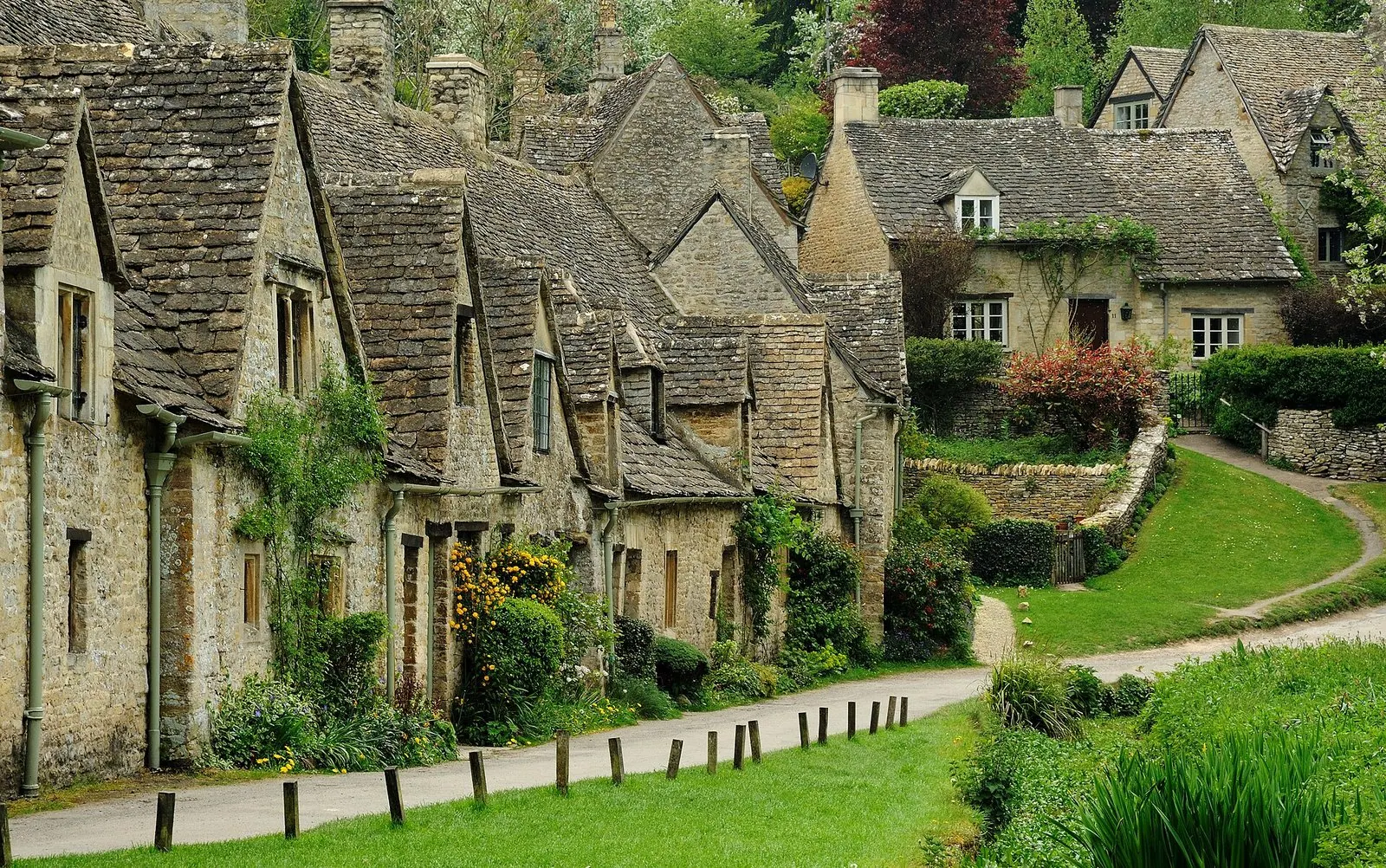
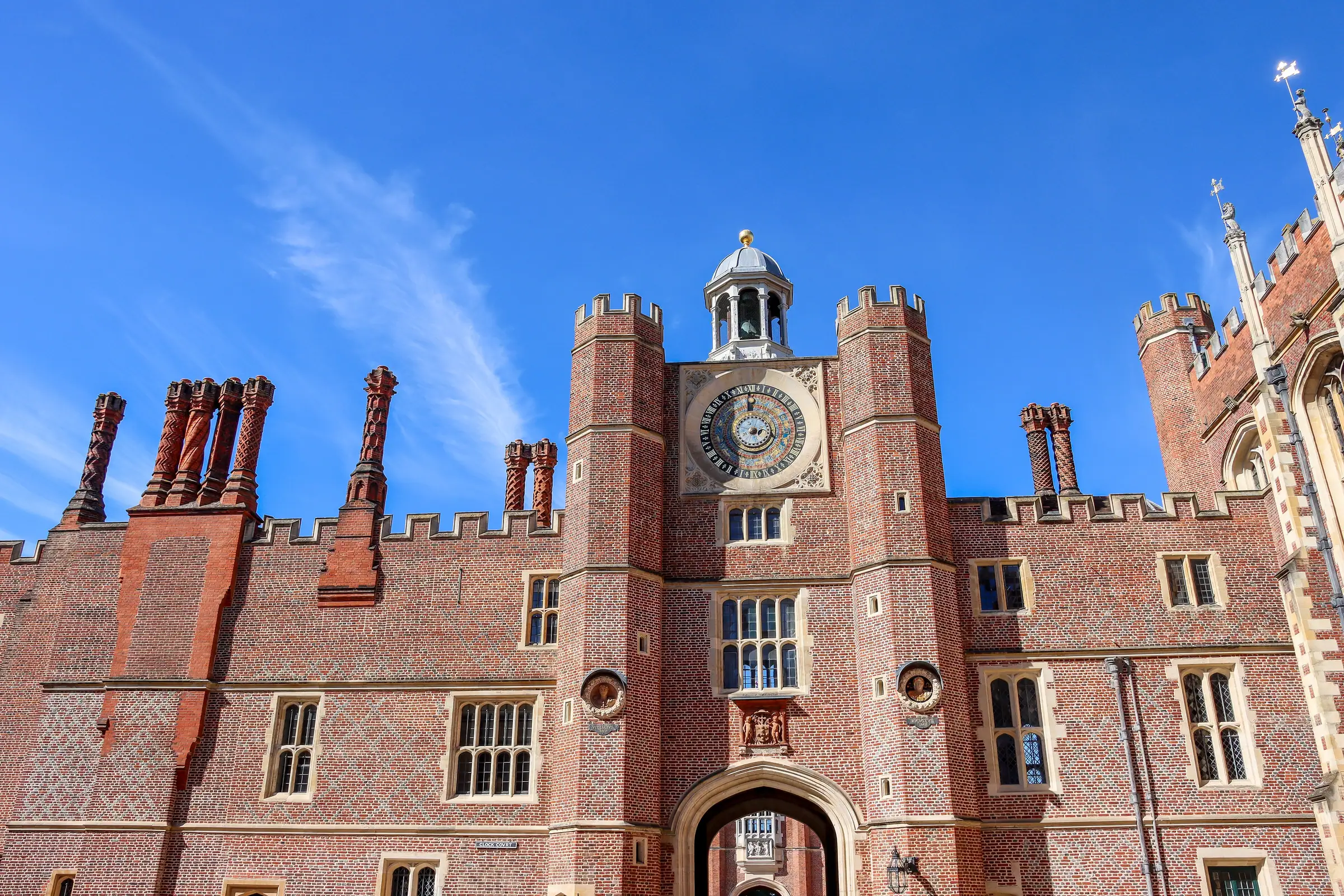
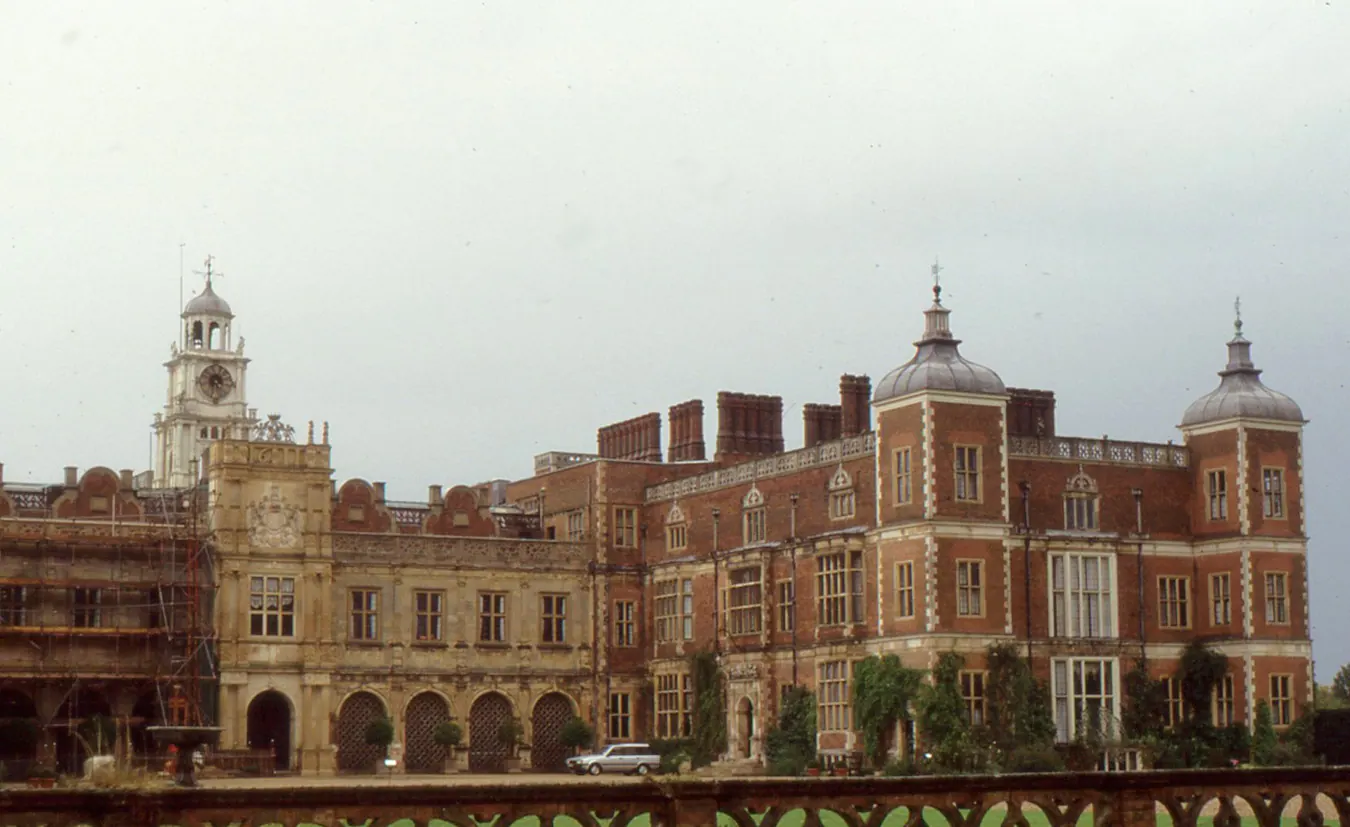
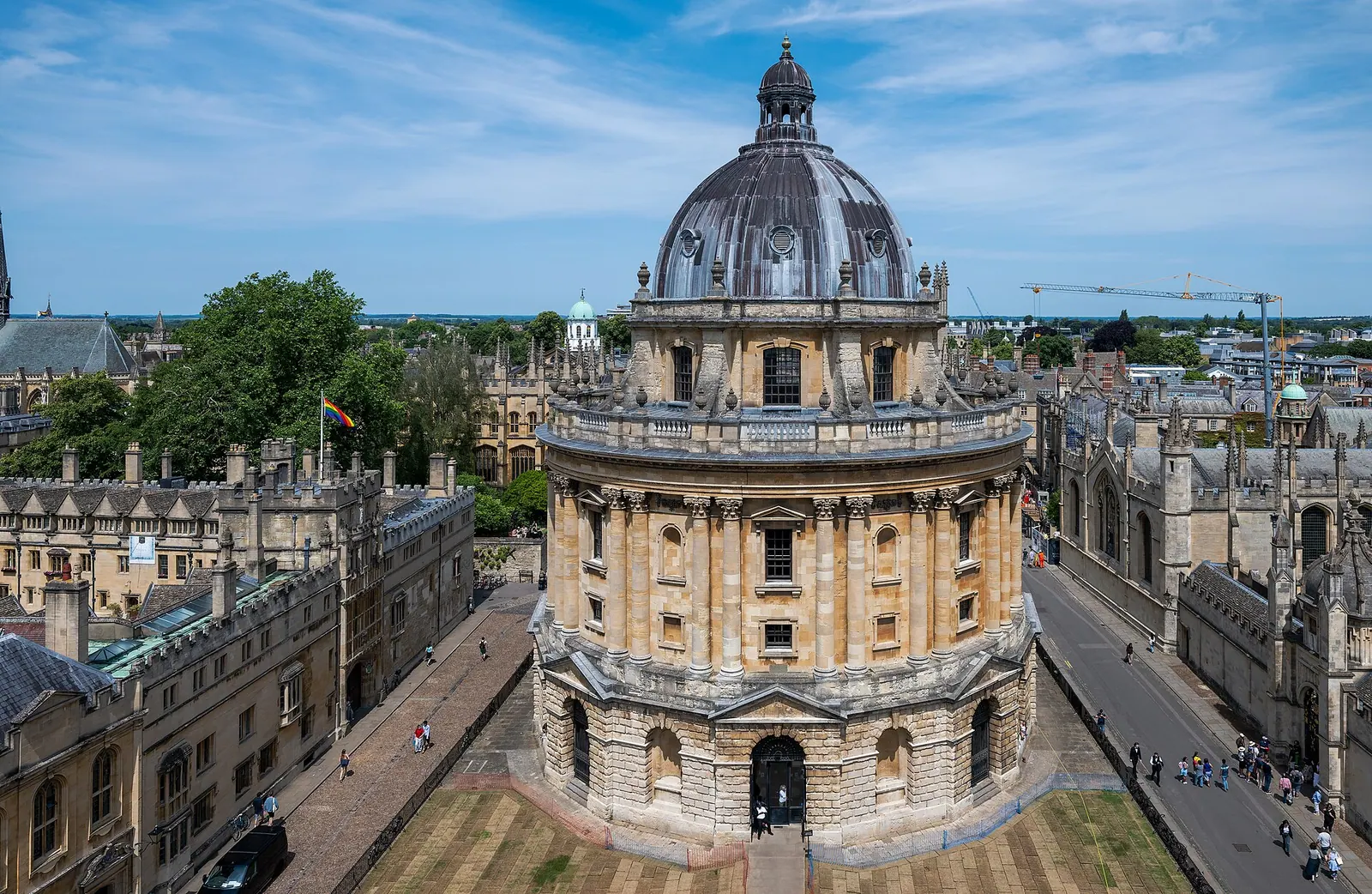
Each region has its own page, with every day trip to compare.
Spotted a change?
Opening times and prices change. Reply to the email this guide came in and tell us what you found.
Travelling with someone?
Forward the email, so they have the guide on their phone too.
Sources
White Cliffs of Dover
Dover Castle
Canterbury
Canterbury Cathedral
Thomas Becket: the murder and the pilgrims
The Canterbury Tales: why Canterbury?
Leeds Castle
Photo credits (46)


 see beyond / the city
Day trips from London
The Kent day guide
One page for each of the five stops on Kent day trips: what it is, what to see, what fits in the time you have, and where to find toilets and food.
How to use this guide
- 1Check how long your tour gives you at each stop. Your tour’s page lists the stops and the time at each one.
- 2On the stop’s page, tap how long your tour stops there: the route shows what fits.
- 3Set a phone alarm 10 minutes before you need to be back at the bus.
Inside
Page
seebeyondthecity.com/london/kent/
see beyond / the cityBefore you arrive · read this on the way
Kent in two minutes
Why the White Cliffs are white
The cliffs are made of chalk, a soft white limestone. The National Trust says it formed from tiny green algae that lived in the sea. When they died, their remains sank to the seabed. Over millions of years the seabed rose above the sea.
Look for: The pale chalk face, and green patches where the cliff is not allowed to wear away.
Flint, brick and tile in the villages
Under much of east Kent lies chalk, and in places the soil on top is clay full of flints. The Kent Downs landscape assessment says villages here were traditionally built of local flint, brick and tile. Many are little more than a church, a manor and some farm cottages.
Look for: Church and cottage walls with dark, knobbly flint stones set in lime mortar or framed by brick.
Oast houses and hop gardens
The Kent Downs assessment says east Kent was once a place of widespread hop growing. Oast houses, the buildings used for drying hops, still dot the countryside, although almost no hop gardens are in production there now.
Look for: Oast houses in the fields you pass, the buildings where hops were dried.
A little history
- A very old story
The white horse
No one knows for sure where Kent’s white horse comes from. A famous story links it to Hengist and Horsa, but that is legend. The horse is still the county’s emblem today.
- 597
Augustine and Canterbury
St Augustine arrived in Kent in 597, sent by Pope Gregory the Great. He set up the first cathedral at Canterbury, and the Archbishop of Canterbury still has his seat there.
- 1066 (a legend)
Invicta, unconquered
Kent’s motto is Invicta, Latin for unconquered. A local legend says it began when the men of Kent made a deal with William the Conqueror. It is a story, not proven history.
- Today
The Garden of England
Kent is called the Garden of England because of its fruit orchards. The orchard fruit and juice are good things to taste while you are here.
see beyond / the cityWhite Cliffs of Dover
Sea air and open space
Why stop here
The White Cliffs are cliffs of chalk (a soft white rock) beside the sea, with grass above them. This is the part of the day for looking at the view, walking outside and feeling far from London’s streets. You can walk above the coast and watch the sea (the English Channel) change in the light, and even a short visit gives you the view.
Don’t miss
Britain’s front door
The French coast on the horizon (only on a clear day), the ferries in Dover Harbour, and Dover Castle on the hill behind it.
First viewpoint · 15 min here · freeDon’t miss — Dover Harbour and its ferries below you, Dover Castle on the hill behind, and the French coast on a clear day.
Along the clifftop path · 30 min here · free — Open chalk grassland, grazing ponies and cattle, and in summer wild flowers and blue butterflies.
The Visitor Centre · 20 min here · free — A shop with gifts and local products, a second-hand bookshop, and a café with a view of the docks and the sea.
Also here, with more time: Fan Bay and the Deep Shelter tunnels (120 min, own ticket) · South Foreland Lighthouse (120 min, own ticket)
There is no entry charge to walk on the cliffs. Parking is charged unless you are a National Trust member or Blue Badge holder, and the lighthouse tower tour and Fan Bay are charged separately. Fan Bay and the lighthouse open on set days in season, so check before you plan to visit them.
The National Trust says the visitor centre is 150 metres from the bus parking. Toilets are at the back of the building. The cafeteria and the shop are at the front. The National Trust page was checked on 30 October 2026.
see beyond / the city Dover Castle
Towers, defences and wartime stories
Why stop here
Dover Castle is a fortress on a hill above the town of Dover. It has a huge Great Tower and a long history of defending the coast. Choose it when you want the castle itself to be part of your day, with Canterbury or the cliffs. Allow time to go inside. Going inside needs an entry ticket.
Don’t miss
A Roman lighthouse and a Saxon church
Lines of thin red Roman tiles in the lighthouse walls, and more Roman tiles around the church windows. The top part of the lighthouse was rebuilt in the Middle Ages.
The Great Tower · 45 min here · in the entry ticket — Henry II’s royal palace, with furnished medieval rooms, and views over the castle and the English Channel from the top. From 9 November 2026 two rooms are closed up for conservation work.
Roman lighthouse and St Mary in Castro · 20 min here · in the entry ticketDon’t miss — Britain’s oldest standing lighthouse, built by the Romans, beside the Anglo-Saxon church on its grassy mound.
Fire Command Post and Ramsay statue · 20 min here · in the entry ticket — A First World War lookout above the cliffs, with wide views of the Channel and the White Cliffs, and the statue of Admiral Ramsay nearby.
Underground Hospital, Secret Wartime Tunnels · 30 min here · in the entry ticket — A guided tour of the Second World War hospital in the chalk, with its operating theatre, wards and corridors.
Under Siege and the Spur · 30 min here · in the entry ticket — An exhibition about the siege of 1216, the medieval tunnels under the north defences, and the Spur viewpoint where the attackers camped.
Allow at least 45 minutes here: the first stop is The Great Tower.
English Heritage says the castle has male, female and disabled toilets in five places. The main restaurant is the NAAFI, with hot food, sandwiches and soup. A small Tunnels Tea Room sells sandwiches, cakes and ice cream. You can also eat a picnic in the grounds. The page was checked on 30 October 2026.
see beyond / the city Canterbury
Old streets and the river
Why stop here
Canterbury is a historic city you can walk around. You can see old streets, the Westgate Towers and a river with gardens and punts (flat boats pushed with a long pole). Time here is for wandering and finding a place to take a break. Going inside the cathedral needs its own entry ticket.
Don’t miss
A city gate built against invasion
The small openings for guns in the round towers, and the stone bridge over the river in front of the gate. Inside, the only way up is a narrow staircase of five flights.
Westgate Gardens · 20 min here · free — Lawns and flower beds beside the River Stour, and a plane tree more than 200 years old. Punt trips run on the river from mid-March to the end of October.
Westgate Towers · 30 min here · own ticketDon’t miss — The largest medieval city gate still standing in England, built from 1379, with a small museum inside and a climb to the battlements for a view over the city roofs.
The Old Weavers' House, Eastbridge Hospital and Greyfriars · 30 min here · own ticket — The timber-framed Old Weavers' House by the river, and close by on the main street Eastbridge Hospital, which has welcomed pilgrims since 1190. Next door, the Franciscan Gardens hold Greyfriars Chapel.
The Beaney · 30 min here · free — Canterbury's museum, art gallery and library, in a grand building of 1897 to 1899 on the High Street.
Canterbury Roman Museum · 45 min here · own ticket — The mosaic floor of a Roman town house, found after the bombing of 1942, with Roman objects from the city around it.
St Augustine's Abbey · 60 min here · own ticket — The ruins of the abbey that Augustine founded after 597. There is a small museum, a free audio tour and a virtual reality view of the abbey in the early 1500s.
Has a page of its own: Canterbury Cathedral (60 min, page 6)
Visit Canterbury says the West End, by Westgate Gardens, has cafes, restaurants and bars. A mobile cafe runs at Tower House in summer. It says the Toddler’s Cove playground, further along the river path, has toilets and a refreshment van.
The Goods Shed, next to Canterbury West station, calls itself a farmers market, food hall and restaurant. Lunch is served Tuesday to Sunday, 12 pm to 3 pm. It is closed on Mondays.
see beyond / the city Canterbury Cathedral
A medieval cathedral up close
Why stop here
Go inside the cathedral in the middle of Canterbury. You can see the nave (the long main hall) and the crypt (a room under the church), which is the oldest part of the building. There is also stained glass from the Middle Ages. It is a visit with its own entry ticket.
Don’t miss
Look up into the central tower
From the top of the Pulpitum Steps, the fan-shaped stone ceiling high inside the tower. Watch your step while you look up. Outside, the same tower rises above the middle of the roof.
The nave · 15 min here · in the entry ticket — The main visitor door leads into the nave, the long main hall rebuilt between 1377 and 1405. Just inside, look for the Canterbury Cross carved in stone.
The Martyrdom · 10 min here · in the entry ticket — The place where Thomas Becket was killed in 1170, with his name in the floor, an altar and the sculpture of swords above it.
The crypt · 15 min here · in the entry ticket — The oldest part of the cathedral, with round Norman arches, carved columns and the place of Becket’s first tomb.
Pulpitum Steps and Bell Harry Tower · 10 min here · in the entry ticketDon’t miss — Climb to the top of the steps and look straight up into the fan vaulting of the central tower. The stone screen here is carved with Lancastrian kings.
Trinity Chapel · 15 min here · in the entry ticket — The candle that marks where Becket’s shrine stood. The Miracle Windows are all around it, and the tomb of the Black Prince is close to the shrine site.
Great Cloister and Chapter House · 20 min here · in the entry ticket — The covered walk of the monks’ monastery, with over 800 carved shields, green men, rabbits and a mermaid. Beside it is the Chapter House, where the monks met every day.
Sightseeing needs a ticket, bought online or at the Visitor Centre. Going to a service or into a chapel to pray is always free. On Sundays the grounds and shop open before the cathedral church does, so check the day's hours.
Canterbury Cathedral says its public toilets are open 9.00 am to 6.30 pm daily. Its café, The Lounge at Cathedral Lodge, is open 10.00 am to 4.00 pm for coffee, lunch and snacks. In summer you can eat outside in the Campanile Garden. The cathedral page was checked on 30 October 2026.
see beyond / the city see beyond / the cityThomas Becket: the murder and the pilgrims
A murder in 1170, a saint, and centuries of pilgrims
Thomas Becket was Archbishop of Canterbury. On 29 December 1170, four knights killed him inside his own cathedral. This page tells the story, and why pilgrims came here for hundreds of years.
The murder, 1170
Becket and King Henry II argued for many years. The story says the king cried, “Who will rid me of this turbulent priest?” Four knights rode to Canterbury and killed Becket in the north-west transept. One sword blow was so hard that the tip of the blade broke on the stone floor.
A saint
Soon people said that sick pilgrims were healed through Becket. The Pope made him a saint in 1173. A stone in the floor with the name THOMAS marks the place where he died.
The shrine and the windows
A Canterbury monk, Benedict of Peterborough, wrote the miracle stories down. Between 1180 and 1220, glass makers turned dozens of them into pictures for twelve windows around the Trinity Chapel. In 1220 Becket’s body was moved into a new shrine there, and pilgrims came from across Europe to pray. Henry VIII had the shrine destroyed in 1538.
Chaucer’s pilgrims
Geoffrey Chaucer’s poem, The Canterbury Tales, follows pilgrims who ride from London to Becket’s shrine, telling stories on the way. The next page is about them.
see beyond / the city see beyond / the cityThe Canterbury Tales: why Canterbury?
A famous poem about pilgrims on the road to Becket
The Canterbury Tales is a poem by Geoffrey Chaucer. A pilgrim is a person who travels to a holy place. Chaucer’s pilgrims ride from London to Canterbury, telling stories on the way.
Who was Geoffrey Chaucer?
Chaucer was born in London in 1342, the son of a rich wine merchant. He worked at the king’s court and collected taxes at the Port of London. The cathedral’s learning site says he never finished the Tales.
Why Canterbury?
The pilgrims are going to the shrine (the holy resting place) of Thomas Becket. He was killed in the cathedral in 1170 (see the page before this one) and made a saint in 1173. The cathedral says this made Canterbury the third most important Christian pilgrimage site in the world, after Jerusalem and Rome.
The contest, and the missing end
About thirty pilgrims meet at the Tabard Inn in Southwark, across the river from London. The innkeeper plans 120 stories, and the best teller wins a dinner paid for by the others. But the poem stops on the road, and the pilgrims never reach Canterbury.
The Tales in Canterbury today
The Canterbury Tales Experience, in St Margaret’s Street, is a walk-through show that follows the pilgrims from the Tabard Inn to Canterbury. Check its website for opening times.
Pilgrims you will meet
The Knight
A respected soldier who had ridden to war farther from home than almost any other man.
The Wife of Bath
A cloth-maker from near Bath. She had married five times and had been to Jerusalem three times.
The Miller
A big, strong man who always won the wrestling prize and could break a door by running at it with his head.
see beyond / the city Leeds Castle
A castle on the water
Why stop here
A castle reflected in water, rooms shaped by centuries of owners, and gardens to relax in. Leeds Castle brings royal history and the atmosphere of a country-house visit into one day from London. It is the place to choose if you would rather spend your day in and around one castle than move between several stops.
Don’t miss
A castle for queens
The Gloriette on the smaller island, joined to the main castle by a stone bridge with arches over the water. A multimedia guide, which comes with some tickets, tells the queens’ stories.
Cedar Lake and the first view · 15 min here · in the entry ticket — From the cascade at Cedar Lake, your first full view of the castle on its water.
The castle · 60 min here · in the entry ticketDon’t miss — Cross the drawbridge to the castle island. Inside are the library and dining room, Lady Baillie’s rooms upstairs, and the drawing rooms.
The Dog Collar Museum · 15 min here · in the entry ticket — A small museum of dog collars beside the castle. The collars range from a Spanish iron collar of the late 1400s to modern ones made from tyres, beads and plastic.
The Culpeper Garden · 20 min here · in the entry ticket — A cottage garden of roses, lupins and poppies inside low box hedges, where the castle’s kitchen garden once grew.
Lady Baillie Mediterranean Garden Terraces · 20 min here · in the entry ticket — A sunny terraced garden with herbs and fragrant plants, and views across the Great Water.
The Maze and Grotto · 20 min here · in the entry ticket — A maze of 2,400 yew trees. From the mound at its centre you see the circular pattern, and an underground grotto with mythical creatures leads you back out.
With only 60 minutes, go straight to the castle (60 min).
Leeds Castle lists accessible toilets at the main entrance, on the Castle Island, near the Stable Courtyard and near the Knight’s Stronghold playground. Its page names the Maze Café, the seasonal Boathouse catering outlet and Castle View Restaurant. The page was checked on 30 October 2026.
see beyond / the city see beyond / the cityMore days out from London
Each region has its own page, with every day trip to compare.
Ready to choose a tour?
See every Kent day trip side by side. seebeyondthecity.com/london/kent/#compare
Bath and Stonehenge
Stonehenge & Roman Bath
Stonehenge · Bath · Castle Combe
Up to about 180 km · 111 miles
Get the Bath and Stonehenge day guide
seebeyondthecity.com/london/bath-stonehenge/
The Cotswolds
Cotswold villages & market towns
Bibury · Bourton-on-the-Water · Stow-on-the-Wold
Up to about 153 km · 95 miles
Get the Cotswolds day guide
seebeyondthecity.com/london/cotswolds/
Hampton Court
Hampton Court Palace
Hampton Court Palace
Get the Hampton Court day guide
seebeyondthecity.com/london/hampton-court/
Hatfield
Hatfield House
Hatfield House
Get the Hatfield day guide
seebeyondthecity.com/london/hatfield/
Oxford and Stratford
Oxford, Stratford & Warwick
Oxford · Stratford-upon-Avon · Warwick Castle
Up to about 163 km · 101 miles
Get the Oxford and Stratford day guide
seebeyondthecity.com/london/oxford-stratford/
Seven Sisters and Brighton
Seven Sisters & Brighton
Seven Sisters · Brighton · Beachy Head
Up to about 121 km · 75 miles
Get the Seven Sisters and Brighton day guide
seebeyondthecity.com/london/sussex/
Windsor
Windsor Castle and royal Windsor
Windsor Castle · St George's Chapel · Windsor town
About 36 km · 22 miles
Get the Windsor day guide
seebeyondthecity.com/london/windsor/
Spotted a change?
Opening times and prices change. Reply to the email this guide came in and tell us what you found.
Travelling with someone?
Forward the email, so they have the guide on their phone too.
see beyond / the citysee beyond / the citySources
White Cliffs of Dover
National Trust: the White Cliffs of Dover
Dover Castle
English Heritage: history of Dover Castle
English Heritage: Dover Castle itineraries
English Heritage: facilities and tours
English Heritage: Dover Castle Under Siege
English Heritage: things to see and do
Canterbury
Canterbury Archaeological Trust: Westgate and City Gaol
Visit Canterbury: Westgate Towers Museum and Viewpoint
Visit Canterbury: Westgate Gardens
Canterbury Museums: Roman Museum visit information
Visit Canterbury: St Augustine's Abbey
Canterbury Cathedral
Canterbury Cathedral: architecture
Canterbury Cathedral learning site: the cathedral
Canterbury Cathedral: cathedral grounds
Thomas Becket: the murder and the pilgrims
Canterbury Cathedral: our story
The Canterbury Tales: why Canterbury?
Canterbury Cathedral learning site: Chaucer
Canterbury Cathedral learning site: pilgrimage today
Harvard’s Geoffrey Chaucer Website: summary of the framing narrative
see beyond / the cityPhoto credits