The real England, in one easy day from London
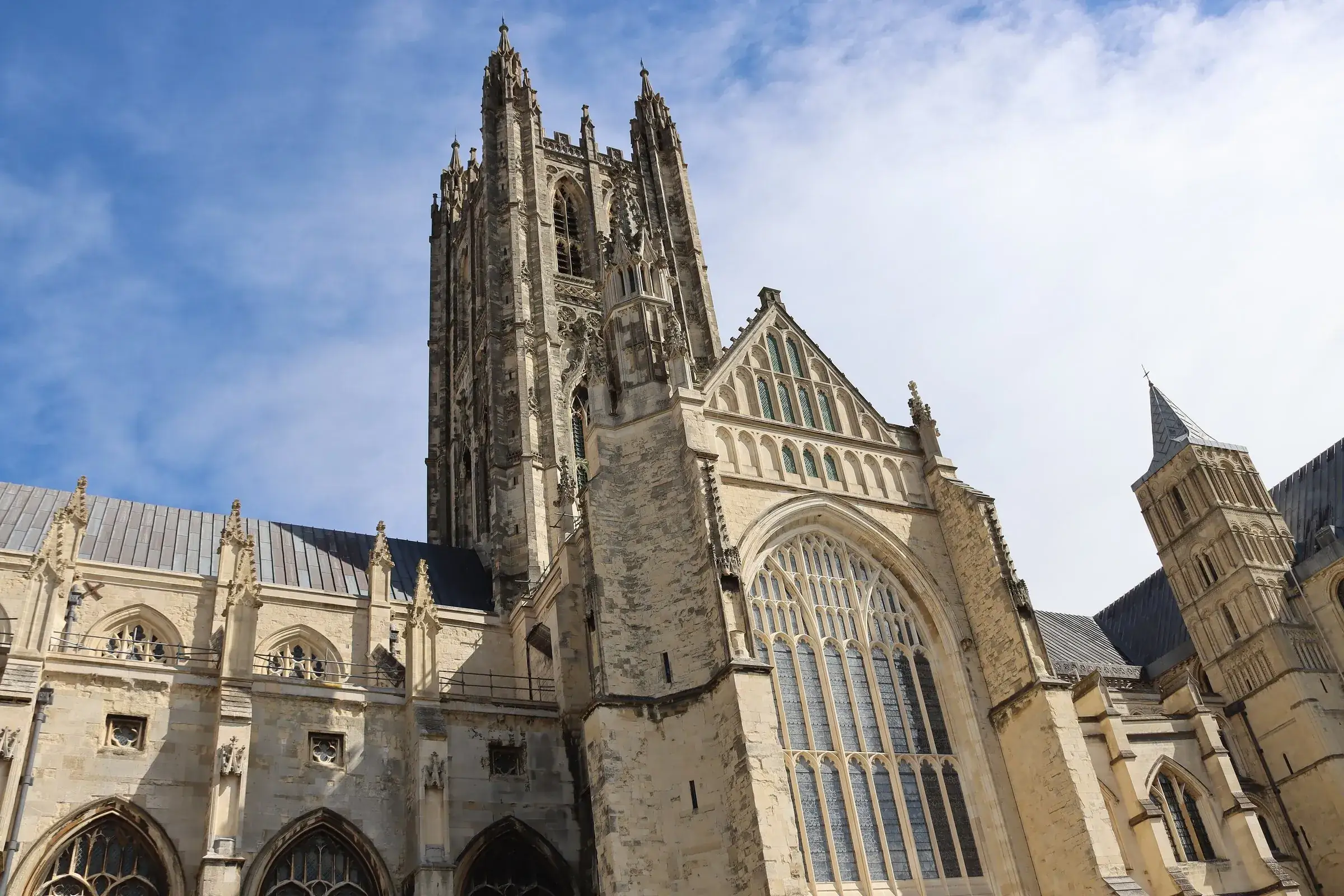
The sunlit stone cathedral seen from below, with the tall Bell Harry tower, pinnacles and a large pointed transept window against pale sky.

A medieval cathedral to step inside

Canterbury Cathedral

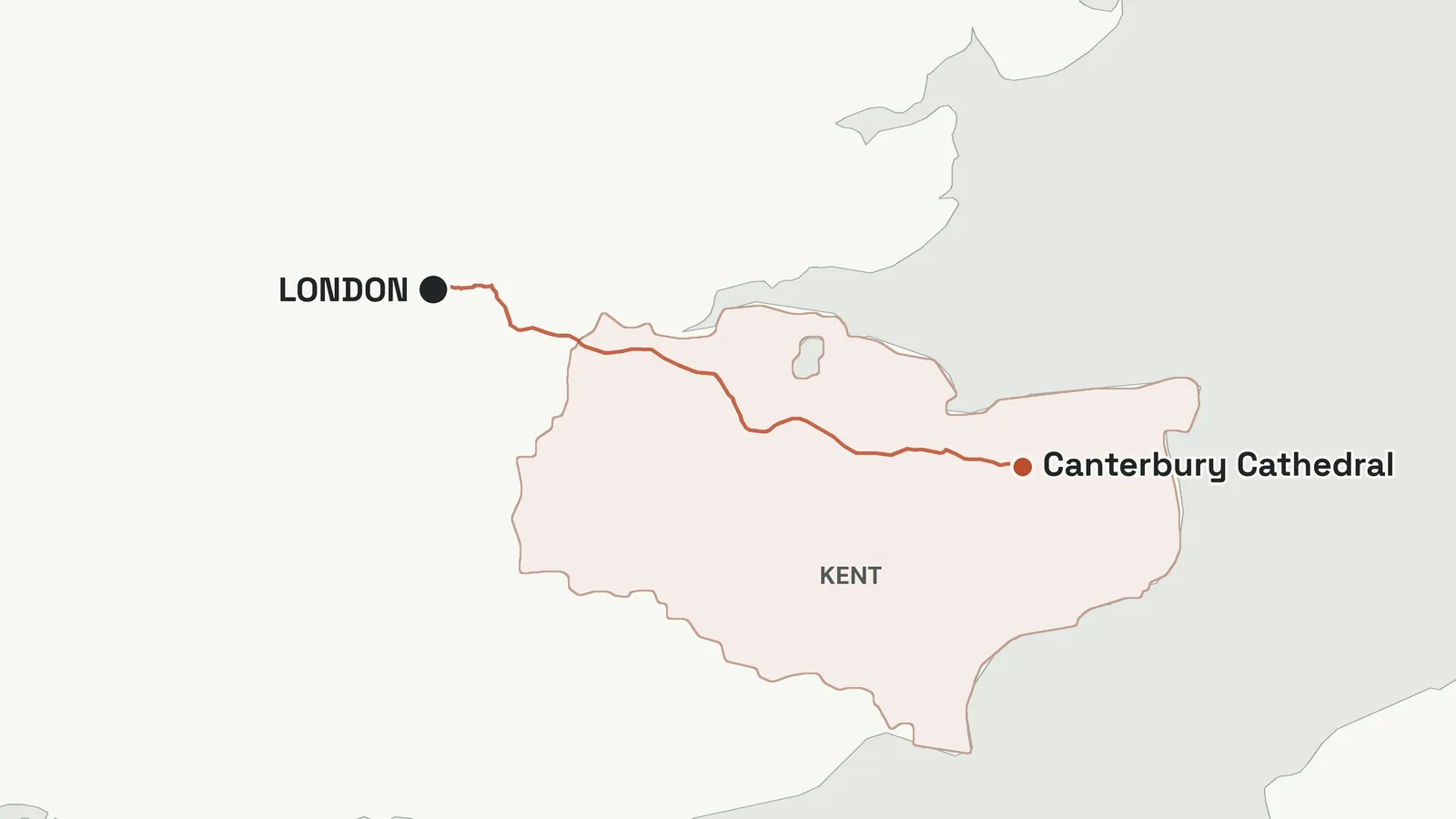
Centre of Canterbury, Kent · a day trip from London

See how long each tour stops in Canterbury Cathedral →

Why it matters

Why Canterbury Cathedral matters.

This is England’s first cathedral, founded by St Augustine in 597, and the mother church of Anglican churches around the world. Archbishop Thomas Becket was murdered here in 1170, and pilgrims came from all over Europe to his shrine. Here is what to look for inside.

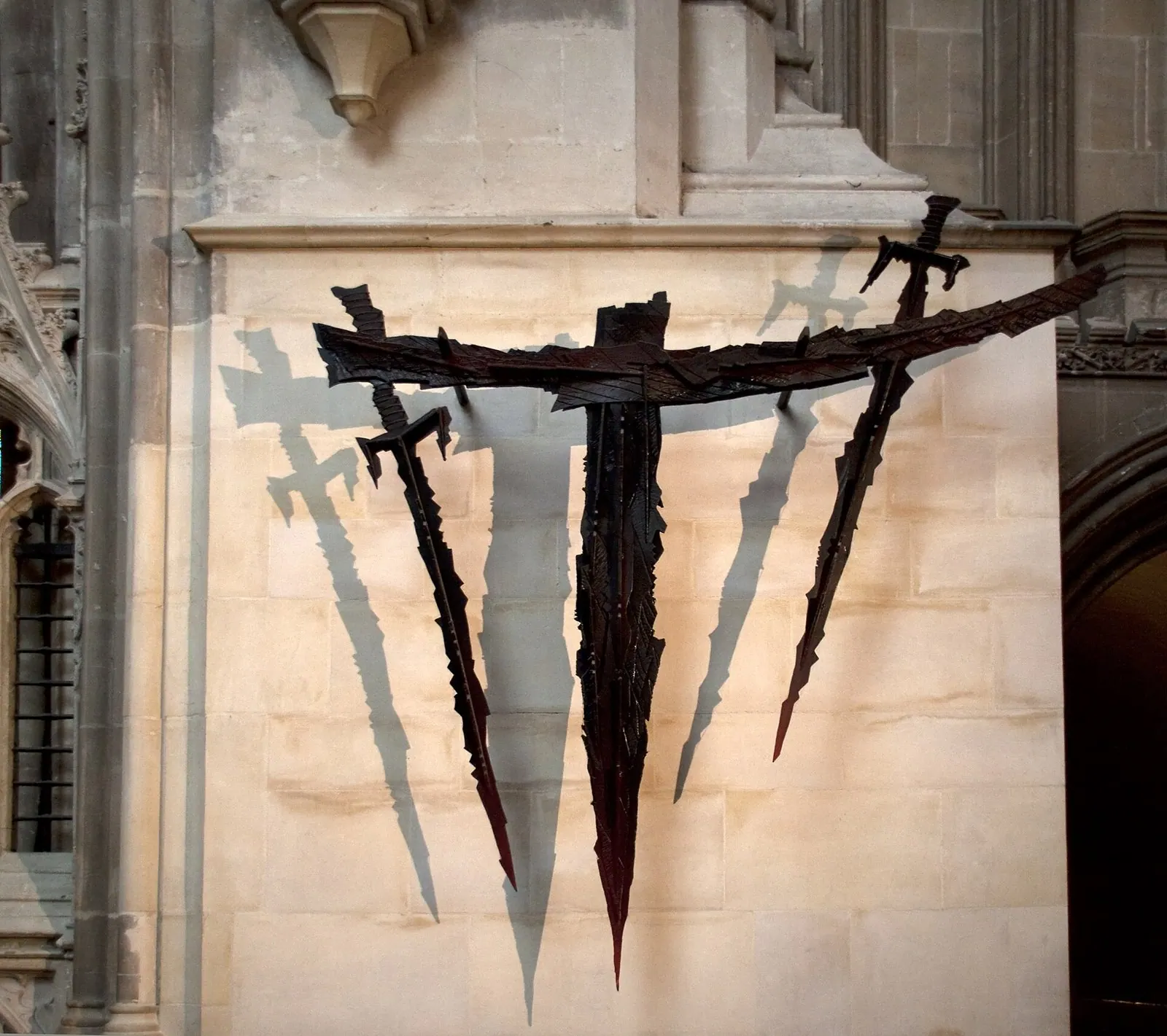
Dark metal sword sculpture with crossbar and swords pointing down, casting long shadows on a warmly lit pale stone wall.

01

Where Thomas Becket was killed

Archbishop Thomas Becket was murdered inside his own cathedral on 29 December 1170.

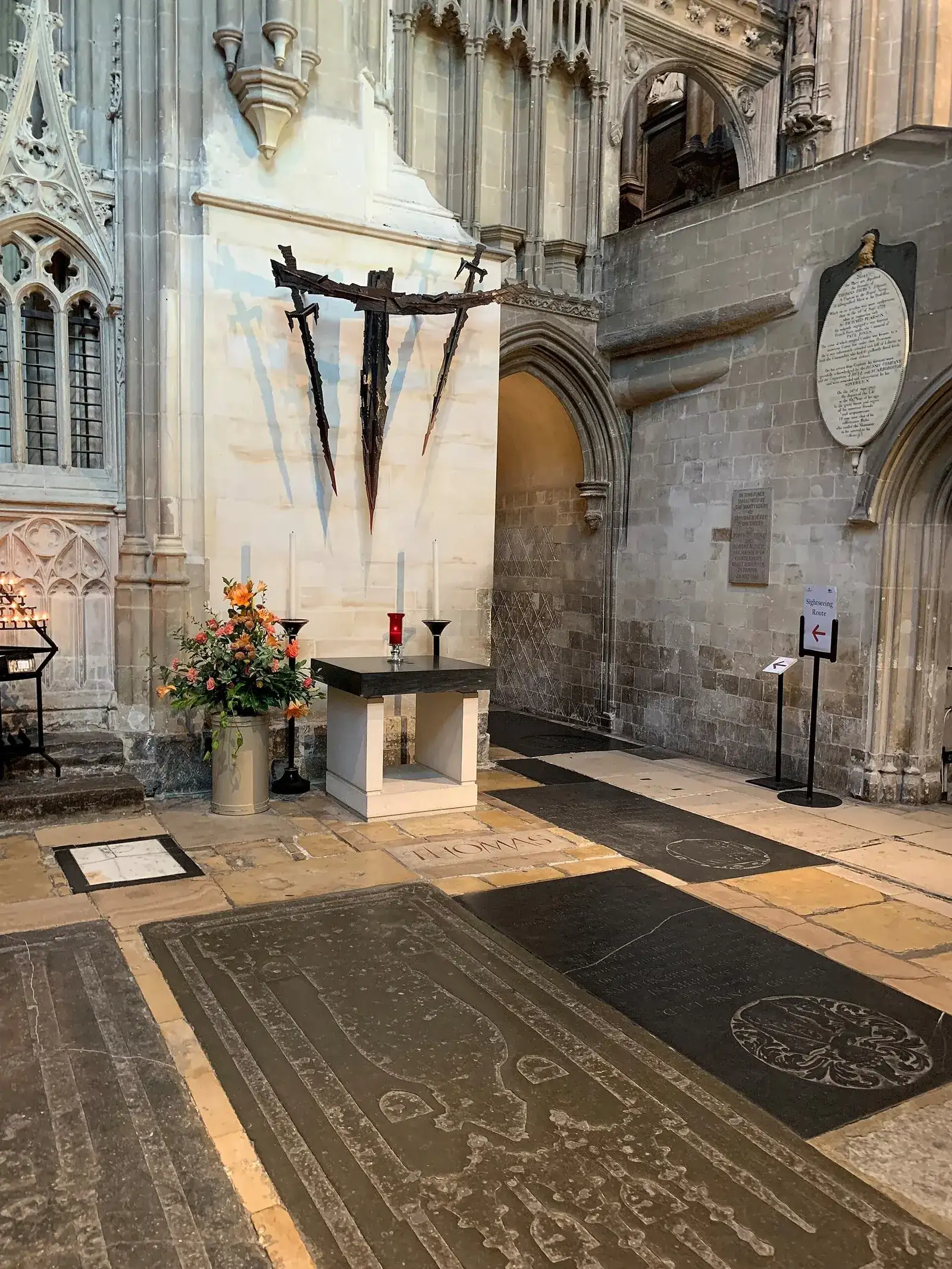
Becket and King Henry II argued for many years. The story says the king cried, “Who will rid me of this turbulent priest?” Four knights then rode to Canterbury and killed Becket here, in the north-west transept (the part of the church that sticks out to the side). One sword blow was so hard that the tip of the blade broke on the stone floor. Soon people said that sick pilgrims were healed through him, and the Pope made him a saint in 1173. In the Middle Ages a small altar on this spot, the Altar of the Sword’s Point, kept the broken tip. Today a stone in the floor with the name THOMAS marks the place, and a new altar stands against the wall.

Look for

The name THOMAS in red letters in the floor, and the metal sculpture above the altar from 1986. Its two swords with red tips and their two shadows make four swords, one for each knight.
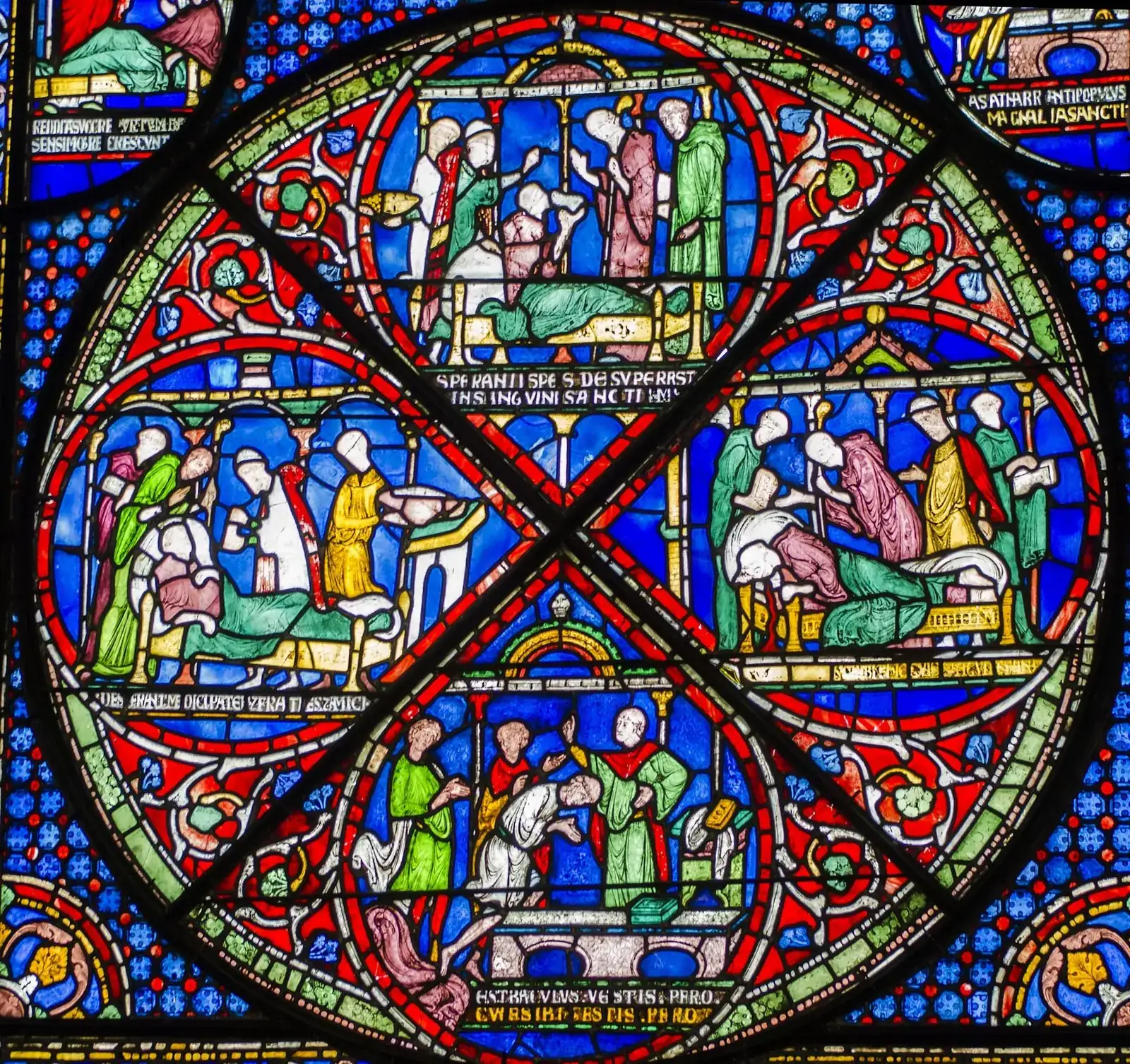
A medieval stained-glass roundel with several scenes of sick people in beds being tended, in vivid blue, red and green glass.

02

The Miracle Windows

Around the Trinity Chapel, medieval windows tell the stories of people healed after Becket’s death.

After Becket was killed, sick people came to his tomb and many said they were healed. A Canterbury monk, Benedict of Peterborough, wrote these miracle stories down. Between 1180 and 1220, glass makers turned dozens of them into pictures for twelve windows around the Trinity Chapel. In 1220 Becket’s body was moved into a new shrine in this chapel, and pilgrims came from across Europe to pray there. Eight of the twelve windows survive. They are among the best-kept early medieval stained glass in Europe. They show ordinary men, women and children who are ill, travel to Canterbury and get better. Henry VIII had the shrine destroyed in 1538.

Look for

Small round pictures in deep blue and red glass, each one a scene from a miracle story. On the floor of the chapel, a single candle marks where the shrine stood.

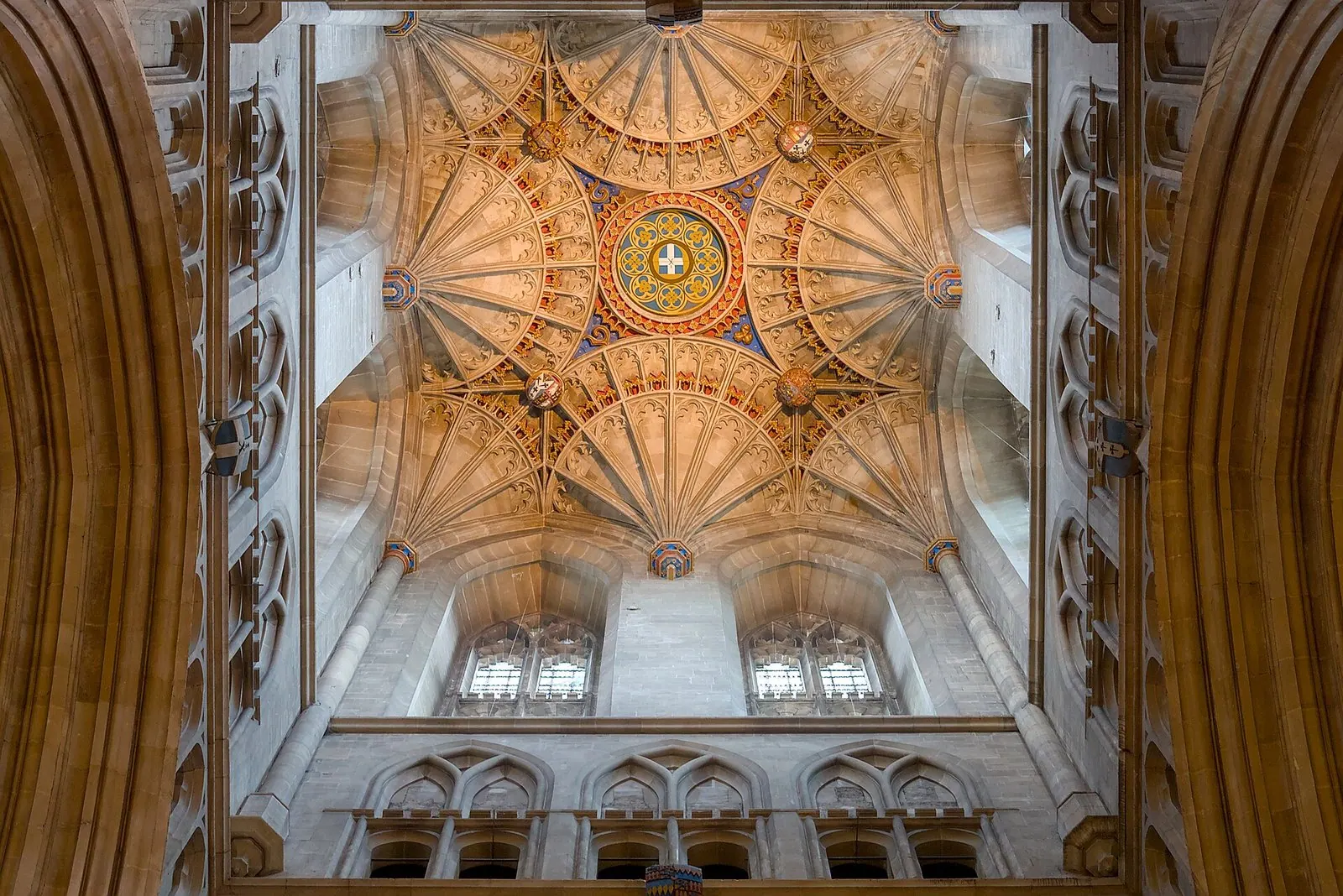
Looking up the inside of a tower to an orange-lit fan vault with a painted central boss, small windows and arcading below.

03

Look up into the central tower

From the top of the Pulpitum Steps (the steps up through a stone screen) you can look straight up into the Bell Harry Tower.

The cathedral was built and rebuilt over hundreds of years. The long nave you walk through first was rebuilt between 1377 and 1405. At its far end, steps lead up through the Pulpitum Screen. This stone wall was built around 1450 and is carved with kings of the House of Lancaster. Above this point rises the central tower, called Bell Harry. It was made taller in 1498, and after that the cathedral looked much as it does today. Inside the tower, the stone ceiling spreads out in a pattern like open fans. This is called fan vaulting.

Look for

From the top of the Pulpitum Steps, the fan-shaped stone ceiling high inside the tower. Watch your step while you look up. Outside, the same tower rises above the middle of the roof.

Your time there

What to see.

These are the highlights worth looking out for, if your time allows. See how long each tour stops in Canterbury Cathedral →

The cathedral says not to miss the place of Becket’s murder, the Miracle Windows, the Black Prince’s tomb and the view from the Pulpitum Steps. Parts can close for services or events, sometimes at short notice.

A small stone altar with candles and orange flowers beneath dark hanging swords, with a name carved in the floor and a sign at right.
Don’t miss

The Martyrdom

The place where Thomas Becket was killed in 1170, with his name in the floor, an altar and the sculpture of swords above it.

About 10 min · Included in the entry ticket

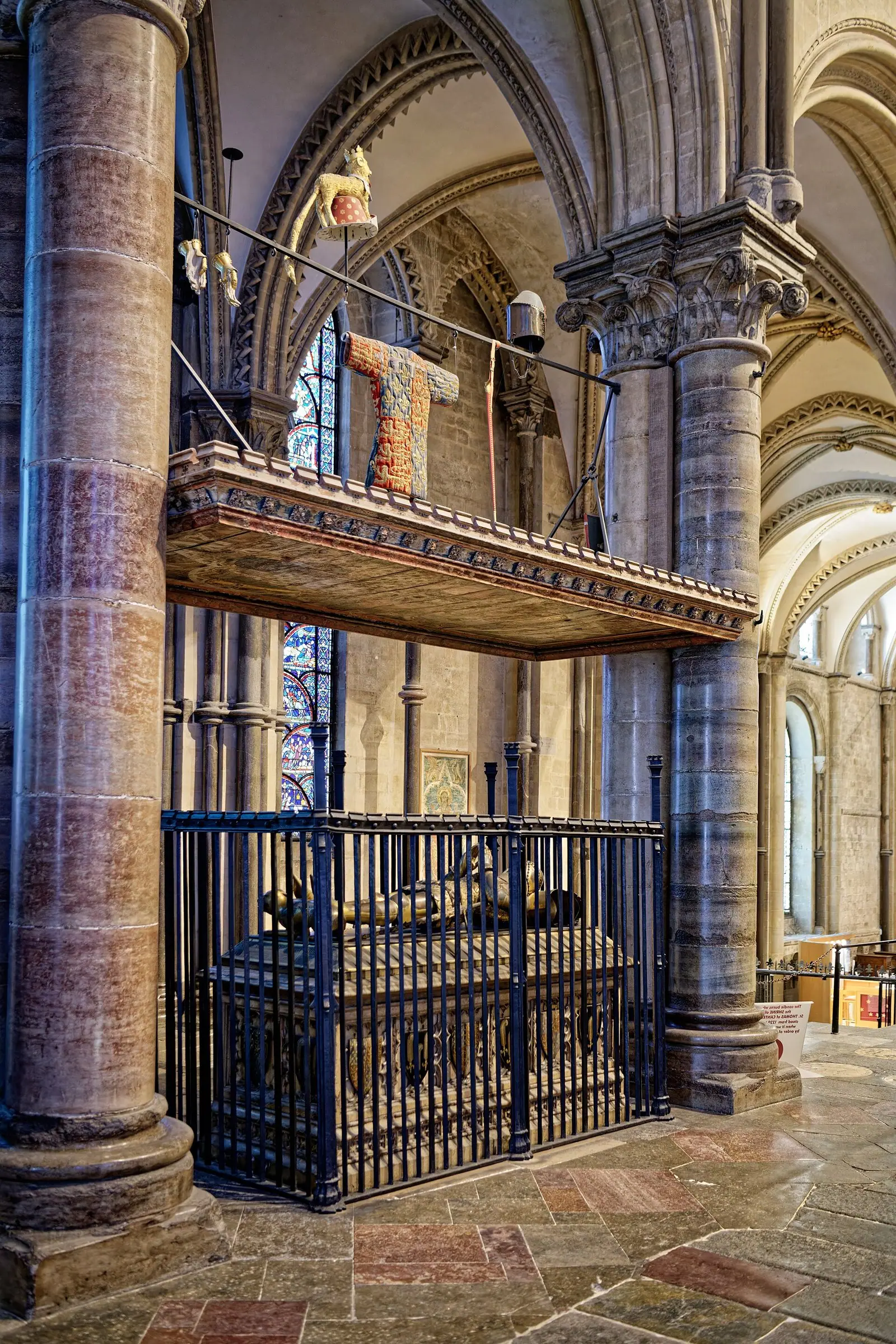
A railed tomb below a wooden canopy hung with a surcoat and shield, with stained-glass windows and Norman arches behind.

Trinity Chapel

The candle that marks where Becket’s shrine stood. The Miracle Windows are all around it, and the tomb of the Black Prince is close to the shrine site.

About 15 min · Included in the entry ticket

Up steps; the only area wheelchair users cannot reach. A touch screen at the bottom of the steps shows the windows.

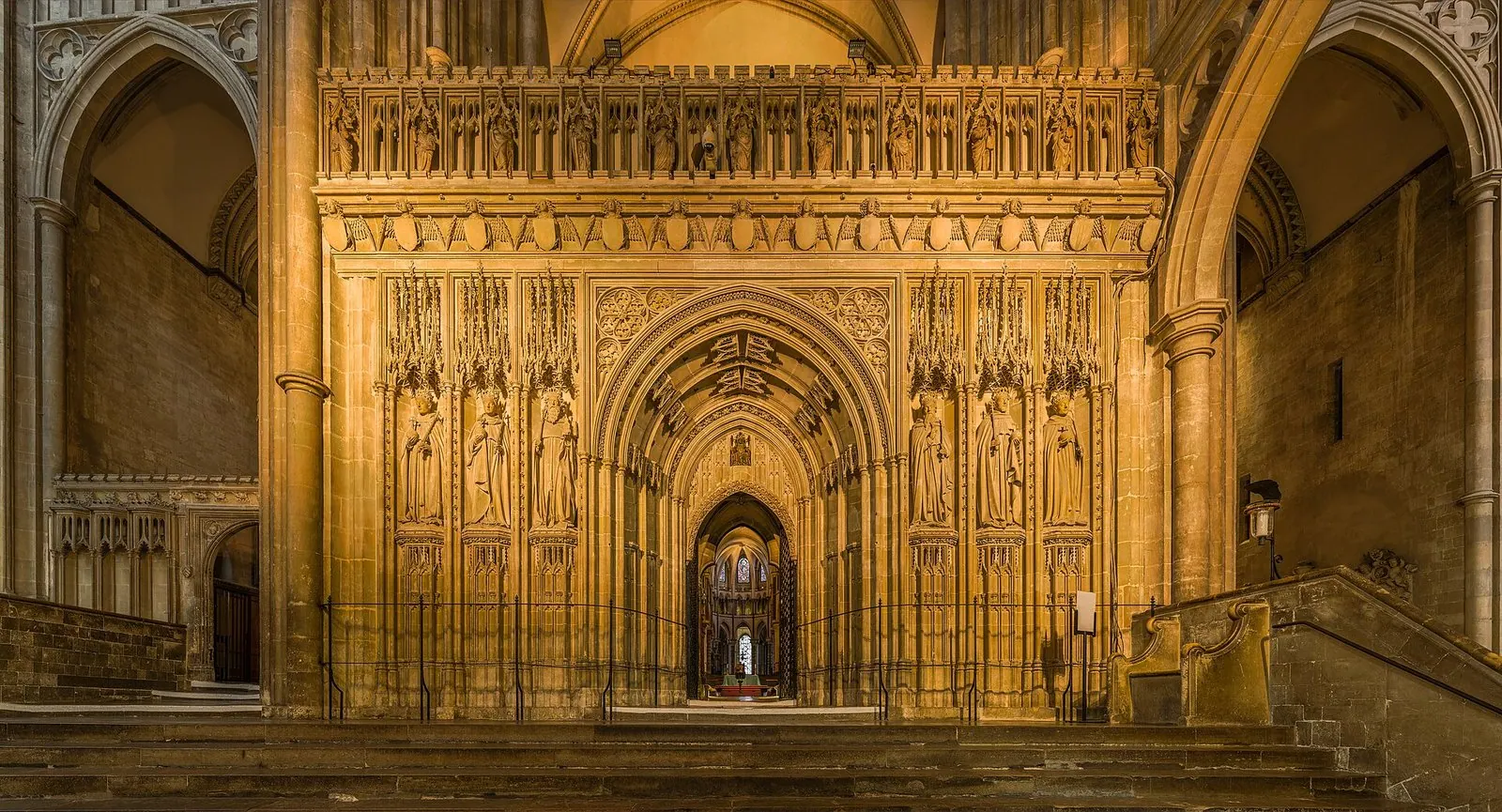
The carved stone Pulpitum screen seen from the nave steps, with six crowned kings in niches either side of the arched doorway to the choir

Pulpitum Steps and Bell Harry Tower

Climb to the top of the steps and look straight up into the fan vaulting of the central tower. The stone screen here is carved with Lancastrian kings.

About 10 min · Included in the entry ticket

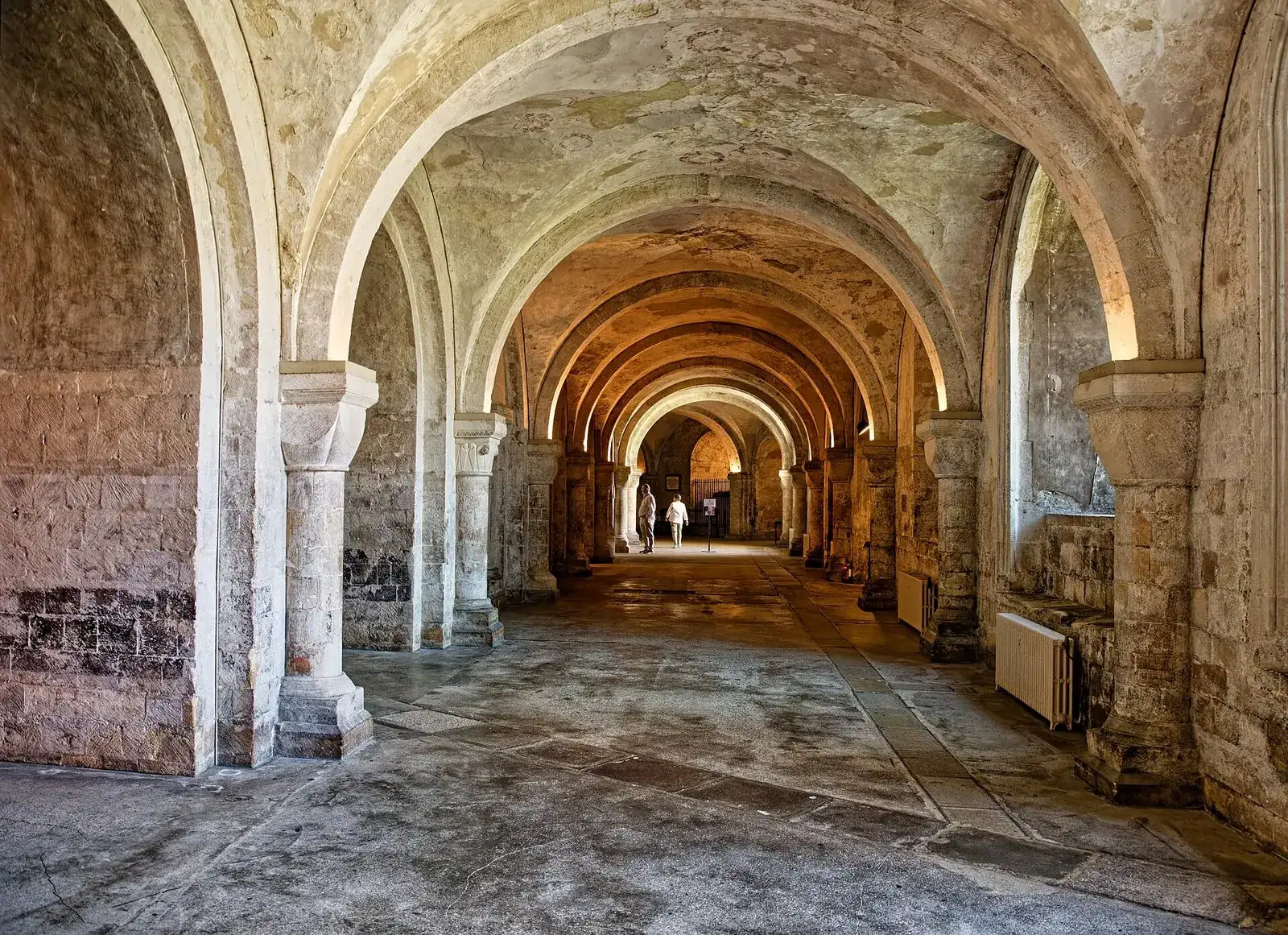
A long stone arcade of round arches in a crypt, lit warmly and receding to a distant doorway, with one small figure.

The crypt

The oldest part of the cathedral, with round Norman arches, carved columns and the place of Becket’s first tomb.

About 15 min · Included in the entry ticket

No photography in the crypt. Step-free entry is by a ramp on the north side.

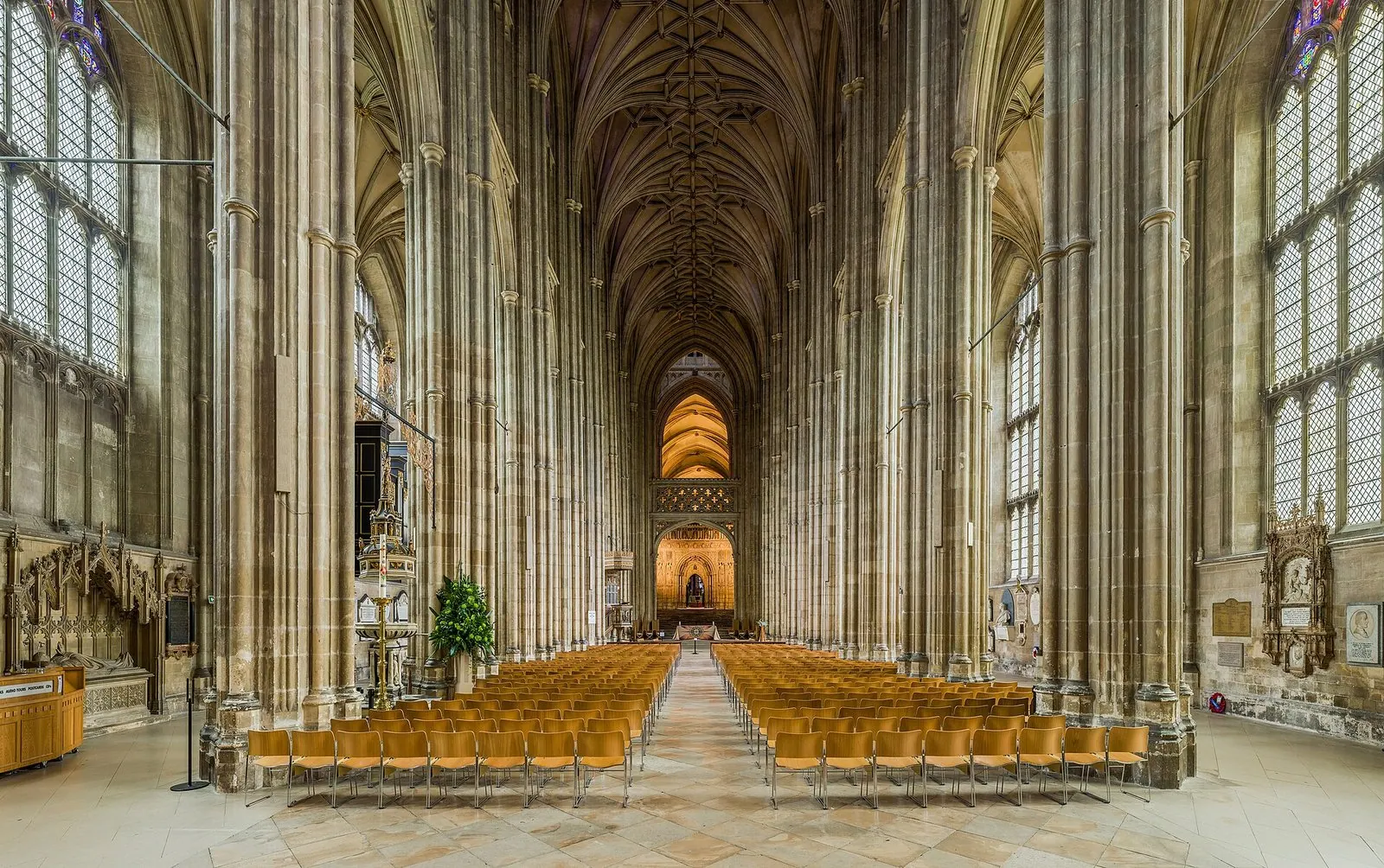
The long Perpendicular nave of Canterbury Cathedral looking east past rows of chairs and tall piers to the Pulpitum steps under the lierne vault

The nave

The main visitor door leads into the nave, the long main hall rebuilt between 1377 and 1405. Just inside, look for the Canterbury Cross carved in stone.

About 15 min · Included in the entry ticket

Step-free entry to the nave is by the North Door.

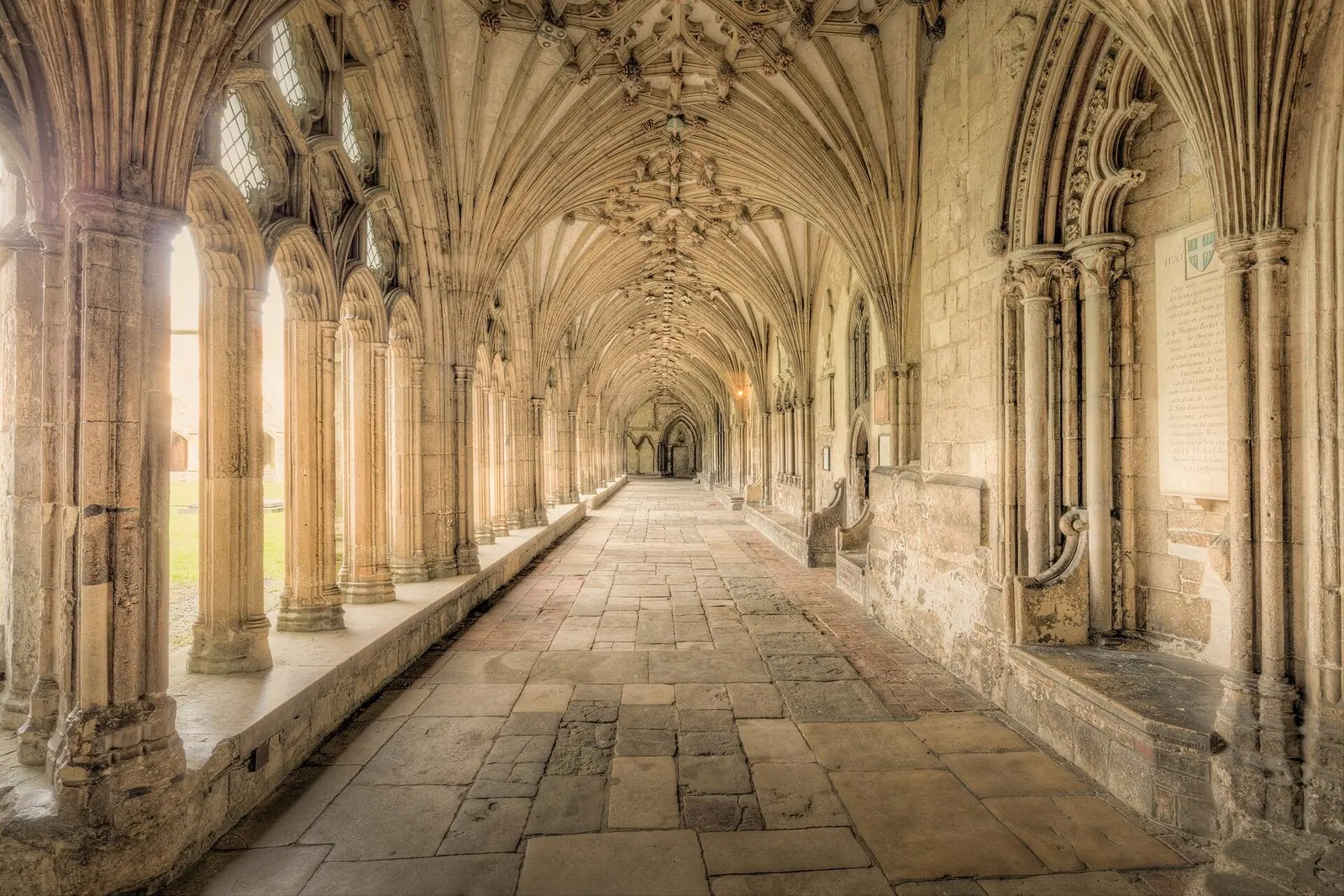
A sunlit stone cloister walk with slender columns, a long fan-vaulted ceiling and a flagged floor leading into the distance.

Great Cloister and Chapter House

The covered walk of the monks’ monastery, with over 800 carved shields, green men, rabbits and a mermaid. Beside it is the Chapter House, where the monks met every day.

About 20 min · Included in the entry ticket

1 of 6

Swipe for all six highlights →

Practical answers

Before you go.

The questions people ask before they book.

Can I go in without a sightseeing ticket?

Sightseeing needs a ticket, bought online or at the Visitor Centre. Going to a service or into a chapel to pray is always free. On Sundays the grounds and shop open before the cathedral church does, so check the day's hours. Cathedral tickets and opening times → (opens in a new tab)

Can parts of the cathedral be closed on my day?

Yes. Areas can close for services, special events or conservation work, sometimes at short notice. The cathedral lists dated closures on its own page, so check it for your day. Canterbury Cathedral: opening times and closures → (opens in a new tab)

What should I know before I go?

Sightseeing needs an entry ticket, and parts of the building can close for services, events or conservation work, sometimes at short notice. Cathedral tickets and opening times → (opens in a new tab)

Is the cathedral easy to enter with a wheelchair?

Christ Church Gate in the Buttermarket is the main step-free entrance to the precincts, but the Buttermarket is cobbled. The Trinity Chapel is the only area that is not wheelchair accessible. There are no toilets inside the cathedral building. Cathedral accessibility → (opens in a new tab)

Can I take photographs inside?

Photography for private use is allowed unless a ban is posted. It is banned in the Crypt at all times, and during services, private prayer and ticketed events. Large bags are not allowed and there is no left-luggage. Cathedral entry terms → (opens in a new tab)

How long should I allow inside the cathedral?

The cathedral says a visit usually takes one to three hours. Allow at least an hour or two inside. Canterbury Cathedral: plan your visit → (opens in a new tab)

Where are the toilets and somewhere to eat?

Yes. Canterbury Cathedral says its public toilets are open 9.00 am to 6.30 pm daily. Its café, The Lounge at Cathedral Lodge, is open 10.00 am to 4.00 pm for coffee, lunch and snacks. In summer you can eat outside in the Campanile Garden. The cathedral page was checked on 30 October 2026. Canterbury Cathedral: plan your visit → (opens in a new tab)

Compare

Compare day trips from London.

Booking links earn us commission, at no extra cost to you. Viator handles the booking.

Compare all Kent tours →

Free day guide

Get the free Kent day guide

The guide has a page for each stop, with what to see in 30, 60 or 90 minutes, and where to find toilets and food.

Unsubscribe any time. Privacy

When to go

What changes through the year.

The cathedral is open to visitors all year, but what you find in the grounds changes with the seasons.

Spring

The cathedral’s busy season starts in April. In spring and summer, when the weather is good, you can sit outside to eat in the café’s Refectory garden. Canterbury Cathedral: plan your visit → (opens in a new tab)

Summer

The gardens are in full bloom, and a kiosk in the grounds sells snacks and drinks. The cathedral also runs special guided tours of its gardens in summer. Canterbury Cathedral: what will you discover → (opens in a new tab)

Autumn

In autumn the cathedral runs special guided tours about the secrets of its stained glass. Check the cathedral's programme before you go. Canterbury Cathedral: what will you discover → (opens in a new tab)

Winter

At Christmas the cathedral puts up Christmas trees and a traditional crib, a model of the Nativity scene. Canterbury Cathedral: what will you discover → (opens in a new tab)

On Sundays the cathedral church opens later than the grounds, and parts of the building can close for services, events or repairs. Check the closures list for your day. Canterbury Cathedral: opening times and closures → (opens in a new tab)

A taste and a keepsake

Take a little of Canterbury Cathedral home.

Medieval pilgrims took a small token home from Canterbury. You can still do the same, or stop for tea in the cathedral grounds if you have free time.

Just ideas for any free time you get.

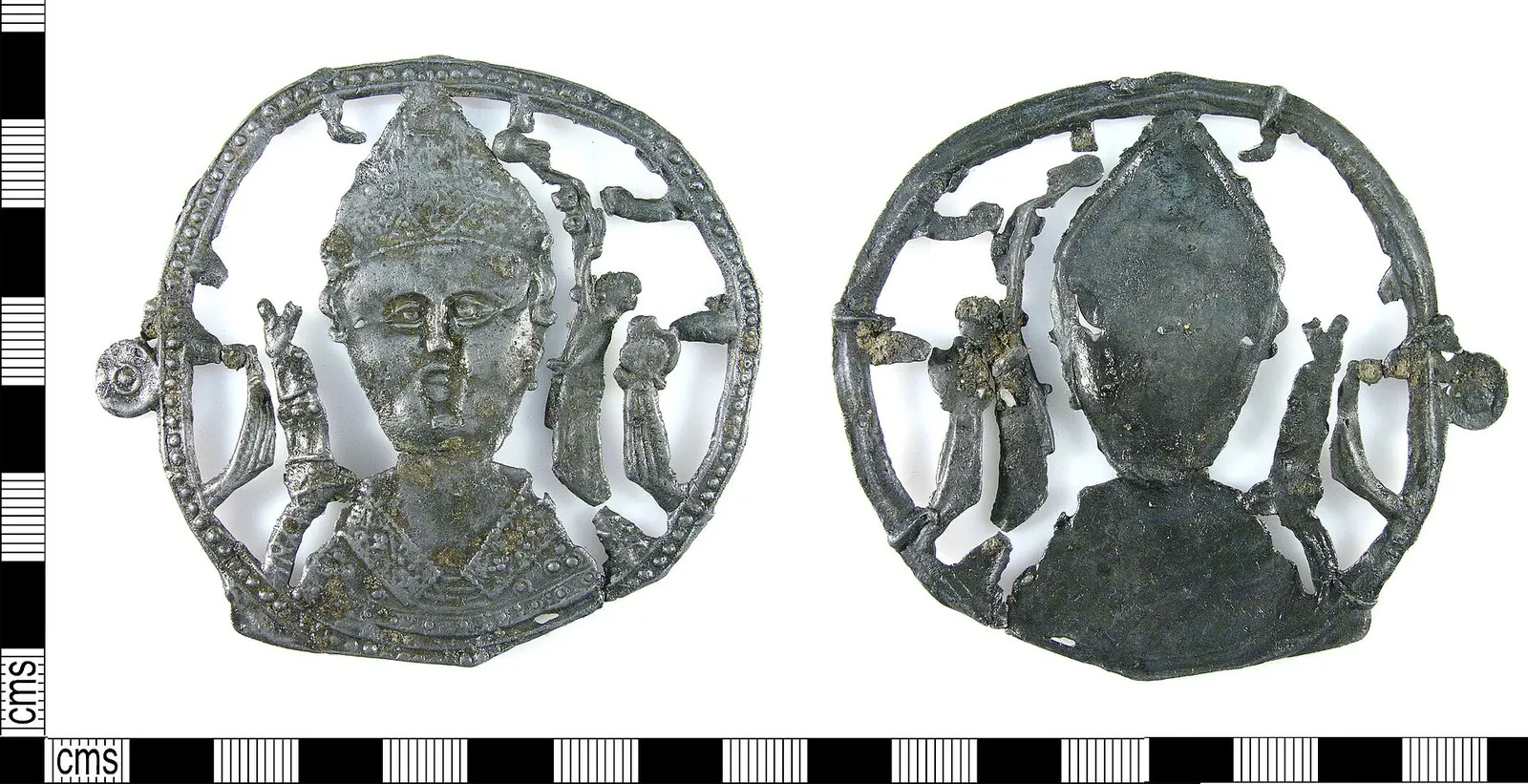
Round pewter pilgrim badge with a mitred bishop's head and shoulders between two small figures, front and back views on white with a scale bar.
Illustrative
Take home

A pilgrim’s token

The cathedral shop sells a pewter pilgrim token of St Thomas Becket, made in Kent. Its design comes from a stained-glass picture of Becket in the cathedral. Medieval pilgrims pinned tokens like this to their clothes for the journey home.

Where to find itThe shop is near Christ Church Gate, so you can visit it on your way in or out.

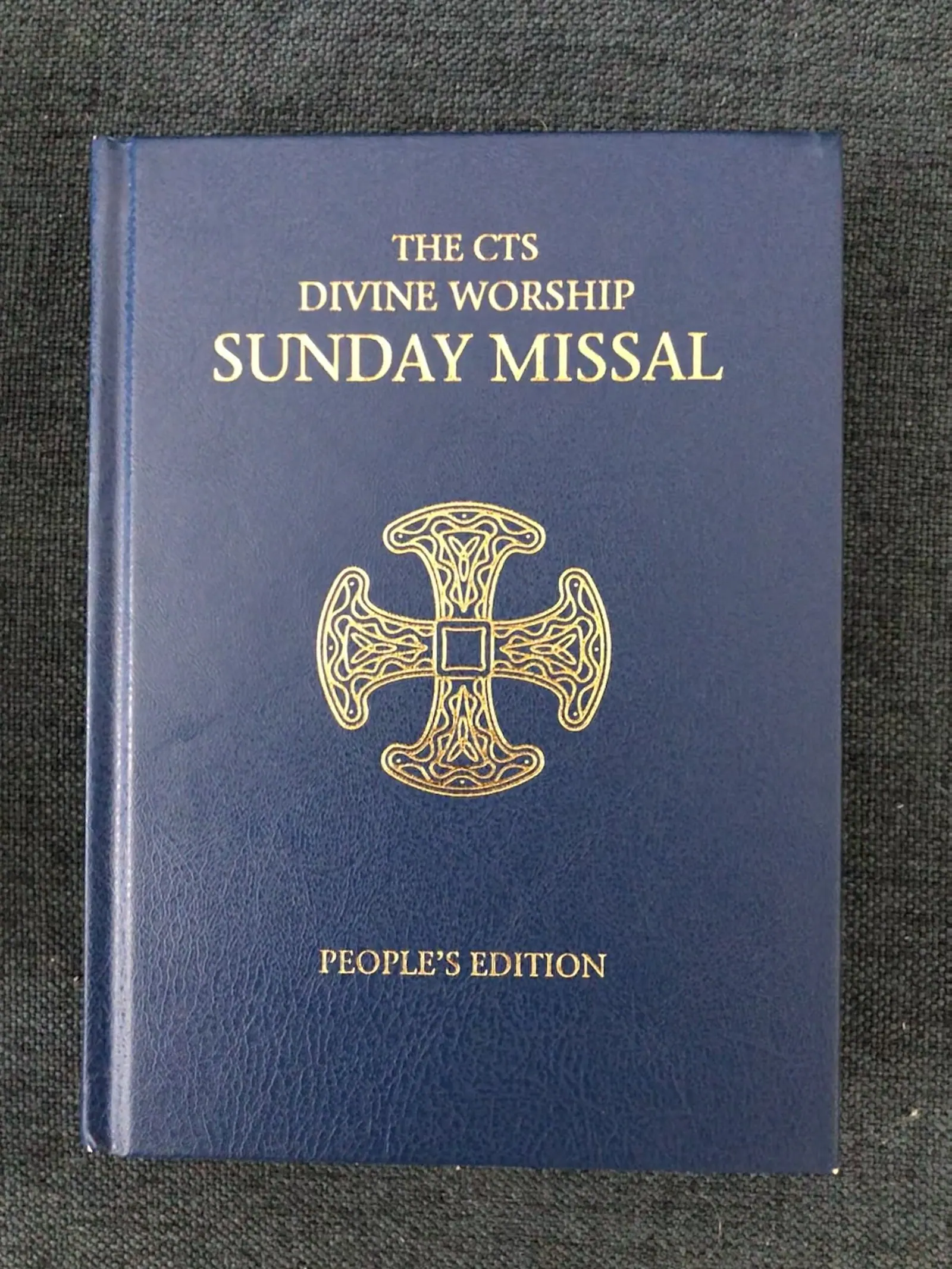
Gold Canterbury Cross stamped in the centre of a navy blue leather book cover, with the title partly cut off above.
Take home

The Canterbury Cross

This cross shape copies a small Saxon brooch from about 850, dug up in a Canterbury street in 1867. The shop sells it as a pendant, and a stone copy stands just inside the nave.

Where to find itLook for the stone cross when you enter the nave, then find the pendant in the shop.

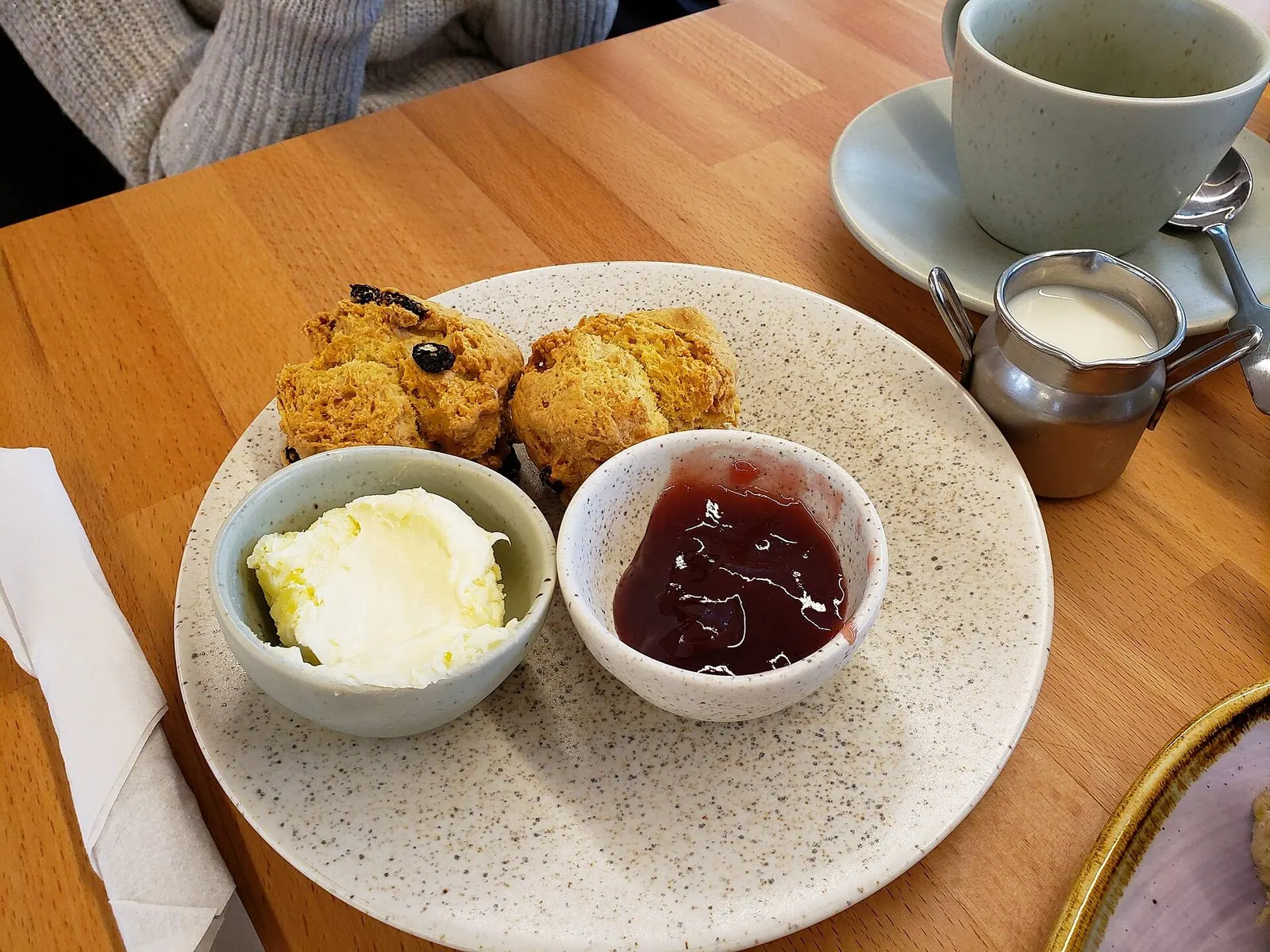
Two fruit scones on a speckled plate with a bowl of clotted cream and a bowl of jam, a milk jug and cup nearby.
Illustrative
Taste

Tea in the cathedral grounds

The Lounge, the café at Cathedral Lodge inside the grounds, serves tea, coffee, light lunches and sweet treats. Its menu has included scones with clotted cream and Kentish apple juice.

Where to find itInside the cathedral grounds, only if you have free time.

Plan your day

Help with choosing.

Also in Kent

Places on the same day trips.

All Kent day trips →
Picture credits and sources

Pictures

Image sources and credits are listed here. Pictures made with AI are marked.

Tour photographs are provided by the tour operators through Viator and are shown from Viator’s own image servers.