The real England, in one easy day from London
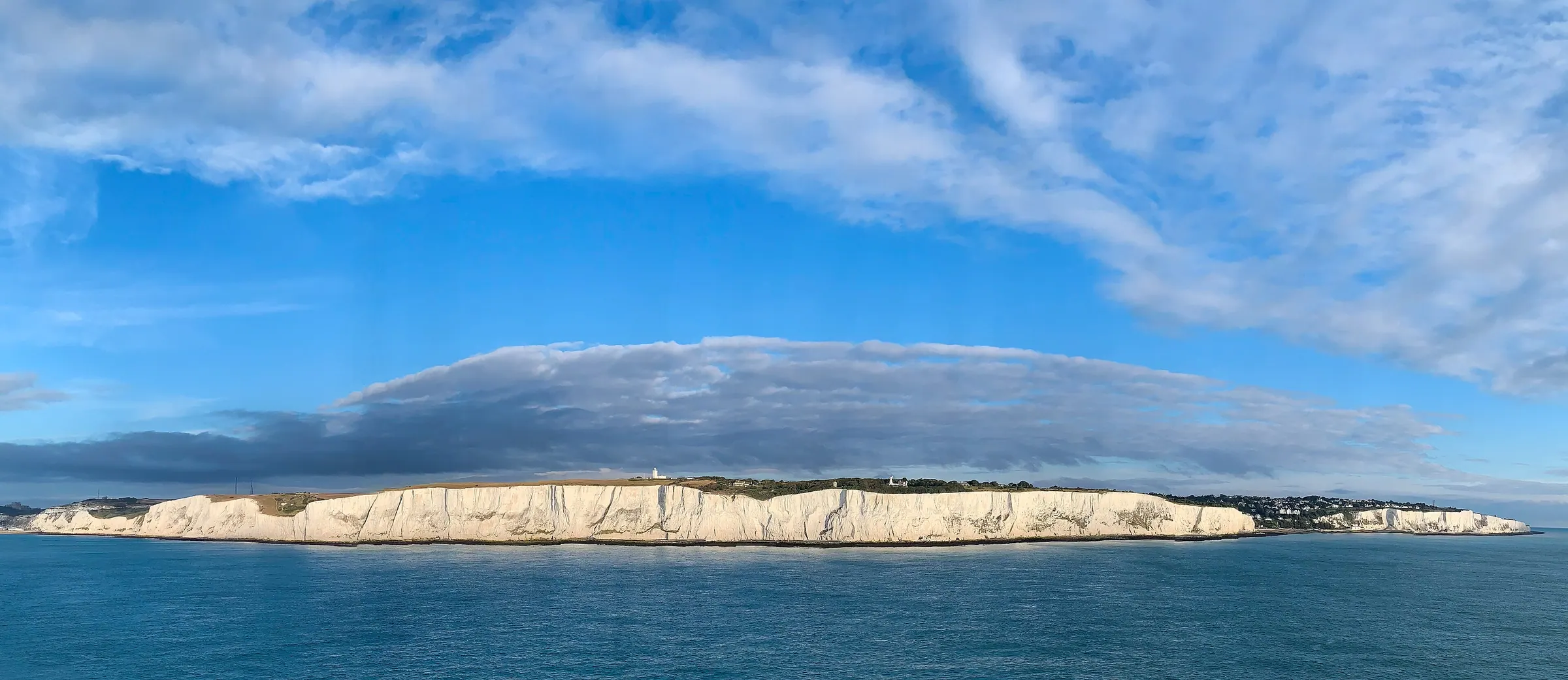
The White Cliffs of Dover and the English Channel viewed from the sea

A place to discover from London

White Cliffs of Dover

Kent coast, near Dover · a day trip from London

See how long each tour stops in White Cliffs of Dover →

Why it matters

Why the White Cliffs matter.

For many British people, these white cliffs mean home. Here is what they are made of, why they are famous, and what to look for when you are there.

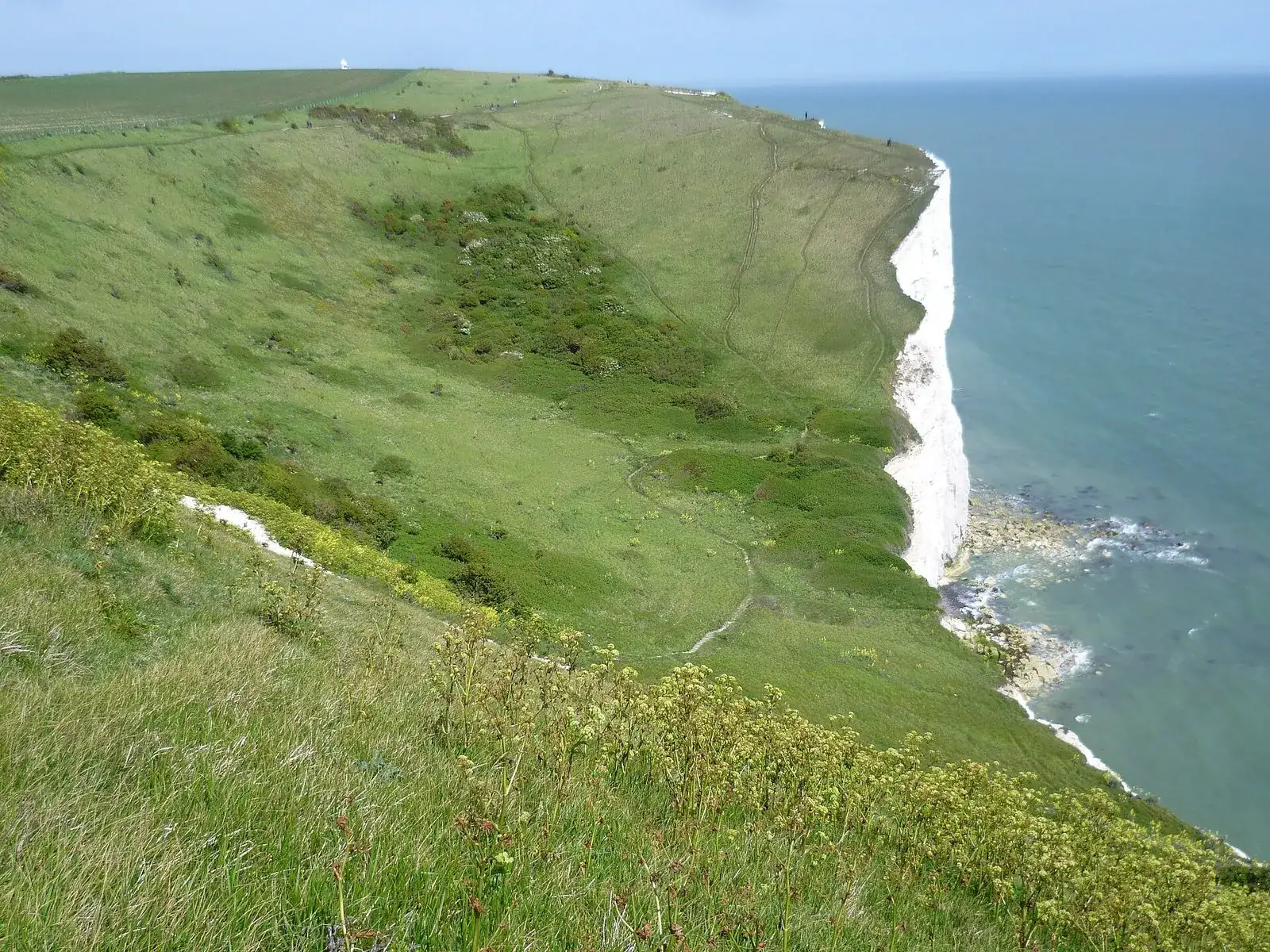
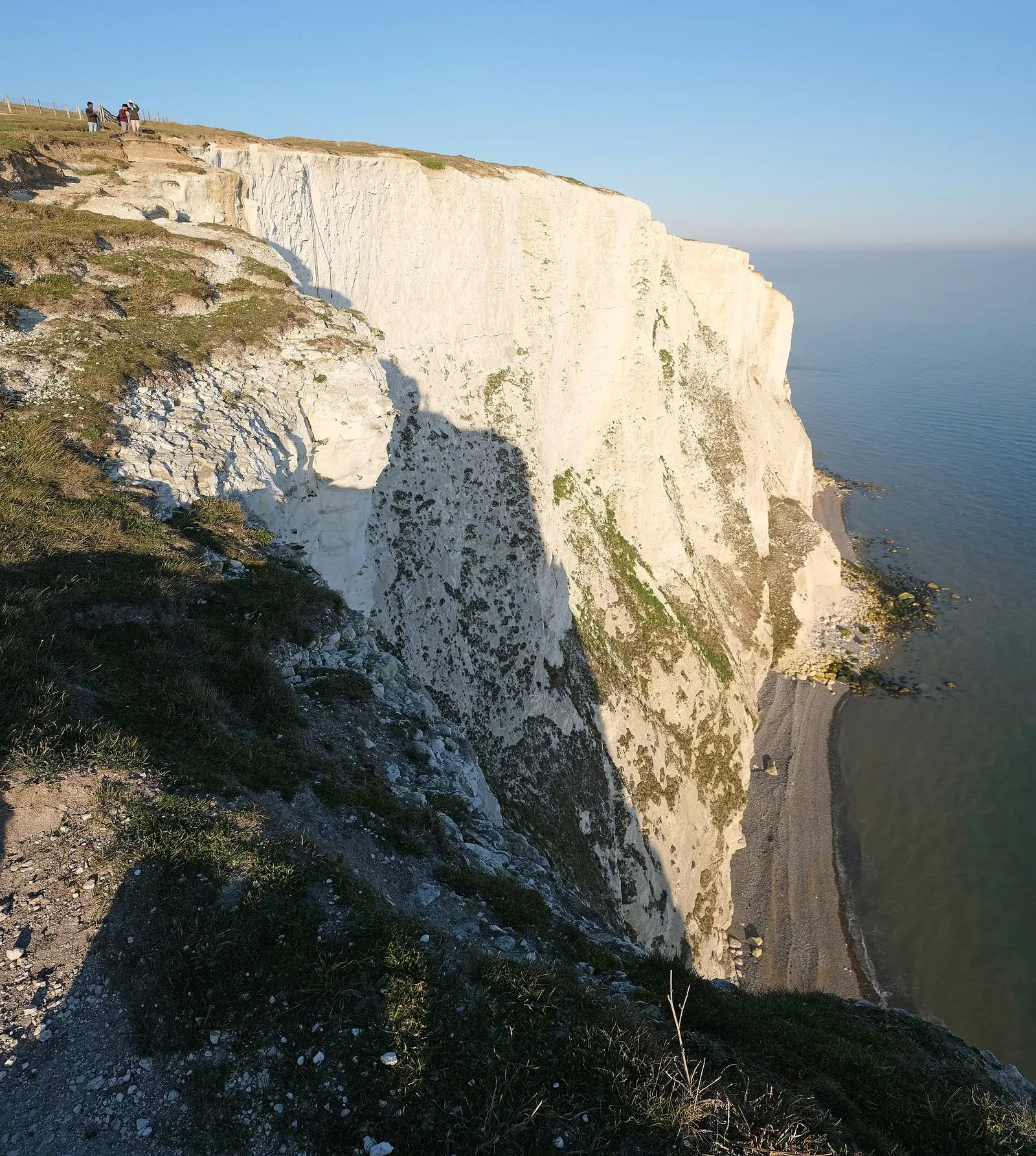
Looking down a pale chalk cliff, with grass and scrub along the top edge, to a calm sea and shingle beach.

01

Made from an ancient seabed

The cliffs are made of chalk, a soft white rock.

Millions of years ago, this land was under the sea. Tiny plants called algae lived in the water. When they died, they sank to the sea floor, and over millions of years the layers became chalk. Today the sea is still wearing the cliffs away, a little at a time, and that is why they stay bright white. Where the cliff is protected from the sea, as at the Port of Dover, plants grow over it and it looks green.

Look for

From a safe viewpoint, look at the line where the white cliff meets the green grass on top. Stay back from the edge, because the chalk can break away.
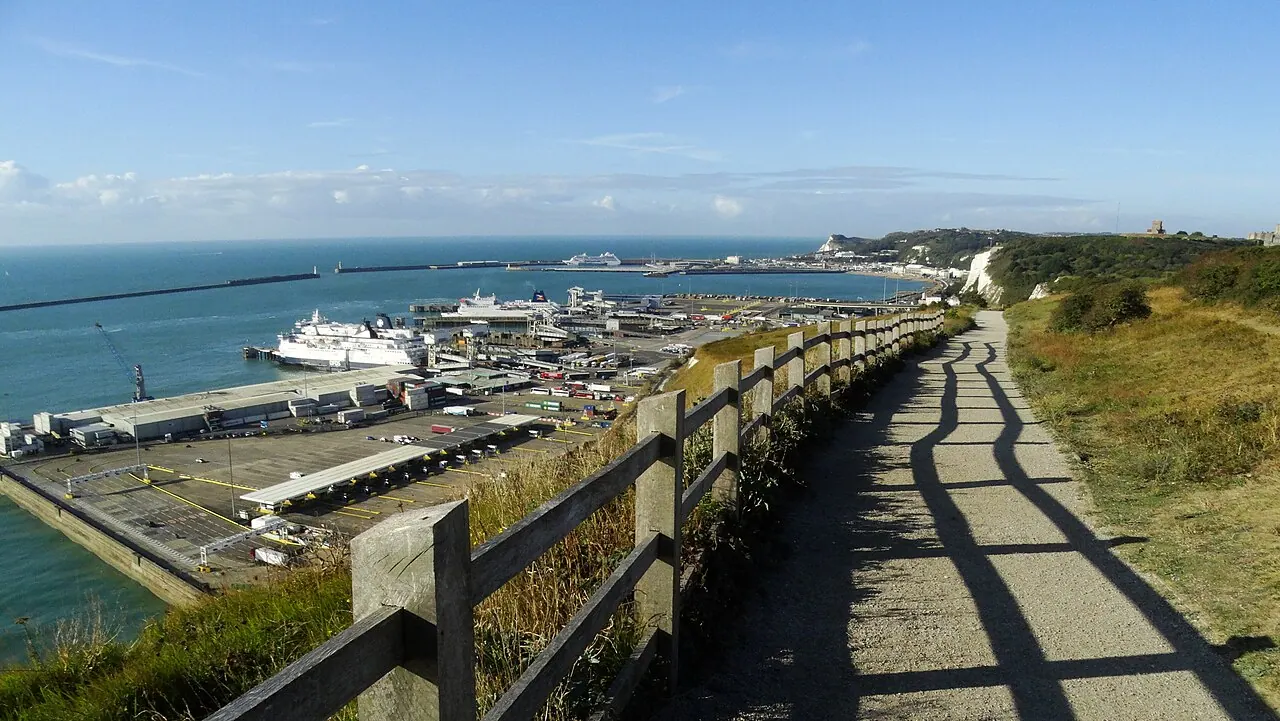
A fenced path on the White Cliffs Country Trail overlooking Dover Harbour

02

Britain’s front door

This is the part of Britain closest to mainland Europe.

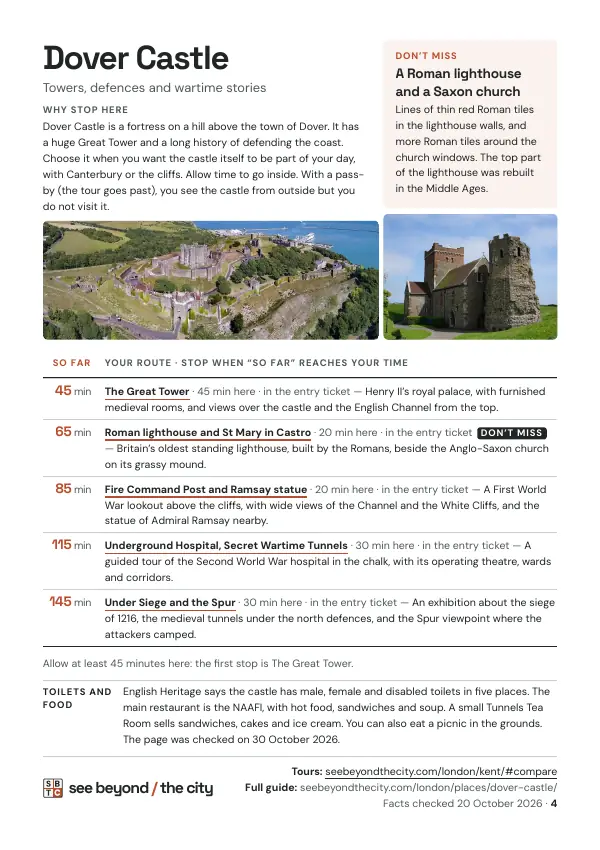
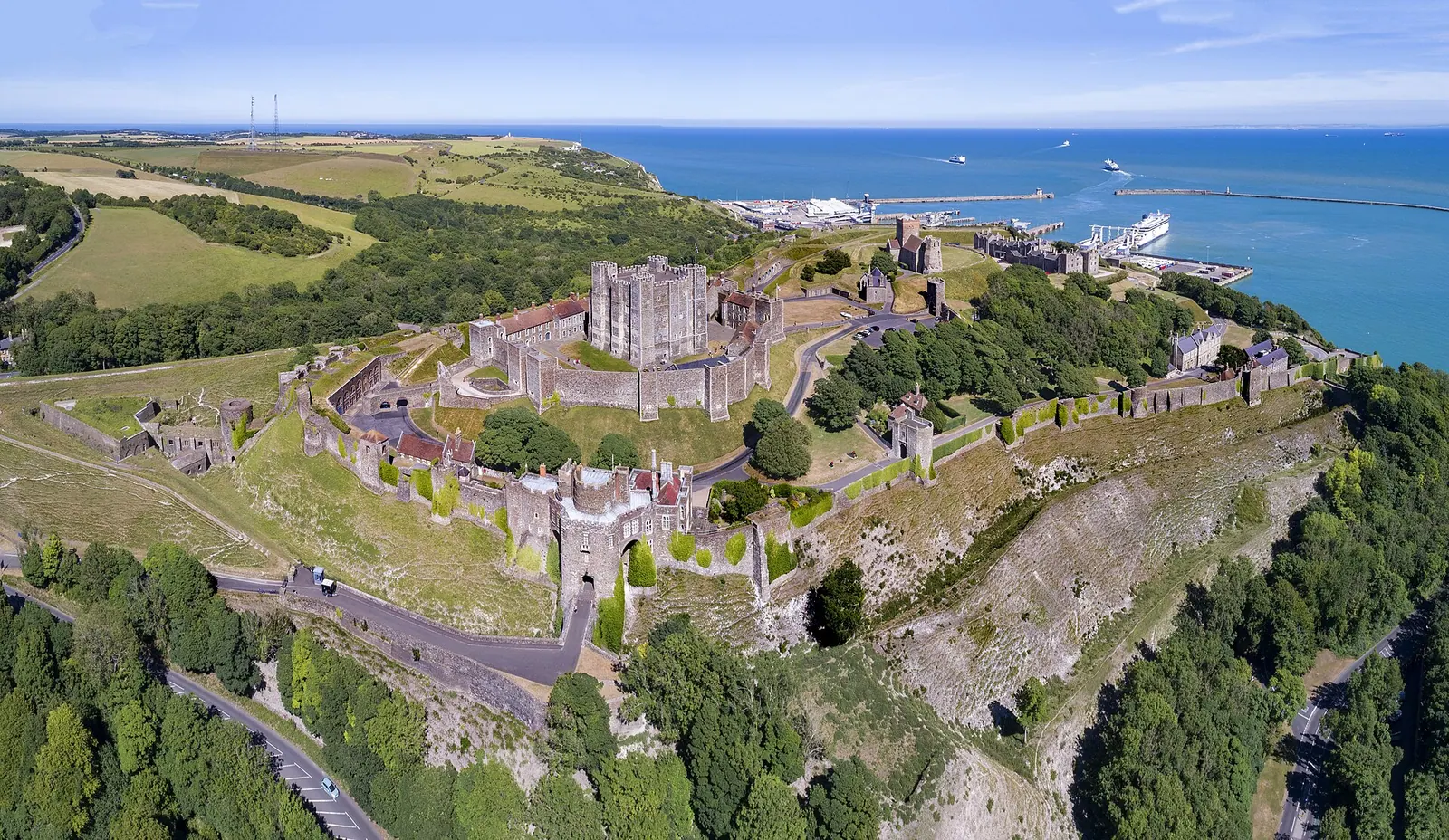
Across the water is France, and on a clear day you can see the French coast from the cliff path. Because the crossing is so short, ships have come to Dover since Roman times. The Romans built a lighthouse here to guide them, and it still stands inside Dover Castle, on the hill behind the harbour. Today you can watch the ferries come and go below you. That is why, for many people, the white cliffs are a symbol of coming home.

Look for

The French coast on the horizon (only on a clear day), the ferries in Dover Harbour, and Dover Castle on the hill behind it.

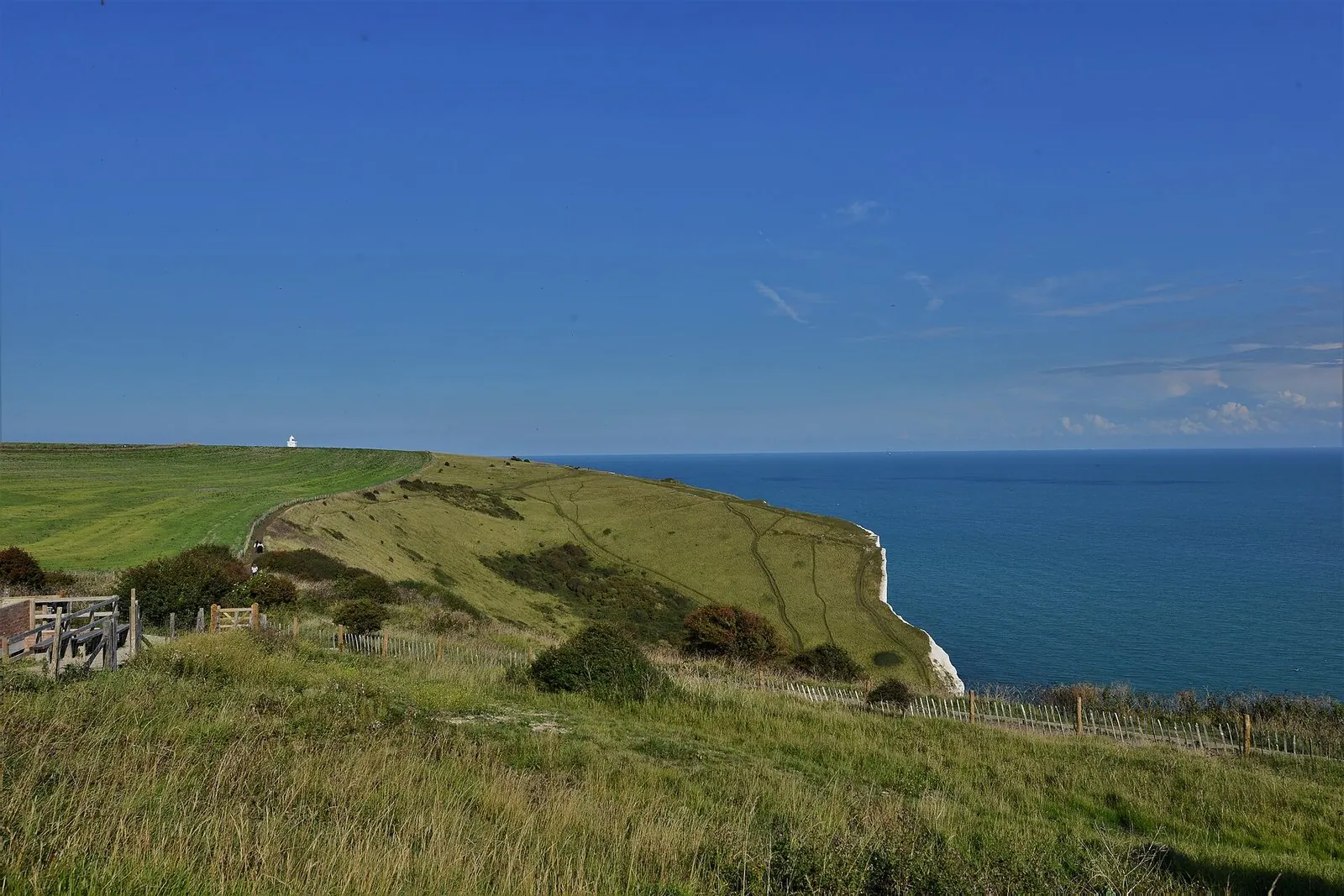
A green clifftop curves out to a white cliff edge above deep blue sea, with a wooden gate at the left.

03

Front line and coming home

In the Second World War, these cliffs were Britain’s front line.

In 1940, many of the soldiers rescued from Dunkirk in France landed at Dover. The rescue was run from tunnels dug into the chalk under Dover Castle. From 1941, big guns were built along the top of the cliffs to fire at enemy ships in the Channel. Tunnels were also dug into the chalk to shelter the soldiers. The singer Vera Lynn made the cliffs famous with her best-known wartime song, “The White Cliffs of Dover”. They became a picture of home for a country at war.

Look for

Old concrete gun sites along the clifftop path, and Dame Vera Lynn Down, a clifftop meadow named after the singer in 2021.

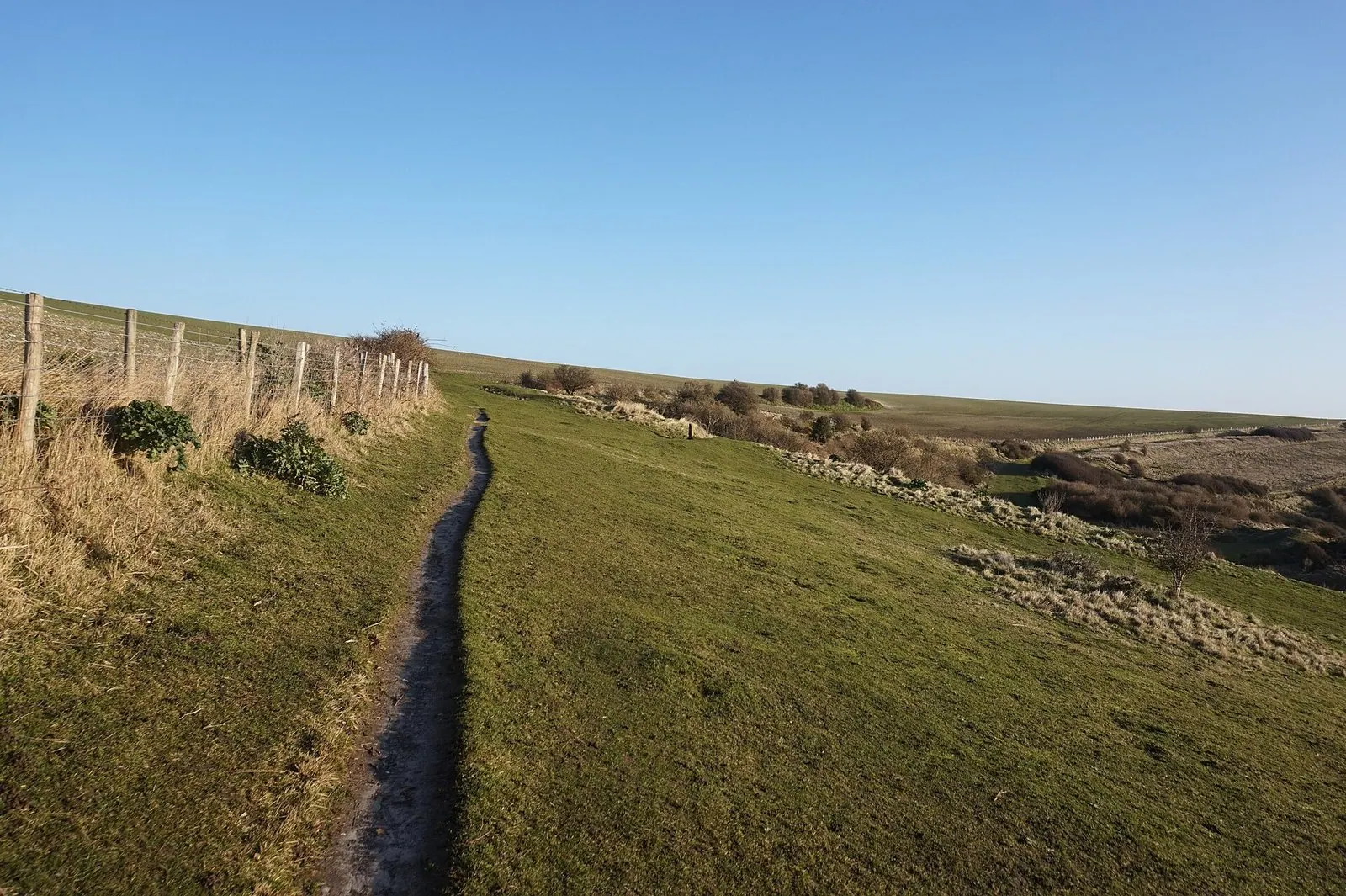
A narrow earth path runs along a grassy slope past a wire fence under a clear blue sky.

04

Life in the short grass

Look beside the path, not only out to sea.

The grass on top of the cliffs grows on chalk, and few places like this are left, so it is protected. In summer, look for small blue butterflies called chalkhill blues and the pyramidal orchid, a wild flower. Skylarks nest on the ground here. Exmoor ponies and small Dexter cattle eat the grass and keep it short, so the flowers have room to grow.

Look for

The ponies and cattle on the slopes. Please stay on the marked path, because birds nest on the ground in spring and summer.

Your time there

What to see.

These are the highlights worth looking out for, if your time allows. See how long each tour stops in White Cliffs of Dover →

The National Trust looks after the clifftops here, from the first viewpoint above the port to a Victorian lighthouse. How far you walk is up to you.

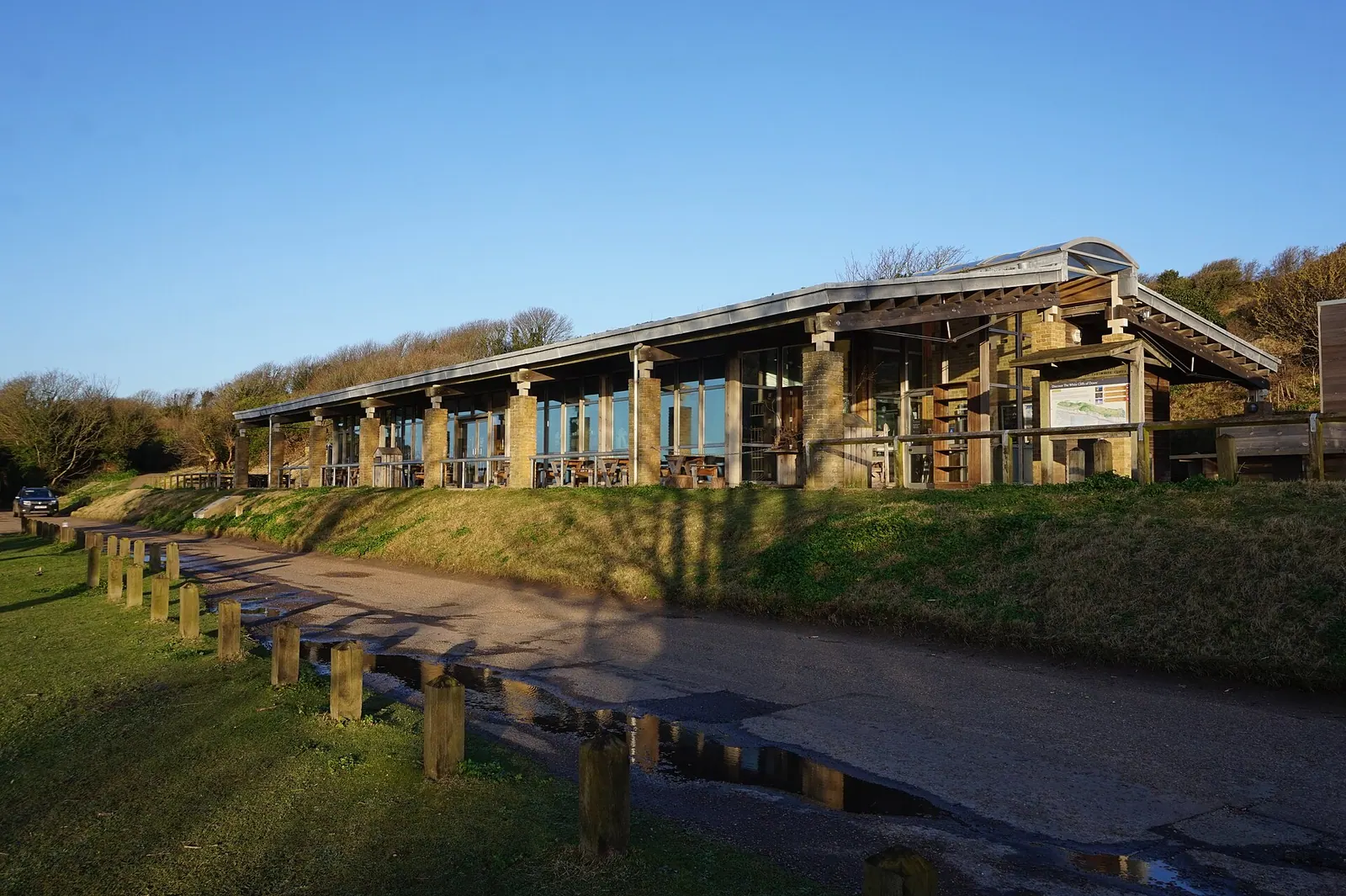
The long, low National Trust visitor centre at the White Cliffs of Dover, with a timber and glass front, seen from the path under a clear blue sky.
Don’t miss

The Visitor Centre

A shop with gifts and local products, a second-hand bookshop, and a café with a view of the docks and the sea.

About 20 min · Free

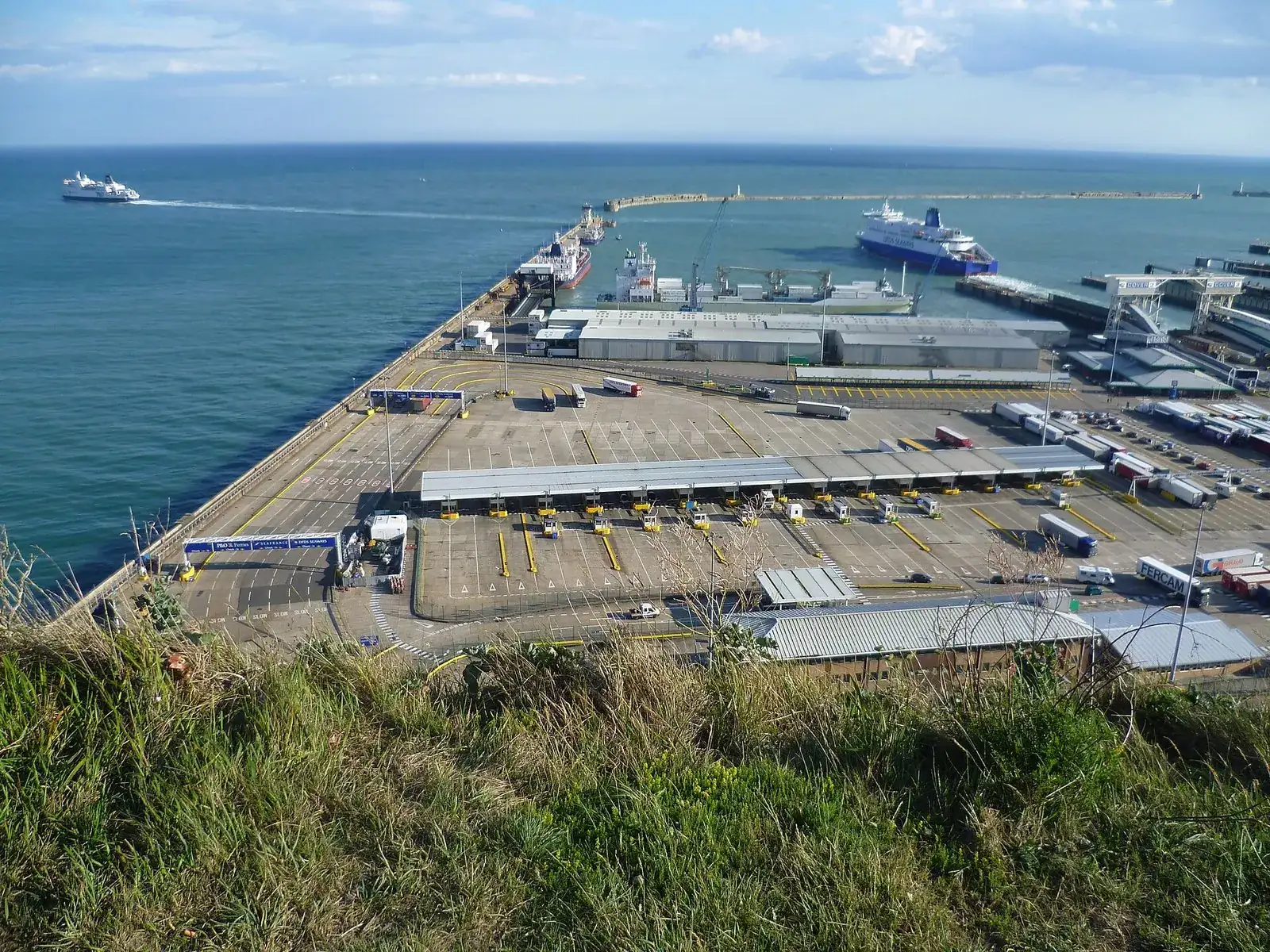
Dover's Eastern Docks seen from Langdon Cliffs, with lorries in the port and cross-Channel ferries at the berths and sailing out to sea

First viewpoint

Dover Harbour and its ferries below you, Dover Castle on the hill behind, and the French coast on a clear day.

About 15 min · Free

About 400 metres from the visitor centre on a smooth path with rest points, suitable for wheelchairs.

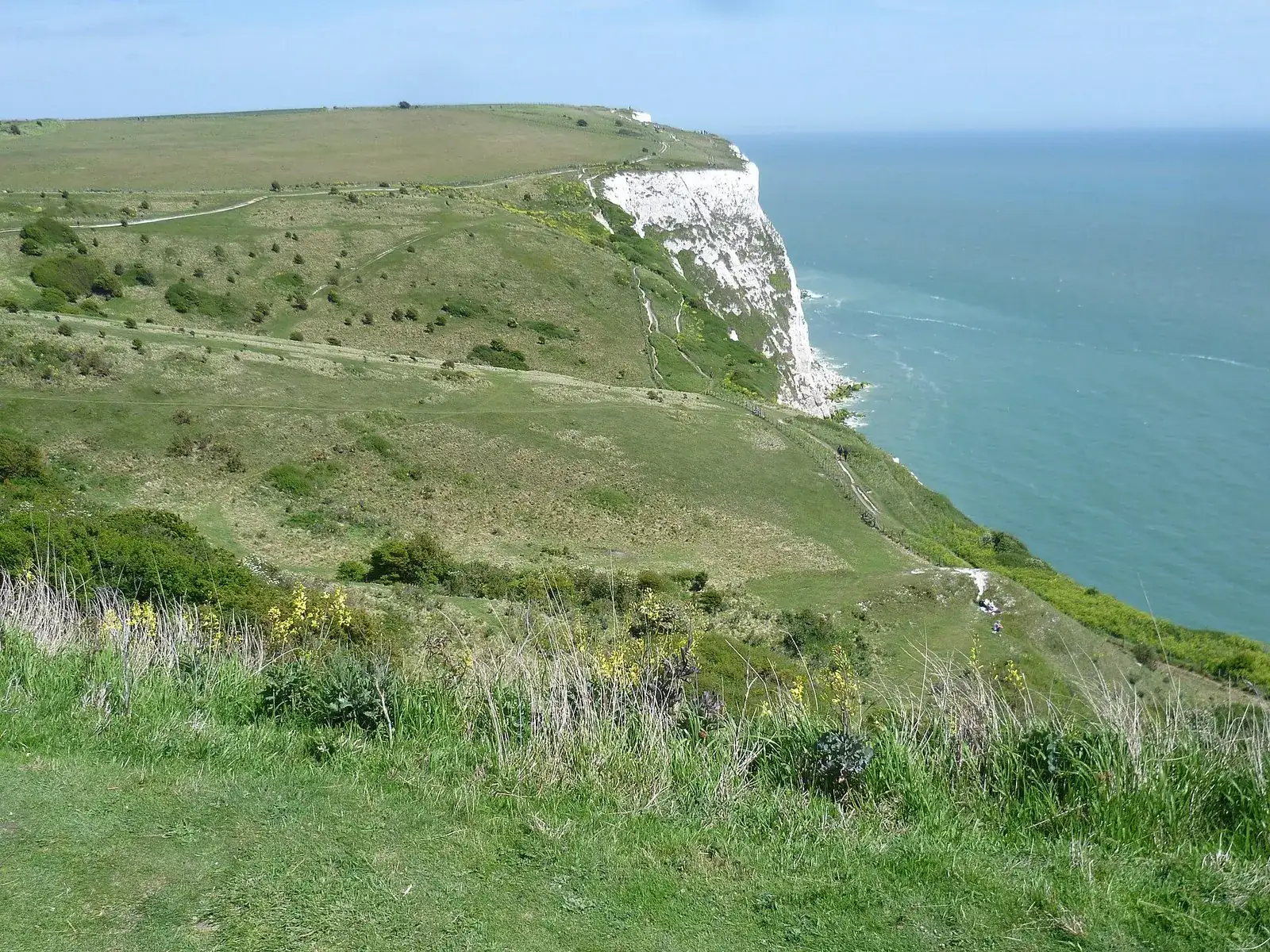
Open chalk grassland and yellow wild flowers on the clifftop above Langdon Hole, with the path running towards white cliffs and the sea

Along the clifftop path

Open chalk grassland, grazing ponies and cattle, and in summer wild flowers and blue butterflies.

About 30 min · Free

From here the path can be steeper and uneven.

Green chalk downland sloping to the white cliffs at Fan Hole and Fan Bay, seen from the clifftop above the sea

Fan Bay and the Deep Shelter tunnels

The site of a Second World War gun battery, with tunnels hidden in the chalk. A guided visit takes you down into the Deep Shelter.

About 40 minutes' walk each way, plus the tunnel visit · Own ticket

The shelter is about a 40-minute walk from the visitor centre, and cars cannot get to it. Steps only. Tickets are paid on the day and cannot be booked. It is closed until March 2027.

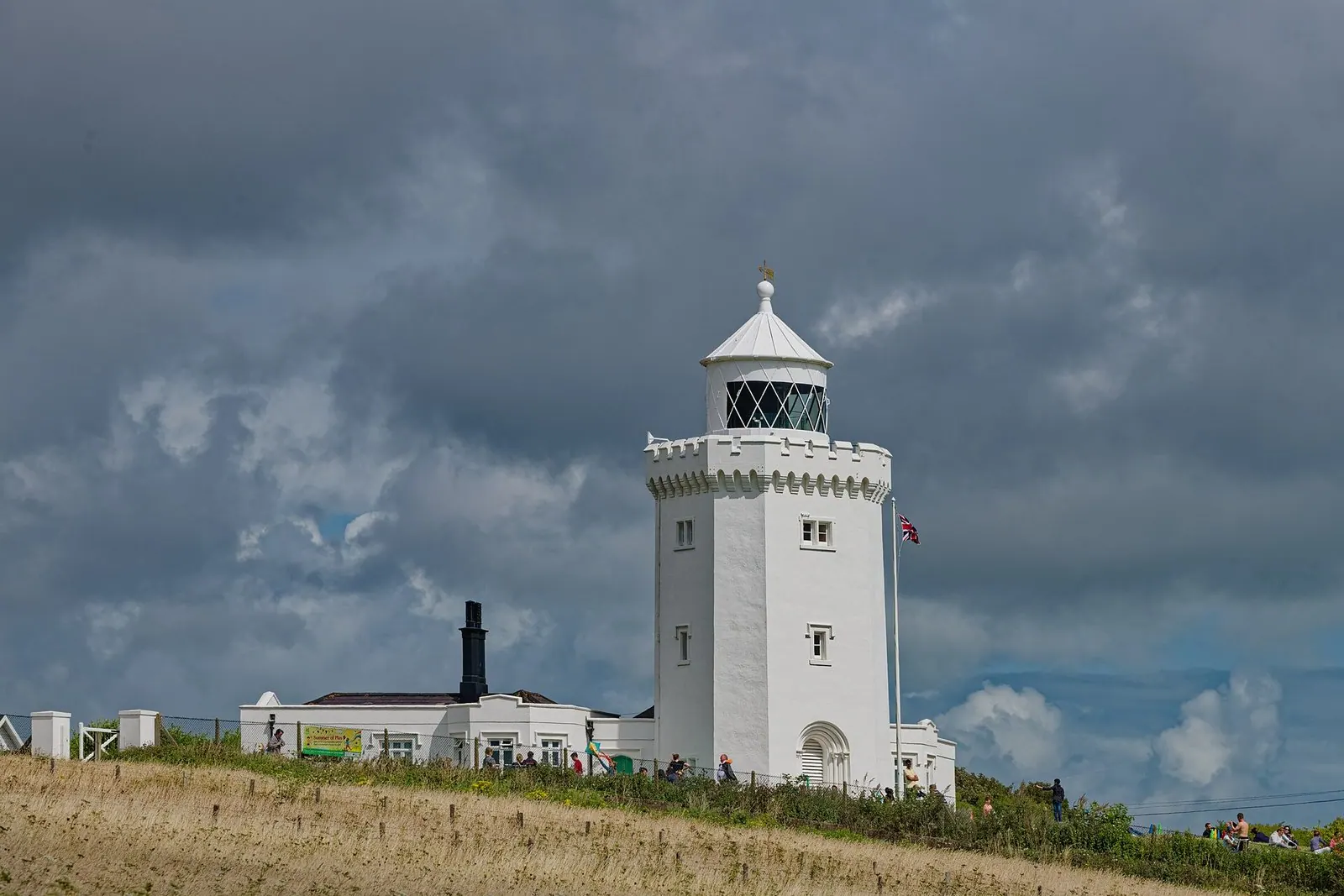
The white Victorian tower of South Foreland Lighthouse and its attached buildings on a grassy clifftop under grey summer clouds

South Foreland Lighthouse

A Victorian lighthouse built to warn ships away from the Goodwin Sands.

About 120 min · Own ticket

The tower is a separate paid guided tour, open on limited days in season. Cars cannot get to it.

1 of 5

Swipe for all five highlights →

Practical answers

Before you go.

The questions people ask before they book.

How far are the White Cliffs of Dover from London?

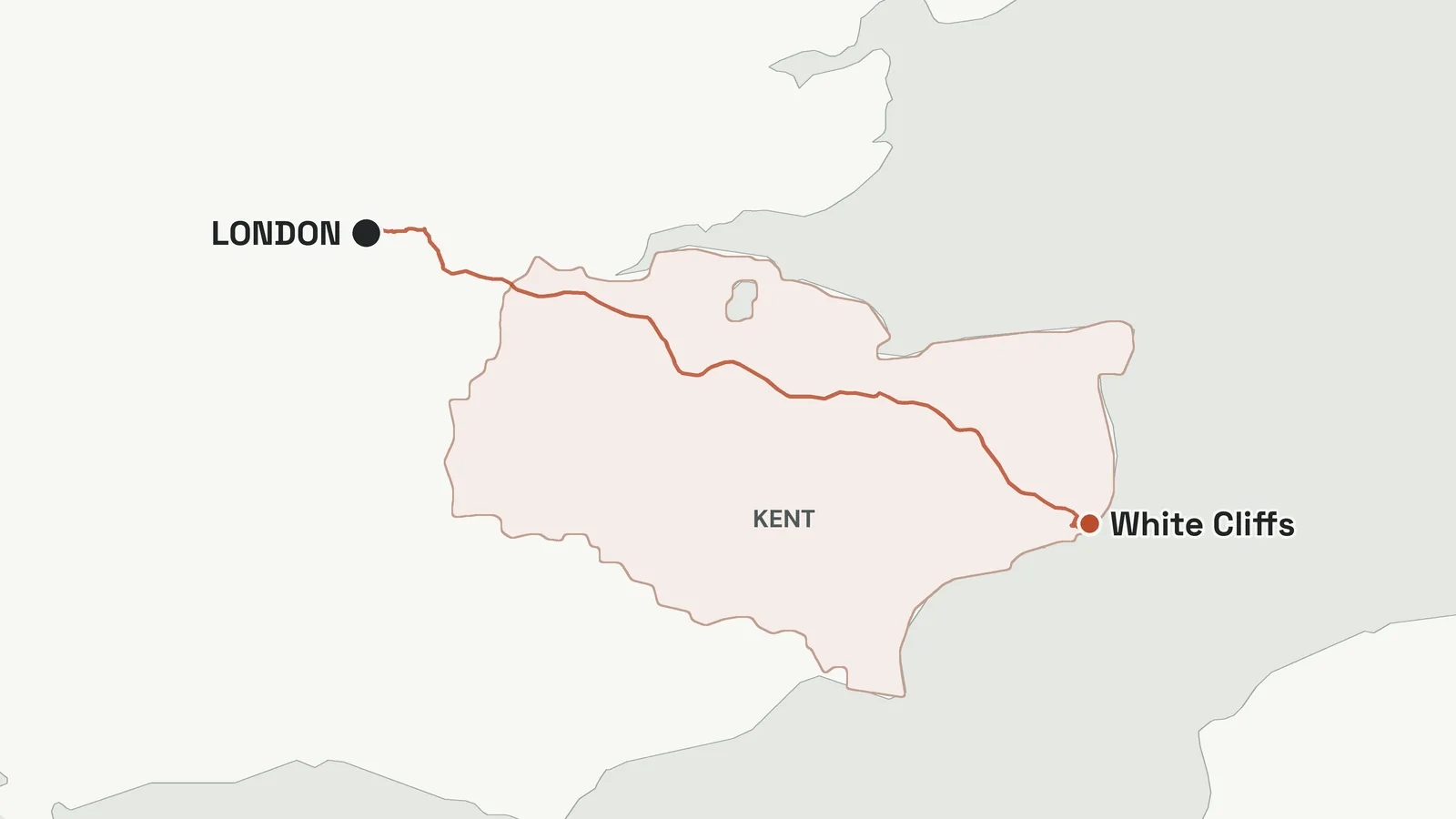
About 75 miles (121 km) by road, roughly 1 hour 50 minutes each way without traffic. Dover Castle and Canterbury are also in Kent. OpenStreetMap road routing (OSRM), retrieved 29 October 2026 → (opens in a new tab)

Where is the first good viewpoint?

A short all-weather path with rest points and a staggered incline leads to a viewpoint and is suitable for wheelchairs. Paths farther along can be steeper or uneven. Check the route and weather for your group. National Trust arrival guide → (opens in a new tab)

What should I know before I go?

The paths are outdoors, the ground can be uneven and the weather changes quickly. A short visit gives you less time to walk. National Trust walking guidance → (opens in a new tab)

Is the walk easy?

The path to that viewpoint has a steady incline and is designed for wheelchair use. Paths farther along can be steeper or uneven. Check the route and weather for your group. National Trust walking guide → (opens in a new tab)

Is Dover Castle included with the cliffs?

The National Trust cliffs do not include Dover Castle. The castle is run by English Heritage and has its own ticket.

Do I need an entry ticket for the view?

There is no entry charge to walk on the cliffs. Parking is charged unless you are a National Trust member or Blue Badge holder, and the lighthouse tower tour and Fan Bay are charged separately. Fan Bay and the lighthouse open on set days in season, so check before you plan to visit them. National Trust arrival guide → (opens in a new tab)

Is it suitable for children?

The coast path goes quite close to the cliff edge in places, and the National Trust asks you to make sure children are supervised. Keep them close and well back from the edge. Check the age rules of the venue or operator you book with. National Trust Fan Bay and lighthouse trail → (opens in a new tab)

Is it suitable for wheelchair users?

The National Trust lists an accessible path to a viewing point over the cliffs. Paths farther along can be steep or uneven, and Fan Bay Deep Shelter is reached by steps only. Ask the tour operator about step-free bus access. National Trust, the White Cliffs of Dover → (opens in a new tab)

Free day guide

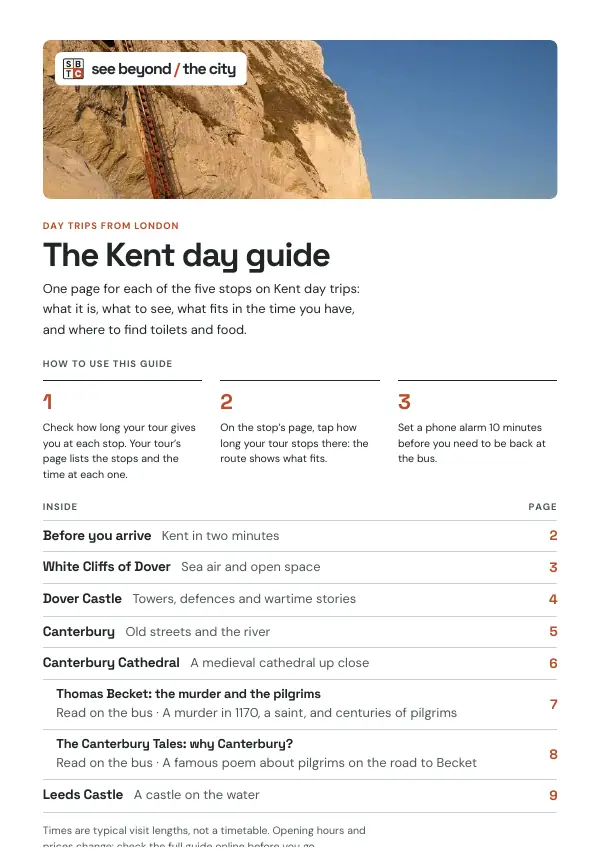
Get the free Kent day guide

The guide has a page for each stop, with what to see in 30, 60 or 90 minutes, and where to find toilets and food.

Unsubscribe any time. Privacy

When to go

What changes through the year.

What you see on the cliffs depends on the season and the weather.

Spring

Orchids grow close to the path on the walk towards Fan Bay, and birds such as peregrines and kestrels hunt over the cliffs. National Trust Fan Bay and lighthouse trail → (opens in a new tab)

Summer

Look for butterflies, bees and orchids beside the path. On fine summer days the sun is very strong on the cliff tops, so bring water and a hat. National Trust Fan Bay and lighthouse trail → (opens in a new tab)

Autumn

Cattle and Exmoor ponies graze parts of the cliffs, so you may see them on the slopes. National Trust, the White Cliffs of Dover → (opens in a new tab)

Winter

Grass paths can become soft and muddy in wet weather. On windy, wet or icy days, choose the tracks further inland rather than the coast path. National Trust Fan Bay and lighthouse trail → (opens in a new tab)

Fan Bay Deep Shelter and the lighthouse tower open only on set days in season. Check the National Trust page before you plan to visit them. Check with the National Trust → (opens in a new tab)

A taste and a keepsake

A cream tea with a sea view, and a book to take home.

The National Trust runs a café, a shop and a second-hand bookshop by the visitor centre, where most visitors start. Money spent in the shop and the bookshop helps care for the cliffs.

Just ideas for any free time you get.

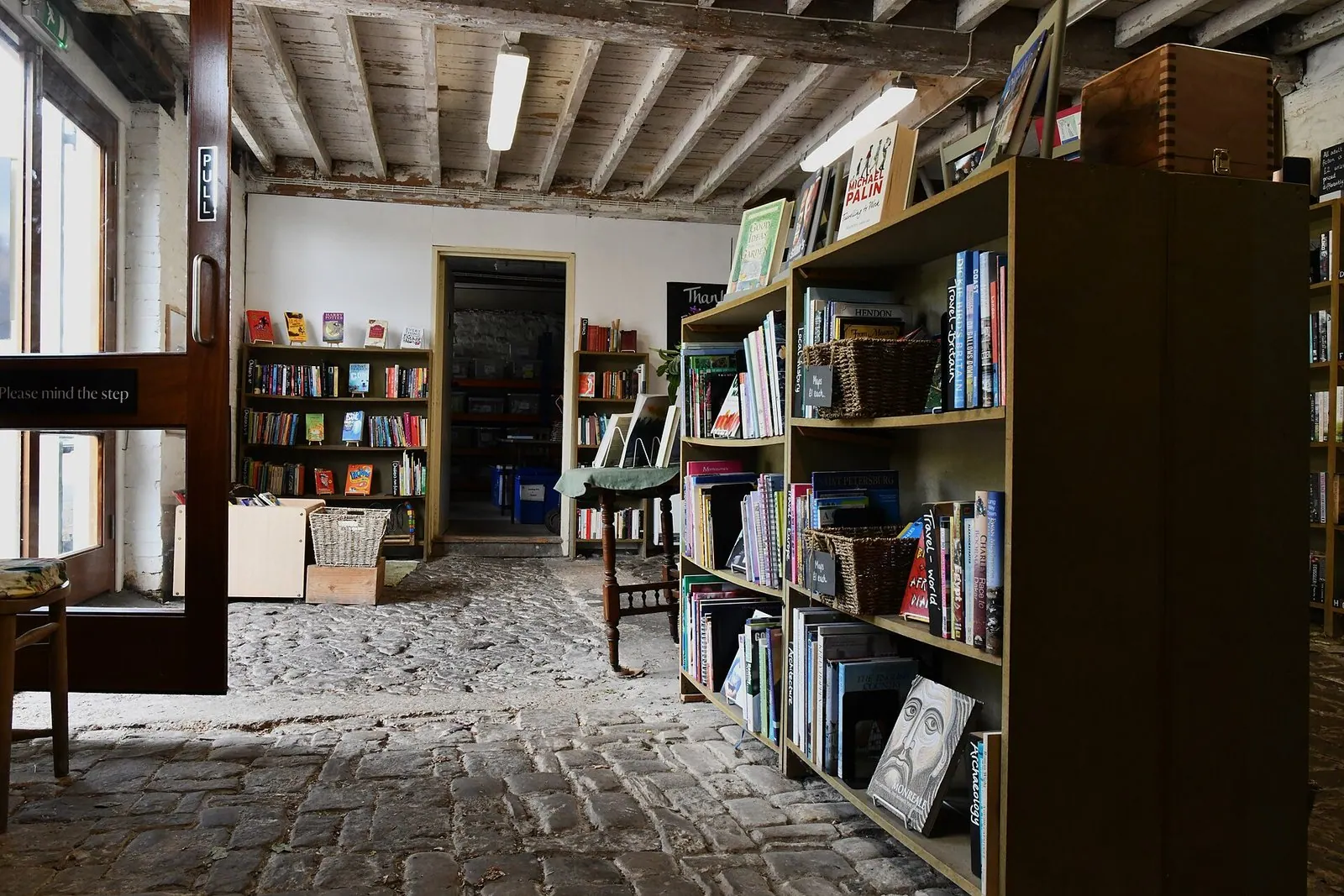
Inside a small second-hand bookshop: wooden bookcases full of books on a cobbled floor under a beamed ceiling, with a doorway to a further room
Illustrative
Take home

A second-hand book from Edith’s

Edith’s is the National Trust’s second-hand bookshop here. It is named after Edith Burvill, who was killed near here when Fan Bay was shelled in the Second World War. All the money goes to caring for the cliffs.

Where to find itBy the visitor centre, at the start of the clifftop walk.

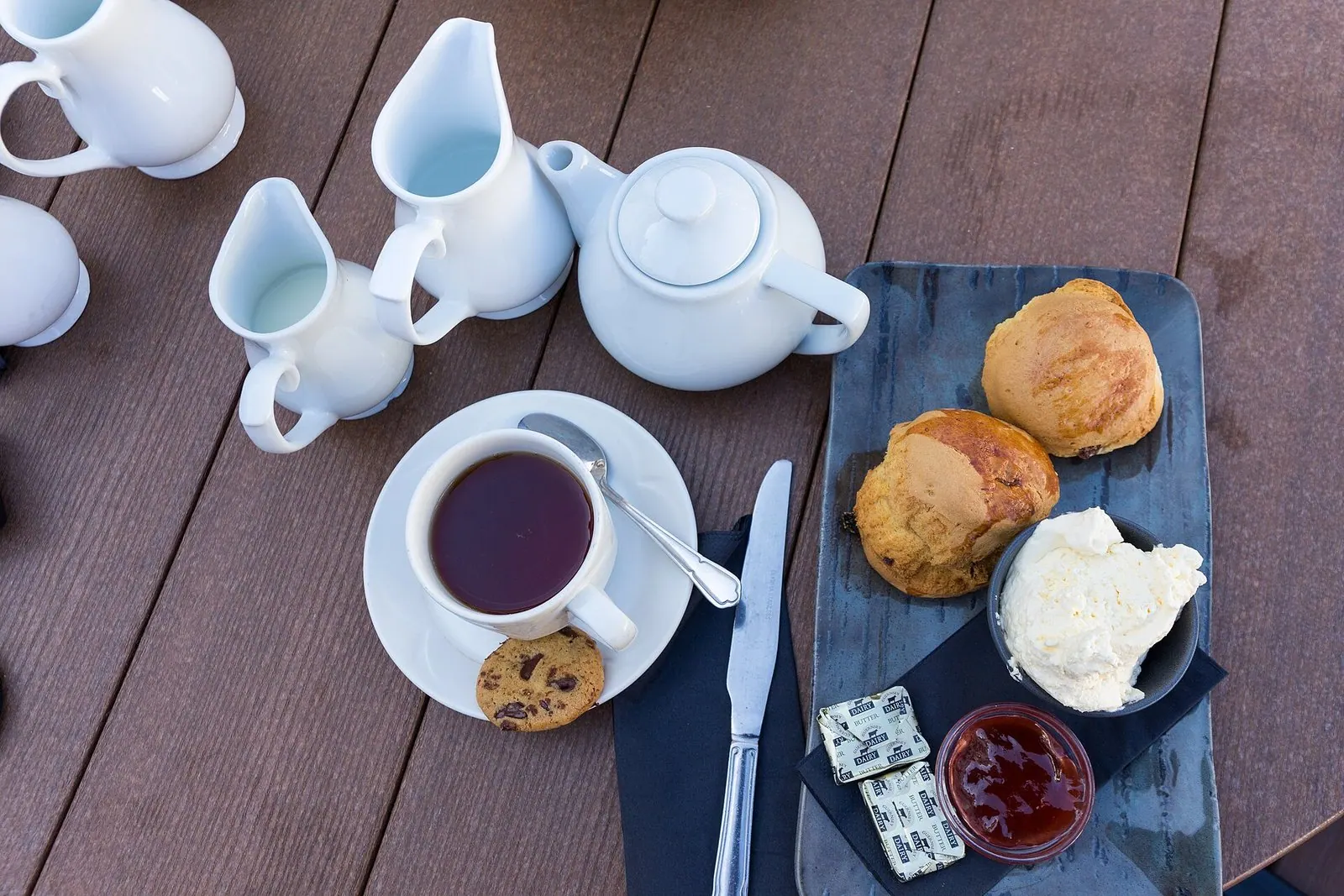
A cup of tea, a slate with scones, clotted cream and jam, butter portions and a white teapot and jugs on a wooden table.
Illustrative
Taste

A cream tea above the port

The National Trust café serves cream teas, which means tea with scones, jam and cream. There are seats indoors and out, with views over Dover and its port.

Where to find itAt the visitor centre where the clifftop walk starts, if you have time to sit down.

Plan your day

Help with choosing.

Also in Kent

Places on the same day trips.

All Kent day trips →
Picture credits and sources

Pictures

Image sources and credits are listed here. Pictures made with AI are marked.

Tour photographs are provided by the tour operators through Viator and are shown from Viator’s own image servers.