The real England, in one easy day from London
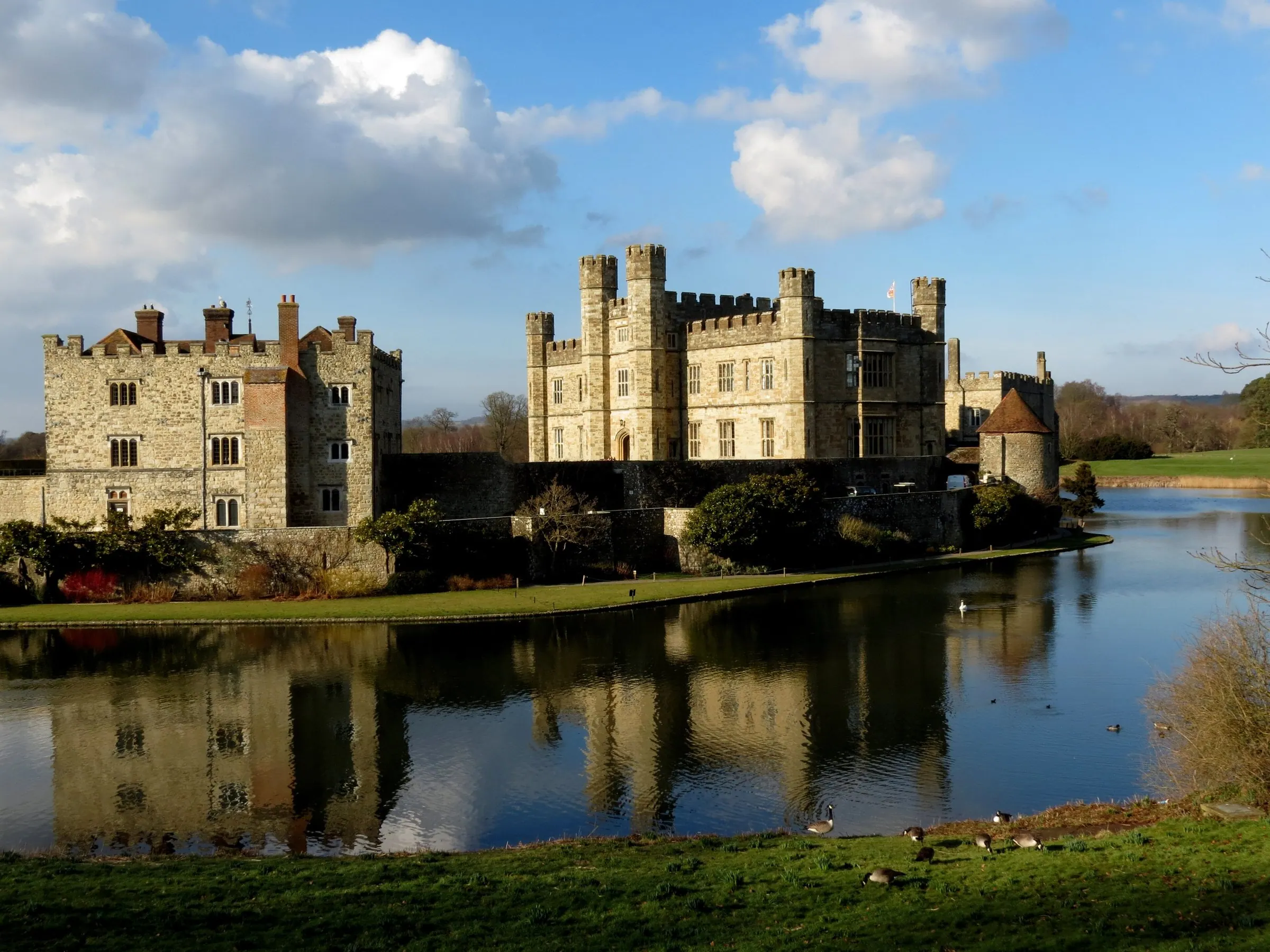
Leeds Castle on its islands, its stone towers reflected in the still moat under a blue sky with white clouds, autumn shrubs along the bank.

A castle on the water · a day from London

Leeds Castle

Near Maidstone, in Kent · a day trip from London

See how long each tour stops in Leeds Castle →

Why it matters

Why Leeds Castle matters.

For almost 900 years this castle on the water has been a fortress, a home for queens and a country house. Here is how it began, who lived here, and what to look for when you visit.

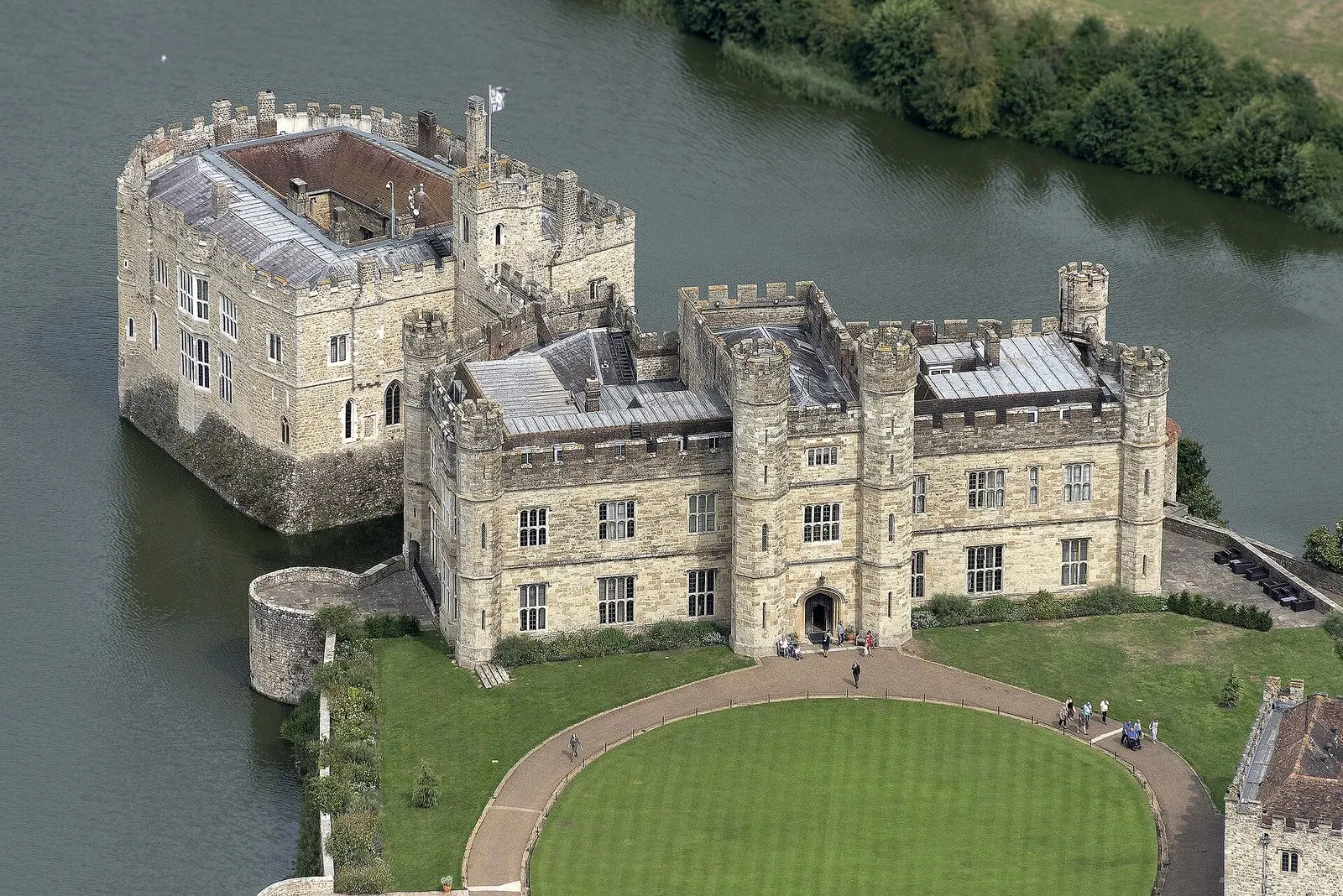
Drone view of Leeds Castle on its island in a wide moat, with green parkland, a golf course and Kent countryside stretching to the horizon.

01

Stone walls on two islands

The castle is built on two rocky islands in the River Len, with water all around it.

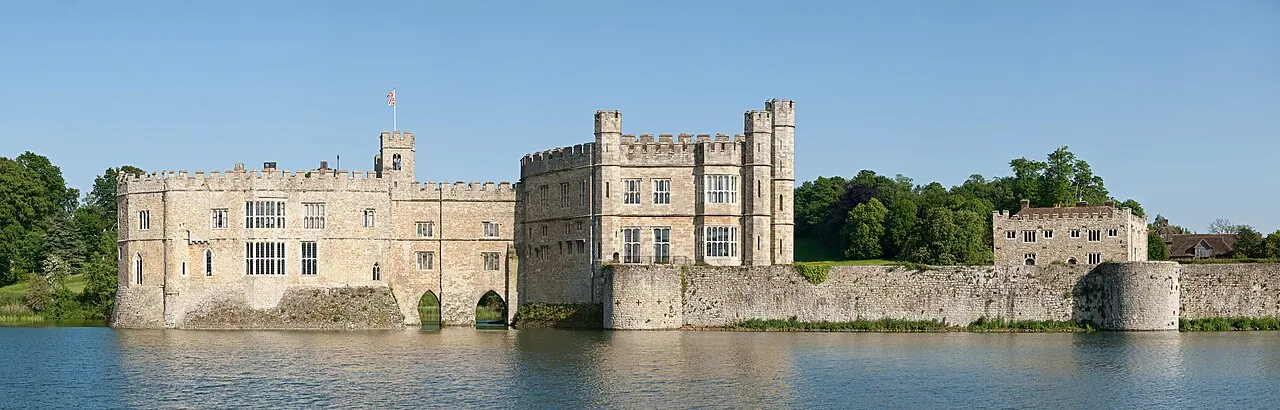
The name comes from “Esledes”, an old English word for a slope or hillside, written in the Domesday survey of 1086. In 1119 Robert de Crevecoeur built the first stone castle here. He put the keep, the strongest part, on the smaller island, and the living buildings on the larger one. A drawbridge joined the two islands and could be raised against attackers, and the valley could be flooded as an extra defence. Today a wide moat still surrounds the castle.

Look for

The water all around the castle, and the drawbridge you cross to reach it. Black swans, the bird in the castle’s logo, live on the moat and the Great Water all year.
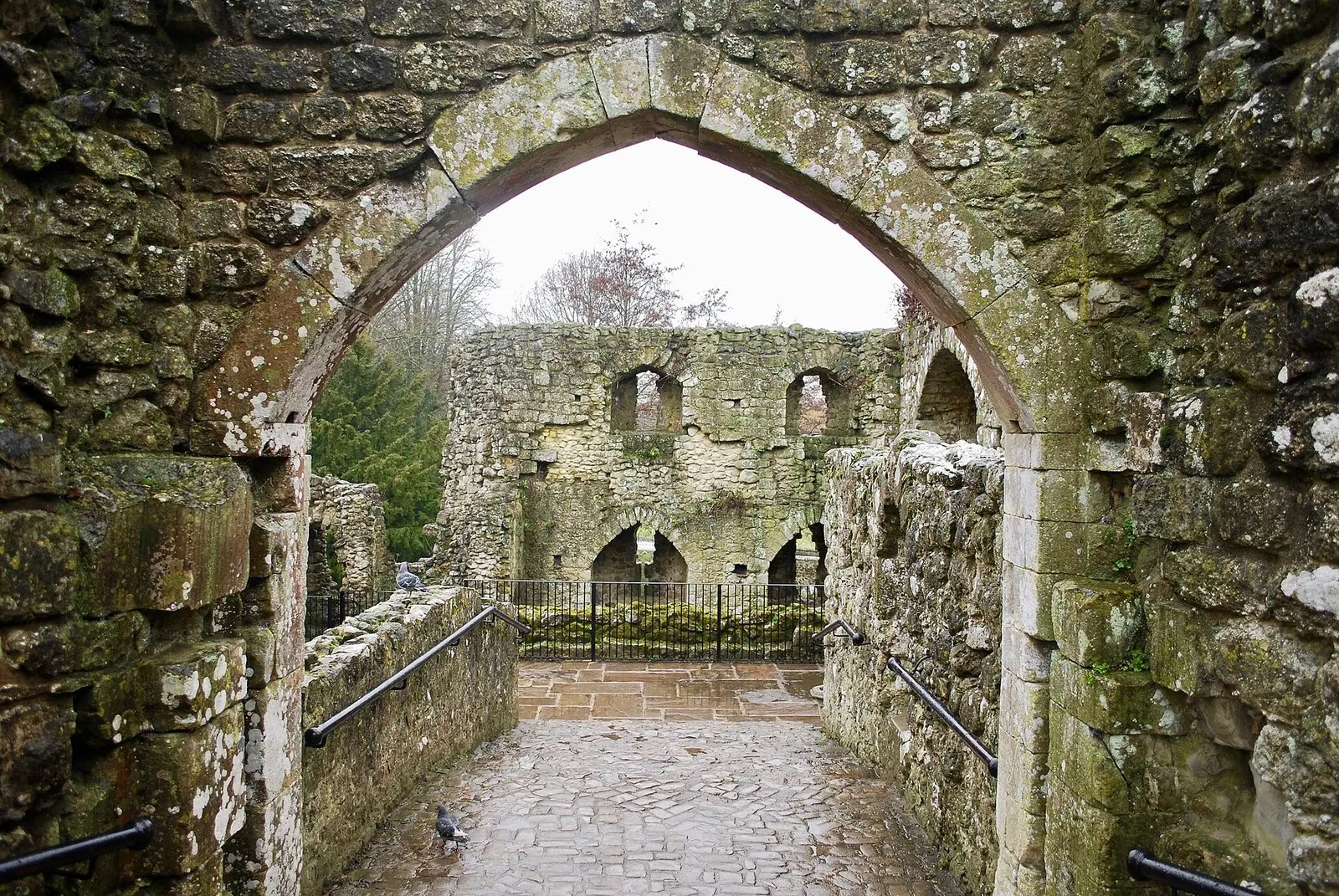
Stone arches over the moat at Leeds Castle, linking the main castle to the smaller block beside it, their walls reflected in the water.

02

A castle for queens

For about 275 years the castle belonged to the royal family, and often to the queen herself.

In 1278 it passed to Queen Eleanor of Castile, wife of Edward I. She built a high wall around the larger island, and the keep took the shape it has today. It is called the Gloriette, from a Spanish word for a garden pavilion. When Edward married Margaret of France in 1299, he gave her the castle, and after that it was often a queen’s own property. Six medieval queens held it. One of them, Joan of Navarre, was accused of witchcraft and lost her property; she later came back to Leeds and was set free. From 1517 Henry VIII turned the fortress into a palace, so that he and Katherine of Aragon could stay here in comfort.

Look for

The Gloriette on the smaller island, joined to the main castle by a stone bridge with arches over the water. A multimedia guide, which comes with some tickets, tells the queens’ stories.

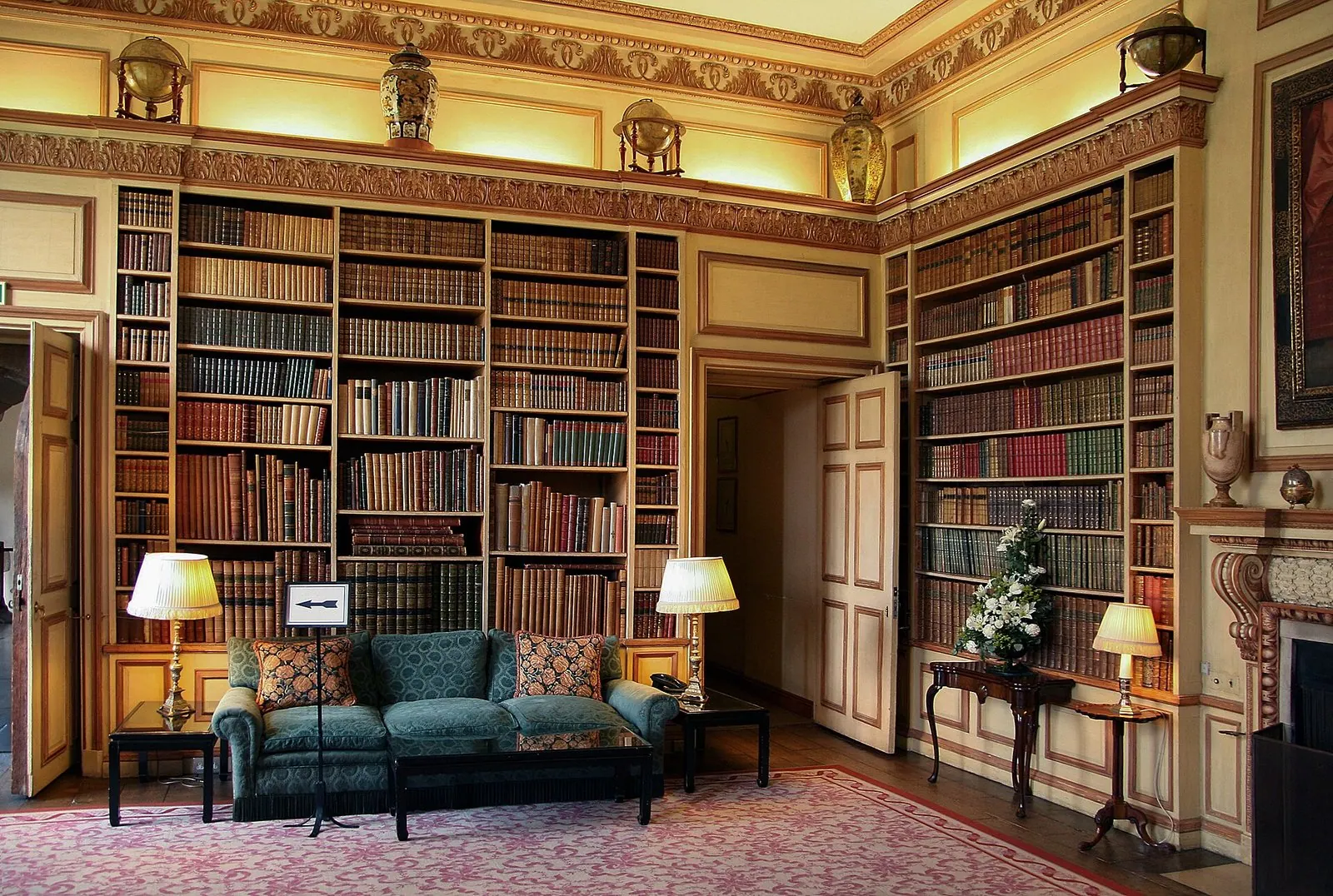
The library at Leeds Castle, tall bookcases of leather-bound books lit by table lamps, with a blue velvet sofa and open doors between the shelves.

03

Lady Baillie’s country retreat

In 1926 a rich Anglo-American woman, Olive Paget, later Lady Baillie, bought the castle.

She wanted it to feel like a medieval castle again, but with every comfort of her own time. Architects rebuilt the rooms, and from 1932 the French designer Stéphane Boudin made the interiors. She added tennis courts and a swimming pool with a wave machine, and kept animals in the park, even llamas and zebras. In the 1930s statesmen, European royalty and film stars came to stay. In the Second World War the castle was a hospital. When she died in 1974 she left it to a charity, the Leeds Castle Foundation, so that it could be cared for and visited. The gardens opened to the public in 1975 and the castle in 1976.

Look for

Upstairs, Lady Baillie’s own rooms; then, down the main staircase, the drawing rooms finished to her design.

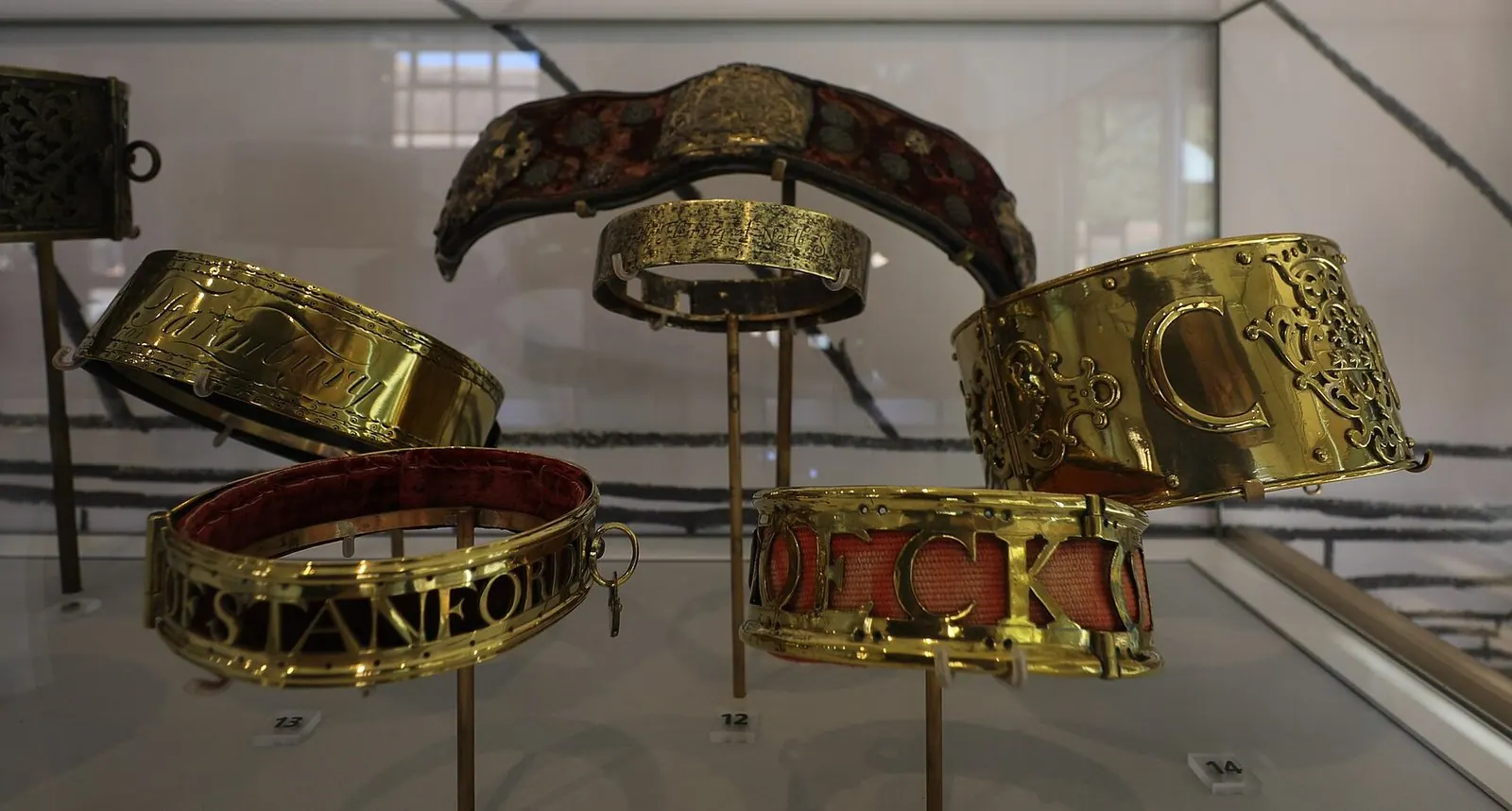
Brass and leather dog collars from the 1700s on stands in a glass case at the Dog Collar Museum, Leeds Castle.

04

A museum of dog collars

Beside the castle is a small museum with one unusual subject, the collars that dogs have worn.

Mrs Gertrude Hunt collected dog collars as a special passion. In 1977 she gave her collection to the Leeds Castle Foundation, in memory of her husband, the historian John Hunt. More collars have been added since. The oldest is from the late 1400s. It is an iron collar from Spain, made for a big dog that guarded farm animals, to protect its neck from wolves and bears. There are also German iron collars from the 1500s with sharp spikes, and modern ones made from tyres, beads and plastic.

Look for

Compare the fierce spiked iron collars with the modern ones. The display may change, because the castle is reviewing the collection.

Your time there

What to see.

These are the highlights worth looking out for, if your time allows. See how long each tour stops in Leeds Castle →

The castle sits on its lake in 500 acres of parkland and gardens. Most visitors pick a few highlights rather than trying to see everything.

Leeds Castle rising from its moat beneath a blue sky
Don’t miss

The castle

Cross the drawbridge to the castle island. Inside are the library and dining room, Lady Baillie’s rooms upstairs, and the drawing rooms.

About 60 min · Included in the entry ticket

The castle visit is self-guided. A multimedia guide comes with some tickets. The drawbridge has about 45 metres of cobbles.

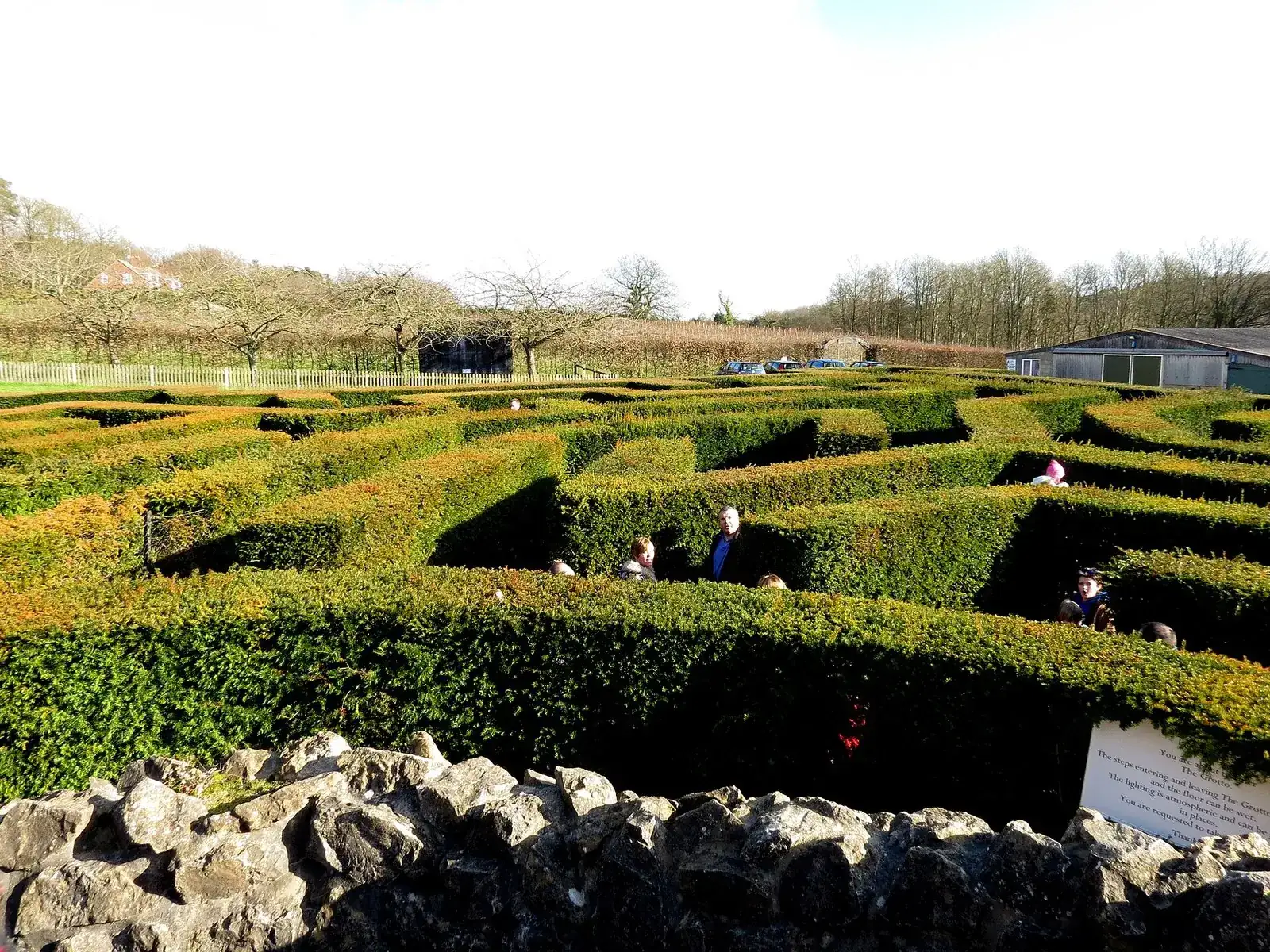
Visitors walking between the clipped yew hedges of the Leeds Castle maze on a sunny day, with a low stone wall in front and bare trees beyond.

The Maze and Grotto

A maze of 2,400 yew trees. From the mound at its centre you see the circular pattern, and an underground grotto with mythical creatures leads you back out.

About 20 min · Included in the entry ticket

Leeds Castle says the maze takes about 20 minutes on average. The mound is not step-free, and the grotto has 24 steps down.

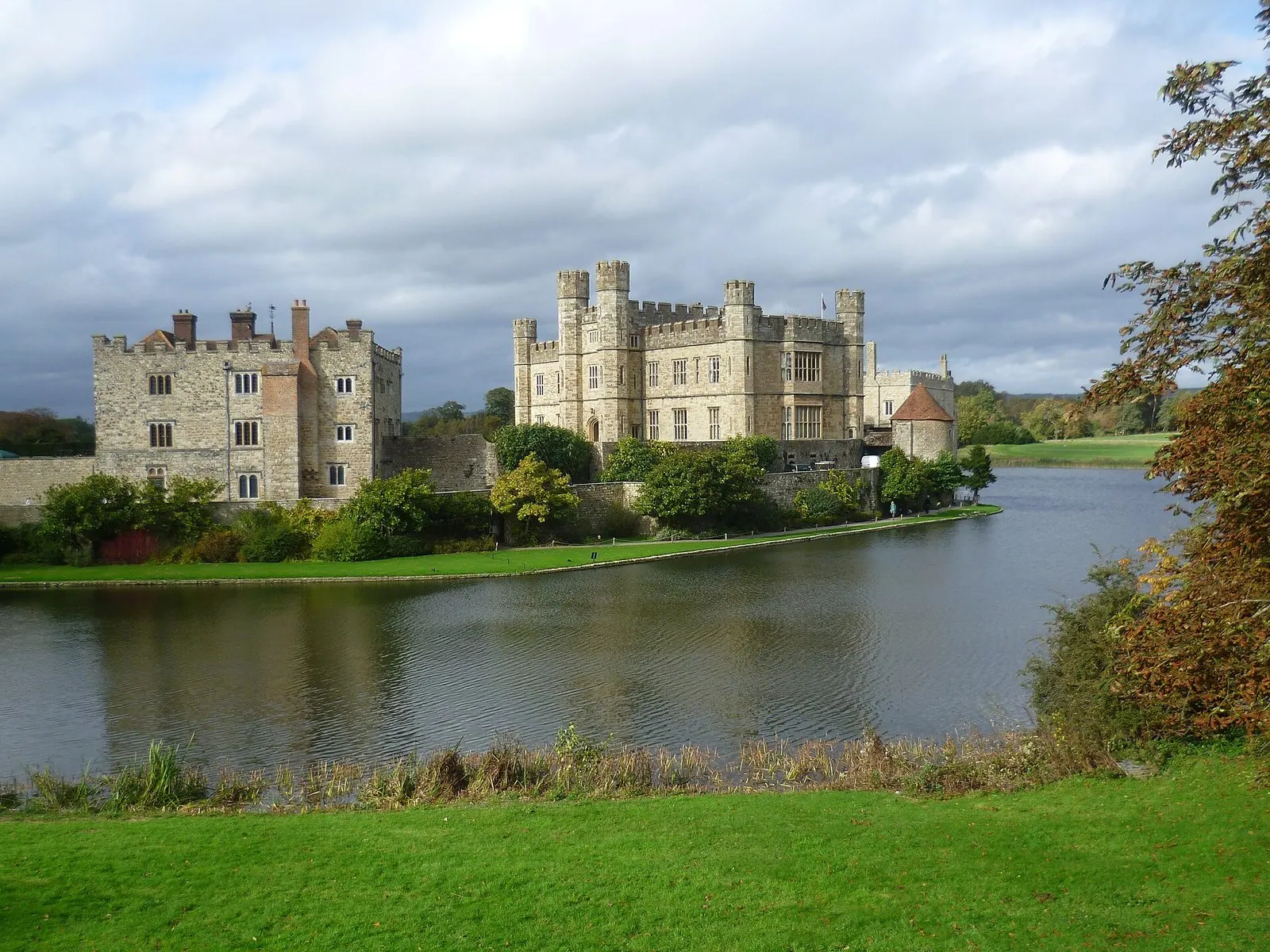
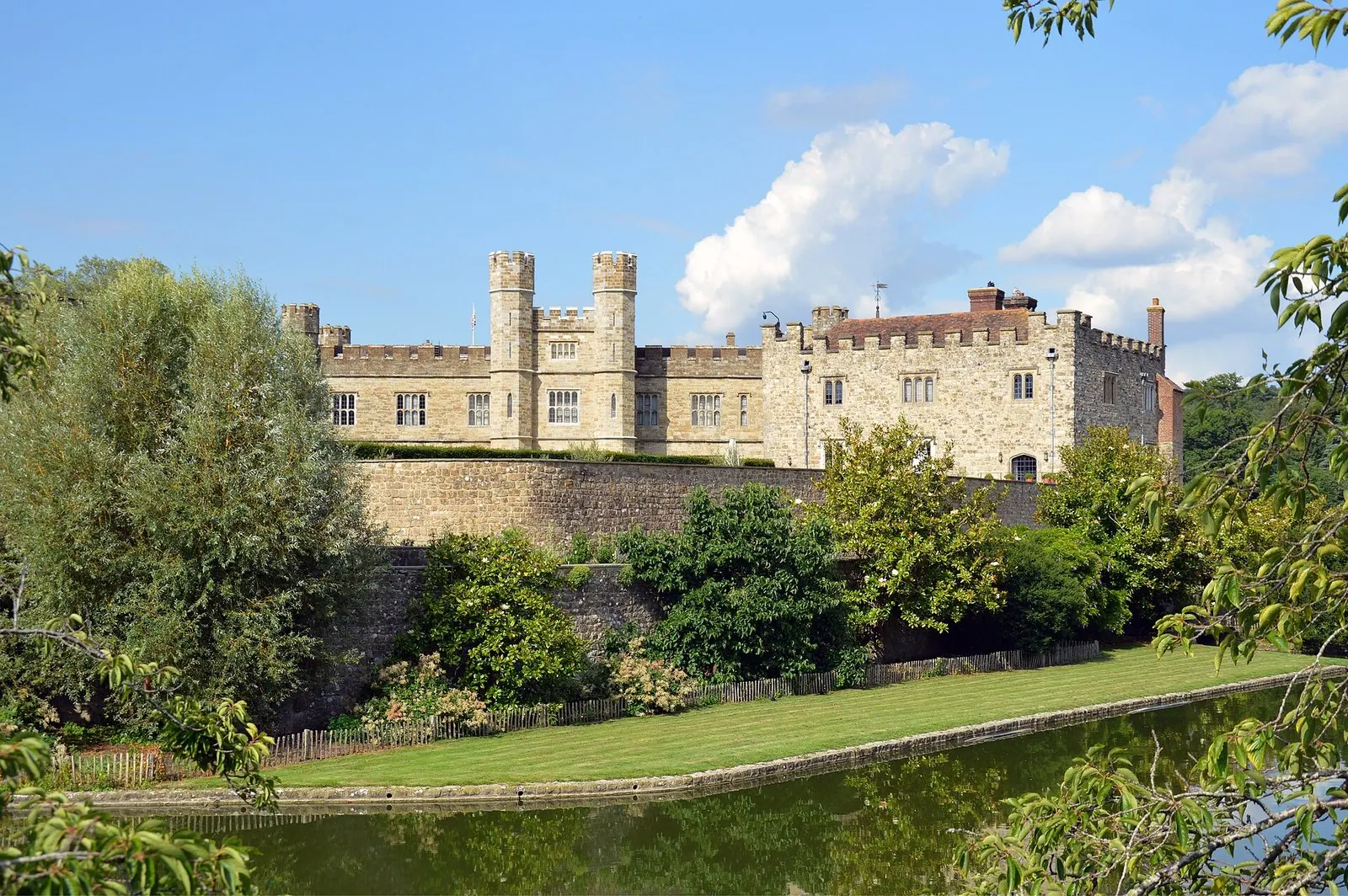
Leeds Castle across the moat under a cloudy sky, its stone towers and lawns beside the water, with a green bank and autumn leaves in front.

Cedar Lake and the first view

From the cascade at Cedar Lake, your first full view of the castle on its water.

About 15 min · Included in the entry ticket

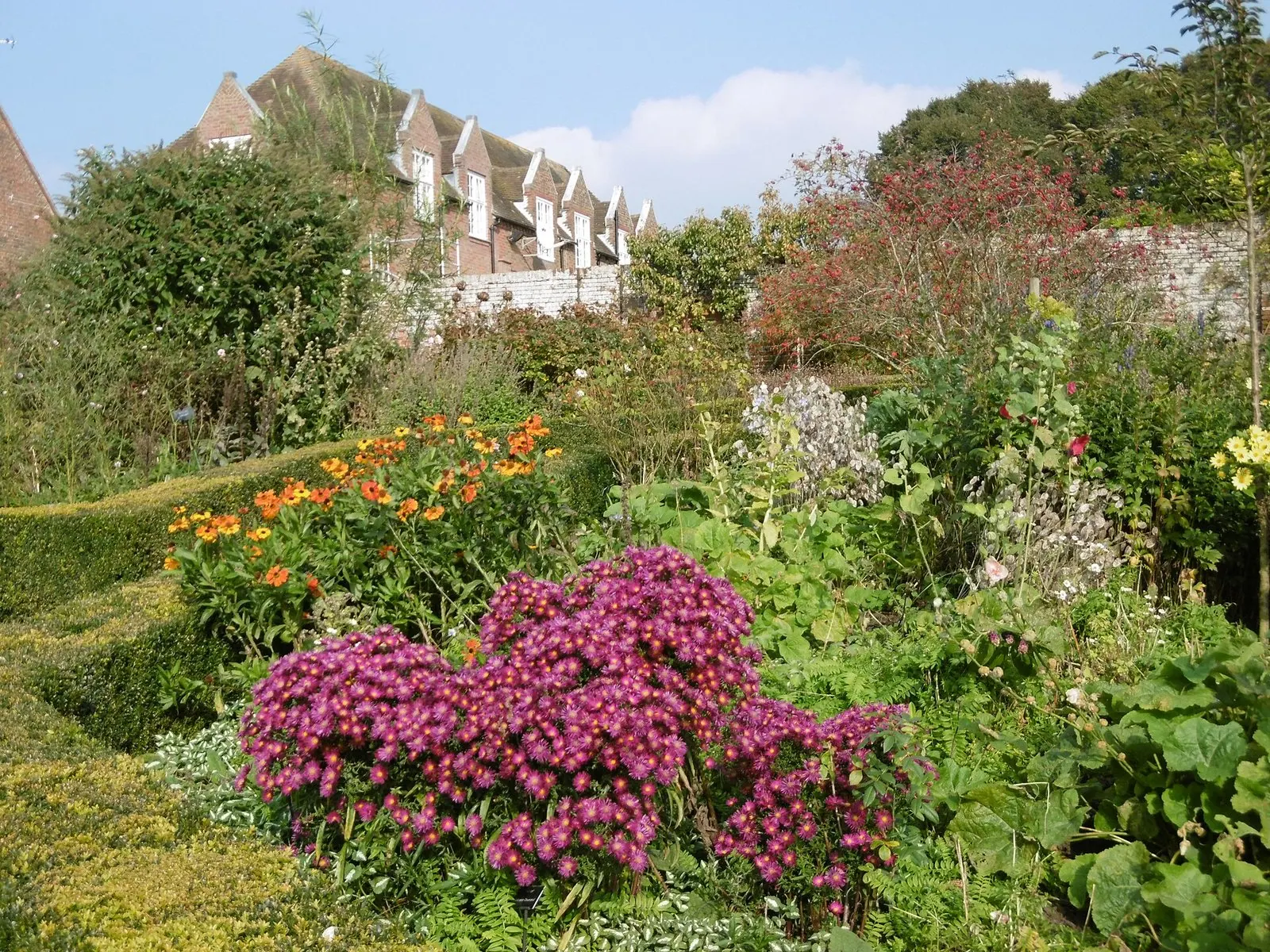
Flower borders of orange and magenta blooms inside low box hedges, with old red-brick buildings and dormer windows behind.

The Culpeper Garden

A cottage garden of roses, lupins and poppies inside low box hedges, where the castle’s kitchen garden once grew.

About 20 min · Included in the entry ticket

Paths are mainly brick or tarmac.

Leeds Castle’s stone walls and towers above a lawn and the moat on a sunny summer day, framed by trees and leafy branches.

Lady Baillie Mediterranean Garden Terraces

A sunny terraced garden with herbs and fragrant plants, and views across the Great Water.

About 20 min · Included in the entry ticket

The path back up from the terraces is fairly steep.

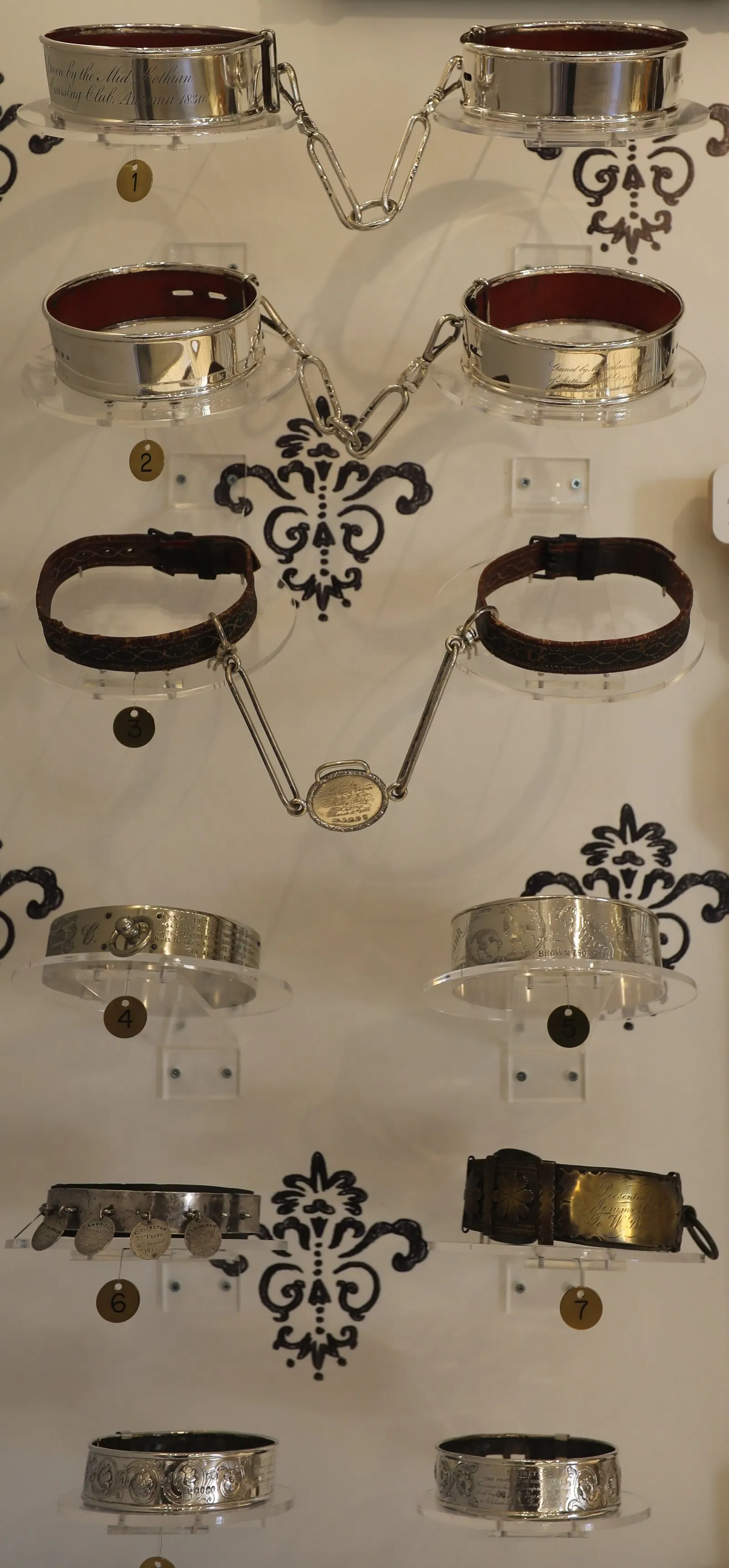
Several antique silver and leather dog collars on clear display stands against a cream wall with black pattern, each with a numbered tag.

The Dog Collar Museum

A small museum of dog collars beside the castle. The collars range from a Spanish iron collar of the late 1400s to modern ones made from tyres, beads and plastic.

About 15 min · Included in the entry ticket

The display may change, because the castle is reviewing the collection.

1 of 6

Swipe for all six highlights →

Choose your day

Which day suits you?

Practical answers

Before you go.

The questions people ask before they book.

How far is Leeds Castle from London?

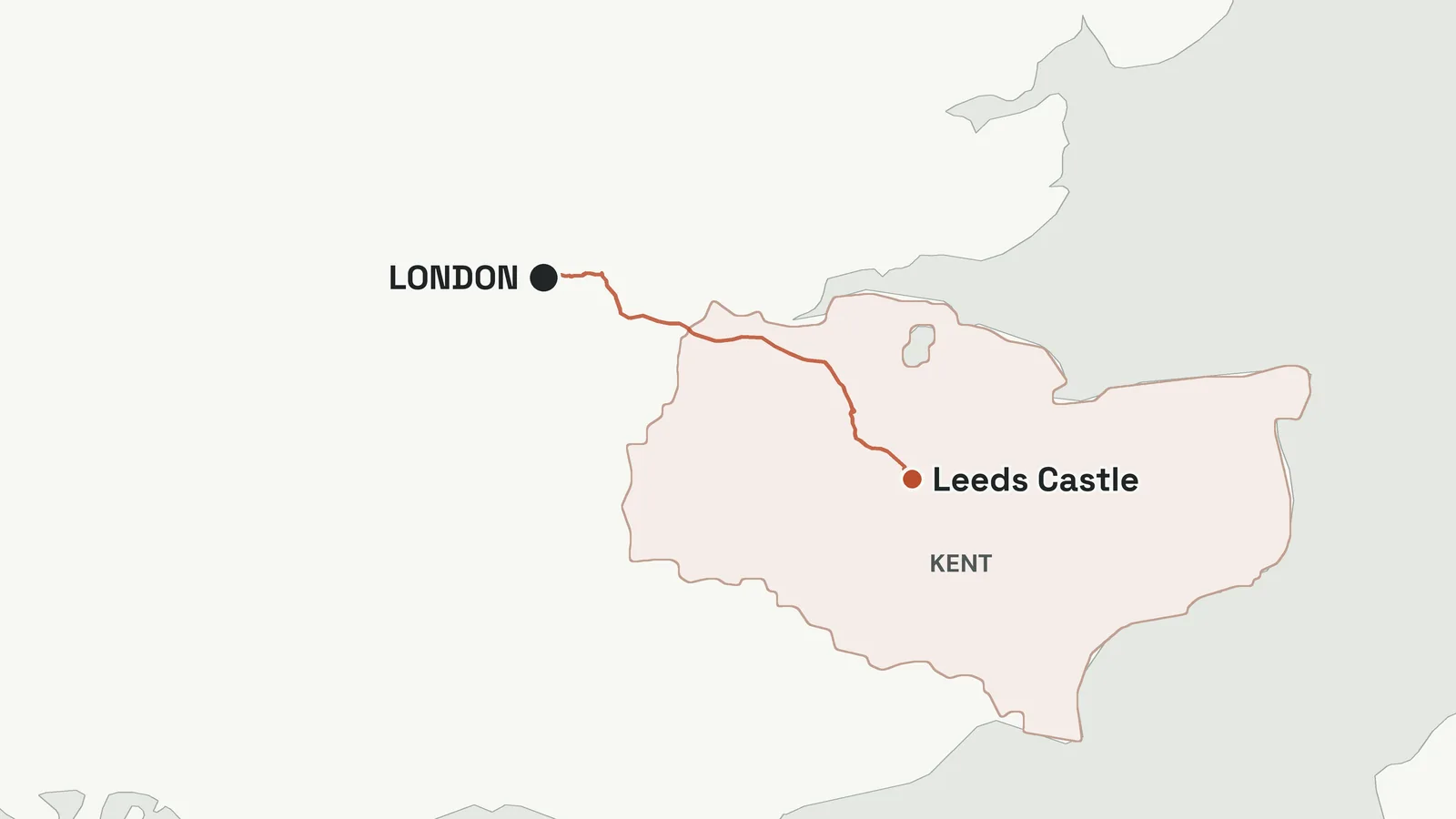
About 42 miles (68 km) by road, roughly 1 hour 15 minutes each way without traffic. Allow a full day for the trip from London. OpenStreetMap road routing (OSRM), retrieved 29 October 2026 → (opens in a new tab)

Can I go to Leeds Castle from London by train?

Yes. Direct trains run from London Victoria to Bearsted or Hollingbourne station in 70 to 75 minutes. From there it is a 5-minute taxi ride or a 30 to 40 minute walk to the castle. A Stagecoach 510 bus stops inside the grounds on Saturdays only. On other days it stops about a 12-minute walk from the Visitor Centre. Leeds Castle: opening times and directions → (opens in a new tab)

What should I know before I go?

The drawbridge has historic cobbles, and the accessible castle route needs staff assistance. The upper floors are not wheelchair accessible. Check the estate’s access guide before you go. Leeds Castle accessibility → (opens in a new tab)

Is Leeds Castle in the city of Leeds?

No. This castle is in Kent, near Maidstone, about 42 miles from London.

Is the castle easy to get around?

The drawbridge has historic cobbles and the accessible castle route needs staff assistance. The maze can be narrow and may puddle, and its mound and grotto are not step-free. Leeds Castle accessibility → (opens in a new tab)

Is the castle open every day?

Not always. The castle is closed to visitors from Friday 6 to Wednesday 11 November 2026 for Christmas set-up, and on 4 and 5 January 2027, while the grounds and other attractions stay open. On 7 and 8 November 2026 the whole estate opens only from 2 pm, for fireworks ticket holders. It is also closed on 25 December. Checked on 1 November 2026. Leeds Castle: opening times and directions → (opens in a new tab)

Where are the toilets and somewhere to eat?

Yes. Leeds Castle lists accessible toilets at the main entrance, on the Castle Island, near the Stable Courtyard and near the Knight’s Stronghold playground. Its page names the Maze Café, the seasonal Boathouse catering outlet and Castle View Restaurant. The page was checked on 30 October 2026. Leeds Castle accessibility: toilets and cafés → (opens in a new tab)

Compare

Compare day trips from London.

Booking links earn us commission, at no extra cost to you. Viator handles the booking.

Compare all Kent tours →

Free day guide

Get the free Kent day guide

The guide has a page for each stop, with what to see in 30, 60 or 90 minutes, and where to find toilets and food.

Unsubscribe any time. Privacy

When to go

What changes through the year.

The castle and grounds open for most of the year, but the hours and the wildlife you see change with the seasons.

Spring

Look for young cygnets, goslings and ducklings on the water, and for migrating birds coming back to nest. Leeds Castle: wildlife → (opens in a new tab)

Summer

From April to September the grounds are open from 10 am to 6 pm. The castle is open from 10:30 am to 5 pm. These are the longest hours of the year. Leeds Castle: opening times and directions → (opens in a new tab)

Autumn

Kingfishers are easier to see, flocks of small woodland birds look for food, and ducks, geese and swans gather in larger groups. Leeds Castle: wildlife → (opens in a new tab)

Winter

With shorter days, you are more likely to see owls, and unusual ducks such as pochard and shoveler on the water. Leeds Castle: wildlife → (opens in a new tab)

From October to late March the castle closes at 3:30 pm or earlier. It also closes on some days for events while the grounds stay open, so check the official opening times for your date. Leeds Castle: opening times and directions → (opens in a new tab)

A taste and a keepsake

Something to taste or take home from the castle.

Here are a few small things you can find on the estate itself, if you have time for a treat.

Just ideas for any free time you get.

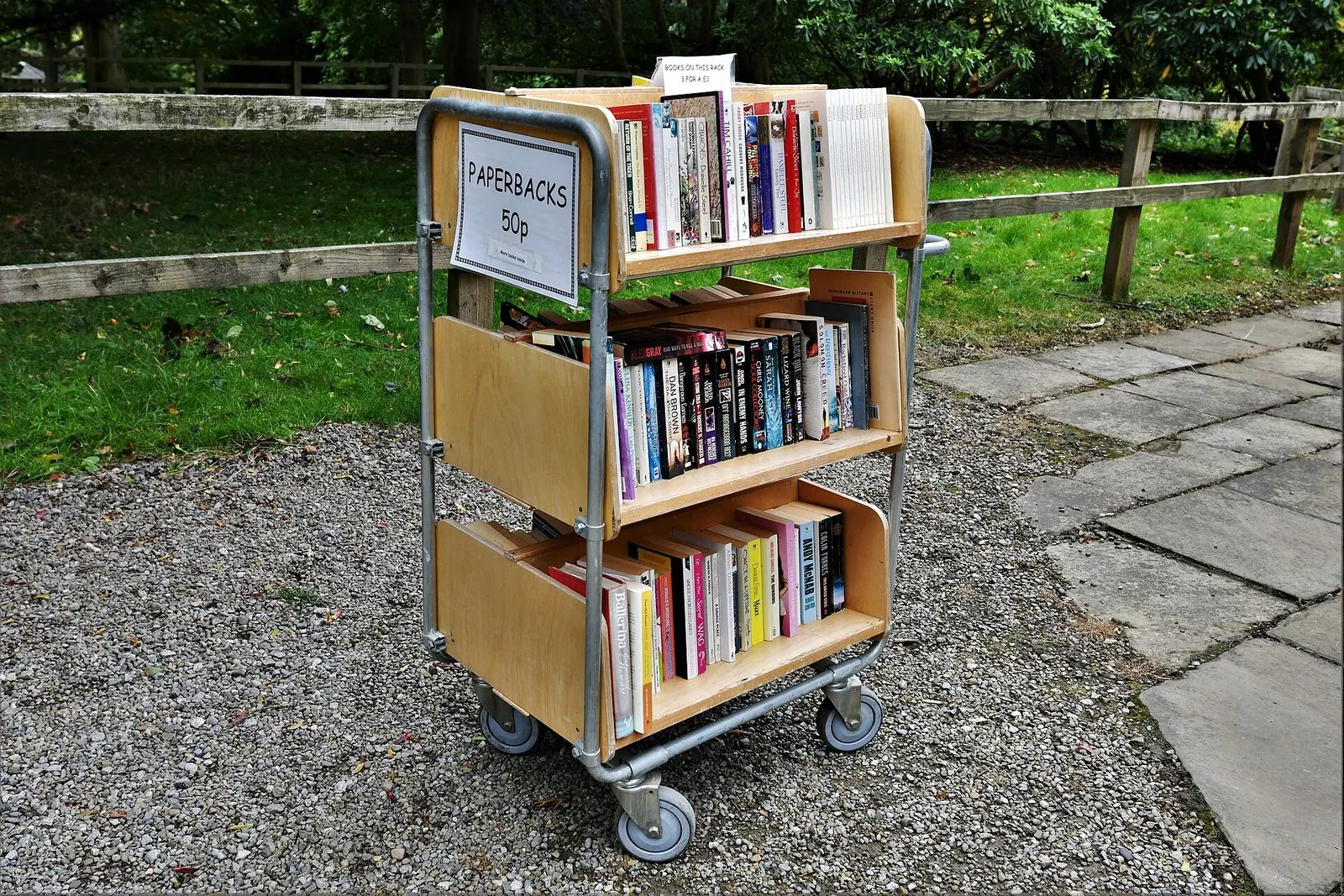
A small wooden book trolley of second-hand paperbacks with a sign reading Paperbacks 50p, standing on a gravel path beside a lawn
Illustrative
Take home

A second-hand book

Leeds Castle volunteers run a small pre-loved bookshop in the Pavilion, near the castle, with second-hand fiction, non-fiction and children’s books. A quiet souvenir of your day.

Where to find itIn the Pavilion, run by volunteers; check its opening days on the castle's site.

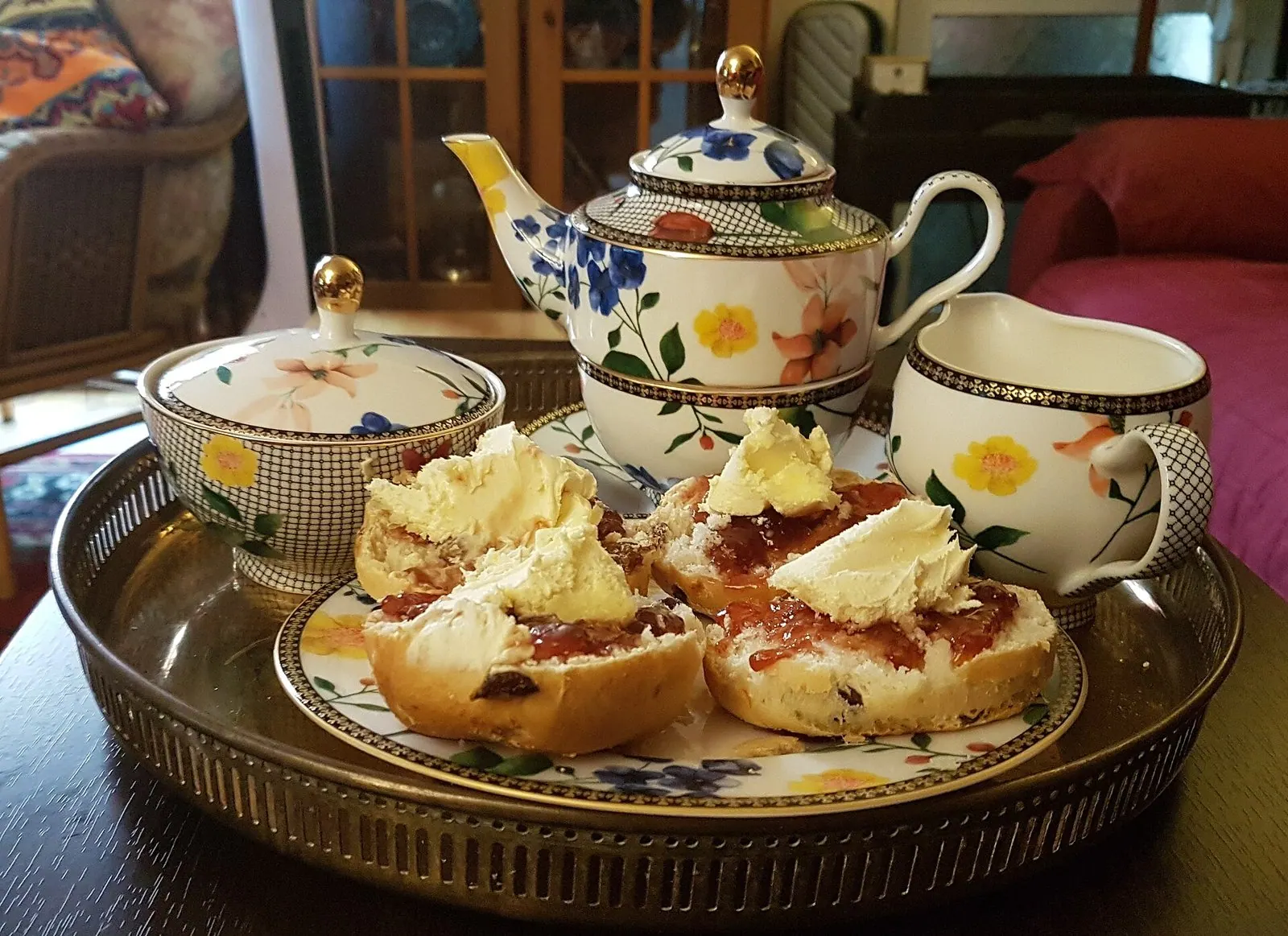
A cream tea on a brass tray: scones topped with jam and clotted cream, a floral teapot, milk jug and sugar bowl.
Illustrative
Taste

Afternoon tea by the moat

The Castle View Restaurant serves a traditional afternoon tea of finger sandwiches, small sweet treats, and scones with Kentish jam and clotted cream. There are views across the moat.

Where to find itIt must be booked ahead, so only if you have enough time; check the days on the castle's site.

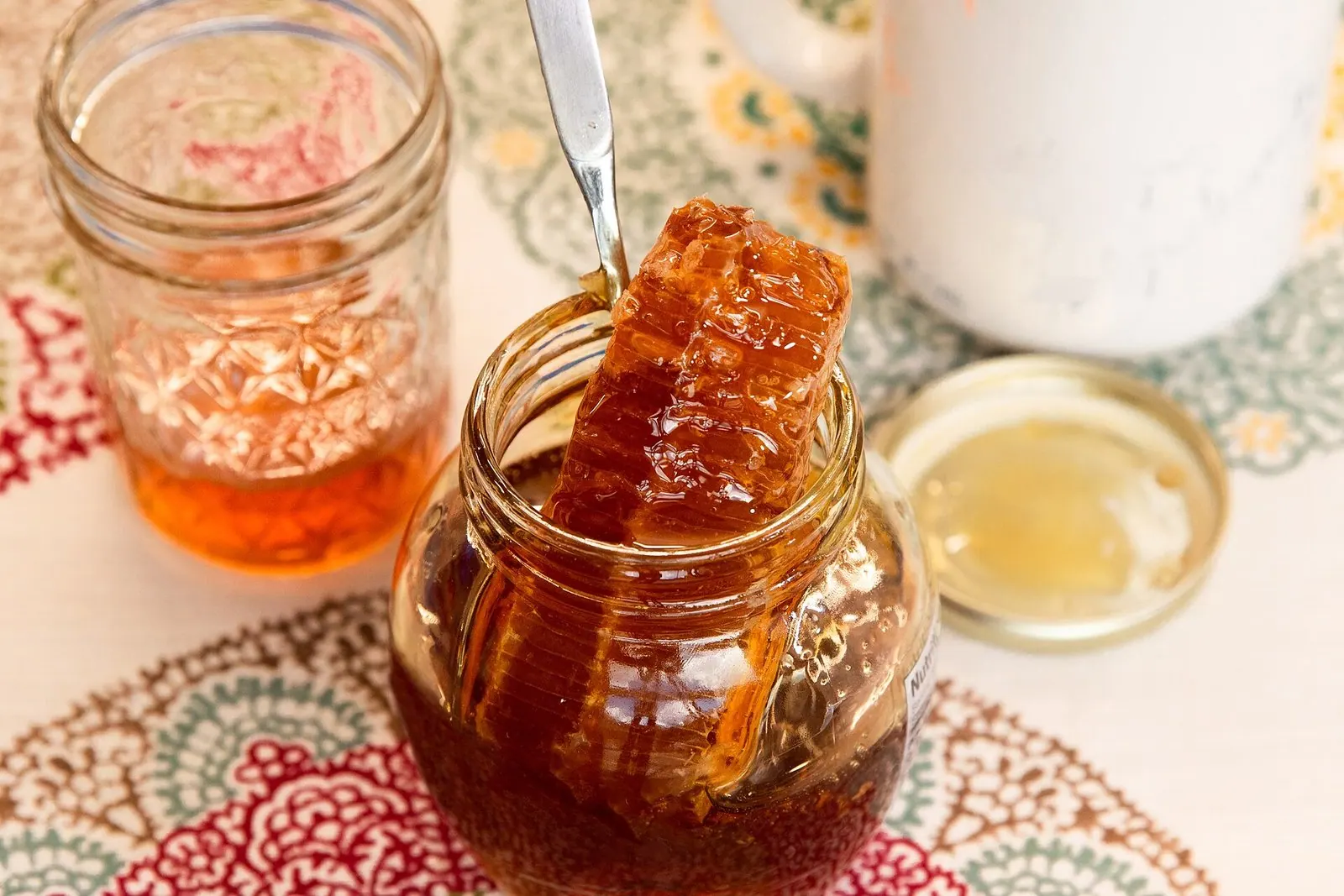
A glass jar of amber honey holding a piece of honeycomb and a spoon, on a patterned cloth beside an open lid.
Illustrative
Taste

Local treats from the shop

The Visitor Centre Shop at the main entrance sells local food and drink such as honey, chocolates, cider and gin. You do not need a castle ticket to go in.

Where to find itEasiest at the end of the day, if you leave from the main entrance.

Plan your day

Help with choosing.

Also in Kent

Places on the same day trips.

All Kent day trips →
Picture credits and sources

Pictures

Image sources and credits are listed here. Pictures made with AI are marked.

Tour photographs are provided by the tour operators through Viator and are shown from Viator’s own image servers.