Day trips from London
The Cotswolds day guide
One page for each of the six villages: what it is, what to see, what fits in 30, 60 or 90 minutes, and where to find toilets and food.
How to use this guide
- Check how long your tour stops in each village. Your tour’s page lists the stops and the time at each one.
- On the village’s page, pick the plan that fits: 30, 60 or 90 minutes.
- Set a phone alarm 10 minutes before you need to be back at the bus.
Before you arrive
The Cotswolds in two minutes
Why the stone is golden
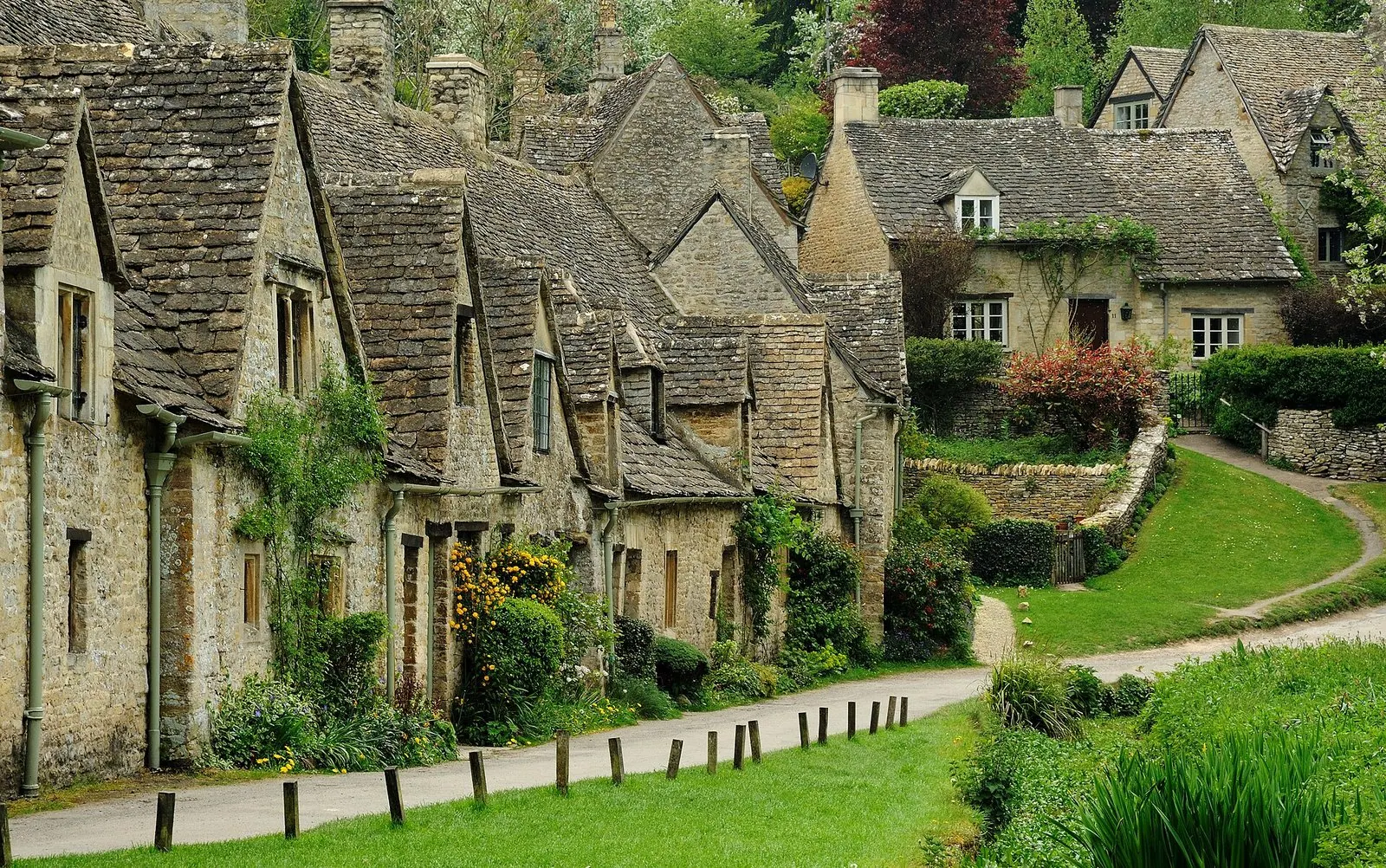
Almost every village here is built from the same local stone, a limestone laid down in the Jurassic period, around 210 to 140 million years ago. Its colour runs from silvery cream through grey to a golden ochre, depending on how much iron oxide (a kind of rust) the stone holds.
Walls built without cement
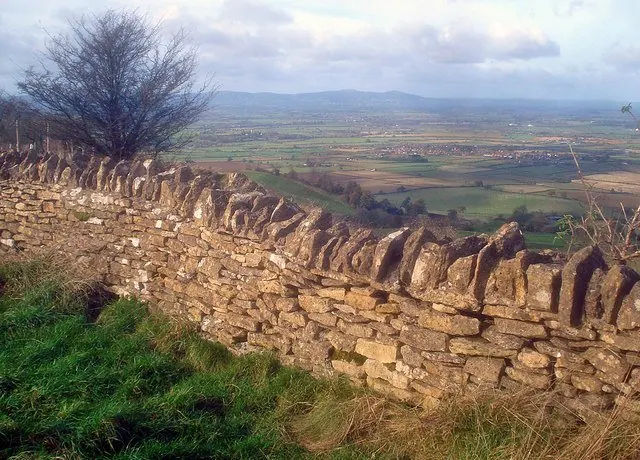
The fields and lanes are edged by dry stone walls, made from the same stone with no cement. The Cotswolds National Landscape counts more than 6,000 km of them. Most date from the 1700s and 1800s, when open land was fenced into fields.
A little history
- Over 6,000 years ago
People shape the hills
The Cotswolds National Landscape says people have lived in and shaped this landscape for more than 6,000 years. Burial mounds, hill forts and the Rollright Stones are still there to see.
- Roman times
A road to Stow
Roman engineers built the Fosse Way from Bath to Stow-on-the-Wold and Moreton-in-Marsh. The road let people and goods travel quickly between towns, farms and villas.
- The late Middle Ages
Wool builds the towns
Money from the wool trade paid for grand churches, manor houses and market towns. The wool churches are the best-known sign of that wealth, and local stone gave the towns their look.
- 1966
A protected landscape
The Cotswolds was made an Area of Outstanding Natural Beauty in 1966. At 790 square miles it is the largest in England and Wales, and it stretches from Bath to Warwickshire and Worcestershire.
Why stop here
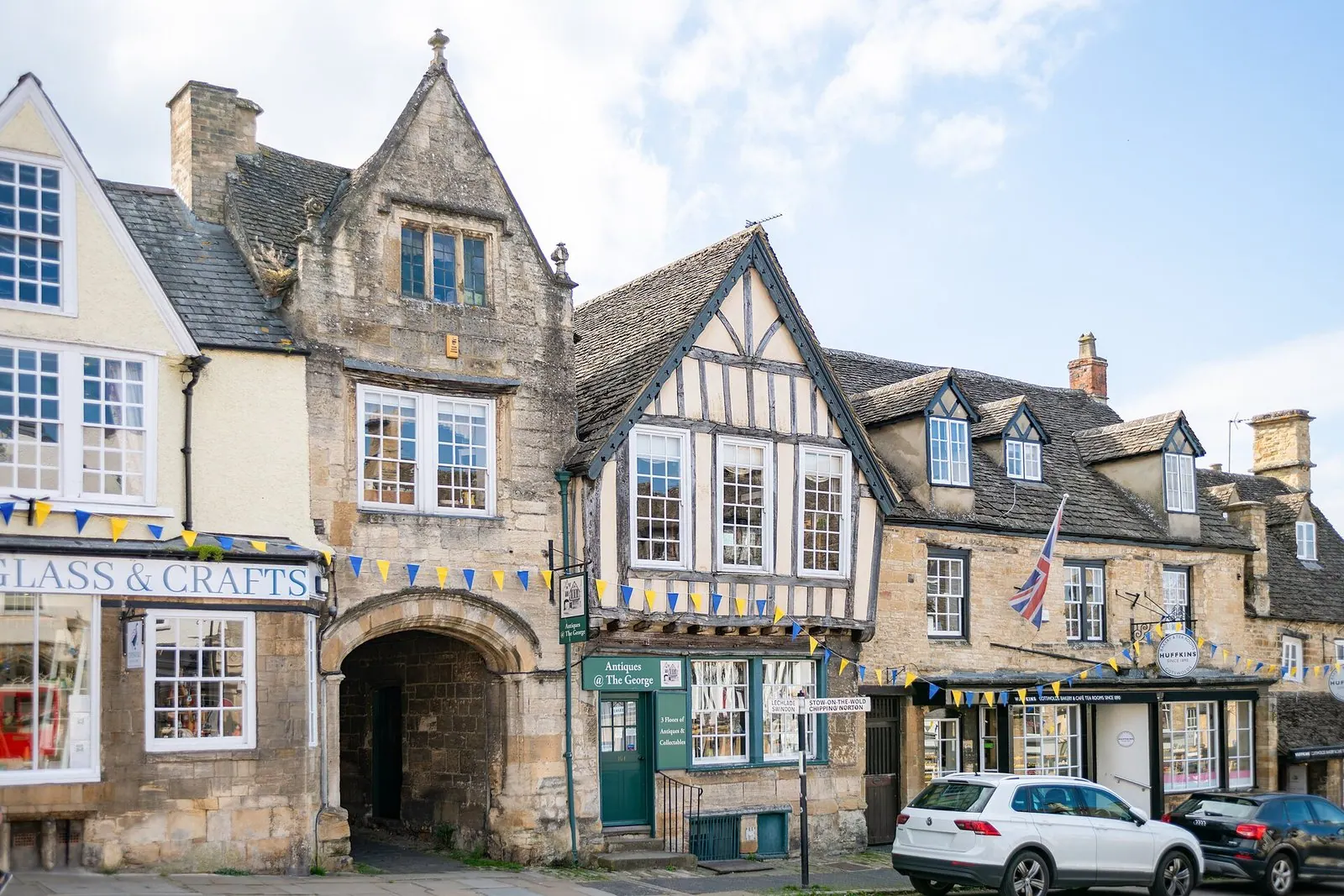
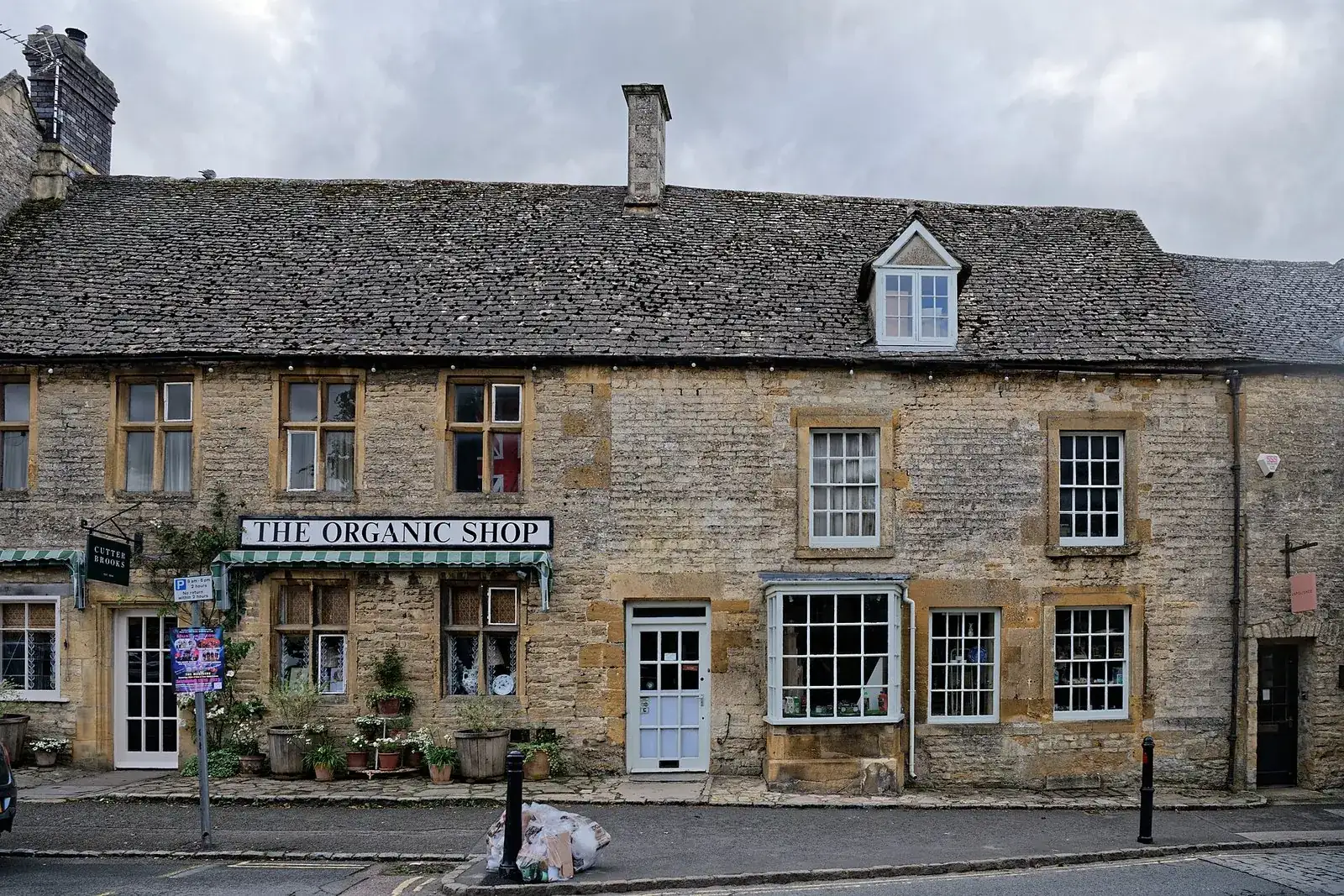
A medieval market town whose High Street runs down to the River Windrush. Look for the large wool church, where Leveller soldiers were held prisoner in 1649, and the Tolsey, the old market house. Antiques and independent shops line the street.
Don’t miss
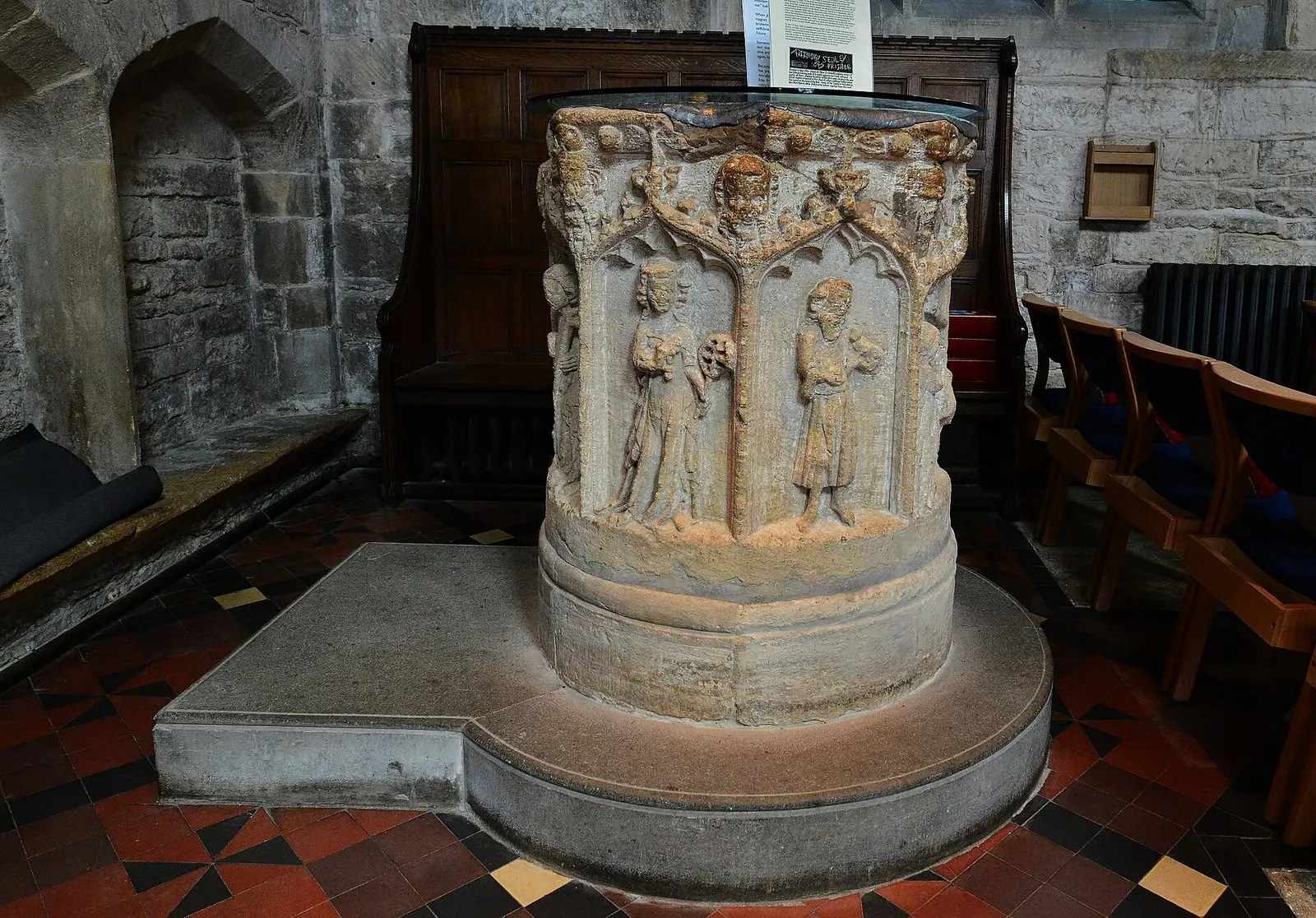
The Levellers locked in the church, 1649
Anthony Sedley’s name and the date 1649, carved by a prisoner into the lead of the font. Also look for the plaque on the church wall.
Your route
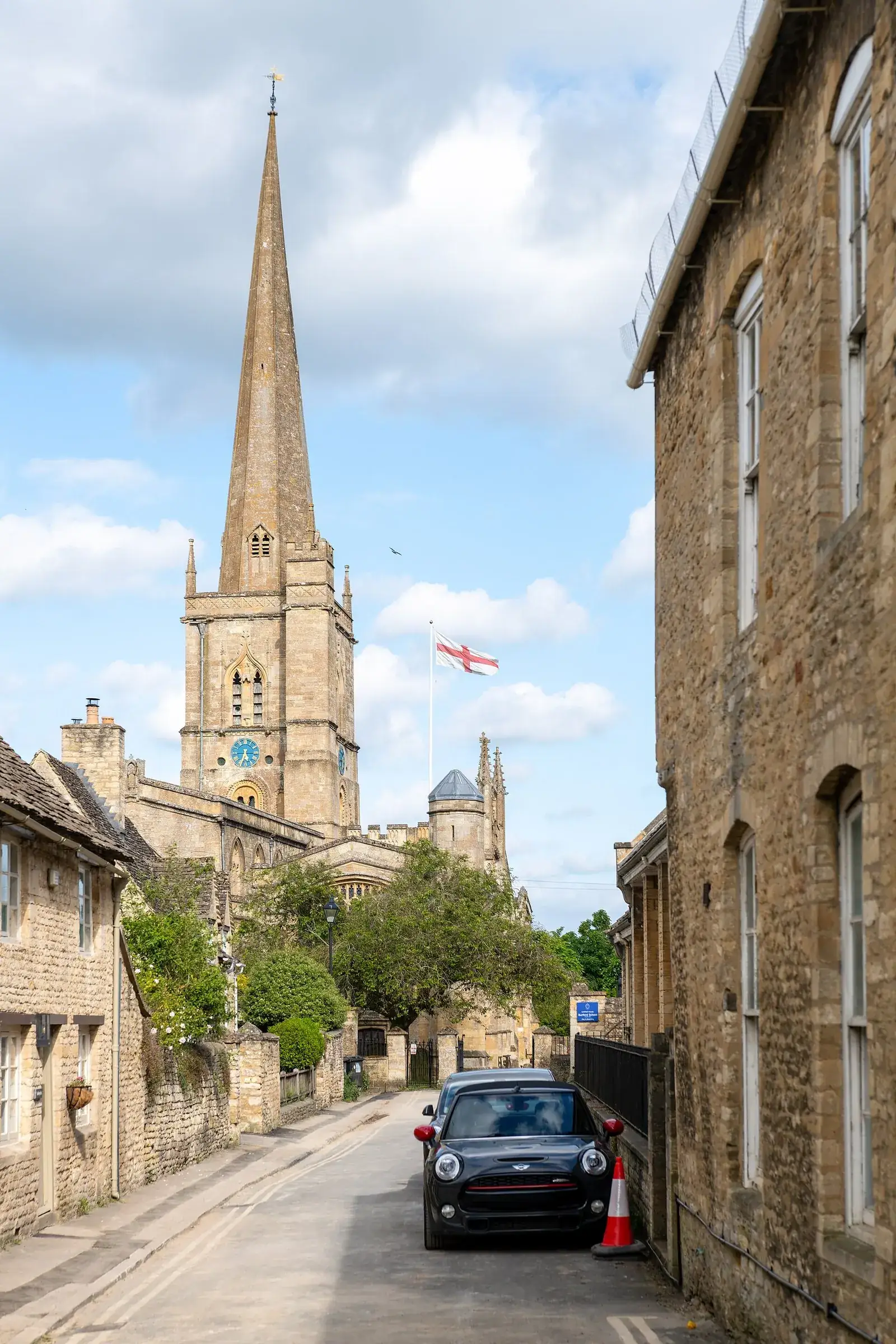
The church of St John the Baptist
A very large church paid for by the wool trade, with a 12th-century tower and west doorway, a carved stone ceiling in the porch, many tombs and stained glass. The Harman tomb has carved people from the Americas, the earliest known in Britain, the church says.
The Levellers’ marks in the church
In 1649 Leveller soldiers, who wanted a more equal society, were held prisoner in this church. One of them, Anthony Sedley, carved his name in the lead of the font. A plaque on the church wall remembers the soldiers who were executed.
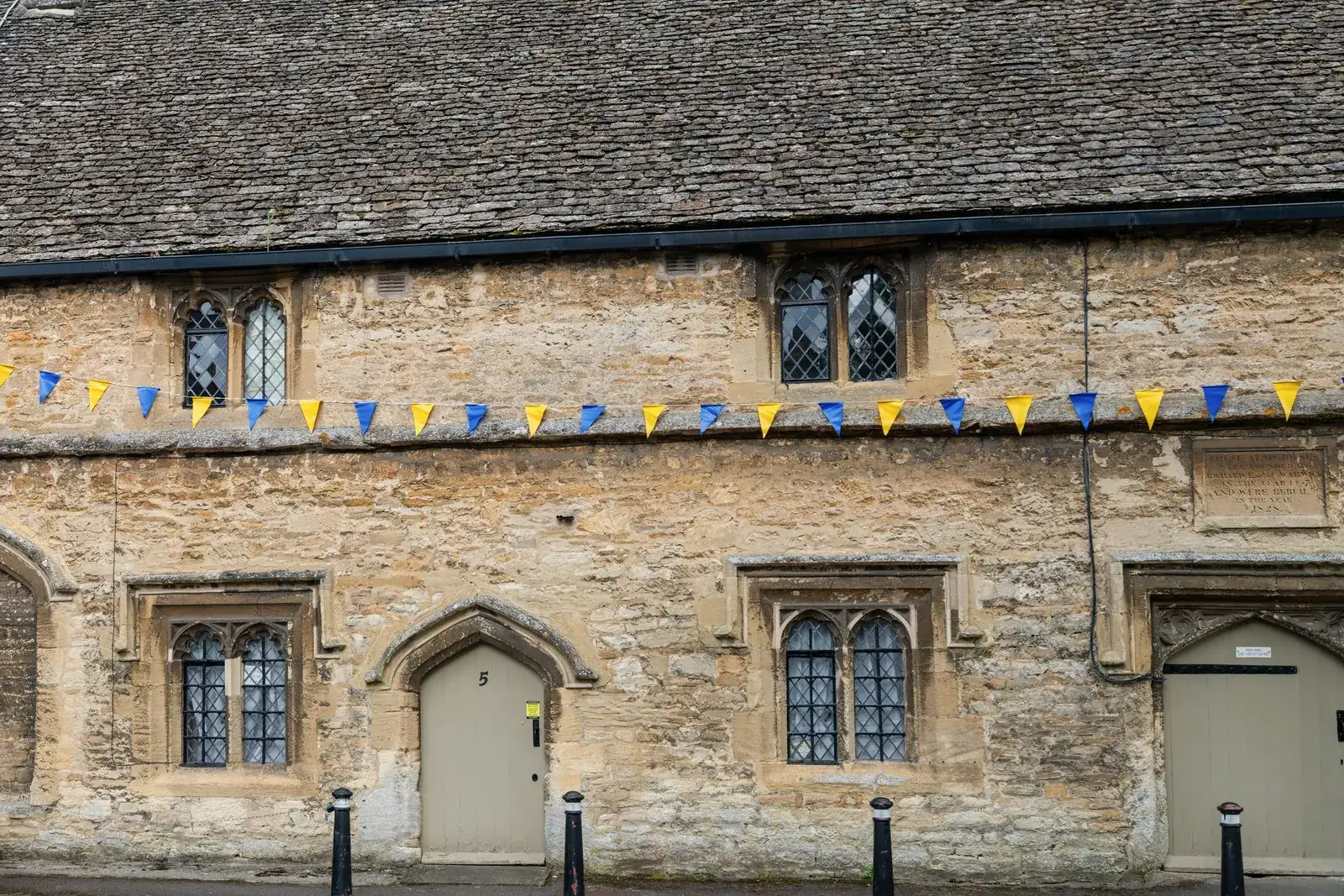
The Great Almshouses
Almshouses are charity homes for poor people. A tablet over the central door says Richard, Earl of Warwick founded these in 1457 and that they were rebuilt in 1828. They stand on Church Lane.
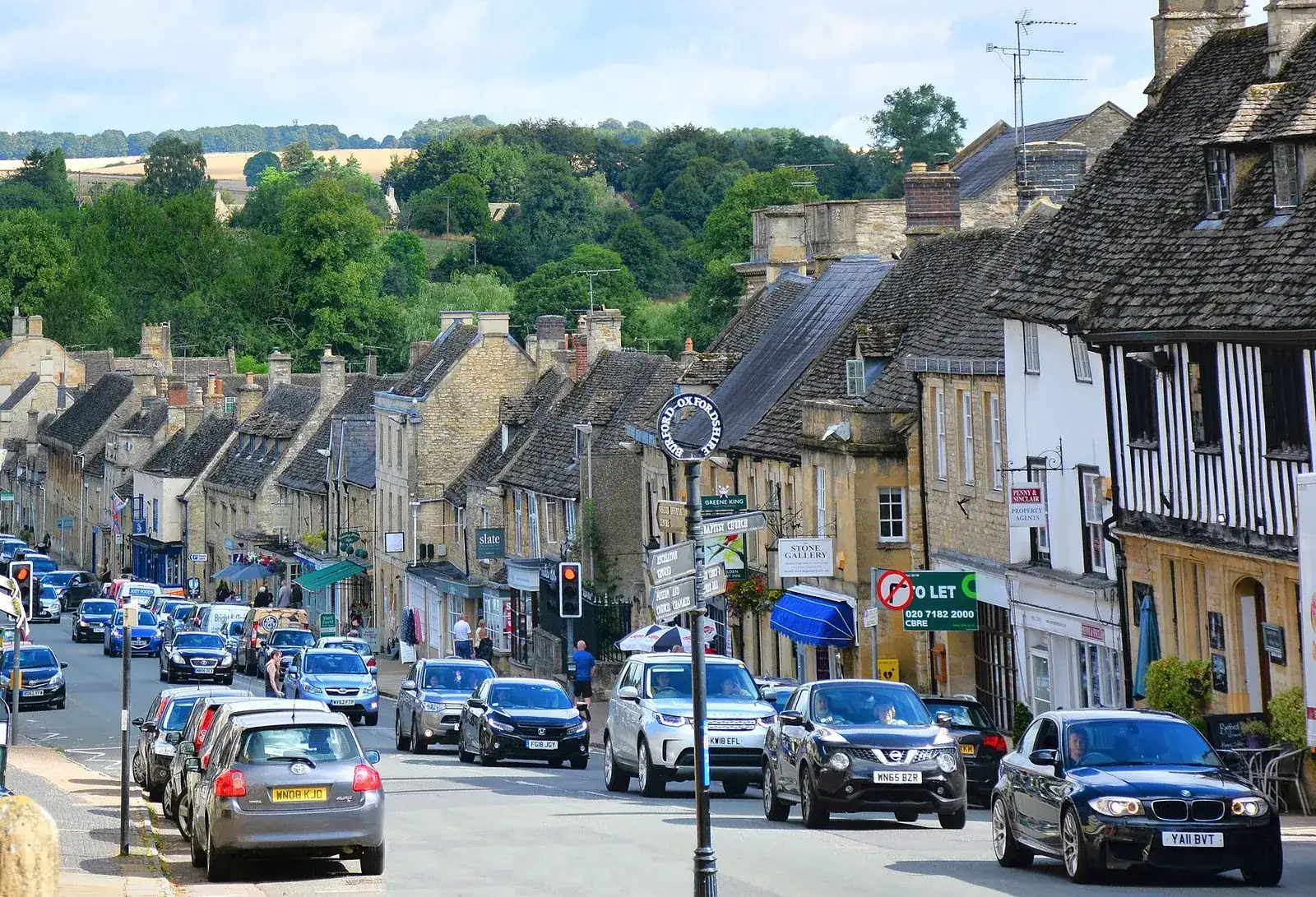
The High Street
A street of stone houses and historic shops that runs downhill to the River Windrush. Burford is known for antiques, independent shops and small boutiques.
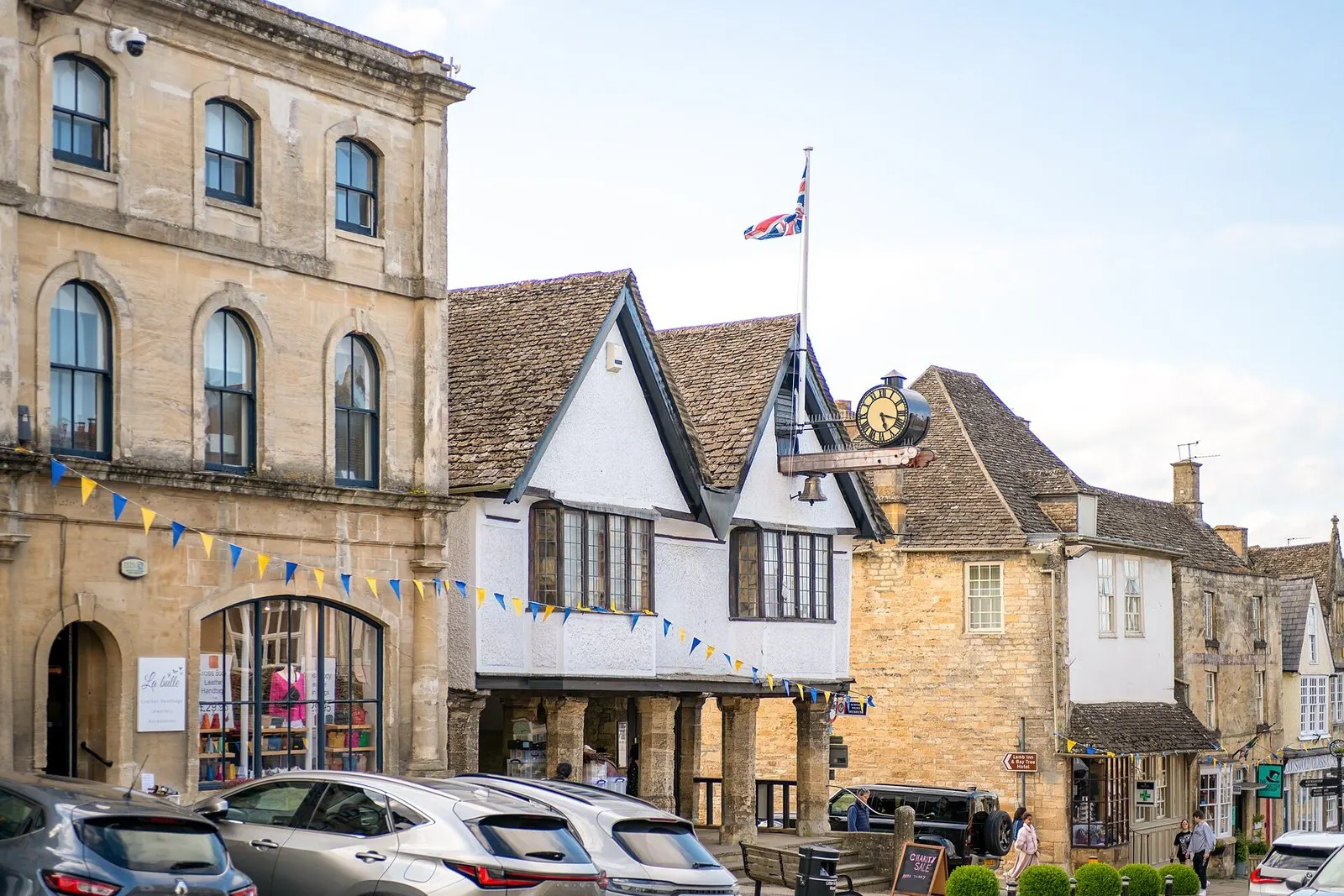
The Tolsey
The 16th-century market house, a timber frame raised on stone piers (columns), with a clock on the front. Traders paid tolls here, and the Borough Court met. It is now the town museum.
Toilets
Yes. West Oxfordshire District Council lists two public toilets in Burford, one on the High Street and one at Guildenford Car Park. Both are open 7.30 am to 7.30 pm and have baby changing. The disabled toilets need a Radar key. The council’s page was checked on 28 October 2026.
Food
Visit Cotswolds lists traditional pubs, tearooms and restaurants in Burford. Huffkins has a café and bakery on the High Street, in a listed building with original beams.
Sources (6)
Why stop here
A small village on the River Coln, best known for Arlington Row, a lane of old stone cottages owned by the National Trust. You see the row, the water meadow and the river from public paths. It is a place for a walk and photographs, not a visit inside anything.
Don’t miss
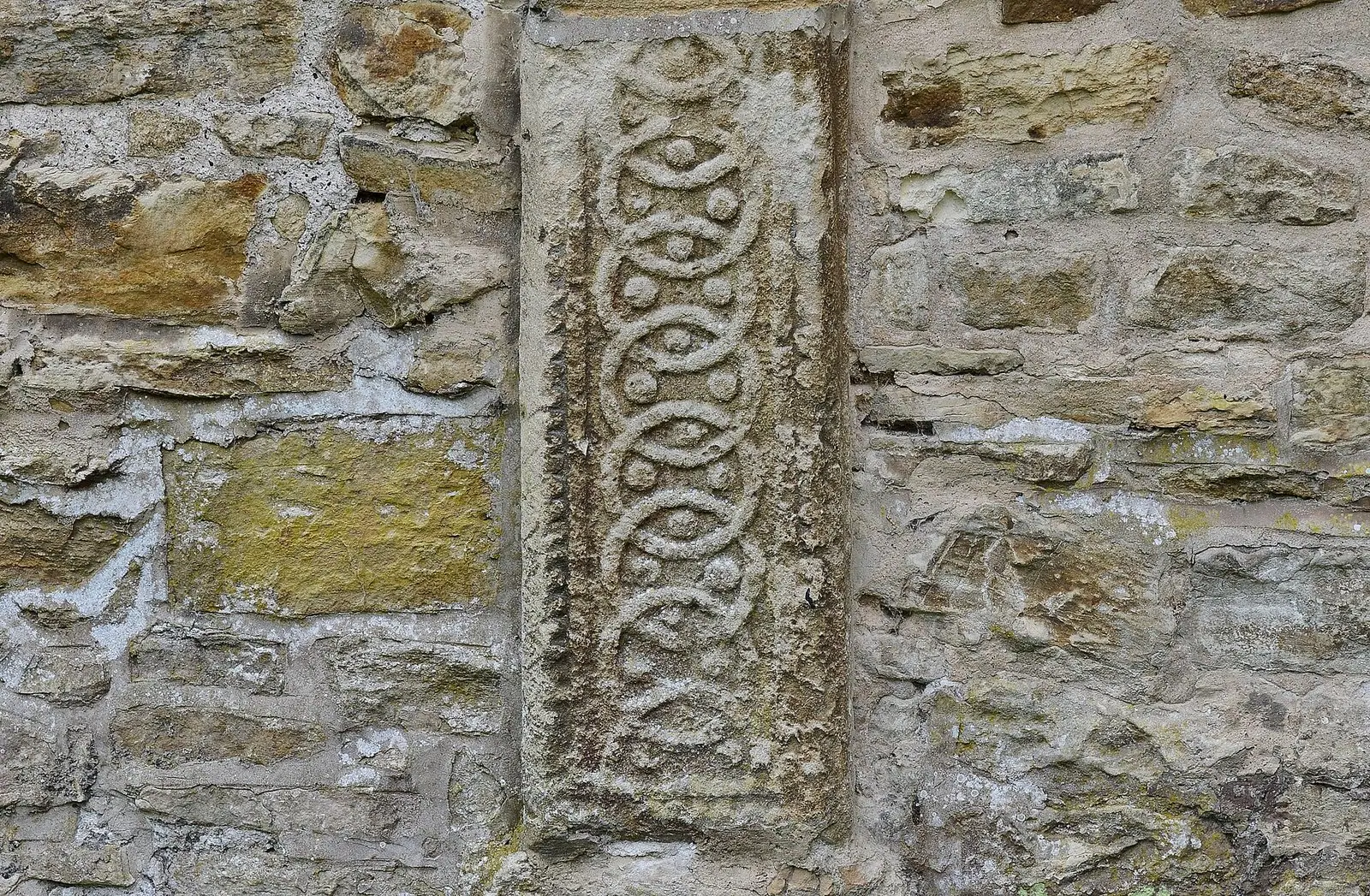
A church with Saxon stones
The Saxon gravestone set into the north wall of the chancel, the square stone font and the Norman doorway.
Your route
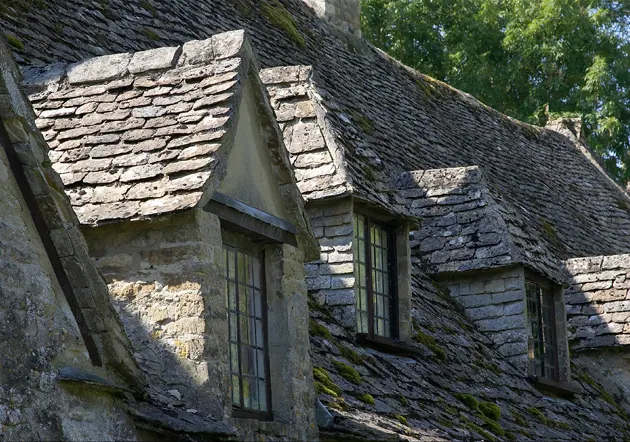
Arlington Row
A row of old stone cottages with a wavy roofline and steep gables, beside the mill stream. It is the best-known view in Bibury.
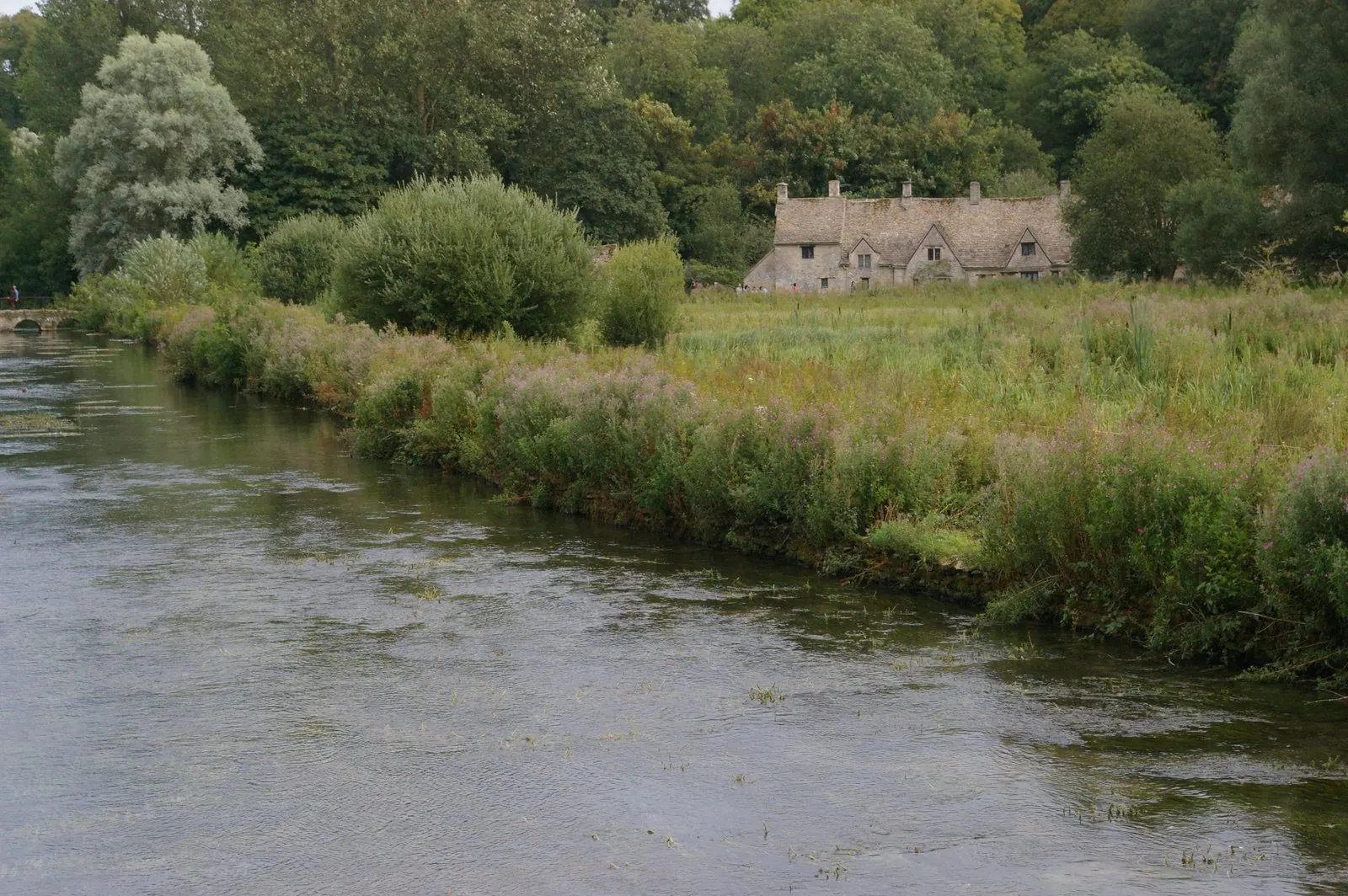
Rack Isle water meadow
A boggy meadow between the river and the row, once used to dry cloth. Look for water voles, kingfishers and dragonflies.
St Mary’s church
A church protected at the highest level, with carved stones from Saxon times (before 1066), a Norman doorway from soon after, and a square stone font from the 1200s.
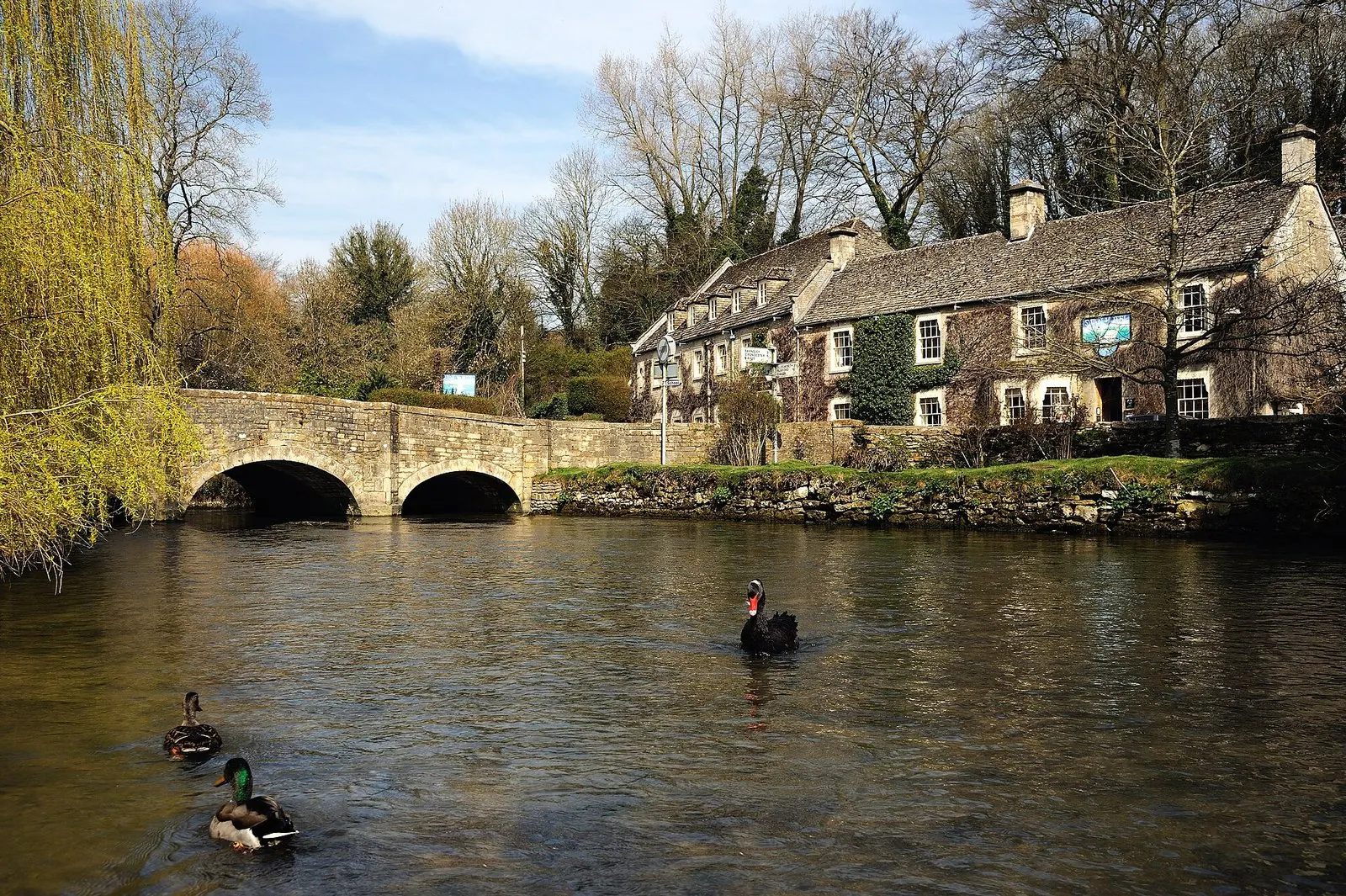
The Swan Hotel
An old coaching inn, where travellers by horse and carriage once stopped, recorded as an inn from 1672.
Bibury Trout Farm
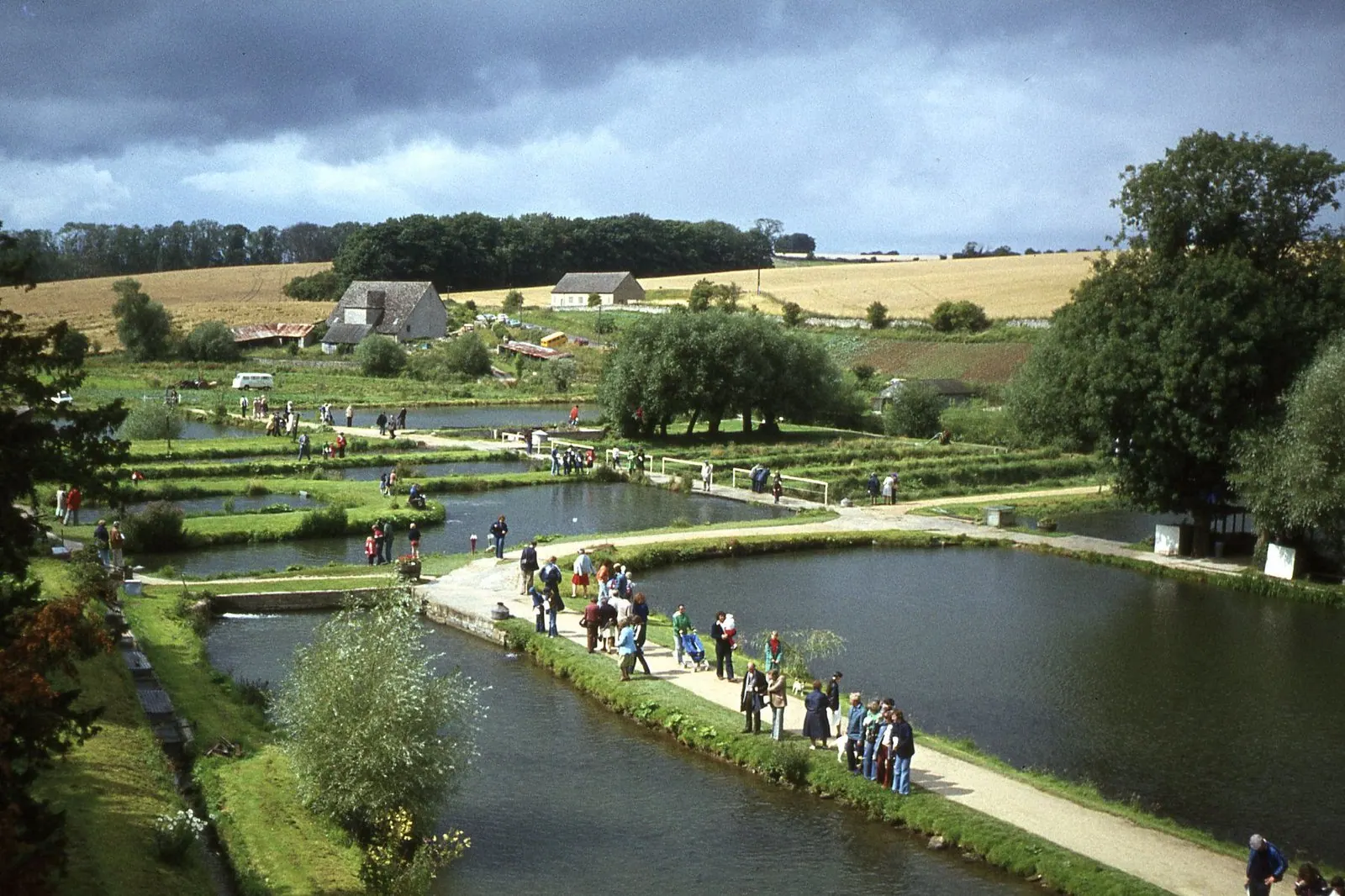
A working trout farm in the village, with ponds, a café and a gift shop. The farm says it was founded in 1902 and is England’s oldest working trout farm.
Toilets and food
The National Trust lists pubs, restaurants and tea-rooms in the village, and public toilets opposite the roadside parking. None is run by the National Trust. The Trout Farm has a café open daily.
Sources (5)
Why stop here
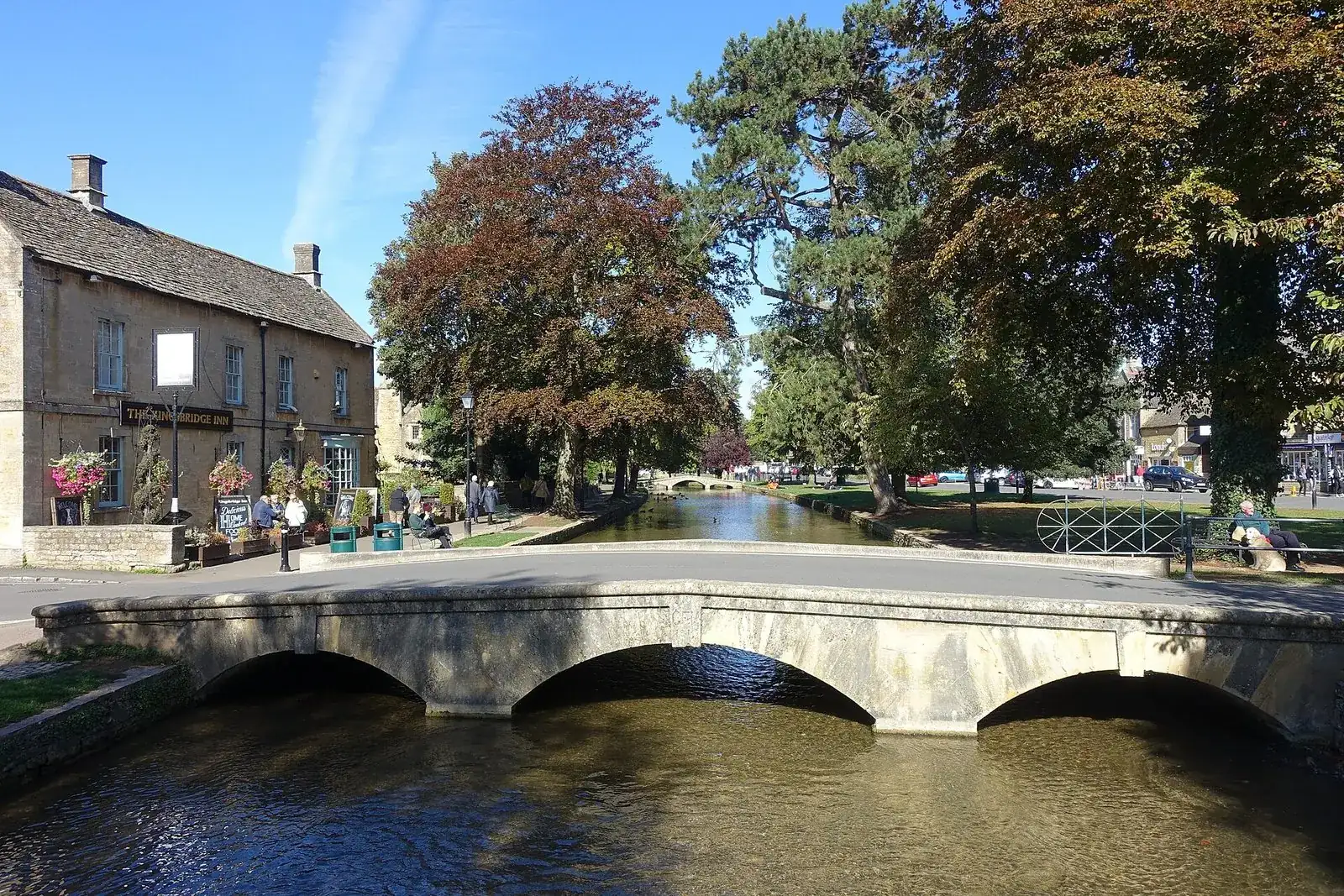
The River Windrush runs through the middle of this Cotswold stone village, under five low bridges and beside a wide green. Shops, cafés, a model of the village, a bird park and a motoring museum are close by. It is often very busy at weekends, so choose a quieter time if you can.
Don’t miss
Five low bridges over the Windrush
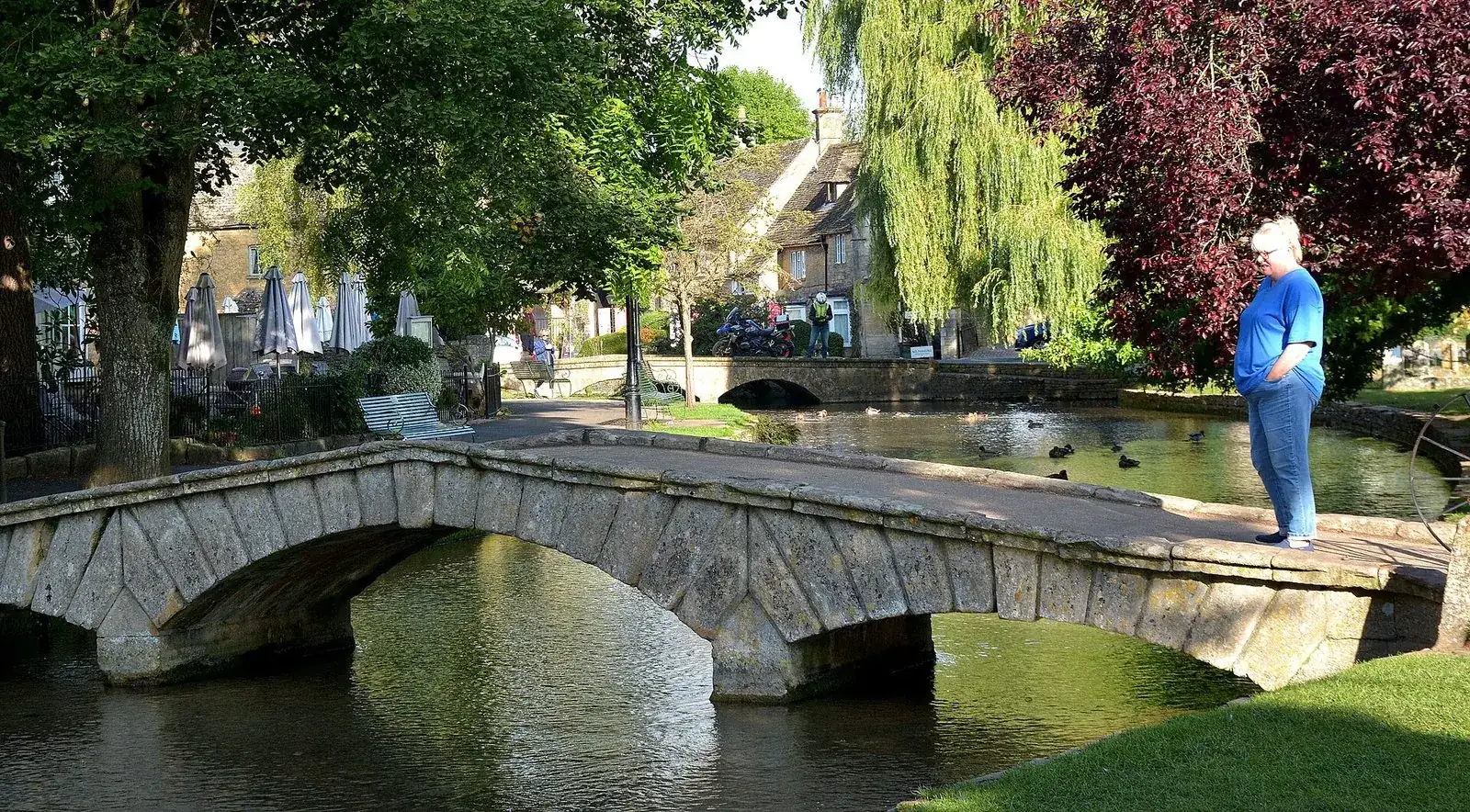
The footbridge called High Bridge, in the middle of the green, and how low the sides of every bridge are.
Your route
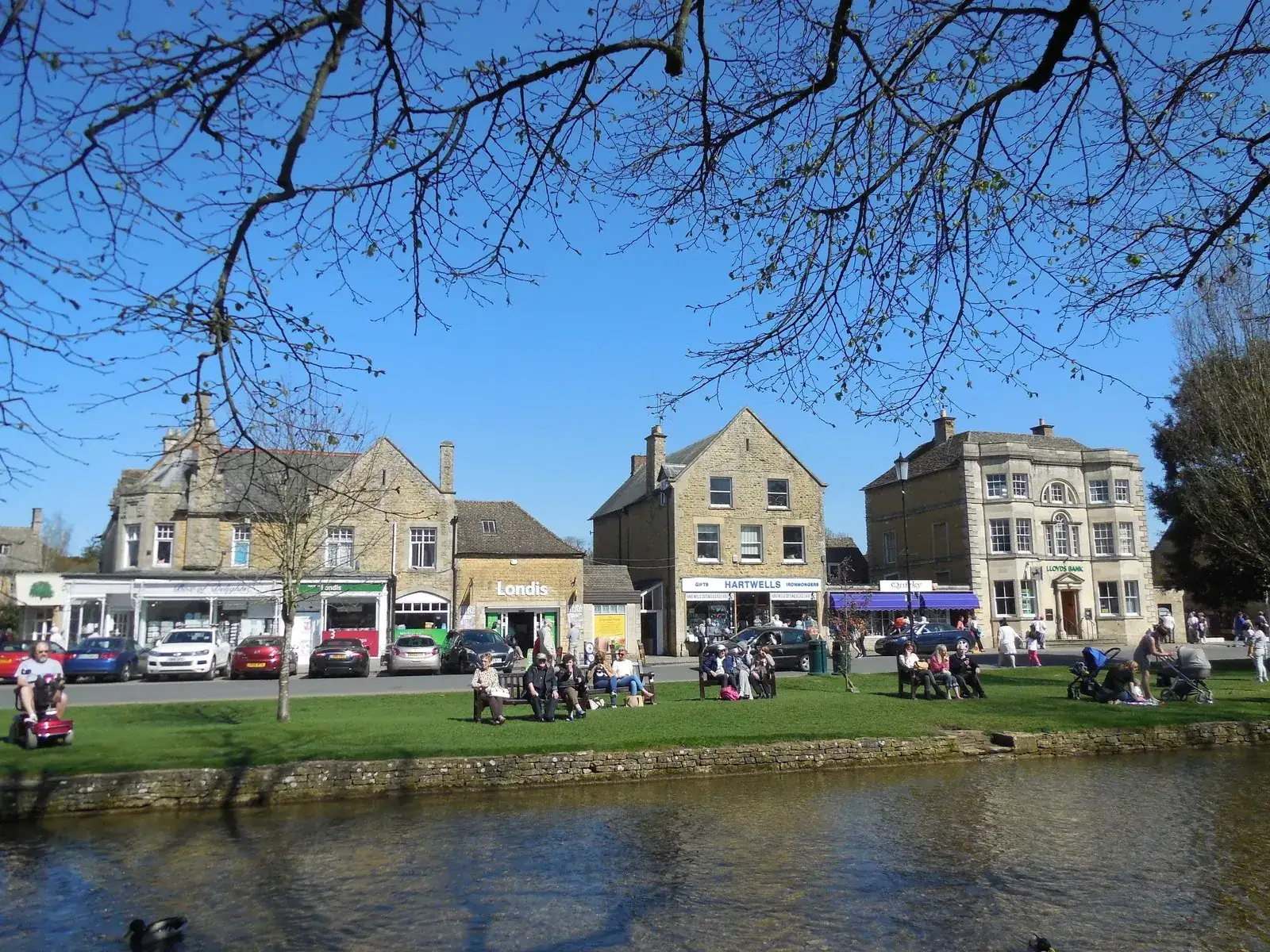
The River Windrush and its bridges
Clear water running between wide grass banks planted with trees, crossed by five low, slightly humped stone bridges.
The Model Village
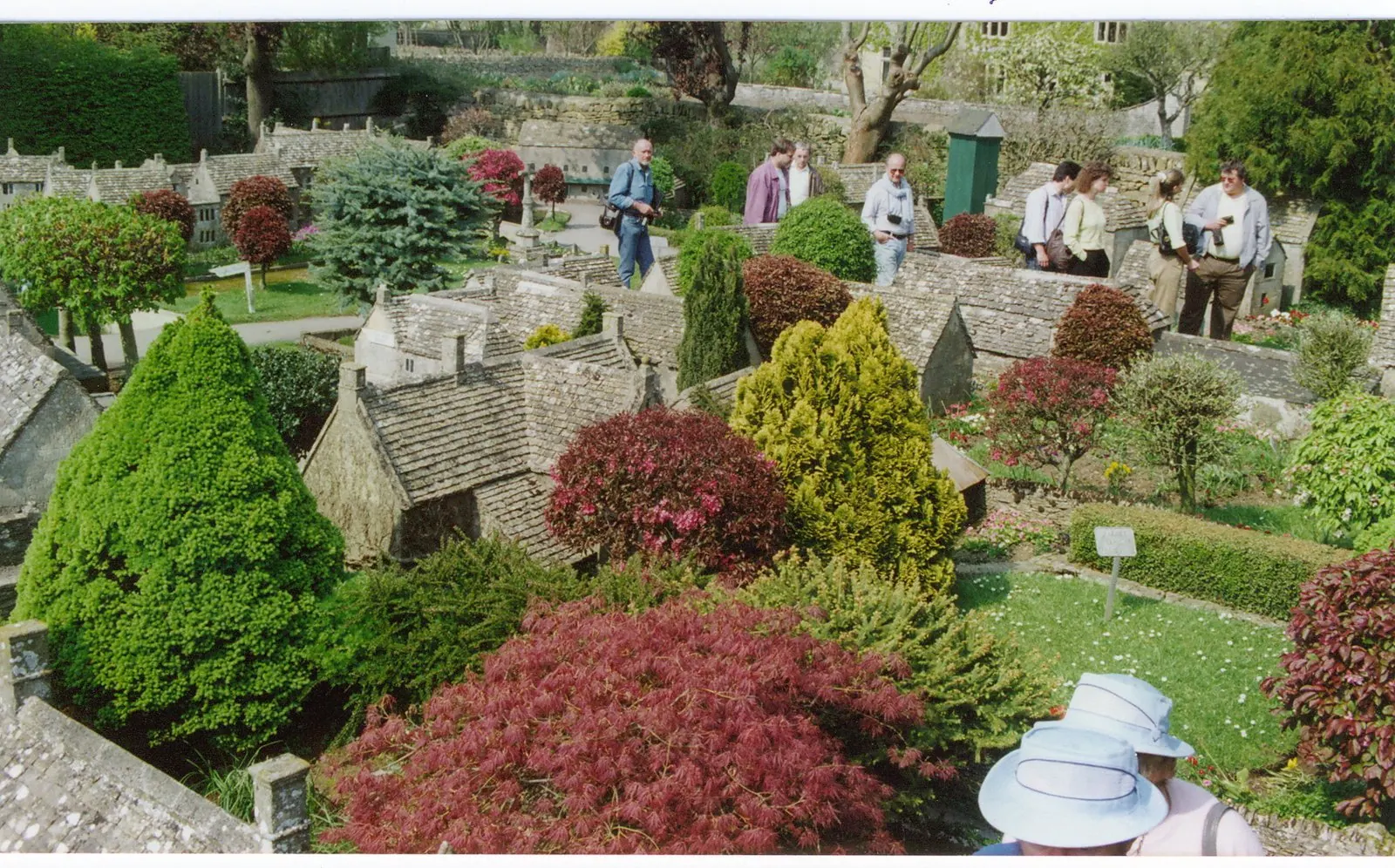
A one-ninth scale copy of Bourton in Cotswold stone, in the garden of the Old New Inn.
The Cotswold Perfumery
A family perfume maker on Victoria Street, started in 1966, with a shop and perfume-making courses in its own teaching room.
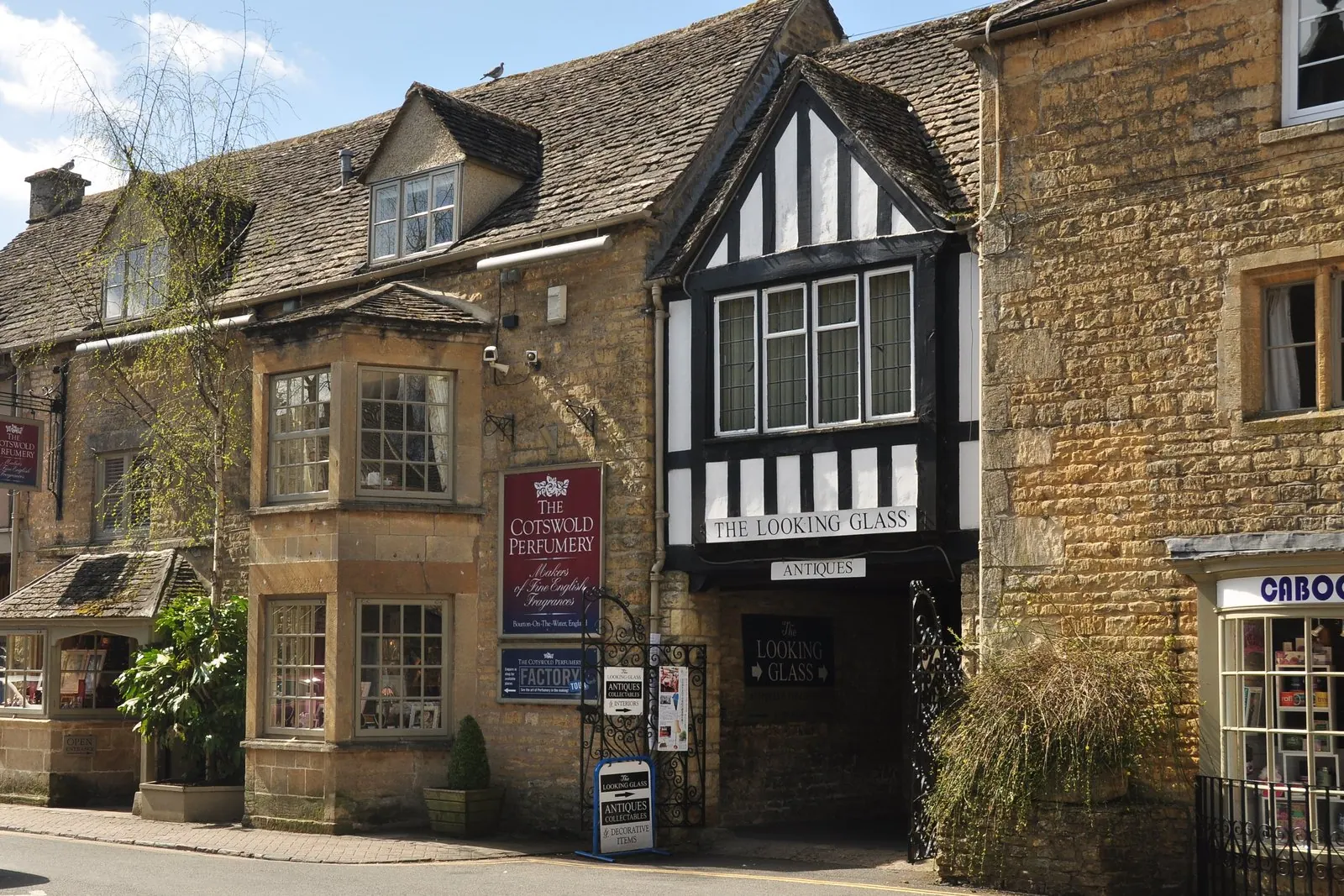
Shops and tea rooms by the river
Independent boutiques, craft shops, galleries and gift shops, with cafés and tea rooms where you can have coffee or afternoon tea by the river.
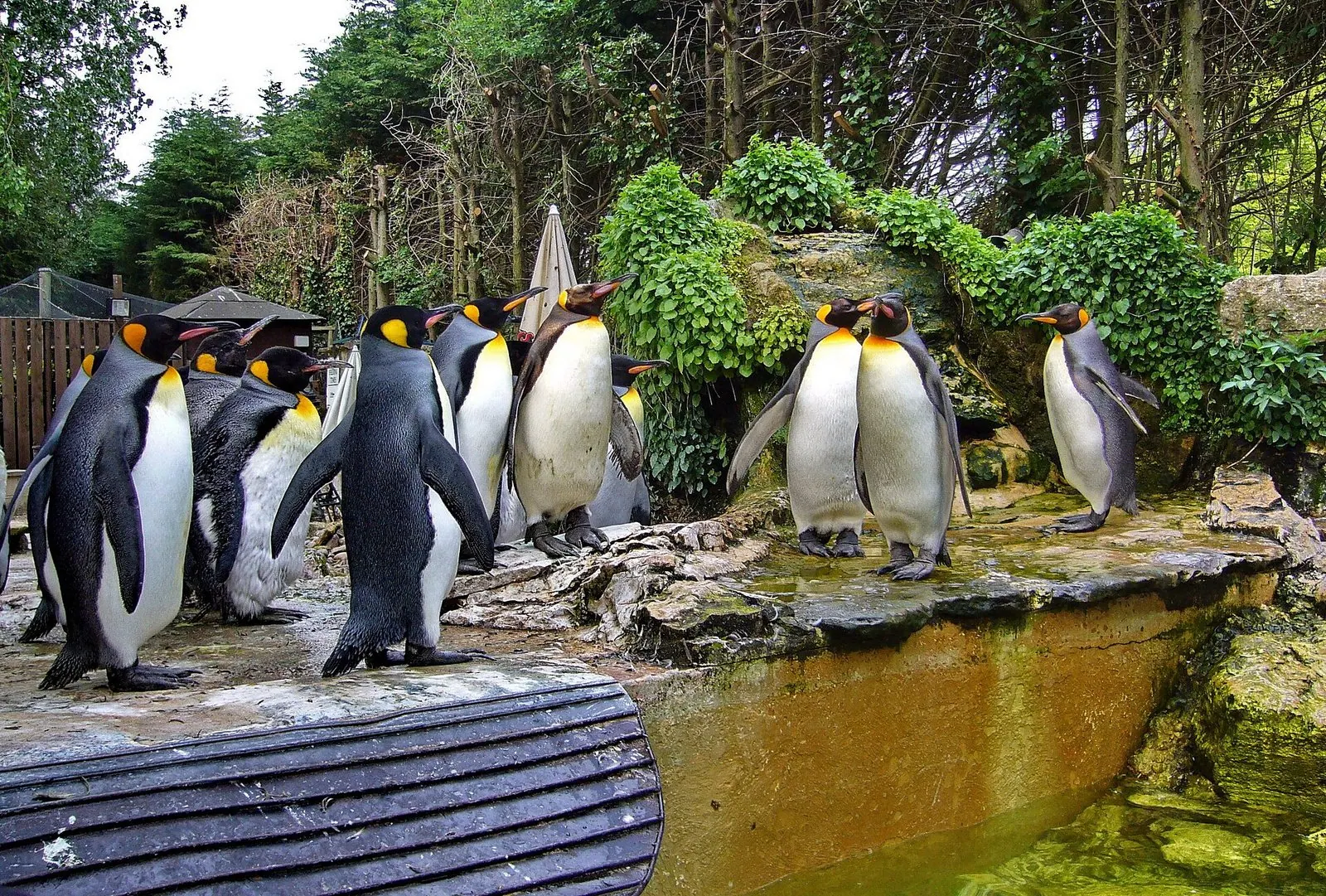
Birdland Park and Gardens
More than 500 birds in nine acres of garden and woodland beside the river, including penguins, flamingos and owls. Birdland says it has England’s only breeding group of king penguins.
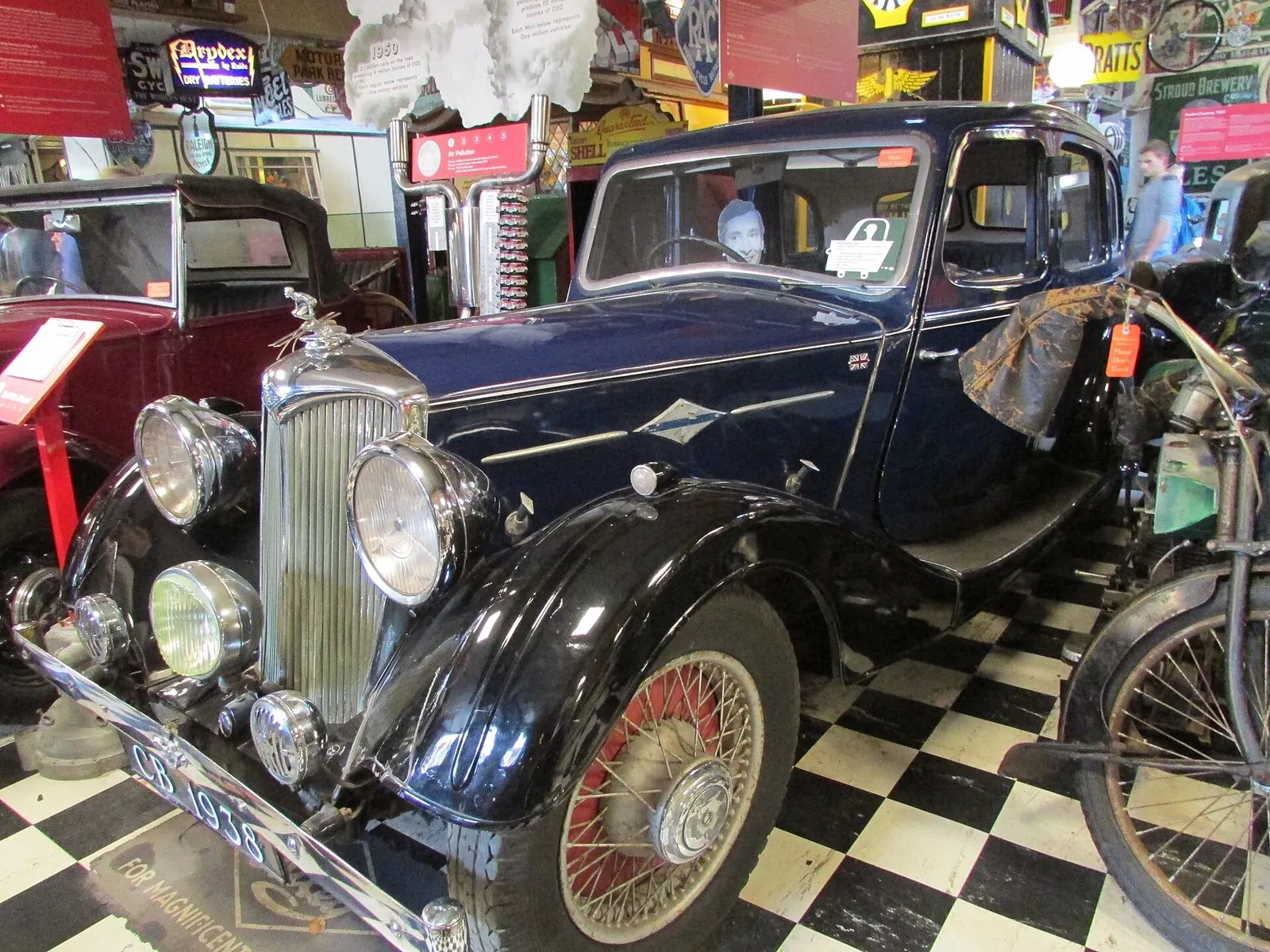
The Cotswold Motoring Museum
Cars, motorbikes, caravans, toys and memorabilia from 20th-century motoring.
Toilets
Yes. Cotswold District Council lists two public toilet sites in Bourton, at the Church Rooms and on Rissington Road. Both have disabled facilities and baby changing, and both charge a small fee.
Food
Visit Cotswolds says Bourton has cafés, restaurants and tea rooms, and lists The Chestnut Tree, a tea room and licensed restaurant in the village. You can have coffee or afternoon tea by the river.
Quieter time
Earlier or later in the day. The Parish Council says the village can be as busy as a seaside resort on holidays and sunny weekends, and that the earlier or later in the day you visit, the quieter and calmer it is.
Sources (8)
Why stop here
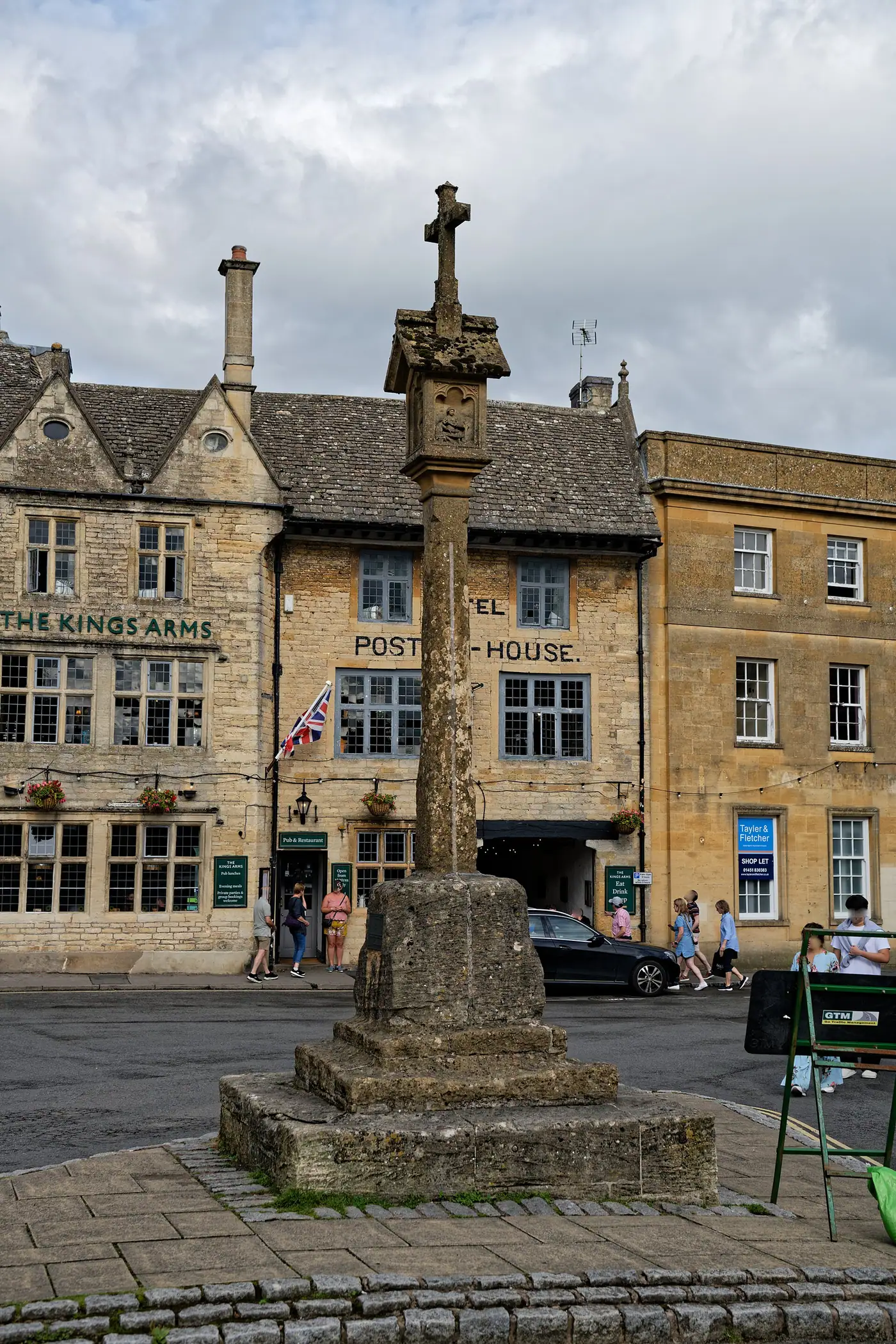
Stow-on-the-Wold is a hilltop market town built around a big square. Medieval fairs once sold thousands of sheep here, and narrow lanes still lead off the square. A Civil War battle ended on its streets in 1646, and St Edward’s north door stands between old yew trees.
Don’t miss
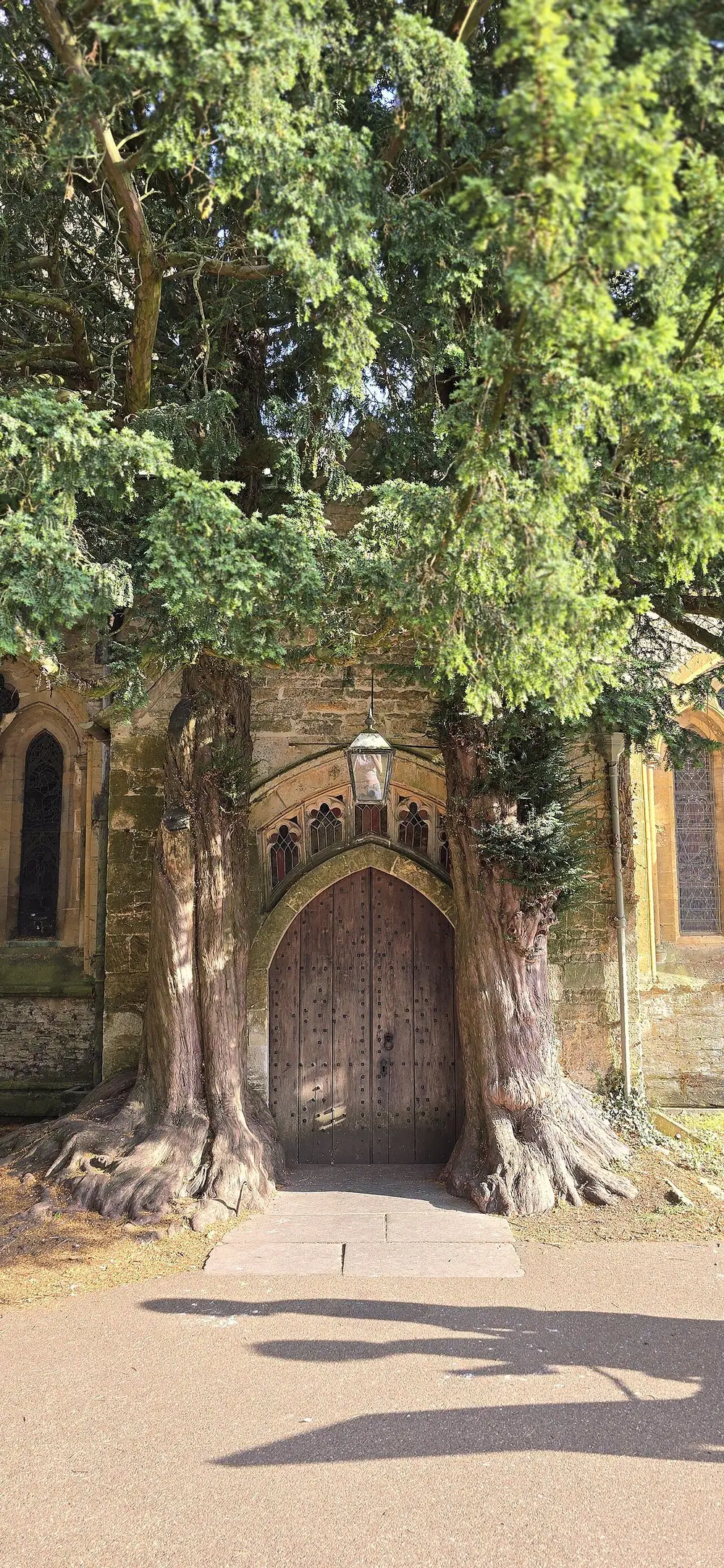
A church door and a Tolkien story
The north door under its small porch, with a yew tree on each side.
Your route
The Market Square and its cross
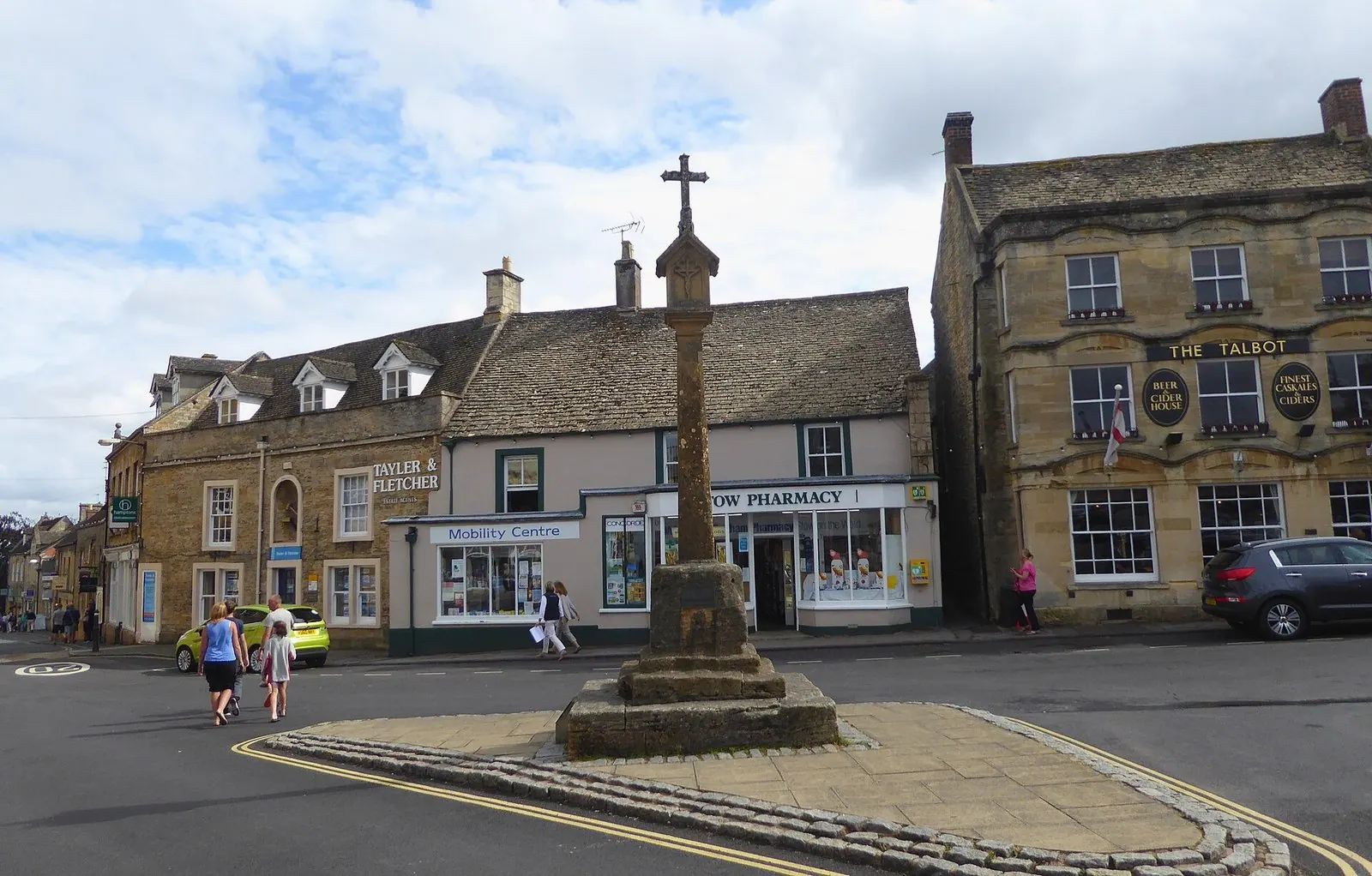
A wide square with a medieval market cross at its heart. The four panels at the top of the cross show the crucifixion, Edward the Confessor (an English king before 1066), the Civil War and the wool trade.
St Edward’s Church and its north door
A church first built in Saxon times (before 1066), with a 15th-century tower, on the west side of the square. Look for the north door between two yew trees.
The lanes called tures
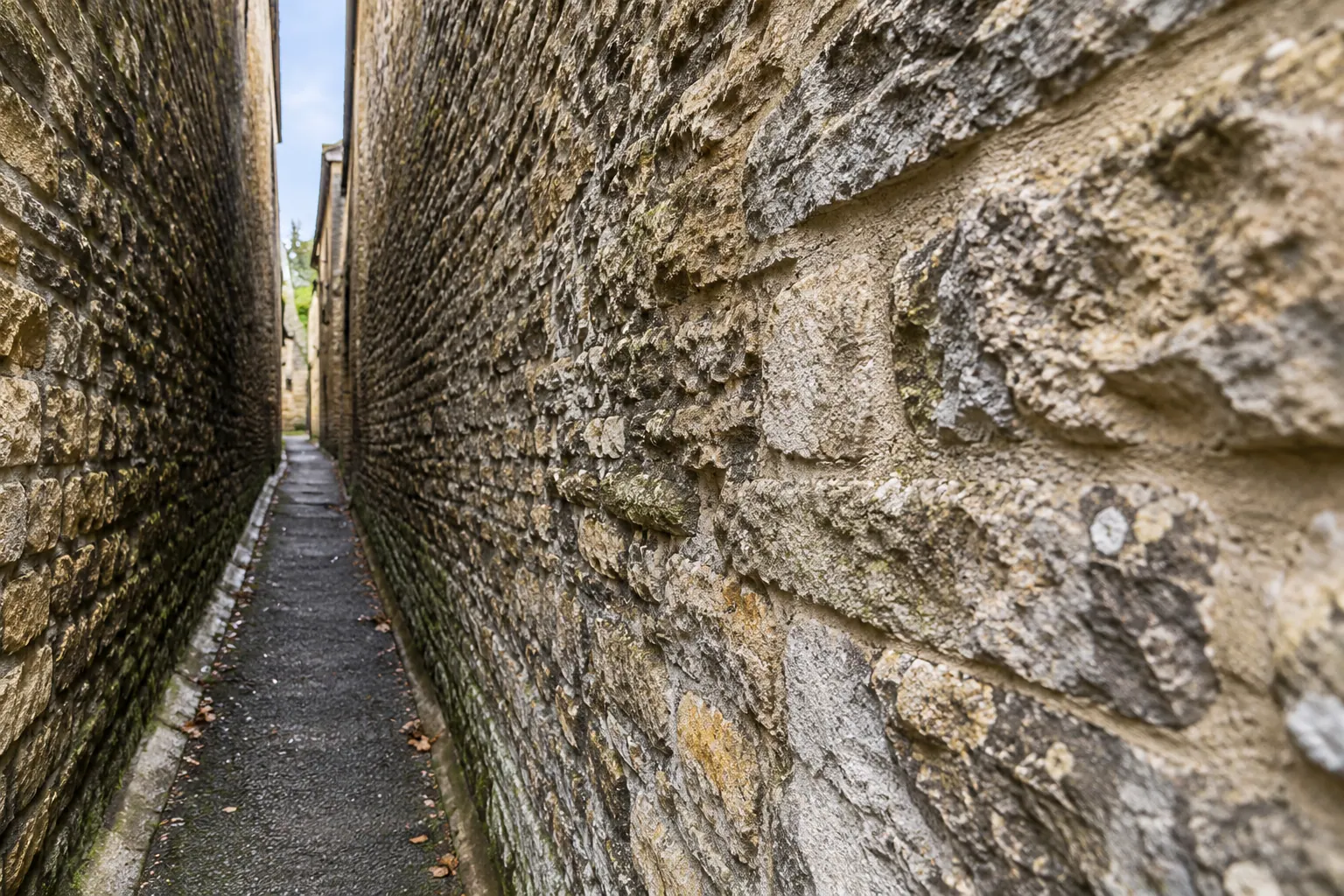
Several narrow lanes lead off the square between the buildings. Local tradition says sheep were counted as they left the market through them.
Antique and independent shops
Stone townhouses round the square hold independent shops, antique centres, galleries and cafés.
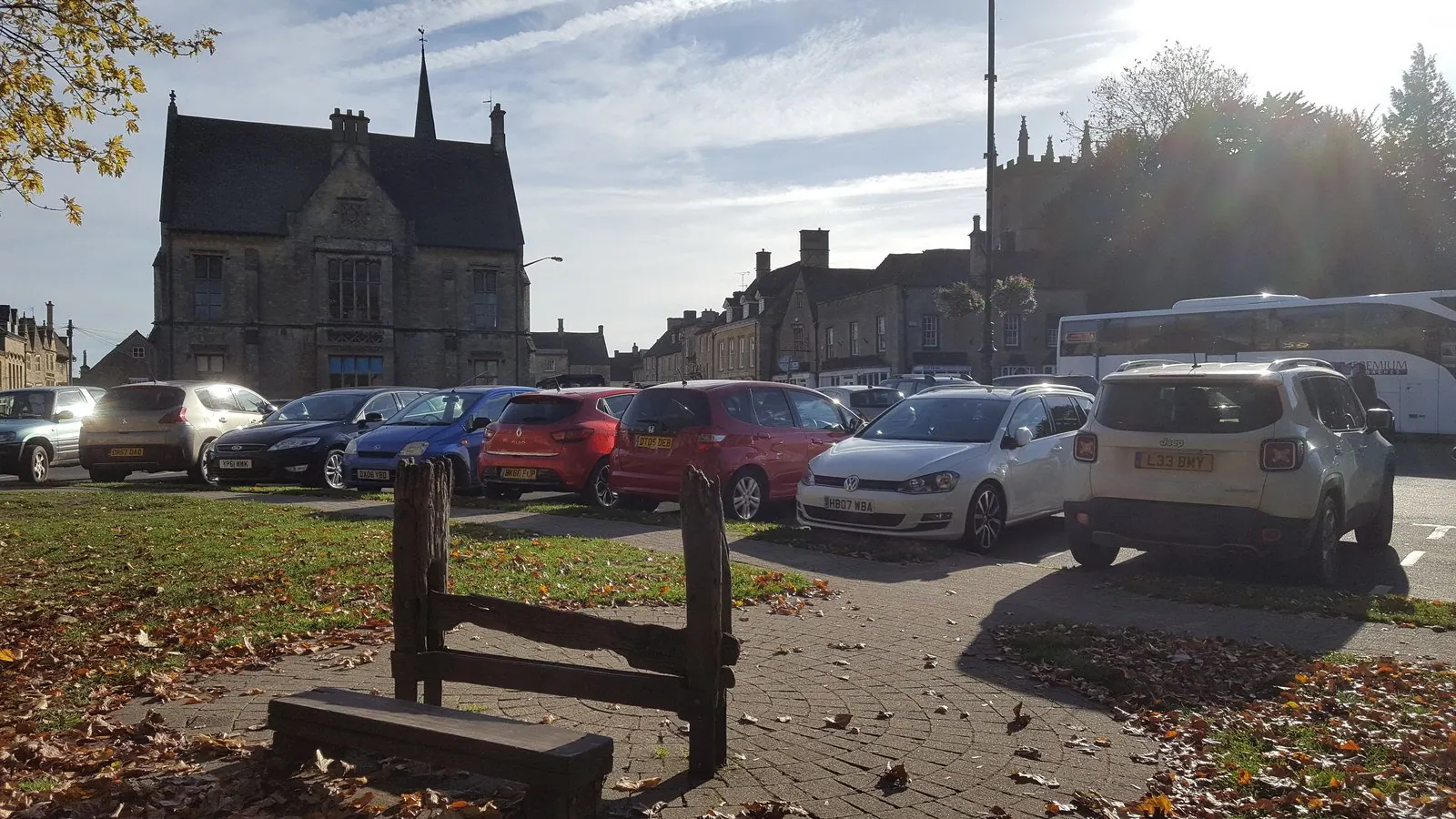
The old stocks
Part of a wooden frame with iron straps, once used to hold a person’s feet as a public punishment. Historic England notes that the foot holes are uncomfortably far apart.
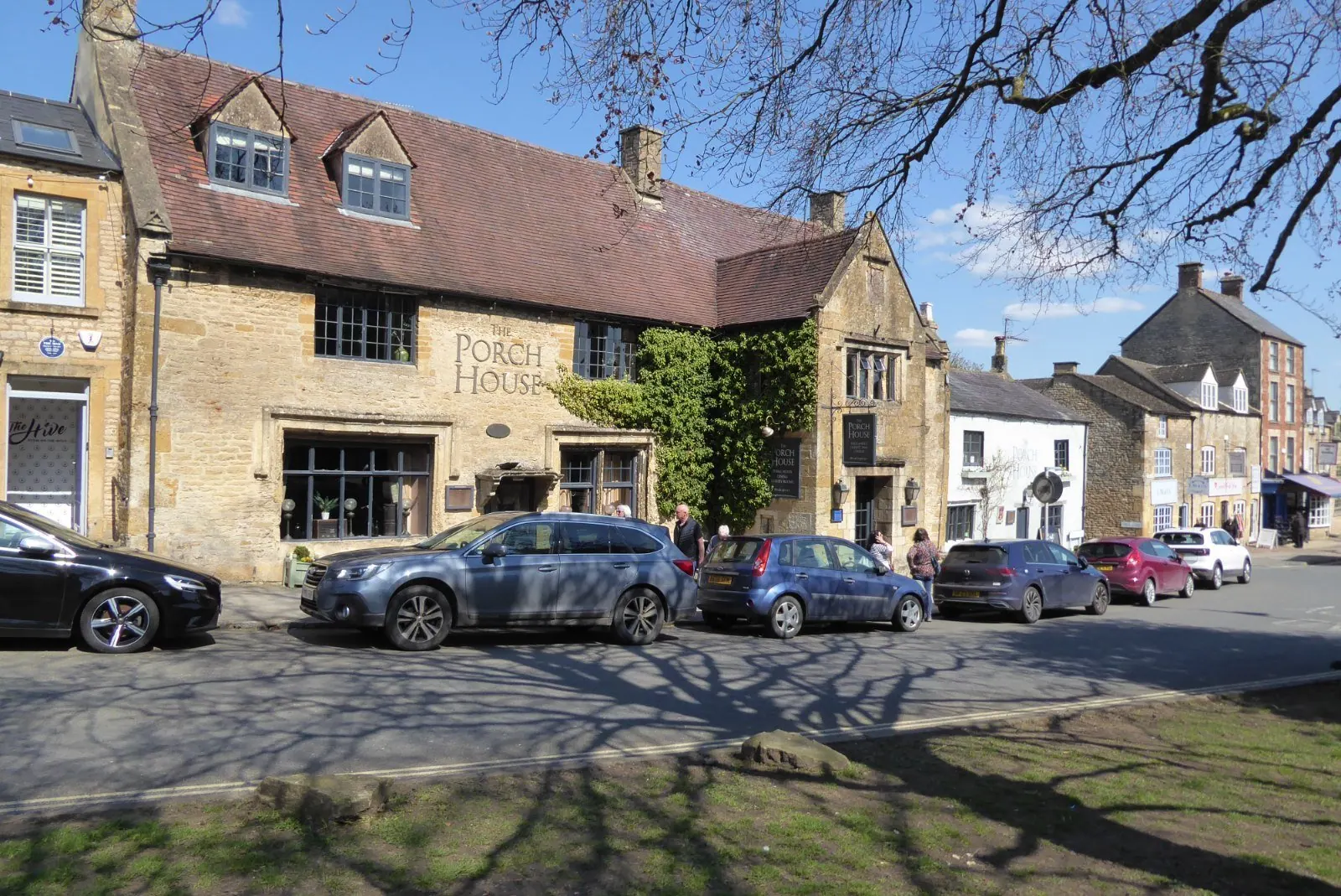
The Porch House inn
A building from the 15th or early 16th century at the bottom of Digbeth Street. The inn calls itself England’s oldest inn.
Toilets
Yes. Cotswold District Council lists a public toilet on Market Square. It charges 50p and has disabled facilities and baby changing. The council’s page was checked on 28 October 2026.
Food
Visit Cotswolds lists cafés, a bakery and inns around the square, such as Huffkins Cafe & Bakery and the Old Stocks Inn. Prices vary, so check the menus.
Sources (7)
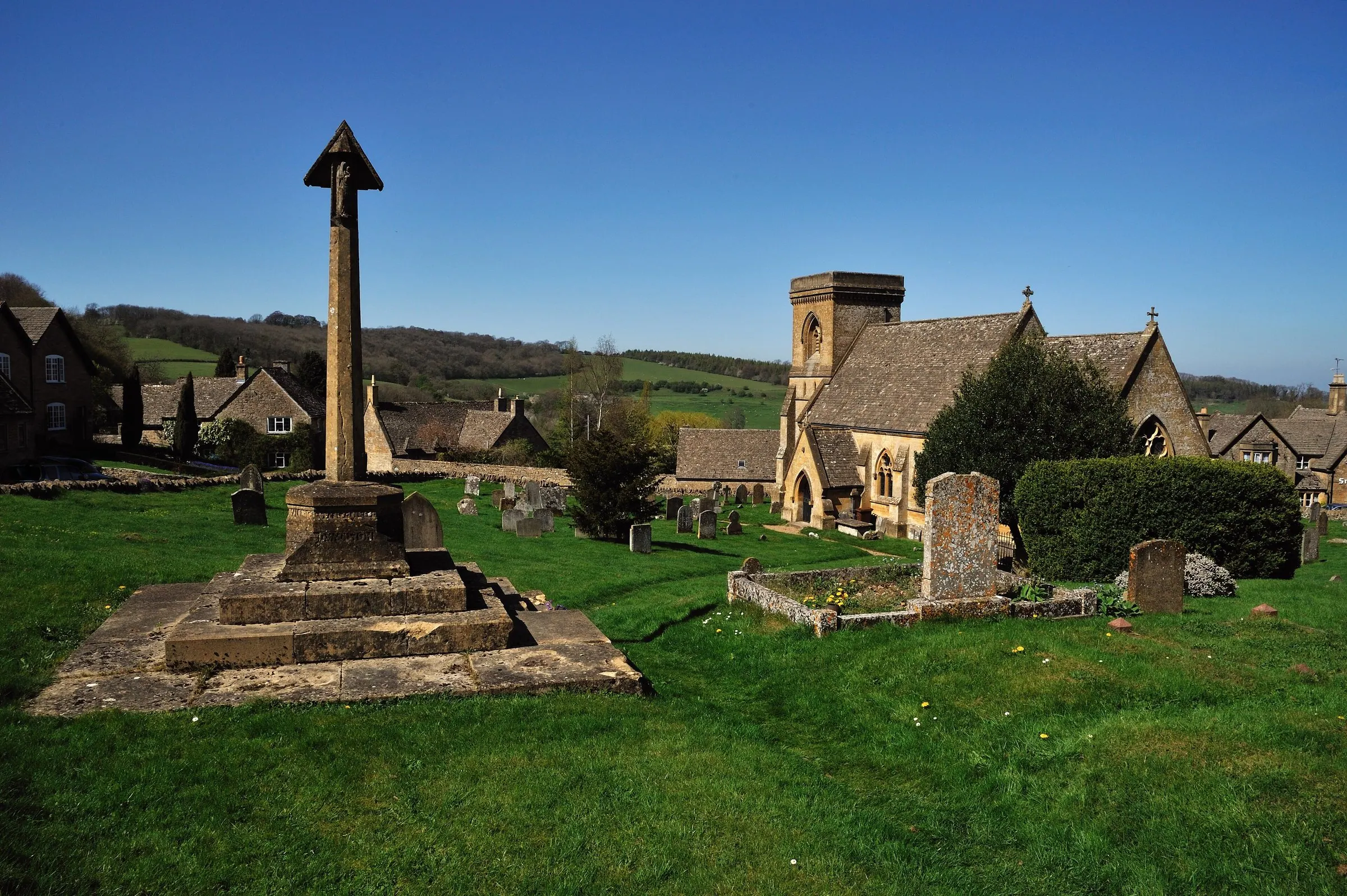
Why stop here
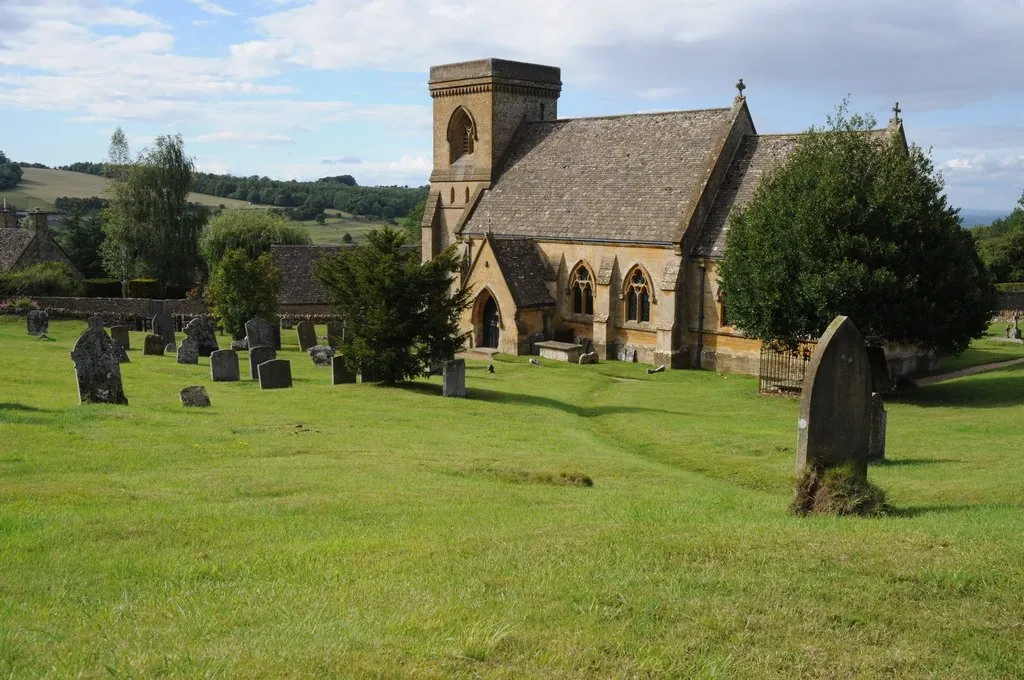
A small hillside village of Cotswold stone cottages around a Victorian church, with wide views over the countryside. Snowshill is best known for the National Trust manor where Charles Wade gathered thousands of handmade objects. It suits visitors who want atmosphere and views more than a house visit.
Don’t miss
Snowshill in Bridget Jones’s Diary
The stone cottages and lanes round the church. The tourist board does not name the house the film used.
Your route
St Barnabas church and the cottages round it
A small stone church built in 1864, with a clock on its tower and a font from the 1400s. Old stone cottages stand around it.
The garden and Wolf’s Cove
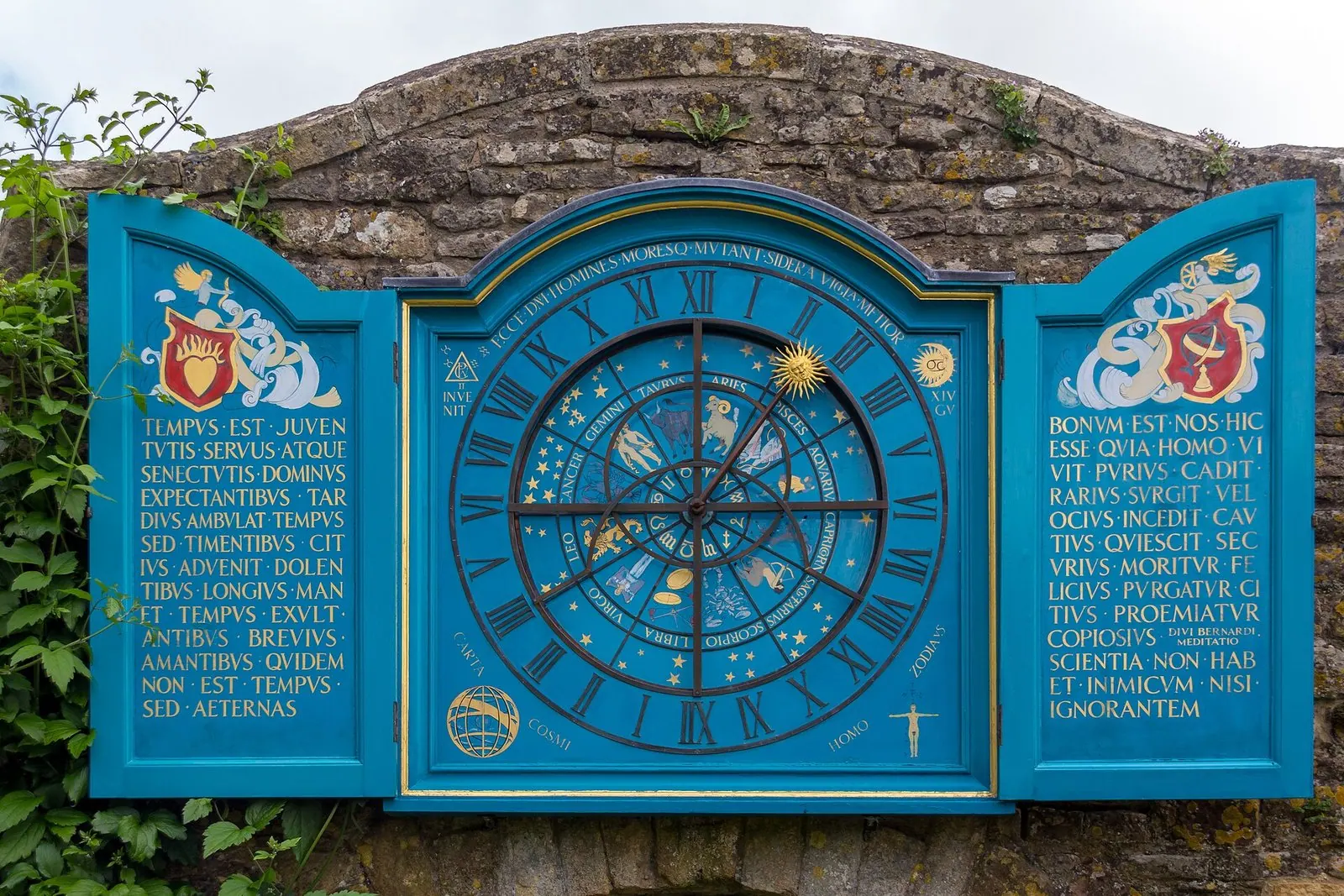
A garden laid out as a series of outdoor rooms, in the Arts and Crafts style, which prized handmade work. Look for a painted 24-hour clock called the Nychthemeron, and Wolf’s Cove, a model Cornish fishing village.
Snowshill Manor and its collection
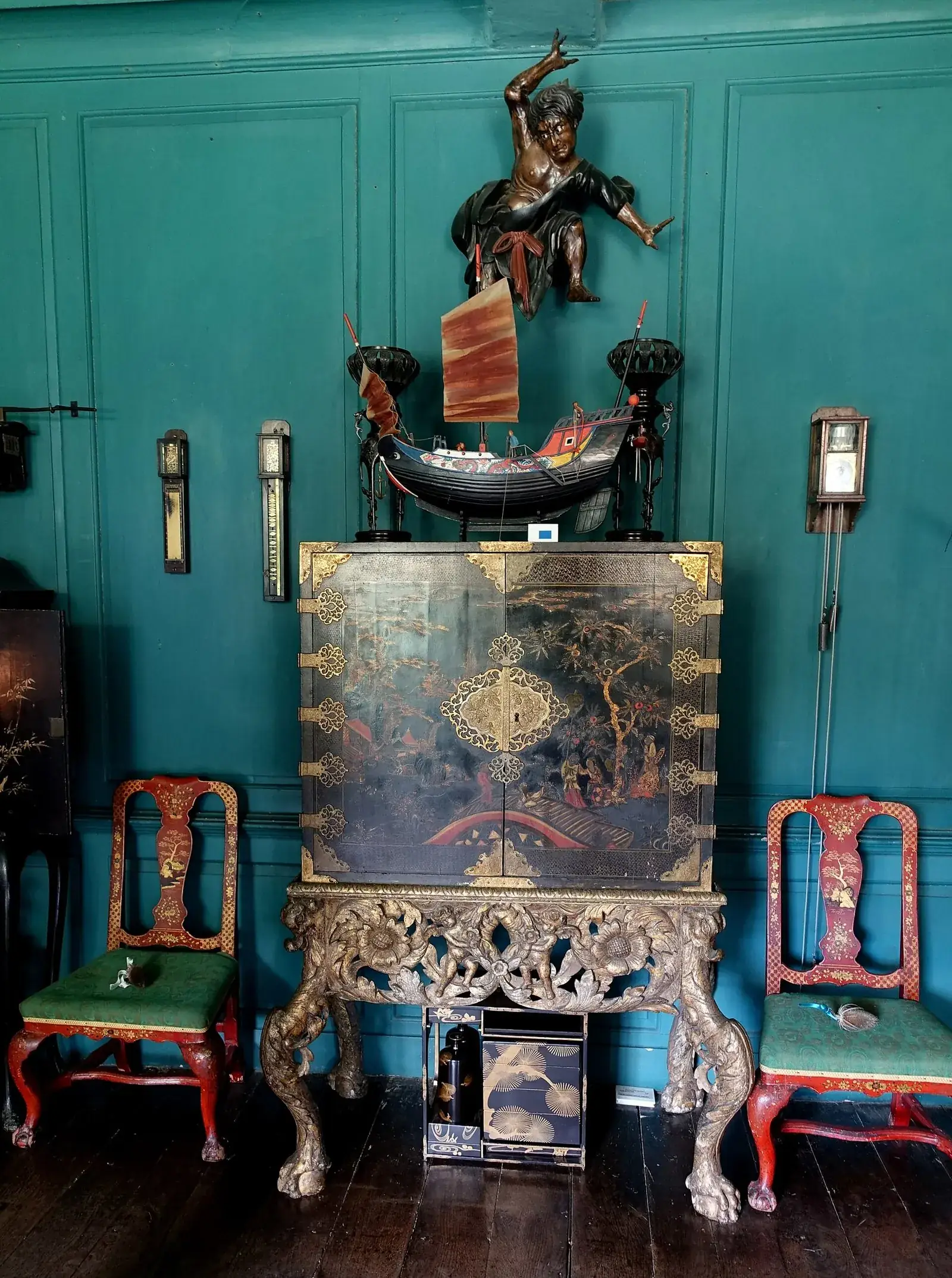
The home of Charles Wade, an architect and collector, filled with handmade objects, from suits of armour and mechanical doorbells to musical instruments and old bicycles. Each room is arranged like a stage set (the scenery for a play).
The Snowshill Arms
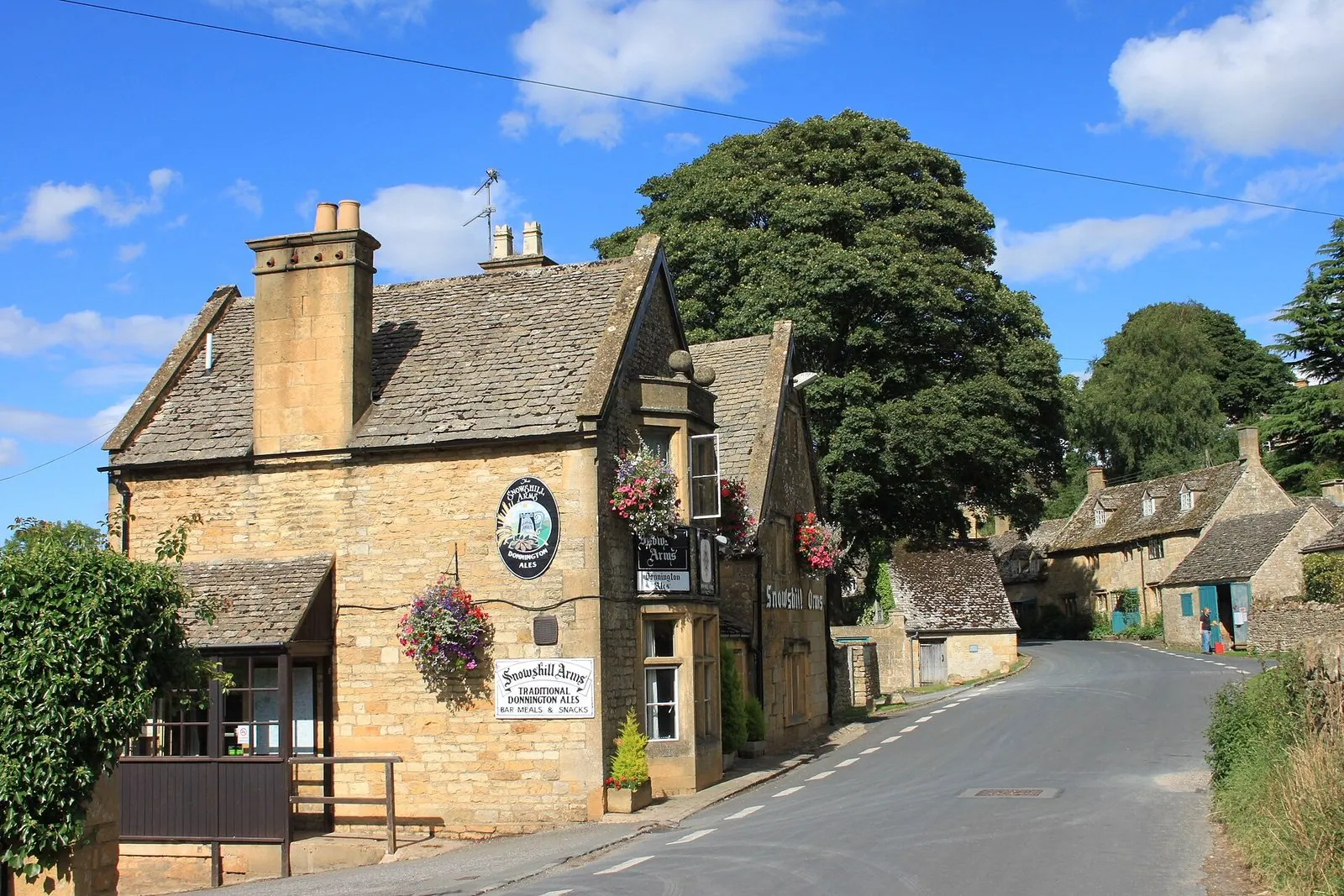
The village pub. The National Trust says it serves traditional British food and a range of ales and wines.
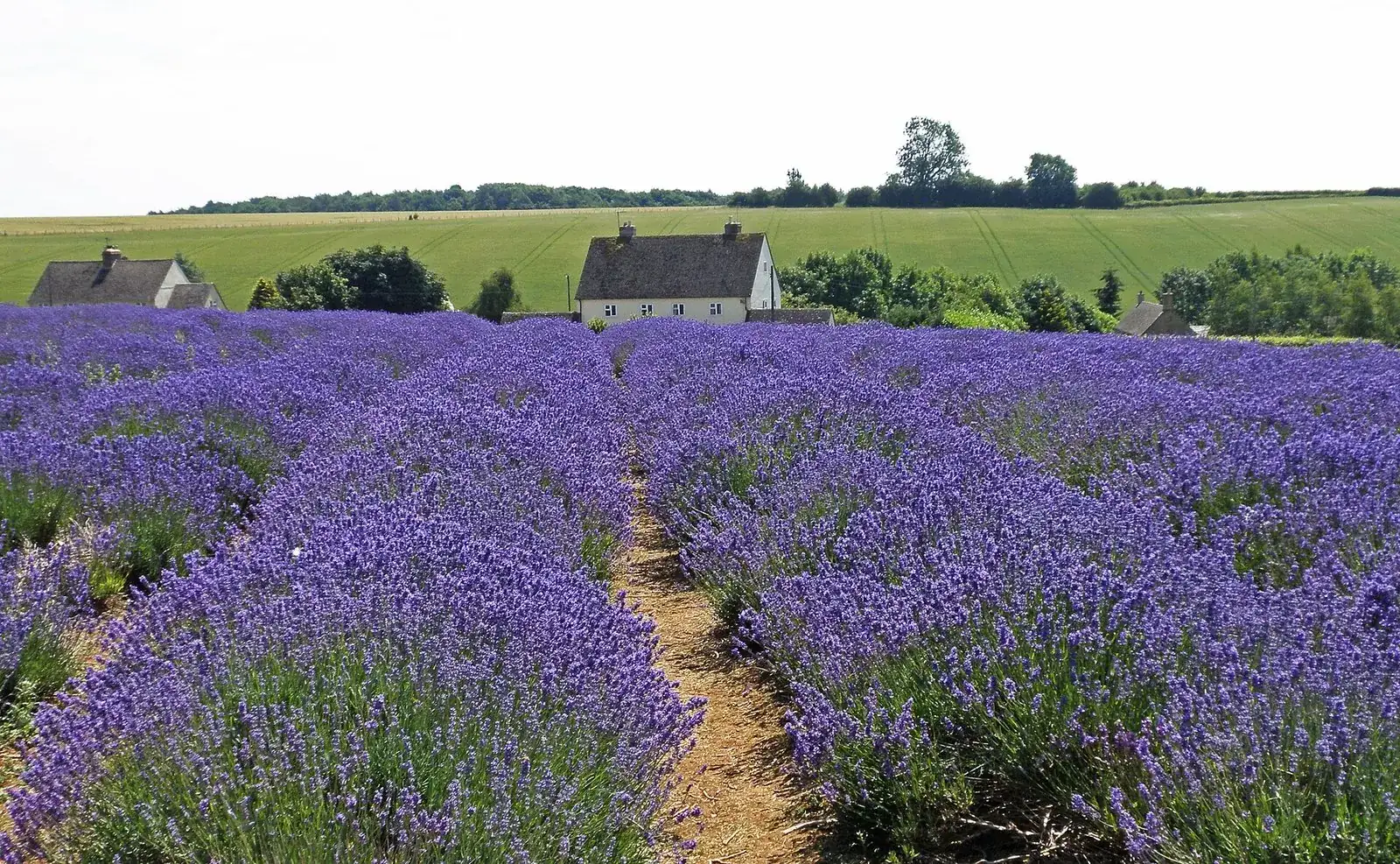
The Cotswold Lavender fields, in summer
In summer, rows of lavender cover the hills near the village. The farm says you see acres of purple as you drive out of Snowshill towards it.
Toilets
Yes, at visitor reception, the café and the garden. Accessible toilets are at visitor reception and the café only.
Food
The National Trust café serves hot and cold drinks, snacks and light meals, with indoor and outdoor seats and views across the valley. There is also a picnic area nearby, in Pipers Orchard.
Sources (8)
Why stop here
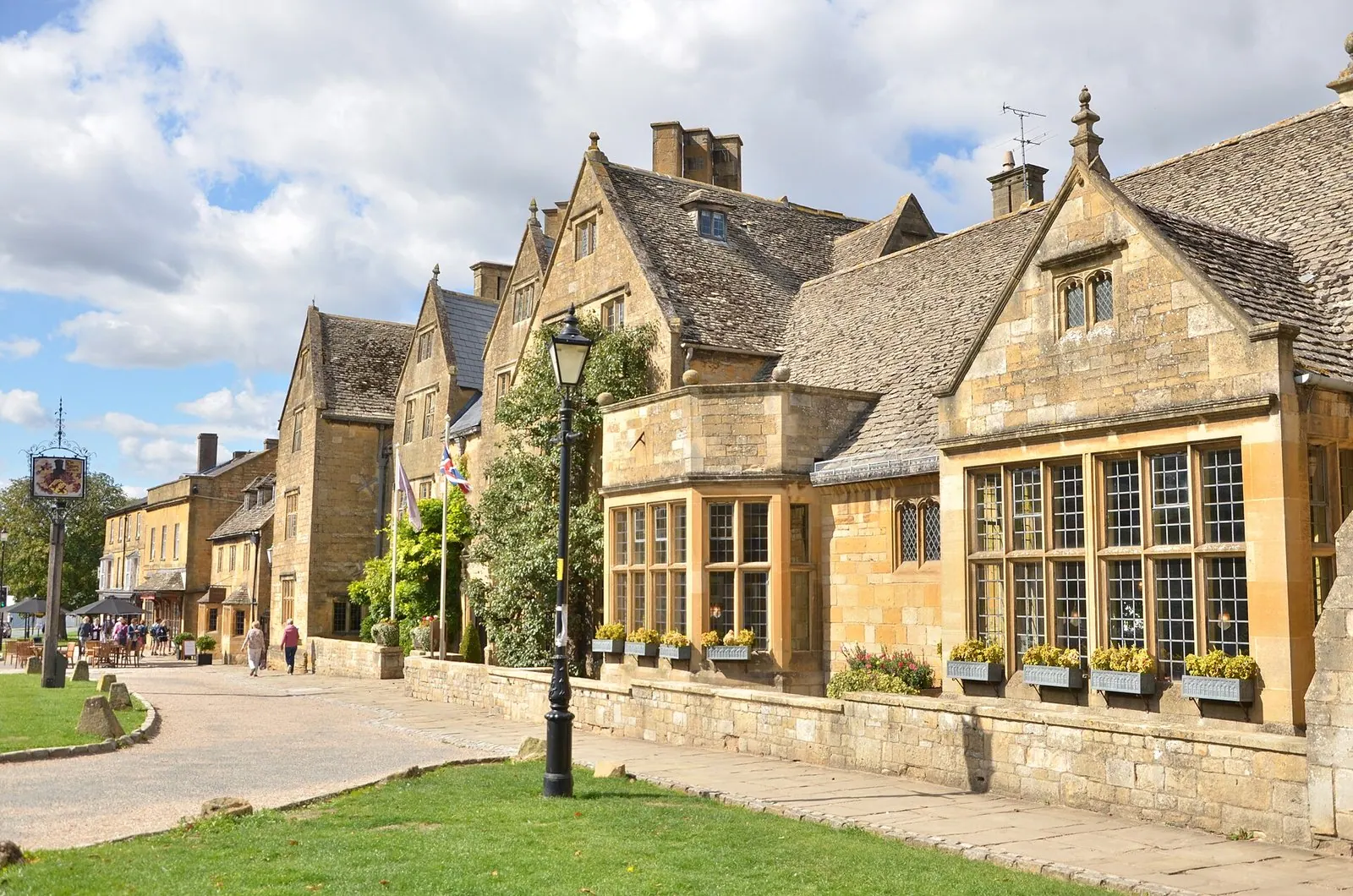
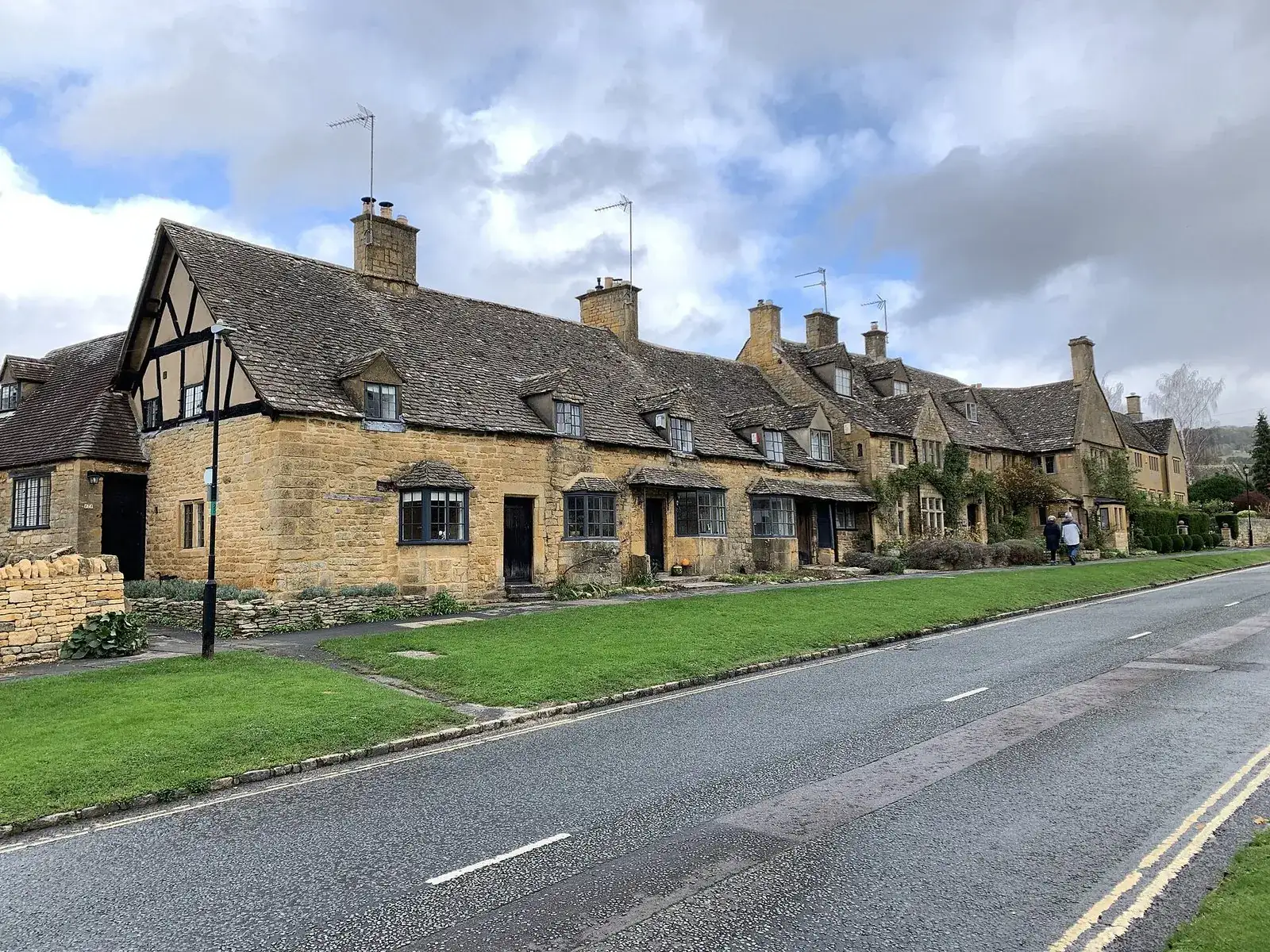
A very wide High Street of honey-coloured Cotswold stone, with independent shops, tea rooms and an old coaching inn. In the 1880s American and English artists came here each summer. Two small museums tell the story. It is a village for wandering, on the north-west edge of the Cotswolds.
Don’t miss
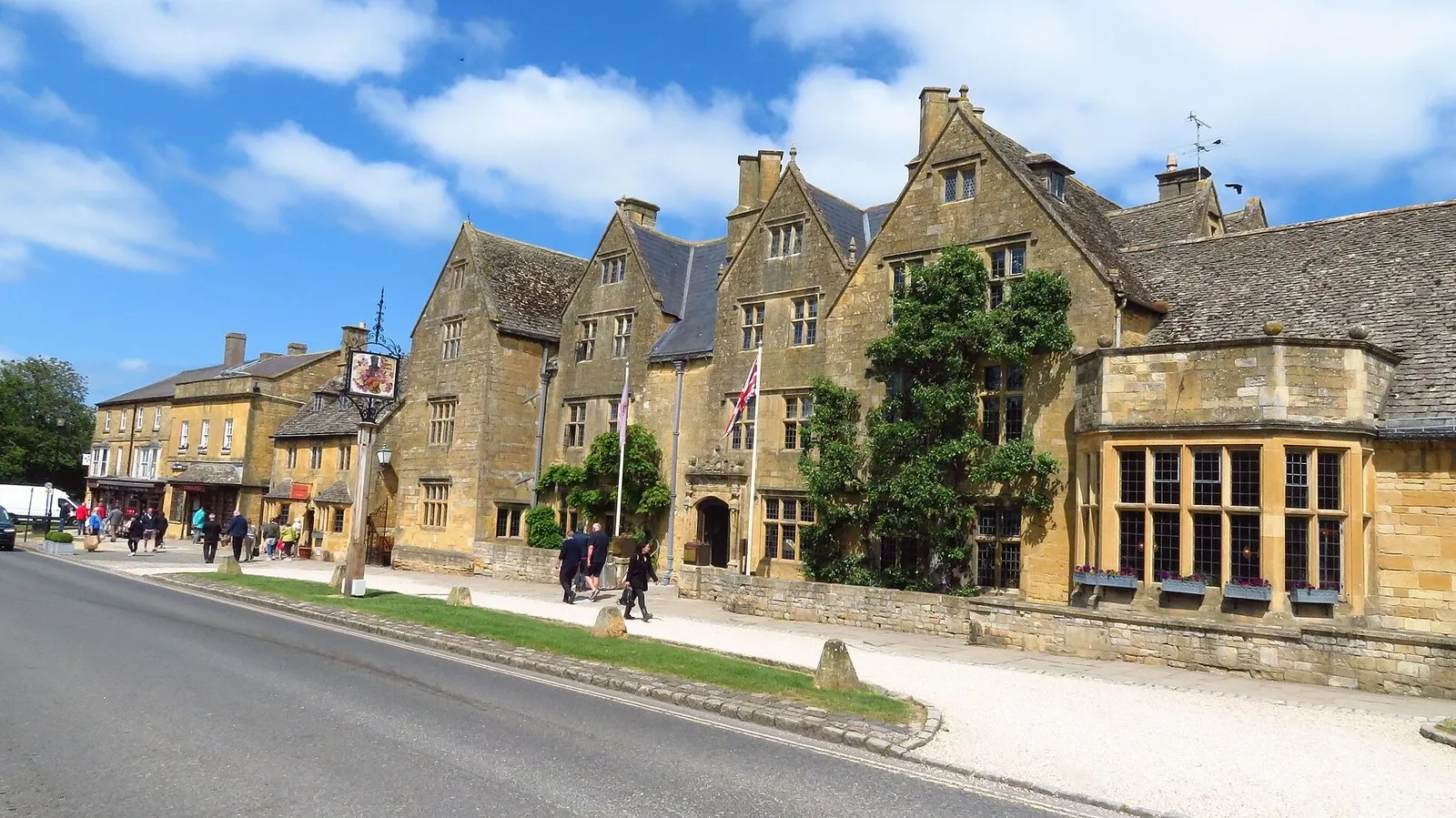
The Lygon Arms and its royal stories
The carved arch above the front door. The Lygon Arms is a working hotel, so look from the High Street.
Your route
The Lygon Arms
The old coaching inn on the High Street, where travellers by horse and carriage once stopped. A carved arch over the front door shows the name John Trevis and the date 1620.
The High Street and the Green
A very wide street of honey-coloured Cotswold stone buildings, shaded by chestnut trees, with the grass of the Green at its heart.
Independent shops and galleries
Art and antiques, handmade jewellery, gifts, fashion and food shops line the High Street, with tea rooms, cafés and pubs between them.
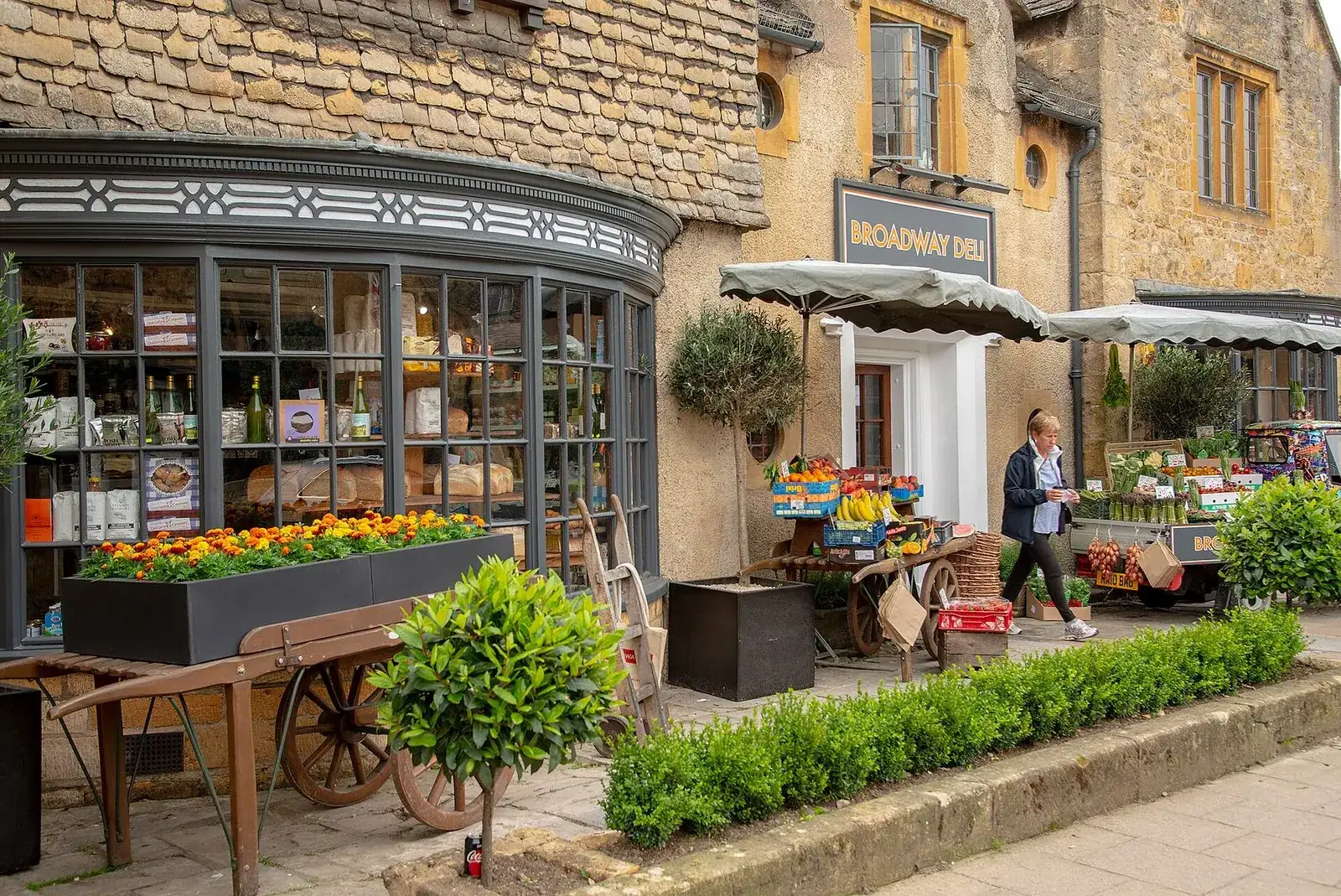
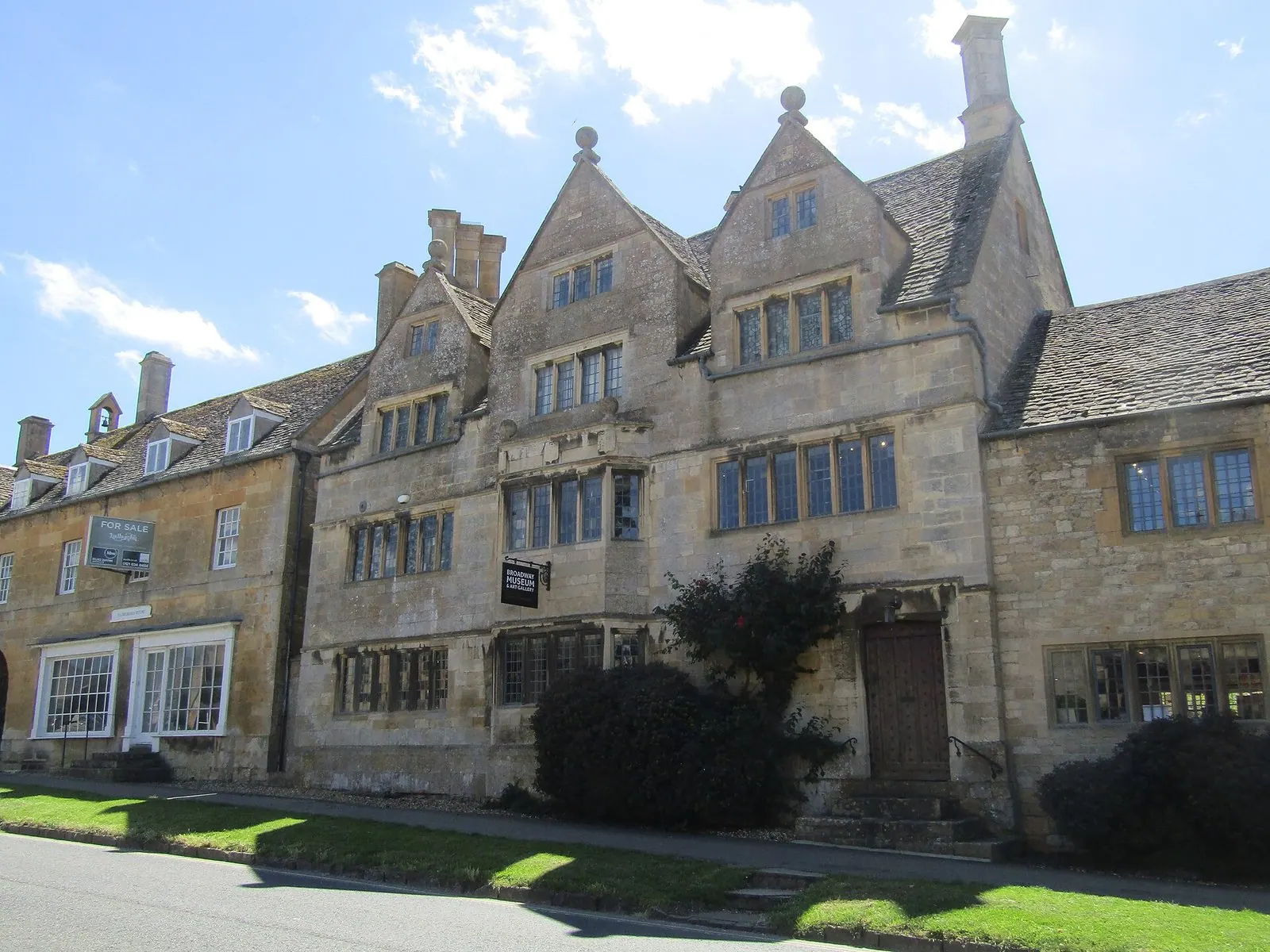
Broadway Museum & Art Gallery
A museum in Tudor House on the High Street, a 17th-century building that began as an inn for travellers by horse and carriage. It shows the story of the artists, the coaching days, the railway and the wool trade.
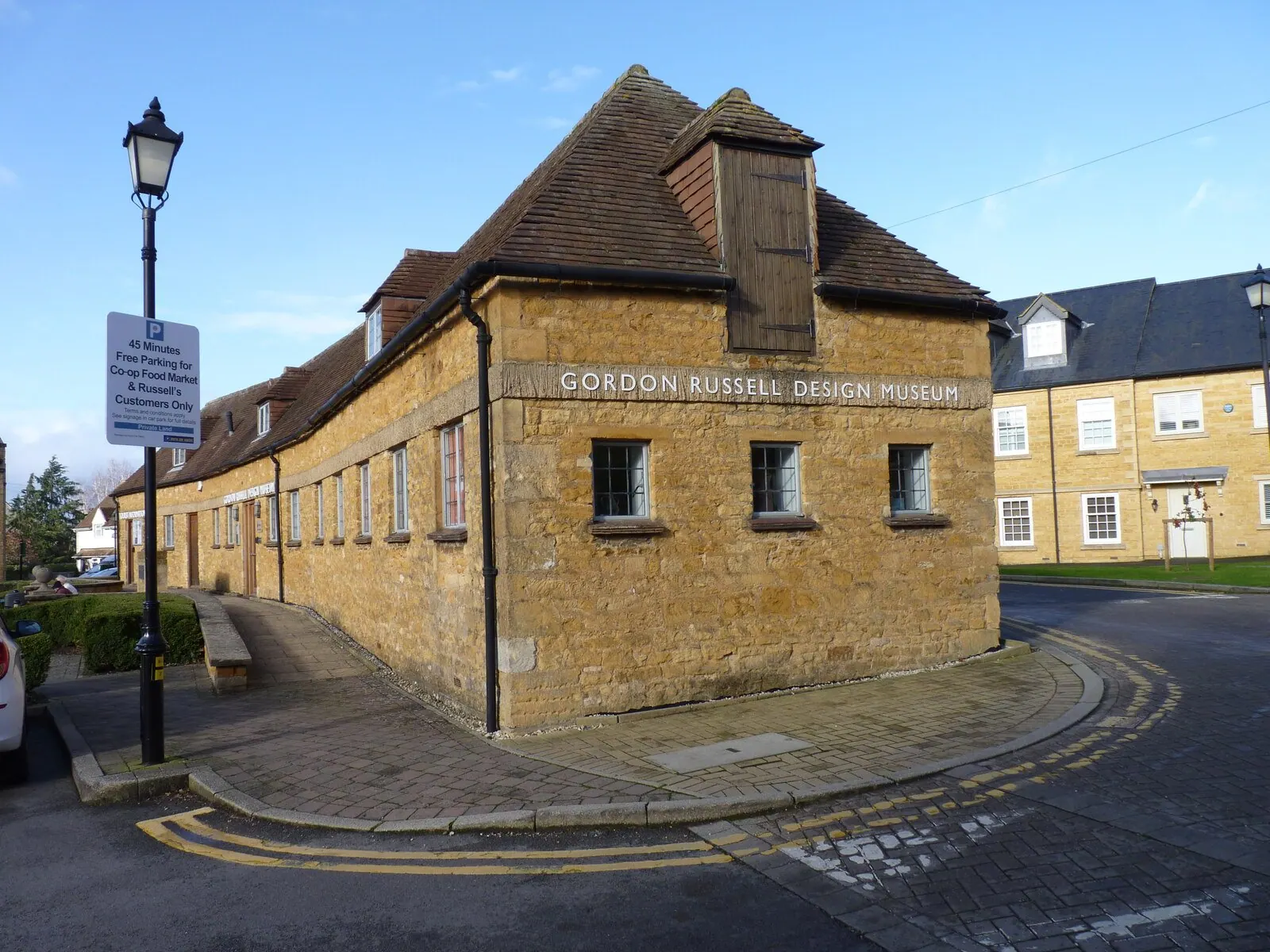
The Gordon Russell Design Museum
Gordon Russell grew up here. His father bought the Lygon Arms in 1904, and the family workshop made its furniture. Gordon went on to build a well-known furniture company and was knighted in 1955. The museum, in one of his old workshops, tells his story.
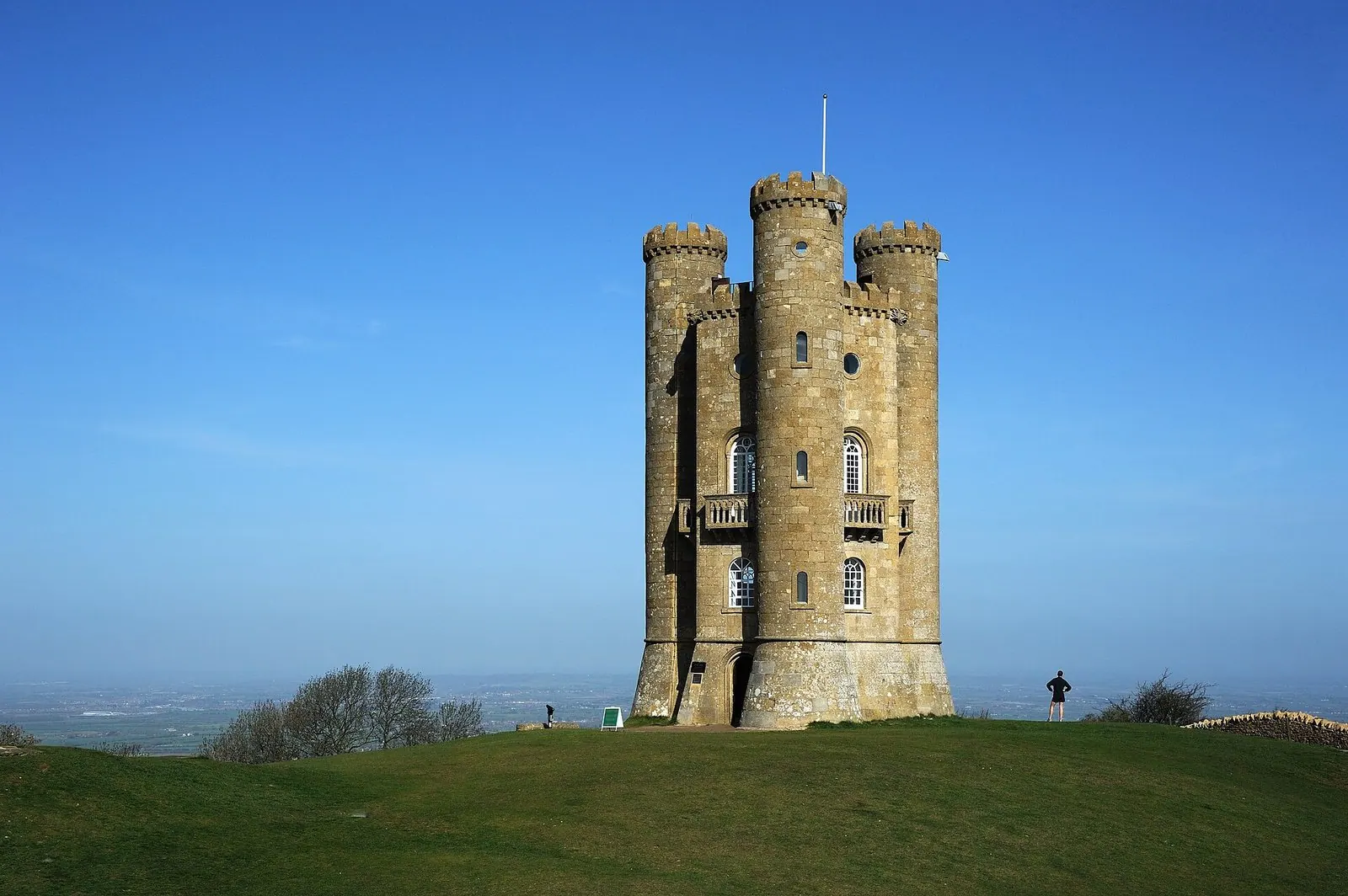
Broadway Tower, seen on the way
A hilltop folly (a building made for show) finished in 1798, with turrets, battlements and balconies. The designer William Morris, the painter Edward Burne-Jones and their friends used it as a holiday retreat.
Toilets
Yes. The Cotswolds National Landscape lists toilets at the short-stay car park in Church Close and at Broadway Park. Ask your guide which is nearest.
Food
There are tea rooms, cafés, a deli and pubs on and around the High Street. The village guide lists Broadway Deli and The Cotswold Larder among them.
Sources (8)
More days out from London
Each region has its own page, with every day trip to compare.
Ready to choose a tour?
See every The Cotswolds day trip side by side.
Compare The Cotswolds day trips
Spotted a change?
Opening times and prices change. Reply to the email this guide came in and tell us what you found.
Travelling with someone?
Forward the email, so they have the guide on their phone too.
Sources
Burford
Bibury
Bourton-on-the-Water
Stow-on-the-Wold
Snowshill
Broadway
Photo credits (48)


 see beyond / the city
Day trips from London
The Cotswolds day guide
One page for each of the six villages: what it is, what to see, what fits in 30, 60 or 90 minutes, and where to find toilets and food.
How to use this guide
- 1Check how long your tour stops in each village. Your tour’s page lists the stops and the time at each one.
- 2On the village’s page, pick the plan that fits: 30, 60 or 90 minutes.
- 3Set a phone alarm 10 minutes before you need to be back at the bus.
Inside
Page
seebeyondthecity.com/london/cotswolds/
see beyond / the cityBefore you arrive · read this on the way
The Cotswolds in two minutes
Why the stone is golden
Almost every village here is built from the same local stone, a limestone laid down in the Jurassic period, around 210 to 140 million years ago. Its colour runs from silvery cream through grey to a golden ochre, depending on how much iron oxide (a kind of rust) the stone holds.
Look for: The colour of the walls. Some are pale and creamy, some deep gold.
Walls built without cement
The fields and lanes are edged by dry stone walls, made from the same stone with no cement. The Cotswolds National Landscape counts more than 6,000 km of them. Most date from the 1700s and 1800s, when open land was fenced into fields.
Look for: How each stone is fitted to the next, and how the wall matches the nearest cottage.
A little history
- Over 6,000 years ago
People shape the hills
The Cotswolds National Landscape says people have lived in and shaped this landscape for more than 6,000 years. Burial mounds, hill forts and the Rollright Stones are still there to see.
- Roman times
A road to Stow
Roman engineers built the Fosse Way from Bath to Stow-on-the-Wold and Moreton-in-Marsh. The road let people and goods travel quickly between towns, farms and villas.
- The late Middle Ages
Wool builds the towns
Money from the wool trade paid for grand churches, manor houses and market towns. The wool churches are the best-known sign of that wealth, and local stone gave the towns their look.
- 1966
A protected landscape
The Cotswolds was made an Area of Outstanding Natural Beauty in 1966. At 790 square miles it is the largest in England and Wales, and it stretches from Bath to Warwickshire and Worcestershire.
see beyond / the cityBurford
An old market town and church
Why stop here
A medieval market town whose High Street runs down to the River Windrush. Look for the large wool church, where Leveller soldiers were held prisoner in 1649, and the Tolsey, the old market house. Antiques and independent shops line the street.
Don’t miss
The Levellers locked in the church, 1649
Anthony Sedley’s name and the date 1649, carved by a prisoner into the lead of the font. Also look for the plaque on the church wall.
The church of St John the Baptist · 15 min here · free — A very large church paid for by the wool trade, with a 12th-century tower and west doorway, a carved stone ceiling in the porch, many tombs and stained glass. The Harman tomb has carved people from the Americas, the earliest known in Britain, the church says.
The Levellers’ marks in the church · 5 min here · freeDon’t miss — In 1649 Leveller soldiers, who wanted a more equal society, were held prisoner in this church. One of them, Anthony Sedley, carved his name in the lead of the font. A plaque on the church wall remembers the soldiers who were executed.
The Great Almshouses · 5 min here · free — Almshouses are charity homes for poor people. A tablet over the central door says Richard, Earl of Warwick founded these in 1457 and that they were rebuilt in 1828. They stand on Church Lane.
The High Street · 15 min here · free — A street of stone houses and historic shops that runs downhill to the River Windrush. Burford is known for antiques, independent shops and small boutiques.
The Tolsey · 20 min here · free — The 16th-century market house, a timber frame raised on stone piers (columns), with a clock on the front. Traders paid tolls here, and the Borough Court met. It is now the town museum.
Yes. West Oxfordshire District Council lists two public toilets in Burford, one on the High Street and one at Guildenford Car Park. Both are open 7.30 am to 7.30 pm and have baby changing. The disabled toilets need a Radar key. The council’s page was checked on 28 October 2026.
Visit Cotswolds lists traditional pubs, tearooms and restaurants in Burford. Huffkins has a café and bakery on the High Street, in a listed building with original beams.
see beyond / the city Bibury
The famous row of weavers’ cottages
Why stop here
A small village on the River Coln, best known for Arlington Row, a lane of old stone cottages owned by the National Trust. You see the row, the water meadow and the river from public paths. It is a place for a walk and photographs, not a visit inside anything.
Don’t miss
A church with Saxon stones
The Saxon gravestone set into the north wall of the chancel, the square stone font and the Norman doorway.
Arlington Row · 10 min here · free — A row of old stone cottages with a wavy roofline and steep gables, beside the mill stream. It is the best-known view in Bibury.
Rack Isle water meadow · 10 min here · free — A boggy meadow between the river and the row, once used to dry cloth. Look for water voles, kingfishers and dragonflies.
St Mary’s church · 10 min here · freeDon’t miss — A church protected at the highest level, with carved stones from Saxon times (before 1066), a Norman doorway from soon after, and a square stone font from the 1200s.
The Swan Hotel · 5 min here · free — An old coaching inn, where travellers by horse and carriage once stopped, recorded as an inn from 1672.
Bibury Trout Farm · 45 min here · own ticket — A working trout farm in the village, with ponds, a café and a gift shop. The farm says it was founded in 1902 and is England’s oldest working trout farm.
The National Trust lists pubs, restaurants and tea-rooms in the village, and public toilets opposite the roadside parking. None is run by the National Trust. The Trout Farm has a café open daily.
see beyond / the city Bourton-on-the-Water
A riverside village with attractions
Why stop here
The River Windrush runs through the middle of this Cotswold stone village, under five low bridges and beside a wide green. Shops, cafés, a model of the village, a bird park and a motoring museum are close by. It is often very busy at weekends, so choose a quieter time if you can.
Don’t miss
Five low bridges over the Windrush
The footbridge called High Bridge, in the middle of the green, and how low the sides of every bridge are.
The River Windrush and its bridges · 15 min here · freeDon’t miss — Clear water running between wide grass banks planted with trees, crossed by five low, slightly humped stone bridges.
The Model Village · 45 min here · own ticket — A one-ninth scale copy of Bourton in Cotswold stone, in the garden of the Old New Inn.
The Cotswold Perfumery · 20 min here · free — A family perfume maker on Victoria Street, started in 1966, with a shop and perfume-making courses in its own teaching room.
Also here, with more time: Shops and tea rooms by the river (30 min, free) · Birdland Park and Gardens (90 min, own ticket) · The Cotswold Motoring Museum (45 min, own ticket)
Yes. Cotswold District Council lists two public toilet sites in Bourton, at the Church Rooms and on Rissington Road. Both have disabled facilities and baby changing, and both charge a small fee.
Visit Cotswolds says Bourton has cafés, restaurants and tea rooms, and lists The Chestnut Tree, a tea room and licensed restaurant in the village. You can have coffee or afternoon tea by the river.
Earlier or later in the day. The Parish Council says the village can be as busy as a seaside resort on holidays and sunny weekends, and that the earlier or later in the day you visit, the quieter and calmer it is.
see beyond / the city Stow-on-the-Wold
A market town with a story
Why stop here
Stow-on-the-Wold is a hilltop market town built around a big square. Medieval fairs once sold thousands of sheep here, and narrow lanes still lead off the square. A Civil War battle ended on its streets in 1646, and St Edward’s north door stands between old yew trees.
Don’t miss
A church door and a Tolkien story
The north door under its small porch, with a yew tree on each side.
The Market Square and its cross · 10 min here · free — A wide square with a medieval market cross at its heart. The four panels at the top of the cross show the crucifixion, Edward the Confessor (an English king before 1066), the Civil War and the wool trade.
St Edward’s Church and its north door · 10 min here · freeDon’t miss — A church first built in Saxon times (before 1066), with a 15th-century tower, on the west side of the square. Look for the north door between two yew trees.
The lanes called tures · 10 min here · free — Several narrow lanes lead off the square between the buildings. Local tradition says sheep were counted as they left the market through them.
Antique and independent shops · 30 min here · free — Stone townhouses round the square hold independent shops, antique centres, galleries and cafés.
The old stocks · 5 min here · free — Part of a wooden frame with iron straps, once used to hold a person’s feet as a public punishment. Historic England notes that the foot holes are uncomfortably far apart.
The Porch House inn · 5 min here · free — A building from the 15th or early 16th century at the bottom of Digbeth Street. The inn calls itself England’s oldest inn.
Yes. Cotswold District Council lists a public toilet on Market Square. It charges 50p and has disabled facilities and baby changing. The council’s page was checked on 28 October 2026.
Visit Cotswolds lists cafés, a bakery and inns around the square, such as Huffkins Cafe & Bakery and the Old Stocks Inn. Prices vary, so check the menus.
see beyond / the city Snowshill
A quiet hill village
Why stop here
A small hillside village of Cotswold stone cottages around a Victorian church, with wide views over the countryside. Snowshill is best known for the National Trust manor where Charles Wade gathered thousands of handmade objects. It suits visitors who want atmosphere and views more than a house visit.
Don’t miss
Snowshill in Bridget Jones’s Diary
The stone cottages and lanes round the church. The tourist board does not name the house the film used.
St Barnabas church and the cottages round it · 15 min here · freeDon’t miss — A small stone church built in 1864, with a clock on its tower and a font from the 1400s. Old stone cottages stand around it.
The garden and Wolf’s Cove · 45 min here · own ticket — A garden laid out as a series of outdoor rooms, in the Arts and Crafts style, which prized handmade work. Look for a painted 24-hour clock called the Nychthemeron, and Wolf’s Cove, a model Cornish fishing village.
Or, with 90 minutes: Snowshill Manor and its collection (90 min, own ticket) — The home of Charles Wade, an architect and collector, filled with handmade objects, from suits of armour and mechanical doorbells to musical instruments and old bicycles. Each room is arranged like a stage set (the scenery for a play).
Also here, with more time: The Snowshill Arms (30 min, free) · The Cotswold Lavender fields, in summer (10 min, free)
Yes, at visitor reception, the café and the garden. Accessible toilets are at visitor reception and the café only.
The National Trust café serves hot and cold drinks, snacks and light meals, with indoor and outdoor seats and views across the valley. There is also a picnic area nearby, in Pipers Orchard.
see beyond / the city Broadway
A long village street to browse
Why stop here
A very wide High Street of honey-coloured Cotswold stone, with independent shops, tea rooms and an old coaching inn. In the 1880s American and English artists came here each summer. Two small museums tell the story. It is a village for wandering, on the north-west edge of the Cotswolds.
Don’t miss
The Lygon Arms and its royal stories
The carved arch above the front door. The Lygon Arms is a working hotel, so look from the High Street.
The Lygon Arms · 5 min here · freeDon’t miss — The old coaching inn on the High Street, where travellers by horse and carriage once stopped. A carved arch over the front door shows the name John Trevis and the date 1620.
The High Street and the Green · 20 min here · free — A very wide street of honey-coloured Cotswold stone buildings, shaded by chestnut trees, with the grass of the Green at its heart.
Independent shops and galleries · 30 min here · free — Art and antiques, handmade jewellery, gifts, fashion and food shops line the High Street, with tea rooms, cafés and pubs between them.
Broadway Museum & Art Gallery · 30 min here · own ticket — A museum in Tudor House on the High Street, a 17th-century building that began as an inn for travellers by horse and carriage. It shows the story of the artists, the coaching days, the railway and the wool trade.
Also here, with more time: The Gordon Russell Design Museum (45 min, own ticket) · Broadway Tower, seen on the way (5 min, free)
Yes. The Cotswolds National Landscape lists toilets at the short-stay car park in Church Close and at Broadway Park. Ask your guide which is nearest.
There are tea rooms, cafés, a deli and pubs on and around the High Street. The village guide lists Broadway Deli and The Cotswold Larder among them.
see beyond / the city see beyond / the cityMore days out from London
Each region has its own page, with every day trip to compare.
Ready to choose a tour?
See every The Cotswolds day trip side by side. seebeyondthecity.com/london/cotswolds/#compare
Bath and Stonehenge
Stonehenge & Roman Bath
Stonehenge · Bath · Castle Combe
Up to about 180 km · 111 miles
Get the Bath and Stonehenge day guide
seebeyondthecity.com/london/bath-stonehenge/
Hampton Court
Hampton Court Palace
Hampton Court Palace
Get the Hampton Court day guide
seebeyondthecity.com/london/hampton-court/
Hatfield
Hatfield House
Hatfield House
Get the Hatfield day guide
seebeyondthecity.com/london/hatfield/
Kent
Cliffs, castles & Canterbury
White Cliffs of Dover · Canterbury · Leeds Castle
Up to about 120 km · 75 miles
Get the Kent day guide
seebeyondthecity.com/london/kent/
Oxford and Stratford
Oxford, Stratford & Warwick
Oxford · Stratford-upon-Avon · Warwick Castle
Up to about 163 km · 101 miles
Get the Oxford and Stratford day guide
seebeyondthecity.com/london/oxford-stratford/
Seven Sisters and Brighton
Seven Sisters & Brighton
Seven Sisters · Brighton · Beachy Head
Up to about 121 km · 75 miles
Get the Seven Sisters and Brighton day guide
seebeyondthecity.com/london/sussex/
Windsor
Windsor Castle and royal Windsor
Windsor Castle · St George's Chapel · Windsor town
About 36 km · 22 miles
Get the Windsor day guide
seebeyondthecity.com/london/windsor/
Spotted a change?
Opening times and prices change. Reply to the email this guide came in and tell us what you found.
Travelling with someone?
Forward the email, so they have the guide on their phone too.
see beyond / the citysee beyond / the citySources
Bourton-on-the-Water
Cotswold District Council: Bourton-on-the-Water Conservation Area Statement
Visit Cotswolds: Bourton-on-the-Water
The Old New Inn: the Model Village
Birdland Park and Gardens: admission prices and opening times
Stow-on-the-Wold
Historic England: Parish Church of St Edward
Historic England: market cross in Market Square
A Church Near You: St Edward’s, Stow
Victoria County History: Parishes, Stow-on-the-Wold
Snowshill
VisitBritain: visit Bridget Jones filming locations
Historic England: Church of St Barnabas, Snowshill
National Trust: things to do in Snowshill Manor
National Trust: things to do in the garden at Snowshill
National Trust: Snowshill to Littleworth Wood circular walk
Cotswold Lavender: the lavender fields
see beyond / the cityPhoto credits