The real England, in one easy day from London
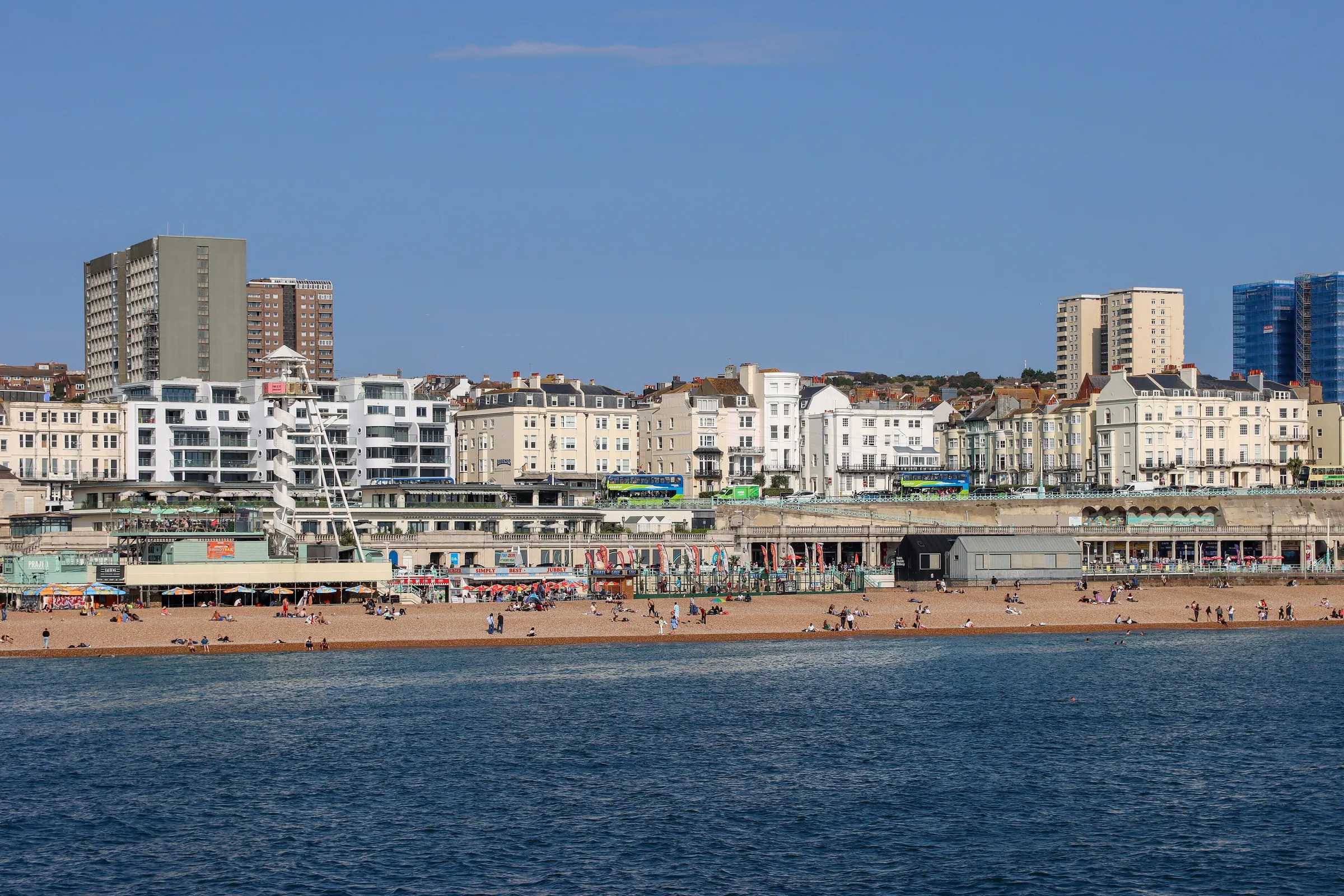
Brighton seafront seen from the sea: a pebble beach with sunbathers, seafront cafés and arches, and a row of cream and white buildings under a blue sky Illustration

A seaside city of old lanes and grand squares

Brighton

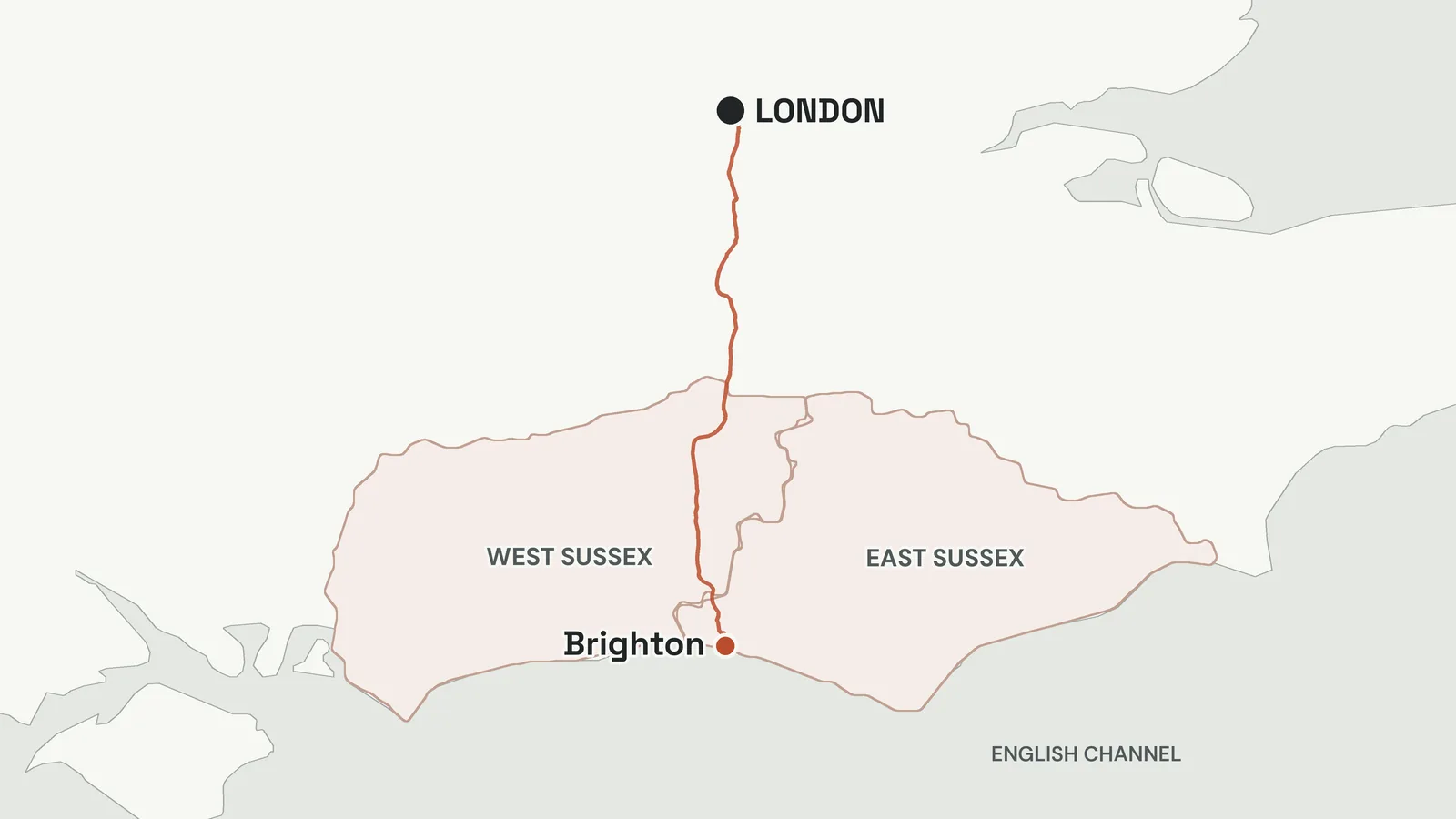
On the south coast, south of London · a day trip from London

See how long each tour stops in Brighton →

Why it matters

Why Brighton matters.

Brighton grew from a small fishing town into a fashionable seaside resort. Here are four stories about the city, each tied to something you can see.

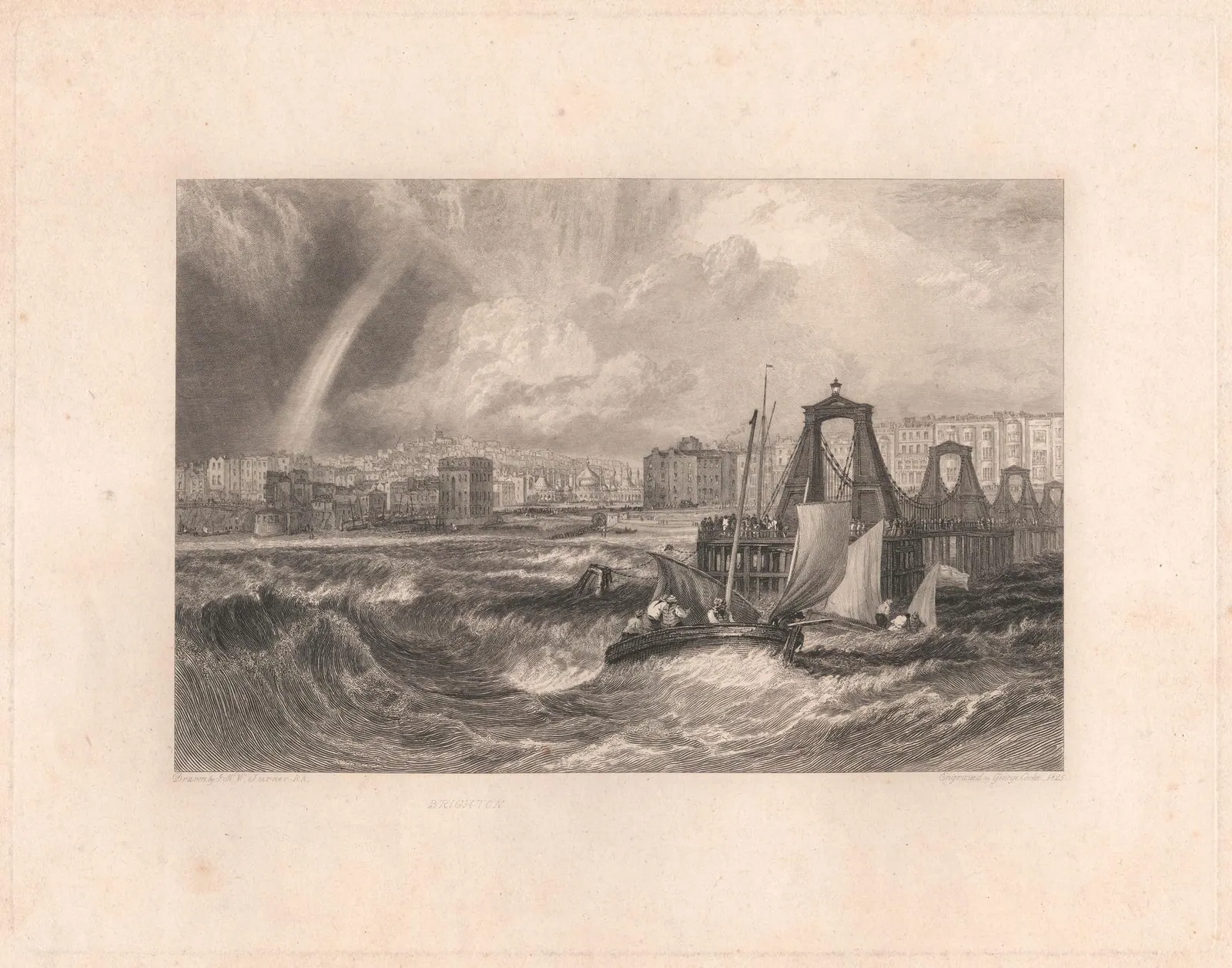
An old engraving of Brighthelmstone from the sea: sailing boats in rough waves, the Chain Pier and seafront houses, with a rainbow in a stormy sky

01

From Brighthelmstone to Brighton

Brighton began as a fishing town called Brighthelmstone.

One of the earliest mentions is in the Domesday Book of 1086 (a record of England made for William the Conqueror). It calls the town Brighthelmstone. In 1313 a charter (a paper that gives a town rights) allowed it to hold fairs. Daily fish markets were held on the beach. Parts of the Lanes date from the late 1500s, when Brighton was still a small fishing town.

Look for

The twittens (narrow alleys) of the Lanes. On Black Lion Street, look for the Cricketers Arms, a pub built around 1545.
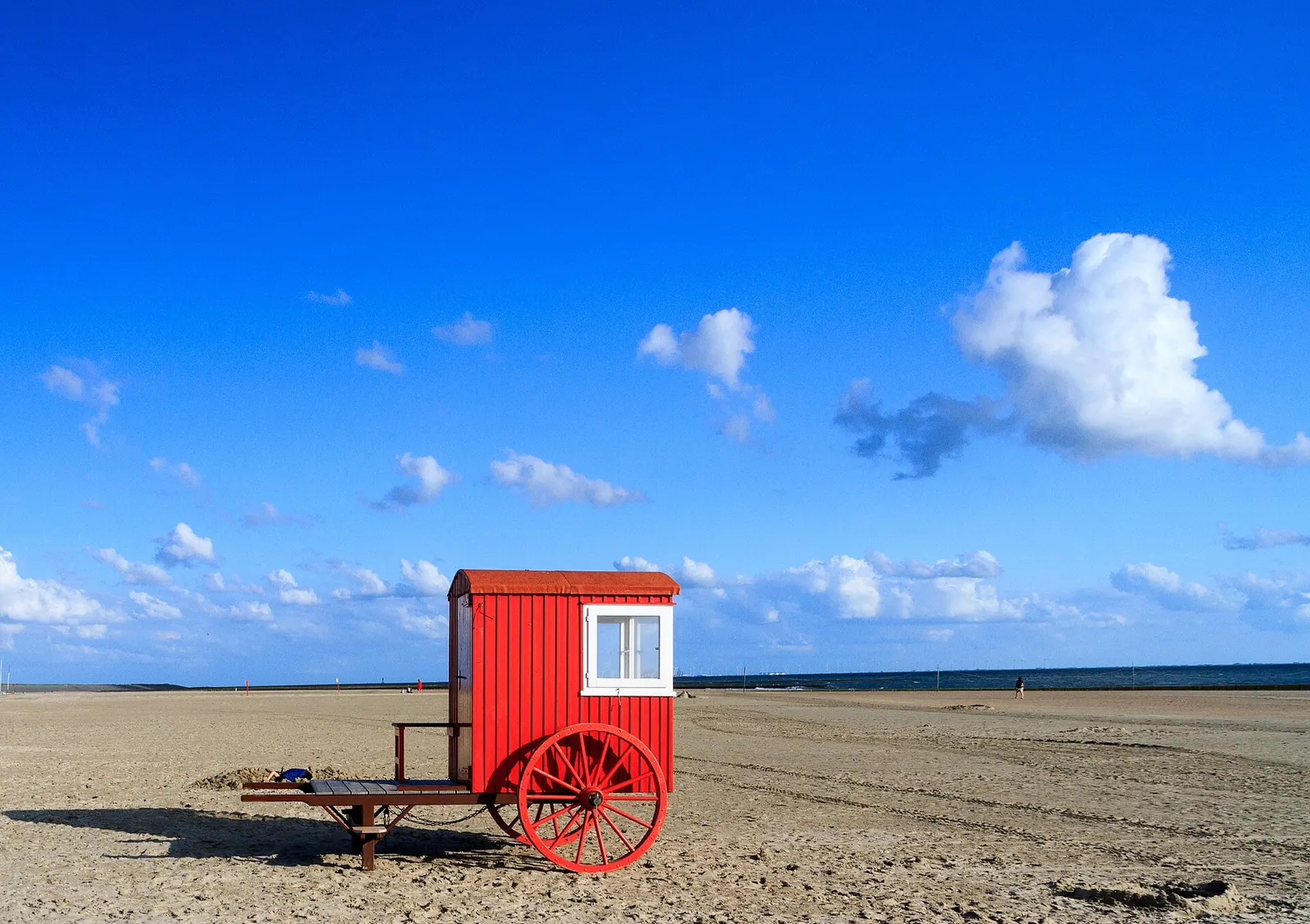
Small red wooden bathing wagon on a wide beach under a deep blue sky with scattered white clouds.

02

The sea cure and the dippers

In the 1700s doctors sent rich visitors to bathe in the sea here.

Dr Richard Russell, a doctor from nearby Lewes, made sea-water treatments famous. Visitors came to bathe, and helpers called dippers lowered them into the water. Martha Gunn came from a poor fishing family and became the best-known dipper. She ran bathing machines (carts that took bathers into the sea) as a business. The Prince of Wales also came on his doctors' advice.

Look for

The pebble beach where the dippers worked, and the Brighton Fishing Museum in the beach arches.

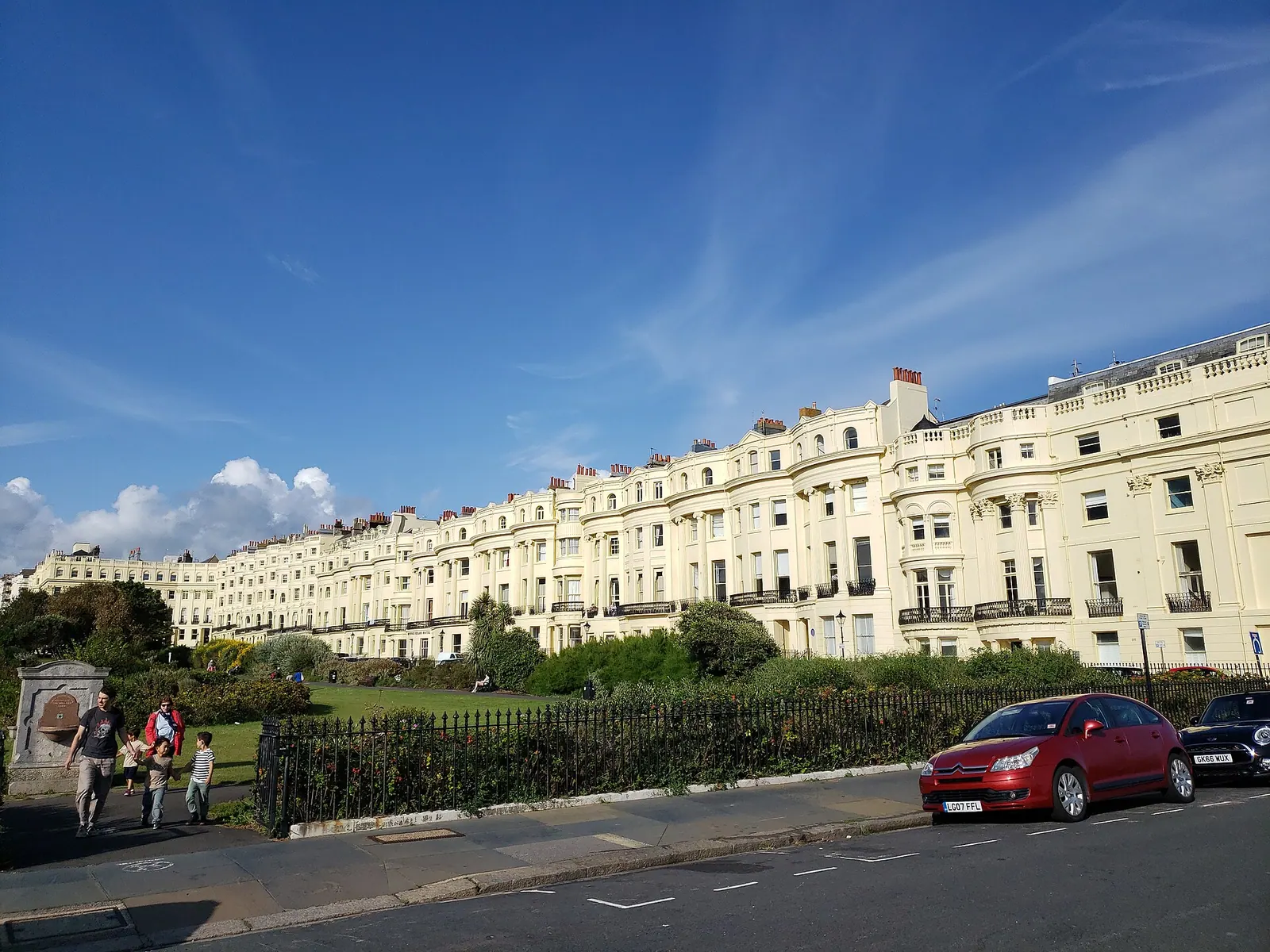
The long cream terrace of Brunswick Square in Hove, with bay windows and balconies, behind railings and a green garden under a blue sky

03

A royal resort and its squares

When the Prince of Wales built his palace here, the town boomed.

Brighton Museums says the population grew from about 3,620 in 1786 to 40,634 in 1831. Builders put up Regency squares and crescents (the Regency was the early 1800s, when the prince ruled for his father). Charles Busby and Amon Wilds built Kemp Town in Brighton and Brunswick Town in Hove. Both are protected conservation areas today.

Look for

The creamy-coloured terraces along the seafront, and the squares of Brunswick Town in Hove.

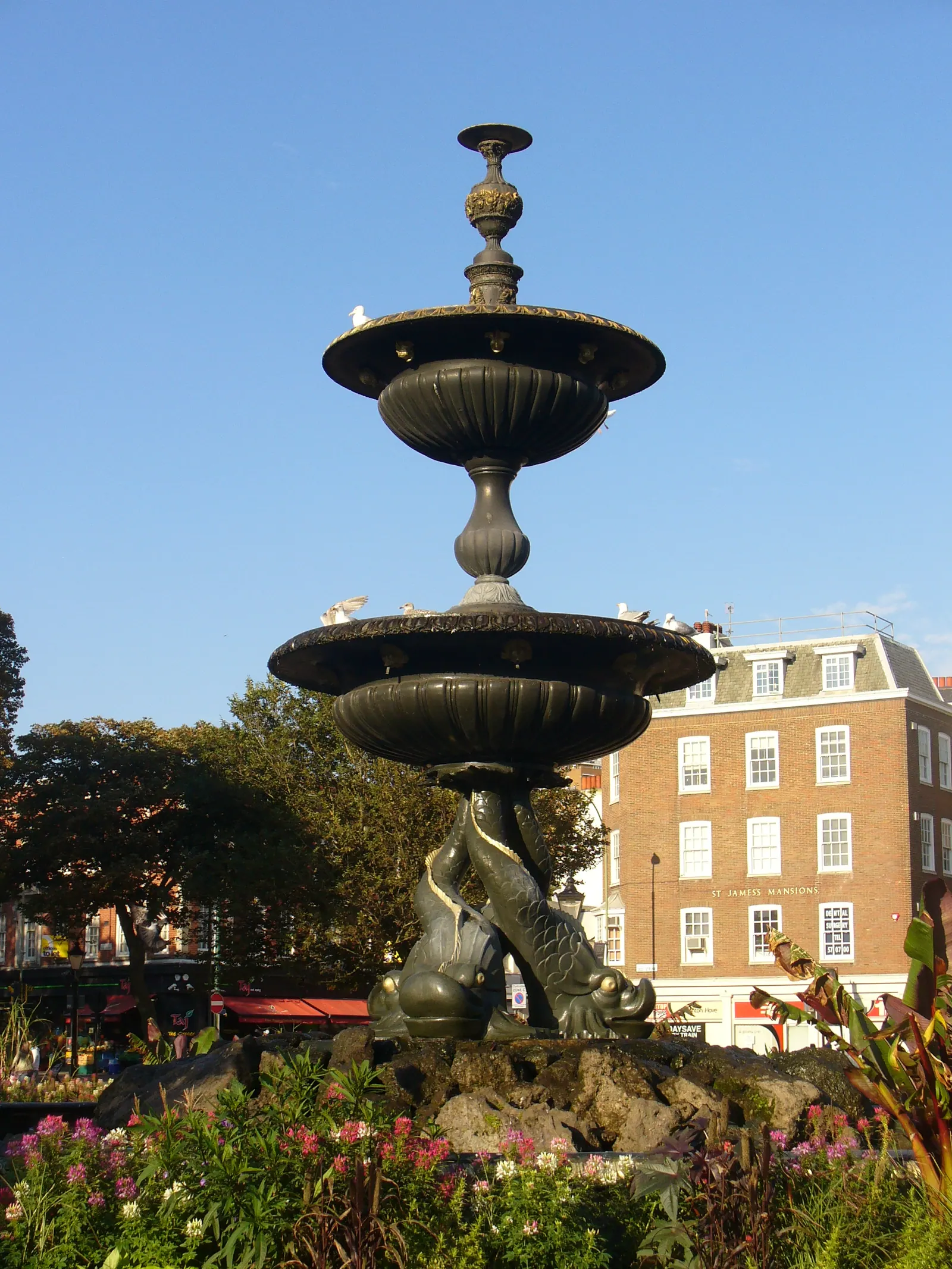
A tall dark iron fountain with dolphin figures in the Old Steine gardens, Brighton, with flowers in front and a brick building behind

04

Jane Austen's Lydia goes to Brighton

In Pride and Prejudice, Lydia Bennet longs to go to Brighton.

In Jane Austen's novel Pride and Prejudice, Lydia and her sister Kitty want to go to Brighton for the "campful of soldiers". Their mother hopes sea-bathing will help her health. Her brother Henry spent time in Brighton with the militia (part-time soldiers) in the 1790s, and the museum thinks this shaped her descriptions.

Look for

The Old Steine, the open space beside the Royal Pavilion, in the town Henry Austen knew in the 1790s.

Your time there

What to see.

These are the highlights worth looking out for, if your time allows. See how long each tour stops in Brighton →

Brighton keeps its best things close together, so these are the main ones, most important first. Picture this: you stand on the pier with the sea on both sides, then walk back into narrow lanes where buskers play and tables spill onto the street.

Inside Brighton, with guides of their own: Royal Pavilion and Palace Pier.

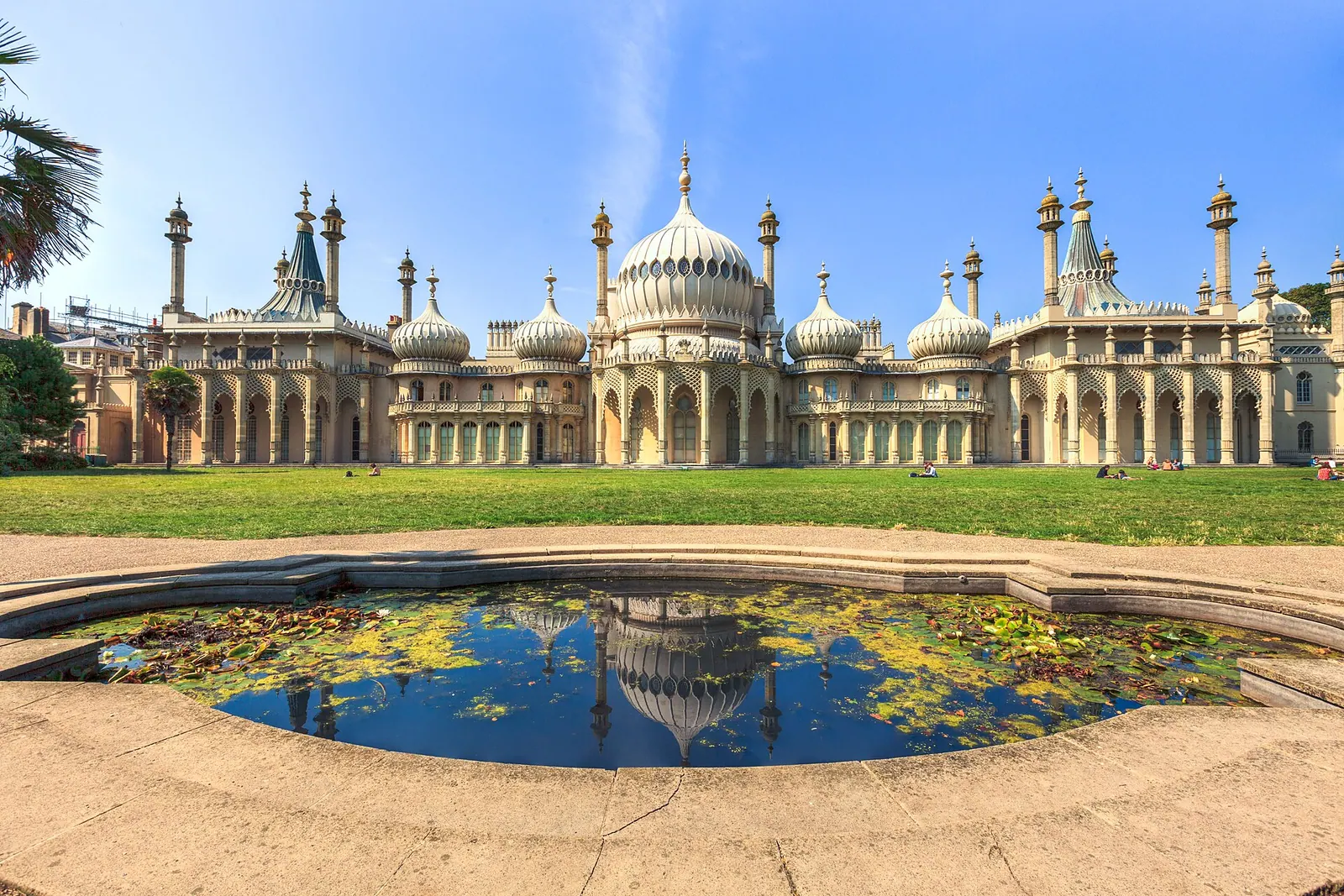
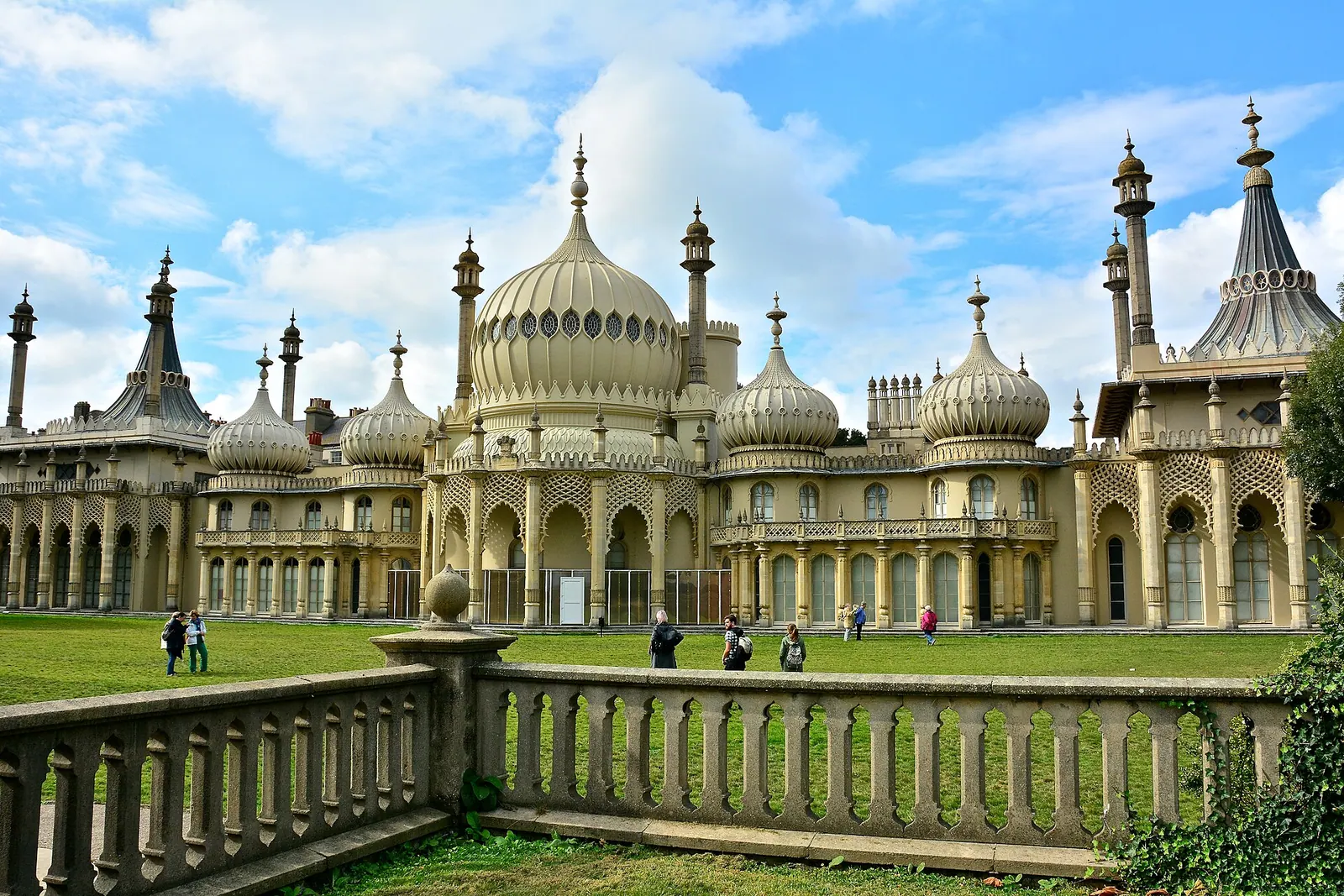
The Royal Pavilion's onion domes and minarets stretch across a green lawn under a blue sky, reflected in a round pond in the foreground.
Don’t miss

The Royal Pavilion

A seaside palace built for a prince, with domes and minarets outside and Chinese-style rooms inside. You can walk round the outside and the gardens without a ticket.

About 90 min · Own ticket

Opening hours (checked 30 October 2026): 10 am to 5.15 pm from October to March, last admission 4.30 pm. It is closed all day on 18 November 2026.

Read our Royal Pavilion guide →

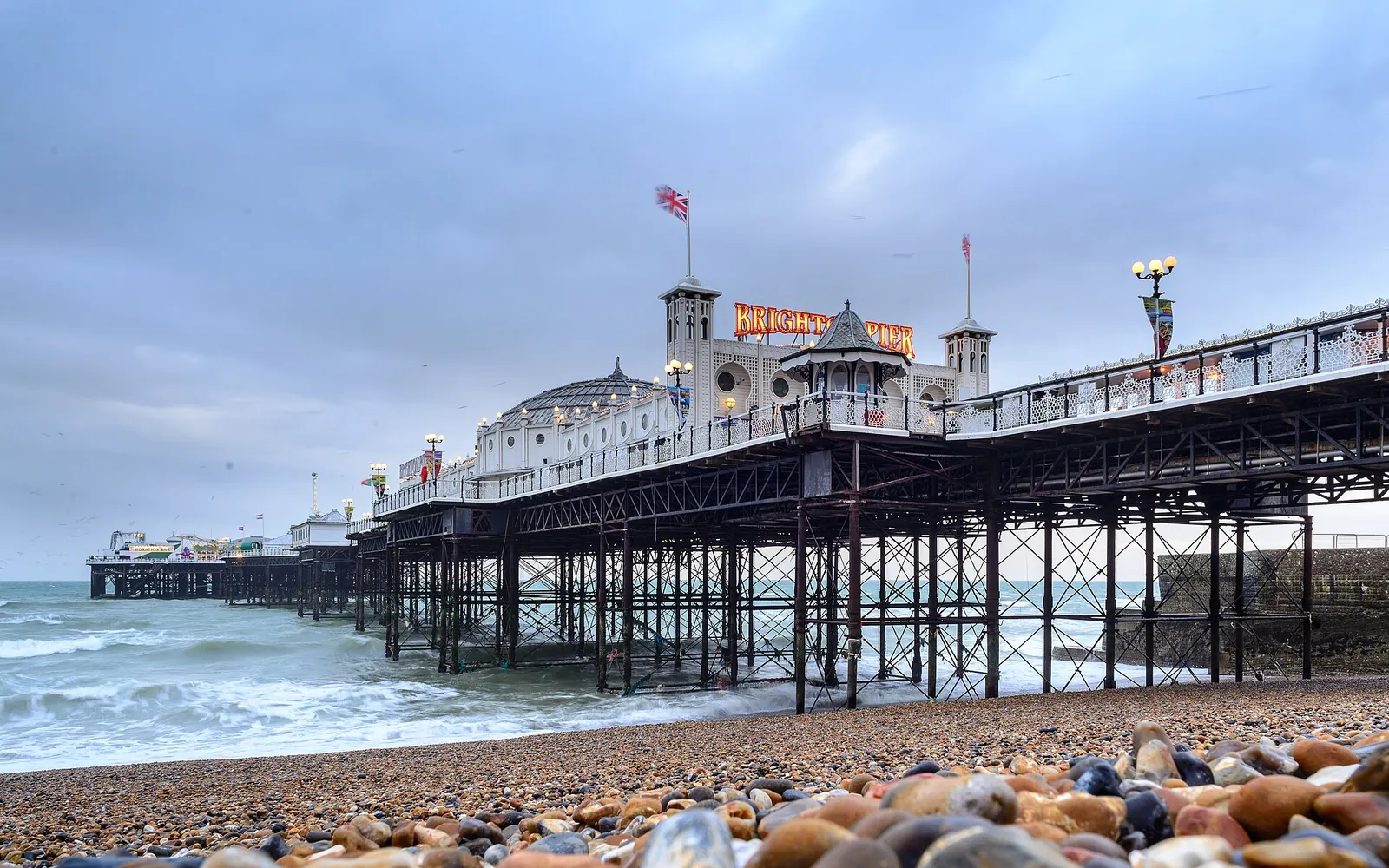
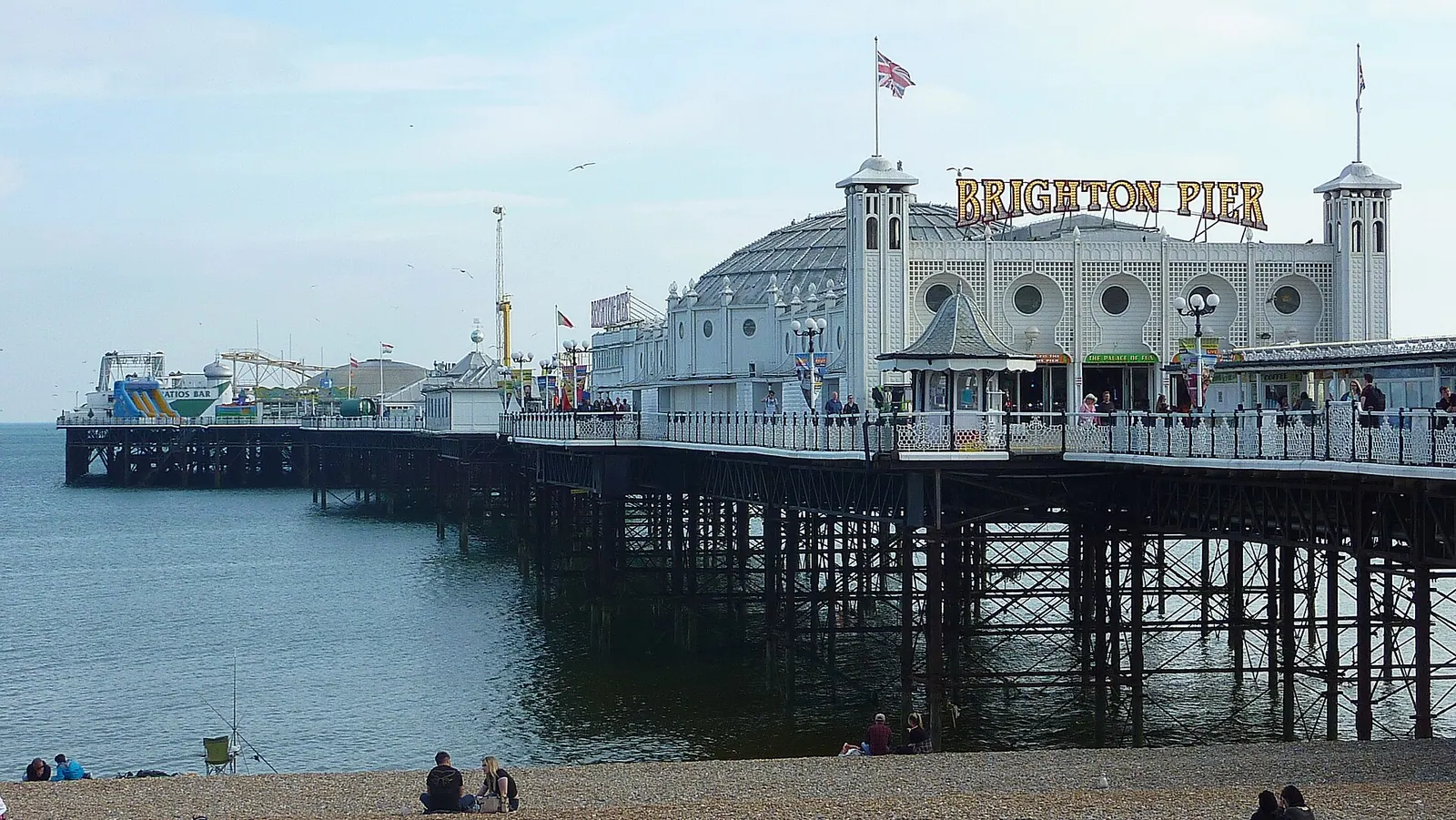
Brighton Palace Pier stands on dark iron legs above a pebble beach and breaking waves, under a cloudy blue sky with a flag flying.

Brighton Palace Pier

The Victorian pier on the seafront, with a funfair, rides, food and sea views from the deck.

About 45 min · Free

The pier charges an admission fee during peak periods (checked 30 October 2026). Rides cost extra.

Read our Palace Pier guide →

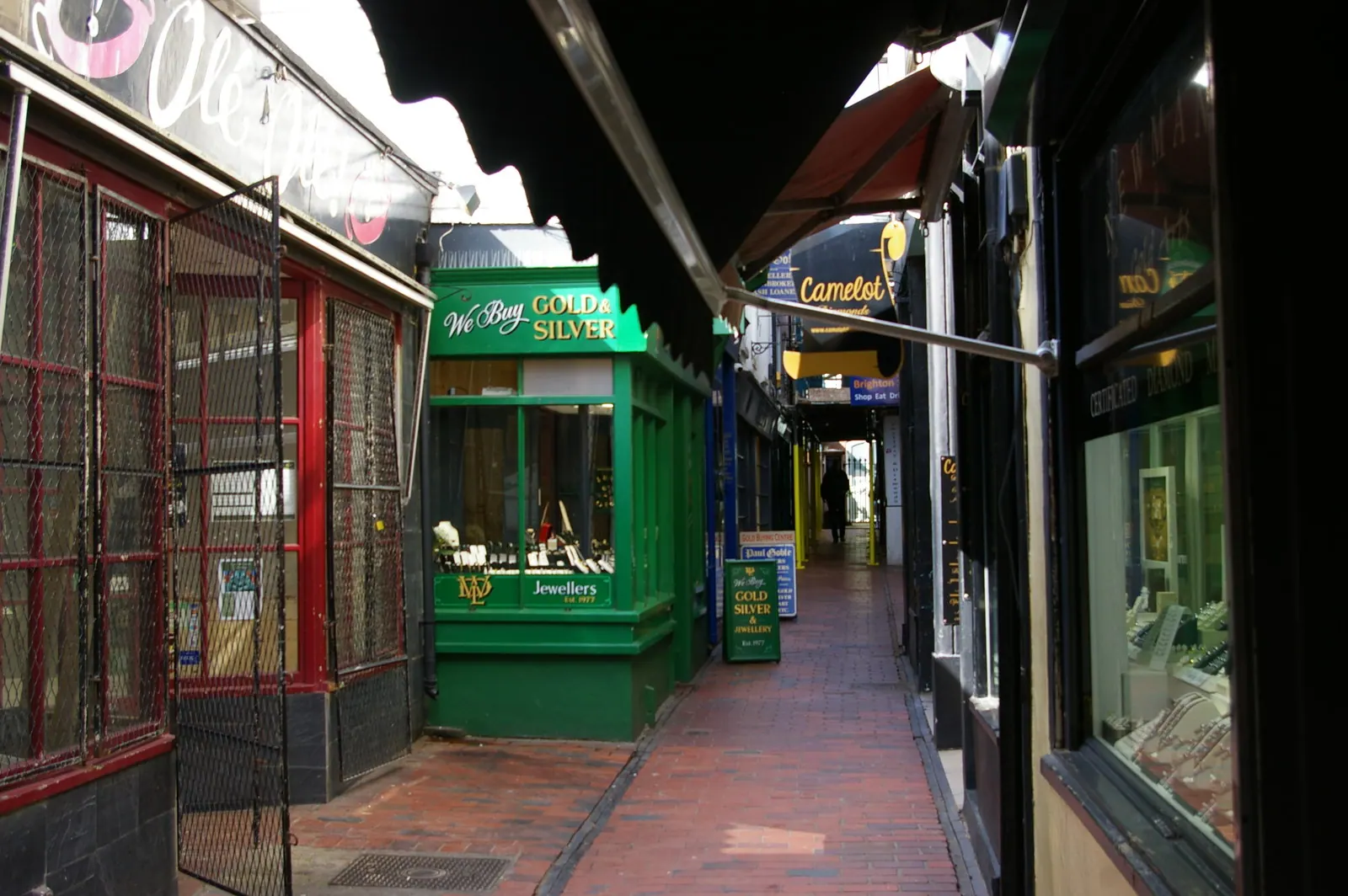
A narrow brick-paved alley in Brighton's Lanes, lined with small jewellery and gold shops under awnings

The Lanes

A maze of narrow alleys (called twittens) and hidden squares, some from the late 1500s, with jewellers, independent shops and places to eat. In summer, buskers play and restaurants put tables outside.

About 30 min · Free

The Lanes are a five-minute walk from the pier.

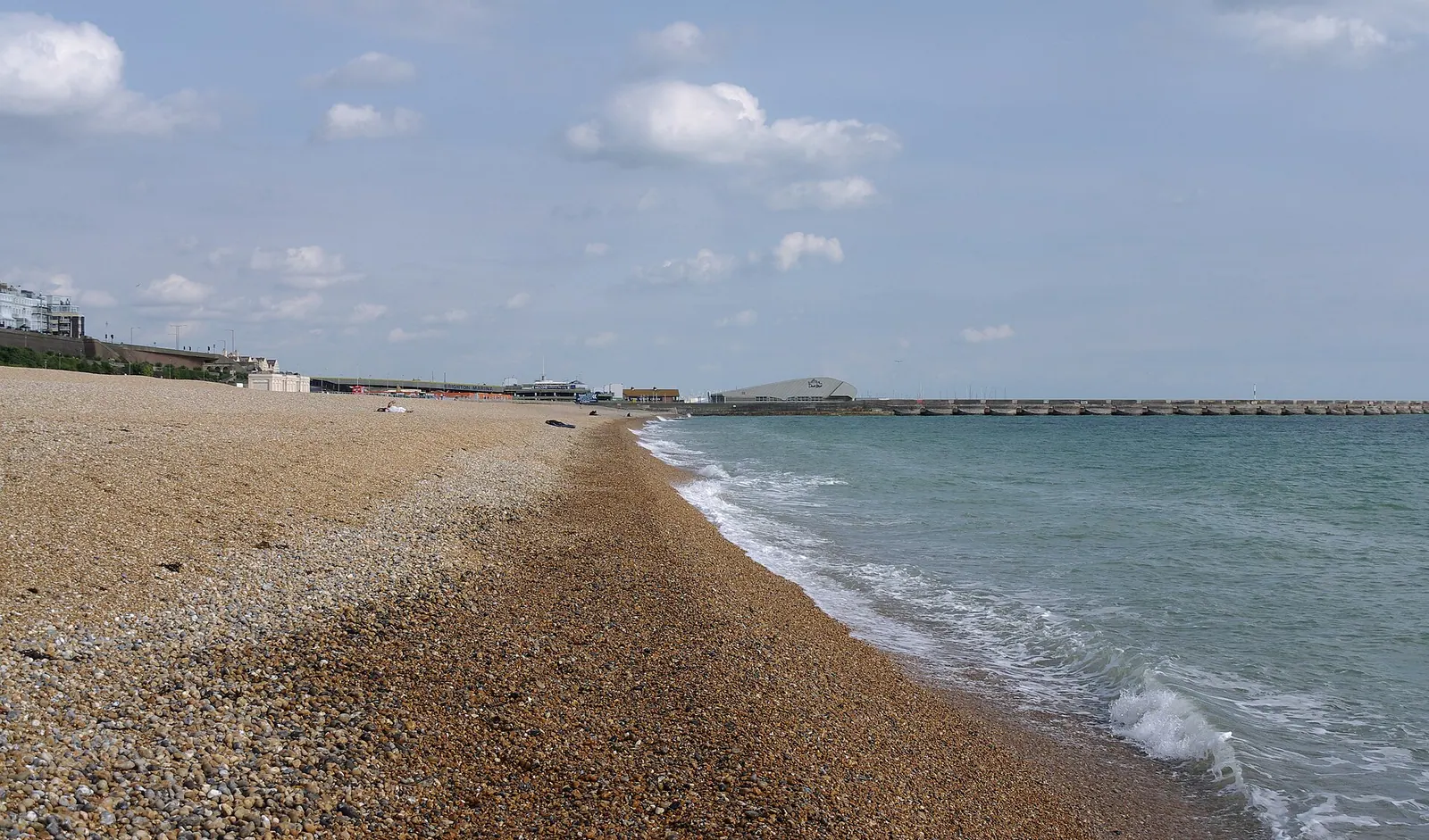
Steep shingle beach sloping to waves, with a long breakwater stretching along the shore under a blue sky with clouds.

The seafront and pebble beach

A long promenade with cafés, galleries in the beach arches, and a steep pebble beach.

About 30 min · Free

Lifeguards patrol the main beaches from the end of May to the first weekend in September. Swim only between the red and yellow flags.

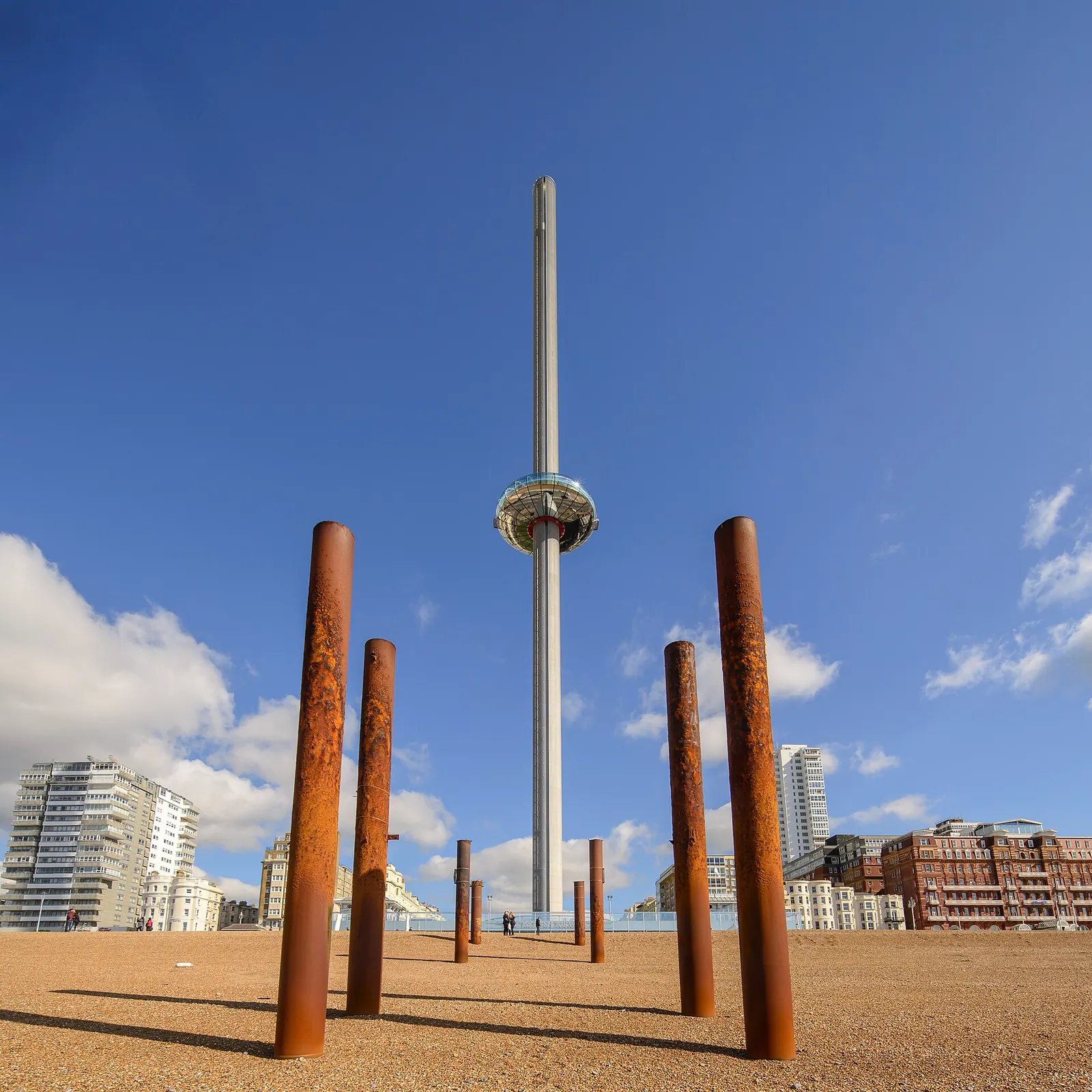
The slim i360 tower with its glass pod rises into a blue sky with white clouds, beside four tall rust-coloured columns and seafront flats.

Brighton i360

A tall viewing tower on the seafront. A glass pod rises slowly for views over the city, the sea and the South Downs.

The ride takes 25 minutes; arrive 20 minutes early. November: Wednesday to Sunday only. · Ticket needed

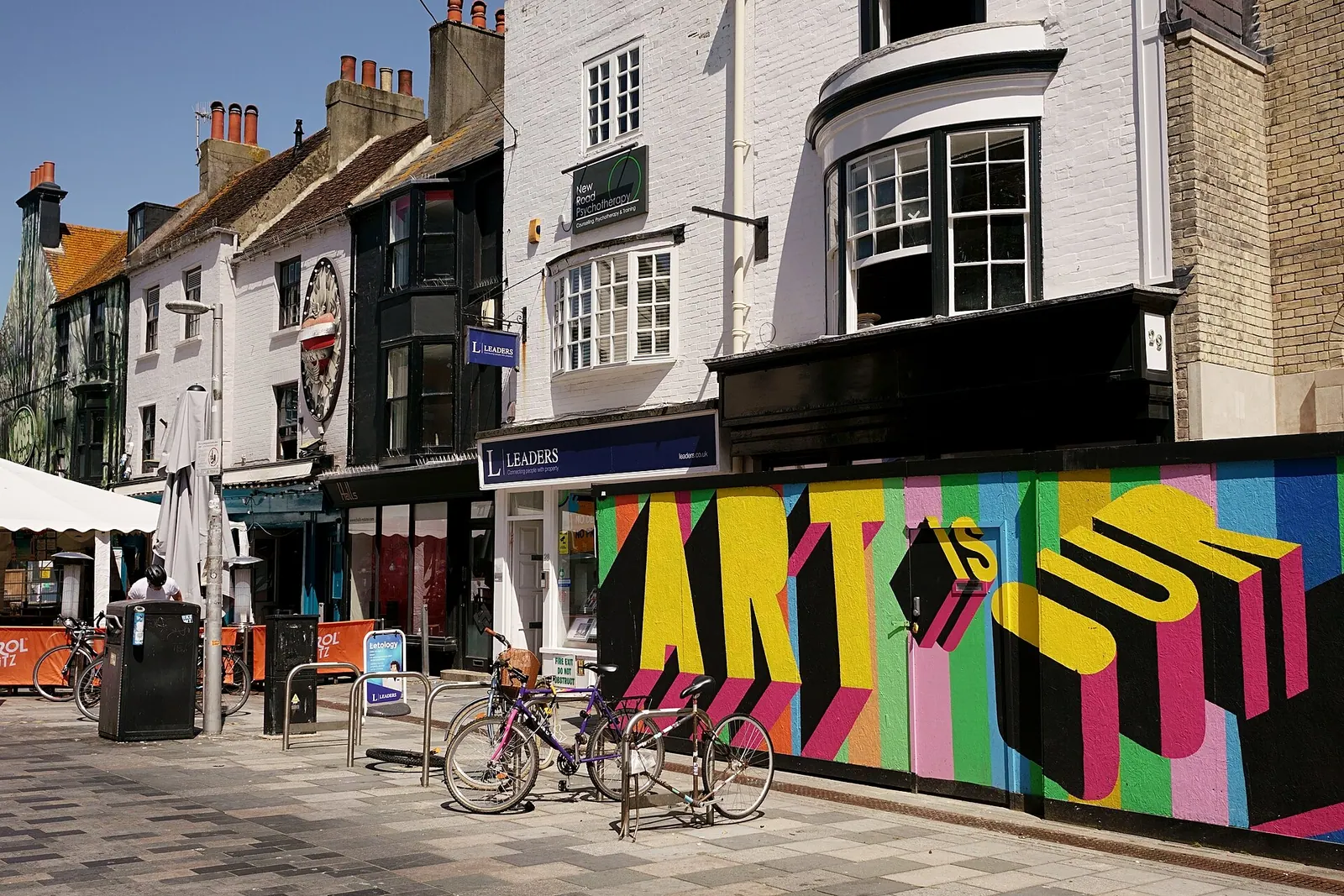
A bright striped mural with the words Art is our on a street in North Laine, with bicycles parked in front of old shopfronts

North Laine

Colourful streets of independent shops, cafés and outdoor stalls, with street art.

About 30 min · Free

Some roads close to traffic at weekends.

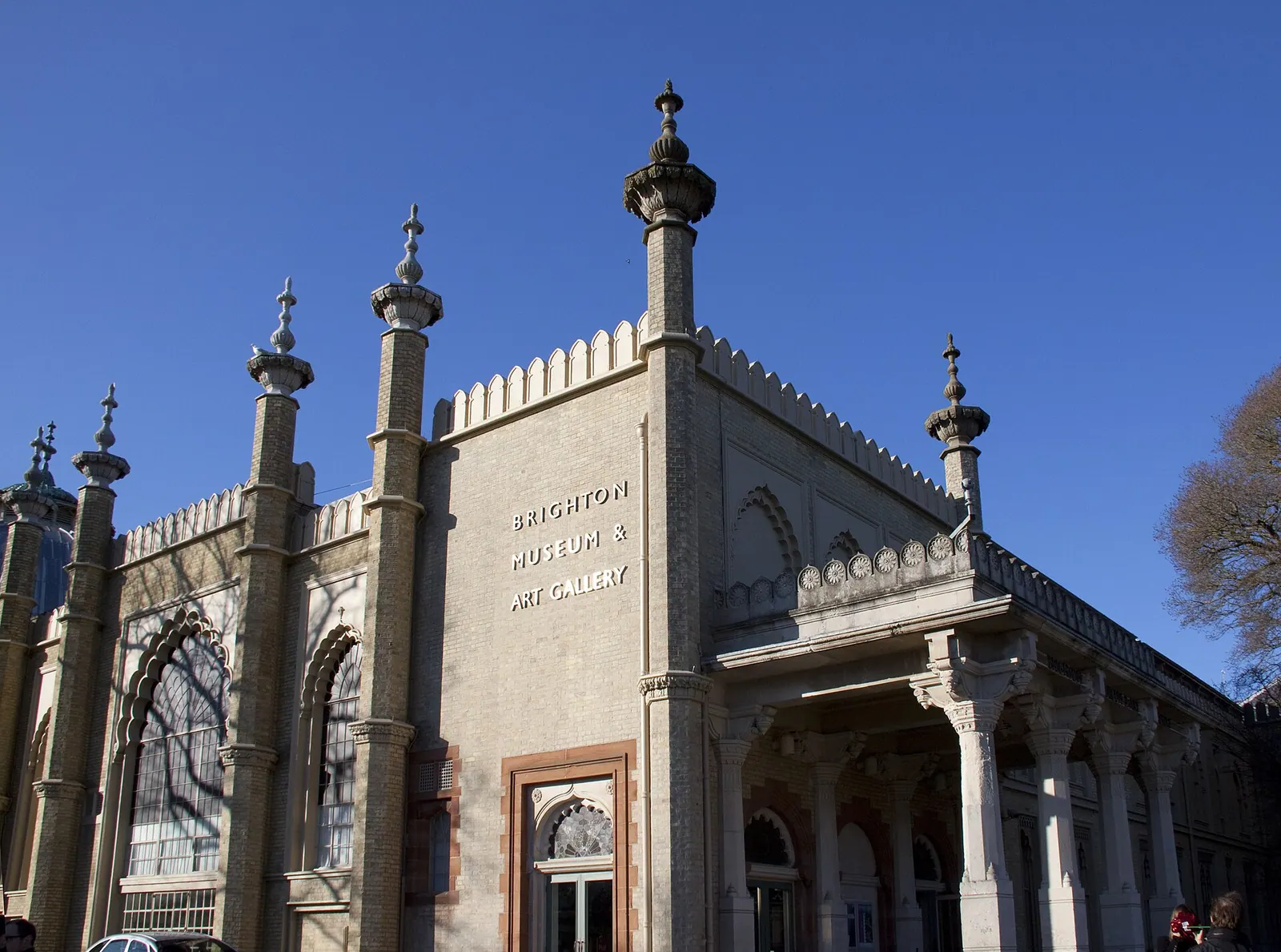
Cream stone museum with slender turrets and scalloped arches, the words Brighton Museum and Art Gallery on its corner, under a deep blue sky.

Brighton Museum and Art Gallery

A museum in the Pavilion Gardens, a few minutes from the seafront, with displays from the deep past to today.

About 45 min · Ticket needed; check the price on the museum's page

Opening hours (checked 30 October 2026): Tuesday to Sunday 10 am to 5 pm, and bank holidays. Closed other Mondays, 24 to 28 December 2026 and 1 January 2027. A lift serves the first floor.

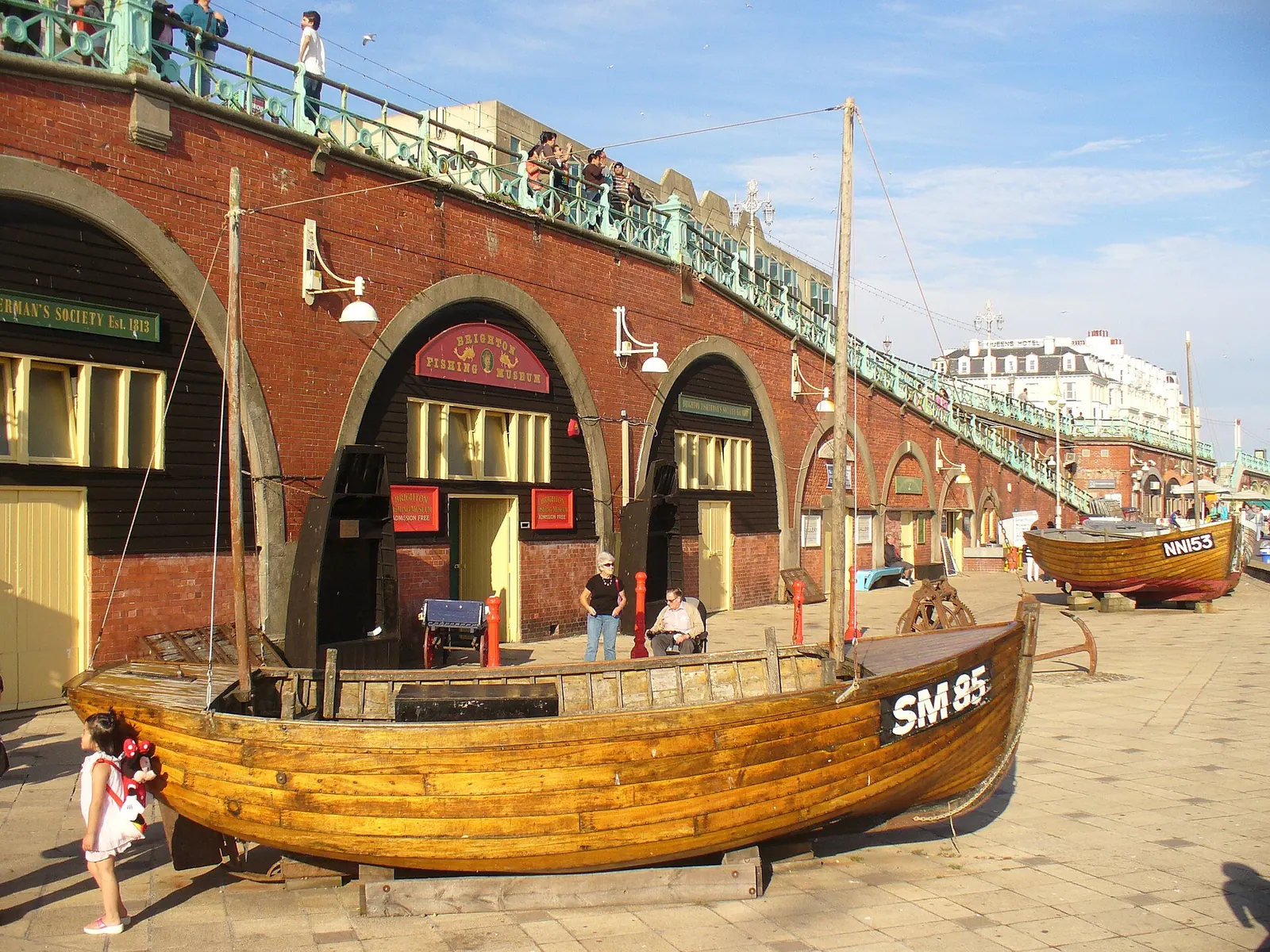
Wooden fishing boat marked SM85 sits on the paving before red-brick arches with timber fronts and a Brighton Fishing Museum sign, under a blue sky.

Brighton Fishing Museum

A small museum in two beach arches west of the pier about the fishing trade, with boats and recordings of fishing people.

About 15 min · Free

Entry is free and you do not need to book. The museum is on the ground level, and a ramp leads down to the seafront.

1 of 8

Swipe for all eight highlights →

Practical answers

Before you go.

The questions people ask before they book.

Do I need a ticket to walk around Brighton?

No. The streets, the Lanes, North Laine and the beach are open to walk. Some sights, such as the Royal Pavilion, charge for entry, and the Palace Pier charges a fee at peak times (checked 30 October 2026). Brighton Palace Pier: official site → (opens in a new tab)

Are there public toilets?

Yes. Brighton & Hove City Council lists public toilets at Royal Pavilion Gardens, Shelter Hall, West Pier Arches by the i360, and Dalton's Bastion east of the pier. The Pavilion says its garden toilets are closed at present (checked 30 October 2026), so use the others. The council's page gives each one's hours, charge and access. Brighton & Hove City Council: public toilets → (opens in a new tab)

What should I know before I go?

The beach is steep pebbles, so sea swimmers need suitable footwear. There is no lifeguard service outside the summer season. Brighton & Hove City Council: sea swimming safety → (opens in a new tab)

Where can I get a drink or a bite to eat?

Almost everywhere. The Lanes have cafés, pubs and restaurants, many with outdoor tables in summer. The seafront has Shelter Hall, a food hall, and fish and chips. The Royal Pavilion's own café is closed until further notice (checked 30 October 2026). VisitBrighton: the Lanes → (opens in a new tab)

Is the beach easy to walk on?

The beach is steep pebbles, so wear shoes with a firm sole. An 850-metre boardwalk for wheelchairs runs from Black Rock to Duke's Mound, and there is a wheelchair-accessible area on the beach. VisitBrighton: Brighton beach guide → (opens in a new tab)

Can I swim in the sea?

Only where lifeguards are on duty, between the red and yellow flags. Lifeguards patrol from the end of May to the first weekend in September, and there is no lifeguard service after that. Do not swim near piers or groynes (low walls running into the sea). Brighton & Hove City Council: sea swimming safety → (opens in a new tab)

What can I do if it rains?

Quite a lot is indoors. The Royal Pavilion and Brighton Museum are ticketed and the Fishing Museum is free. Both museums have step-free ground floors, and Brighton Museum has a lift (checked 30 October 2026). Brighton & Hove Museums: Brighton Museum plan your visit → (opens in a new tab)

Is Brighton easy to get around?

Yes. The city is compact, and most visitors find it easiest to explore on foot. The Lanes are only a five-minute walk from the pier. VisitBrighton: travel information → (opens in a new tab)

Compare

Compare day trips from London.

Booking links earn us commission, at no extra cost to you. Viator handles the booking.

Compare all Seven Sisters and Brighton tours →

Free day guide

Get the free Sussex day guide

The guide has a page for each stop, with what to see in 30, 60 or 90 minutes, and where to find toilets and food.

Unsubscribe any time. Privacy

When to go

What changes through the year.

Brighton is a year-round seaside city. The beach changes most with the seasons.

Spring

Brighton Festival, a multi-arts festival, fills three weeks of May; the 2027 festival runs Saturday 1 to Sunday 23 May. Brighton Festival 2027 → (opens in a new tab)

Summer

Lifeguards patrol from the end of May until the first weekend in September, and in 2026 were on duty 10 am to 6 pm daily. Swim between the red and yellow flags. Brighton & Hove City Council: sea swimming safety → (opens in a new tab)

Autumn

September brings the Brighton Art Fair at the Brighton Dome Corn Exchange, and Artists Open Houses carry on into November. Visit Brighton: what's on → (opens in a new tab)

Winter

There is no beach lifeguard service on the city's beaches outside the lifeguard season, so take extra care near the water and check the weather first. Brighton & Hove City Council: sea swimming safety → (opens in a new tab)

In summer the Lanes come alive, as many restaurants open outside and street musicians play. Lifeguard dates change each year, so check the council page. VisitBrighton: the Lanes → (opens in a new tab)

A taste and a keepsake

Local tastes and a keepsake from Brighton.

Here are three local things to try in Brighton. Check opening times before you go.

Just ideas for any free time you get.

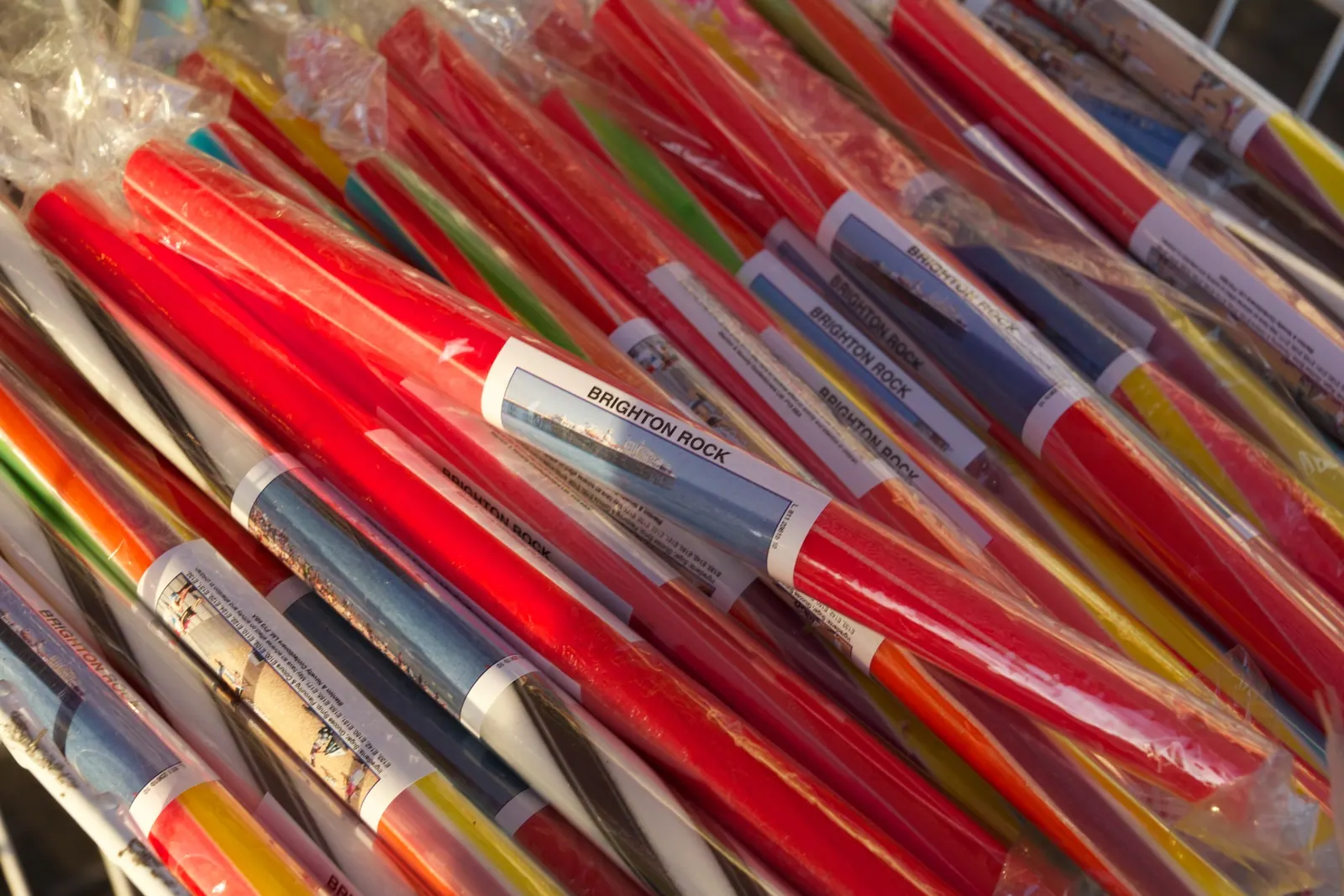
Bundles of cellophane-wrapped seaside rock sticks in red, yellow and blue stripes, with Brighton Rock labels on the wrappers.
Illustrative
Take home

A stick of Brighton rock

Brighton & Hove Museums sells a rainbow-striped stick of rock, which it calls a traditional Brighton sweet. It is a small, light souvenir.

Where to find itSold in the museums' online shop. Ask in a seafront shop if you want one on the day.

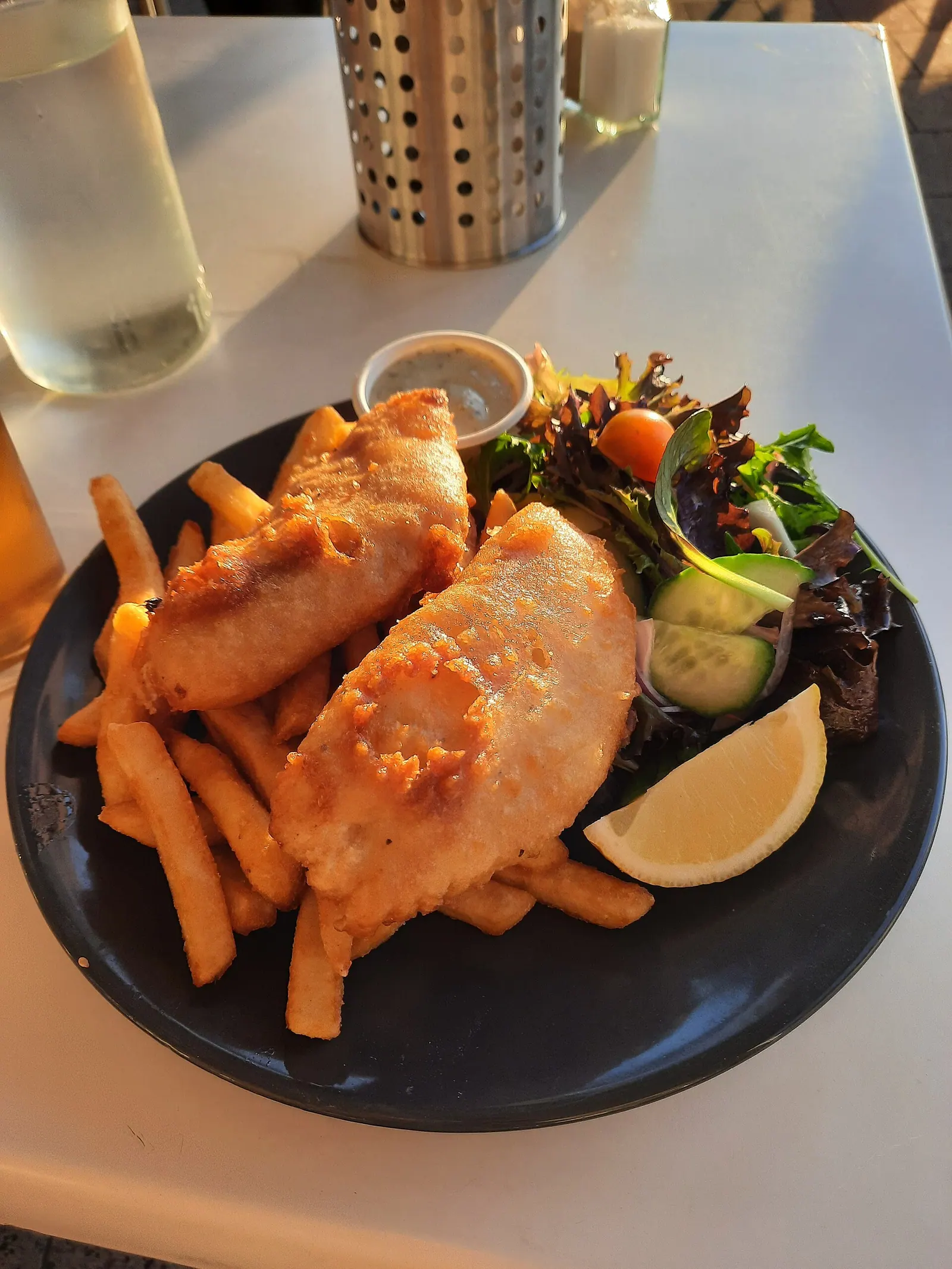
Plate of golden battered fish and chips with salad, cucumber and a lemon wedge on a dark plate.
Illustrative
Taste

Fish and chips by the sea

Brighton has fresh seafood from the sea, and VisitBrighton says people still love classic fish and chips. You will find places serving it along the seafront.

Where to find itOn the seafront, only if your time allows a meal.

Five gin bottles with orange, black and pink labels standing in a row against a plain purple backdrop on a white surface.
Illustrative
Taste

Brighton Gin

Brighton Gin is made with organic grain spirit, juniper, orange and lime peel, and local coriander seed. Its blue-green bottles match the colour of Brighton's seafront railings.

Where to find itFor adults only, aged 18 or over.

Also in Seven Sisters and Brighton

Picture credits and sources

Pictures

Image sources and credits are listed here. Pictures made with AI are marked.

Tour photographs are provided by the tour operators through Viator and are shown from Viator’s own image servers.