The real England, in one easy day from London
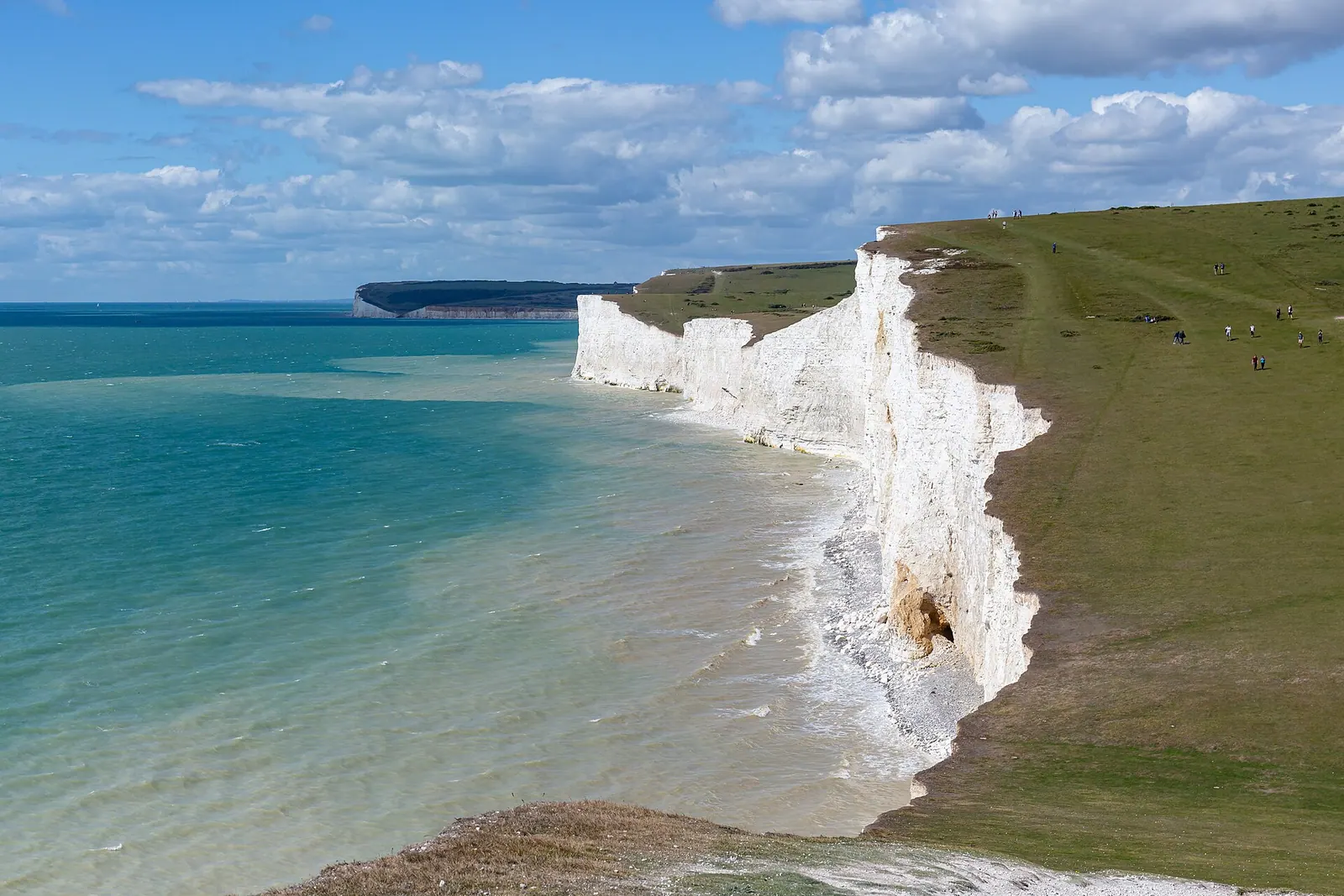
White chalk cliff with a small cave at its foot above turquoise water, green downland on top and more cliffs fading into the distance.

Chalk cliffs and a winding river

Seven Sisters

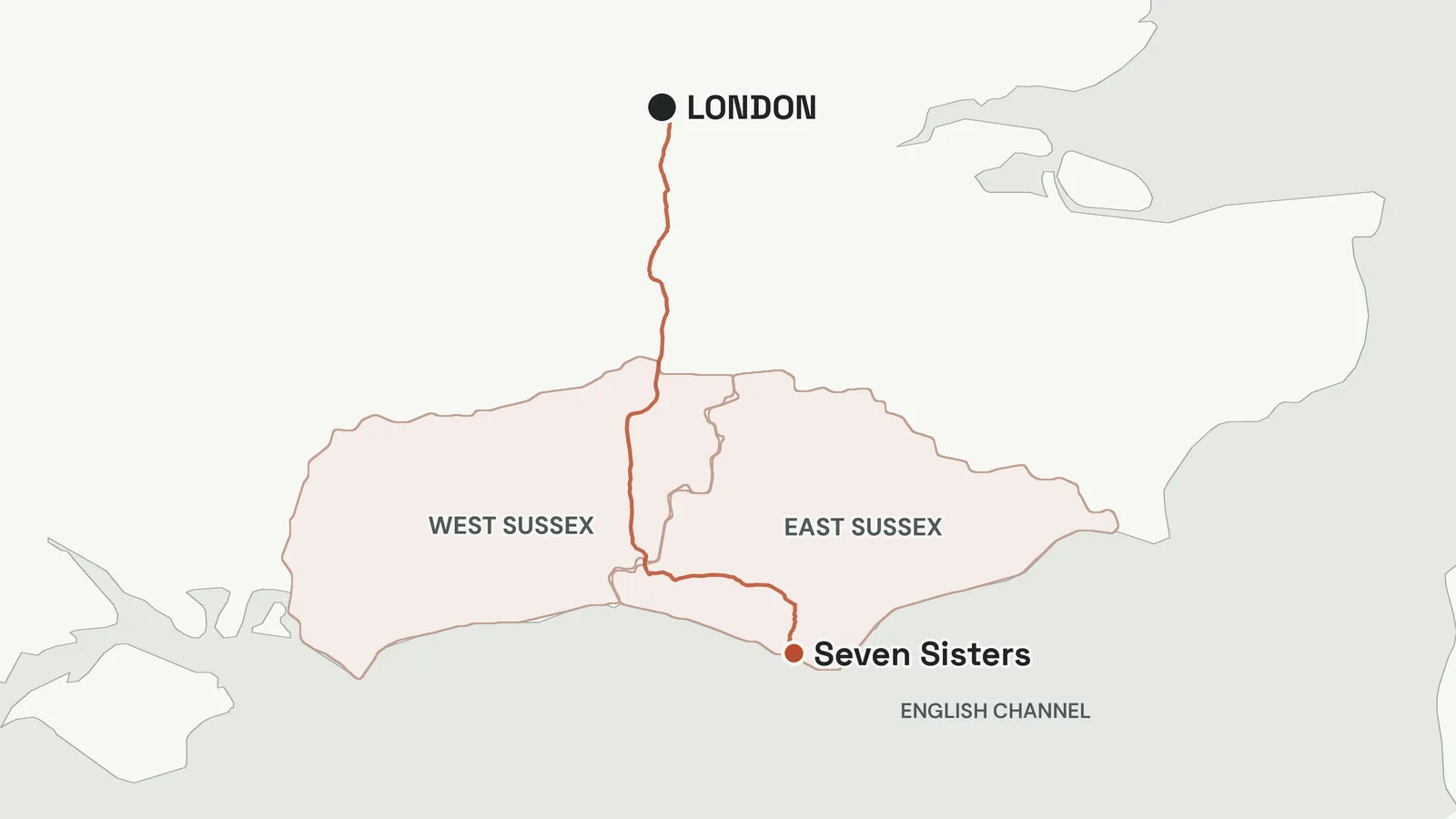
Between Seaford and Eastbourne · a day trip from London

See how long each tour stops in Seven Sisters →

Why it matters

Why the Seven Sisters matter.

The Seven Sisters are a famous row of chalk cliffs on the Sussex coast. They show how chalk forms, how a coast changes and why wild places need care. Here is what to look for.

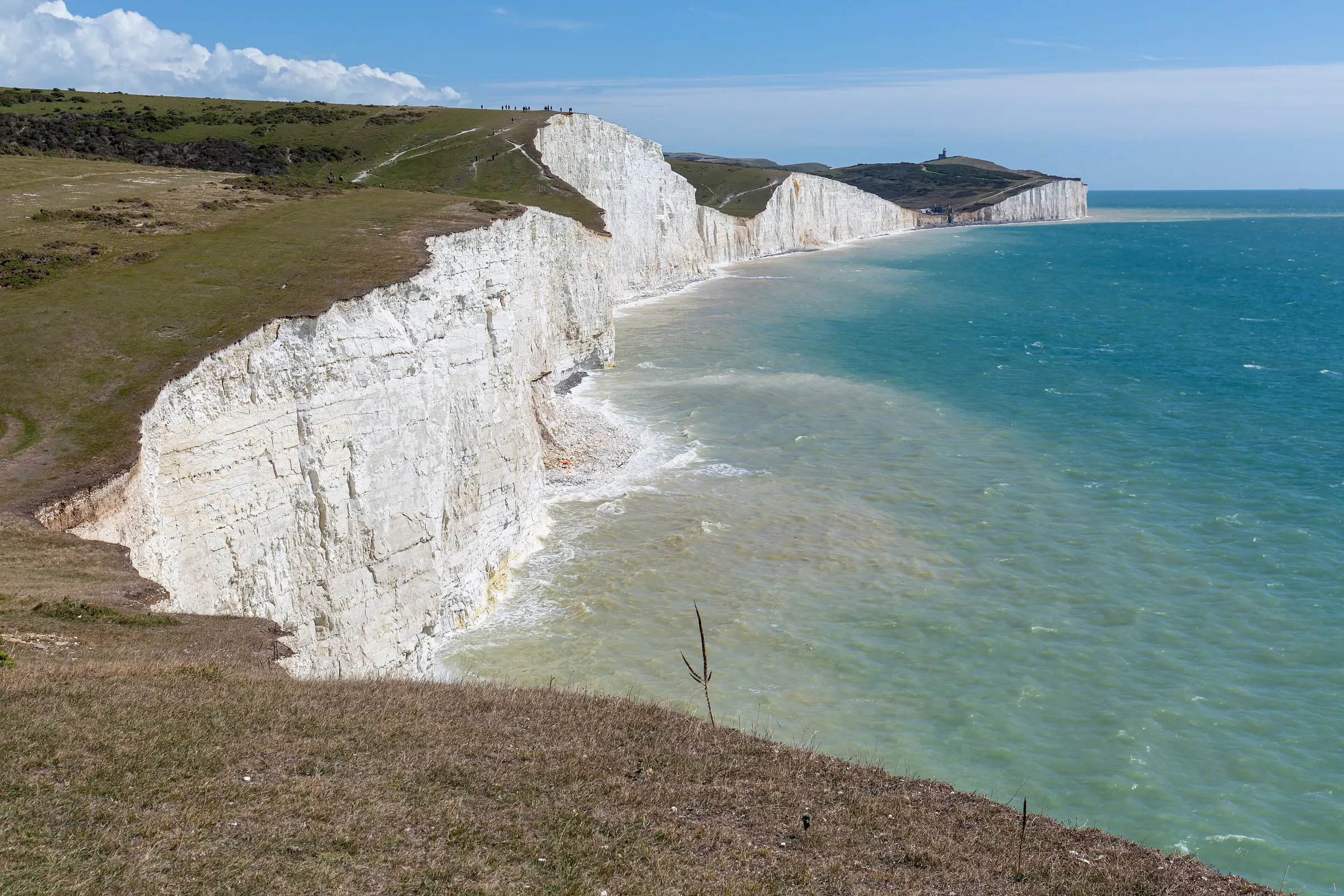
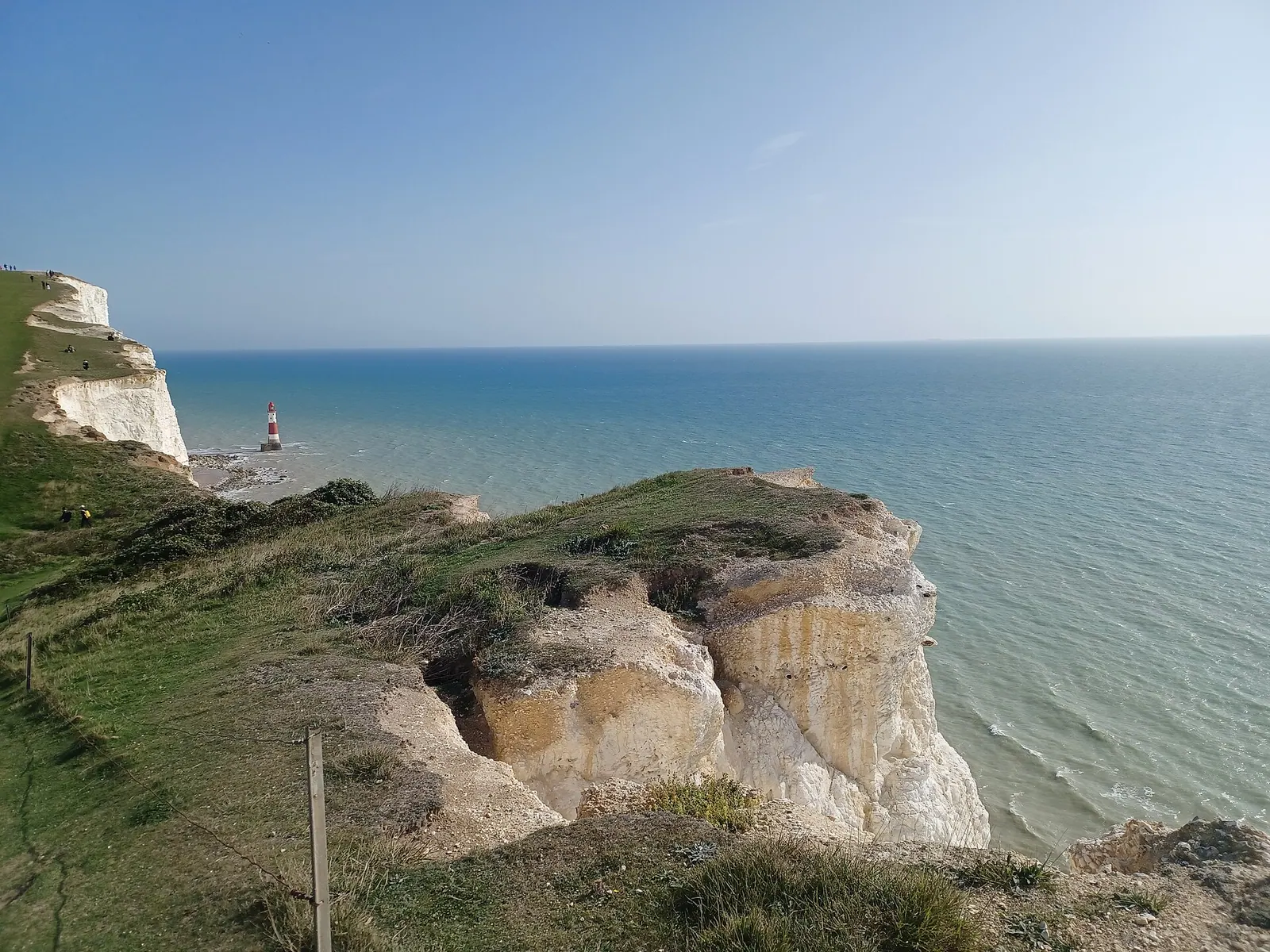
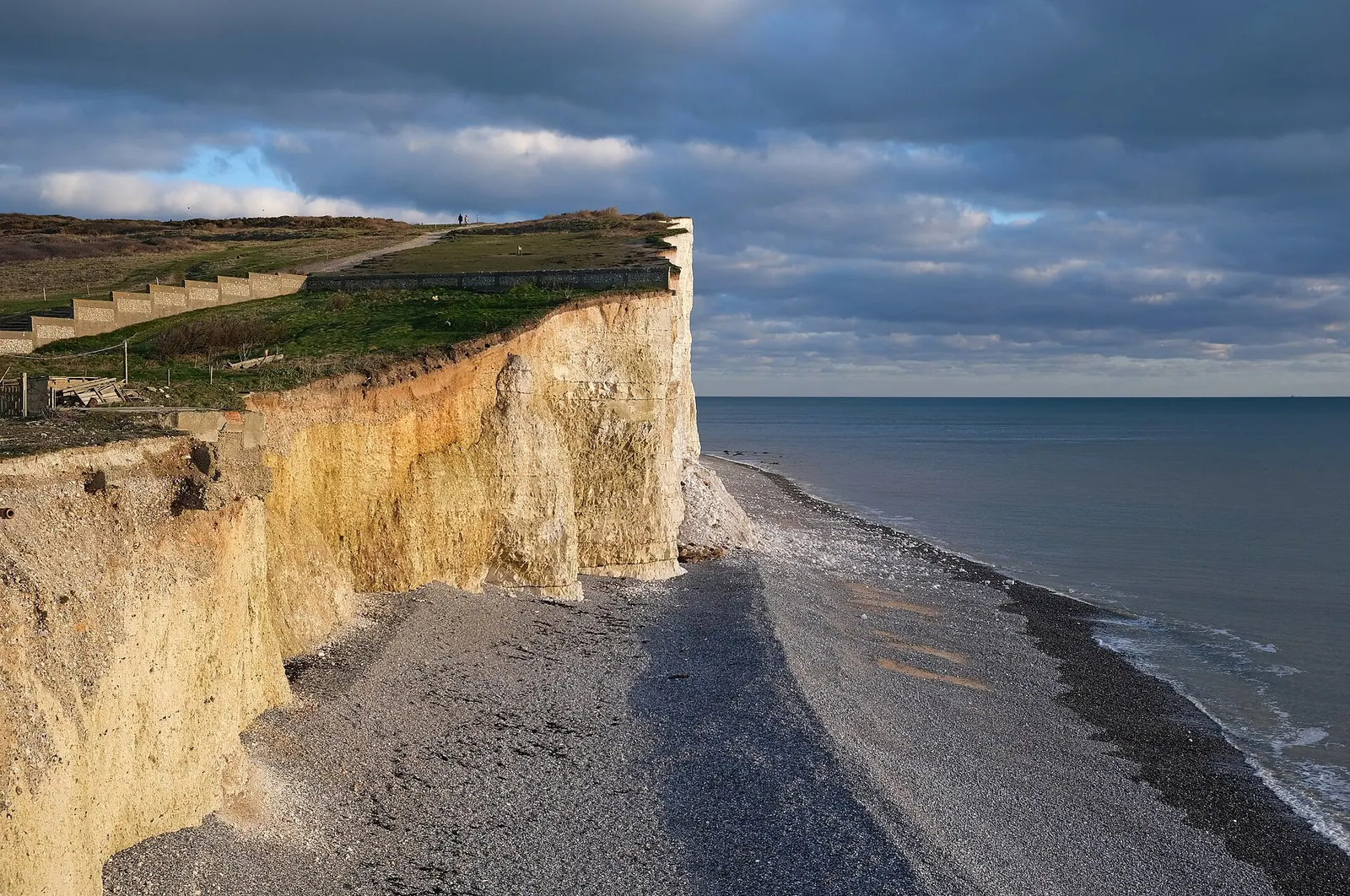
Tall sunlit chalk cliff face with faint darker streaks, dropping to calm blue sea, grassy clifftop above.

01

White cliffs made from tiny sea creatures

The cliffs are chalk, a soft white rock made from the remains of tiny sea creatures.

Between 100 and 66 million years ago, this land lay under an ancient sea. Tiny sea creatures lived and died there. Their remains sank, were buried and were slowly pressed into chalk. Later, forces in the Earth lifted the chalk above the sea. Now waves cut into the cliffs, and rain and frost crack them from the top. The park estimates that the edge wears back by 30 to 40 centimetres (12 to 16 inches) a year.

Look for

Dark bands of flint (a hard stone) running through the white chalk. Stay at least 5 metres (16 feet) back from the edge.
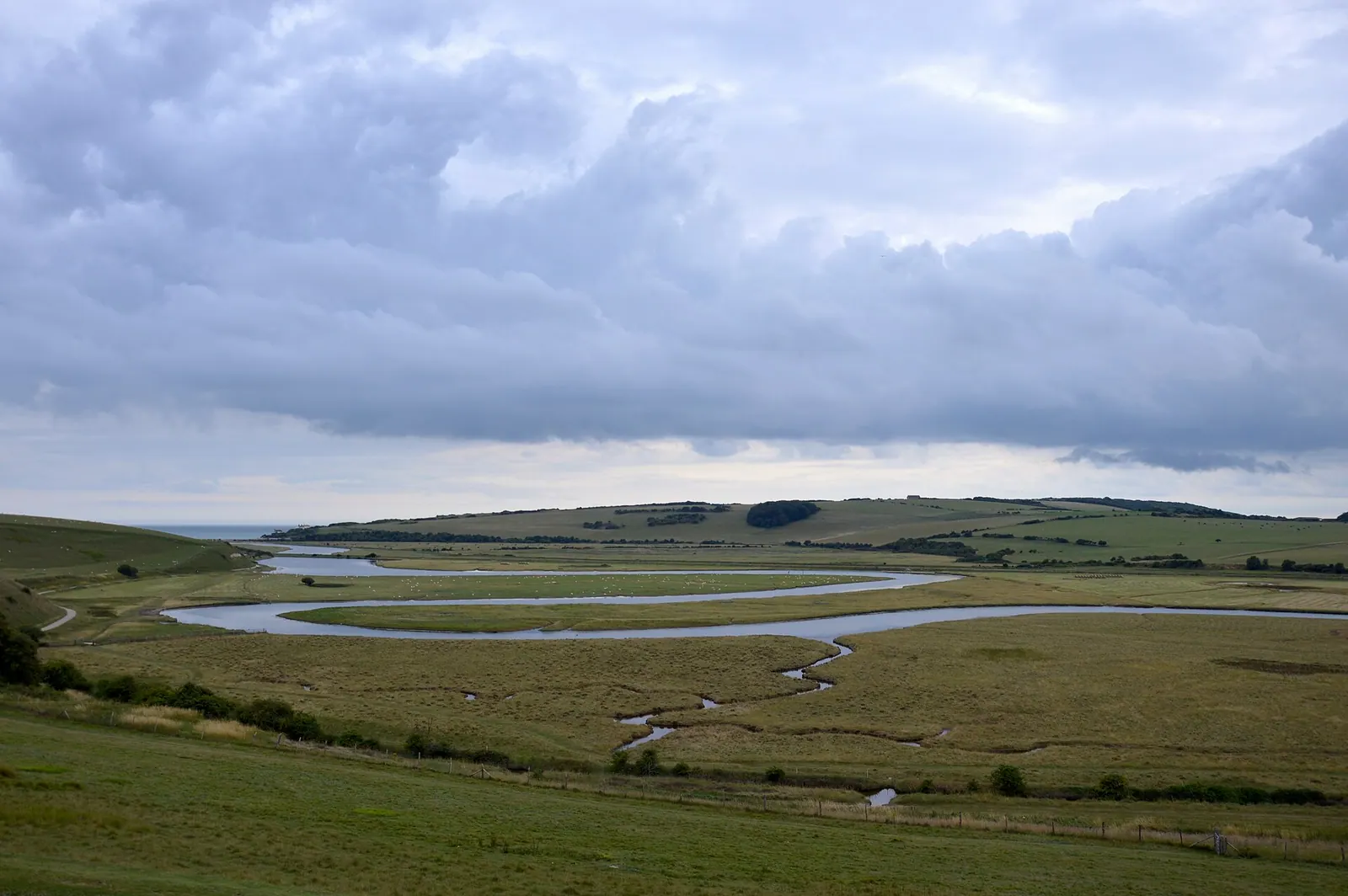
Winding river loops across a flat green valley floor with rolling downs behind under heavy grey and white clouds.

02

A river that once wandered

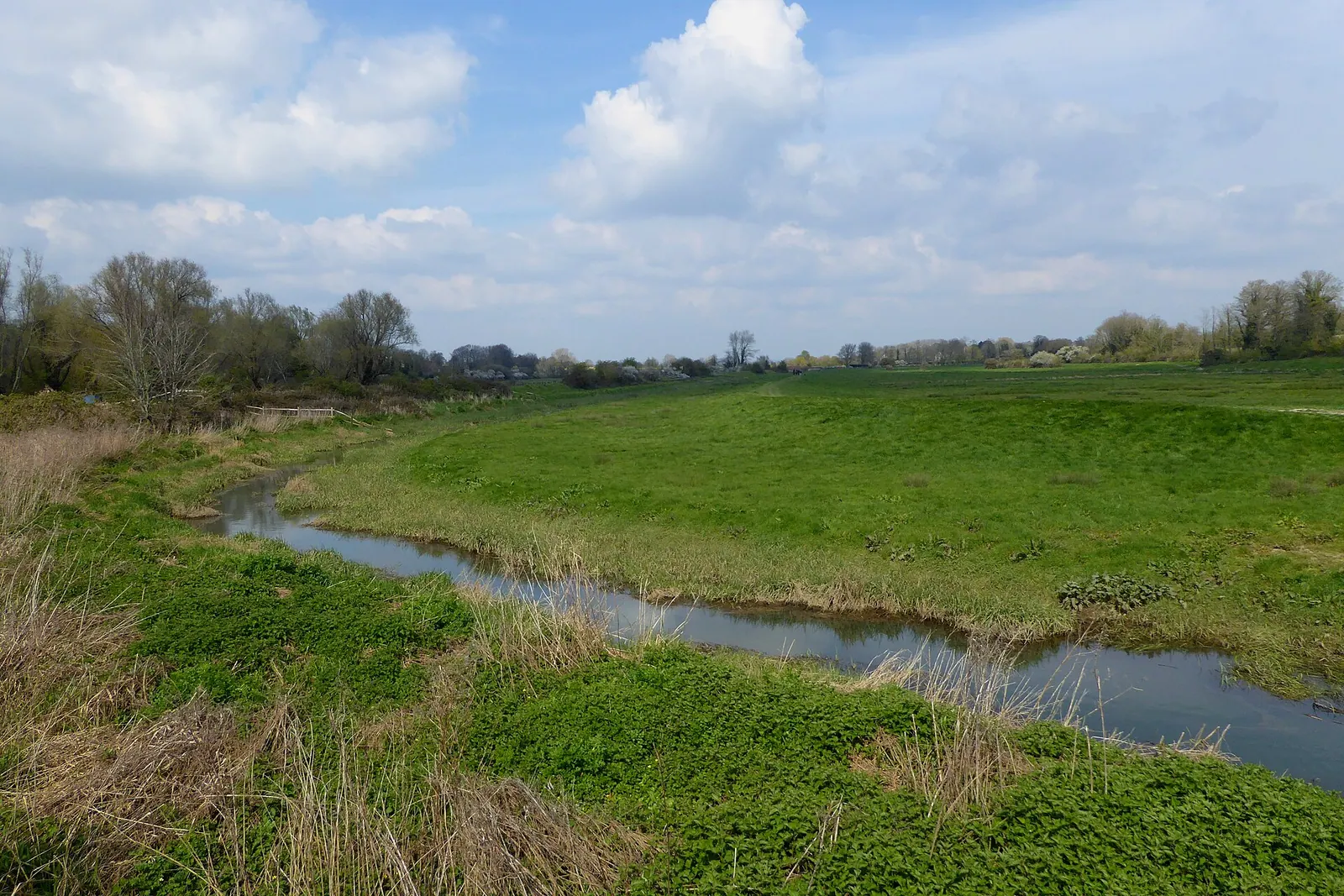
The Cuckmere river reaches the sea through a valley full of old curves.

Look at the valley floor and you can see bends and small lakes left by the old river. In 1847 a straight channel was cut for the river, to help trade and boats. The old bends were cut off. Until about 500 years ago, the whole valley was salt marsh (land that the sea floods).

Look for

The curling old bends and the lakes between them, seen from the path down to the beach.

Row of concrete anti-tank blocks stretching across a green valley floor, with a fallen block in the foreground and blue sky above.

03

Coast watchers and wartime defences

For centuries people watched this coast, for smugglers, for ships in trouble and, in wartime, for invasion.

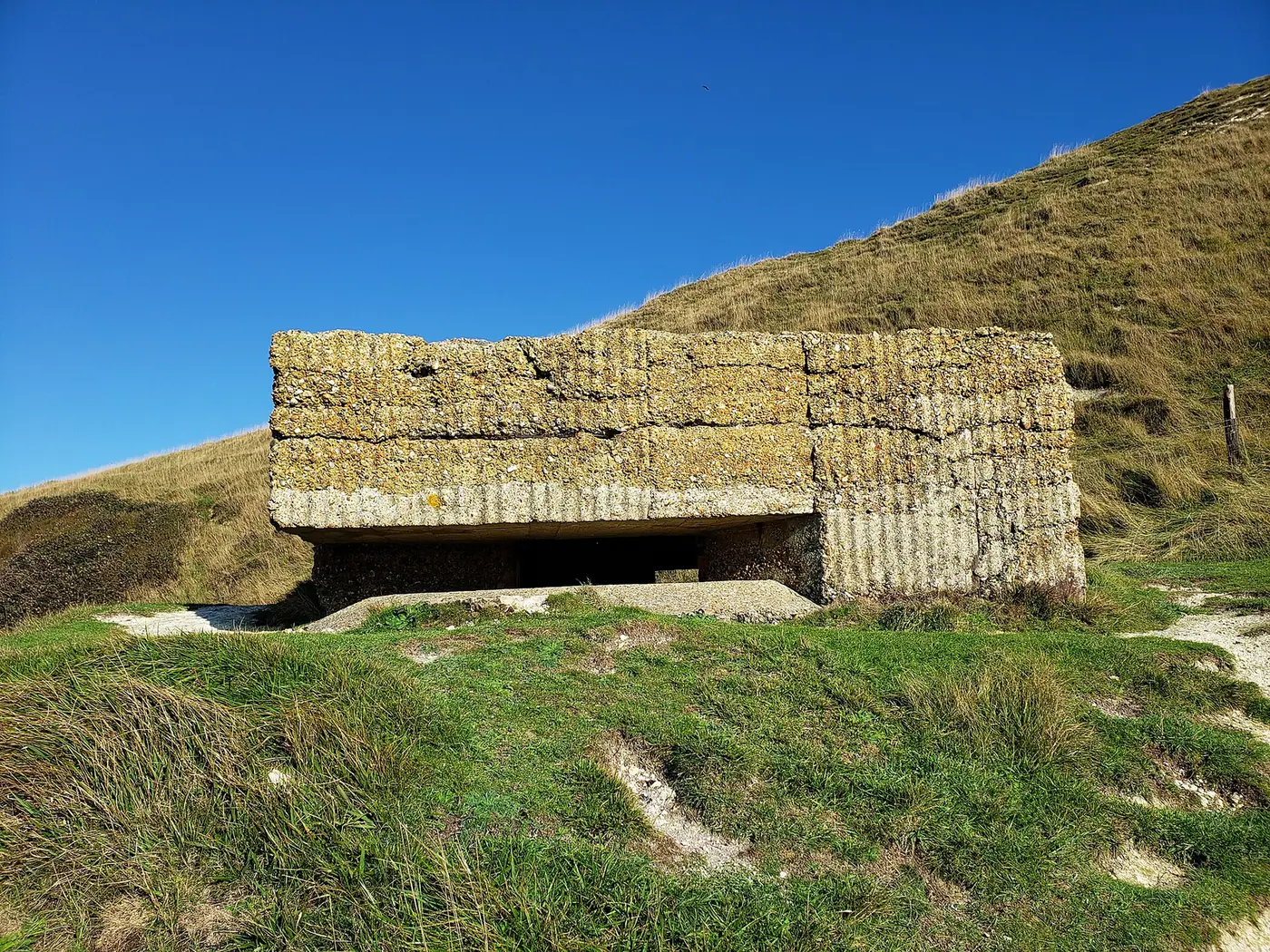
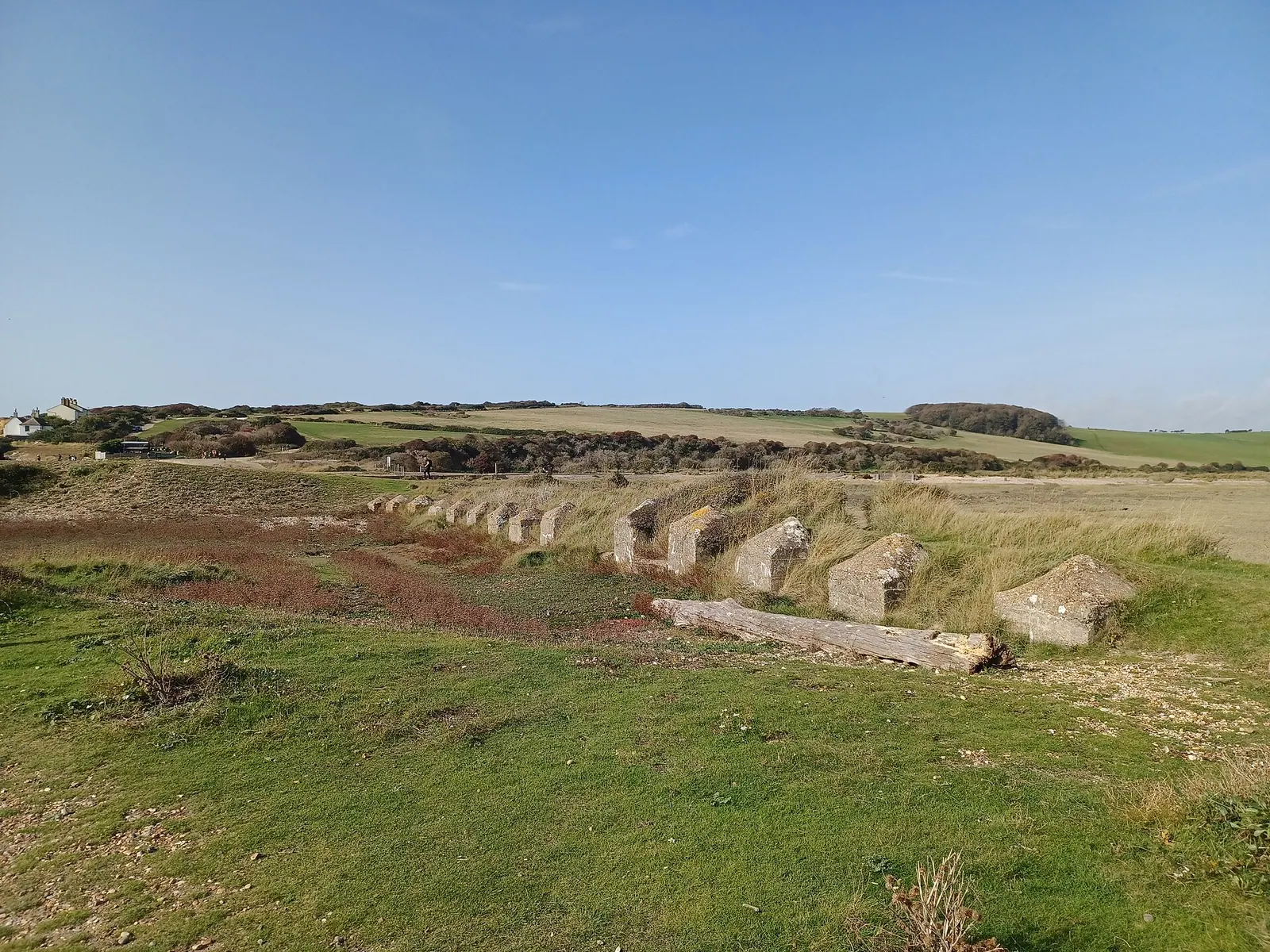
By the 1700s smugglers were landing tea, spirits and tobacco on quiet beaches here. Smuggling and shipwrecks led to a coastguard station (a base for officers who watched the coast) at nearby Crowlink Gap in the 19th century. In the Second World War, people built small concrete pill boxes (shelters with gun slits) and anti-tank blocks called Dragon’s Teeth. Some are still here.

Look for

The pill boxes along the path to the beach, and the Dragon’s Teeth close to the lagoons.

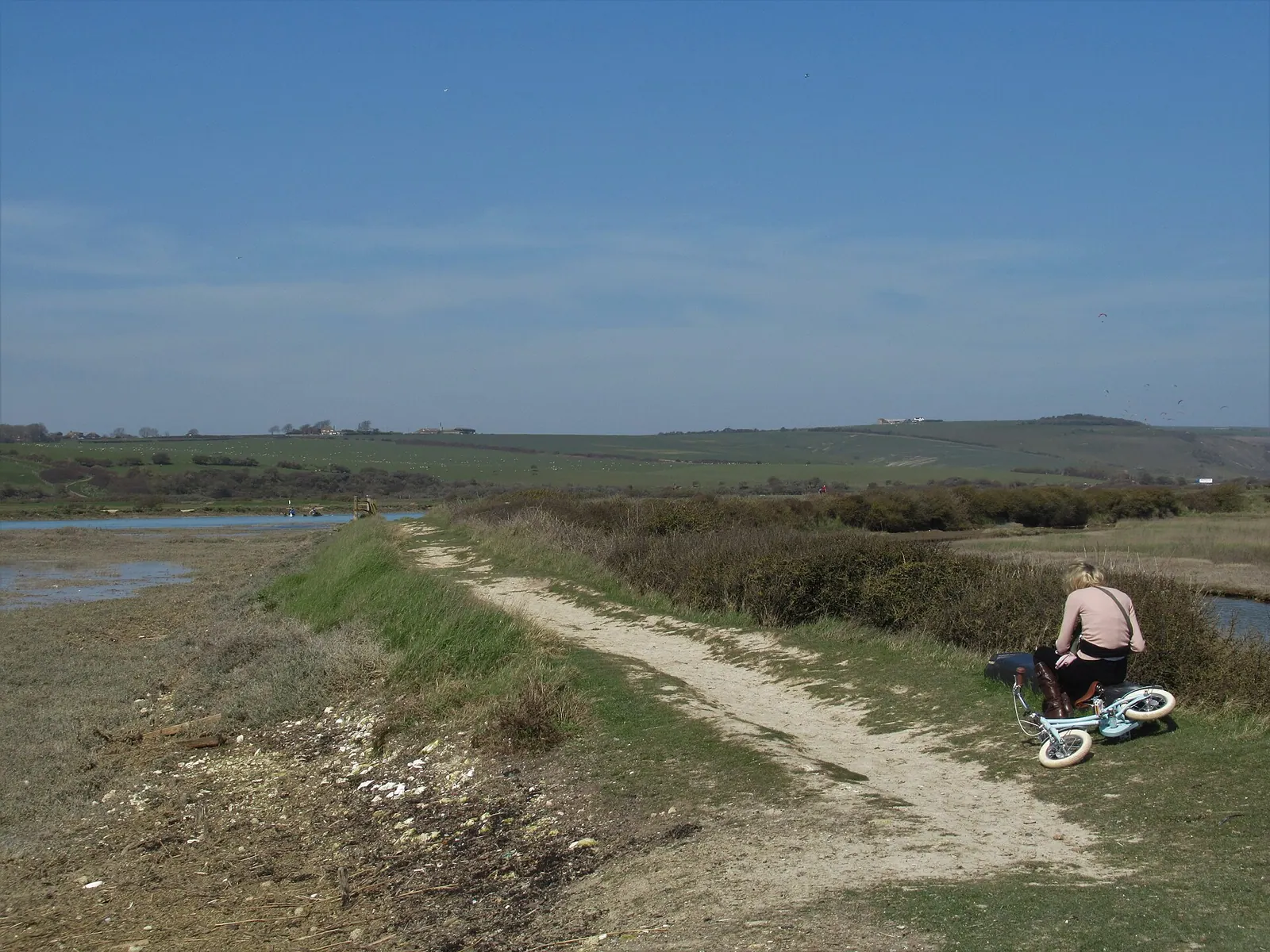
Footpath across grassy marsh beside the Cuckmere river in Seven Sisters Country Park, with the downs beyond

04

England’s newest National Nature Reserve

In March 2026 the Seven Sisters became part of England’s newest National Nature Reserve.

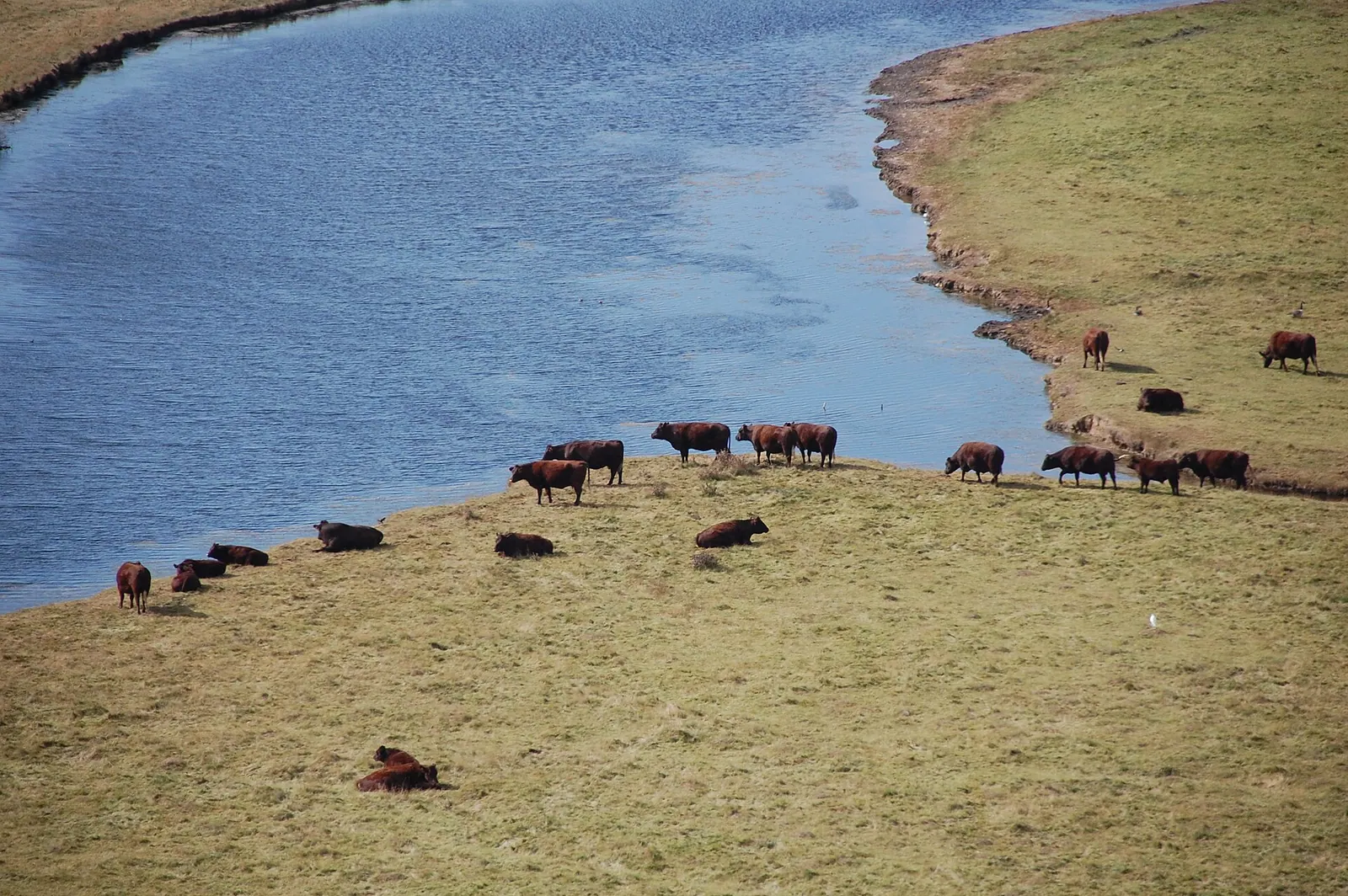
The reserve covers 1,500 hectares (about 6 square miles), from Seaford to Eastbourne. It protects rare chalk grassland, woodland, saltmarsh and an estuary (where a river meets the sea). Sheep, ponies and cattle graze the grass so that wild flowers and butterflies can grow. The chalk also stores underground water that supplies drinking water to about half a million people.

Look for

Wild flowers and butterflies, such as the chalkhill blue, on the grass in summer, and grazing sheep or ponies.

Your time there

What to see.

These are the highlights worth looking out for, if your time allows. See how long each tour stops in Seven Sisters →

The South Downs National Park Authority looks after Seven Sisters Country Park, at the foot of the cliffs, and the National Trust looks after the cliffs further east at Birling Gap. Picture this: white chalk above a blue sea, with a river bending through the valley below.

Inside Seven Sisters, with a guide of its own: Birling Gap.

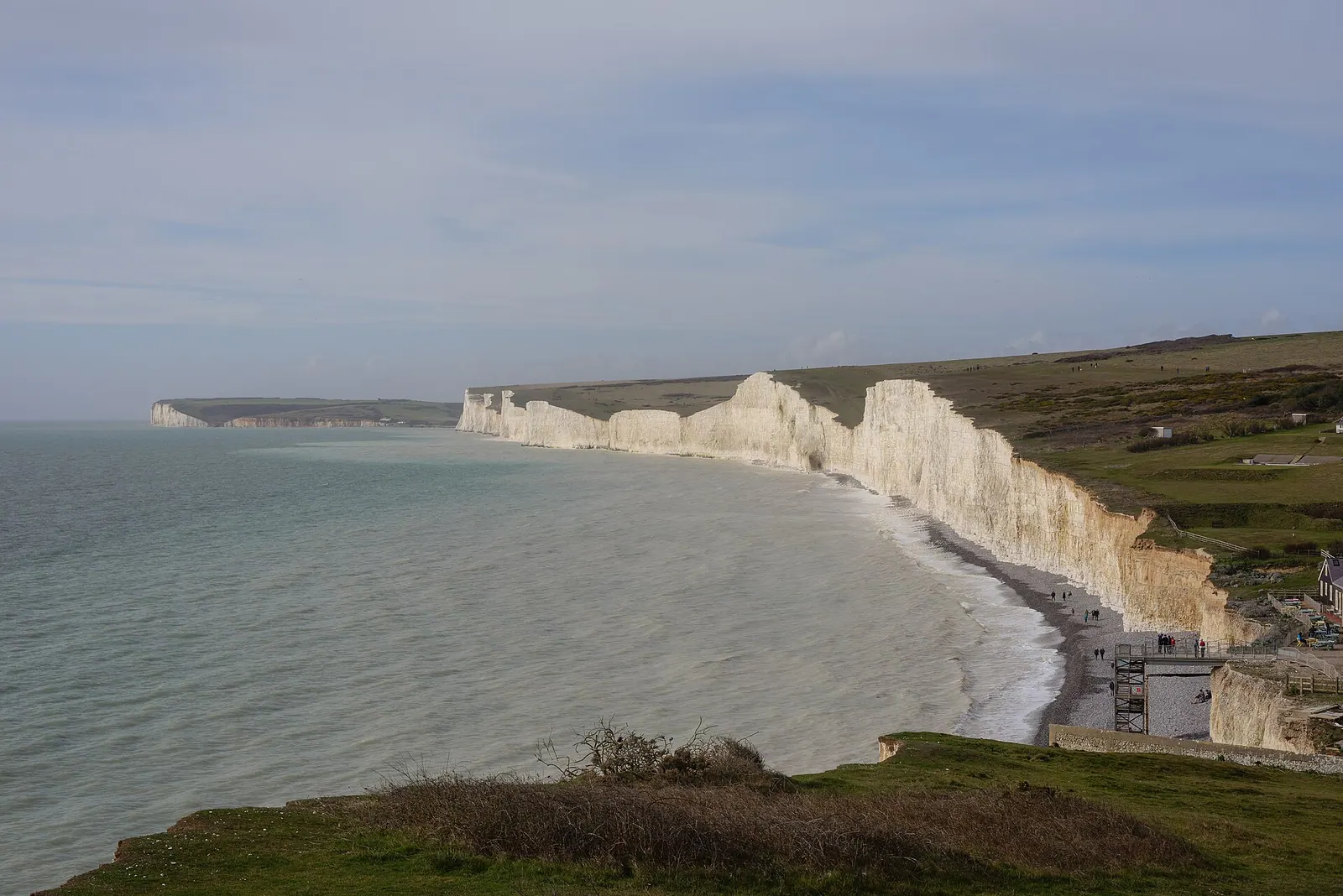
Long line of white chalk cliffs along a turquoise sea seen from a grassy hilltop, with a distant lighthouse and a bright blue sky.
Don’t miss

The Seven Sisters cliffs

A line of steep white chalk cliffs, with bands of dark flint, meeting the English Channel (the sea between England and France).

About 20 min · Free

The cliffs are fragile. Stay at least 5 metres (16 feet) back from the edge and from the base.

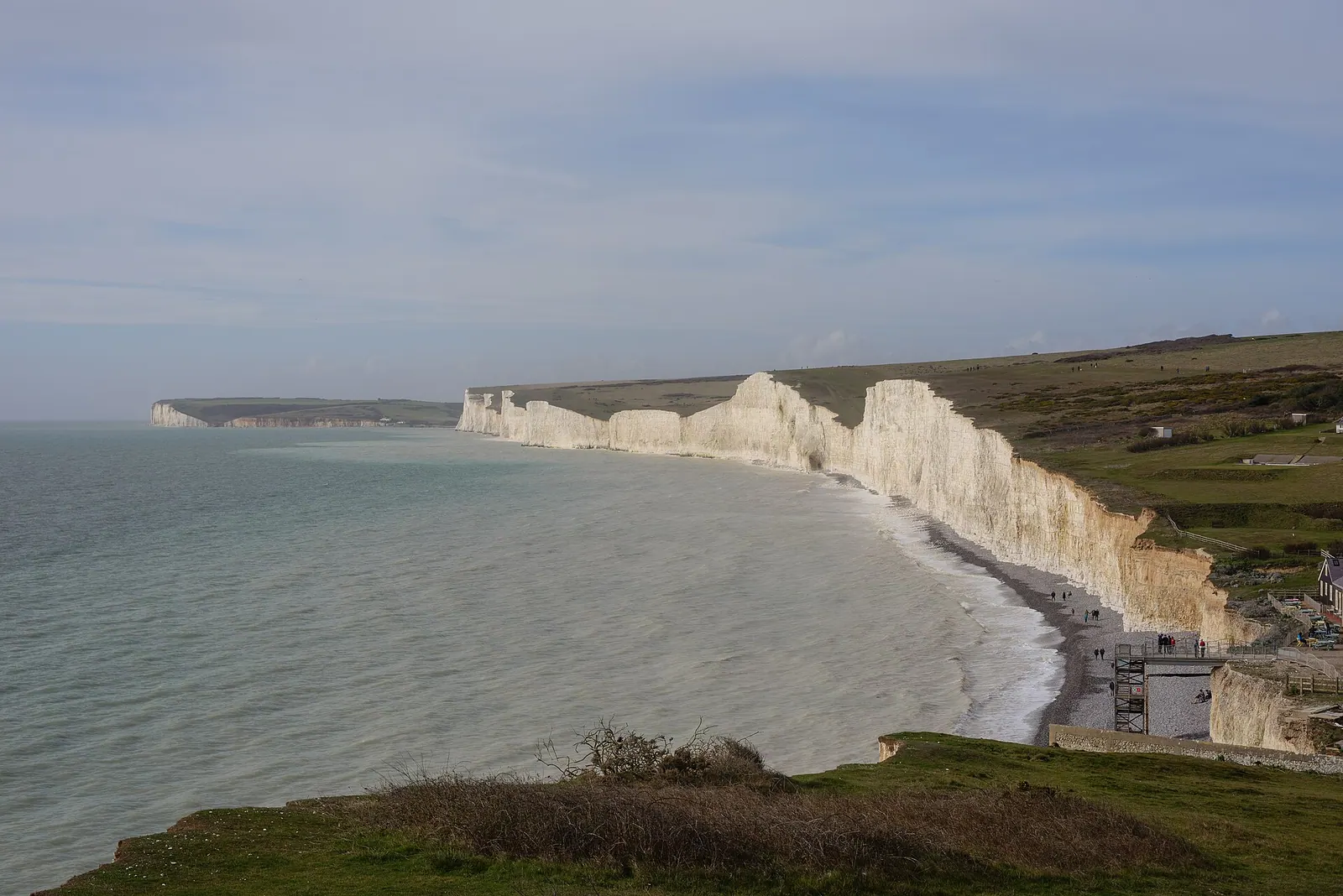
The Seven Sisters chalk cliffs curving away along the coast beyond the grassy cliff top at Birling Gap, with the sea below and a pale sky above.

Birling Gap

The National Trust's cliff-top stop at the eastern end of the Seven Sisters, with a café, a shop and a bookshop, the old coastguard cottages and steps down to the beach.

About 20 min · Free

It has its own guide on this site. The cliffs here are fragile, so keep well back from the edge.

Read our Birling Gap guide →

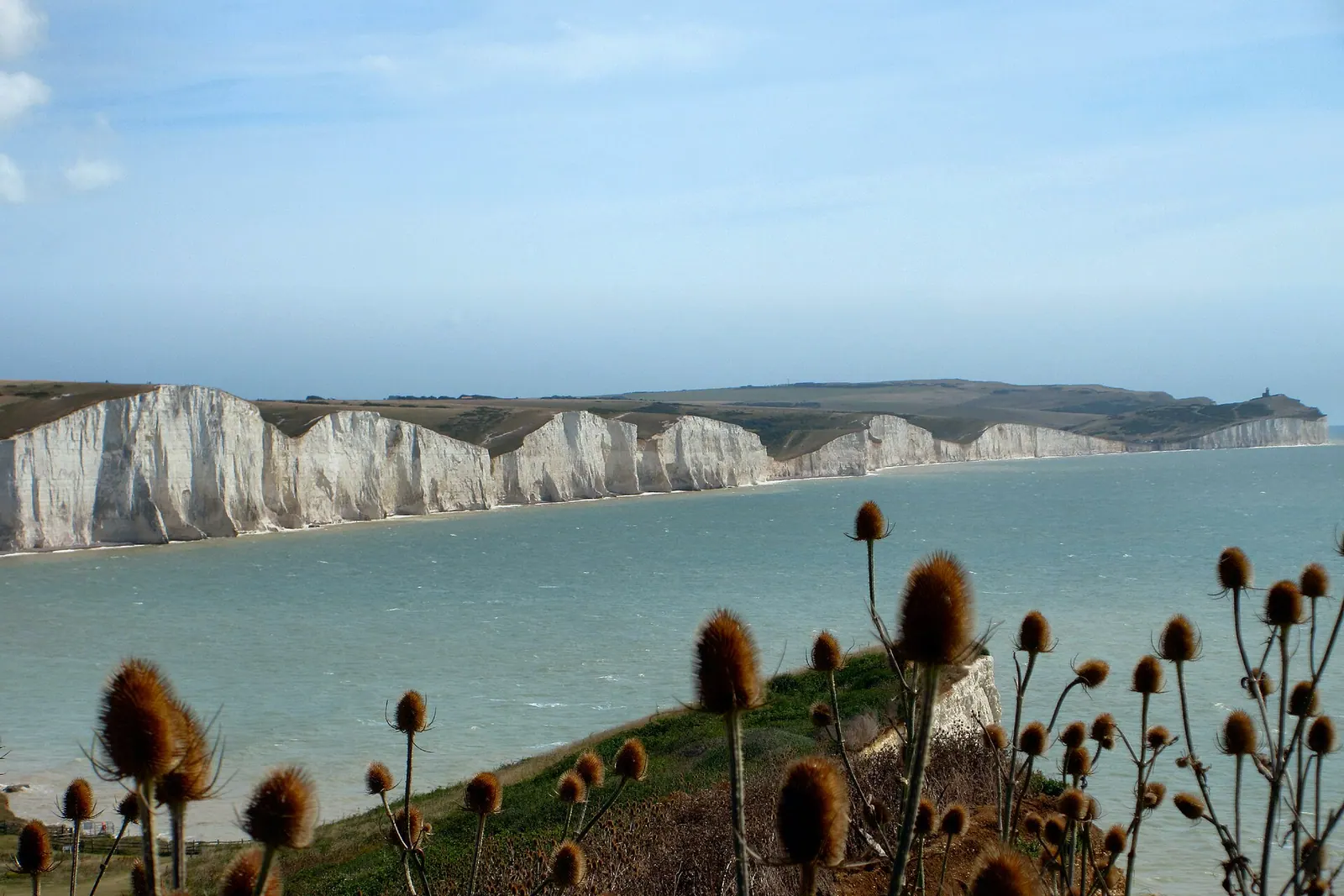
Line of white chalk cliffs across a turquoise bay, framed by dried teasel heads on the green clifftop.

The view from Seaford Head

The classic view back across the Cuckmere valley to the cliffs. Seaford Head is a separate nature reserve on the west side of the river.

About 45 min · Free

The Sussex Wildlife Trust manages it with Seaford Town Council. The slopes make it hard for wheelchairs.

Narrow river curving through bright green meadow with reeds, trees and a pale blue sky behind.

Cuckmere Haven and the river bends

The old river bends in the valley floor, the lakes between them, and the shingle beach where the river reaches the sea.

About 30 min · Free

The Easy Access Trail runs about 2 km (1.2 miles) from the visitor centre to the beach, and suits wheelchairs, mobility scooters and pushchairs.

Weathered concrete pill box with a long gun slit on a green hillside under a deep blue sky.

Second World War defences

Concrete pill boxes along the path to the beach, and anti-tank blocks called Dragon’s Teeth near the lagoons.

About 15 min · Free

Visitor Centre at Exceat. Tourism is an important industry for this area.

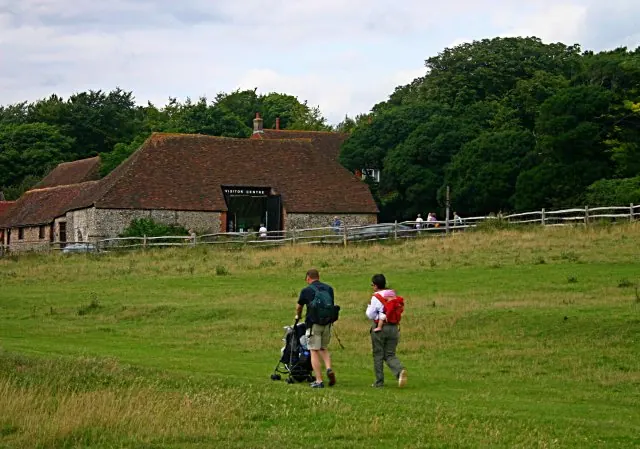
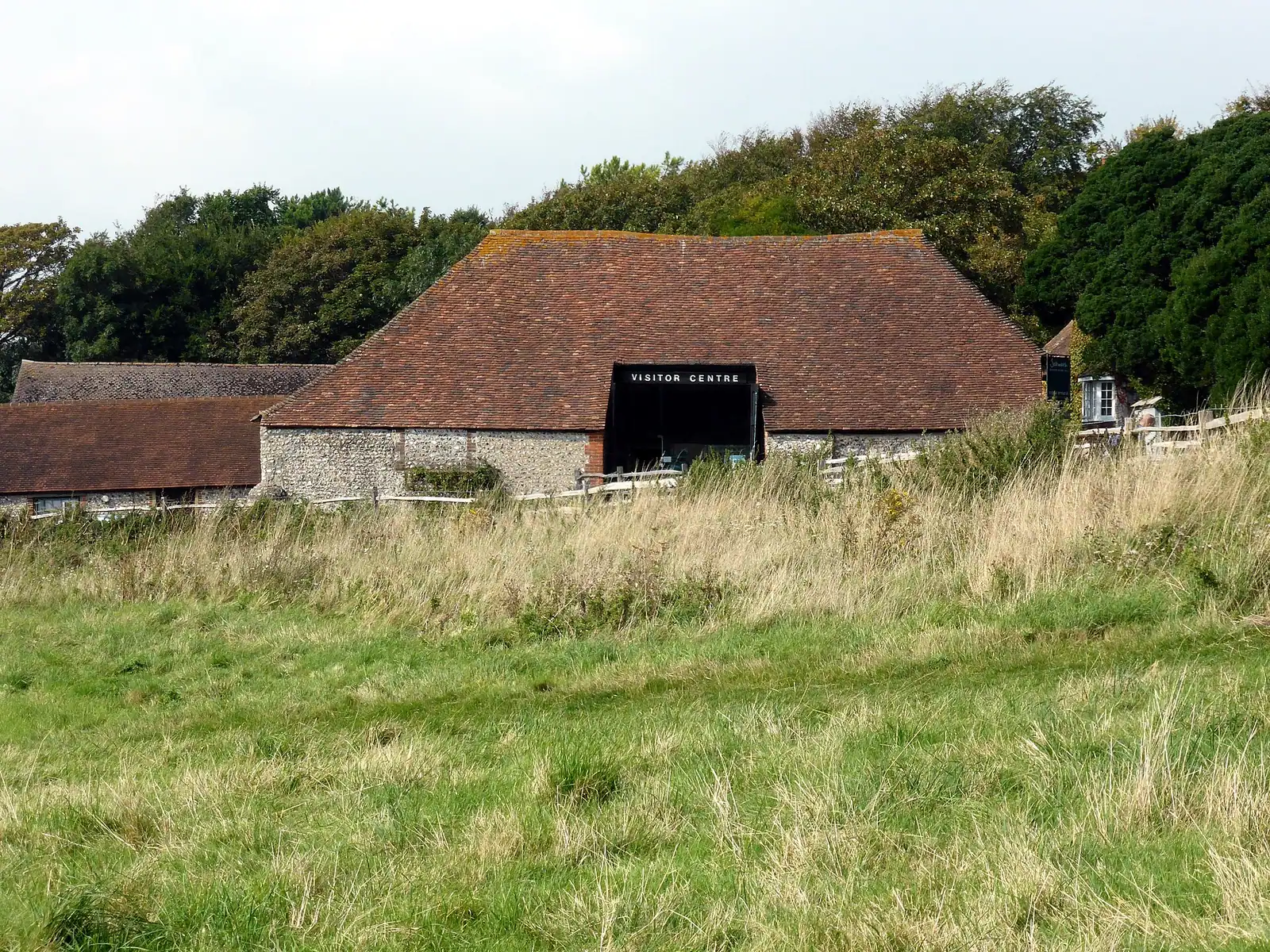
The visitor centre at Exceat

The place to start, with gifts, maps and books, free wi-fi, a traditional Sussex shepherd's hut and a Grade II listed K6 telephone box (the classic British phone box) for photographs.

About 15 min · Free

Opening hours (checked 30 October 2026): 10 am to 4 pm from late October to March, and 10 am to 5 pm in other months. It is closed on 25 December.

Cattle grazing and resting on the grass beside a bend of the River Cuckmere in Seven Sisters Country Park

Chalk grassland and wildlife

Short, springy grass full of wild flowers and butterflies in summer, grazed by sheep, ponies and cattle.

About 15 min · Free

Birds nest on the ground from March to September, so stay on the main paths.

1 of 7

Swipe for all seven highlights →

Practical answers

Before you go.

The questions people ask before they book.

How close can I go to the cliff edge?

Stay at least 5 metres (16 feet) back from the edge and from the base of the cliffs. The park says chalk falls are unpredictable and can happen at any time, so stay on the path and admire the view from a safe distance. Seven Sisters Country Park: cliff and river safety → (opens in a new tab)

Can I cross the river mouth at Cuckmere Haven?

No, the park says crossing is very risky. At high tide the river can be 6 to 7 metres high, with a strong current, so follow the path around it. Mobile signal is limited at the beach. If you need help, call 999 or 112 and ask for the coastguard. Seven Sisters Country Park: cliff and river safety → (opens in a new tab)

What should I know before I go?

The cliffs are fragile, and chalk can fall without warning. You must stay well back from the edge. The walk is outdoors in all weather, and the cliff-top hills are steep. Seven Sisters Country Park: cliff and river safety → (opens in a new tab)

Is there an easy, step-free walk?

Yes. The Easy Access Trail follows the valley floor to the beach, about 2 km (1.2 miles) each way. It suits wheelchairs, mobility scooters and pushchairs, and the paths over the cliffs are steeper. The visitor centre hires out two free all-terrain mobility scooters, and booking ahead is advised. Seven Sisters Country Park: plan your visit → (opens in a new tab)

Are there toilets?

Yes. Free public toilets stand next to the visitor centre, including an accessible Changing Places toilet. In winter, from late October to March, they open 7 am to 6 pm, and from April to October they open 7 am to 9 pm (checked 30 October 2026). There are no toilets at the beach or along the cliffs. Seven Sisters Country Park: plan your visit → (opens in a new tab)

Where can I get food and drink?

At the visitor centre. The Grab and Go sells takeaway snacks, sandwiches, hot and cold drinks and ice cream, and the independently run Saltmarsh Café next door serves sit-down meals from 9 am. A seasonal ice cream van stands in the south car park. Opening hours (checked 30 October 2026): the Grab and Go is open 10 am to 4 pm from late October to March. Seven Sisters Country Park: plan your visit → (opens in a new tab)

Can dogs come?

Yes, responsible dog walkers are welcome. Keep dogs under close control, and on a lead near livestock, wildlife, cliffs and open water. Dogs on leads can also go into the visitor centre and the Grab and Go. Seven Sisters Country Park: visiting with dogs → (opens in a new tab)

Can large buses park at the country park?

The park says it has no set bus pick-up or drop-off point, and large buses cannot use its car parks at weekends, on bank holidays and in summer. Seven Sisters Country Park: car and bus parking → (opens in a new tab)

Compare

Compare day trips from London.

Booking links earn us commission, at no extra cost to you. Viator handles the booking.

Compare all Seven Sisters and Brighton tours →

Free day guide

Get the free Sussex day guide

The guide has a page for each stop, with what to see in 30, 60 or 90 minutes, and where to find toilets and food.

Unsubscribe any time. Privacy

When to go

What changes through the year.

What you see here changes with the season, and so do the opening hours.

Spring

Birds nest on the ground from March to September, and the park ropes off some areas. Stay on the main paths. In May and June the first Adonis blue butterflies appear. Seven Sisters Country Park: wildlife spotting → (opens in a new tab)

Summer

The grass is full of butterflies, bees and wild flowers. In dry, warm weather the park asks visitors never to use disposable barbecues or light open fires. Seven Sisters Country Park: wildfire warning → (opens in a new tab)

Autumn

From August to October, migrating birds such as redshank and oystercatchers pass through the wetlands. In September and October, colourful fungi (mushrooms) grow on the grass. Seven Sisters Country Park: wildlife spotting → (opens in a new tab)

Winter

Short-eared owls fly in from Scandinavia and are seen more often in recent years. From late October to March the visitor centre closes at 4 pm, and the car parks and toilets close at 6 pm (checked 30 October 2026). Seven Sisters Country Park: opening times → (opens in a new tab)

The park is open all year. Check the weather and the tide times before you go, and keep well back from the cliff edge in every season. Check with the country park → (opens in a new tab)

A taste and a keepsake

A coffee or an ice cream, and a local souvenir.

The visitor centre at Exceat has a Grab and Go and a shop. Both say they buy from local suppliers where they can.

Just ideas for any free time you get.

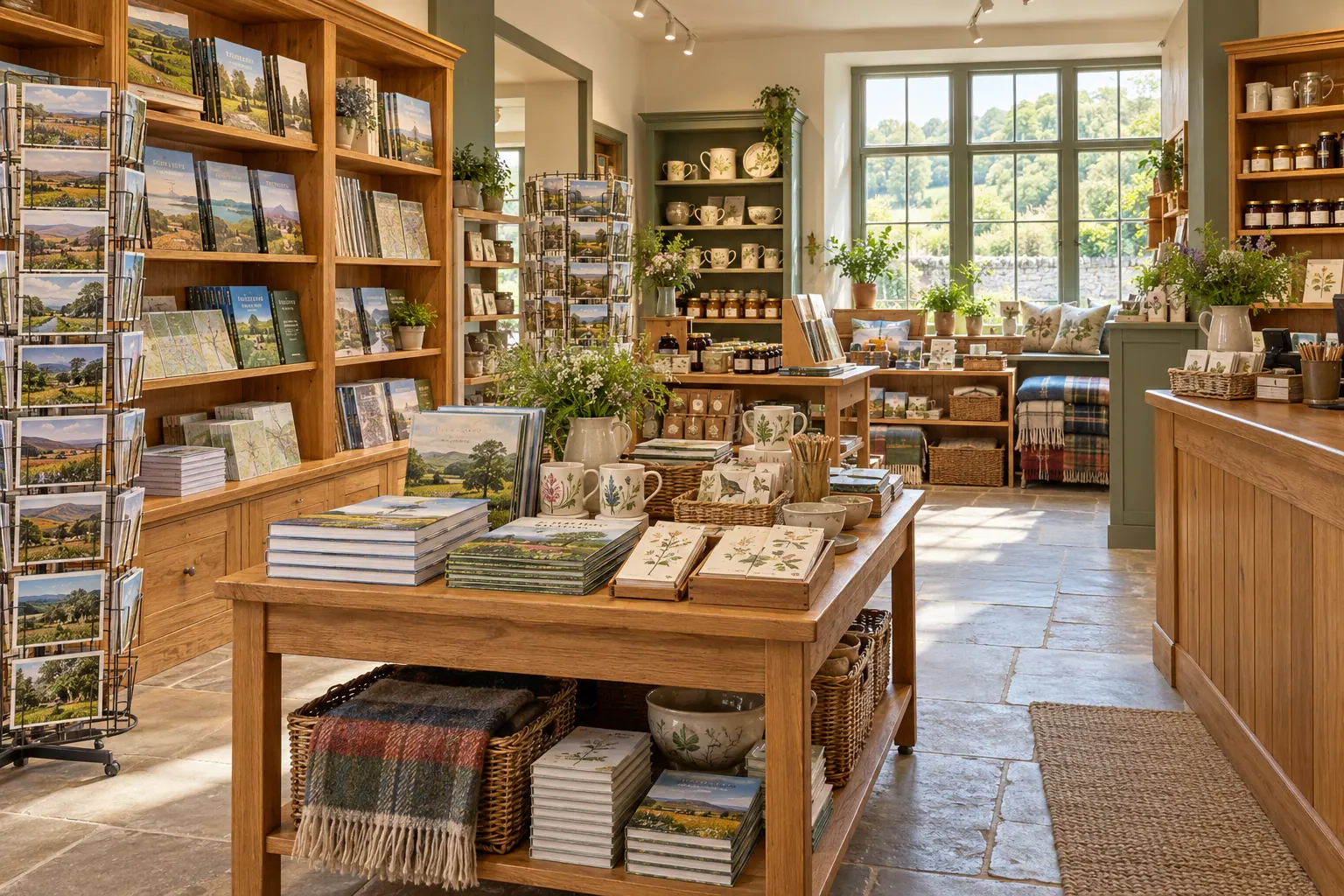
A sunny gift shop with racks of countryside postcards, shelves of walking books and maps, mugs, jars of local produce and wool throws in baskets
Souvenir shop
Take home

A map, book or local craft

The visitor centre shop sells gifts, maps, books, local crafts and local produce. The park says it tries to support local businesses.

Where to find itAt the visitor centre, which is open daily except 25 December.

Long flint-walled barn with a red tiled roof and a black VISITOR CENTRE sign, seen across rough grass.
Taste

Local coffee or ice cream

The Grab and Go sells takeaway snacks, sandwiches, hot drinks and ice cream. It names Liquid Spirit Coffee and Holy Cow! Ice Cream among its local suppliers.

Where to find itAt the visitor centre, if you have time to queue.

Also in Seven Sisters and Brighton

Picture credits and sources

Pictures

Image sources and credits are listed here. Pictures made with AI are marked.

Tour photographs are provided by the tour operators through Viator and are shown from Viator’s own image servers.